June 24, 2026 · 6 min · By Dr. Elena Voss
How digital smile design actually works — and why it changes everything
A step-by-step look at what happens between your first scan and the moment you approve your new smile.
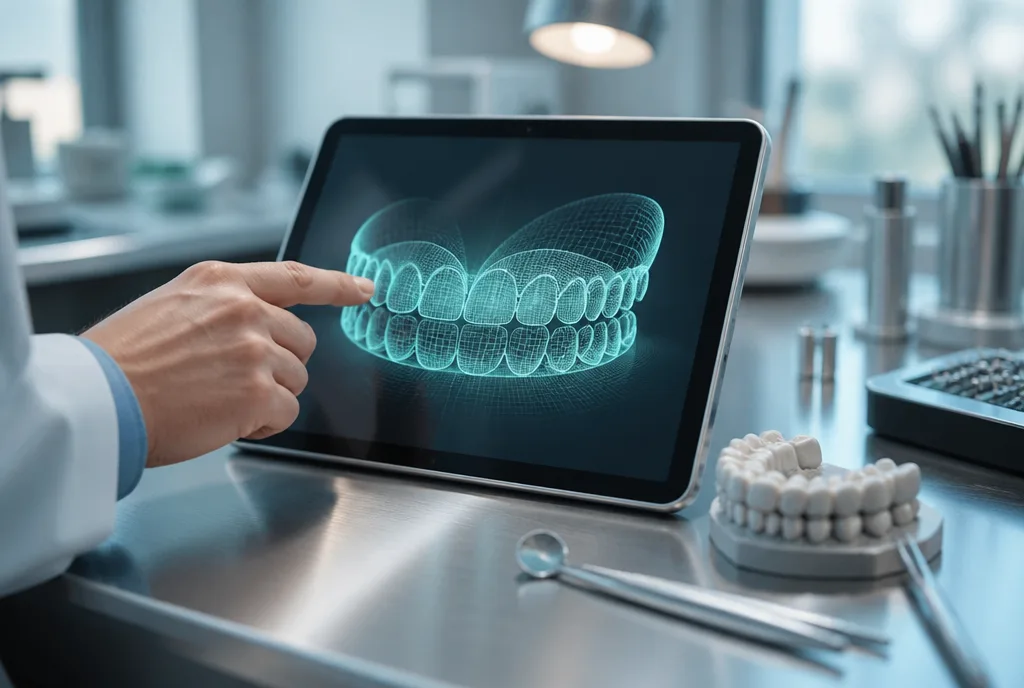
For decades, cosmetic dentistry ran on trust. Your dentist described the result, you imagined it as best you could, and you found out whether the two matched only after the work was done. Digital smile design flips that order. Here is what the process looks like at Axis, and why it removes the single biggest source of anxiety in cosmetic dentistry.
1. We capture your smile in three dimensions
On your first visit we take an intra-oral scan — a handheld wand that builds a precise 3D model of your teeth in a few minutes, with no trays of impression material. We add a set of clinical and facial photographs and a bite record. For implant cases, a low-dose CBCT scan gives us the bone in 3D as well.
The result is a complete digital twin of your mouth and how it sits in your face. That last part matters: a smile is only as good as its relationship to your lips, your midline and your face at rest and smiling.
2. We design against your face, not a template
On the digital model we design tooth shape, length, edge position and shade — but always referenced to your facial photographs. This is why two people who both ask for veneers should never get the same teeth. The design is driven by your proportions.
The technology is only there so we can be honest with you earlier. You see the plan before you commit to it.
3. You see it on screen — then you wear it
We show you the design on screen and adjust it with you. Then we convert the approved design into a physical wax-up and a wearable trial smile: a temporary version we place over your teeth so you can see and feel the shape in your own mouth, in your own mirror, in daylight.
Nothing about your teeth has been changed at this point. If something is not right — a fraction too long, a shade too bright — we adjust it. Only when you sign off do we prepare a single tooth.
4. We build to the plan
Because the veneers, aligners or implants are produced from the approved 3D design, delivery is predictable. The ceramist layers porcelain to the agreed shape; implants are placed with a printed surgical guide to the planned position. The final result tracks the design you approved.
Why it matters
The fear in cosmetic dentistry has always been irreversibility — that you will end up with a smile you did not choose. Designing and trialling first turns an irreversible decision into a reversible one. You approve the result while everything is still changeable. That is the whole point.
Curious what your own plan might look like? Start with our Smile Timeline Planner, or book a 3D Smile Design consult.
Next step
See how it applies to your smile — start a plan or book a 3D Smile Design consult.