Light Therapy 101
What LED light does to skin, what the evidence supports, and where it stops.
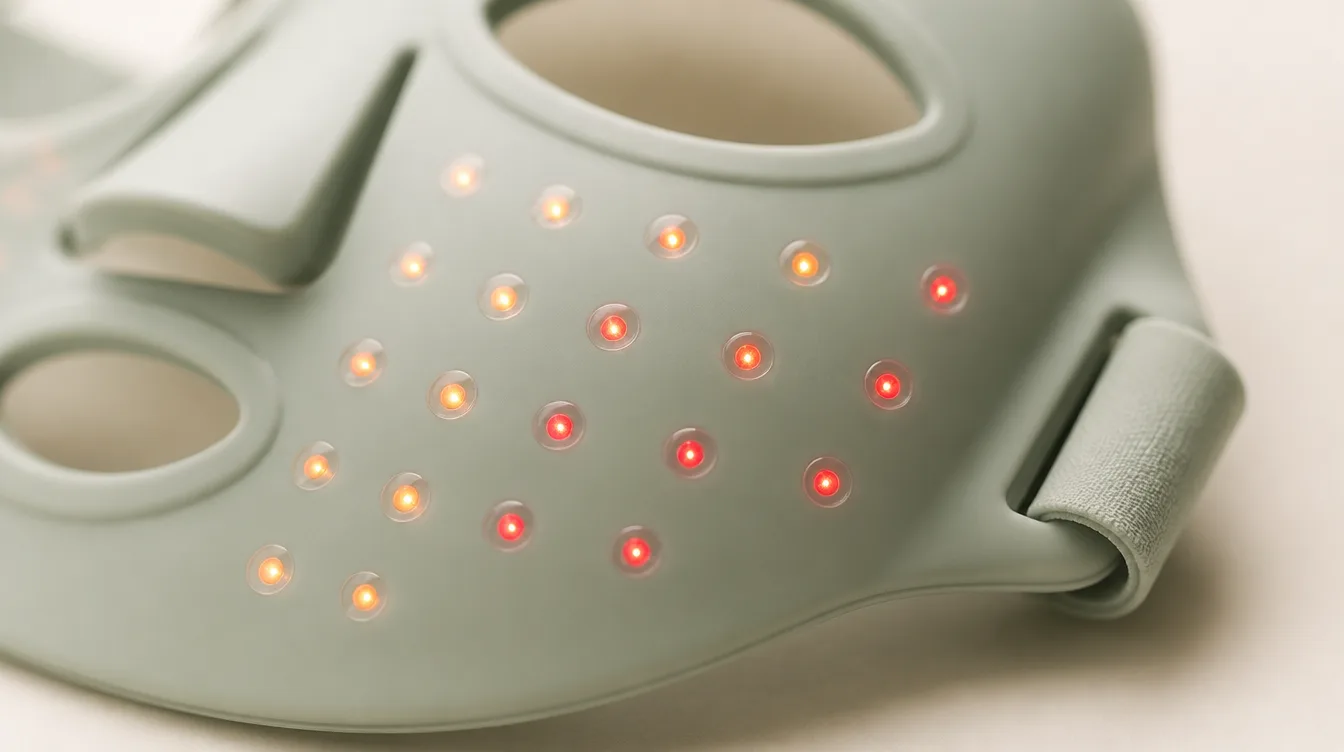
LED (light-emitting diode) therapy shines specific wavelengths of visible and near-infrared light on the skin. It does not use ultraviolet light and does not heat or burn the skin. Different wavelengths are used for different goals.
The five wavelengths in the Lumen Mask
| Light | Wavelength | Used for |
|---|---|---|
| Blue | 415 nm | Targets the look of breakouts. Blue light is the band studied most for mild to moderate acne. |
| Amber | 590 nm | Helps the look of redness and uneven tone settle. |
| Red | 633 nm | The most studied red band for the look of fine lines, paired with blue for breakouts. |
| Deep red | 660 nm | Reaches a little deeper than 633 nm and supports a smoother-looking surface. |
| Near-infrared | 830 nm | Invisible to the eye. Used in studies alongside 633 nm for firmness and texture. |
What the evidence supports
Breakouts. The strongest evidence is for mild to moderate acne. A 2025 systematic review in JAMA Dermatology of six randomized trials (216 participants) found at-home red and blue LED devices reduced lesions compared with controls, with minor side effects.
Fine lines and texture. Trials using 633 nm and 830 nm light have reported improvements in wrinkle scores, but they are smaller and mostly used in-office devices.
Where it stops
- It will not treat deep cysts, scarring or skin disease. See a dermatologist for those.
- Home masks put out less light than clinic panels, so results take regular use over weeks.
- Results vary from person to person.
Why depth matters
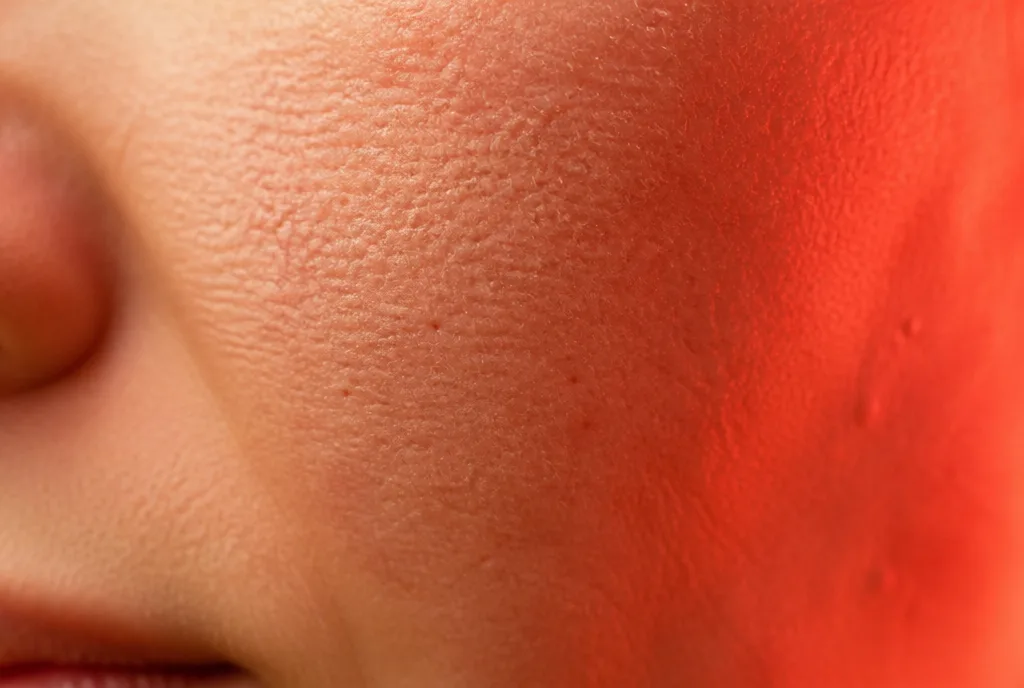
Longer wavelengths travel further into skin before they are absorbed. Blue works near the surface, red a little deeper, near-infrared deeper again. Pairing them lets one session reach different depths.
How we test
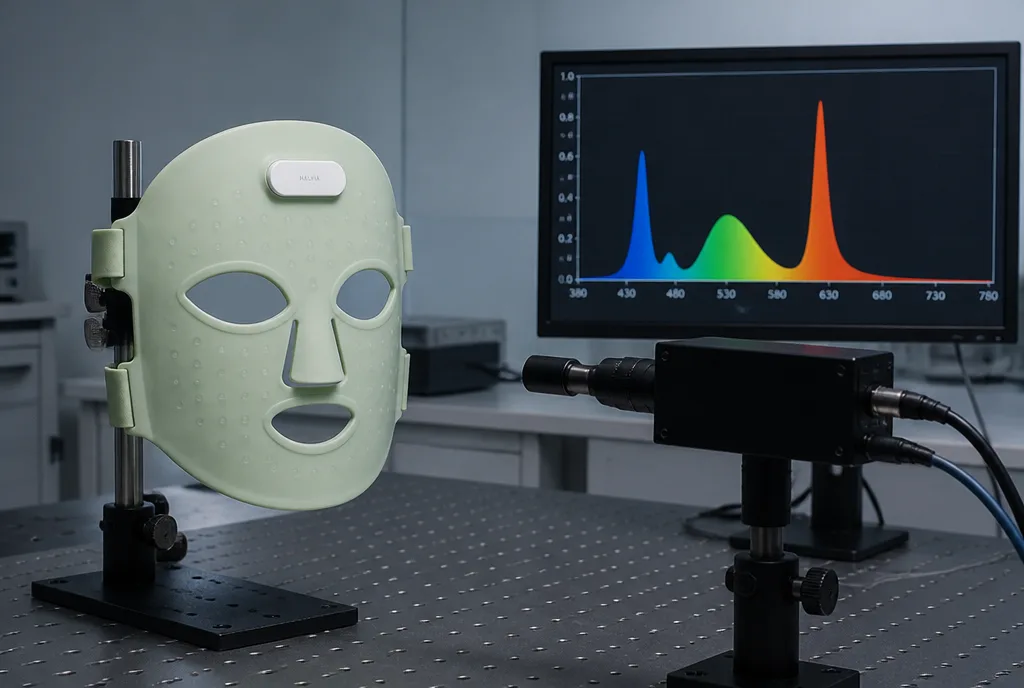
Each production batch is checked on a spectrometer for peak wavelength and output, and the mask design is tested to IEC 62471, the international standard for photobiological safety of lamps and LED products.