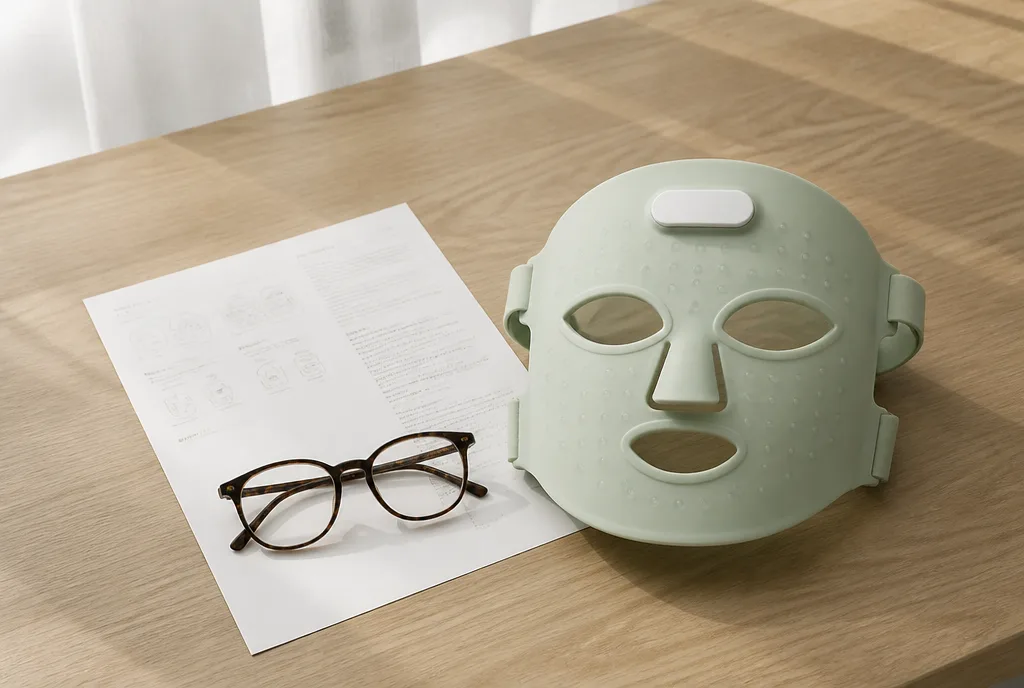
Many LED masks carry the line "FDA-cleared." It is a real regulatory status, but it is easy to read more into it than it says.
Cleared is not approved
Most at-home LED masks reach the US market through the 510(k) process. The maker shows the FDA that its device is substantially equivalent to a device already legally on the market, called a predicate. If the FDA agrees, the device is cleared. Approval is a different, more demanding route used for higher-risk devices.
The codes to look for
In the FDA's database, at-home LED masks for wrinkles are commonly listed under the product code OHS, "Light Based Over The Counter Wrinkle Reduction," under regulation 21 CFR 878.4810. Many also list OLP, the code used for over-the-counter acne light devices. A clearance covers the specific uses named in that device's "indications for use" statement, nothing broader.
How to check a claim yourself
- Ask the brand for its 510(k) number. It starts with K, followed by six digits.
- Search that number in the FDA's public 510(k) database.
- Check that the device name matches the product you are buying, and read the indications for use.
A clearance tells you the FDA reviewed the device against a predicate for safety and for the stated uses. It does not tell you how a mask will work for your skin, so read it alongside the published wavelengths, session time and eye-safety testing.
Source: FDA 510(k) Premarket Notification database, product codes OHS and OLP, regulation 21 CFR 878.4810, checked October 2026.
This article is general information, not medical advice. Talk to a dermatologist about any skin condition.