Whitening is the most popular thing we do, and the most misunderstood. People arrive either expecting Hollywood in one visit, or convinced that nothing will work because a supermarket kit did nothing. The truth sits calmly in between.
What whitening changes — and what it cannot
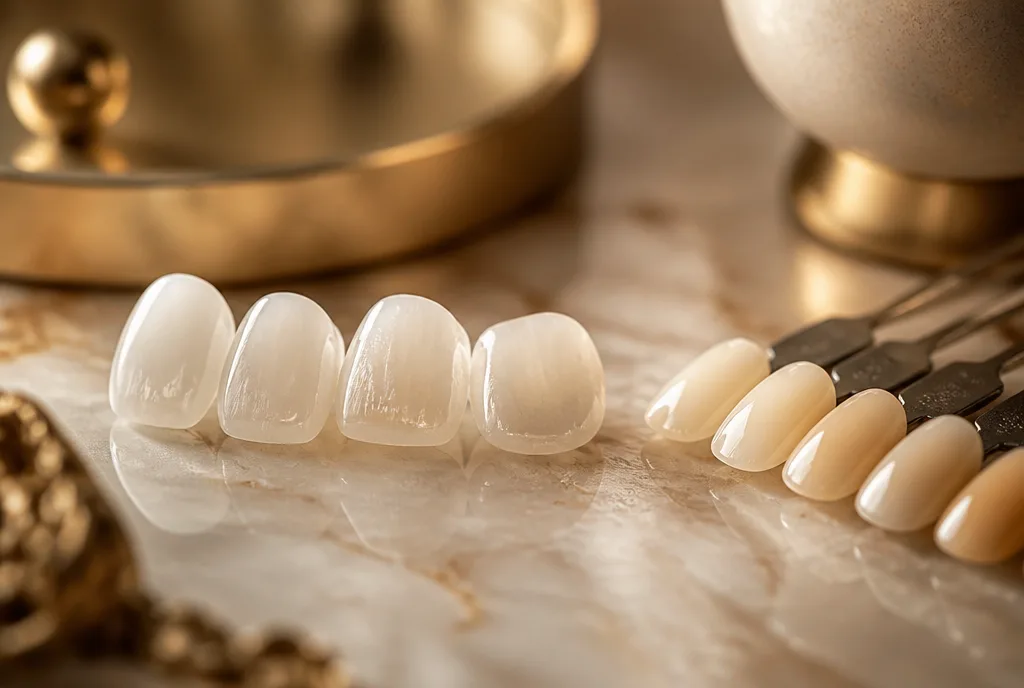
Whitening gel lifts the natural colour of your own tooth. It does not change the colour of crowns, veneers or fillings, and it cannot lift a stain that lives inside the tooth from an old root treatment the way it lifts surface and age-related yellowing. Knowing what is causing your colour is the first thing we assess.
A realistic result
Most people move several shades lighter on the classical shade guide. Someone starting quite yellow will see a bigger, more dramatic shift than someone already fairly light. That is why we record your exact starting shade first, and why our Shade Studio tool asks where you are starting from before it estimates where you can get to.
Why supervised beats shop-bought
- Strength. In the UK, only a dental professional can supply or prescribe effective whitening concentrations. Over-the-counter kits are legally capped far lower — which is why they so often disappoint.
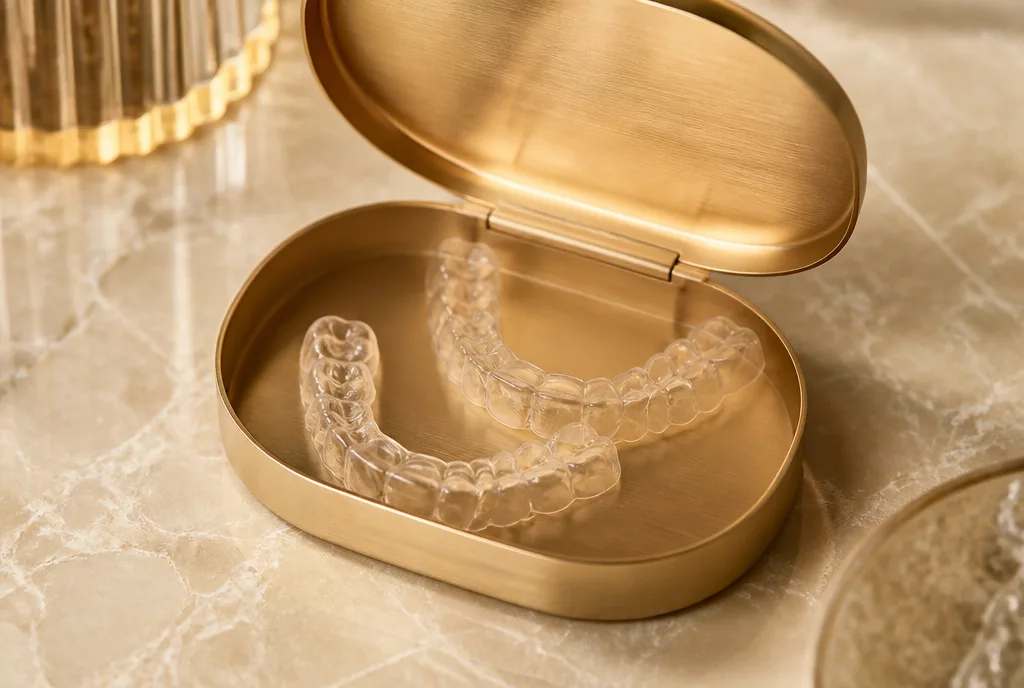
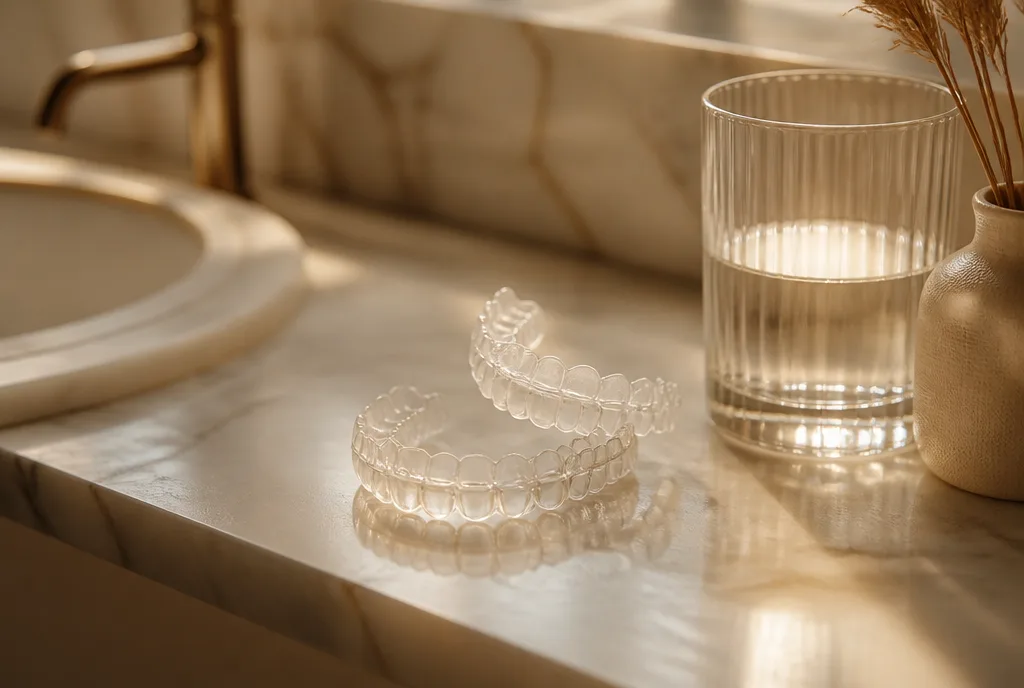
- Fit. Custom trays keep the gel on the enamel and off the gums, which is both safer and more even than a one-size strip.
- Sensitivity. We adjust the gel and add desensitiser if your teeth are tender, so you finish the course rather than abandoning it.
Making it last
Whitening is not permanent — colour drifts back gently over the years, faster if you drink a lot of coffee, tea or red wine. A short top-up in your existing trays once or twice a year keeps it bright, and a hygiene visit removes the surface stain that dulls it in between.
Used properly, whitening does not harm enamel. If you have been putting it off because a kit let you down, a supervised course is a very different experience.
Written by Simone Okafor at Lumara Smile Studio, Marylebone.
Book a consultation