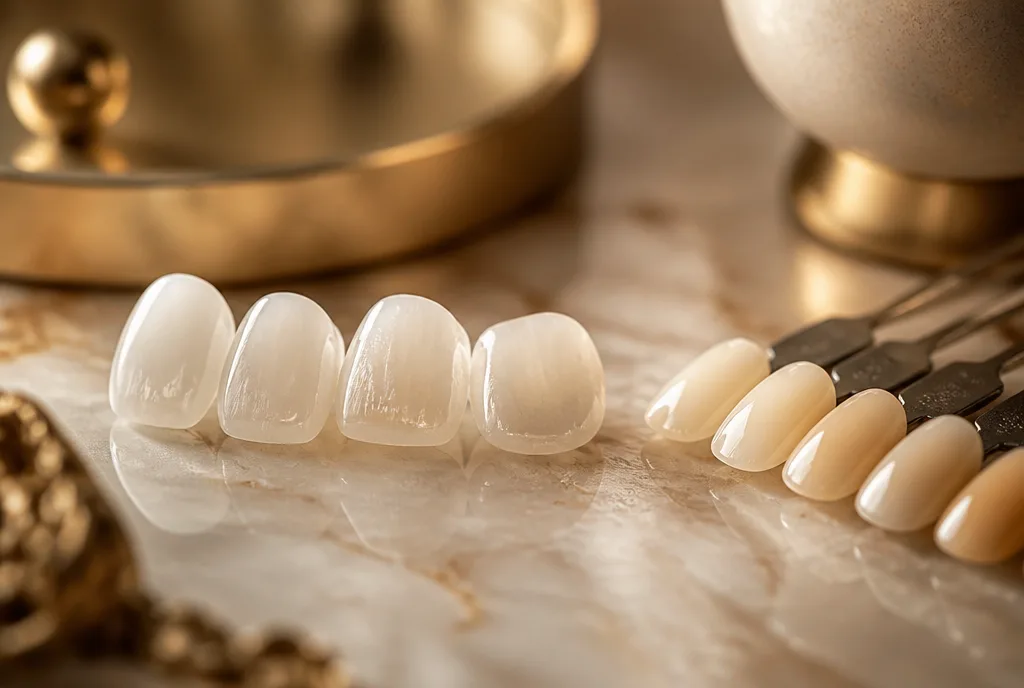
It is the question we are asked more than any other: should I have veneers or composite bonding? Both can reshape a tooth, close a gap or brighten a smile, and on the day they are placed a good example of each can look almost the same. The differences show up in three places — how much of your own tooth you keep, what it costs, and how it behaves over the years.
What each one actually is
Composite bonding is tooth-coloured resin sculpted directly onto the tooth by hand and set with a light. Nothing, or almost nothing, is removed. It is additive, largely reversible, and can often be done in a single visit.
Porcelain veneers are thin shells of ceramic, made by a technician and bonded to the front of the tooth. A veneer usually needs a small amount of enamel removed to make room for it, which makes it a permanent commitment — but the porcelain itself is harder, more stain-resistant and, done well, has a depth that composite struggles to match.
The three questions that decide it
- How much tooth do you want to keep? If keeping your own enamel matters most, bonding — or aligning first and then bonding — is usually the answer.
- What is your budget, honestly? Bonding costs less up front but is more likely to need a refresh in a handful of years. Porcelain costs more and typically lasts far longer, so over a decade the maths can even out.
- How do you live? Heavy coffee, red wine or smoking will dull composite faster than porcelain. If that is you, we will factor it in.
Why we often suggest bonding first
Because it is reversible and conservative, bonding is a low-risk way to try a new shape before committing to porcelain. For many people it is not a stepping stone at all — it is the finished result. Our default is always the least invasive option that reaches your goal, and we will tell you plainly when that is bonding rather than veneers.
If you would like to see which route fits your smile, our Smile Match tool is a good place to start, or book a design consultation and we will show you both on your own teeth.
Written by Dr Elise Marchetti at Lumara Smile Studio, Marylebone.
Book a consultation