
22 Jul 20268 min readBy Gregory Yeoh
Google Ads vs Facebook Ads in 2026: Which Should You Use First?
One catches people already shopping. The other puts you in front of people who do not know you yet. Here is how to pick.
Who it's for: Small business owners and marketers who want to know where to put their first ad budget without wasting it.
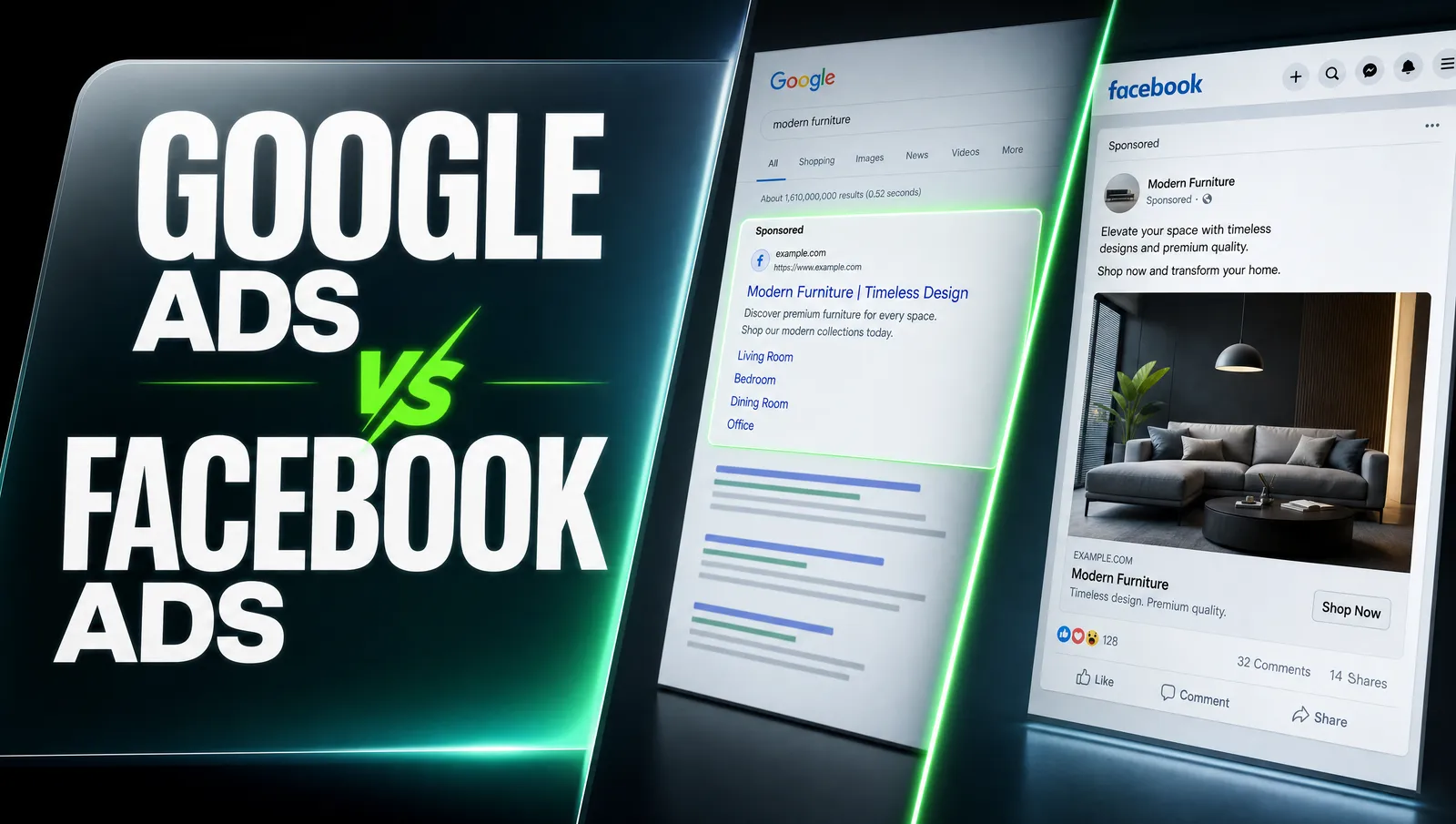
Seed Light's verdict: start with Google Search Ads when there is clear search demand for what you sell and you want to capture people already looking. Start with Facebook and Instagram when the offer benefits from visual creative, discovery or broader audience reach. Some businesses eventually use both, but there is no rule that says you need both.
Google Search Ads reach people actively searching. Facebook and Instagram Ads can introduce an offer before someone searches. Here is how to decide which job matters more first.
In short
- Google Search Ads can reach people already searching for a relevant product, service or solution.
- Facebook and Instagram Ads can introduce your offer to audiences before they actively search for it.
- If strong search demand already exists, Google Search may be the better first test. If the offer needs to be seen or demonstrated, Meta may be worth testing first.
- Judge both on business outcomes such as qualified leads, purchases and acquisition cost, not clicks or likes alone.
- Add the second platform when there is a clear role for it and enough budget to test it properly.
The short answer
Think of it like this. Google Ads is the person already walking into your shop asking for help. Facebook Ads is the eye-catching window display that stops people who were just walking past.
Google Search Ads are useful when someone already knows what they need and searches for it. Your ad can appear around relevant search results when the query, targeting and campaign are eligible. That usually means higher intent than an audience that was not searching at all.
Facebook and Instagram Ads are useful when discovery matters. You can reach people based on location, customer signals, previous interactions and Meta's delivery system, then use the creative and offer to earn attention before they actively search.
How each one works
The big difference is search intent versus interest targeting. This one idea explains almost everything else.
With Google Search Ads, you choose keywords and campaign settings that help determine which searches your ads may be eligible to appear for. Google then uses its matching and auction systems to decide whether an ad shows and where.
With Facebook and Instagram Ads, you define the campaign goal, location and audience inputs, provide the creative and let Meta's delivery system find people likely to take the chosen action.
When Google Ads wins
Google Ads shines when people are ready to act and they are searching for it right now.
If you sell a service that people need when something goes wrong, Google is usually the first place they look. Same goes for anything urgent or local.
- You sell a service people search for, like a dentist, lawyer, electrician, or web designer
- Your customers want it now and cannot wait, like a leaking pipe or a broken aircon
- You get a lot of near me searches and want to show up for your town or city
- What you sell is hard to explain in a photo, so people need to search to understand it
- You want leads fast and you can measure a clear cost per lead
When Facebook and Instagram Ads win
Facebook and Instagram can be useful when the offer benefits from strong visuals, storytelling or discovery. They can also be used to reconnect with people who previously visited or engaged with the business.
- You sell visual products like fashion, food, beauty, furniture, or anything you want to show off
- Your product is an impulse buy that people did not plan to look for
- You want to build brand awareness so people know your name before they need you
- You want to retarget warm audiences, like people who viewed a product but left
- You have a strong offer or story and want it in front of a big, specific audience
Targeting, budget, and cost
The two platforms find customers in very different ways. Google targets the words people type, so you choose the searches you want to show up for. Meta targets the people themselves, so you choose the audience by interests, behaviour, and location.
Costs vary heavily by market, competition, objective and audience. Google Search clicks can be expensive in competitive industries because advertisers are bidding around active demand. Meta may offer cheaper reach in some markets, but cheaper reach does not automatically mean cheaper customers.
Do not choose a platform because one click or impression looks cheaper. Compare the cost of the outcome you actually care about, such as a qualified lead, booking or purchase.
How to measure ads the right way
Clicks, reach and engagement help explain campaign behaviour, but they should not be the final success measure when the goal is leads or sales.
Track as far through the customer journey as your systems realistically allow. That may include leads, qualified leads, purchases, revenue and return on ad spend. Attribution is never perfect, especially when sales happen through calls, WhatsApp or offline follow-up, so compare platform data with your own CRM or sales records where possible.
Set up conversion tracking before spending so forms, calls, purchases and other important actions are measured where technically possible. Good tracking will not capture every offline influence perfectly, but it gives you much better information than relying on clicks alone.
- Watch leads and sales, not clicks and likes
- Track ROAS so you know what you got back for what you spent
- Set up tracking before you spend, not after
- Give each platform enough time and budget to show real results
Start with X if...
If you can only test one platform first, choose the one closest to how your customers already discover and buy from you.
- Start with Google Search Ads if people already search for what you sell, your service is urgent or local, or your product is hard to show in a photo
- Start with Facebook and Instagram Ads if your product is visual, it is an impulse buy, you want to build awareness, or you want to reconnect with people who already visited your site
How to choose, and when to run both
Running both can make sense because they can serve different parts of the customer journey. A Meta campaign may introduce the business, while a later Google search may capture existing demand, but customers do not always move through channels in that exact order. Add a second platform when you have enough budget, a clear role for it and reliable tracking.
How Seed Light can help
We manage Google and Meta campaigns for small businesses and recommend the starting channel based on the offer, audience, existing demand and budget. Tracking is set up around the customer journey so we can report leads, sales and revenue where those outcomes can be measured reliably.
Frequently asked questions
1. Should I start with Google Ads or Facebook Ads?
Start with the platform closest to how customers currently discover the offer. Choose Google Search when clear search demand already exists. Consider Facebook and Instagram when discovery and creative are more important. You do not need to run both simply because both exist.
2. Which is cheaper, Google Ads or Facebook Ads?
There is no universal winner. Click, impression and lead costs vary by market, audience, competition, creative and offer. Compare cost per qualified lead or sale rather than assuming one platform will always be cheaper.
3. Can I run Google Ads and Facebook Ads at the same time?
Yes. They can complement each other when each has a clear role and the budget is large enough to test both properly. If the budget is limited, one focused test is usually easier to learn from than two underfunded campaigns.
4. How much should a small business spend on ads to start?
Start with a test budget large enough to generate useful data without risking money the business cannot afford to lose. The right amount depends on expected click costs, conversion rate, customer value and market size, so there is no useful universal minimum.
About the author

Founder, Seed Light
Gregory Yeoh founded Seed Light in 2017 and works across web design, SEO, paid advertising and automation for small businesses.
On this page
More guides
 8 min read21 ChatGPT Prompts for Business Writing | Free Prompt Guide
 11 min read30 Social Media Caption Prompts | Free Ready-to-Use Guide
Prefer it done for you?
Guides are great. Results are better.
Book a free 15-minute call and we will build it with you.
Book a free 15-minute callKeep reading
21 ChatGPT Prompts for Business Writing | Free Prompt Guide
Never stare at a blank page again. 21 copy-paste prompts for your posts, pages, emails, and review replies.
30 Social Media Caption Prompts | Free Ready-to-Use Guide
Stop staring at the blank caption box. Copy an expert-written prompt, paste it into ChatGPT, and post in your own voice.

Let’s talk
Ready to get more
customers?
Tell us what you want to grow or improve. We’ll reply within 24 hours with honest advice, even if we never work together.
Prefer email or a call? hello@seed-light.com · +60 16-411 9138
Results so far
Results from real clients100+
Brands worked with
28,441+
Leads generated
$4.1M+
Sales generated for clients
Up to 13x
Return on Meta ad spend
Monthly leads