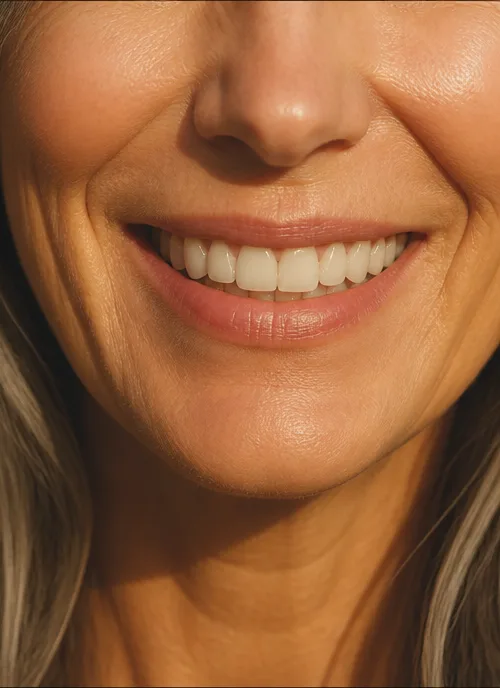
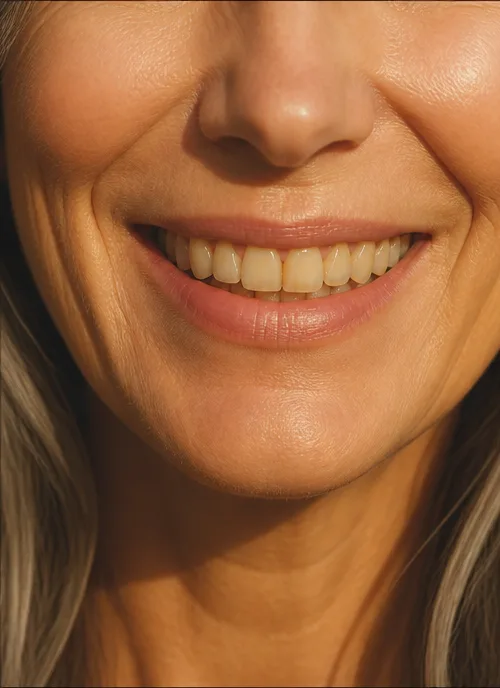
What it is
Composite bonding builds chips, edges, small gaps and asymmetries back in tooth-coloured resin, sculpted directly onto the tooth and cured with light. No anaesthetic in most cases, no drilling, nothing removed — which means it is genuinely reversible, a claim almost nothing else in cosmetic dentistry can make.
Dr Ellison layers three to four shades in each restoration so the resin carries the same depth as enamel rather than the flat, chalky look bonding gets a bad name for. The final polish — fifteen minutes of it — is what separates invisible bonding from obvious bonding.
Where it beats porcelain
Edges worn by grinding, a chipped corner, a midline gap, the two lateral incisors that never quite matched: for localised problems on otherwise healthy teeth, bonding delivers most of the result for a fraction of the fee, in an afternoon. Case No. 072 in the gallery arrived with a $24,000 full-veneer quote from elsewhere and left with $1,800 of whitening and edge bonding.
Its honest trade-off: resin stains and chips faster than porcelain. Expect a polish every year or two and a 5–7 year life before refresh — which, being reversible, is a simple re-layer rather than a remake.
Fair questions
Does composite bonding damage teeth?
No — the resin bonds to lightly conditioned enamel. Nothing is drilled away, and it can be removed or refreshed later.
How long does it last?
5–7 years is typical before a refresh. Red wine, coffee and smoking shorten the cosmetic life; an annual polish extends it.
Is one visit really enough?
For most cases, yes — 60 to 90 minutes per session. Larger reshaping across six or more teeth is sometimes split over two.
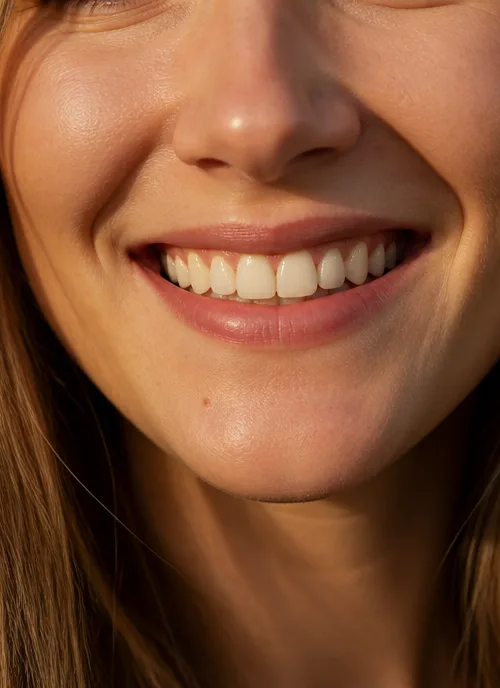
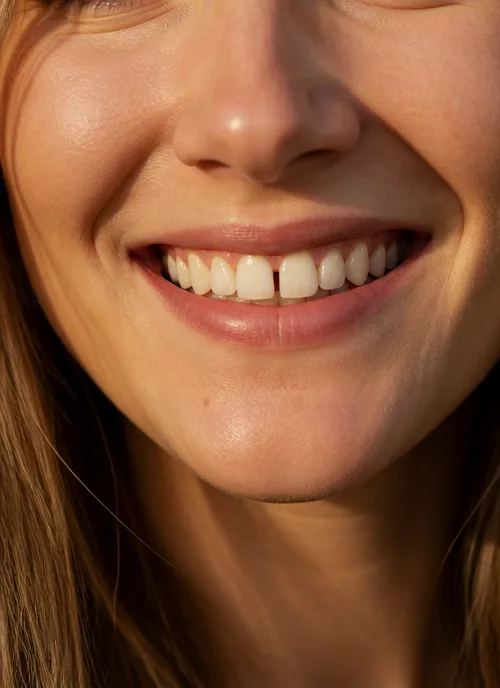 AfterBefore