
Key takeaways
If you run a business that serves people nearby, few marketing moves pay off as reliably as local SEO. Here is the short version before we go deep.
- 97% of consumers read reviews for local businesses before choosing, so your reviews are part of your storefront now (BrightLocal, 2026).
- 74% of people want reviews written in the last 3 months, which means a steady trickle of fresh reviews beats a big pile of old ones (BrightLocal, 2026).
- 45% now use AI tools like ChatGPT for business recommendations, up from just 6% a year earlier (BrightLocal, 2026).
- Google ranks local results on three things: relevance, distance, and prominence (Google Business Profile Help).
- 47% of consumers will not use a business with fewer than 20 reviews, so review count is a real buying filter, not a vanity number (BrightLocal, 2026).
1. What is local SEO? (and how it differs from regular SEO)
Local SEO is the work of getting your business found by people searching nearby.
It helps you show up in the Google map pack and in results that carry a location, like "coffee shop near me" or "plumber in your town." Regular SEO chases rankings anywhere; local SEO for small businesses wins the customers within driving distance.
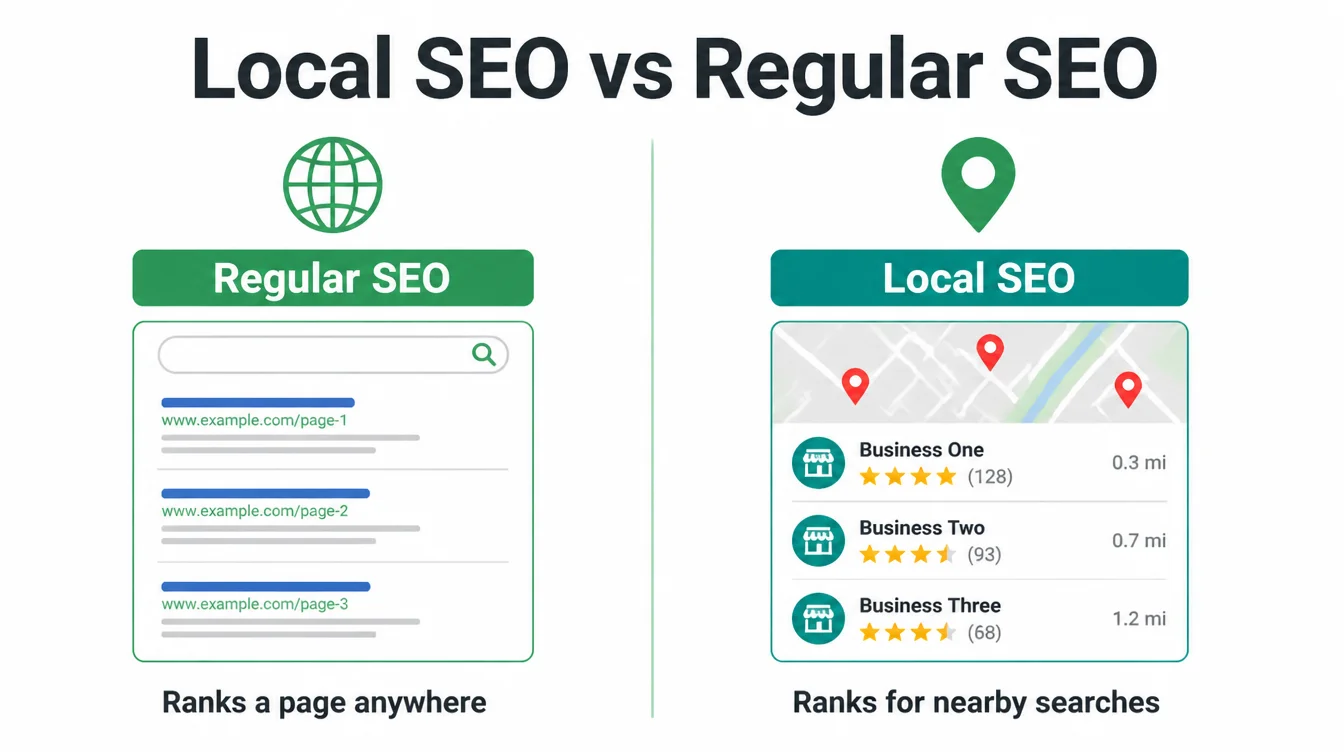
Here is the simplest way to picture it.
Search for a local service. You usually see two things. First, a map with three business listings pinned to it. That block is the map pack, also called the local 3-pack. Below it sit the normal blue-link results, where local pages can also rank.
By contrast, local SEO fights for both, but it cares most about the map pack, because that is where the calls and bookings come from. It pulls on different levers too.
A blog post ranks on content and links. A map listing ranks on your Google Business Profile, your reviews, and whether your business details match across the web, which is the whole job of local SEO.
New to search in general? Start with our plain-language explainer on what SEO actually is, then come back here for the local side.
2. Why local SEO matters more than ever in 2026
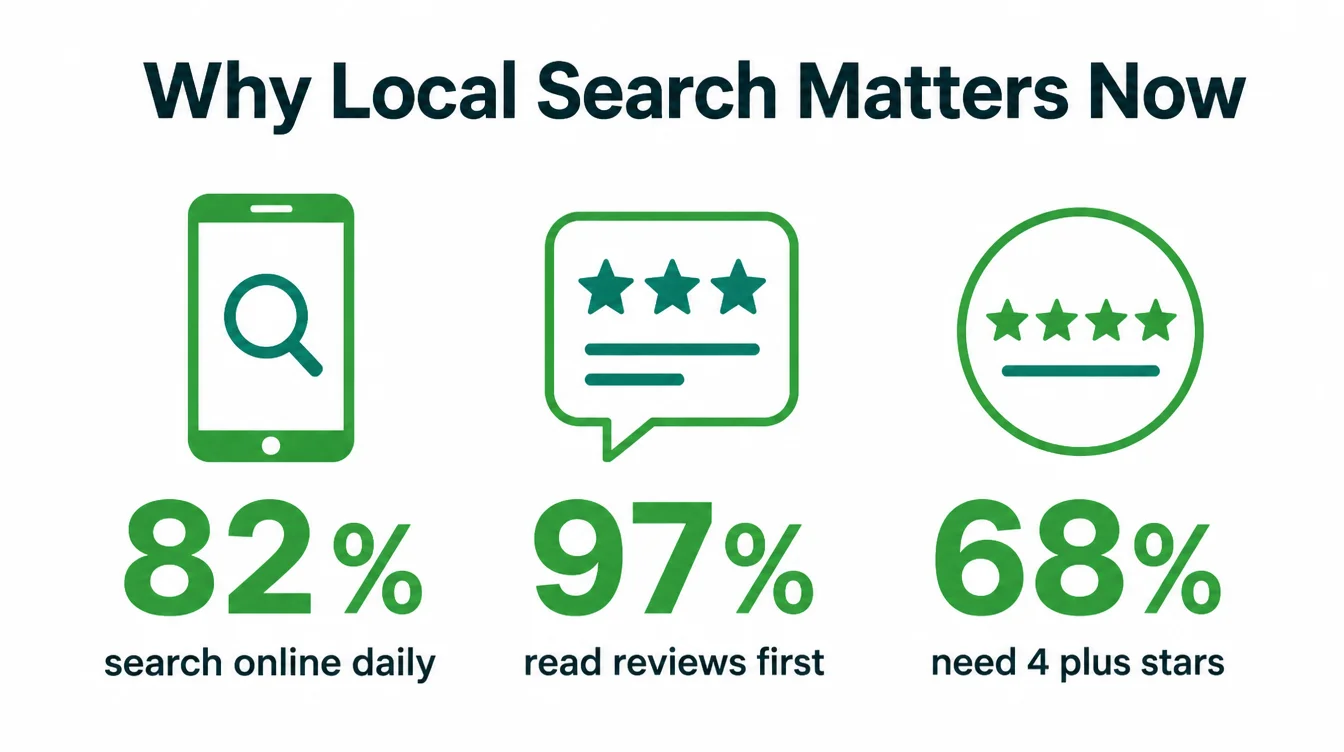
Local search is now a daily habit, and reviews decide who gets the call. Roughly 82% of consumers search for something online at least once a day, and 45% start their local searches on Google by default (BrightLocal, 2025). If you are not visible when they look, a competitor is.
Three shifts make this the year to take local seriously.
Reviews became your real storefront. A clean website helps, but people trust other people. Around 49% of consumers now trust online reviews as much as a personal recommendation from a friend (BrightLocal). And they read a lot of them: 97% check reviews before choosing a local business.
Star ratings act as a filter. The score is what counts. About 92% of consumers care about star ratings, and 68% will only consider a business with four stars or more (BrightLocal, 2026). Drop below that line and you get skipped before anyone reads a word.
AI search is changing how people find you. This one is new. The share of people using AI tools like ChatGPT to find local businesses jumped to 45% in 2026, up from 6% the year before (BrightLocal, 2026). More on what that means for your listing in Step 7.
As a result, the takeaway is simple. Your next customer is searching nearby, comparing star ratings, and increasingly asking an AI for a recommendation. Local SEO puts you in all three places.
3. How Google decides local rankings: relevance, distance, prominence
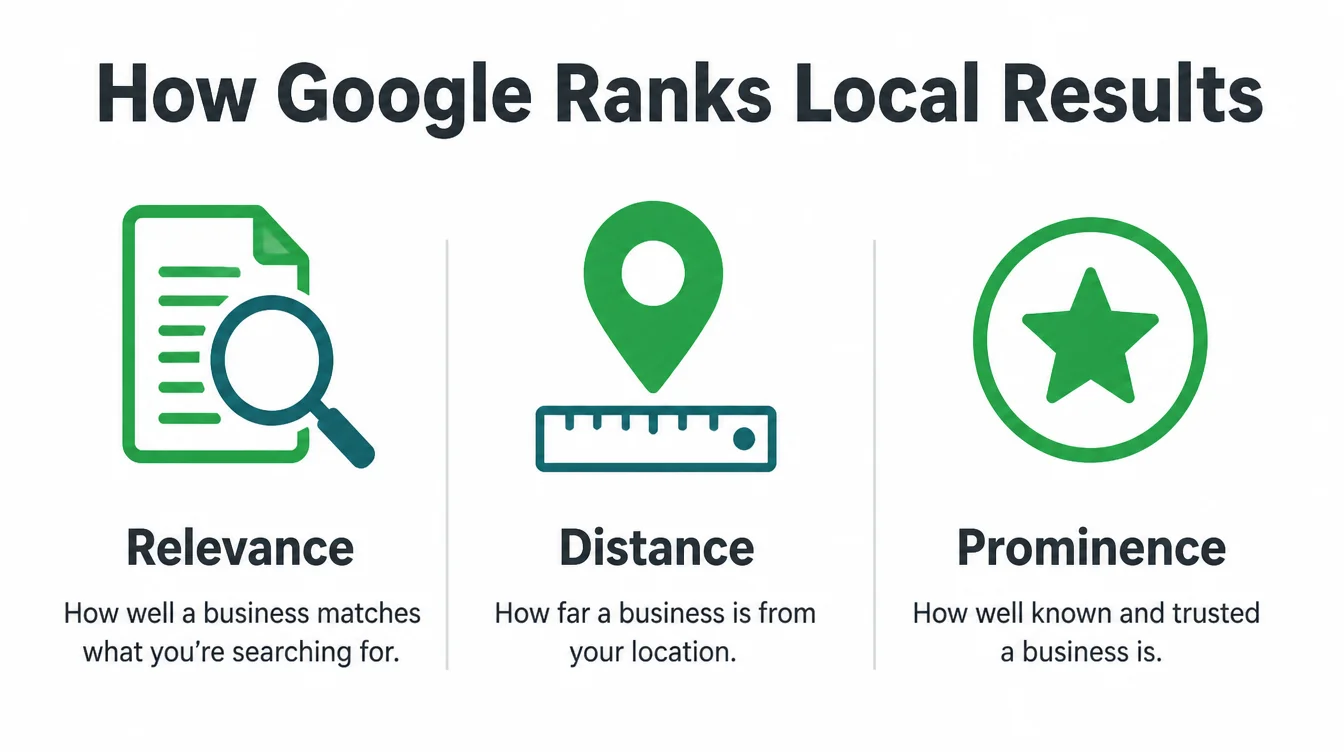
Google ranks local results on three plain factors: relevance, distance, and prominence (Google Business Profile Help). Understand these three and every tactic in this guide makes sense. You are not gaming an algorithm. You are giving Google clear, consistent signals that you are the right nearby business.
Let us break each one down.
Relevance is how well your business matches the search. This is mostly about your Google Business Profile. The right primary category, a clear description, and accurate services tell Google what you do.
Distance is how close you are to the searcher. You cannot move your shop, but you can set your service areas correctly and keep your address accurate so Google places you on the map properly.
Prominence is how well known and trusted your business is. This is where reviews, citations, and links come in. A business with steady recent reviews and consistent details across the web looks more prominent than a silent one.
Where should you spend your energy? Reviews carry serious weight. Specifically, Darren Shaw, who runs Whitespark's annual Local Search Ranking Factors survey, found that reviews account for an estimated 16 to 20% of map pack ranking weight, and that review recency is now one of the top factors (Whitespark, 2026). Keep that in mind as we move through the steps.
4. Step 1: Claim and optimize your Google Business Profile
Your Google Business Profile is the single most important asset in local SEO, so this is where you start. It is the free listing that powers your map pack appearance, your reviews, your photos, and your hours. Claim it, verify it, and fill out every field. An incomplete profile quietly costs you customers.
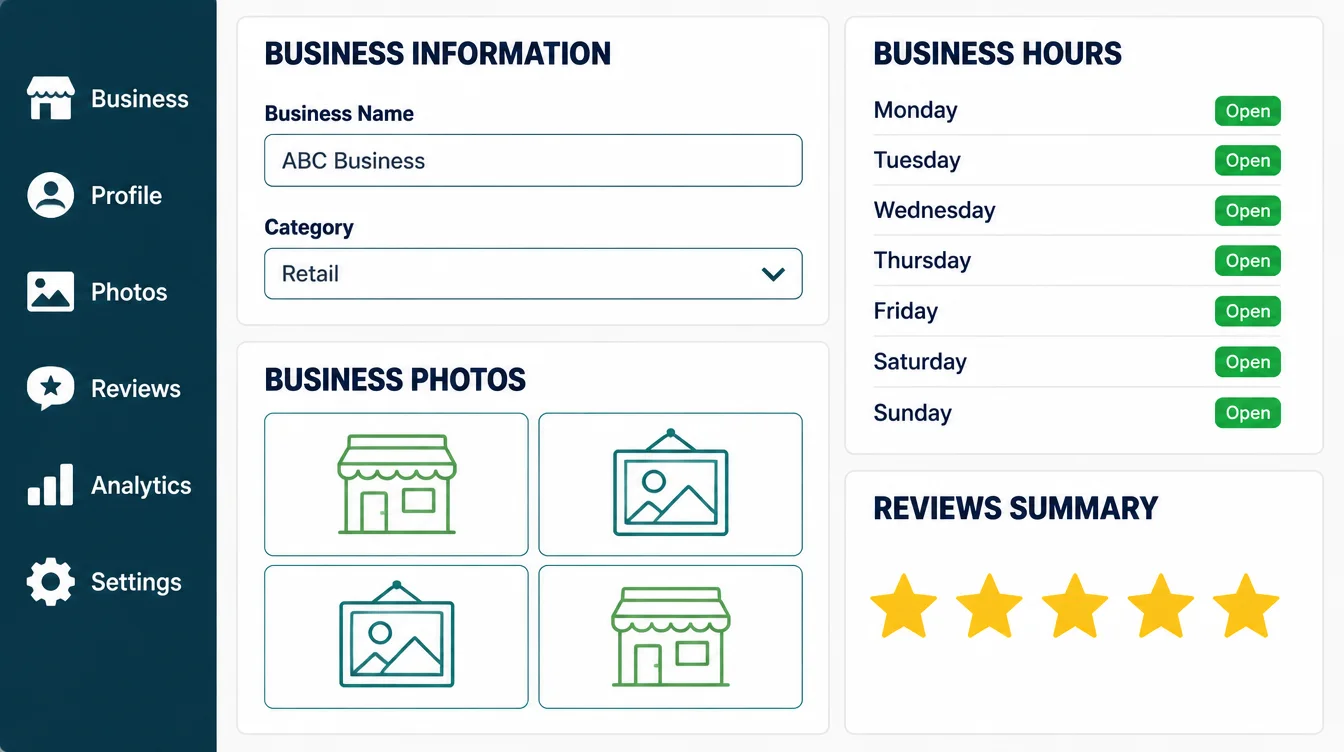
Work through this checklist. In particular, do not skip the primary category or the photos. For a full field-by-field walkthrough, use our Google Business Profile optimization checklist.
- Pick the right primary category. This is the biggest relevance lever you have. "Italian Restaurant" beats "Restaurant." Be specific, then add secondary categories for your other services.
- Fill in every detail. Name, address, phone, website, and hours. And 85% of consumers say contact details and opening hours matter when they research a local business (BrightLocal, 2025). Leaving these blank is a missed sale.
- Add real photos. Your storefront, your team, your work, your products. Fresh, real photos build trust and give people a reason to choose you.
- Use the products and services sections. List what you offer with short descriptions. It feeds Google more relevance signals and helps you show up for specific searches.
- Turn on messaging and keep hours current. Update holiday hours. Reply to questions. An active profile signals a real, open business.
Here is something most guides skip. When we cleaned up a coaching client's Google Business Profile in February 2026, we found the listing looked fine at a glance.
Based on our audit, though, we observed two hidden problems: a duplicate profile left over from an old office address, and a primary category set to "Consultant" instead of "Life Coach." We merged the duplicate and fixed the category.
Two small changes, but they were the kind of thing that quietly holds a listing back for months.
No storefront? How service-area businesses use a Google Business Profile
If you are a coach, consultant, realtor, plumber, or any business that goes to the customer, you do not need a public address to rank. You can run a service-area business profile.
You hide your address and set the regions you serve instead. You still get reviews, photos, and map visibility; you just will not be pinned to one storefront.
This matters because almost no local SEO guide covers it, yet it describes a huge share of small businesses. Set your service areas to the towns and neighborhoods you actually serve, not a giant region, since Google rewards focus.
If you want help setting this up correctly, that is exactly the kind of thing we handle in our local SEO service.
Not sure where your listing stands? Seed Light builds websites and runs local SEO for small businesses, from coaches to local service brands. Talk to us and we will tell you the two or three changes that matter most.
5. Step 2: Do simple local keyword research
Local keyword research means finding the exact phrases nearby customers type, then using those words on your profile and pages. You do not need expensive tools to start. You need to think like your customer and write down how they actually describe what you do, plus the places they search from.
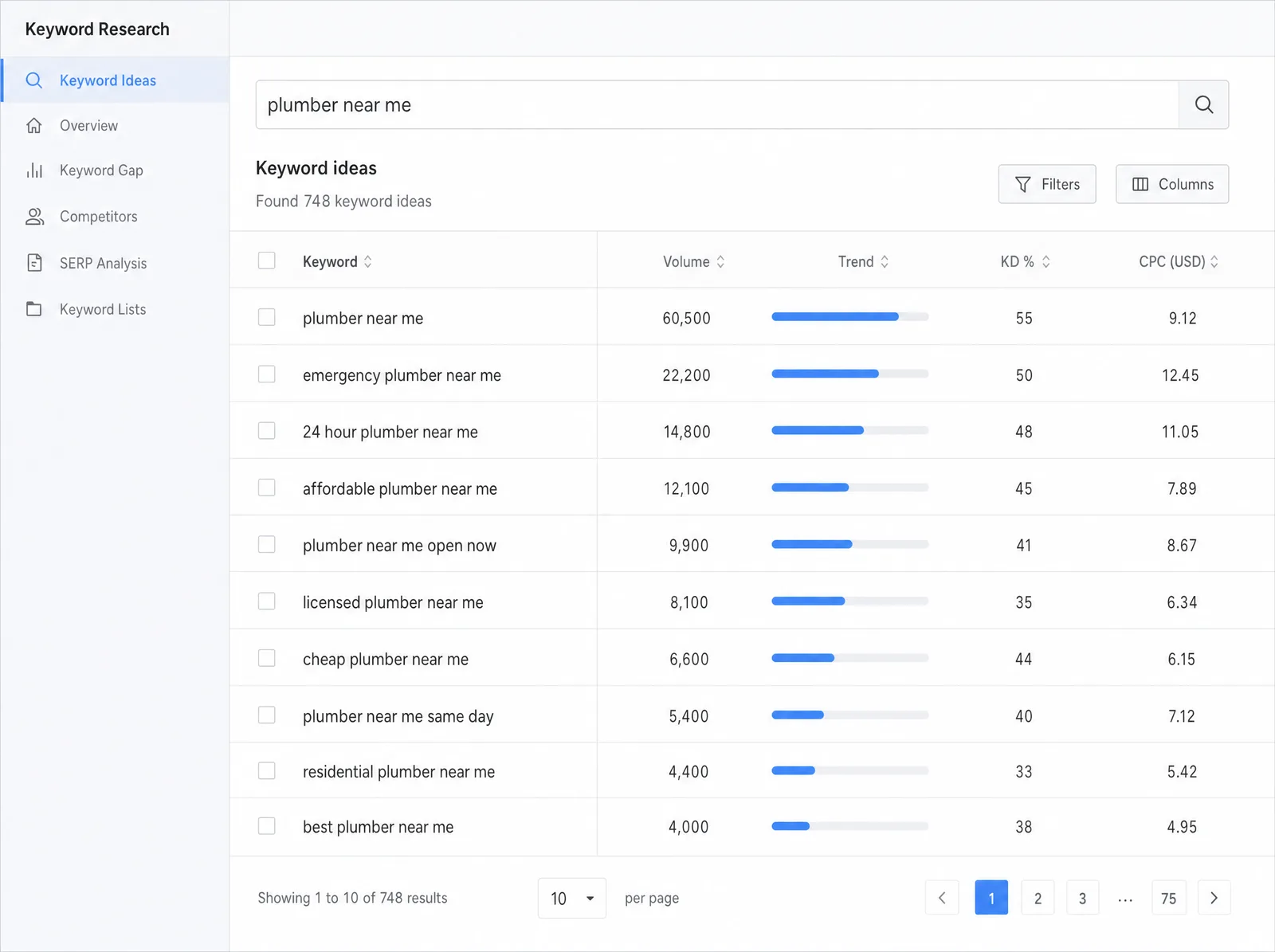
Build your list in three passes. To understand what to target, start from your customer's words, not yours.
Start with services plus places. Take each service and pair it with your town, neighborhood, or region. "Emergency plumber [town]." "Wedding photographer [area]." These geo-modified phrases are the bread and butter of local search.
Add the "near me" intent. People rarely type "near me" expecting you to own the phrase. Google handles the location for them. So you do not target "near me" directly. You earn those searches by nailing your category, address, and service areas in Step 1.
Check what Google suggests. Type your service into the search bar and read the autocomplete options. Scroll to "People also ask" and "related searches." These are free, real phrases from real searchers.
A free tool like Google Keyword Planner can confirm rough volumes if you want numbers, and Semrush's guide to local business SEO goes deeper on tool-based research.
Keep your final list short and honest. Five to fifteen phrases that genuinely match your business will take you further than a hundred you will never realistically rank for.
6. Step 3: Make your website ready for local search
Your website backs up everything your Google Business Profile claims, so it needs to send the same local signals. Google cross-checks your site against your listing. When the two agree, you look trustworthy.
The goal here is a fast, mobile-friendly site that clearly states who you are, what you do, and where you serve. Our free local SEO checker reads a page and reports which of those signals it can find.
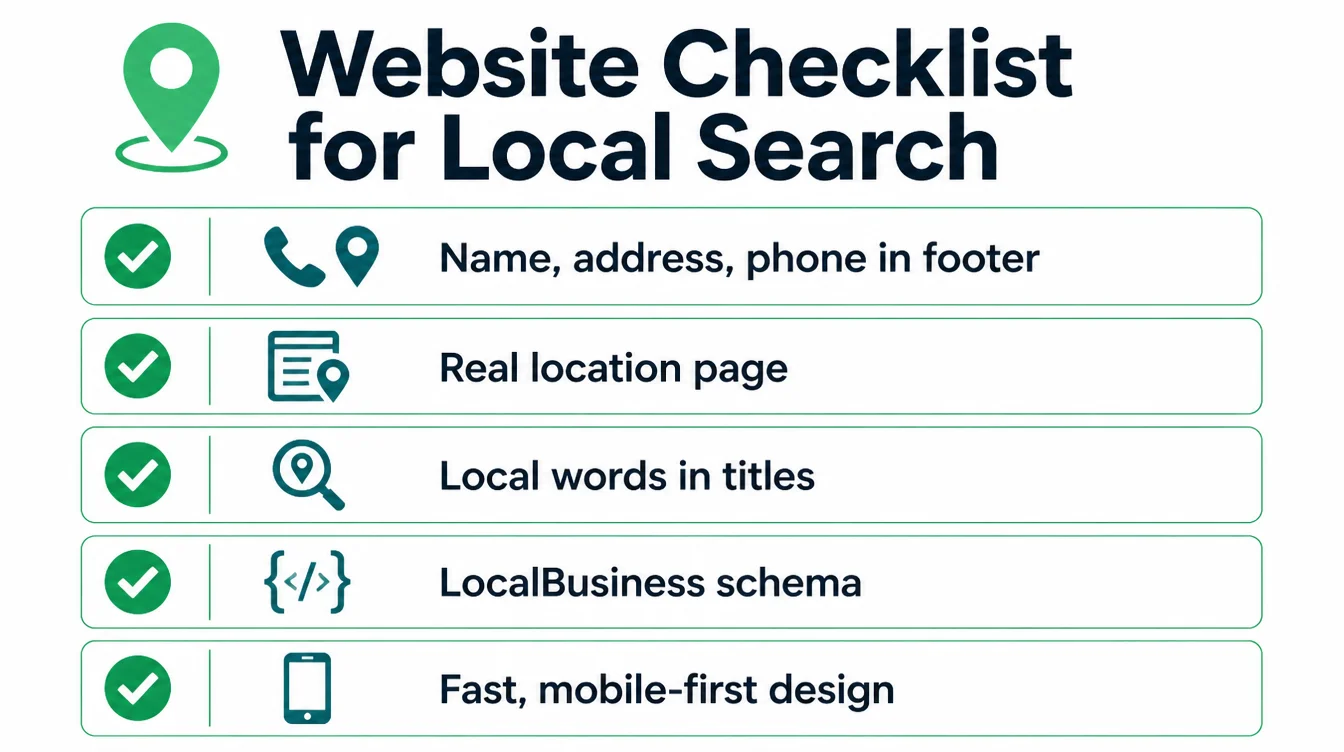
Cover these basics. Meanwhile, keep every page genuinely useful, not stuffed with town names.
- Show your name, address, and phone in the footer. On every page. It should match your Google Business Profile exactly, character for character.
- Write a real location or service-area page. Not a thin doorway page. A genuine page about the areas you serve, the problems you solve there, and proof you have done the work.
- Use local words in your title tags and headings. Your homepage title might read "[Service] in [Town]." Natural, not stuffed.
- Add LocalBusiness schema. This is structured data that hands Google your details in a format it reads instantly (Google Search Central). It is a small technical win that many small sites miss.
- Make it fast and mobile-first. Most local searches happen on a phone. A slow site loses customers before it ever gets to rank.
If your current site is slow, hard to edit, or missing these basics, that is a website problem, not a willpower problem. A clean, fast build makes local SEO far easier; see how we approach web design for small businesses.
7. Step 4: Get your NAP and citations consistent
A citation is any place online that lists your business name, address, and phone, known as your NAP. Consistency is the whole game. When your details match across Google, Facebook, Yelp, Apple Maps, and industry directories, you build the prominence Google looks for. When they clash, you confuse both search engines and customers.
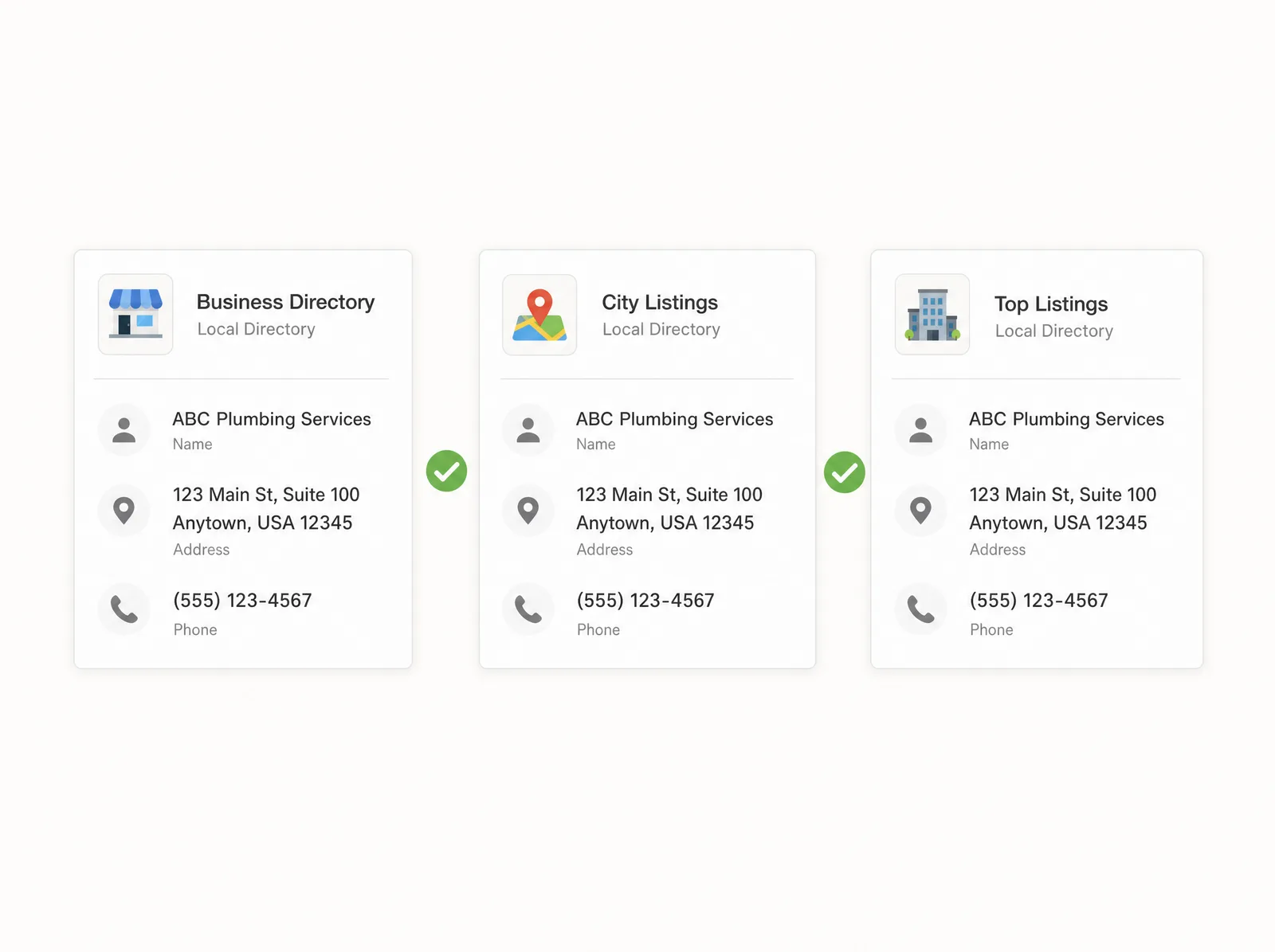
Here is the practical part. When we ran a local service business through BrightLocal's citation checker in March 2026, we found its name showing up three different ways across directories: the legal name in one place, a shortened version in another, an old phone number in a third.
None of it was deliberate. It just piled up over the years. That kind of drift is normal, and it is exactly what holds listings back.
Fix it in three moves. However, do not try to fix everything in one weekend.
- Audit what is out there. Search your business name and phone number. Note every listing and where the details disagree.
- Fix the big ones first. Google, Facebook, Apple Maps, Bing, and the top directory for your industry. These carry the most weight.
- Find new citation spots. Your local chamber of commerce, industry associations, and respected regional directories. Quality beats quantity here.
Decide on one exact version of your name, address, and phone, then use it everywhere from now on. Consistency going forward matters as much as cleaning up the past.
8. Step 5: Turn reviews into a steady, fresh signal
Reviews are the strongest lever most small businesses are not pulling on purpose. They influence rankings and they close customers.
Whitespark puts reviews at roughly 16 to 20% of map pack ranking weight, and 47% of consumers will not even consider a business with fewer than 20 reviews (BrightLocal, 2026). The mistake is treating reviews as a one-time push.
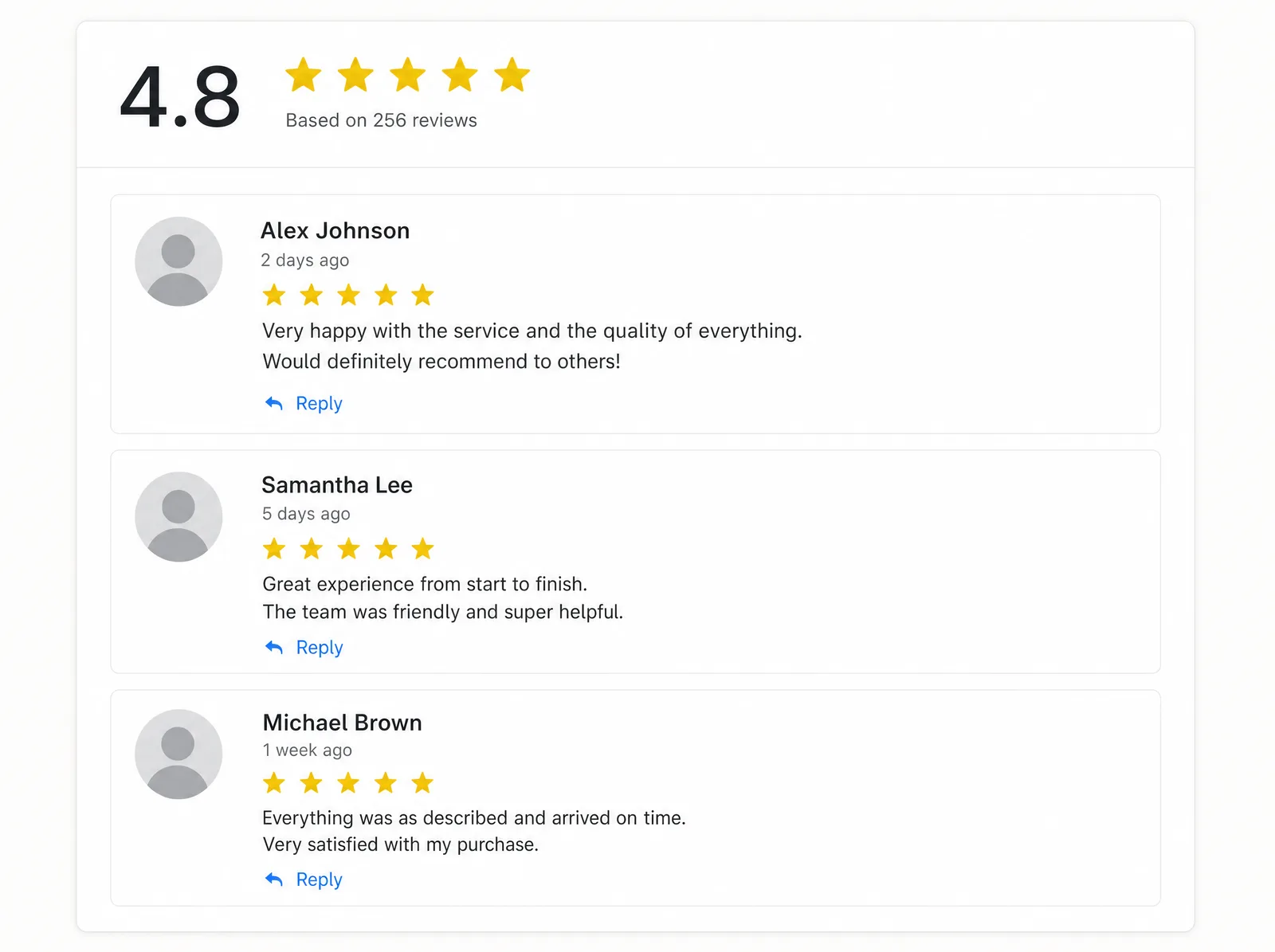
The shift to understand: reviews are a living signal. People want recent ones. About 74% of consumers look for reviews written in the last three months, and 32% want them from the last two weeks (BrightLocal, 2026).
A glowing review from two years ago does almost nothing today. A steady trickle of new ones does everything.
We saw this firsthand. When we set up a review-ask routine for a local service client in April 2026, the thing that moved the needle was not the tool. We found it was timing: asking the same day the work was done, every single time.
So build a simple cadence instead of a one-off campaign. In addition, make the ask part of your normal handoff, not a separate chore.
- Ask every happy customer, right away. The best moment is just after you deliver, when they are pleased. Make it a habit, not an afterthought.
- Make it one tap. Send a direct link to your Google review form by text or email. Every extra step loses people.
- Aim for a steady flow. A few fresh reviews every week beats twenty in one burst then silence. Recency is the point.
- Reply to every review, good or bad. This is not optional. Around 88% of consumers would use a business that responds to all its reviews, compared with just 47% for one that ignores them (BrightLocal, 2024). A calm, kind reply to a bad review often wins more trust than the five-star ones.
One honest warning. Never buy reviews or post fake ones. Google catches it, customers smell it, and the damage outlasts any short-term bump.
9. Step 6: Earn local backlinks and mentions
A backlink is another website linking to yours, and local links tell Google you are a real, rooted part of your community. You do not need hundreds. A handful of relevant local links does more for a small business than a pile of random ones. The aim is genuine connections, not link schemes.
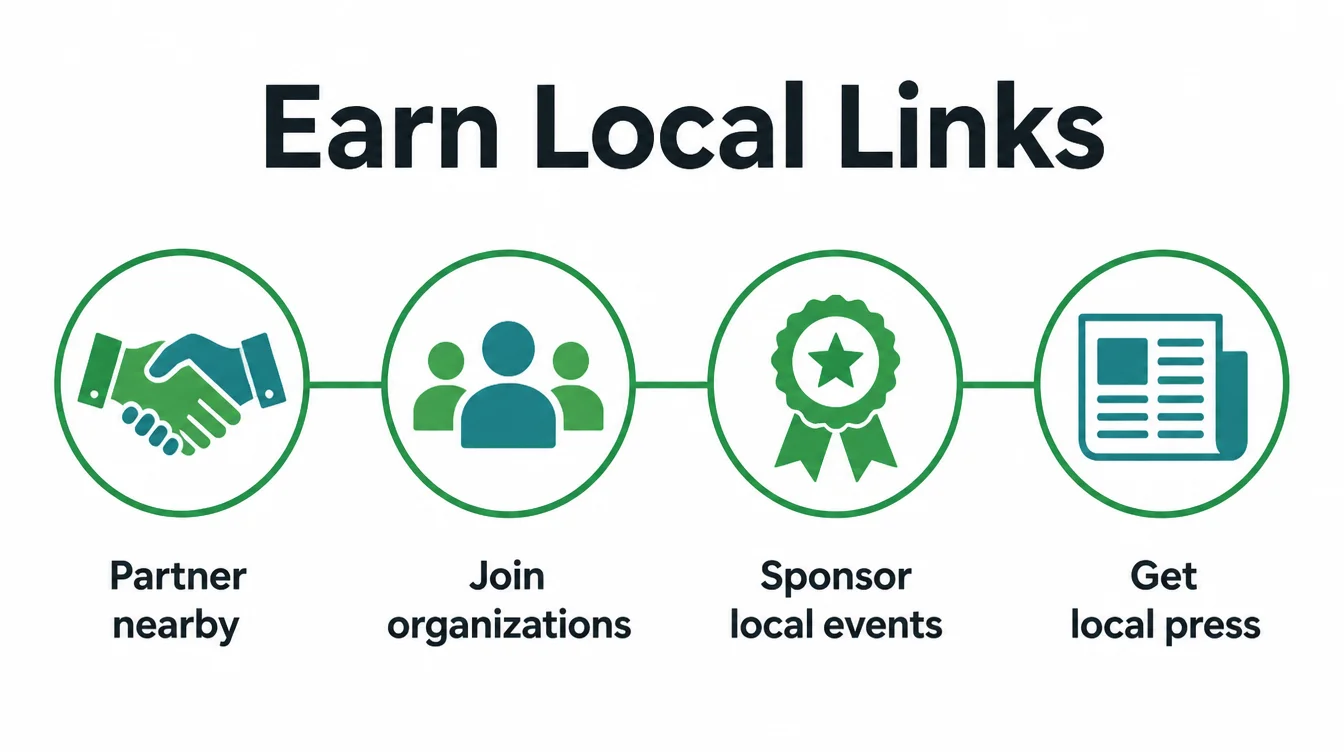
Start close to home. For context, a few links from respected local sites outweigh dozens of random directories.
- Partner with nearby businesses. The florist and the wedding venue. The gym and the physio. Refer each other and link to each other where it makes sense.
- Join local organizations. Your chamber of commerce or an industry association usually links to member sites. That is a trusted local signal.
- Sponsor something local. A youth team, a charity run, a community event. Sponsors often get a link, and you get goodwill.
- Get local press. Launching something new or hitting a milestone? A short note to a local news site or blog can earn a strong, relevant link.
Think of it as showing up in your community online the same way you would in person. The links follow real relationships. Want to see the kind of sites this builds toward? Browse our recent work.
10. Step 7: Get found in AI search and "near me" answers
People increasingly ask an AI assistant for local recommendations, and the same fundamentals that win the map pack also feed those answers.
The share of people using AI tools like ChatGPT for business recommendations jumped to 45% in 2026, up from 6% a year earlier (BrightLocal, 2026), and 40% of consumers now use generative AI within their search (BrightLocal, 2025).
This is the fastest-moving part of local search, and most of your competitors are ignoring it.
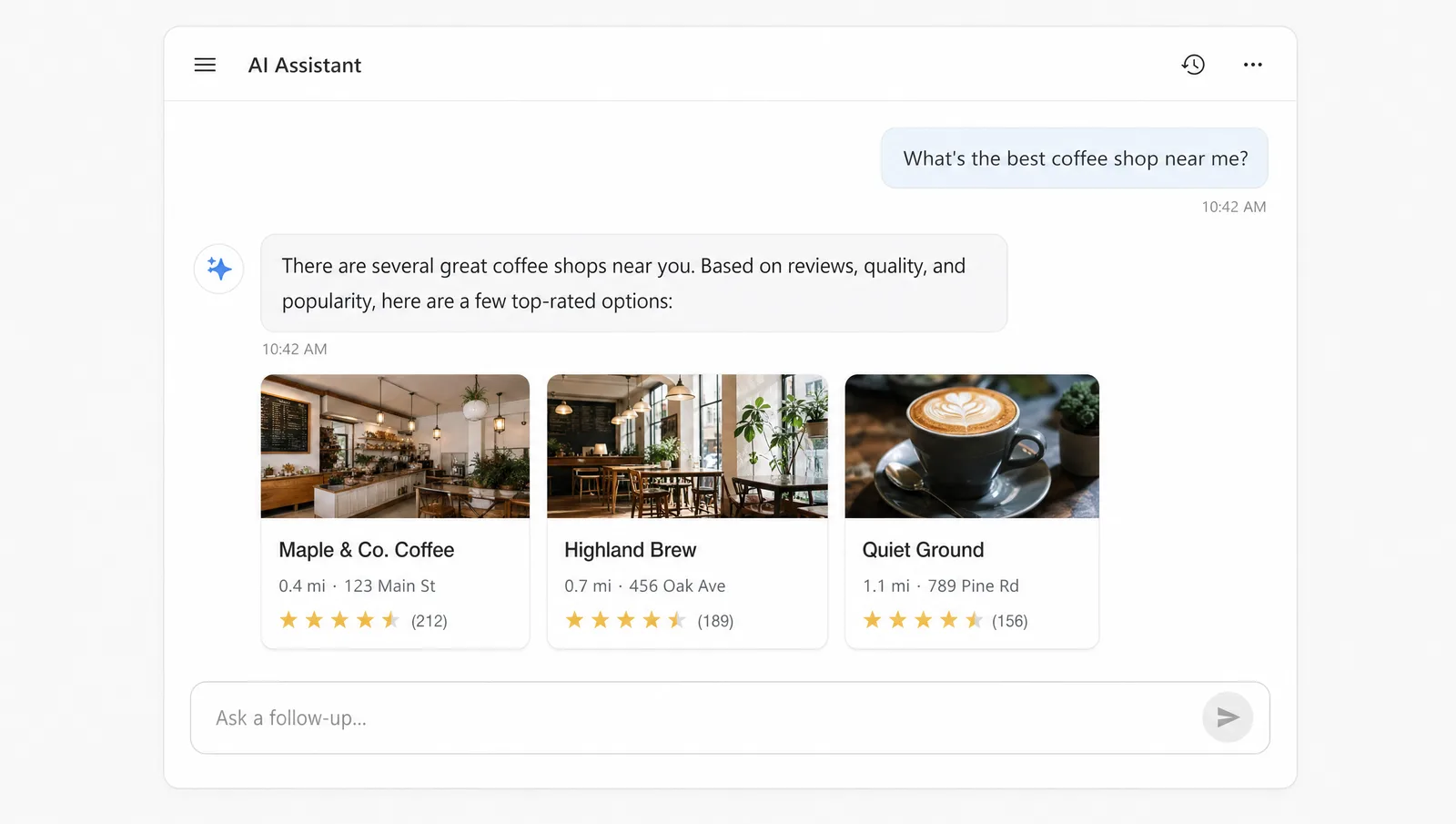
The good news: you do not need a separate strategy. AI assistants lean on the same trustworthy signals you have been building.
- Keep your Google Business Profile flawless. Accurate hours, category, and services give AI a clean source to quote.
- Keep earning fresh reviews. AI tools weigh reputation. Recent, steady reviews make you a safer recommendation.
- Keep your details consistent everywhere. When your NAP agrees across the web, an AI assistant trusts it and repeats it.
- Answer real questions in plain language on your site. A clear FAQ that names the problems customers actually have is easy for an AI to lift and cite.
If you want to go further with automation and AI for your business, that is a whole area we work in; see our AI and automation service. For now, just know that doing local SEO well already puts you in the AI answer.
11. How long local SEO takes, and what it costs
Local SEO is steady work, not a switch. Most small businesses see real movement in three to six months, and stronger, steady rankings in six to twelve.
Some early wins show up faster: claiming your profile and fixing citations can nudge things inside the first month. Reviews and links are what take time, because trust is earned, not bought.
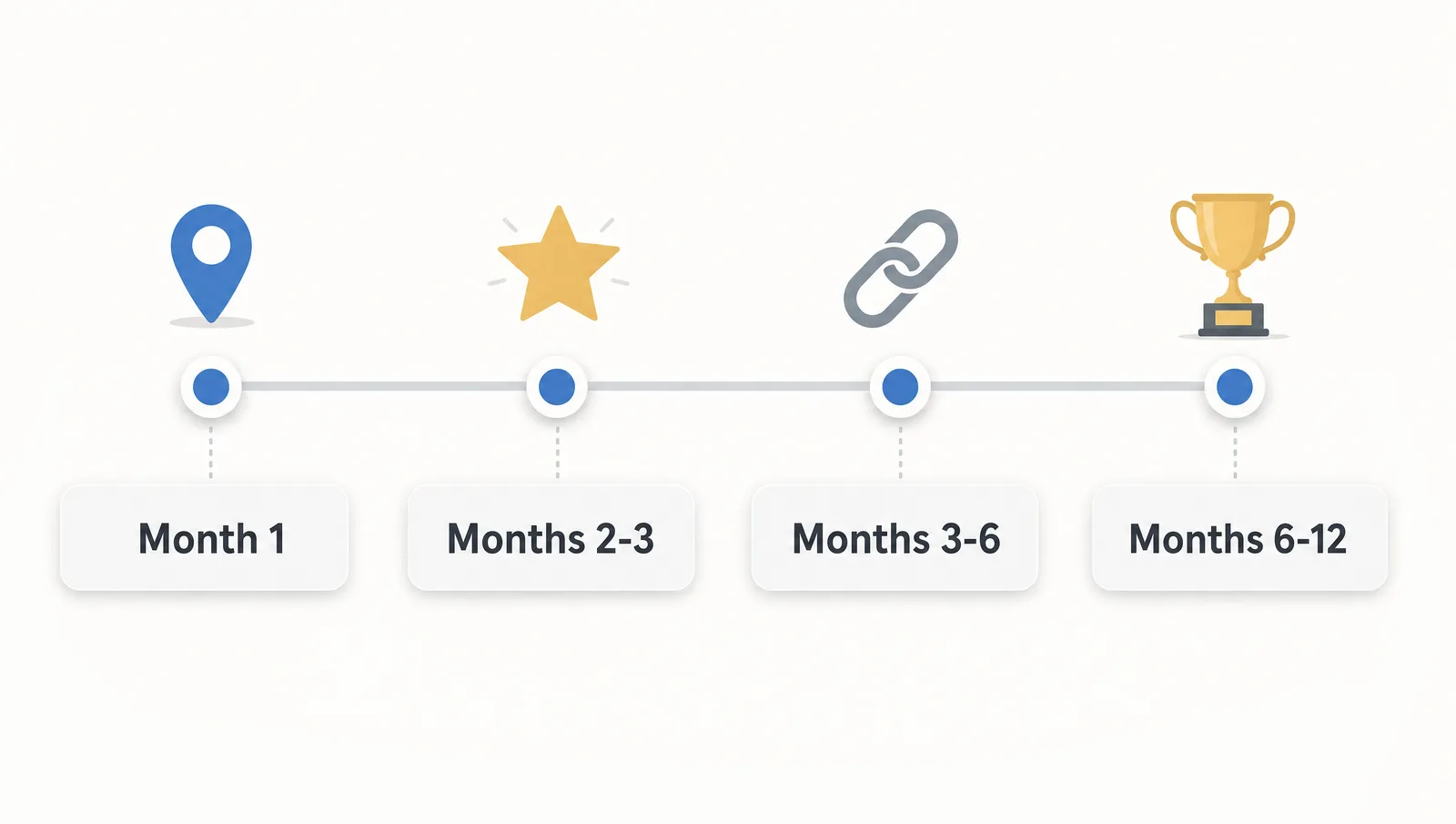
Here is a realistic month-by-month picture, the kind of plan most guides will not give you.
| Timeframe | Focus | What you should see |
|---|---|---|
| Month 1 | Claim and optimize Google Business Profile, fix citations | A complete, accurate listing; small early visibility wins |
| Months 2 to 3 | Reviews cadence, on-page and location pages | More profile views and clicks; first review momentum |
| Months 3 to 6 | Local links, steady reviews, content | First real map pack movement on your core terms |
| Months 6 to 12 | Keep reviews fresh, expand content and links | Stronger, steadier rankings and a real flow of calls |
Now the money question.
| Option | Typical cost | Best for |
|---|---|---|
| Do it yourself | Free, plus your time | Single location, low competition, time to learn |
| Freelancer | Around 75 to 200 US dollars per hour | Specific tasks or a one-time cleanup |
| Small agency retainer | A few hundred to a few thousand per month | Competitive markets, multiple locations, ongoing growth |
So should you do it yourself or hire help? Use this simple test. Do it yourself if you have one location, a calm local market, and a couple of hours a week. Get help if your market is crowded, you run multiple locations, or your weeks are already full and reviews keep slipping.
Many owners do the basics themselves, then bring in help for the ongoing reviews, links, and content. Our pricing page explains how the work is scoped and quoted, so you know what you are deciding between.
12. How to track your local SEO progress
You cannot improve what you do not measure, and local SEO has a few simple numbers worth watching. You do not need a fancy dashboard. Check a handful of signals once a month and you will know exactly whether your work is paying off.
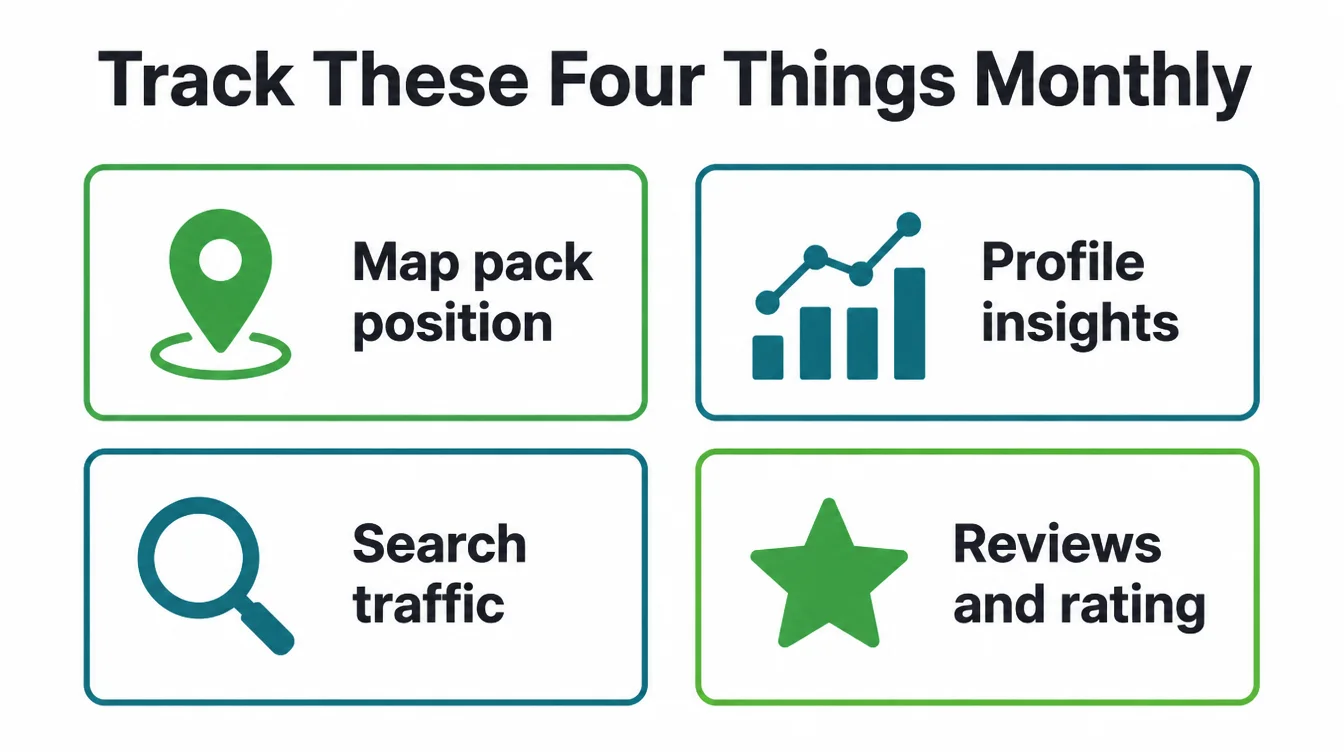
Track these four.
- Your map pack position for your main service-plus-place phrases. Search them in an incognito window, or use a rank tracker that checks from your area.
- Google Business Profile insights. Calls, direction requests, website clicks, and how people found you. These are the actions that turn into customers.
- Website traffic from search, using a free tool like Google Search Console. Watch which local queries bring people in.
- Reviews and rating over time. Count and average star rating, but also recency. Are new reviews still coming in this month?
Therefore, pick one day a month, write the numbers down, and compare. Slow and steady upward is exactly what healthy local SEO looks like. For more practical guides like this one, browse the Seed Light blog.
Frequently asked questions
1. What is the difference between local SEO and regular SEO?
Regular SEO tries to rank a page anywhere for a topic. Local SEO helps a business show up for people searching nearby, especially in the Google map pack and in results that include a location. Local SEO leans heavily on your Google Business Profile, your reviews, and consistent name, address, and phone details, on top of normal on-page work.
2. How long does local SEO take to work?
Plan for three to six months to see real movement, and six to twelve months for stronger, steady rankings. A fresh Google Business Profile and a few citation fixes can show small wins in the first month, but reviews and local links take time to build. Less competitive areas move faster than crowded city markets.
3. How much does local SEO cost for a small business?
Doing it yourself costs nothing but your time. A freelancer usually charges around 75 to 200 US dollars per hour. A small agency retainer typically runs from a few hundred to a few thousand US dollars per month, depending on how competitive your market is and how many locations you have. Many owners start by optimizing their own profile, then hire help for reviews and links.
4. Is local SEO worth it for a small business?
For most local businesses, yes. People search for nearby help constantly, 97% of consumers read reviews before choosing, and a strong map pack listing brings in calls and bookings without paying for every click. If your customers are within driving distance, local SEO is usually the highest-return marketing you can do.
5. Can I do local SEO myself, or should I hire someone?
You can do the basics yourself: claim your Google Business Profile, fill it out fully, fix your citations, and ask happy customers for reviews. Consider hiring help if your market is competitive, you have multiple locations, or you simply do not have time to keep reviews and content fresh every month.
6. Do I need a physical address to do local SEO?
No. Service-area businesses such as coaches, consultants, plumbers, and mobile services can use a Google Business Profile without showing a public address. You hide the address and set the areas you serve instead. You still get reviews, photos, and map visibility; you just will not appear pinned to one storefront.
7. How do online reviews affect local SEO rankings?
Reviews are one of the strongest local ranking signals, estimated at roughly 16 to 20% of map pack weight by Whitespark. Count, star rating, and especially how recent and steady your reviews are all matter. They also drive clicks: 47% of consumers will not use a business with fewer than 20 reviews, and 88% prefer businesses that reply to every review.
8. How do I rank in the Google map pack?
Focus on Google's three factors: relevance, distance, and prominence. Fully optimize your Google Business Profile with the right primary category, complete details, and real photos. Keep your name, address, and phone consistent everywhere, earn fresh reviews on a steady cadence, and build a few local links. Then track your map pack position and keep the profile active.
About the author
Gregory Yeoh is the founder of Seed Light, a small digital agency that has built websites and run marketing, SEO, and automation for small businesses since 2017. He works hands-on with coaches, realtors, and local service businesses, and writes plain-language guides to help owners get found online without the jargon. Want local SEO handled instead of added to your to-do list? Book a free call.