
Key takeaways
- SEO means search engine optimization. It is the work of earning a spot in the free results, not buying one.
- There are three parts. Technical (can Google read your site), on-page (do your pages answer the question), off-page (does anyone vouch for you).
- Local SEO is its own game. For a shop or a service business, the Google Business Profile and the map pack usually matter more than national rankings.
- It is slow, then it compounds. Expect a few months before steady movement, then rankings that keep working without extra spend.
- Nobody can guarantee position one. Guarantees, overnight results and bulk cheap links are the three clearest warning signs.
SEO stands for search engine optimization. In plain words, it is the work you do to make your website show up higher on Google when people search for what you sell.
The goal is simple. When someone types a question or a service into Google, you want your business to be one of the first things they see.
1. What SEO actually means
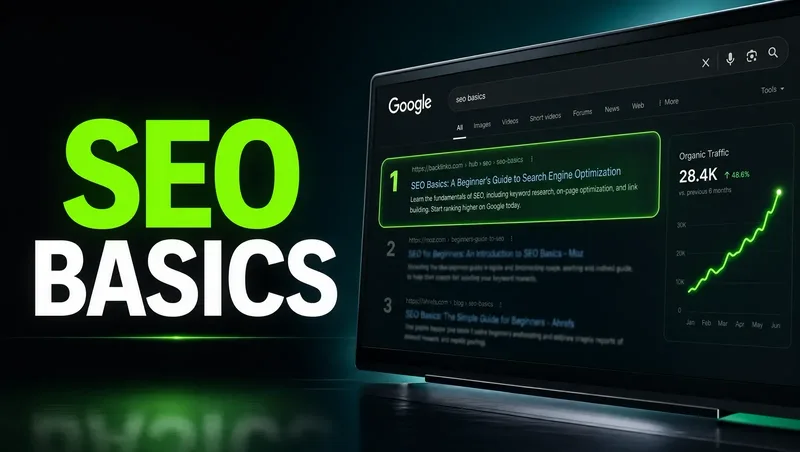
SEO is short for search engine optimization. It is the work of helping search engines like Google understand your website and trust it enough to show it near the top of the results.
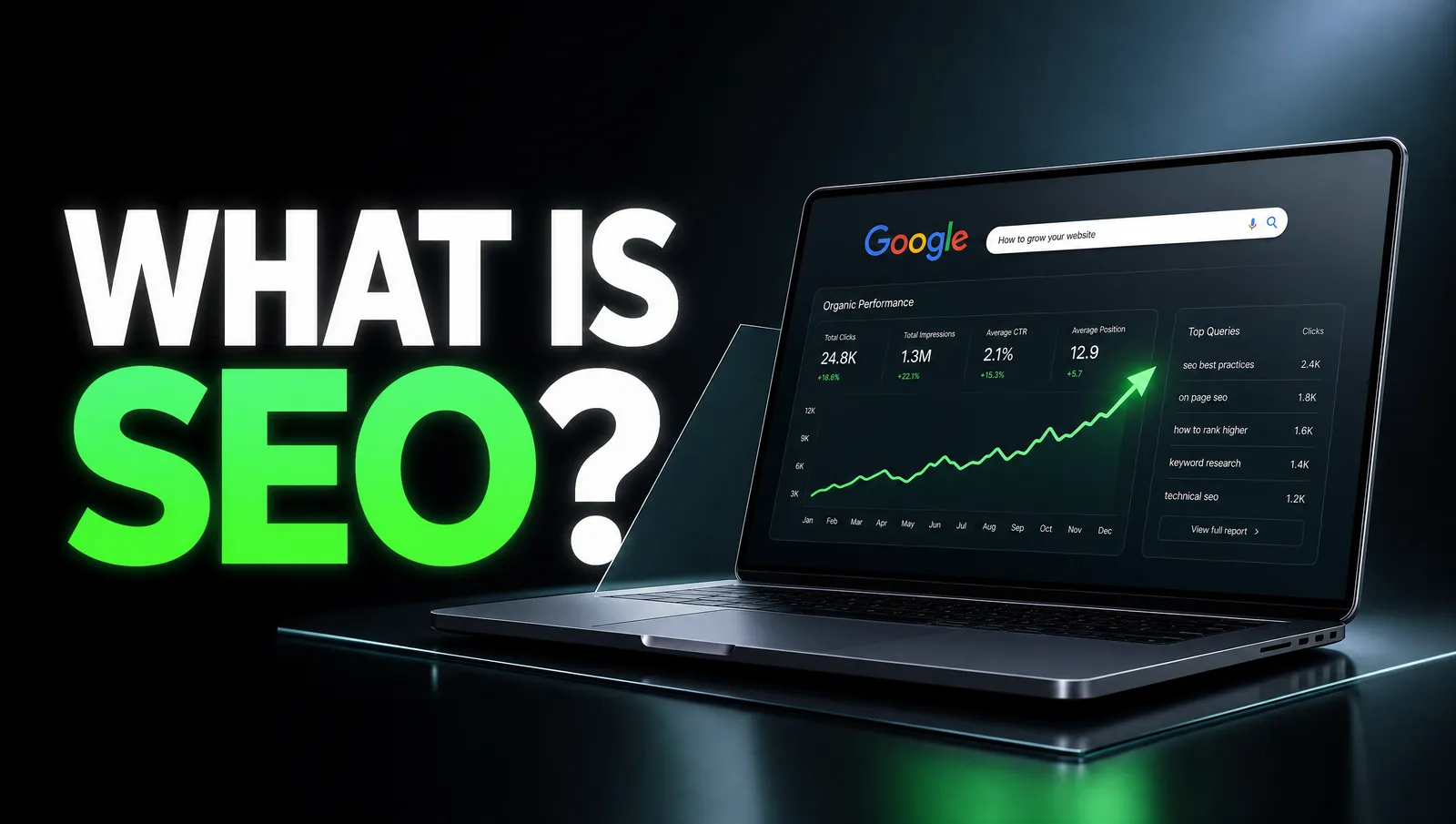
Think of Google as a giant front desk. Every day, people walk up and ask questions. Google's job is to point them to the best answer. SEO is how you make your website one of the answers Google feels safe recommending.
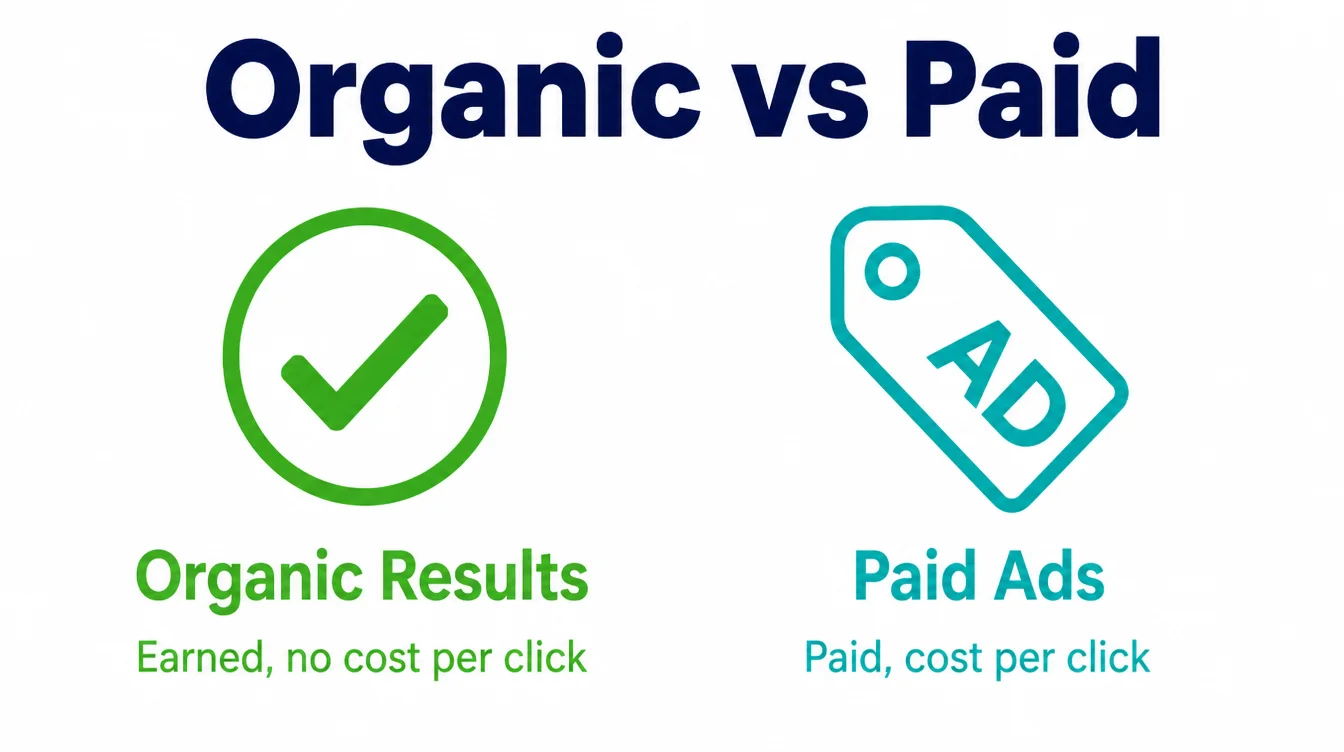
You are not paying Google for these spots. They are called organic results, which just means free listings you earn by being useful and trustworthy. That is the big difference between SEO and ads, and we will get to ads later.
2. Why SEO matters for your business
Most people start with a search. When they need a plumber, a clinic, a lawyer, or a new pair of shoes, they open Google and type. If you are not there, you do not get the call.
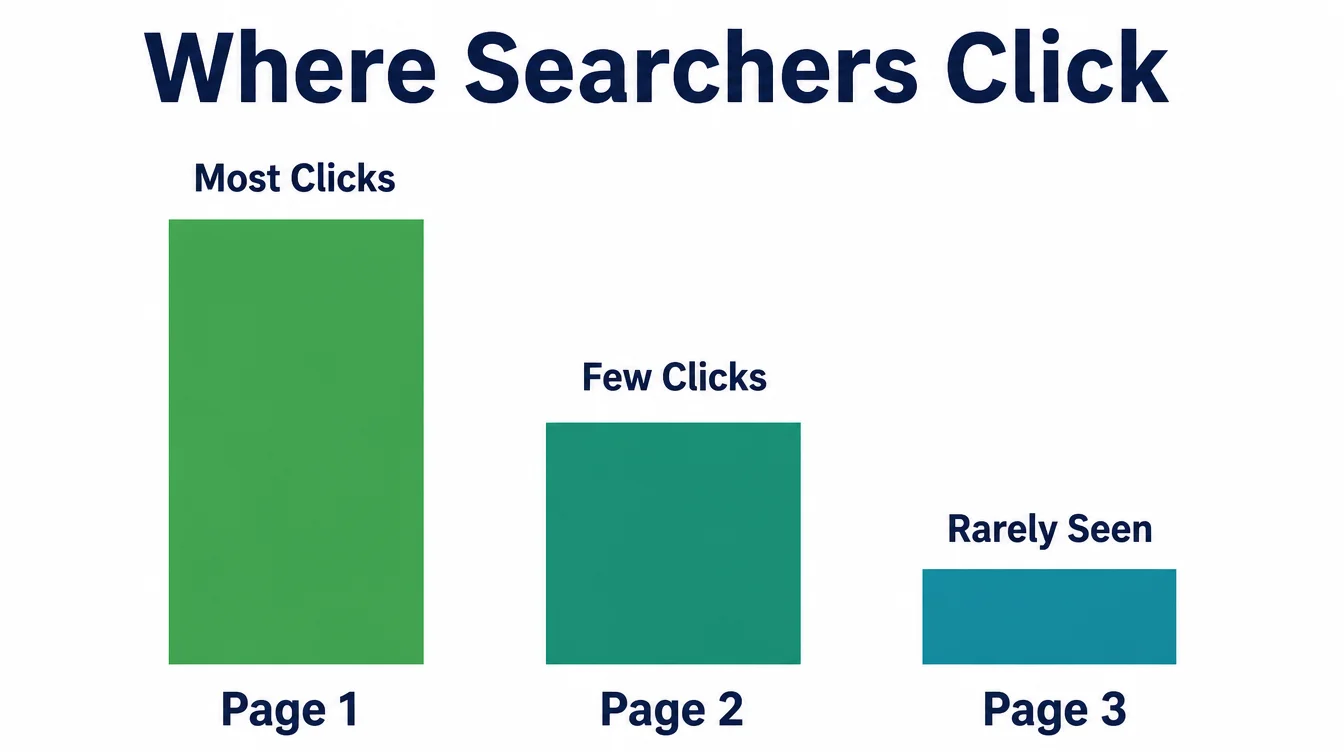
Here is the part that hurts. Most people never go past the first page. Many never go past the first few results. So being on page two of Google is a bit like being in a shop on a street no one walks down.
Search traffic is also high quality. These are people actively looking for what you offer, right now. That makes them far more likely to buy than someone who just stumbled on an ad. Good SEO puts you in front of those people at the exact moment they want help.
3. The 3 parts of SEO, explained simply
SEO sounds complicated, but it really comes down to three jobs. Get all three working together and you have a strong foundation.
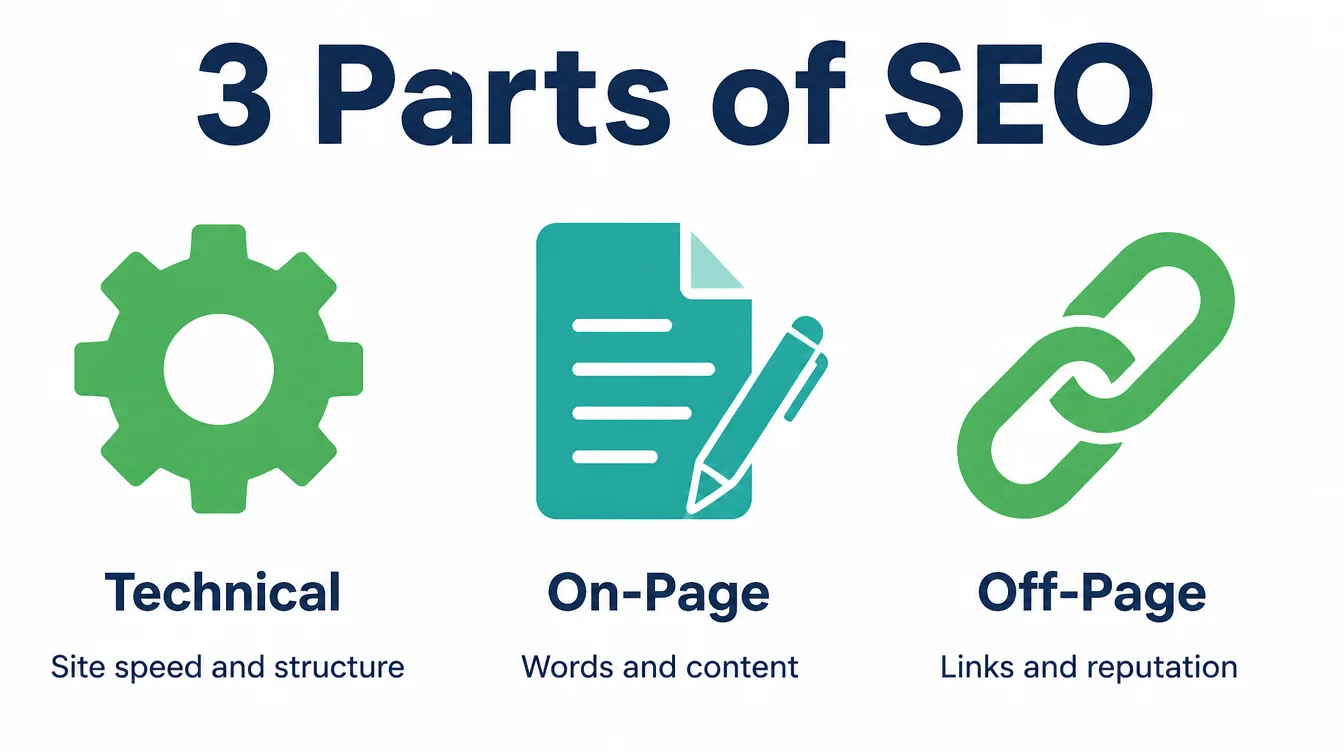
Most agencies and tools talk about technical SEO, on-page SEO, and off-page SEO. Here is what each one means without the jargon.
- Technical SEO is the plumbing. It makes sure your site loads fast, which is what Core Web Vitals measure, works on phones, and is easy for Google to read. If Google cannot crawl your pages, nothing else matters.
- On-page SEO is the content. It is the words on your pages, the headings, and the answers you give. You write clearly about what you do, who you help, and the questions people ask, so Google knows what you are about.
- Off-page SEO is your reputation. It is mostly about links and mentions from other websites. When trusted sites point to you, Google sees you as more credible. Think of each link as a small vote of confidence. Google puts it plainly in its own guide: it "primarily finds pages through links from other pages it already crawled" (Google Search Central).
4. Local SEO and the Google map pack
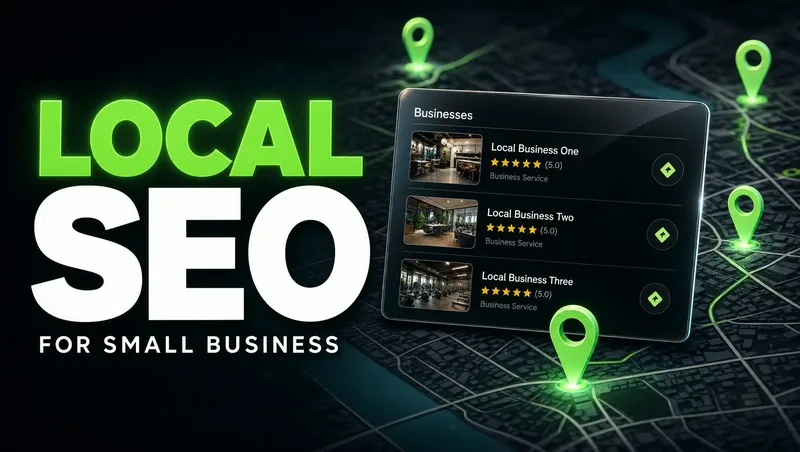
If you serve a town or city, local SEO is your secret weapon. It helps you show up when someone searches for a service near them, like a dentist or a cafe in their area.
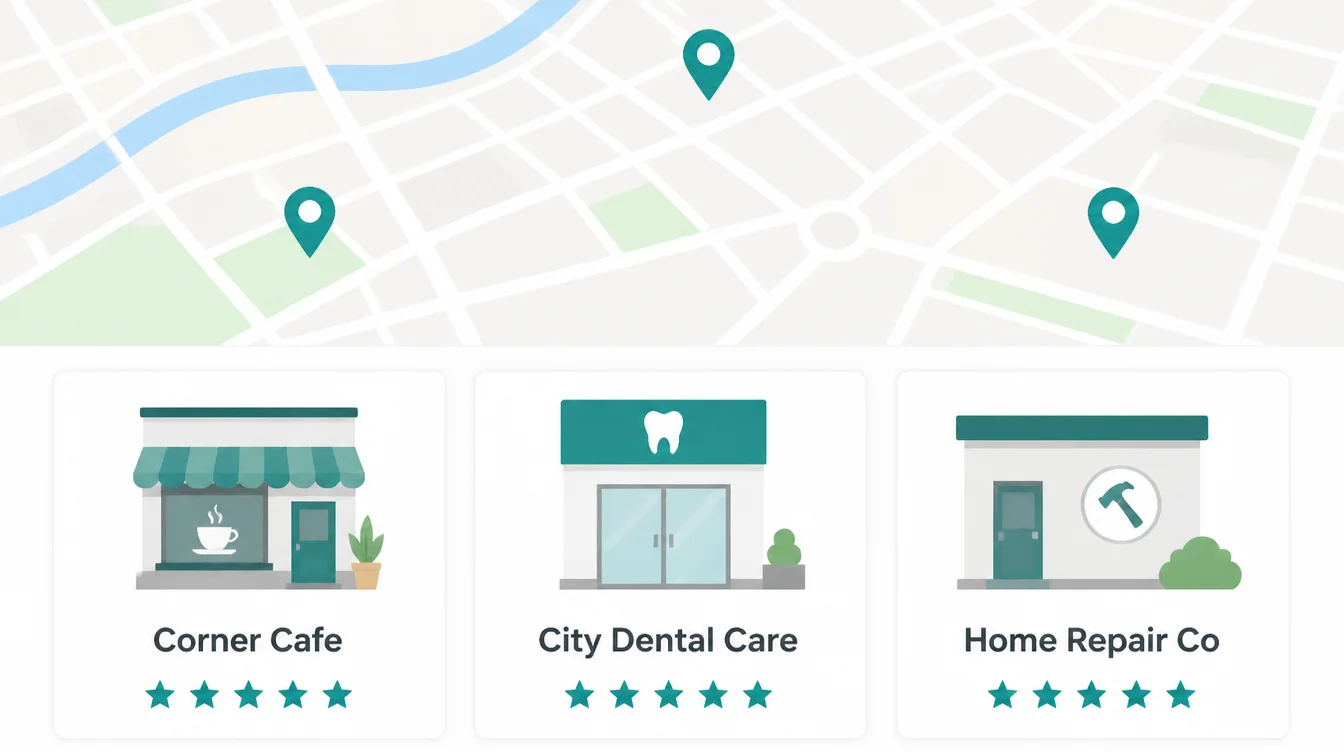
You have seen the map pack even if you did not know the name. It is the box at the top of Google with a map and three business listings, each with stars and reviews. Landing in that box can bring in more calls than anything else.
The big driver of local SEO is your Google Business Profile, the free listing you can claim for your business, and getting that listing into the map pack is the whole job of local SEO.
Google says local results come down to three things: relevance, distance, and prominence, and that "more reviews and positive ratings can help your business's local ranking" (Google Business Profile Help).
So fill the profile out fully, add real photos, keep your name, address, and phone number the same everywhere online, and steadily collect honest reviews. For a local shop or service, this often matters more than ranking for broad national searches.
5. How long SEO takes and why it compounds
Be honest with yourself here. SEO is slow. It is not a switch you flip. You will usually wait a few months before you see steady movement, sometimes longer in tough markets.
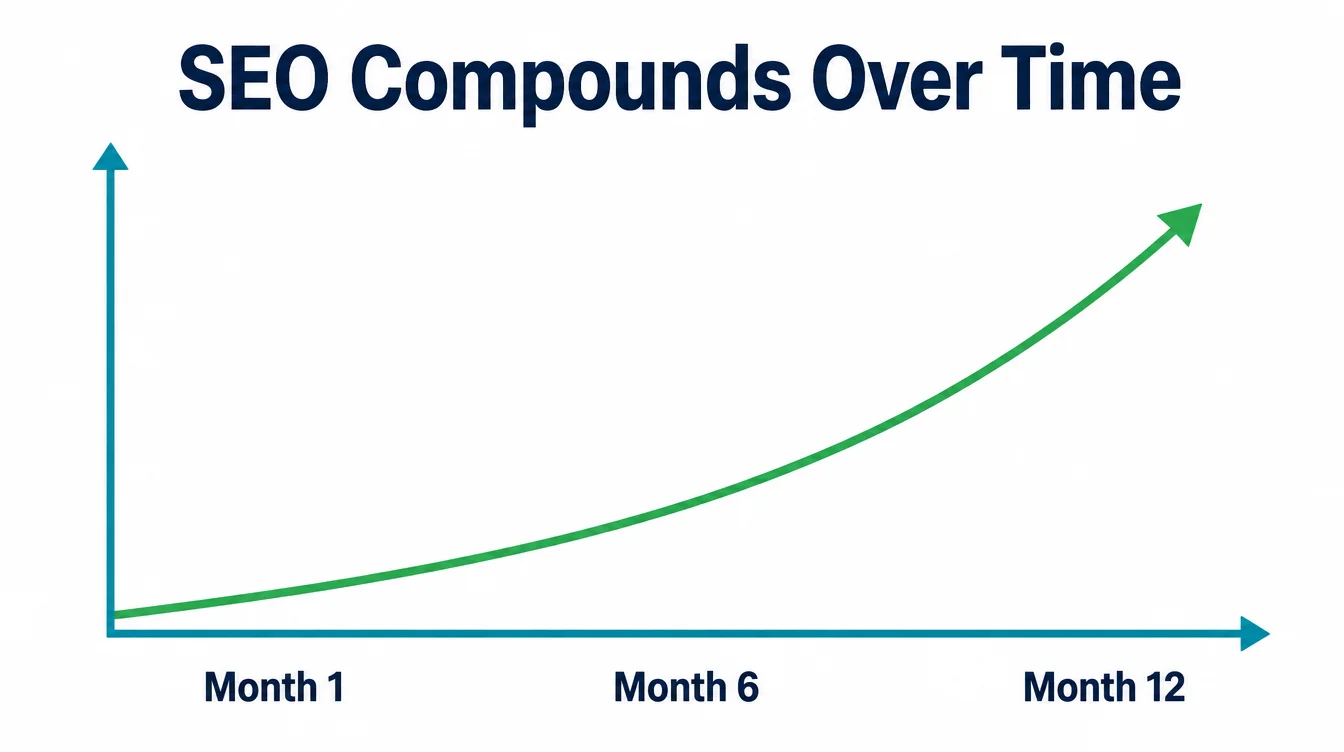
The reason is trust. Google watches how your site behaves over time before it hands you the top spots. New pages need to be found, read, and proven useful.
That takes patience. Google says the same thing about its own index: "Some changes might take effect in a few hours, others could take several months" (Google Search Central).
But here is the upside, and it is a big one. SEO compounds. Unlike ads, which stop the moment you stop paying, the rankings you earn keep working.
A page that climbs to the top can bring in visitors for months or years with little extra effort. The longer you stay at it, the more the results stack up.
6. SEO vs paid ads, and when each makes sense
People often ask if they should do SEO or run ads. The honest answer is that they do different jobs, and most healthy businesses use both.
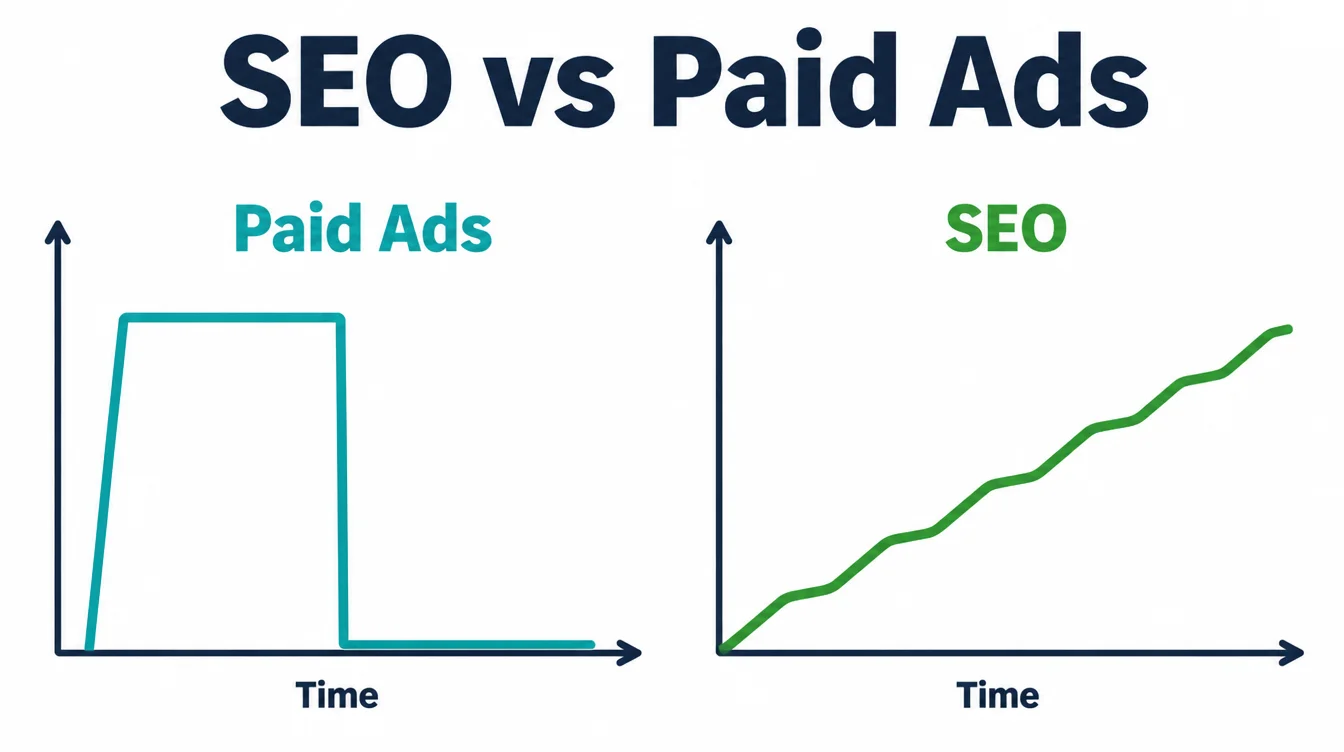
Paid ads are fast. You can be at the top of Google today and turn the tap on or off whenever you like. The catch is that the traffic stops the second you stop paying, and a click can get pricey in busy markets.
SEO is the long game. It is slower to start, but the traffic you earn costs nothing per click and keeps coming. A simple way to decide is below.
- Need leads this week or testing a new offer? Ads make sense.
- Want steady traffic that does not vanish when the budget runs dry? SEO is the play.
- Want the strongest setup? Run ads now for quick wins while you build SEO for the long haul.
We put the two side by side, with the numbers, in our guide to SEO vs Google Ads.
7. Myths and scams to avoid
SEO has a lot of noise around it, and some of it is designed to take your money. Knowing a few red flags will save you a lot of pain.
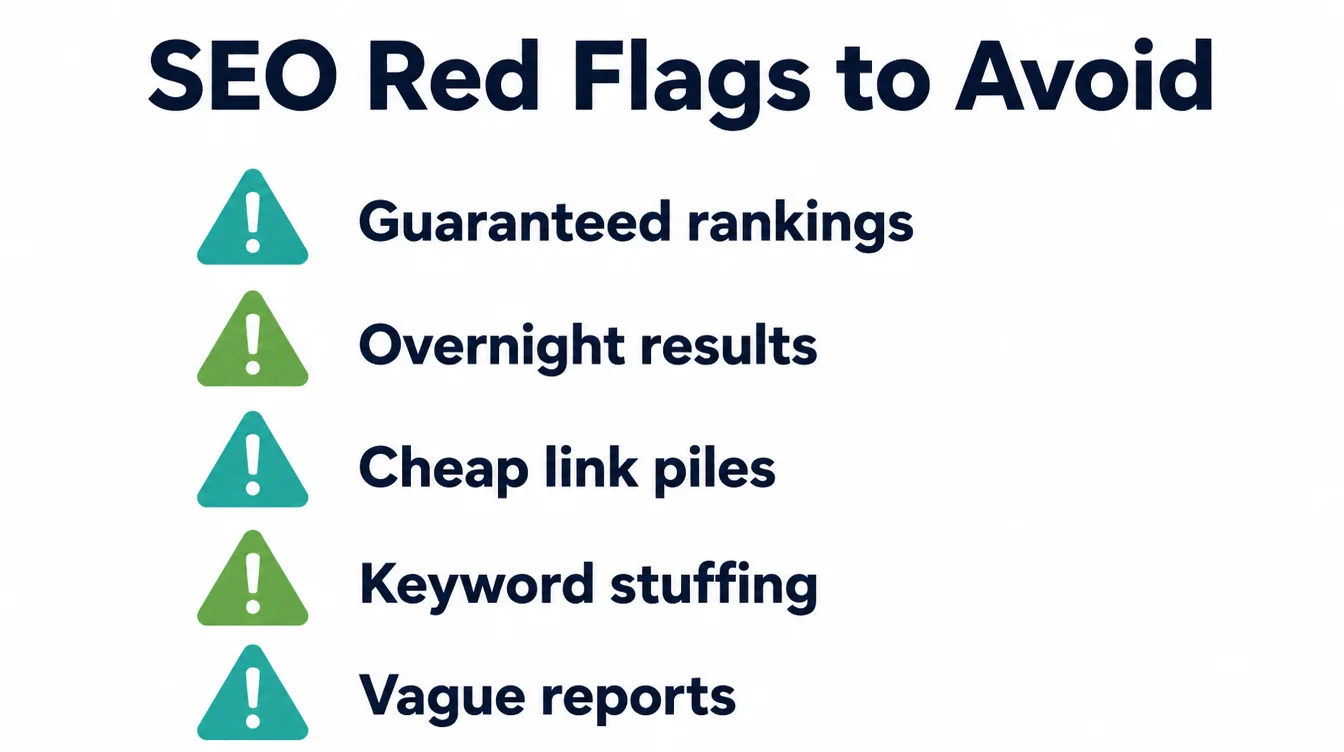
If anything below sounds familiar, slow down and ask more questions before you hand over a single dollar.
- Guaranteed number one rankings. Nobody can promise this. Google states it outright: "No one can guarantee a #1 ranking on Google," and warns you to be wary of anyone claiming a special relationship with Google (Google Search Central).
- Instant results in days. Real SEO takes months. Overnight jumps usually come from risky tricks that get sites punished later.
- Buying piles of cheap links. Spammy links can drag you down, not up. One good link beats a hundred junk ones.
- Stuffing the same keyword everywhere. This reads badly to people and to Google. Write for humans first.
- Vague monthly reports with no real numbers. You deserve to see what was done and what it changed.
8. How to start and when to get help
You do not need to do everything at once. Start with the basics that change the most, then build from there.
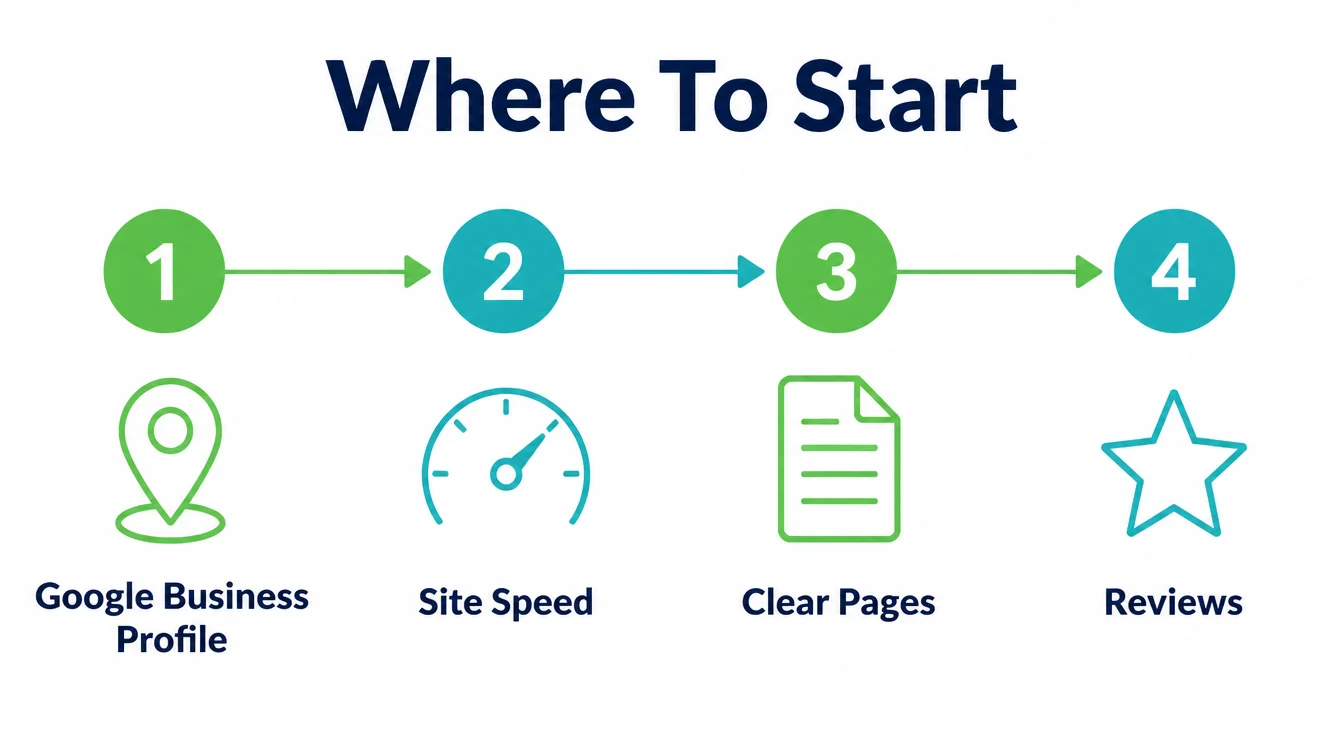
A simple first list looks like this. Claim and fill out your Google Business Profile. Make sure your site loads fast and works on phones. Write clear pages about each thing you offer and the questions customers actually ask.
Ask happy customers for reviews. Those steps alone put you ahead of most small businesses. If you want the full walkthrough, our SEO basics guide for small businesses covers each step in more detail.
So when should you hire help? If you have tried the basics and feel stuck, if your market is crowded, or if you simply do not have the hours, that is the point where a good partner earns their keep. The key word is good. Look for clear reporting, honest timelines, and no wild promises.
If you would like a second pair of eyes, our SEO service is built around plain talk and real numbers, with no jargon and no guarantees we cannot keep. Whenever you are ready, we are happy to take a look and point you in the right direction.
Frequently asked questions
1. What does SEO stand for?
SEO stands for search engine optimization. It is the work of helping search engines like Google understand your website and trust it enough to show it near the top of the results. You are not paying Google for these spots. They are organic results, which means free listings you earn by being useful and trustworthy.
2. How long does SEO take to show results?
SEO usually takes a few months before you see steady movement, sometimes longer in tough markets. Google watches how your site behaves over time before it hands you the top spots. The upside is that SEO compounds. A page that climbs to the top can keep bringing in visitors for months or years with little extra effort.
3. What is the difference between SEO and paid ads?
Paid ads are fast. You can be at the top of Google today, but the traffic stops the second you stop paying. SEO is slower to start, but the visitors you earn cost nothing per click and keep coming. Most healthy businesses use both, with ads covering quick wins while SEO builds steady traffic for the long haul.
4. What is local SEO?
Local SEO helps your business show up when someone searches for a service near them, like a dentist or a cafe in their area. The biggest driver is your Google Business Profile, the free listing you can claim for your business. Fill it out fully, keep your details the same everywhere online, and collect honest reviews.