

Key takeaways
- A CMS is software that lets you add and change your website's words, photos, and pages without code.
- About 70% of all websites run on a CMS, per W3Techs. The other 30% are hand-coded or static.
- WordPress is the leader, powering 41.5% of all websites and 59.3% of sites with a known CMS.
- Most small businesses need one, so you can edit prices, hours, and posts yourself instead of paying for every tweak.
- The catch is upkeep. A CMS needs regular updates to stay fast and safe, especially its add-ons.
1. What is a content management system?
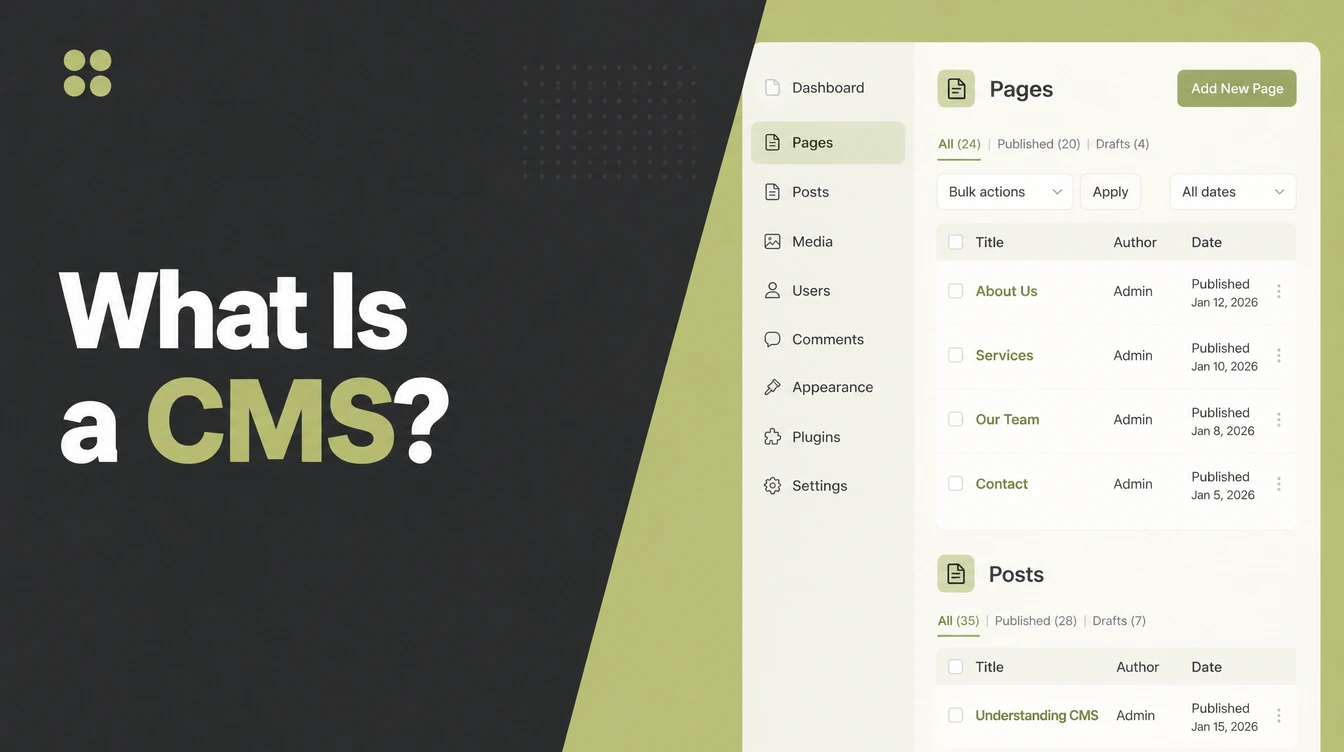
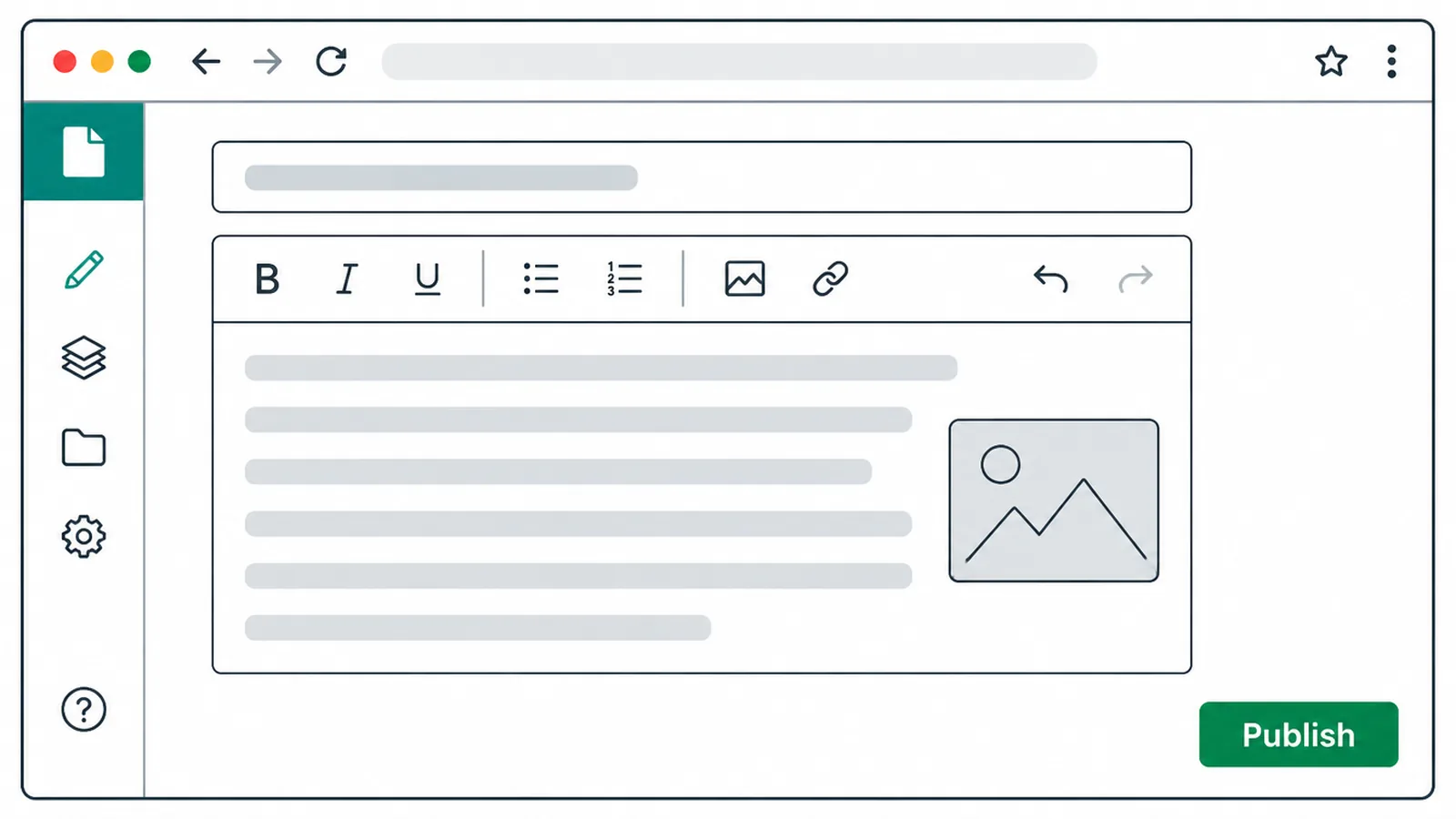
A content management system (CMS) is software that lets you add and change your website's words, photos, and pages without writing code. You log in, type into a simple editor, click publish, and the change shows up on your live site. Think of it as a word processor for your whole website.
This is why a CMS is so common. About 70% of all websites run on a CMS, according to W3Techs. Only about 30% are built by hand or run as plain static files. So if you own a website, the odds are good that a CMS is already doing the heavy lifting behind it.
Before a CMS existed, changing one line of text meant opening code files and uploading them to a server. One typo could break the page. A CMS removes all of that. You get a friendly screen, you make your edit, and the system handles the technical part for you.
2. How does a CMS work?
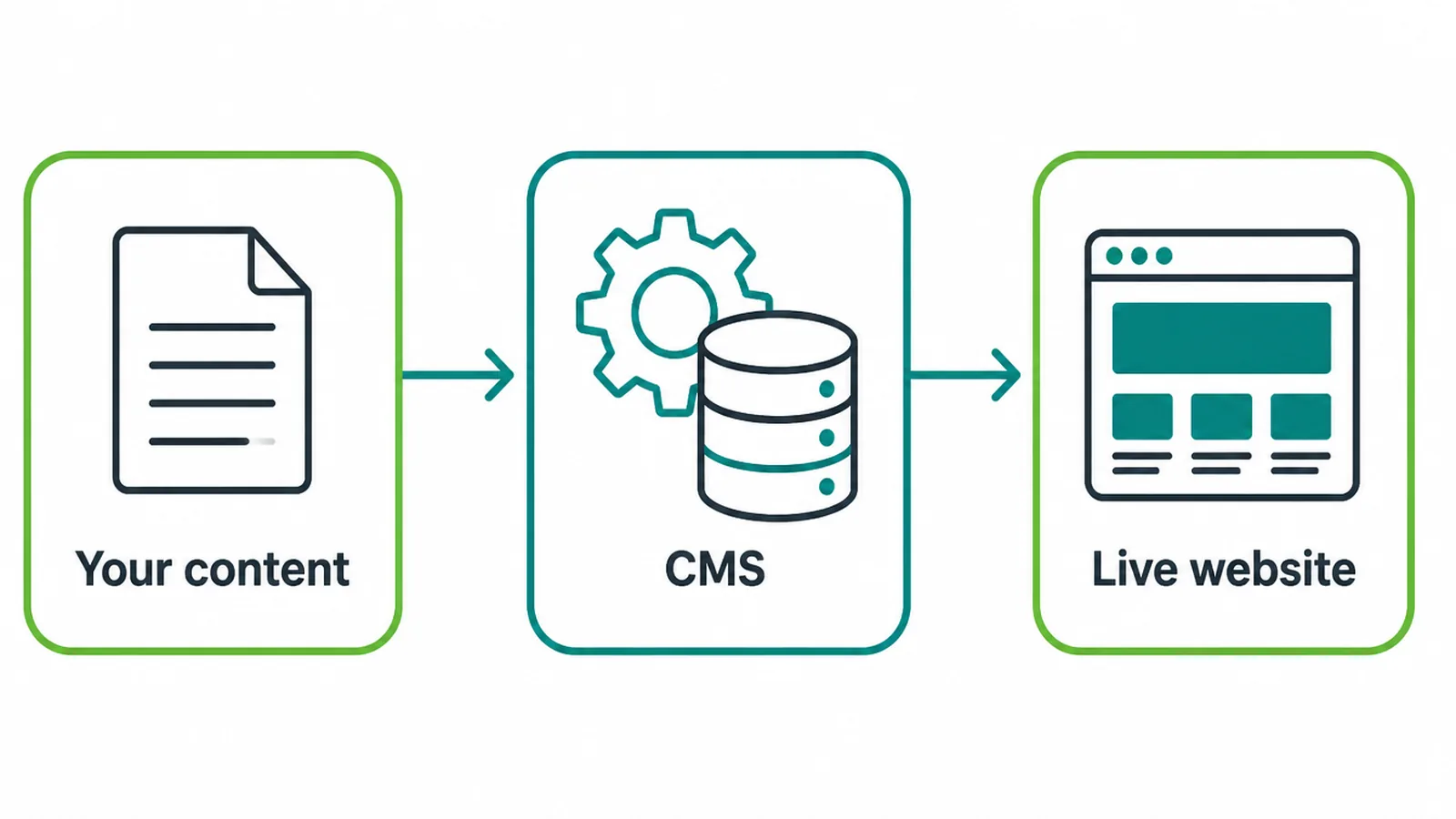
A CMS has two sides. There is a back office where you do the work, and a front desk that your visitors see. You never touch the front desk directly. You just feed the back office, and the CMS builds the public pages for you.
In the back office, you write a draft, add images, and preview how it will look. When you are happy, you hit publish.
The CMS saves your content in a database, then assembles the live page on demand. Your visitor types your web address and the CMS serves them a finished page, pulled from the content you stored.
This split is the whole trick. You only learn one simple editing screen, while the system manages templates, layout, and the code underneath. Here is how the two sides compare.
| Back office (you) | Front desk (visitors) |
|---|---|
| Private login screen | Public web pages |
| Type words and add photos | Read finished, styled pages |
| Save drafts and preview changes | See only published content |
| Click publish to go live | Visit your web address |
| No code required | Never sees the editor |
3. Real CMS examples you have heard of
Most well-known site tools are a CMS or include one. The biggest by far is WordPress. It powers 41.5% of all websites and holds 59.3% of the market among sites built on a known CMS, per W3Techs.
It runs blogs, brochure sites, and online stores. If you want a deeper look at how it stacks up, see our guide on Wix versus WordPress.
Other names you will recognise:
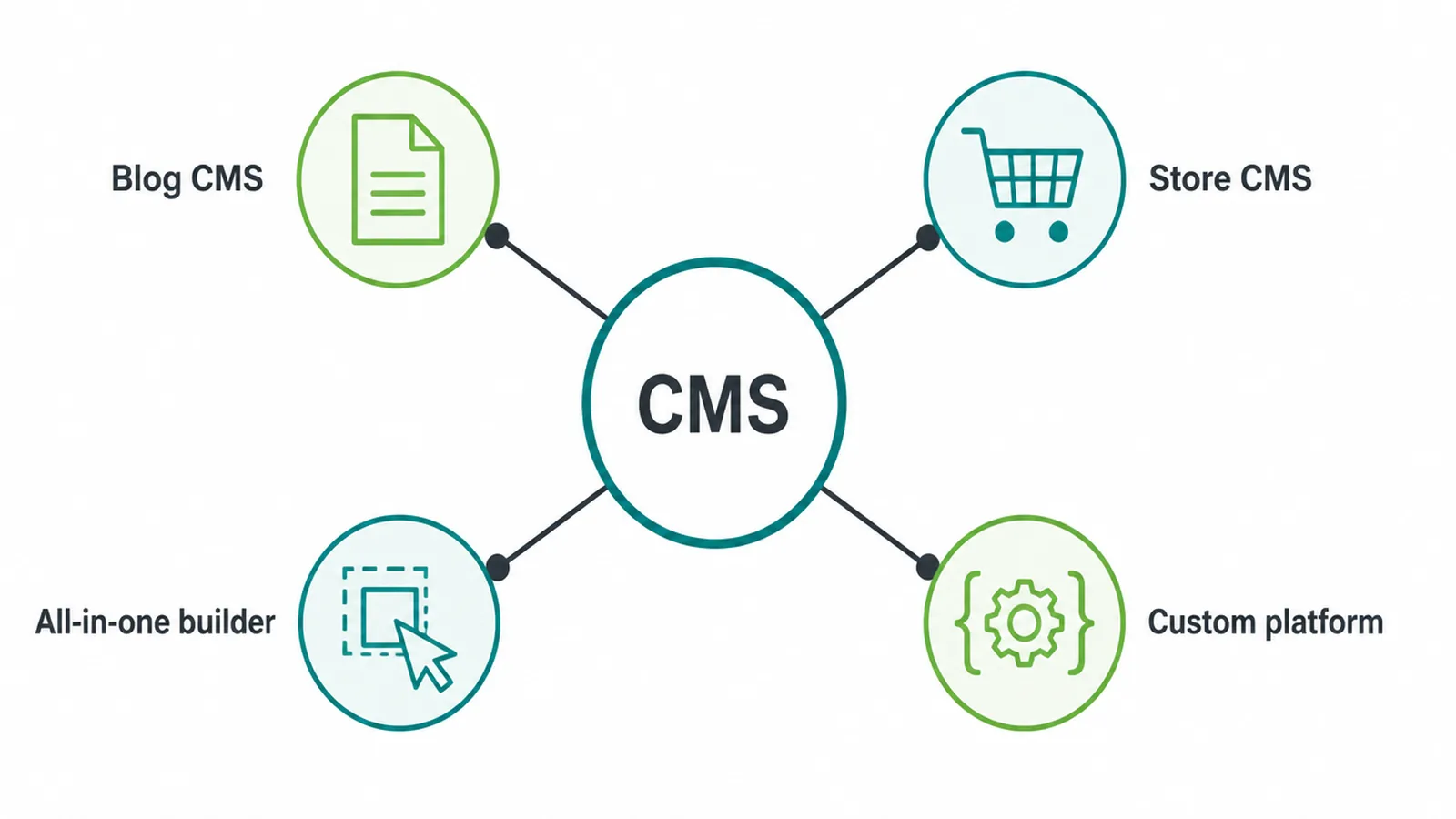
- Shopify is built for online stores. It runs about 5.2% of all sites and handles products, carts, and checkout out of the box.
- Wix (around 4.3%) and Squarespace (around 2.5%) are the simplest. They bundle design, hosting, and editing into one drag-and-drop tool.
- Drupal and Joomla are older, more technical systems used for bigger, custom projects.
There is also a newer class of tools that separate the editor from the front end. If you are weighing one of those, our comparison of WordPress versus Webflow is a good next read.
4. CMS vs website builder vs static site
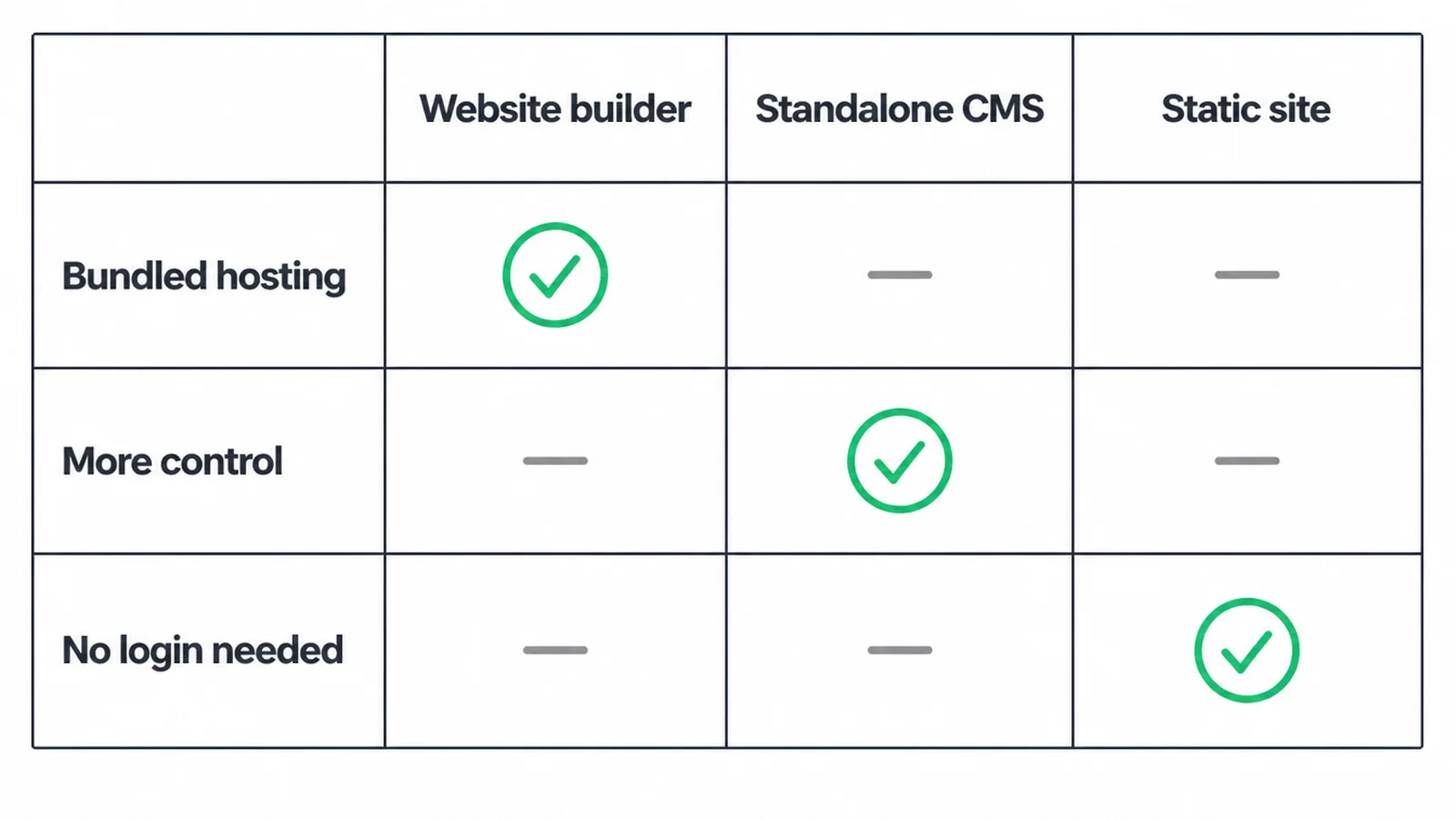
These three terms get mixed up a lot, so let us keep it simple. A website builder like Wix is really a CMS bundled with hosting and design in one box. It is the easiest way to start, but you trade some control and freedom for that simplicity.
A standalone CMS like WordPress gives you more control and more room to grow. You can change almost anything and add features as you go. The cost is that you handle hosting and updates yourself, or pay someone to do it.
A static site has no CMS at all. The pages are pre-built files that just sit and load fast. There is nothing to log into and nothing to update, which is great for a tiny site that rarely changes. We cover when that makes sense in our guide to the static website.
There is one more flavour worth a mention: a setup that keeps your editor and your public site in separate boxes that talk over the internet. That approach has real upsides and real trade-offs for a small business, and we break it down fully in our piece on the headless CMS.
5. Do you need a CMS?
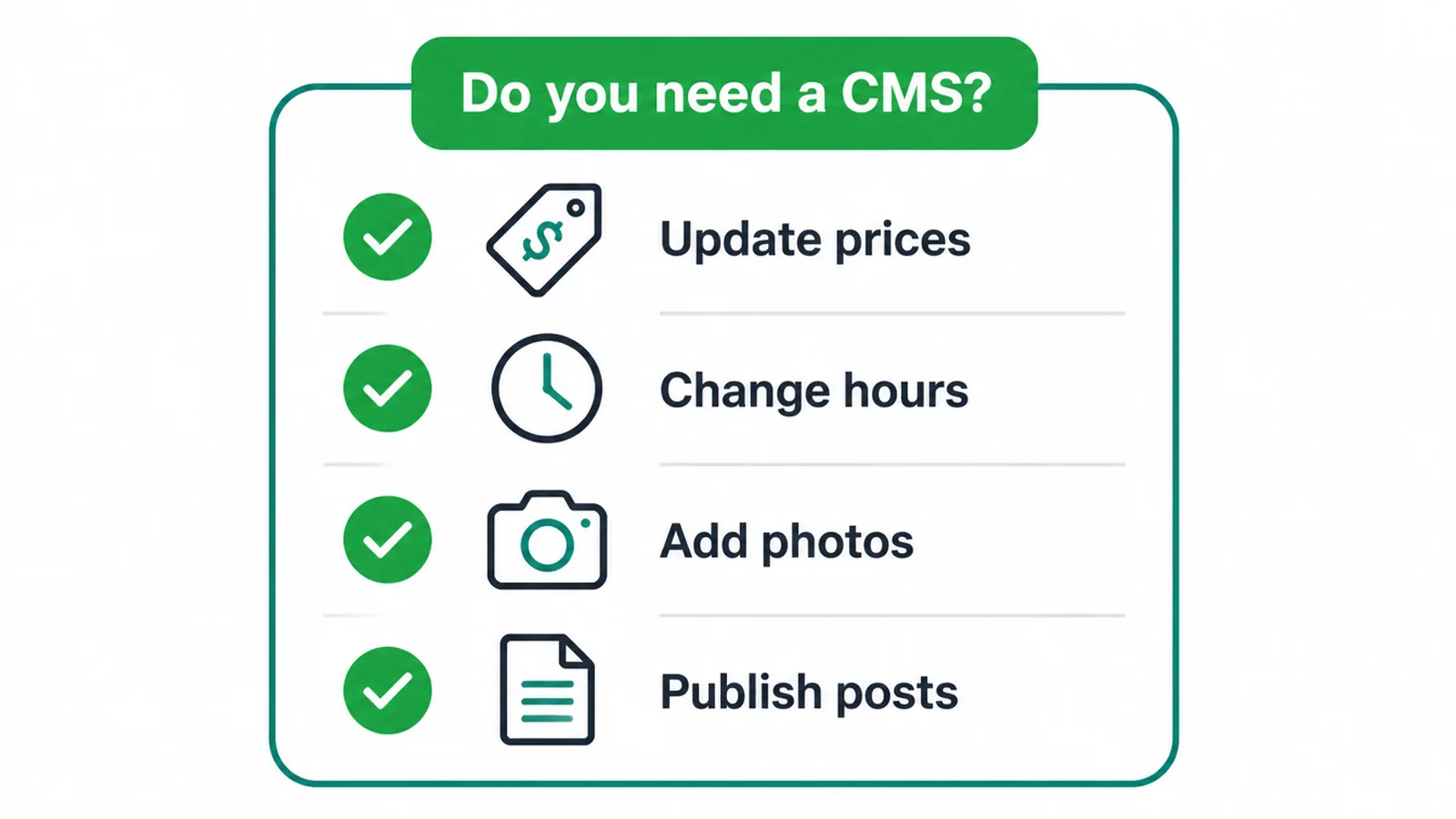
For most small businesses, yes. A CMS pays off the moment you want to change something yourself. New prices, new opening hours, a fresh photo, a blog post: with a CMS you log in and do it in minutes. Without one, every small tweak means waiting on a developer.
That control matters more than people expect. A website that never gets updated slowly goes stale, and stale sites lose trust and traffic.
Being able to keep your own content fresh is one of the quiet reasons a CMS-backed site tends to win. It is also part of building a strong small business website that grows with you.
The one real exception is a tiny one-page site that almost never changes. A single contact page for a one-person trade, for example, may not need a CMS at all.
A simple static page can do the job and load very fast. But the second you plan to add pages, sell products, or publish regularly, a CMS earns its keep.
6. The catch: a CMS needs upkeep
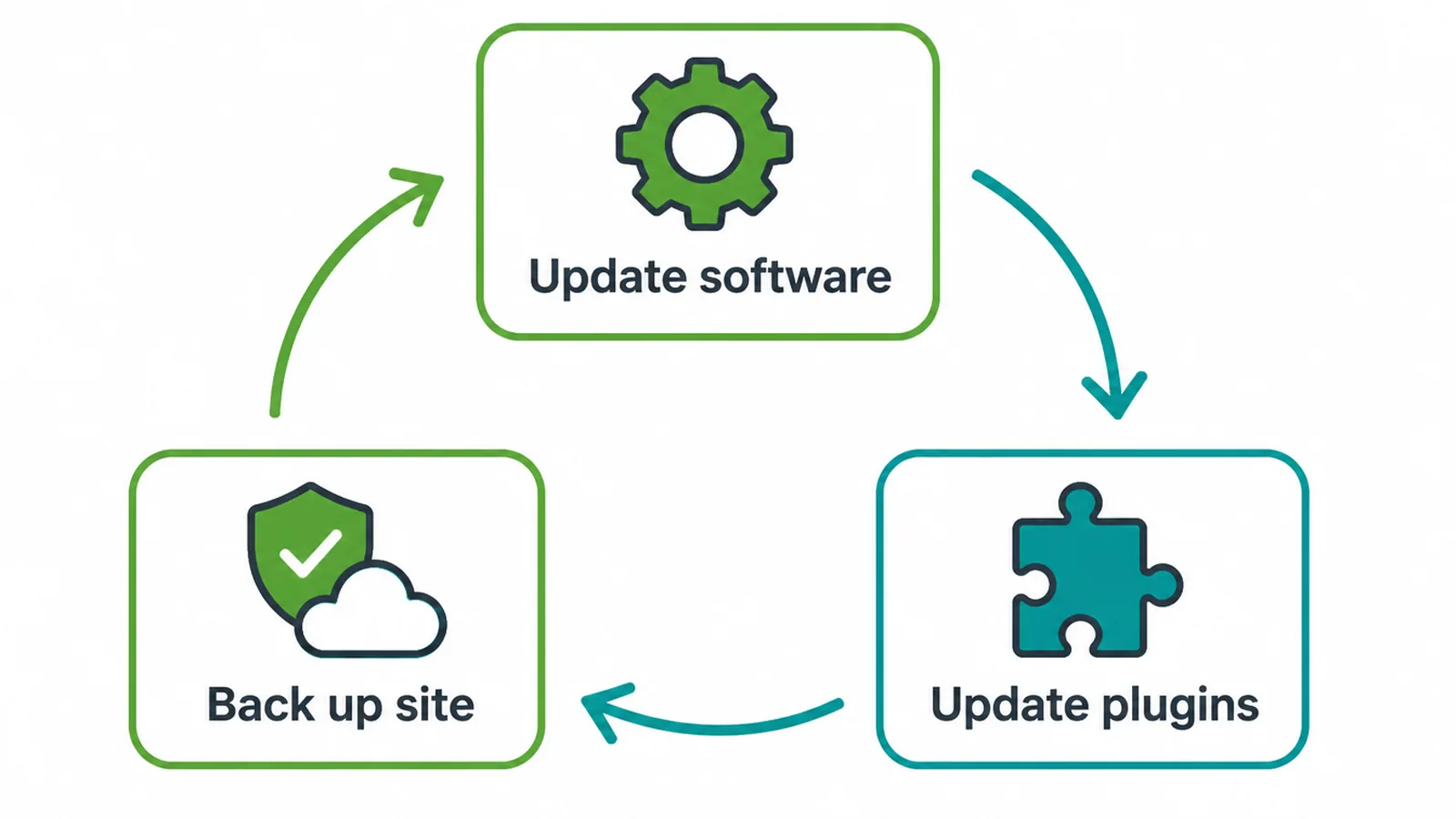
A CMS is powerful, but it is not set-and-forget. The software, and especially its add-ons, need regular updates to stay safe and fast. Skipping updates is the most common way a small business site gets hacked or slows to a crawl.
The numbers make the point. In 2024 there were 7,966 new WordPress vulnerabilities reported, and 96% of them were in plugins, not the core software, per Patchstack via SecurityWeek.
The trend kept climbing: 11,334 new vulnerabilities appeared in 2025, a 42% jump, with 91% in plugins. So the platform itself is rarely the weak spot. The add-ons you bolt on are.
The lesson is simple. Use fewer, trusted add-ons. Keep everything updated. Back up your site. If that sounds like a chore, it can be handed off.
Our web design and development team keeps client sites patched and monitored, and our web design work builds the foundation right from day one. If you want help choosing the right setup, get in touch and we will point you the right way.
Frequently asked questions
1. What is a CMS in simple terms?
A CMS is software that lets you add and change your website's words, photos, and pages without writing code. You type in a simple editor, click publish, and the change goes live. Think of it as a word processor for your whole website.
2. How does a CMS work?
A CMS has two sides. The back office is where you log in, type your content, and hit publish. The front desk is the live website your visitors see. The CMS stores your content in a database and builds the public pages for you, so you never touch the code.
3. What are some examples of a CMS?
The most popular CMS is WordPress, which powers 41.5% of all websites. Other common ones are Shopify for online stores, Wix and Squarespace for simple all-in-one sites, and Drupal and Joomla for bigger custom projects.
4. Is WordPress a CMS?
Yes. WordPress is the most widely used CMS in the world. It runs 41.5% of all websites and holds 59.3% of the market among sites built on a known CMS. You can use it for a blog, a brochure site, or a full online store.
5. Do I need a CMS for my website?
Most small businesses do. A CMS lets you update prices, hours, photos, and posts yourself without paying someone every time. The exception is a tiny one-page site that almost never changes, where a simple static page can work fine.
6. What is the difference between a CMS and a website builder?
A website builder like Wix or Squarespace is a CMS bundled with hosting and design tools in one easy package. A standalone CMS like WordPress gives you more control and freedom but asks you to handle hosting and updates. Builders trade some control for simplicity.
7. Is a CMS free?
Some are. The WordPress software is free to download, but you still pay for hosting and a domain. Builders like Wix and Squarespace charge a regular subscription that bundles everything together. There is no truly zero-cost option once you add hosting.
8. What is the easiest CMS for a beginner?
Wix and Squarespace are the easiest to start with because they bundle hosting, design, and editing into one tool with drag-and-drop. WordPress is more flexible but has a steeper learning curve. Pick based on how much control you want versus how fast you want to launch.