
Key takeaways
- Start with the search, not the page. Find the phrases customers type, then write the page that answers them.
- Position is worth chasing. The top three organic results take 54.4% of all clicks, so the gap between position two and position eight is the whole game.
- Local SEO is the fastest win. A complete Google Business Profile, the same details everywhere, and a steady trickle of reviews.
- Four technical basics matter. Speed, mobile, HTTPS and a submitted sitemap. The rest can wait.
- Plan for three to six months. Ahrefs' poll of 3,680 professionals says so, and the work compounds after that.
SEO is how you get found on Google without paying for each click. For a small business the basics are short: find the searches your customers make, give each one a page that answers it, claim your Google Business Profile, and fix four technical things.
That is the whole beginner list, and this guide works through it in the order that pays off fastest.
Every step below can be done by an owner with free tools. Nothing here needs a budget, only a few hours.
1. Why the basics are worth the hours
Search traffic is people who are already looking for what you sell, which is why it converts better than almost anything else you can buy. The value sits at the top though.
Backlinko's analysis of roughly four million search results found the first organic result averages a 27.6% click-through rate, and the top three take 54.4% of all clicks (Backlinko, 2025).
The other side of that coin is unforgiving. Ahrefs studied around 14 billion pages and found 96.55% of them get zero traffic from Google (Ahrefs, 2023). Publishing is not the job. Being the best answer for a specific search is the job.
For a local business the case is stronger still. A 2025 BrightLocal consumer study found Google Search is the first stop for 45% of people looking for a local business, with map apps the default for another 20% (Search Engine Journal, 2025).
2. Step 1: find the searches, then build the page
Keyword research sounds technical. It is just writing down what a customer would type, then checking whether anyone types it.
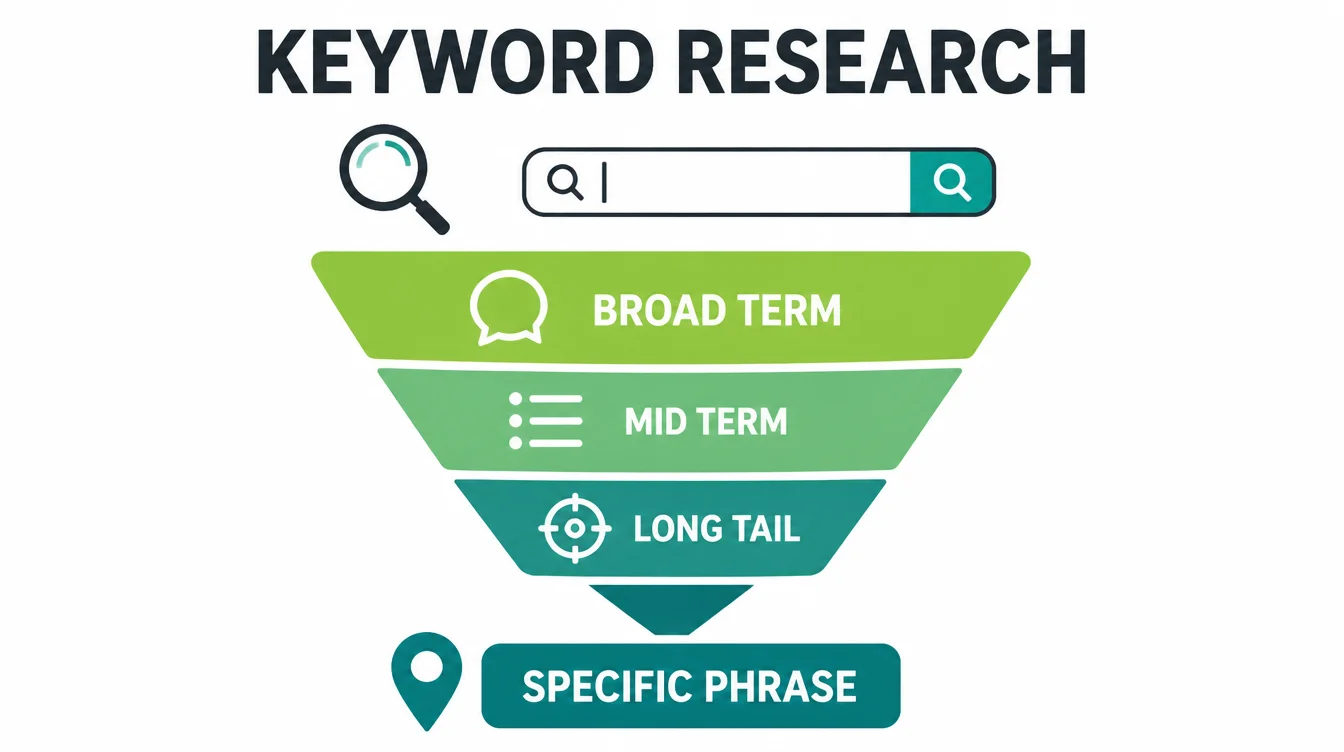
List every service you sell, in the words a customer would use rather than the words on your invoice. Then check the volumes with Google Keyword Planner and see what else people ask with AnswerThePublic.
Go for the long phrases early. "Air conditioner service" is a war you will lose for a year. "Aircon servicing in George Town" is a search you can win this quarter, and the person typing it is closer to buying. Our guide to keyword research walks through the whole process.
One rule keeps this simple: one search intent, one page. If two pages target the same phrase, they compete with each other and Google picks the weaker one.
3. Step 2: the on-page work
On-page SEO is what you control completely. It is also where most beginner gains live.
Title and description
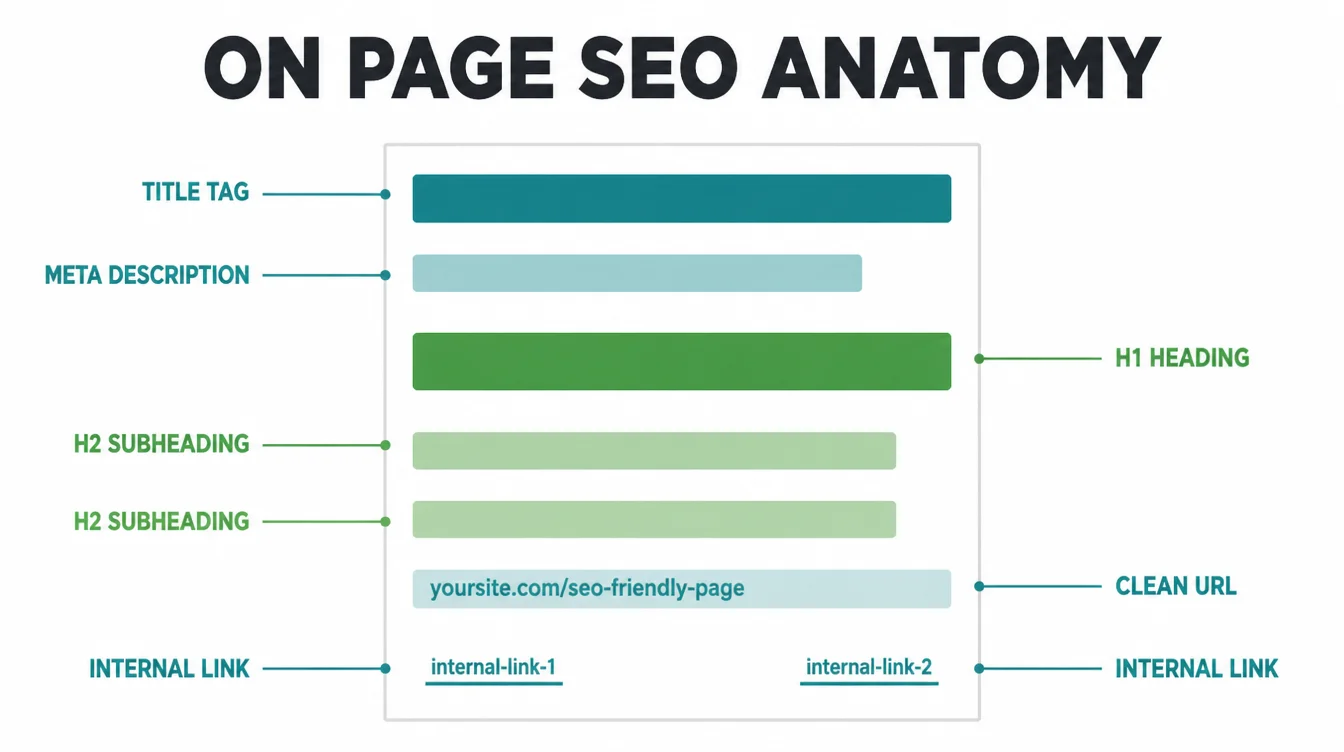
The title is the clickable line in the results. Put the search phrase near the front, keep it around 60 characters, and make it obvious what the page is. The description underneath decides whether people click, so write it as an advert. Our guide to writing meta descriptions has examples.
Headings and structure
One H1 per page, saying what the page is about. H2s for the sections underneath, in the order someone would ask about them. This helps readers skim, and it helps AI answers lift the right passage, which increasingly matters as much as ranking.
The first paragraph
Answer the question in the first two sentences, plainly and completely, before any preamble. That paragraph is what a search result or an AI answer will quote.
URLs and internal links
Keep addresses short and readable. Then link related pages to each other with descriptive text, so both readers and Google can see how your pages connect. Our on-page SEO checklist covers each element in detail.
4. Step 3: local SEO, the fastest win available
If your customers are nearby, this is where to start. The map pack, the box of three businesses at the top of a local search, often brings more calls than the rest of your rankings put together.
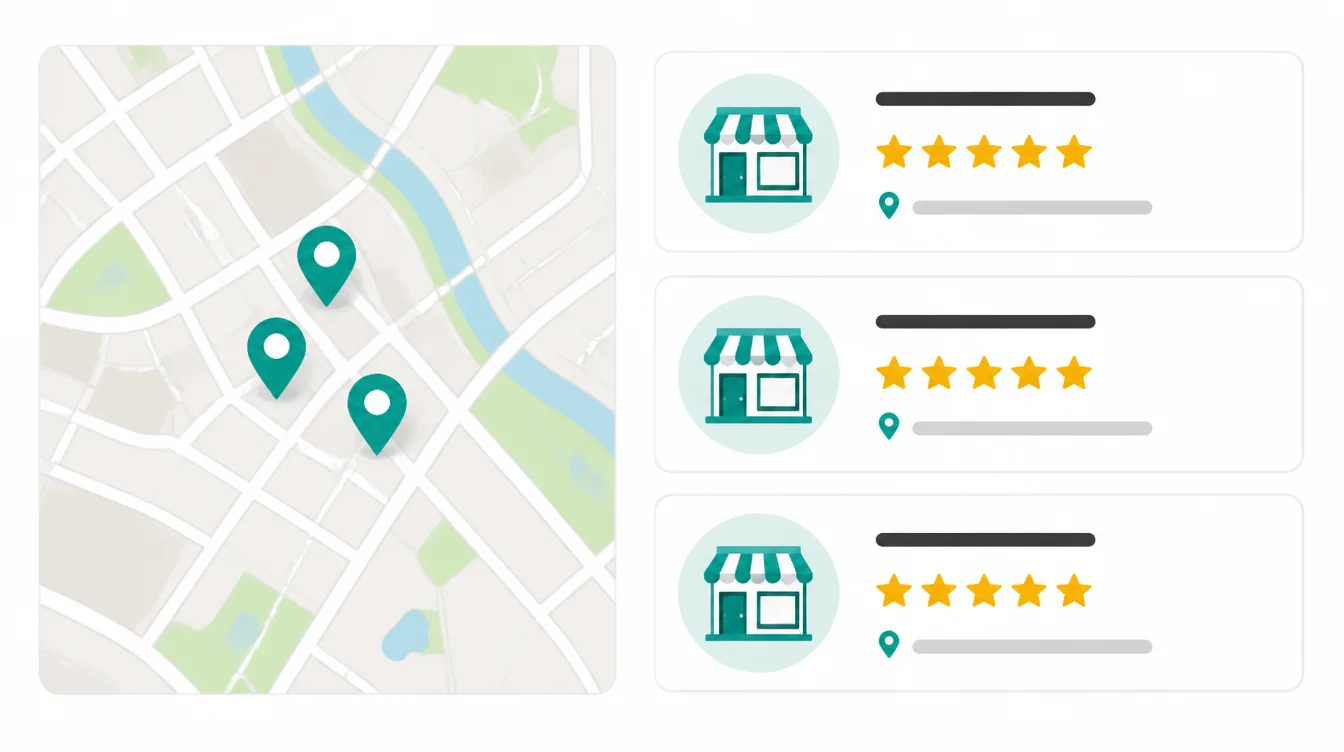
Google names relevance, distance and prominence as the three things behind local results, and states that "more reviews and positive ratings can help your business's local ranking" (Google Business Profile Help). Distance you cannot change. The other two you can.
- Claim the profile and complete every field, including categories, hours, services and real photos.
- Keep your name, address and phone number identical everywhere online. Inconsistent details are the most common local fault.
- Ask happy customers for reviews, steadily rather than in bursts, and reply to each one.
- Give each area you serve a page that says something real about serving that area.
Work through our Google Business Profile checklist first, then the wider local SEO checklist. If you would rather hand it over, that is what our local SEO service does.
5. Step 4: content that answers real questions
Content is how you rank for everything beyond your service pages. The rule is boring and reliable: write the answer to a question a customer actually asked you this month.
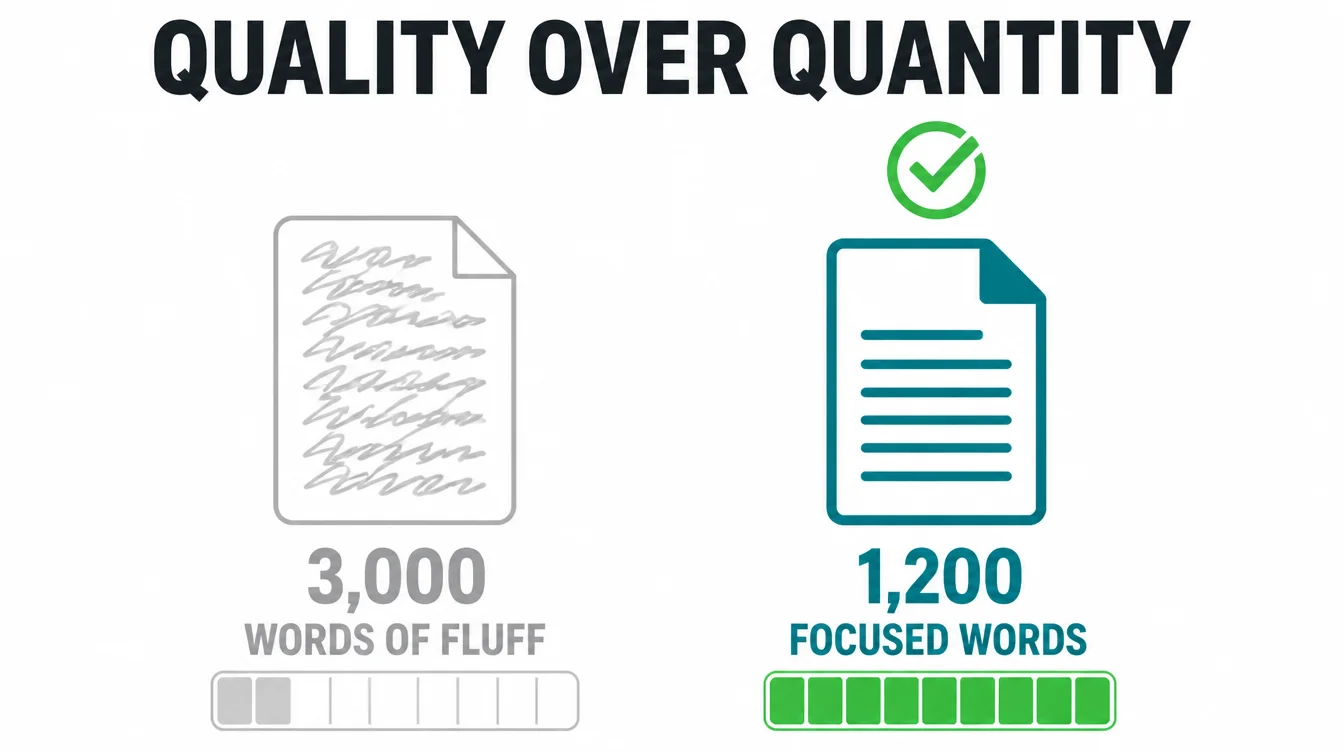
Ignore word count targets. Write until the question is answered properly, then stop. A tight 1,200 words that answers the question beats 3,000 words of throat-clearing, and the padded version is exactly the kind of page that ends up in Ahrefs' 96.55%.
Publish on a rhythm you can sustain. One good article a month for a year is twelve assets. Four in one week and then silence is one burst that ages badly.
6. Step 5: the four technical checks
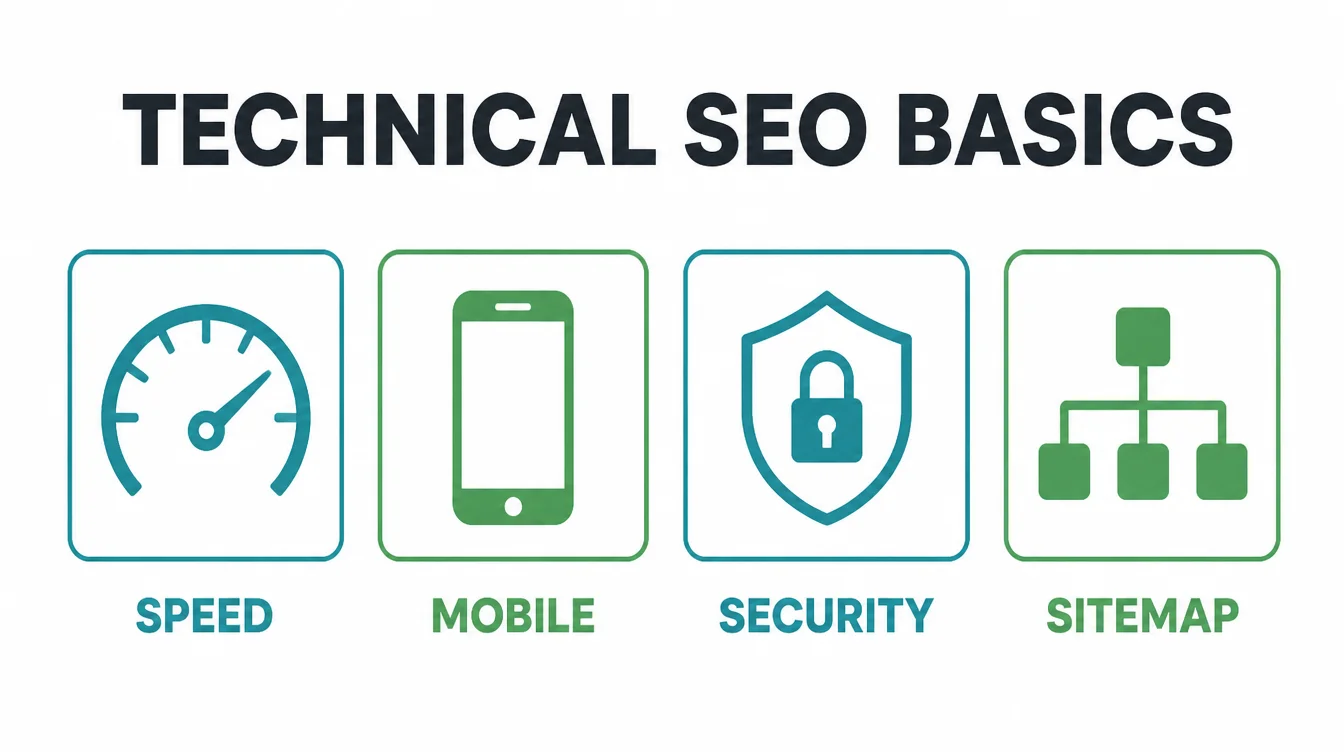
Technical SEO gets treated as a specialist subject. Four checks cover almost everything a small site needs.
Speed
Google measures loading through Core Web Vitals and says the main content should appear within 2.5 seconds (Google Search Central). Test with PageSpeed Insights on the mobile tab. The usual fixes are compressing images, removing plugins you do not use, and cutting tracking scripts. Our guide to Core Web Vitals explains the scores.
Mobile
Google uses the mobile version of your site for ranking (Google Search Central), and mobile is 52.57% of worldwide traffic on StatCounter's latest published month (StatCounter, July 2026). Open your own site on a phone and try to buy from yourself.
HTTPS
The padlock. Most hosts now include a certificate at no cost, and browsers warn visitors without one. This is a ten-minute job that only needs doing once.
A submitted sitemap
A sitemap lists your pages so Google can find them. Most SEO plugins generate one. Submit it in Google Search Console, then use the same tool to check which pages are indexed. Our guide to using Search Console covers the reports worth reading.
7. Mistakes that undo the work
Four faults come up again and again, and each one is avoidable.
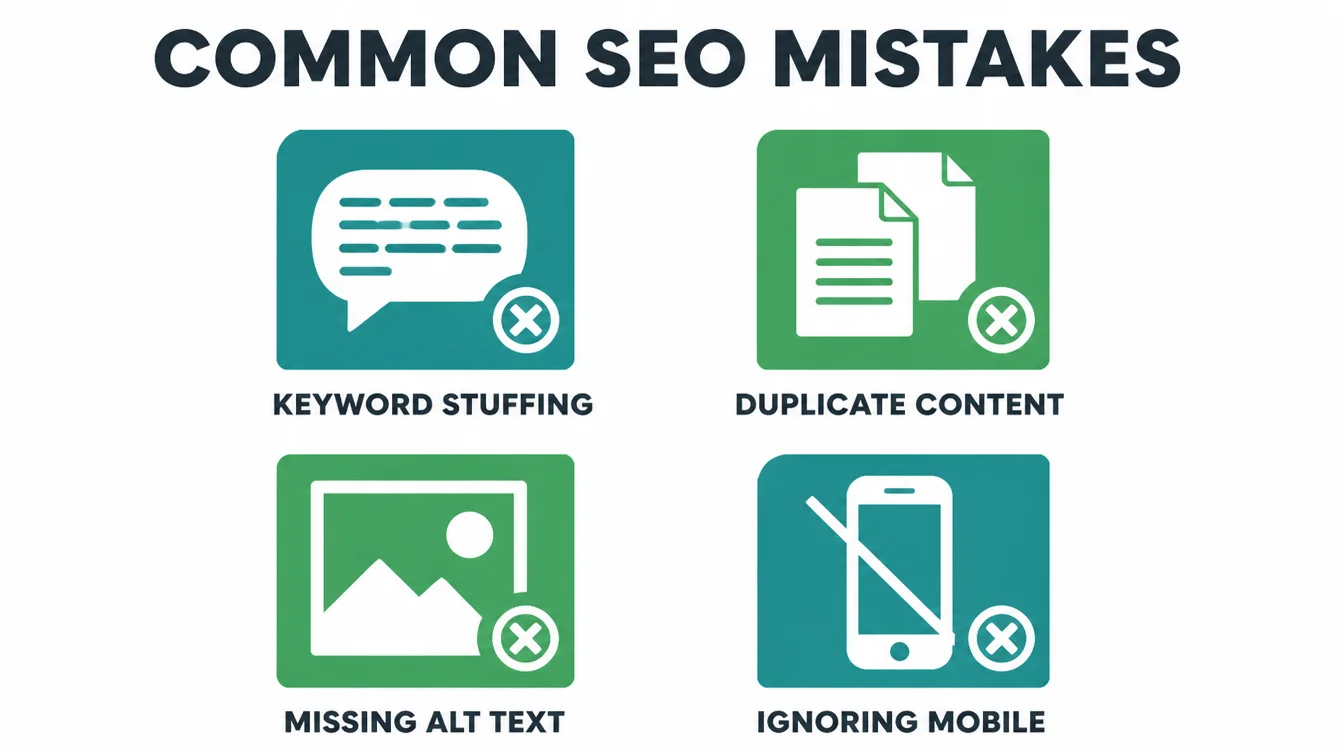
- Repeating the keyword everywhere. It reads badly to people, and Google has been ignoring it for years. Write for the reader.
- Two pages targeting one search. They split your signals and neither wins. Merge them.
- Buying cheap links. Google's own guidance warns against link schemes, and one good mention beats a hundred directory entries.
- Expecting fast results. Impatience is what makes owners quit at month three, one month before it starts working.
One more worth naming: any promise of a guaranteed number one ranking. Google states plainly that "no one can guarantee a #1 ranking on Google" (Google Search Central). Our list of small business SEO mistakes covers the rest.
8. The free tools that cover all of this
You do not need paid software for any step in this guide.
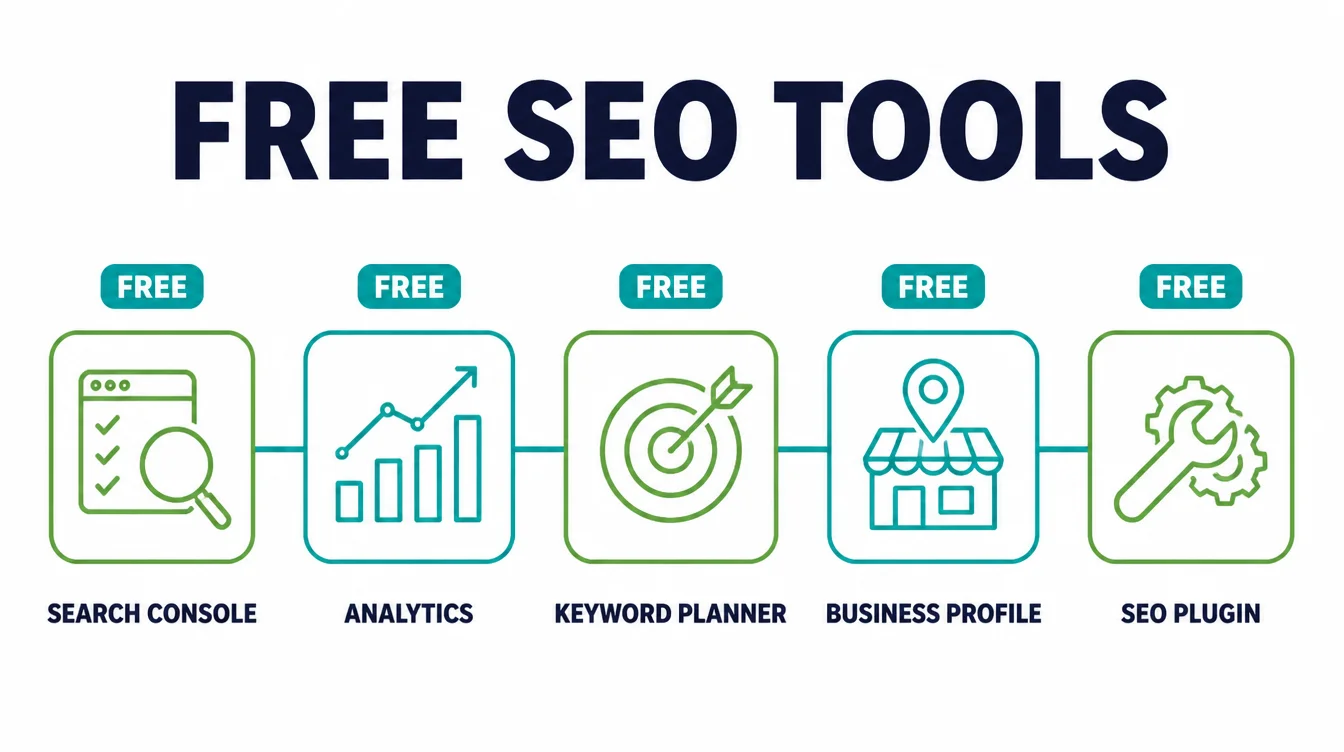
Google Search Console shows which searches already bring you visitors and which pages Google has indexed. Google Analytics shows what people do once they arrive. Google Keyword Planner gives search volumes. Google Business Profile runs your local listing. On WordPress, RankMath or Yoast guide the on-page work inside the editor.
Start with Search Console. Most owners find they already rank on page two for something valuable, and improving that page is the quickest result available.
9. How long SEO basics take, and when to get help
Plan for three to six months before steady movement. That is the majority answer in Ahrefs' poll of 3,680 SEO professionals (Ahrefs, 2024), and our guide to how long SEO takes breaks it down month by month.
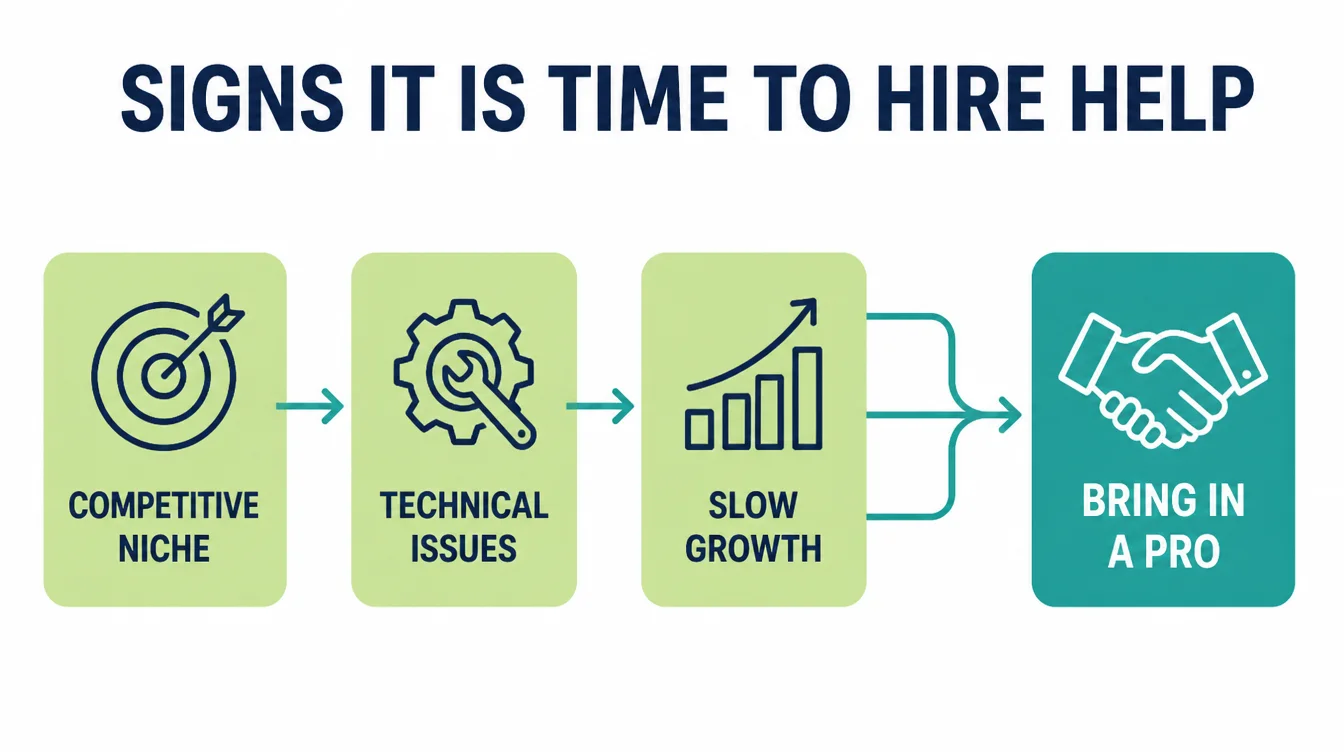
Bring in help when one of three things is true: your market is genuinely competitive and everyone ranking has a budget, the technical faults are past what you can fix, or you have run out of hours and the work has stopped.
Before you hire anyone, read our guide to what SEO costs, which sets out what changes the price and what to ask for in a quote.
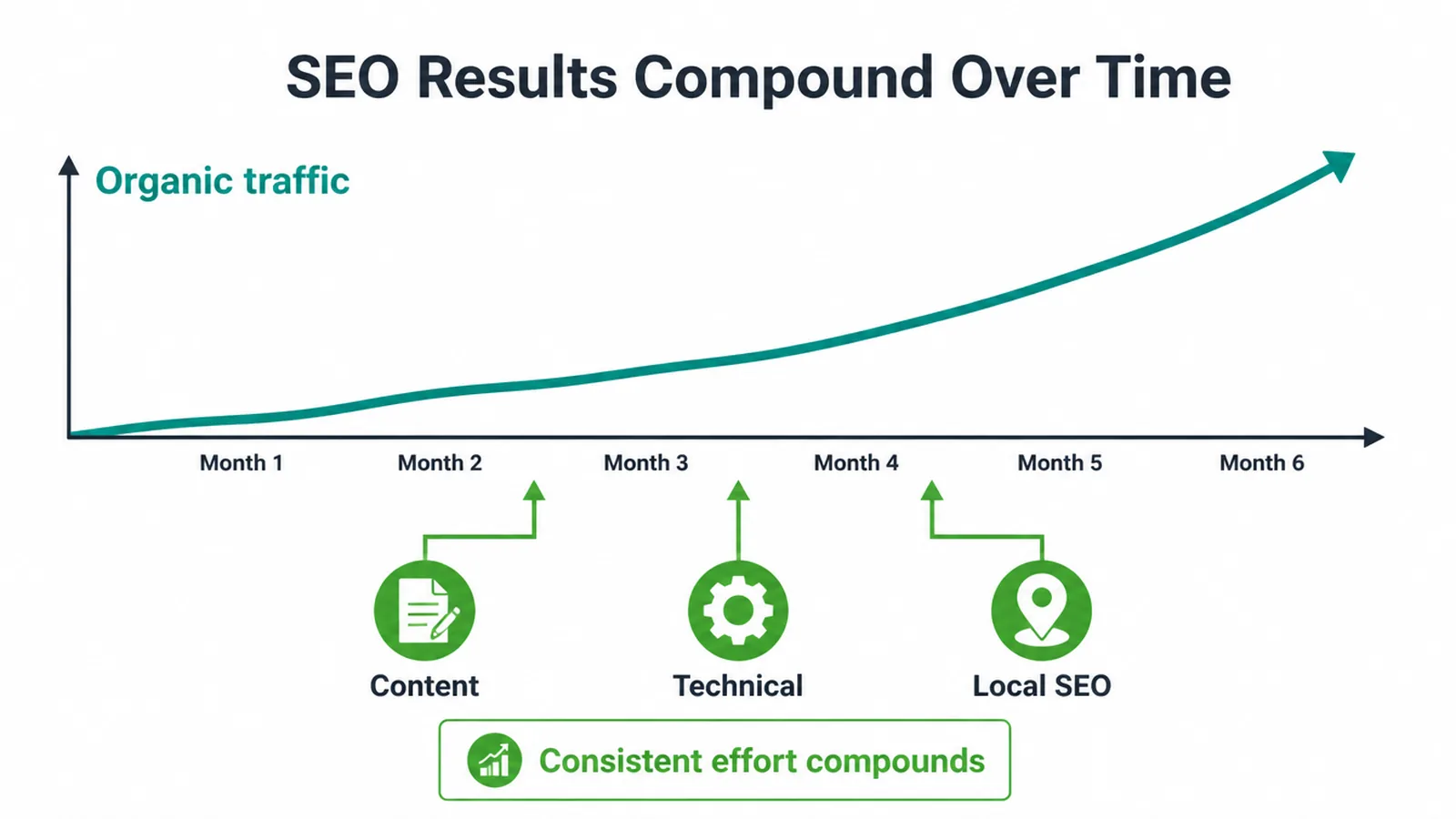
The order in this guide is the order to work in. Searches, pages, listing, content, technical. Each step makes the next one worth more, which is why skipping to content rarely works.
Frequently asked questions
1. What are the SEO basics every small business should start with?
Start with the searches your customers actually type, then give each one a page that answers it. Add a complete Google Business Profile, make sure the site is fast and works on a phone, and link related pages to each other. Those four jobs put you ahead of most small businesses, and none of them need a budget.
2. How long does SEO take to work for a small business?
Plan for three to six months. That is the majority answer in Ahrefs' poll of 3,680 SEO professionals, and it matches what happens in practice. Local listings can move sooner, sometimes within weeks. The work compounds, so pages you publish now keep bringing in visitors long after you stop paying attention to them.
3. Can I do SEO myself without an agency?
Yes, and the early wins are the ones you can do yourself. Keyword research, page titles, your Google Business Profile and helpful content all sit within reach of an owner with free tools. Bring in help when your market is genuinely competitive, when the technical faults are beyond you, or when you run out of hours.
4. What free SEO tools should a small business use?
Google Search Console and Google Analytics show what is already happening. Google Keyword Planner shows what people search for, and Google Business Profile runs your local listing. If your site is WordPress, RankMath or Yoast guide the on-page work inside the editor. That set covers everything in this guide at no cost.