SEO Price Malaysia 2026: Typical Costs, Scope and Trade-Offs

Published Malaysian SEO rates span from a few hundred a month to five figures, and the five providers in this guide publish figures across that whole spread. Seed Light lists each one with a live source, then explains the five factors that decide where a real quote for your business lands.
Key takeaways
Short on time? Here is the whole pricing picture in five lines before we break it down.
- Retainers dominate. 78.2% of providers charge a monthly retainer, per Ahrefs' survey of 439 SEO providers.
- Published local rates span from a few hundred to five figures a month. The cited table below lists five providers' own numbers.
- US guides run high. US-based providers cost 3 to 5 times more than providers in emerging markets (Backlinko, 2025).
- Cheap SEO is the expensive kind. 96.55% of pages get zero traffic from Google (Ahrefs, 2023), and thin work lands you there.
- Allow three to six months for early movement and four to twelve for fuller results (Ahrefs poll of 3,680 professionals). If the budget cannot last that long, do not start.
1. SEO price in Malaysia: the short answer
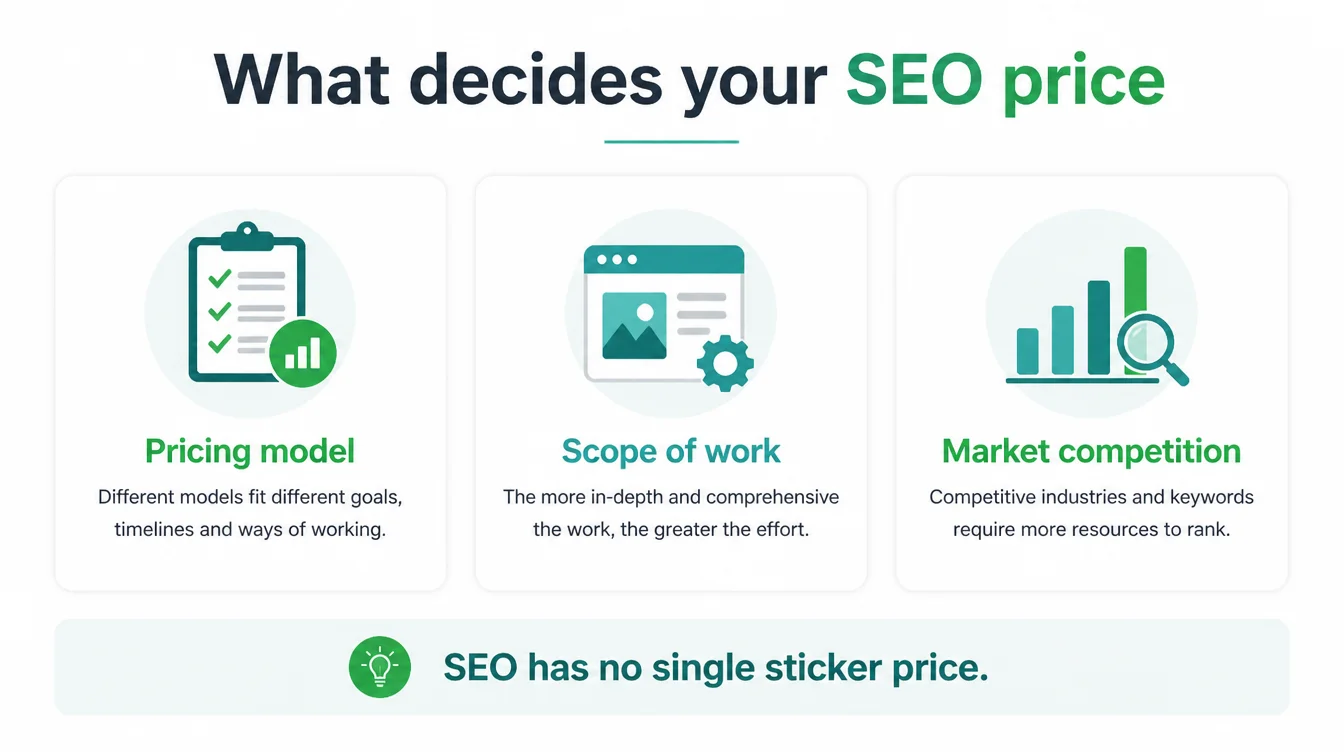
SEO has no sticker price. What you pay depends on the pricing model, the scope of work, and how competitive your market is.
For scale, Ahrefs' survey of 439 SEO providers found the most common retainer worldwide was $501 to $1,000 a month (Ahrefs, 2024). Published local packages run from a few hundred to five figures monthly.
Here's the part most pricing guides skip. Anyone who quotes you one number before asking about your business, your competitors, and your website is guessing. A real quote follows real questions.
This guide is different in two ways. First, we explain our own pricing logic openly, so we have no reason to be cagey about anyone else's. Second, we'll tell you when SEO is not worth buying at all. Skip ahead to that section if you want the honesty first.
2. How do SEO providers charge?
Three models cover nearly every SEO quote you'll see: a monthly retainer, an hourly rate, or a fixed project fee. Retainers dominate. In Ahrefs' survey of 439 providers, 78.2% charge a monthly retainer as their main model (Ahrefs, 2024). Each model fits a different job, so pick by the work, not the label.

Monthly retainer
You pay a fixed fee each month for ongoing work: technical fixes, content, links, and reporting. This suits a business that wants steady growth, because rankings compound and need upkeep.
Backlinko's study of over 300 SEO professionals found the most common retainer overall sits between $1,001 and $2,500 a month (Backlinko, 2025). Retainers reward patience. They punish anyone who quits in month two.
Hourly rate
You pay for time, usually for consulting, audits, or training. In the same Ahrefs survey, $75 to $100 an hour was the most popular rate, chosen by 24% of providers (Ahrefs, 2024).
Hourly works well when you have an in-house person who needs direction, or one specific problem to diagnose. It's a poor fit for long content campaigns, where the hours balloon.
Per-project fee
You pay once for a defined piece of work: an audit, a migration, a content package. Ahrefs found $2,501 to $5,000 was the most popular project fee, at 21.2% of providers, while Backlinko's respondents most often quoted $1,000 to $5,000 per project (Backlinko, 2025). Projects suit one-off jobs with a clear finish line.
So which should you pick? Match the model to the job. Ongoing growth wants a retainer. A specific fix wants a project. Advice wants an hour.
3. What do providers actually charge in Malaysia?
Published local rates span roughly from the price of a phone plan to the salary of a full team, and that spread is real, not sloppy.
Five providers publish their numbers openly, listed below with sources. One warning first: US pricing guides run high, because Backlinko found US-based providers cost 3 to 5 times more than providers in emerging markets.
| Source | Published monthly figures | Notes |
|---|---|---|
| ZenWeb | Agency RM1,500-3,000; freelancer RM1,500-4,000; in-house junior RM4,500-6,500; senior in-house team RM8,000-15,000+ | Twelve-month cost comparison of the four ways to buy. Same figures as our July check, at a new address after the page moved |
| VeecoTech | RM900-10,000+ | Cost guide on the agency's blog. Unchanged since July |
| LOCUS-T | RM1,700-4,980 | Published 2026 package prices. Unchanged since July |
| Hypercharge | RM800-12,000 | Tiered cost-and-value guide. Unchanged since July |
| Mediaplus Digital | RM900-10,000+ | Revised upward at both ends since our July check, when the same page published RM1,500-9,000 |
Treat every row as marketing as well as data. A published range tells you where a firm wants to compete. It doesn't tell you what your business needs.
These are also the providers' own claims, not our verification of their value, and none of them are our prices. How we scope and quote our own work is explained on our pricing page.
Why do the ranges stretch so far? Because "SEO" can mean four hours of work a month or forty. The global surveys tell the same story: retainers cluster in a middle band, then scatter widely on either side depending on scope. Which brings us to the real question.
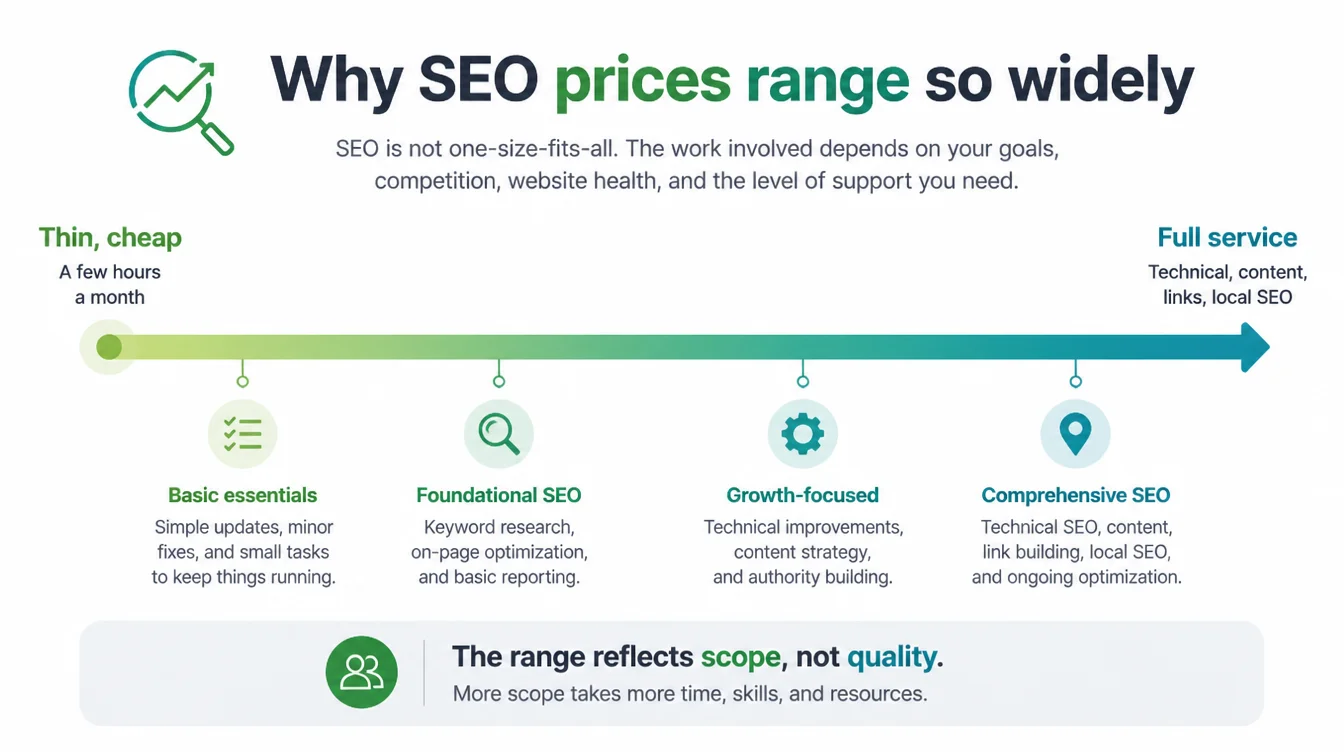
4. What decides where your price lands?
Five factors move an SEO quote more than anything else: competition, scope, the state of your site, who does the work, and reporting depth. The "who" alone is worth about a third, since Backlinko's pricing study found agencies charge roughly 30% more than freelancers (Backlinko, 2025). Here's how each factor plays out.
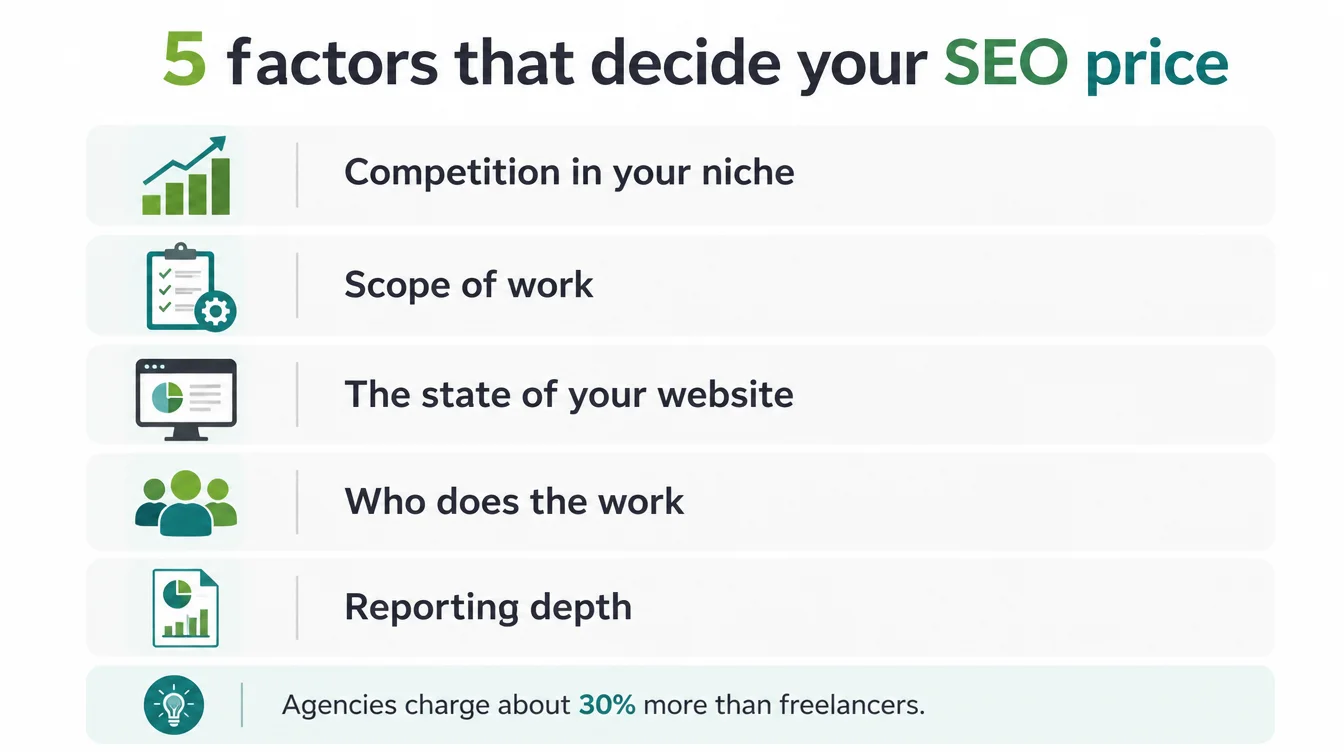
Competition in your niche
Ranking a niche wedding photographer in a small town is a different job from ranking a law firm in a capital city. More rivals with bigger budgets means more content, more links, and more months. Ask any consultant how competitive your keywords are. Expect specifics, not a shrug.
Scope of work
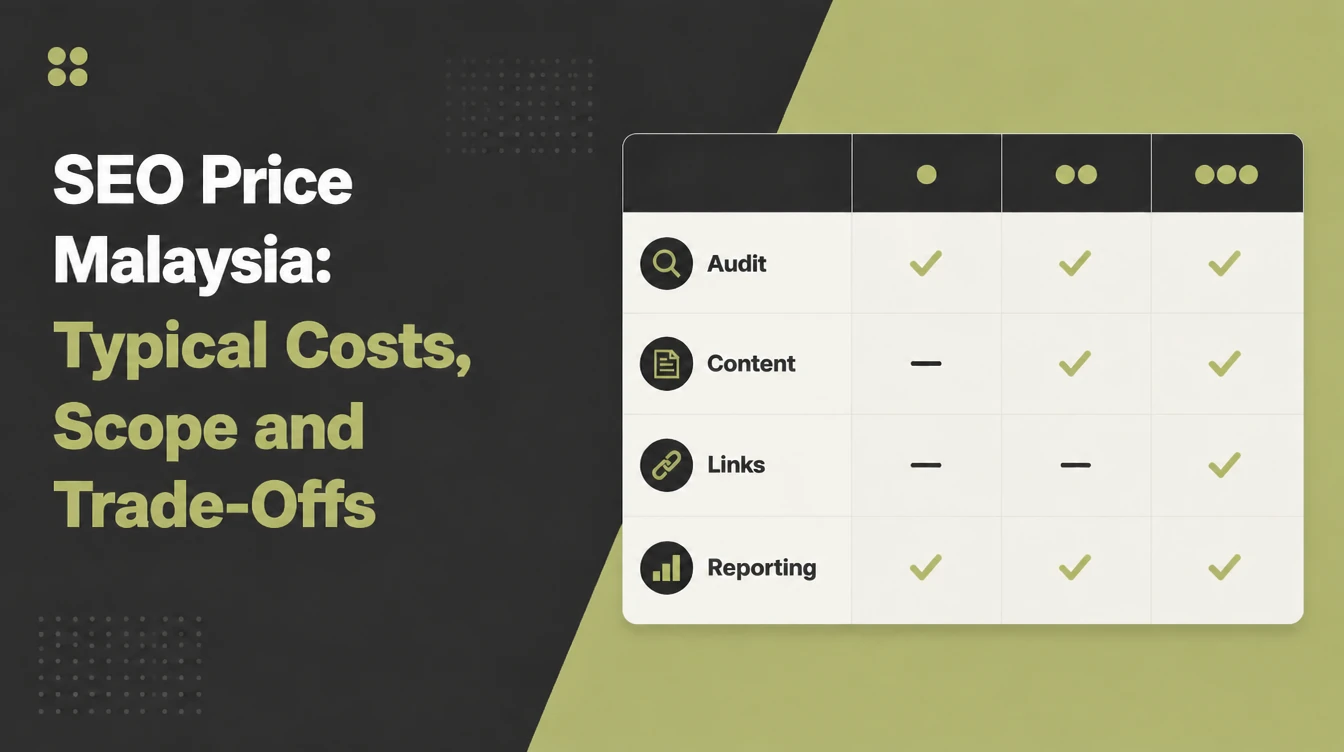
Technical SEO, content writing, link building, and local SEO are four different skills. A package covering all four costs more than one that tunes your existing pages. Check what's inside the retainer before comparing prices. A cheap plan that skips content isn't comparable to one that includes eight articles a month.
The state of your website
A slow, messy, or penalised site needs repair before growth. If your site was built years ago and never touched, expect the early months to go to fixing rather than climbing. A clean, modern site starts further up the hill, and the quote should reflect that.
Who does the work
Freelancers cost less but carry one person's bandwidth. Agencies cost more, that 30% premium again, and bring a team. An in-house hire is the priciest route in the published local comparisons above. None is automatically better. The question that matters is who will do your work, not whose logo sits on the invoice.
Reporting depth
A monthly PDF of rankings costs almost nothing to produce. Tracking leads, calls, and sales back to search takes proper setup and costs more. Pay for the second kind. Rankings you can't tie to revenue are trivia.
5. Why does cheap SEO usually cost the most?
Here's the uncomfortable math. Ahrefs studied around 14 billion pages and found 96.55% of them get zero traffic from Google (Ahrefs, 2023). Cheap SEO produces exactly that kind of page: technically published, practically invisible. You pay less per month and get nothing per month, which makes it the most expensive option per result.
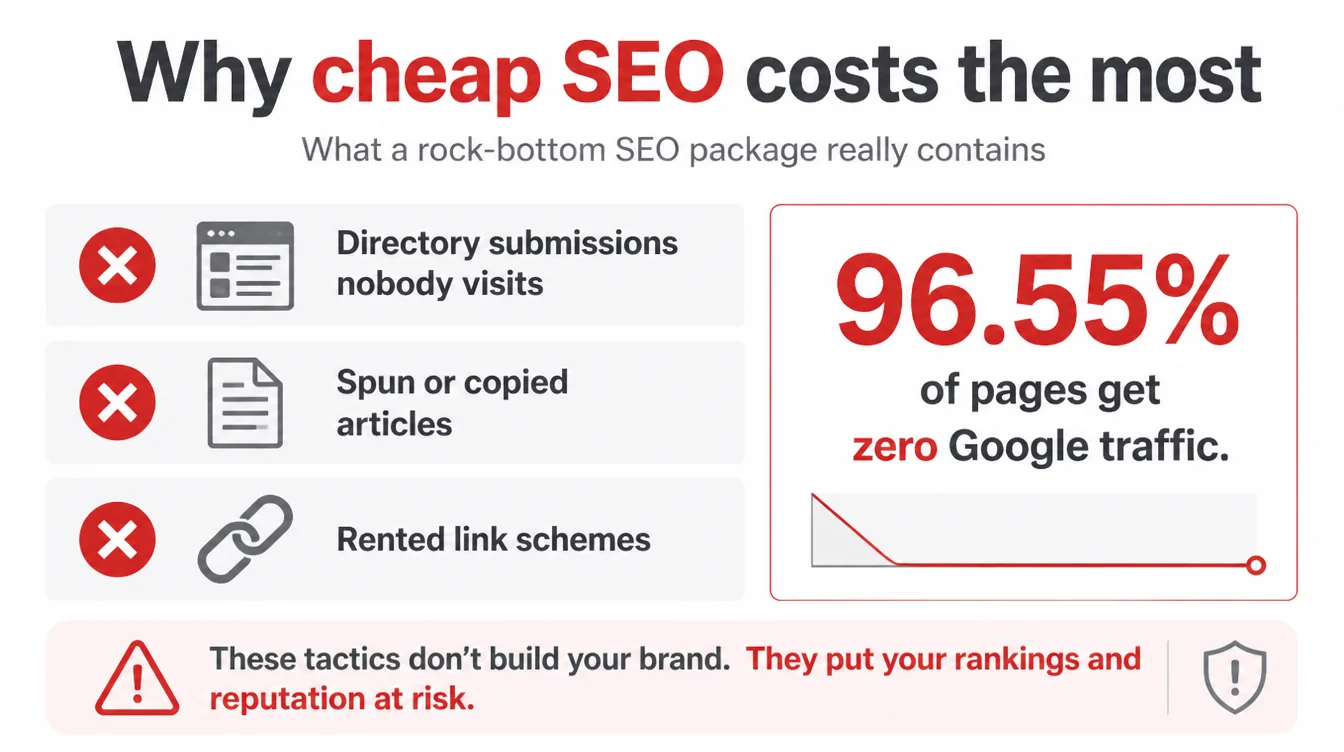
What does a rock-bottom package usually contain? Directory submissions nobody visits. Spun or copied articles that read like a blender ate a brochure. Links from networks built to be rented out, which Google's systems are trained to ignore or punish. The invoice is real. The progress isn't.
You don't have to take our word for it. Google's own hiring guide states plainly that "no one can guarantee a #1 ranking on Google" (Google Search Central).
The same page tells you to be wary of firms that promise rankings, keep their methods secret, or build links through shady schemes. When a pitch opens with a guarantee, Google itself is telling you to walk.
A fair test before you sign anything: ask a low-cost provider to show you the last three articles they wrote and the last ten links they built. Good studios open the folder. Weak ones talk about proprietary methods.
6. When is SEO not worth buying?
Sometimes the honest advice is: not yet. Early movement often shows in three to six months, with fuller results over four to twelve; Ahrefs' poll of 3,680 SEO professionals supports the early range (Ahrefs, 2024). If your situation can't survive that wait, or can't fund it, SEO is the wrong first purchase. Four cases come up again and again.
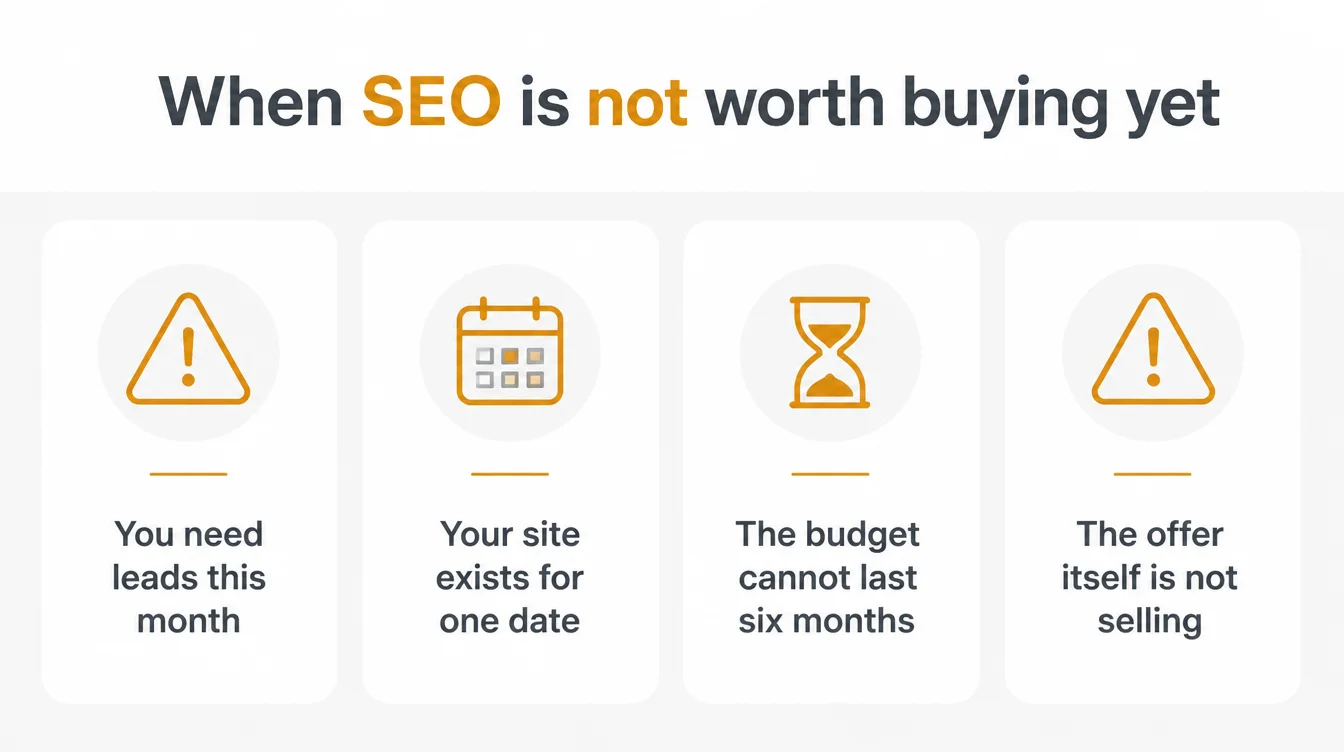
You need leads this month
A brand-new business with an empty calendar needs customers now, not in autumn. Run ads first. They cost more per lead, but the first work goes live in 1 to 2 weeks, and our Google Ads management page shows what running them for you involves.
Our SEO vs Google Ads comparison covers how to sequence the two so ads buy time while search builds.
Your site exists for one date
A one-off event, a short campaign, a pop-up. By the time search rankings ramp up, the date has passed. Spend that money on ads, email, and outreach instead.
The budget can't last six months
Three months of retainer is often money spent building a foundation you then abandon. If the budget only covers a short stretch, buy a one-time project instead, an audit plus fixes, or wait until you can commit. Half a bridge helps nobody cross.
The offer itself isn't selling
If visitors already reach your site and don't buy, more visitors multiply the same problem. Fix the offer and the website first. Traffic amplifies whatever it lands on.
7. What are you actually paying for in 2026?
Position, and increasingly, citation. Backlinko's analysis of roughly four million search results found the #1 organic result averages a 27.6% click-through rate, and the top three positions take 54.4% of all clicks (Backlinko, 2025). Everything below that fights for scraps. Your fee buys movement toward the few positions that get seen.
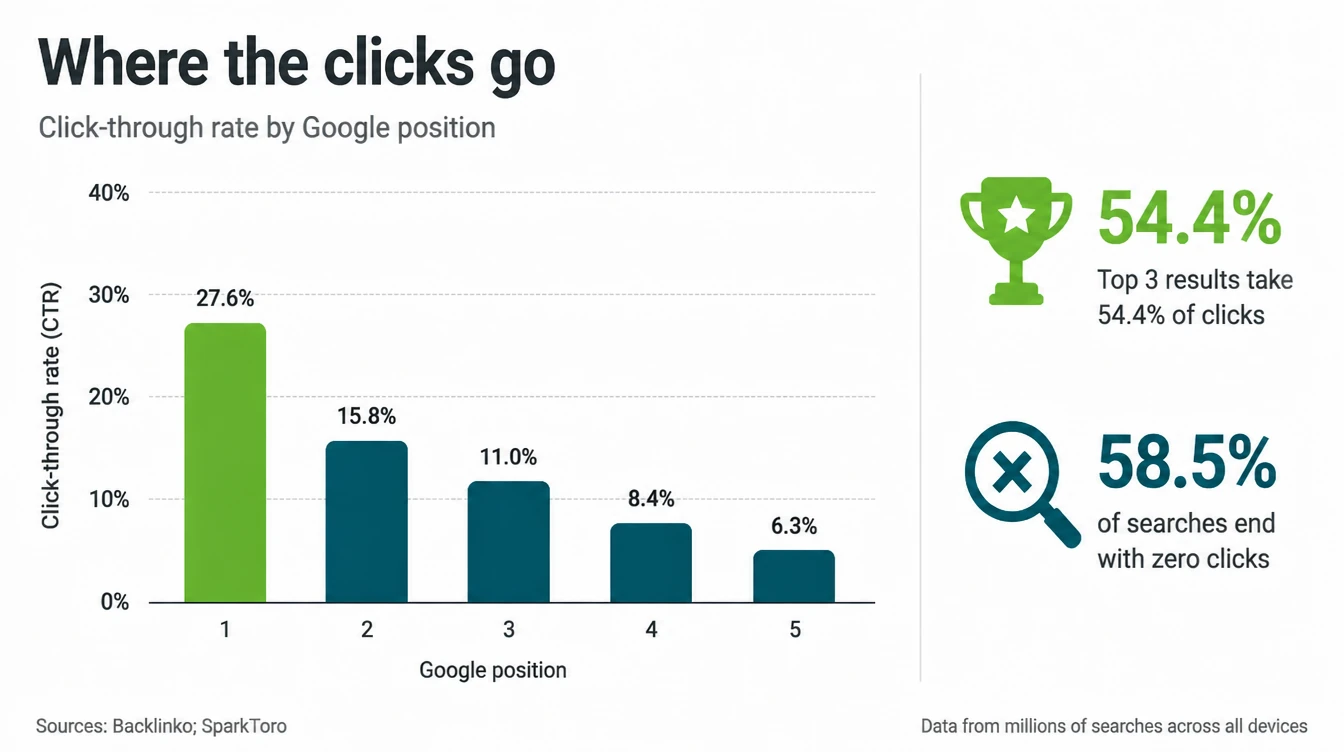
There's a catch, though. Fewer searches end in a click at all. SparkToro's study of US search behaviour found 58.5% of Google searches ended in zero clicks in 2024 (SparkToro, 2024). Google answers more questions right on the results page.
AI Overviews sharpen this further. Seer Interactive tracked what happens when an AI Overview appears above the results: for brands not cited in it, organic click-through fell to 0.52%, down 65.2% year over year.
Brands that were cited saw 35% higher organic click-through (Seer Interactive, 2025). In plain terms, you're no longer paying only for a ranking. You're paying to be the source the answer quotes.
For local businesses the case stays strong. A 2025 BrightLocal consumer study found Google Search is the first stop for 45% of consumers looking for local businesses, with map apps the default for another 20% (Search Engine Journal, 2025).
That's why our local SEO work treats your Google Business Profile as seriously as your website.
8. How long until SEO pays off?
Early movement often shows in three to six months, with fuller results over four to twelve. Ahrefs' poll of 3,680 SEO professionals supports the early range (Ahrefs, 2024), and it matches what we've seen on the retainers we've run since 2018. We break the timeline down month by month in our guide to how long SEO takes.

Now compare that wait with paid clicks. WordStream's 2026 benchmark puts the average Google Ads cost per click at $5.42, up from $5.26 in 2025. It also found that average cost per lead fell for the first time in five years (WordStream, 2026).
Ads are rent, and the rent keeps going up. SEO is closer to buying: slower to close, cheaper to hold. That's the fair way to judge a quote. Not against zero, but against what the same customers would cost you through ads, forever.
9. Questions to ask before you sign
Google's own hiring guide suggests interviewing an SEO the way you'd interview any contractor: ask what they'll do, ask for examples, and check references (Google Search Central). Good providers enjoy these questions. Weak ones deflect them. Here are eight worth asking, with what a good answer sounds like.
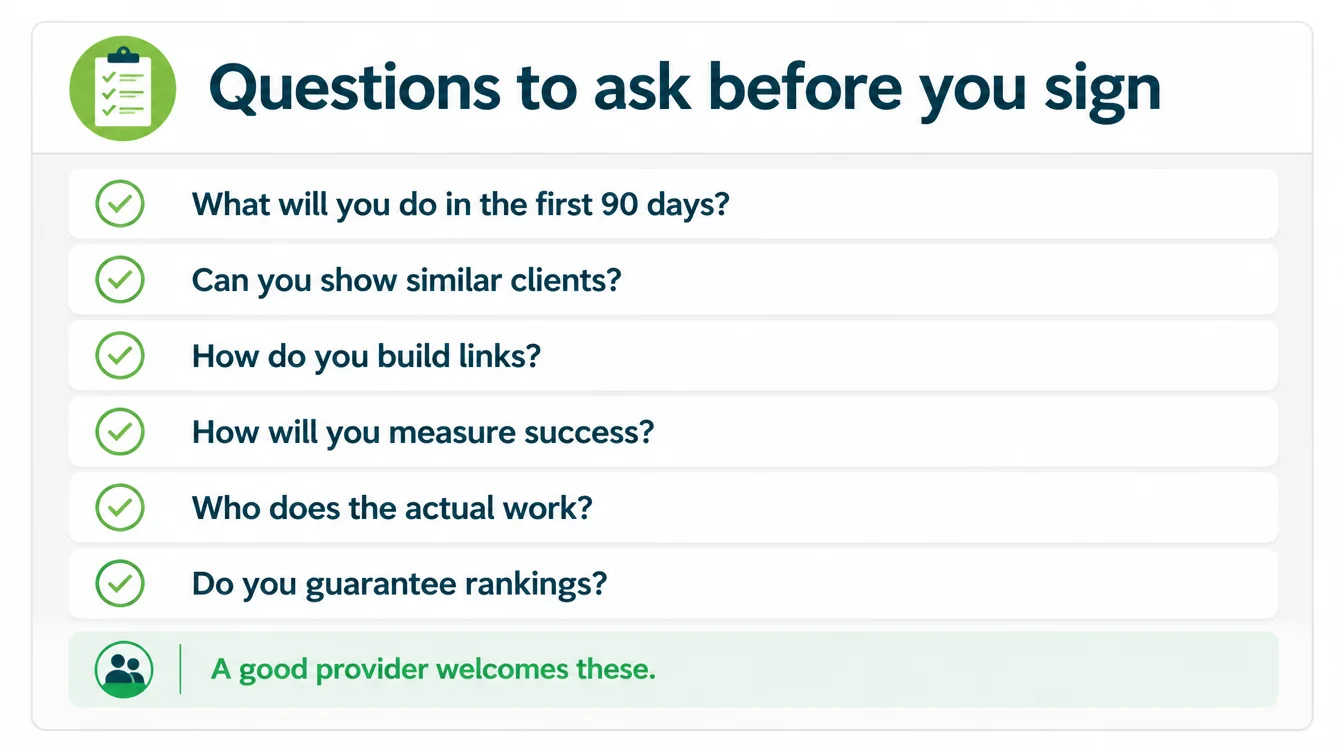
- What exactly will you do in the first 90 days? A good answer is specific: an audit, a list of technical fixes, a content plan with titles. "We activate our process" is not an answer.
- Can you show me similar businesses you've helped? Google recommends asking for examples and references. Good answers name businesses and results you can verify yourself.
- How do you build links? You want named tactics: content people cite, outreach, local citations, digital PR. "Our private network" means rented links that can sink you.
- How will you measure success? Leads, calls, and sales, not rankings alone. If the report can't connect search to revenue, ask what you're renting.
- Who does the actual work? The person pitching you, a junior, or an outsourcer? Any of those can be fine. A hidden answer isn't.
- What do I keep if we stop? The content, the site access, the analytics, and every account should stay yours. Anything held hostage is a red flag.
- Do you guarantee rankings? The only correct answer is no. Google says no one can guarantee a #1 ranking, so a guarantee tells you the pitch is dishonest.
- Can they explain how they price? Not every good consultant publishes figures, but the pricing logic should be clear before a sales call. Ours is set out on our pricing page.
Frequently asked questions
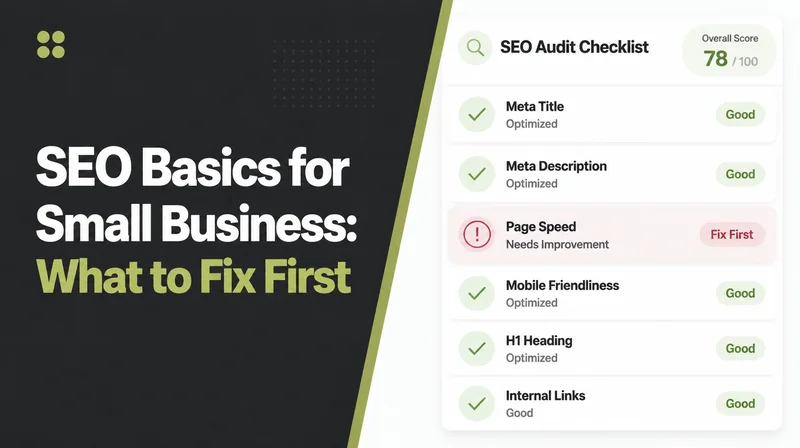
Short answers below. For the fundamentals, start with what SEO is and our guide to SEO basics for small business, and see our pricing page for how a quote gets built.
1. How much does SEO cost in Malaysia?
Published local packages span from a few hundred to five figures a month, depending on scope. Providers price by how competitive your keywords are, how much technical work and content the package includes, and who does the work. The comparison table in this guide lists five providers' published rates with live sources. Treat any single number quoted before anyone has asked about your business as a guess.
2. How much should a small business spend on SEO?
An SEO budget should be sustainable across the work and its timeline. Early movement often shows in three to six months, with fuller results over four to twelve. A modest consistent budget can outlast a larger one that stops after eight weeks. Match the spend to customer value, then rethink the scope if the required client count makes the numbers unworkable.
3. Is paying for SEO worth it?
For most established businesses, yes. The top three organic results take 54.4% of all clicks, and rankings keep working after the work is paid for, unlike ads that stop the moment the budget stops. It is not worth it if you need leads this month, if your budget cannot last six months, or if visitors already reach your site and do not buy.
4. Why is some SEO so cheap?
Because the work is thin. Very cheap packages usually mean directory submissions, spun or copied articles, and automated link schemes that Google's own guidance warns against. Ahrefs found 96.55% of pages get zero traffic from Google, and thin work is how pages end up in that pile. A cheap retainer that produces nothing costs more per result than a fair one that works.
5. Can I do SEO myself instead?
Yes, especially early on. The fundamentals are learnable: clear pages, helpful content, a complete Google Business Profile, and a fast site. Start with our plain guide to what SEO is, then work through our SEO basics for small business. Most owners hit a ceiling on time rather than difficulty, and that is usually the right moment to bring in help.
6. How does Seed Light price SEO?
Our pricing page explains how a quote is built and the five things that decide the number, so you know what shapes the figure before you ever talk to us. This guide works the same way: every rate in the table above is that provider's own published figure, cited to a live source. If a provider will not explain their pricing logic before a sales call, it is fair to ask why.