How Long Does SEO Take? Timelines, Factors and Expectations

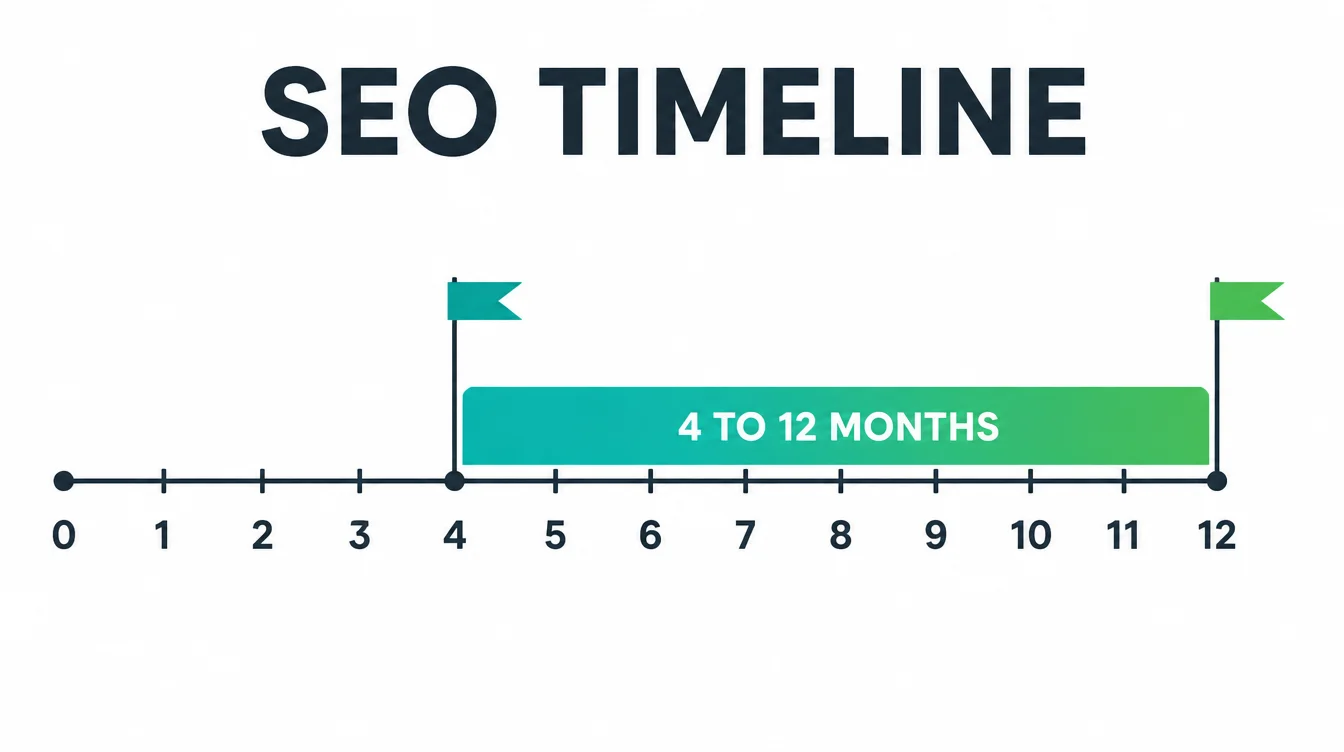
SEO's early movement often shows in three to six months, with fuller results over four to twelve. Google's Maile Ohye said SEO usually needs four months to a year to implement improvements and see potential benefit. Site age, competition, content and links affect the timing. Seed Light checks those drivers and names the two or three fixes that matter.
Key takeaways
Short on time? Here is the whole answer in five lines before we break it down.
- Early movement in 3 to 6 months, fuller results in 4 to 12. Google says SEO usually needs four months to a year to implement improvements and see potential benefit (Google Search Central, How to hire an SEO).
- New pages rarely rank fast. Only 1.74% of newly published pages reach the top 10 within a year (Ahrefs, 2023).
- Age and trust win. 72.9% of pages in the top 10 are more than three years old, and the average number one page is about five years old (Ahrefs, 2023).
- Ranking is not "arrive and done." Only about 27% of pages that reached the top 10 stayed there across one study (Semrush).
- Watch leading signs first. Indexed pages and impressions climb before rankings and clicks do.
1. Early movement in 3 to 6 months, fuller results in 4 to 12
How long does SEO take? Early movement often shows in three to six months, with fuller results over four to twelve. Google's own guidance supports the longer end of that range.
Maile Ohye, a former Google search expert, put it plainly: "in most cases the SEO will need 4 months to a year to help your business first implement improvements and then see potential benefit" (Google Search Central, How to hire an SEO). Our free SEO ROI calculator lets you set your own ramp and see what the wait is worth.
So if someone promises you the top spot in 30 days, walk away. SEO is slow on purpose, because it rewards trust, and trust takes time to build.
The good news is that the work compounds. The early months feel quiet, then the later months pay off. New to the topic? Start with our plain guide on what SEO is.
2. Why it takes that long
The biggest reason is simple. Most new pages do not crack the top 10 within a year. In fact, only 1.74% of newly published pages rank in the top 10 within a year (Ahrefs, 2023). That number sounds harsh, but it explains why patience matters so much.
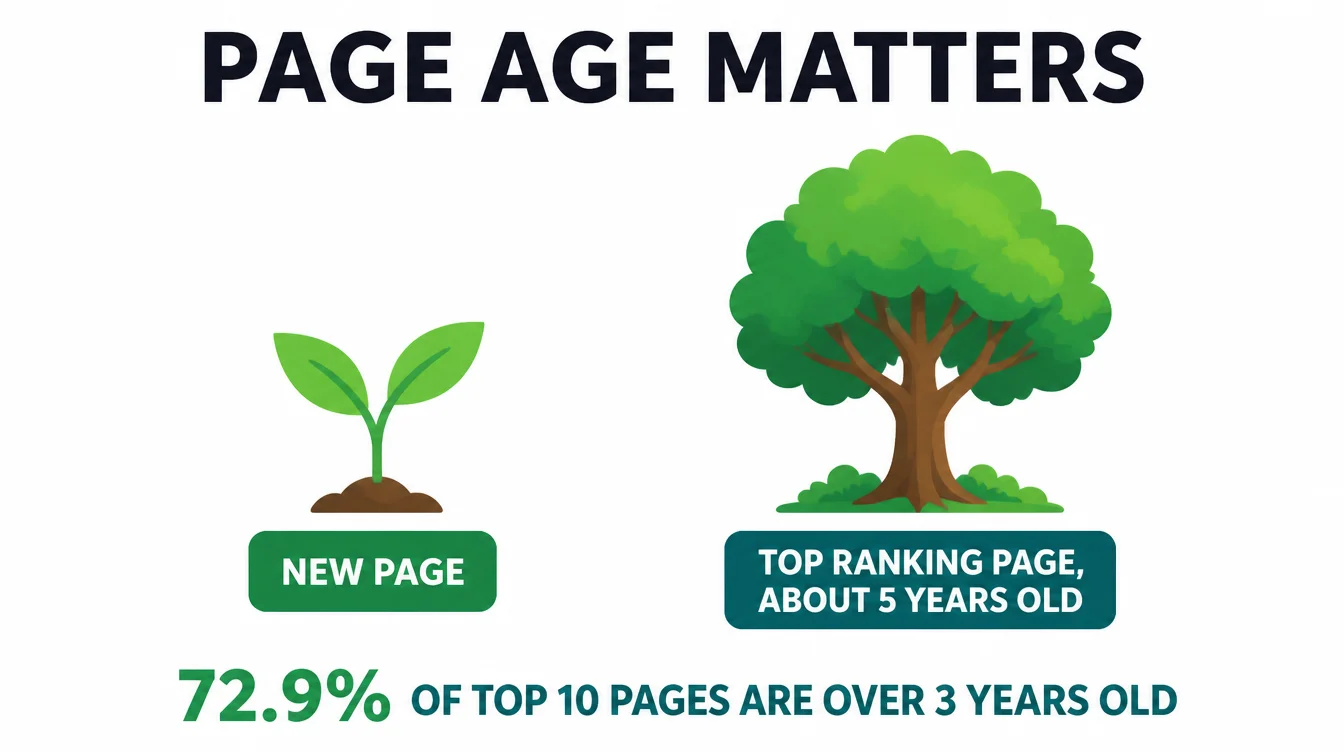
Age is a huge factor too. The pages already winning are old and trusted. Around 72.9% of pages in Google's top 10 are more than three years old, and the average number one page is about five years old (Ahrefs, 2023). To beat them, your page needs time to earn the same trust.
Google itself frames SEO as a long game and reminds owners that good results take time and effort (Google Search Central). Google has to crawl your pages, watch who links to you, and see how people respond. None of that happens overnight.
3. What drives your timeline
Your exact timeline depends on a few things. The same effort can take three months on an easy keyword and a year on a hard one. Here are the five biggest drivers.
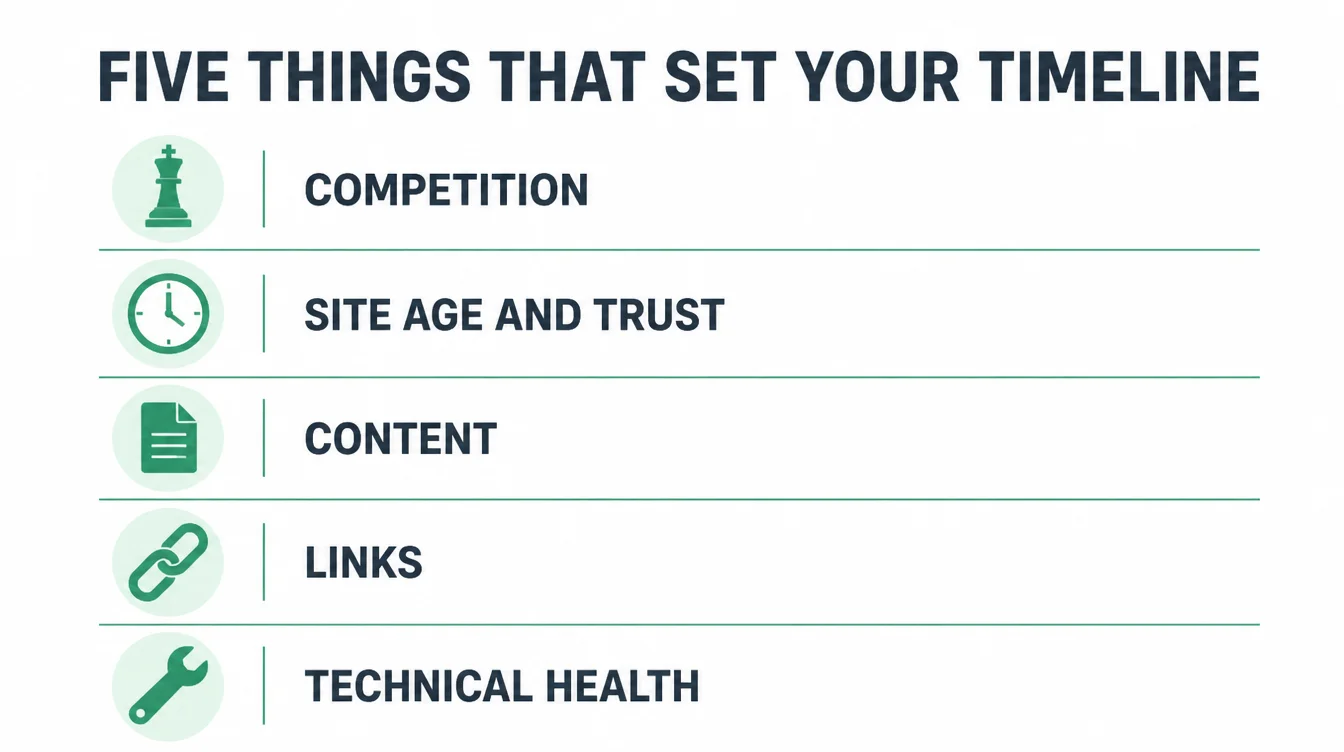
Competition
If twenty strong sites already chase your keyword, you wait longer. If almost nobody does, you can climb fast. Easy, specific phrases are where new sites win first.
Site age and trust
An older site with a history ranks faster than a brand new one. A new site spends its early months simply earning a place in line, which is why a fresh website usually takes longer.
Content
Thin pages stall. Helpful, specific pages that fully answer the question climb. The more useful your content, the sooner Google trusts it. See how to rank higher on Google for the content side.
Links
Other sites linking to you act like votes. The number one result has 3.8 times more backlinks than positions two to ten, and link authority strongly correlates with higher rankings (Backlinko). Our guide on how to get backlinks shows the safe way.
Technical health
If your site is slow, broken, or hard for Google to read, everything drags. Fixing the basics removes the brakes so the rest can work.
4. Ranking is not "arrive and done"
Here is the part most guides skip. Reaching the top is not the finish line. Holding the top is. Most pages that reach the top 10 do not stay there.
In one study, only about 27% of pages that made the top 10 stayed there for the whole study, while around 41% of domains were ranking in the top 10 after six months (Semrush).
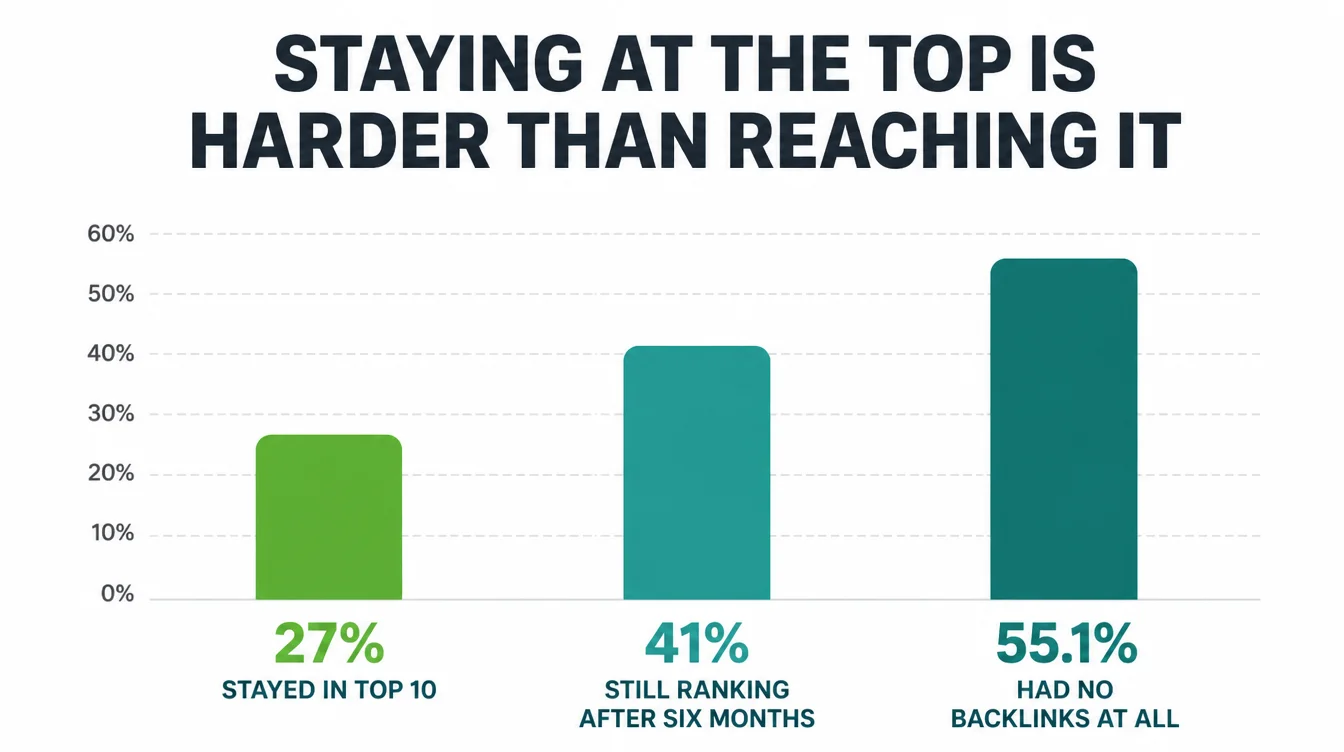
So SEO is a habit, not a one-time push. You keep publishing fresh content, you keep earning links, and you keep an eye on rivals. Notably, that same study found 55.1% of domains that failed to reach the top 10 had no backlinks at all (Semrush).
Stop the work, and your spot can slip. This is also why SEO and paid ads do different jobs, which we cover in SEO vs Google Ads.
5. What progress looks like month by month
Rankings are the last thing to move, so do not stare at them in month one. Instead, watch the leading indicators first. They tell you the engine is running before the speedometer shows it. Here is a realistic timeline for a small business doing the work steadily.
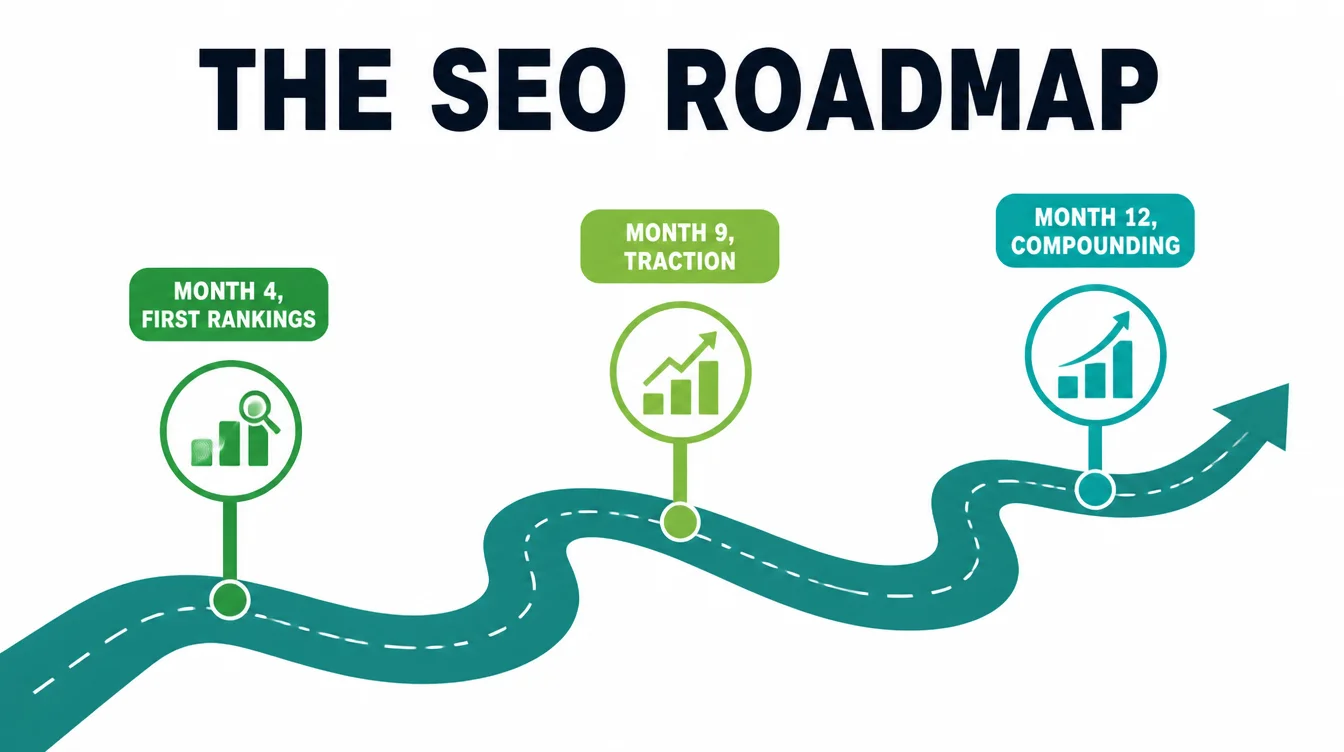
| Months | What is happening |
|---|---|
| Months 1 to 2 | Foundation. You research keywords, fix technical issues, and plan content. Little moves publicly, but the base is being set. |
| Months 2 to 3 | Implementation. Pages get written, on-page fixes go live, and your site structure improves. |
| Months 3 to 4 | Indexing. Google crawls and indexes the new pages. Impressions in Search Console start to appear. |
| Months 4 to 6 | Early movement. You rank for long, specific phrases. The first trickle of organic visitors arrives. |
| Months 6 to 9 | Traction. Rankings climb toward page one for more keywords, and leads from search become noticeable. |
| Months 9 to 12 | Compounding. Trust builds, links add up, and traffic grows faster as your pages age and strengthen. |
Your timeline may run faster or slower, but the order rarely changes. Leading signs come first, then rankings, then steady leads.
6. How to make SEO work faster
You cannot skip the wait, but you can shorten it. The owners who get results sooner all do the same simple things from the start. Most of them are just SEO basics done consistently.
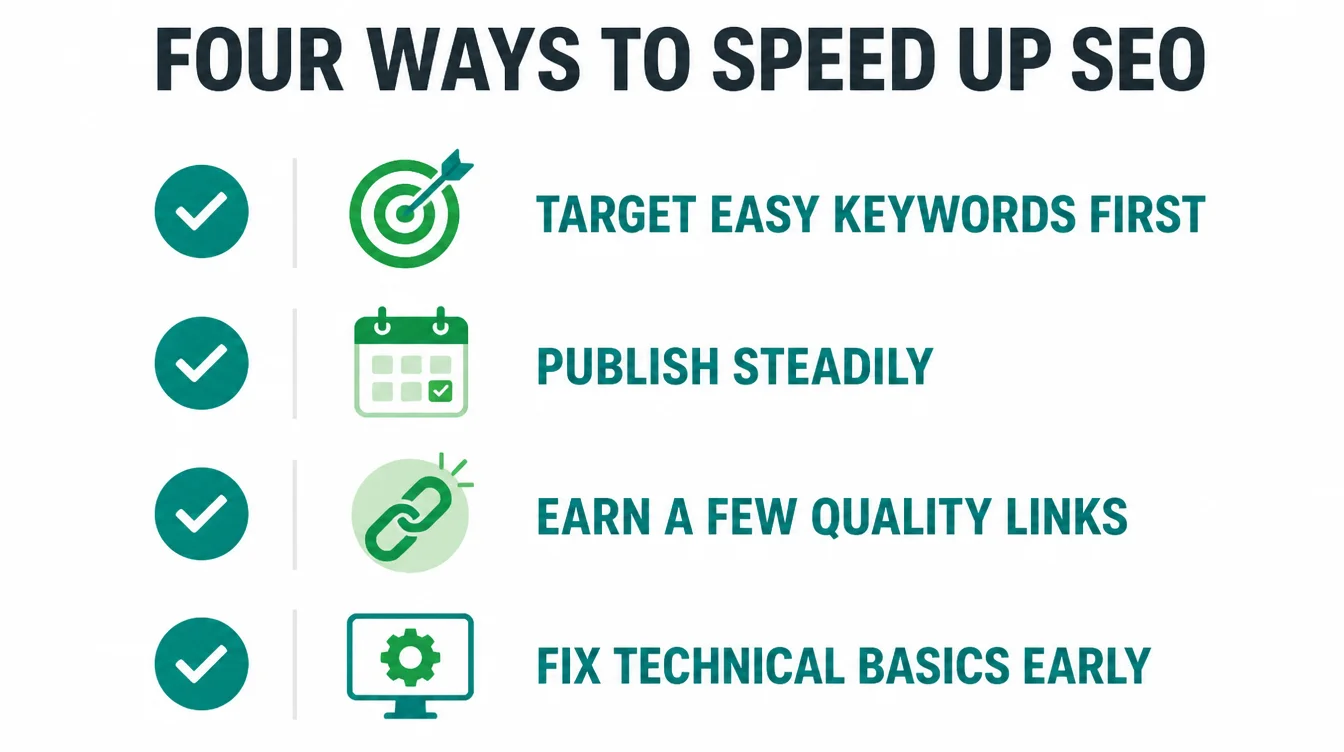
Target easy keywords first
Go after specific, lower-competition phrases before the big ones. A plumber should chase "emergency tap repair in your area" before "plumber." Small wins build the trust you need for harder terms later.
Publish helpful content steadily
One useful page a week beats ten in a rush then silence. Consistency tells Google you are active and worth trusting.
Earn a few quality links
Since backlinks separate winners from the rest, even a handful of links from trusted local sites helps. Quality beats quantity every time.
Fix the technical basics early
A fast, clean, mobile-friendly site removes the drag. If your site is the bottleneck, see how we approach SEO services for small businesses.
7. When to worry
Patience is right, but blind patience is not. There is a difference between slow progress and no progress. So keep an eye on the leading signs, and act if they flatline.
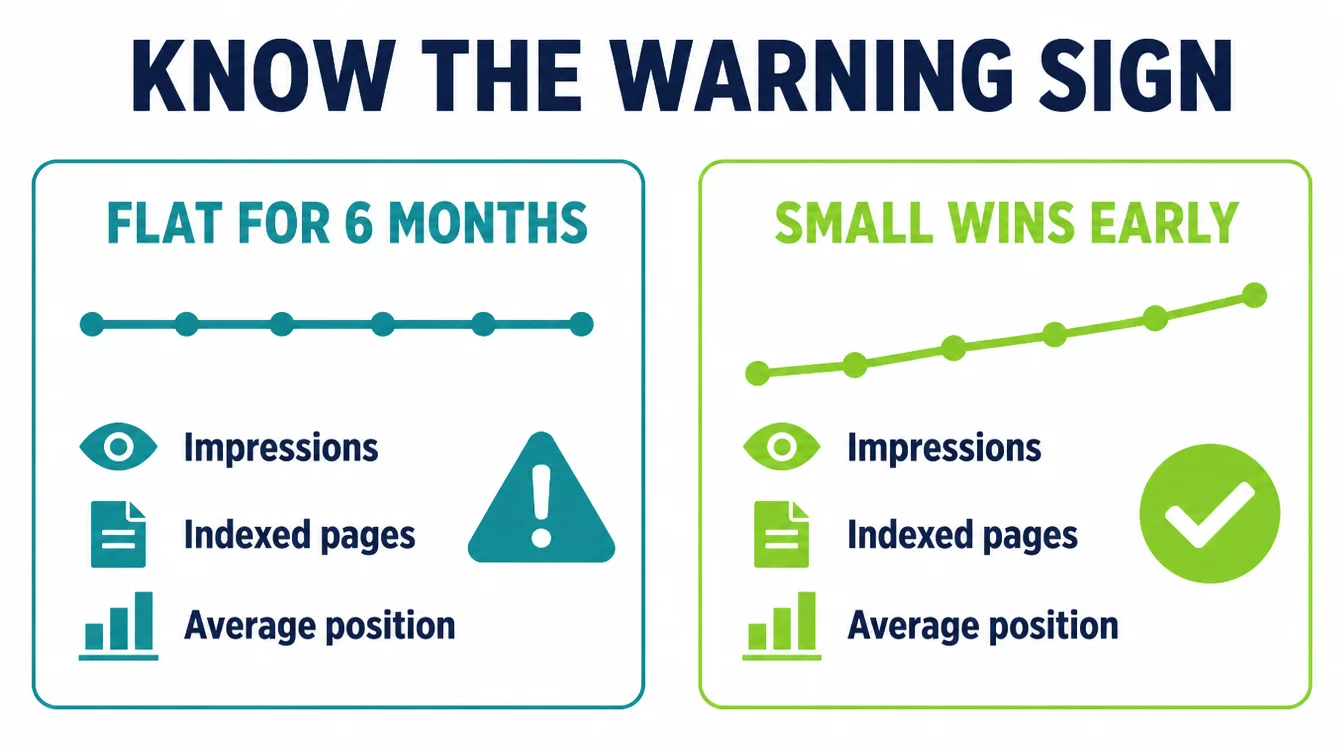
If your impressions, indexed pages, and average position in Search Console all sit flat for six months, something is wrong. Maybe pages are not indexed, maybe the content is too thin, or maybe a technical issue is blocking Google. By contrast, healthy SEO shows small wins early even before the big rankings land.
If you are stuck, our wider local SEO guide and the rest of the Seed Light blog walk through common fixes. At Seed Light, we treat the first three months as proof the engine works, then push for rankings from there.
Frequently asked questions
1. How long does SEO take to work?
SEO's early movement often shows in three to six months, with fuller results over four to twelve. Google's guidance says SEO usually needs four months to a year to implement improvements and see potential benefit. Easy keywords and established sites can move sooner, while crowded terms or a fresh site can take longer. The work compounds as pages, links and site history develop.
2. When will I see SEO results?
You see leading signs first, often within one to three months. New pages get indexed, impressions in Search Console climb, and you start ranking for long, specific phrases. Real money keywords and steady traffic usually follow around months four to nine. If nothing moves at all by month six, something is wrong and worth checking.
3. How long does SEO take for a new website?
A new website usually takes longer because it has no age or trust yet. Only 1.74% of newly published pages rank in the top 10 within a year, and the average number one page is about five years old. Expect a new site to spend the first months getting indexed and building a few links before rankings climb. Patience and consistency matter most here.
4. Why does SEO take so long?
SEO takes time because Google rewards trust, and trust is earned slowly. Most top pages are old: 72.9% of pages in the top 10 are more than three years old. Google needs to crawl your pages, see other sites link to you, and watch how people respond. None of that happens overnight, so the timeline reflects how search itself works.
5. Can I speed up SEO?
You cannot skip the wait, but you can shorten it. Target easier, specific keywords first, publish helpful content steadily, fix technical issues, and earn a few quality links. Backlinks matter a lot, since the number one result has 3.8 times more backlinks than positions two to ten. Doing the basics well from the start avoids months of lost ground.
6. How do I measure SEO progress?
Watch leading indicators before rankings, then track rankings and traffic. In Google Search Console, look at indexed pages, impressions, and average position climbing. Then track keyword rankings, organic clicks, and leads or sales from search. Write the numbers down monthly and compare. Steady upward movement, even when slow, is exactly what healthy SEO looks like.