How to Get Backlinks: Earn Quality Links Without Buying Spam

Earn backlinks by giving other sites a reason to link: useful content, local citations, guest articles on relevant sites, supplier and partner listings, and press quotes. Buying links breaks Google's rules. Seed Light does the outreach and the content for small business clients, aiming for a handful of good links each quarter.
Key takeaways
Short on time? Here is how to get backlinks the safe way, in five lines, before we break each one down.
- Backlinks still matter. There is a positive correlation between the number of sites linking to a page and its search traffic (Ahrefs, 2024).
- The bar is low. 94% of all blog posts have zero external links, so most of your competitors are not even trying (Backlinko, 2025).
- Never buy links. Google calls buying or selling links a spam violation (Google Search Central).
- Earn, do not pay. Citations, your trade body, your suppliers, digital PR, guest posts, and your own network are all free and safe.
- Make it a habit. A few good links a quarter beats a one-time pile, and it keeps your profile looking natural.
1. What a backlink is and why it still matters
A backlink is simply a link from another website to yours. Search engines treat each one like a vote. When a trusted site points at you, it is saying you are worth a look. As a result, pages with more links from real sites tend to rank higher and pull in more visitors.
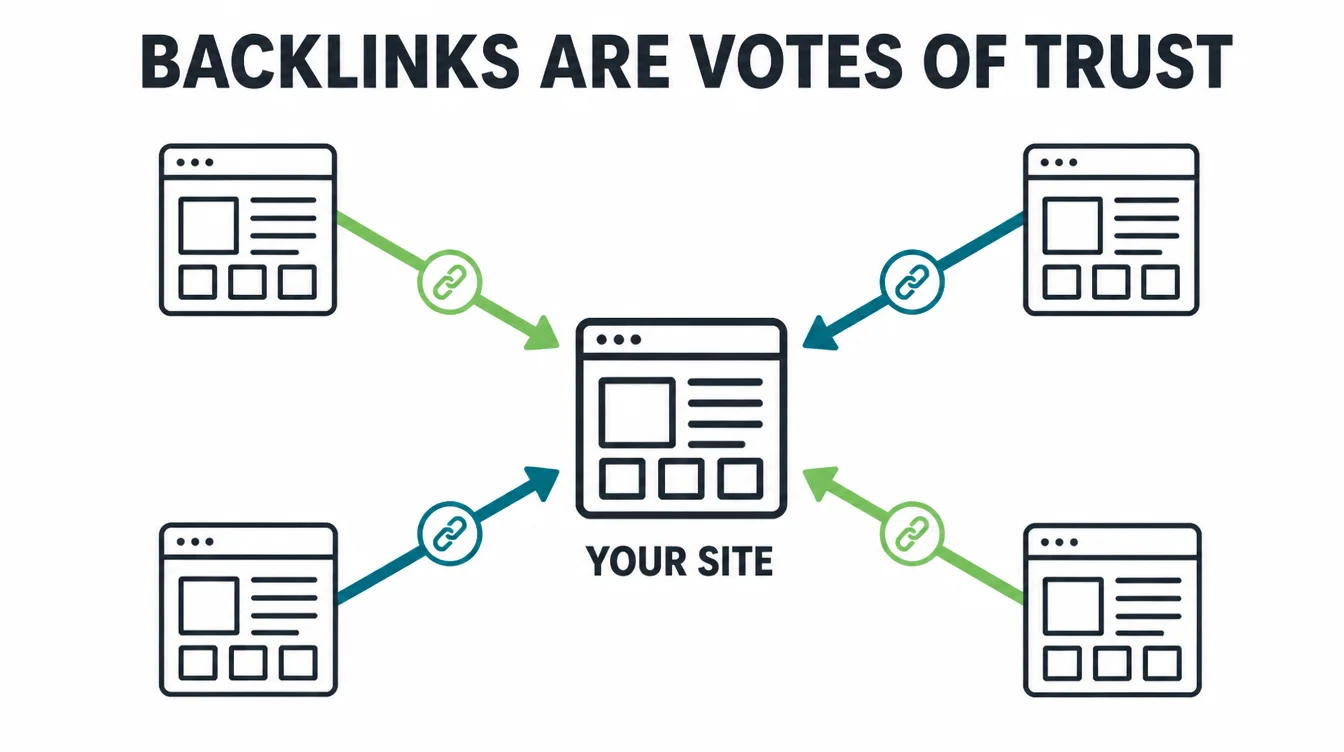
This is not a hunch. There is a positive correlation between the number of websites linking to a page and the search traffic it gets, and higher-ranking pages tend to acquire more new followed referring domains over time (Ahrefs, 2024).
In other words, links and rankings grow together. If you are new to the basics, our guide on what SEO is sets the scene.
Backlinks are not the only thing that counts, though. Good content, a fast site, and clear pages all matter too. But links are one of the few signals you build off your own site, so they are worth real effort. For the wider picture, see how to rank higher on Google.
2. Why the bar is lower than you think
Here is the part nobody tells small business owners. Most of your competitors do not earn links at all. In fact, 94% of all blog posts have zero external links, and 93% of business content gets zero links (Backlinko, 2025). So the field is wide open.
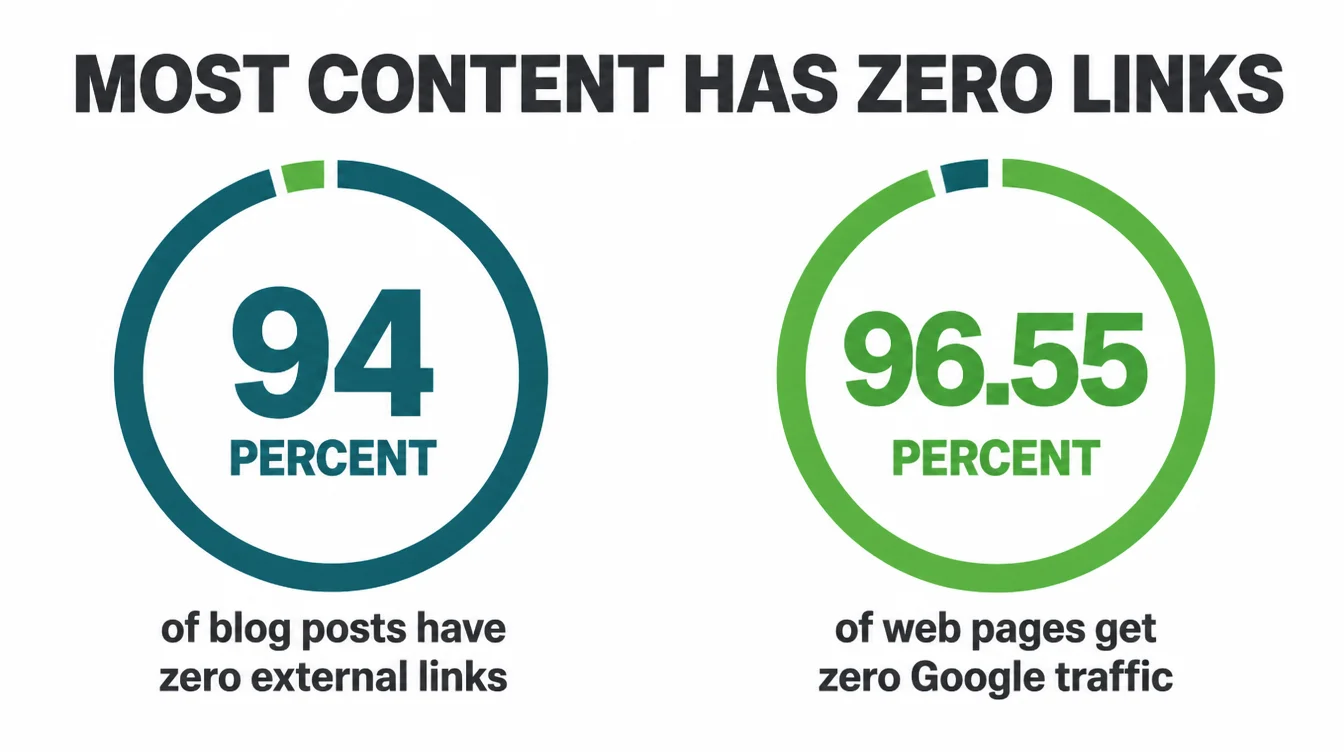
It gets better. Across the whole web, 96.55% of all pages get zero search traffic from Google (Ahrefs, 2024).
One big reason is that those pages have no links pointing at them, so search engines never trust them enough to rank them. Therefore a few solid links can lift you above a sea of pages that are simply invisible.
None of this happens overnight, mind you. Links and trust build slowly. For a realistic timeline, read how long SEO takes. The point for now is that earning a handful of honest links puts you ahead of most rivals, because most rivals never start.
3. Never buy links (Google calls it a spam violation)
Before the tactics, one hard rule. Do not buy links. Google's spam policies list buying or selling links for ranking purposes as a link scheme that breaks the rules (Google Search Central).
If you ever do pay for a link, such as a sponsorship or an advert, that link must use rel="nofollow" or rel="sponsored" so it does not pass ranking signals.
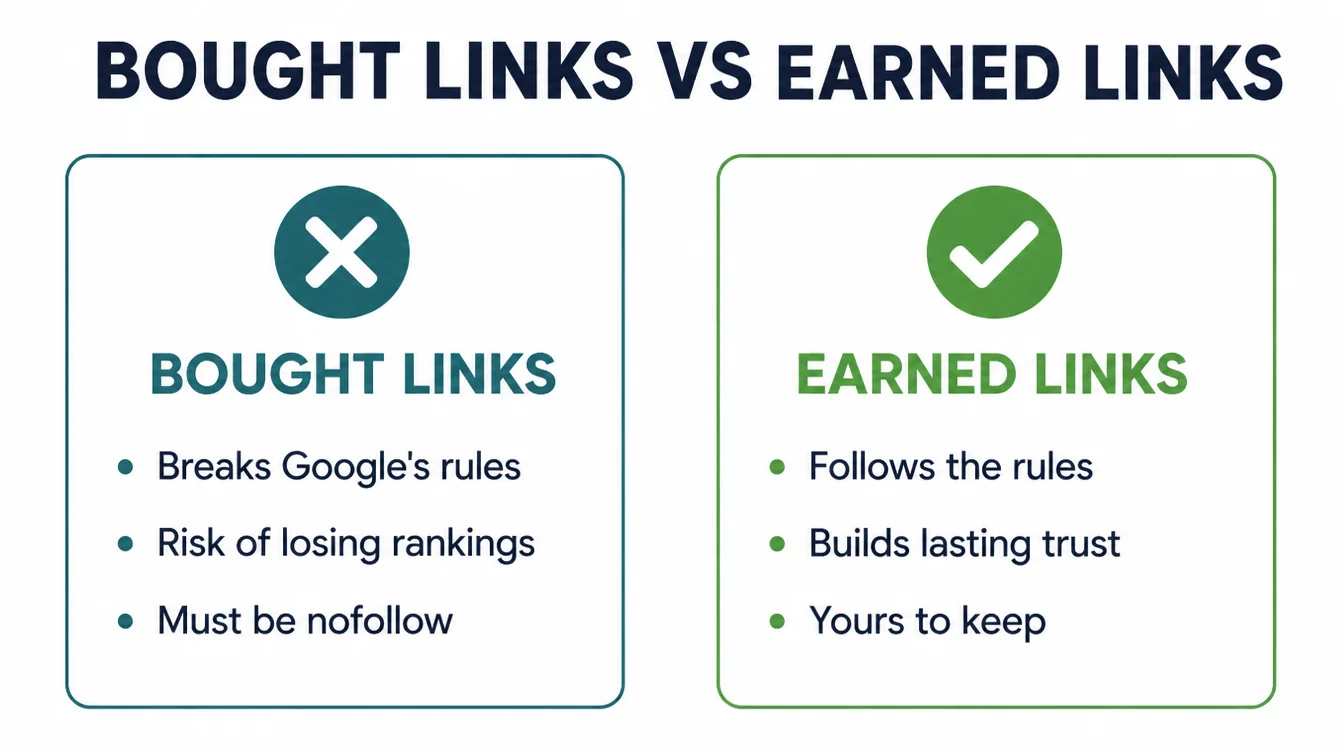
The maths is simple. Bought links are a short-term shortcut with a long-term cost. Sites caught in a link scheme can lose rankings, and recovery is slow and painful.
Meanwhile, the earned links below cost you time instead of money, and nobody can take them away. So skip the seller sliding into your inbox and build the real thing instead.
4. Way 1: local citations and directories
This is the easiest place to start. A citation is a listing of your name, address, and phone on another site, and the good ones include a link. Get listed on the big general directories and the main directory for your industry. Each listing gives you a link and keeps your details correct everywhere.
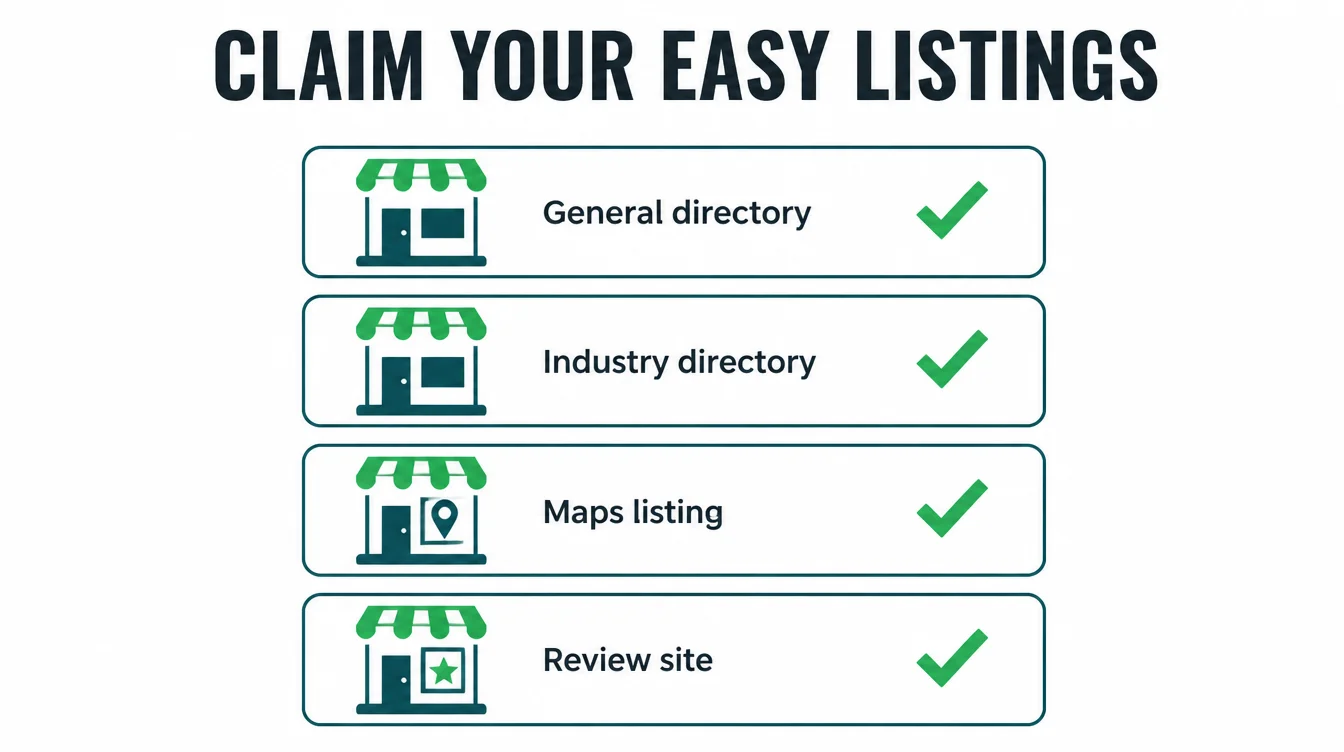
Be picky, though. You do not need a hundred listings. Pick the trusted ones, fill them in fully, and stop. For the exact sites to target and how to keep your details in sync, follow our guide on local citations. It pairs well with broader local SEO for small businesses.
5. Way 2: industry bodies, chambers, and associations
If you pay membership dues somewhere, you may already have a link sitting unclaimed. Chambers of commerce, trade bodies, and industry associations almost always publish a member directory. Moreover, those listings sit on sites that search engines already trust, so the link carries real weight.
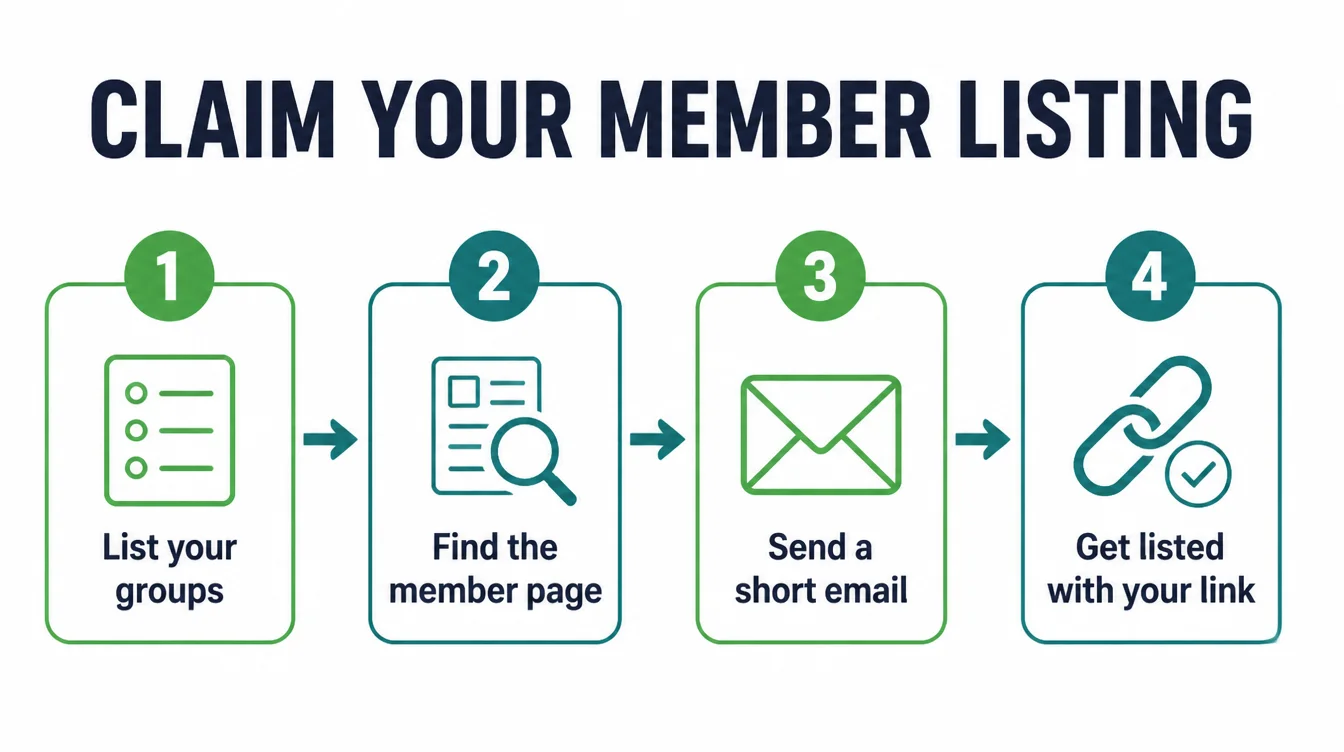
Here is the move. List every group you belong to. Then check each one for a member page and make sure your business is on it with a working link to your site.
If you are not listed, email them and ask. Likewise, joining one relevant local group is often worth it for the link and the referrals alone.
6. Way 3: suppliers, partners, and "we use them" mentions
Think about the businesses you work with. Your suppliers, the brands you stock, the software you rely on, and the partners you refer customers to.
Many of them have a "customers," "partners," "stockists," or "find a pro" page. Consequently, a quick ask can land you a link from a site that already knows and trusts you.
Make it easy for them. Send a short note: "We love working with you. Could you add us to your customer page?
Here is our link and a one-line description." Because you already have a relationship, the yes rate is high. In the same spirit, offer to add them to your own site so it works both ways.
7. Way 4: digital PR and journalist requests
Reporters and bloggers need expert quotes every single day. Services that collect journalist requests let you reply to those calls with a useful comment. When your quote gets used, you often get a link from a news or industry site, which is exactly the kind of trusted link you want.
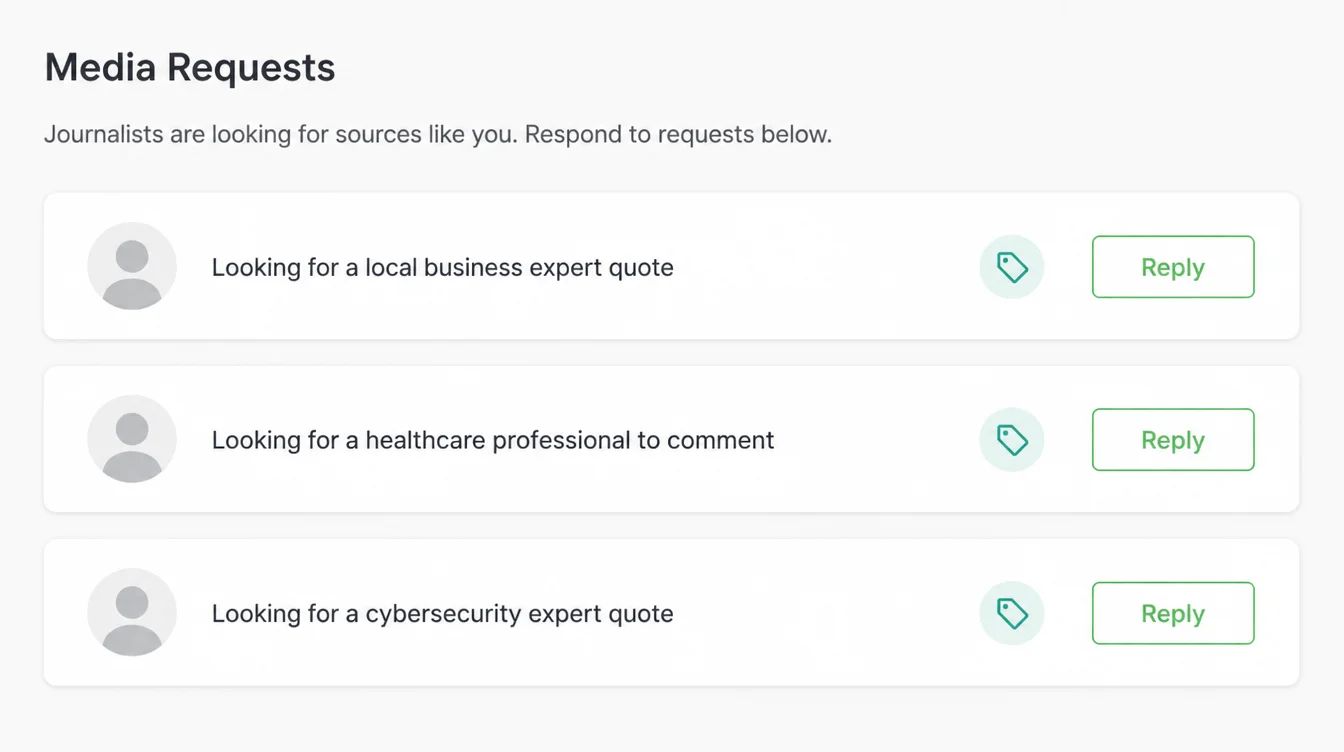
To make this work, keep replies short, helpful, and on time. Answer the actual question, add one specific tip, and skip the sales pitch. Furthermore, you can pitch your own small stories: a local milestone, a useful survey of your customers, or a comment on a change in your trade. Real, useful, and human wins.
8. Way 5: guest posts on real, relevant sites
Writing a genuinely useful article for another site can earn you a link in the author bio or the body. The key word is relevant. A guest post only helps if the site serves a similar audience and has real readers. Otherwise it is just noise that search engines ignore.
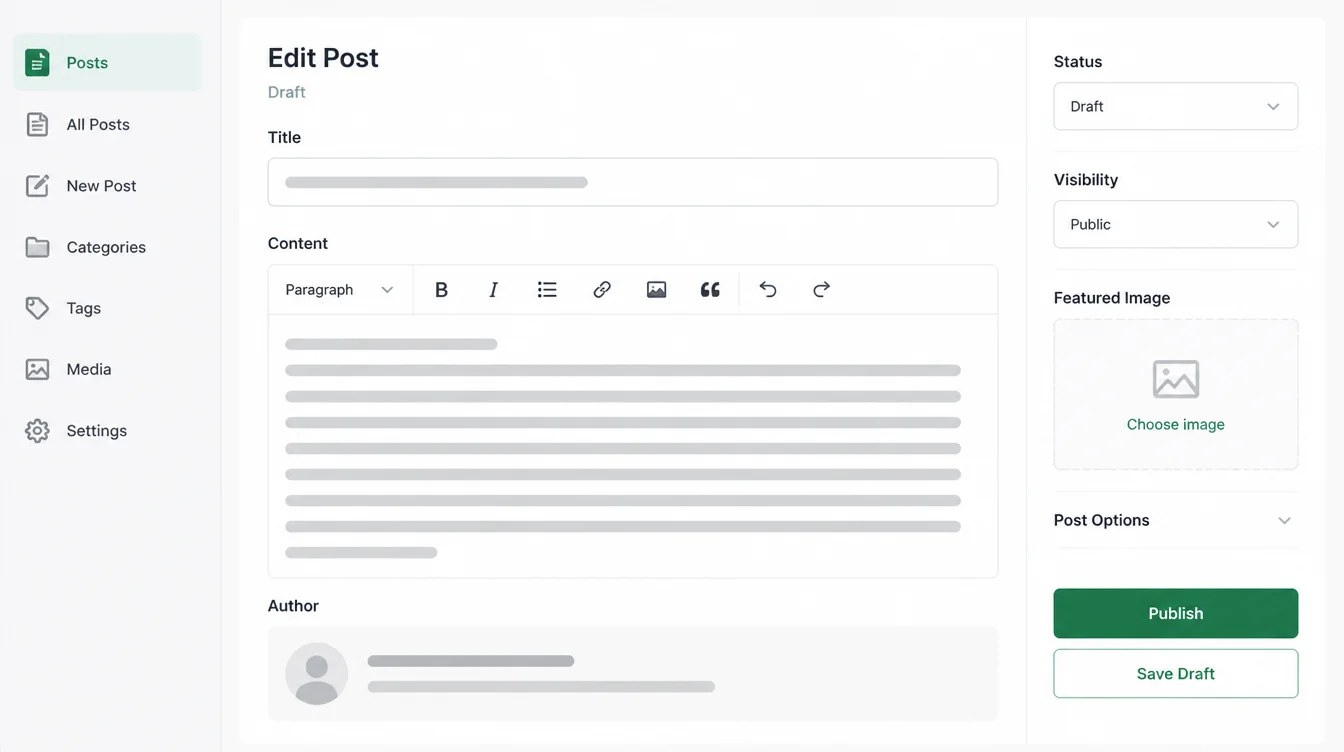
So aim for quality, not volume. One thoughtful post on a respected local or industry blog beats ten on link farms. Pitch a topic you can teach better than anyone, write it for their readers, and let the link be a natural byproduct.
Avoid any site that exists only to sell links, since that drags you straight into the rules you are trying to follow.
9. Way 6: create something worth linking to
The best link building is making something so useful that people link to it on their own. Three formats work well for a small business: original data, a free tool, and the best guide on a topic. Each gives other sites a real reason to point at you.
Original data
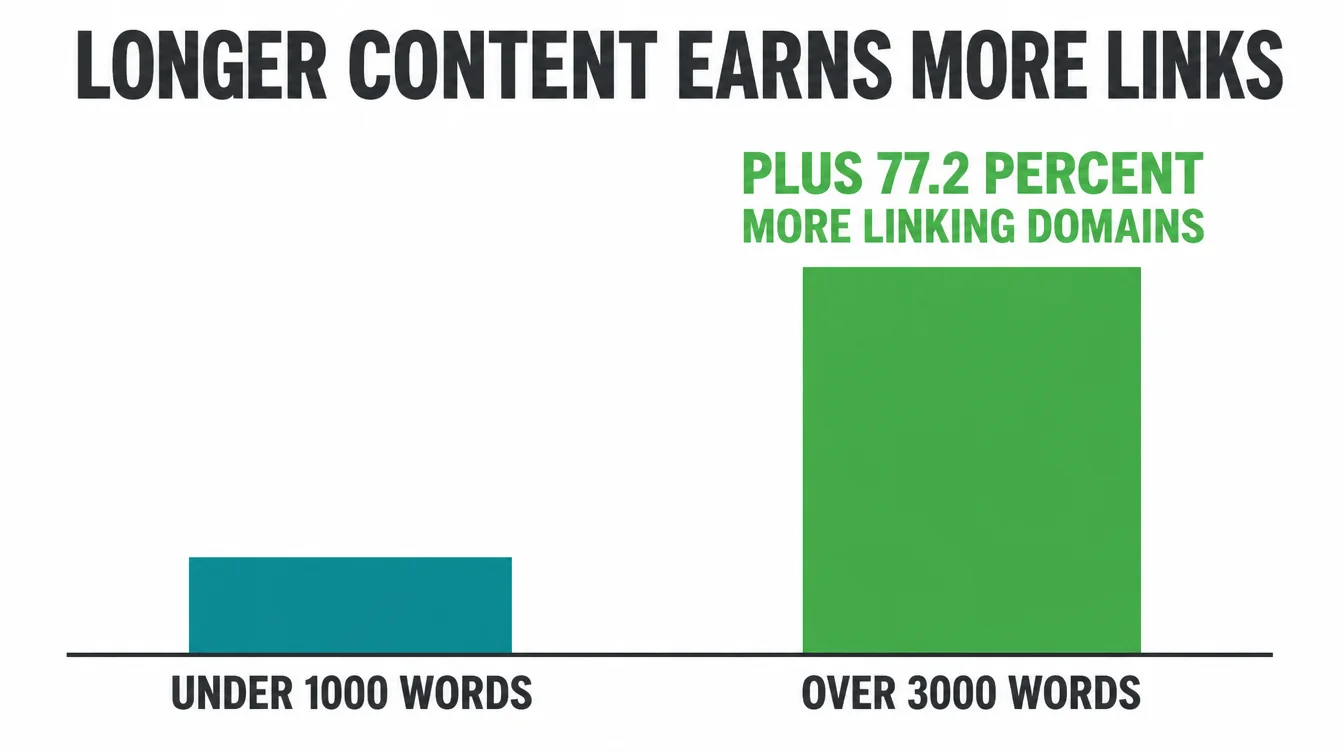
Survey your customers, count something in your trade, or share what you have learned. Fresh numbers are link magnets because writers cite stats. Length helps too: content over 3,000 words earns 77.2% more referring domain links than content under 1,000 words (Backlinko, 2025).
A free tool or template
A simple calculator, checklist, or template that solves one real problem gets shared and linked for years. It does not need to be fancy. It needs to be genuinely handy.
The best guide on a topic
Pick a question your customers always ask and answer it better than anyone. Pages with more referring domains tend to rank higher, and the number one result has far more backlinks than the results just below it (Backlinko). A truly great guide is how you earn those links.
10. Way 7: reclaim unlinked mentions
Sometimes people name your business without linking to it. A blog mentions you, a local roundup lists you, or a press piece quotes you, but the words are not clickable. Those are easy links waiting to be claimed.
To find them, search for your business name and read where it shows up without a link. Then send a friendly note: "Thanks for the mention.
Would you mind linking it to our site so readers can find us?" Since the writer already chose to mention you, adding the link is a small ask, and most say yes.
11. Way 8: the people you already know
Your network is full of links you have never asked for. The accountant who did your books, the designer who made your logo, the charity you sponsor, the school your kids attend, the supplier down the road. Many of them have a website with a page where you could fit.
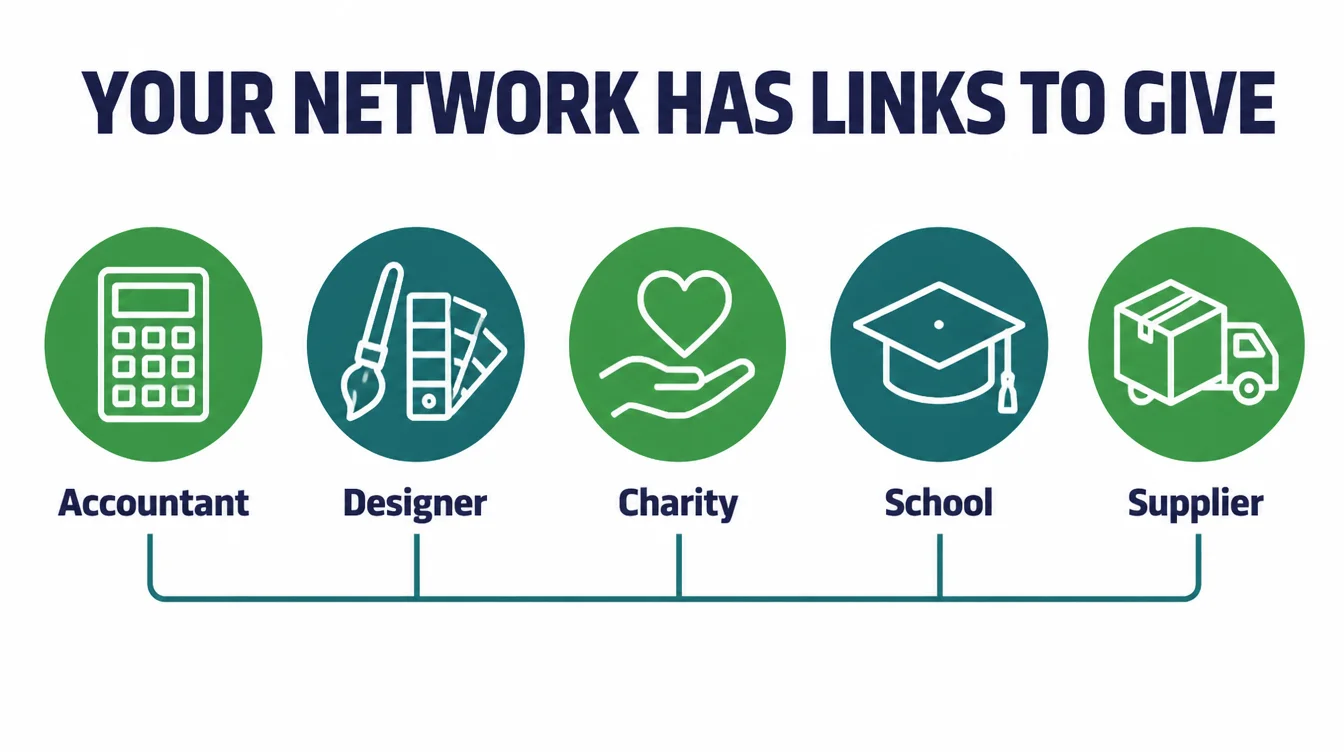
Make a list of everyone you have a real relationship with. Then ask, one at a time, whether they have a partners, supporters, or local-friends page you could join.
Because the relationship is real, the link looks natural to search engines, which is exactly what you want. Additionally, these chats often turn into referrals, so the upside is double.
12. A simple monthly backlink routine
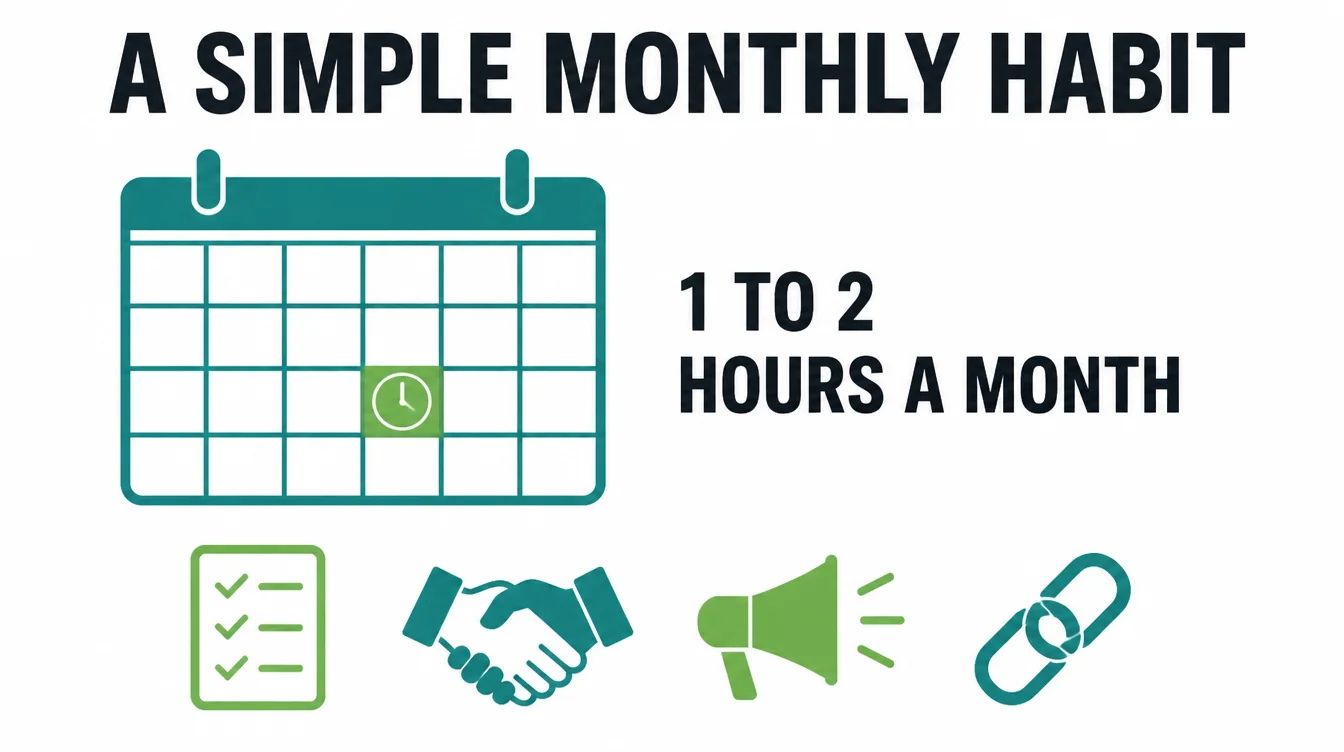
You do not need a big campaign. You need a small habit. Spend an hour or two each month on the steps below, and your link profile grows steadily without ever crossing the rules. Slow and steady is exactly what healthy link building looks like.
| Tactic | Best for |
|---|---|
| Local citations and directories | A fast first batch of links plus correct details across the web |
| Industry bodies and chambers | Trusted links you may already be paying for through membership |
| Suppliers and partners | Easy links from sites that already know and trust you |
| Digital PR and journalist requests | High-trust links from news and industry sites |
| Linkable content (data, tools, guides) | Earning links on autopilot over the long run |
| Unlinked mentions and your network | Quick wins from people who already talk about you |
Work one row a month if that is all you have. After a quarter you will have claimed your citations, your memberships, and your easy network links, and you will have at least one piece of content pulling links on its own.
Making that kind of asset on a schedule is what our content marketing service does, and the link and ranking side sits in our SEO service. For more, browse the Seed Light blog.
Frequently asked questions
1. What is a backlink and why does it matter?
A backlink is a link from another website to yours. Search engines treat it like a vote of trust, and there is a positive correlation between the number of websites linking to a page and the search traffic it gets. So when real, relevant sites link to you, you tend to rank higher and reach more customers. The key word is real. A handful of links from trusted sites in your area or industry beats a hundred links from sites nobody trusts.
2. How do I get backlinks for free?
Start with the links you can claim today. List your business in the main directories and citation sites. Join your local chamber, trade body, or industry association and use the member listing. Ask the suppliers and partners you already work with to add you to their customer or partner page. Then build something worth linking to, like a free tool or an honest local guide, and tell people it exists. Every one of those costs time, not money, and all of them are within the rules.
3. Is buying backlinks against Google's rules?
Yes. Google's spam policies list buying or selling links for ranking purposes as a link scheme that violates its rules. If you do pay for a link, for example a sponsorship or an advert, the link must use rel=nofollow or rel=sponsored so it does not pass ranking signals. Sites caught buying links can lose rankings, so the risk is not worth it for a small business. Earn links instead of buying them.
4. What is the difference between a dofollow and nofollow link?
A dofollow link is a normal link that can pass ranking signals to your site. A nofollow link carries a small tag that tells search engines not to pass those signals. You want a healthy mix. Nofollow links from a news site or a directory still send you real visitors and make your profile look natural. Do not chase only dofollow links, and never pay for a dofollow link, because paid links are meant to be nofollow or sponsored.
5. Do directory listings count as backlinks?
Yes, and the good ones do double duty. A listing on a trusted directory or citation site gives you a link and keeps your name, address, and phone correct across the web. The trick is to be picky. Pick the big general directories and the main directory for your industry, get your details right, and stop there. You do not need to be on a hundred low-quality sites, because accuracy matters more than volume now.
6. How many backlinks does a small business need?
There is no fixed number, and quality beats quantity every time. The number one result in Google has far more backlinks than the pages just below it, but those are usually big, competitive terms. For a local business, a steady stream of links from your community, your suppliers, your trade body, and a few relevant sites is plenty to compete. Aim for a handful of good new links each quarter, built up steadily, and keep them honest.