How to Rank Higher on Google in 2026: What Still Works

Rank higher on Google by matching each page to what people actually search, covering the topic properly, fixing speed and mobile, and earning a few real links. Backlinko reports that the top three results take 54.4% of clicks. Seed Light finds what is holding pages back and fixes the basics first.
Key takeaways
Want to know how to rank higher on Google without the dead tactics? Here is the whole thing in five lines before we break it down.
- The top spots win the clicks. The top three results take 54.4% of all clicks, so a small jump in position is a big jump in customers (Backlinko).
- Trust comes first. Google says trust is the most important quality signal, and helpful content made for people beats everything else (Google Search Central).
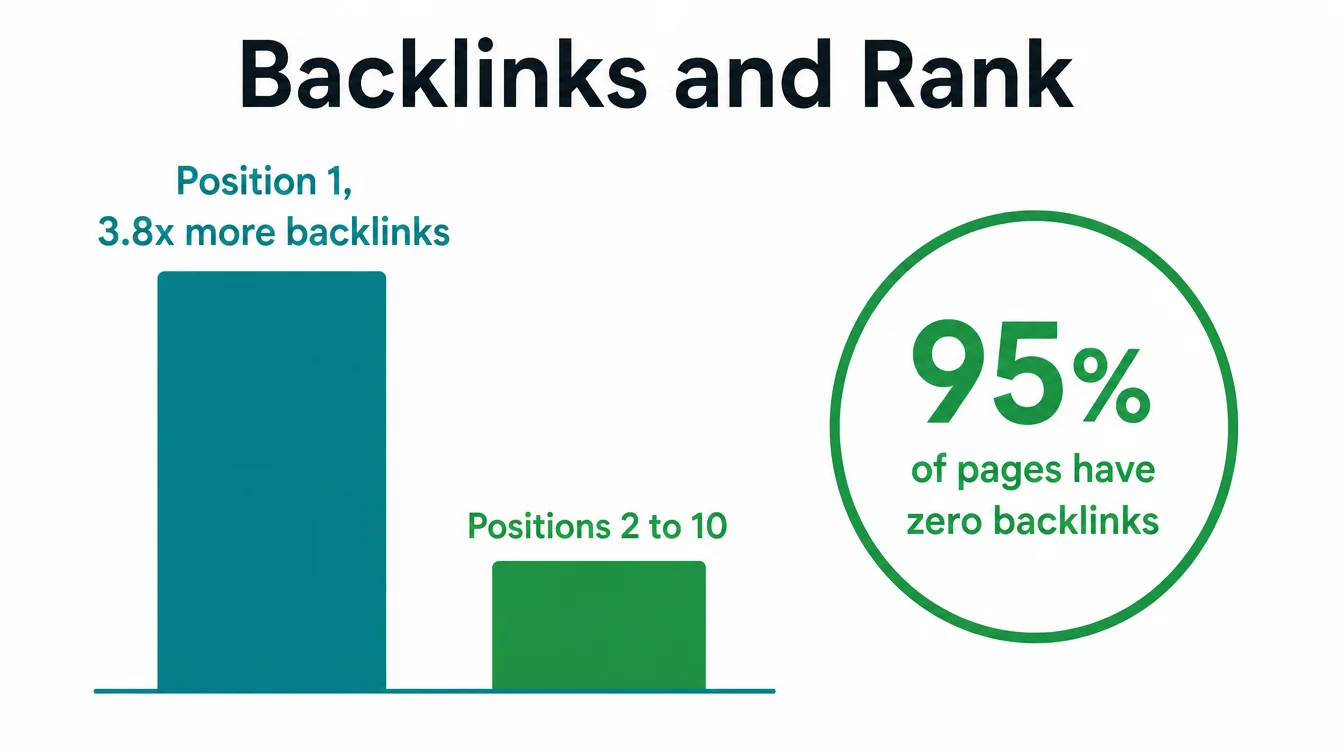
- Links still matter. The number one page has about 3.8x more backlinks than positions two through ten, yet roughly 95% of pages have none (Backlinko).
- Search changed. SparkToro measured 68.01% of US Google searches ending without a click between January and April 2026, and AI Overviews now appear on a sizeable share of results (SparkToro).
- Retire the 2019 playbook. Keyword stuffing, thin posts, and anchor spam do not work. Write for people and keep it up monthly.
1. Why ranking still matters
If you want to know how to rank higher on Google, start with the prize. The top spots get nearly all the attention. The number one result earns 27.6% of clicks, and the top three combined pull 54.4% of every click (Backlinko).
Drop to position ten and you get 2.7%. Slip to page two and you get 0.63%. So moving up one or two spots is not a vanity win. It is more customers.
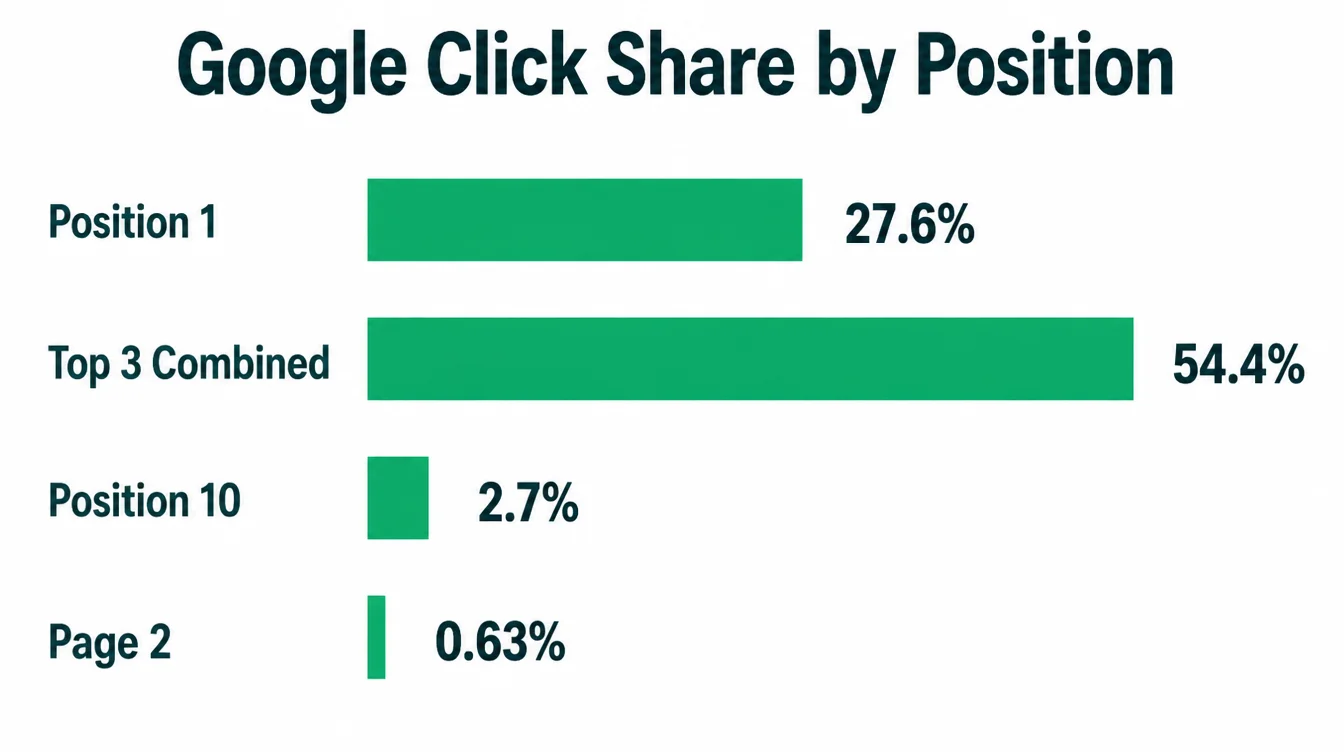
| Position | Share of clicks |
|---|---|
| Position 1 | 27.6% |
| Top 3 combined | 54.4% |
| Position 10 | 2.7% |
| Page 2 (top result) | 0.63% |
Now the honest part. Search has changed, and you have to plan for it. In 2026, 68.01% of Google searches ended without a click, up from 60.45% in 2024 (SparkToro).
Meanwhile, AI Overviews keep growing. A study tracking them found they moved from 6.49% of searches in January 2025 to a 24.61% peak in July, then settled around 15.69% by November (Semrush).
Therefore the goal is wider now: rank well, and become the source those answers quote. New to all this? Start with our plain guide on what SEO is.
2. Start with search intent and helpful content
Forget tricks. Google is clear about what it rewards. It describes people-first content as "content that's created primarily for people" and says, "Of these aspects, trust is most important" (Google Search Central). In plain words, the page that helps the reader most tends to win. Helpful content beats everything else, every time.
So before you write a word, answer one question: what does the person typing this actually need? A buyer wants to compare options. A beginner wants a simple explainer. Someone in a hurry wants a phone number and hours.
As a result, the same keyword can need three very different pages. Get that wrong and no amount of polish saves you. For the foundations, our SEO basics for small business guide walks through it from scratch.
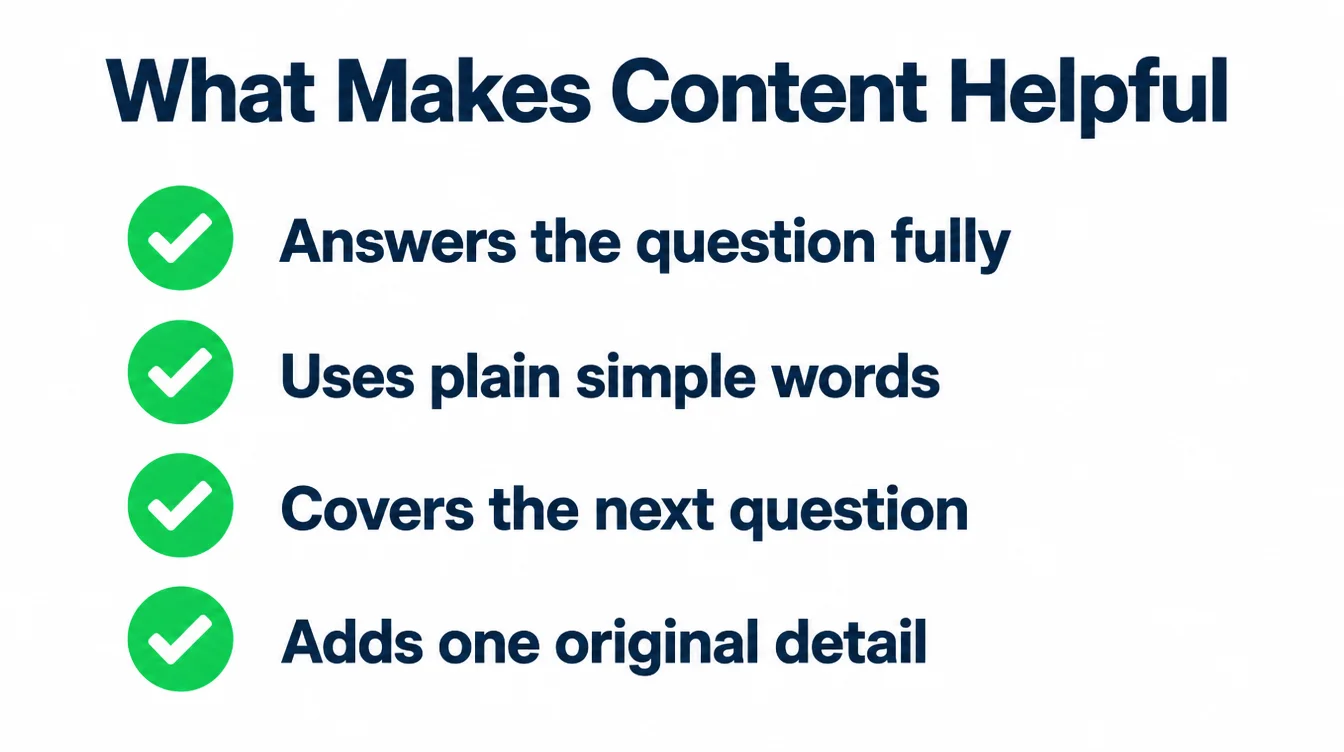
Furthermore, "helpful" has a low bar that most pages still fail. Answer the question fully. Use plain words. Cover the follow-up questions a real person would ask next. Add something only you know, like a specific example or a number. That is how you earn the spot, and it is the part competitors keep skipping.
3. Match what the searcher actually wants
Here is the fastest way to find search intent: search the keyword yourself and look at the top ten. Google has already shown you what it thinks people want.
If the page one results are all short how-to guides, a long sales page will not rank, no matter how good it is. The format is part of the answer.
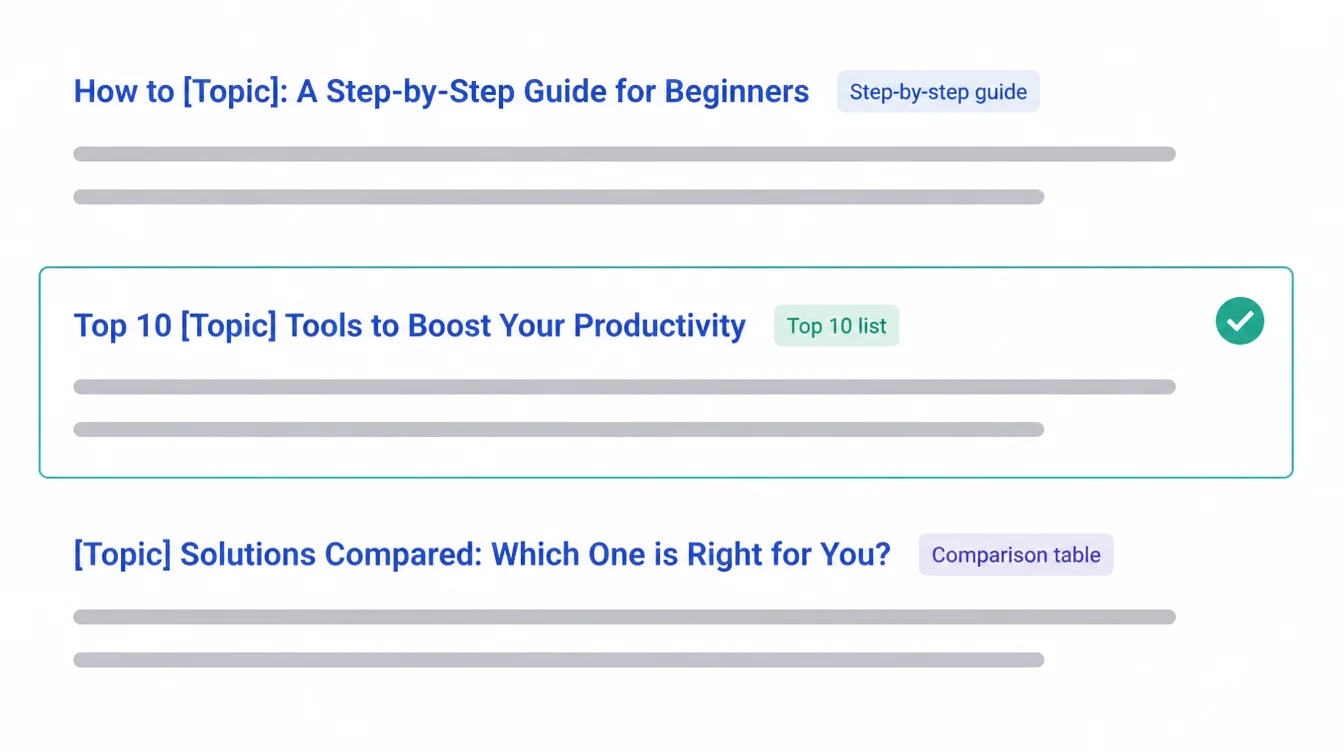
Specifically, check three things.
- First, the type of page: guide, list, product, comparison, or local result.
- Second, the depth: a quick answer or a full deep dive.
- Third, the angle: are they after "how," "best," "vs," or "near me"?
Match all three and you are halfway there. By contrast, if you ignore the top results and write what you feel like writing, you are guessing.
One more thing. Cover the whole topic. A page about "how to rank higher on Google" should touch intent, content, trust, links, and page speed, because that is what the reader needs to actually do it. Thin pages that name a keyword but answer nothing are exactly what stopped working.
4. Earn trust (E-E-A-T in plain words)
E-E-A-T stands for experience, expertise, authoritativeness, and trust. It sounds like jargon, but it is simple. Google wants to know a real, qualified person stands behind the page. Trust is the one it cares about most, and a page it cannot trust will not rank well however else it scores (Google Search Central).
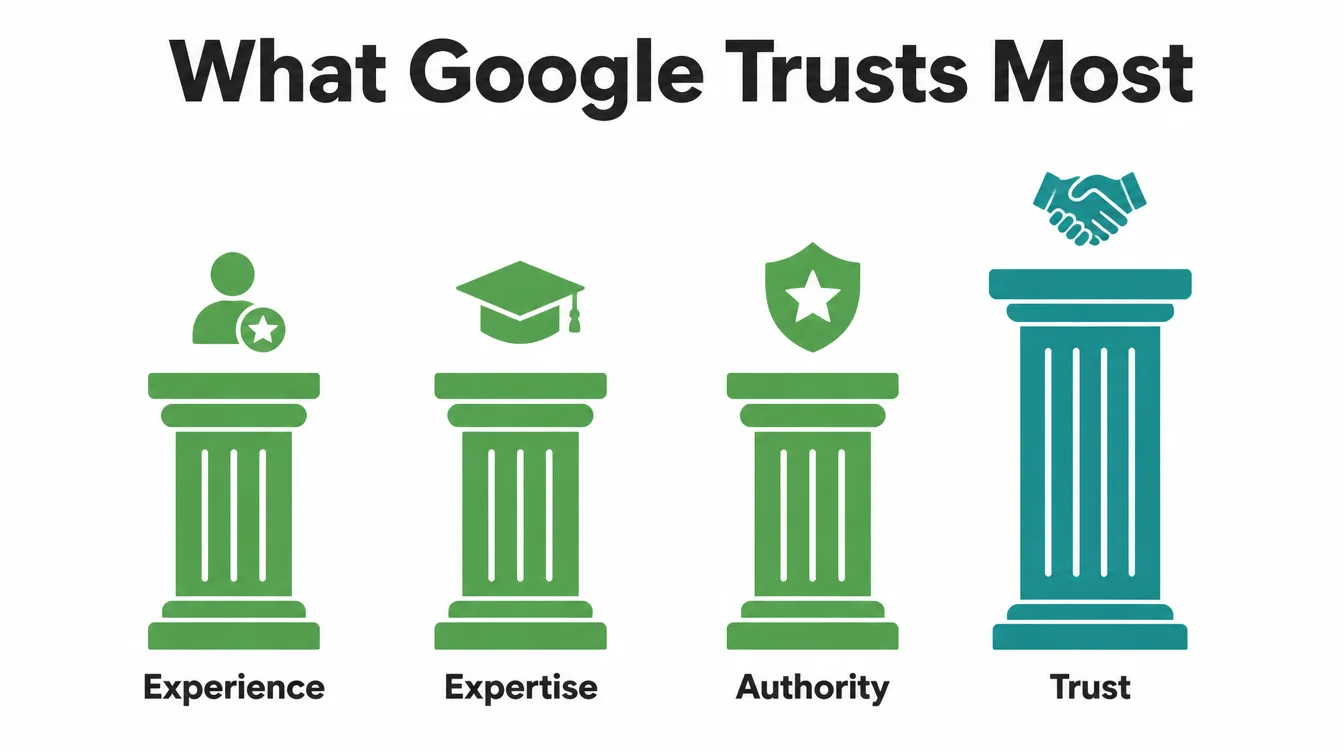
What trust looks like in practice
In practice, trust comes down to a few visible things.
- Put a real author on the page with a short bio and a link to who they are.
- Show real reviews and real results, not stock praise.
- Keep your details accurate: correct hours, a real address, a phone number that works.
- List the sources behind your claims.
None of this is technical. It is just being honest in a way both people and Google can see.
The same idea drives the map results
For a local business, the same idea drives the map results too. Reviews, accurate details, and a complete profile are trust signals. They tell Google you are a real operation customers vouch for. That is why the boring stuff, like fixing a wrong address, often moves you more than any clever tactic.
5. Get the page experience right
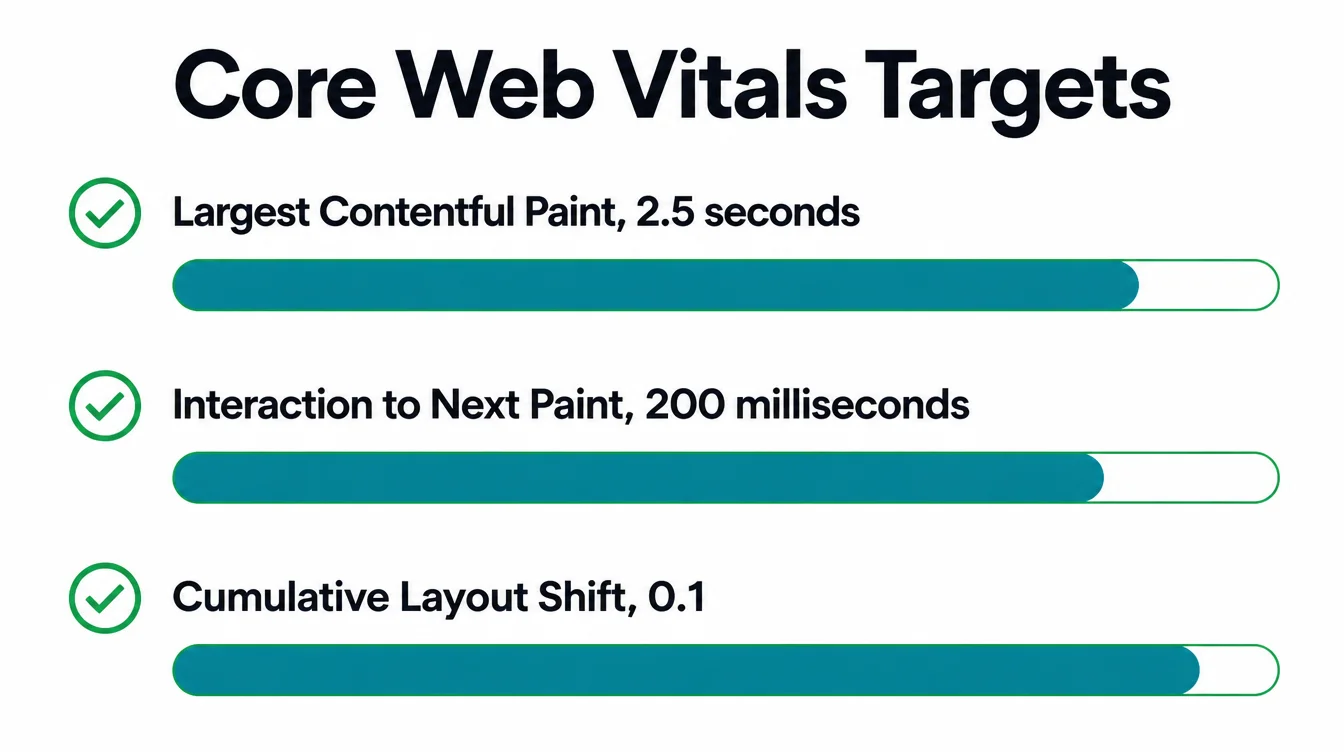
A great answer on a slow, clunky page still loses. Google measures page experience with Core Web Vitals, and the targets are clear.
Aim for a Largest Contentful Paint within 2.5 seconds, an Interaction to Next Paint of 200 milliseconds or less, and a Cumulative Layout Shift of 0.1 or less, measured at the 75th percentile of visits (web.dev). In plain words: load fast, respond fast, and do not jump around while loading.
It has to work on a phone
And it has to work on a phone. Google uses mobile-first indexing, which means it looks at the mobile version of your page to decide how to rank you (Google Search Central).
So if your site is fine on desktop but cramped and slow on mobile, that is the version that counts against you.
Therefore test on your own phone, with real thumbs, on a normal connection. If it feels heavy, that is a build problem worth fixing. See how we approach SEO and site speed for small businesses.
6. Build authority with links
Links are still an important ranking signal. In a study of millions of results, the number one page had about 3.8 times more backlinks than positions two through ten, and roughly 3 times more referring domains (Backlinko).
A link from another site is a vote. The more relevant, trusted sites that point to you, the stronger you look.
Most pages have no links at all
Here is the encouraging part. The same broad analysis of 11.8 million results found that approximately 95% of all pages have zero backlinks (Backlinko).
For context, that is an older snapshot, not 2026 data, but the lesson holds: the bar is low. Even a handful of good links from relevant sites can lift you past pages with none.
In particular, focus on quality and relevance, not volume. One link from a respected industry site beats fifty from random directories. Our guide on how to get backlinks shows the white-hat ways to earn them.
7. What stopped working
A lot of advice online is years out of date. If you are still doing any of this, stop. It wastes time at best and risks a penalty at worst.
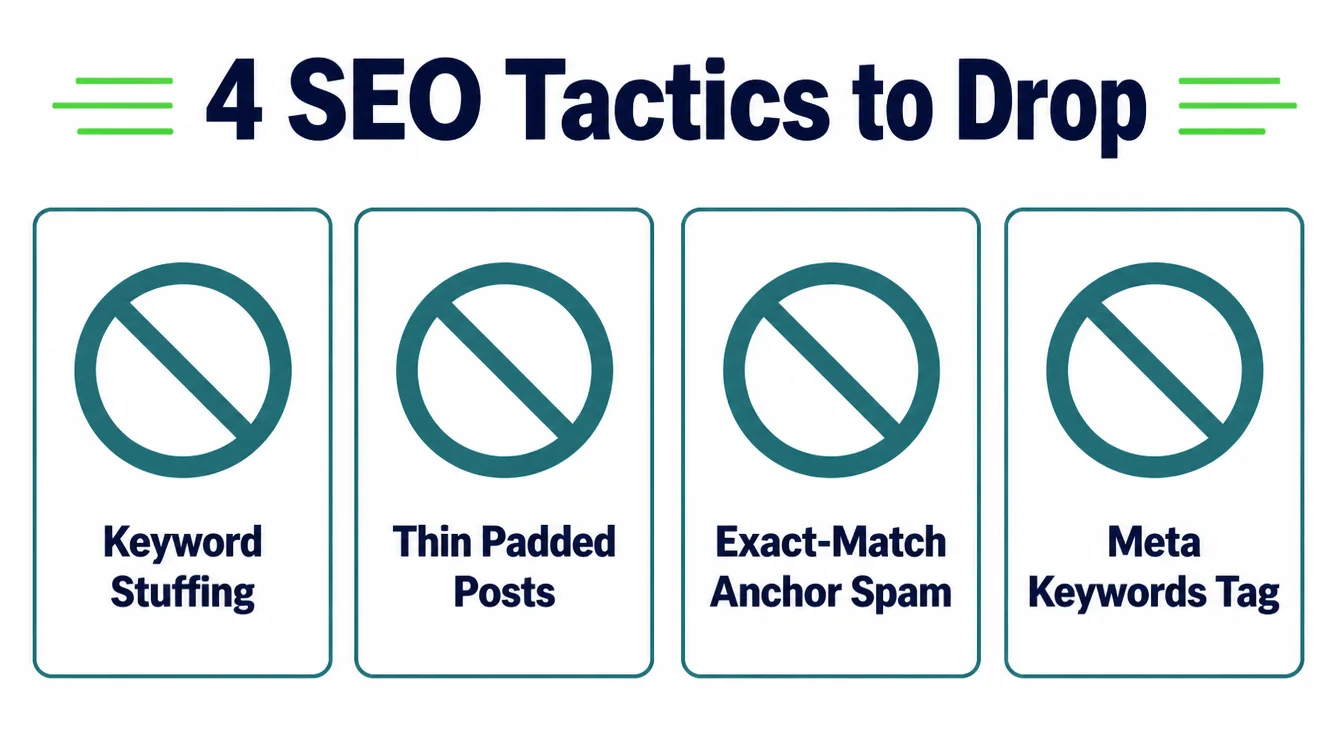
Keyword stuffing
Repeating your keyword in every other sentence does not help, and it reads badly. Use the phrase naturally a few times and move on. Google understands topics now, so exact matches matter less.
Thin posts written to a word count
A 300-word page that answers nothing is invisible. So is a padded 2,000-word page that says nothing. Length is not the goal. Answering the question fully is.
Exact-match anchor spam
Buying links that all use your exact keyword as the link text is a red flag. Natural links use varied, normal wording. Forced patterns get you noticed for the wrong reasons.
Meta keywords and AI mass-production
The meta keywords tag has done nothing for ranking for over a decade. And spinning out hundreds of auto-written pages does not work either.
Google says using automation for "manipulating search rankings" is "a violation of our spam policies" (Google Search Central). Wondering how long the new approach takes? See how long SEO takes to work.
8. How to rank in AI Overviews and snippets
AI Overviews and featured snippets are the new top of the page, and they pull from pages that already do the fundamentals well.
With AI Overviews appearing on a sizeable chunk of results in 2026, being the source they quote is now part of ranking, not a separate game (Semrush). The good news: the work that earns a mention in AI answers is the same work that earns a top spot.
To be the citable source, make your answer easy to lift. Answer the main question in one or two clear sentences near the top of the page. Use plain headings that match real questions.
Back claims with specific facts and numbers a model can quote with confidence. By contrast, vague, rambling pages give an AI nothing clean to pull, so they get skipped.
However, do not chase the AI box at the cost of the reader. A page built to genuinely help, with a real author and honest sources, is exactly what gets cited. Therefore keep writing for people first. The citation follows the quality, not the other way around.
9. A simple monthly routine
Ranking is not a one-time push. It is a habit. Spread the work across a month and it stays manageable. Here is a routine you can actually keep up between everything else you run.
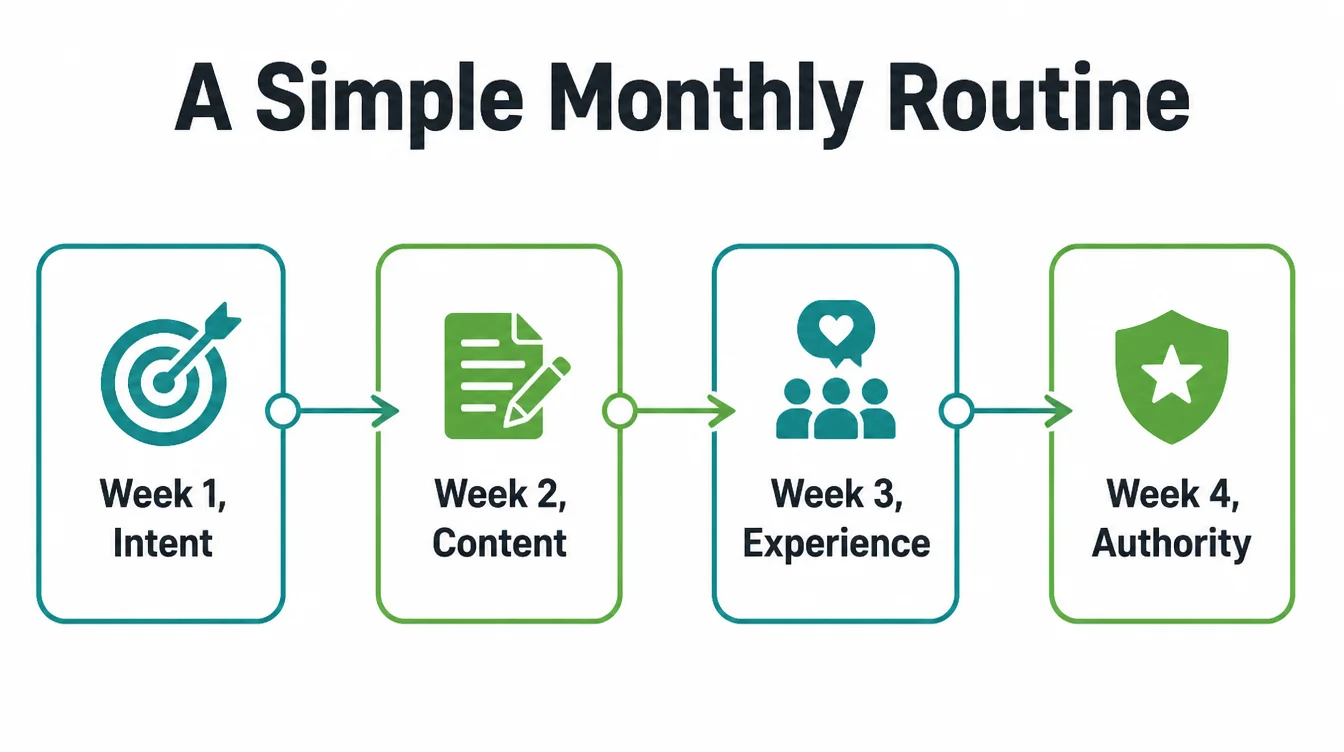
| Week | Focus | One concrete action |
|---|---|---|
| Week 1 | Intent | Pick one page, search its keyword, and check it matches the top results |
| Week 2 | Content | Improve that page: fuller answer, plain headings, a real author |
| Week 3 | Experience | Test your top pages on a phone and fix anything slow or jumpy |
| Week 4 | Authority | Earn or ask for one good, relevant link, then check your positions |
Track where you rank for a few key terms and write the numbers down each month. Slow and steady upward is exactly what healthy SEO looks like. For more, browse the Seed Light blog, tighten your pages with our on-page SEO checklist, or weigh the options in SEO vs Google Ads.
Frequently asked questions
1. How do I rank higher on Google in 2026?
Start by matching what the searcher actually wants, then publish helpful content that answers it better than the pages already ranking. After that, build trust with a clear author, real reviews, and accurate details, make your page fast on a phone, and earn a few good links over time. There is no single trick. It is the same handful of things done well and kept up.
2. How long does it take to rank higher on Google?
Plan for months, not days. A small fix to an existing page can move within a few weeks. Across SEO, early movement often shows in three to six months, with fuller results over four to twelve. Trust and links build up slowly, so treat ranking as a habit you keep, not a task you finish once.
3. Do backlinks still matter for ranking?
Yes. Links still correlate strongly with higher positions. One analysis of millions of results found the number one page had about 3.8 times more backlinks than positions two through ten. The catch is that around 95% of all pages have zero backlinks, so even a few good ones from relevant sites can set you apart. Quality and relevance beat raw volume.
4. What SEO tactics stopped working?
The 2019 playbook is done. Keyword stuffing, thin posts written to hit a word count, exact-match anchor text spam, and the old meta keywords tag do nothing useful now and can hurt you. Google also says using automation to manipulate rankings violates its spam policies. Write for people first, and skip anything that only exists to trick the algorithm.
5. How do I show up in Google AI Overviews?
Be the clear, citable source. Answer the question in plain words near the top of the page, use simple headings, and back claims with facts a model can quote. Strong, well-organised pages that already rank well are the ones AI Overviews tend to pull from. So the work that earns a top spot is the same work that earns a citation.
6. What is the most important Google ranking factor?
Google says trust is the most important member of its quality signals, and a page that is not trustworthy will not rank well no matter how it scores elsewhere. In practice that means content created for people, a real author, accurate details, and a track record others point to. Get trust right and the other factors have something solid to build on.
7. Can I rank higher on Google by myself?
Yes, for a lot of it. Matching search intent, writing helpful pages, adding a real author, getting reviews, and keeping your site fast are all things an owner can do without code. Links and technical fixes are where many people bring in help. Start with the free, high-impact work, and only pay for the parts you cannot do yourself.