FAQ Schema 2026: When It Still Helps Search Visibility

FAQ schema labels question and answer pairs so machines can read them. Since May 2026 it no longer earns a Google rich result for most sites, but it is safe to keep and still helps AI answer engines understand your page. Add it only where a real FAQ exists. Seed Light adds structured data where it earns its place.
Key takeaways
- The Google dropdown is gone. Google retired the feature: FAQ rich results no longer appear in Google Search from 7 May 2026, and the documentation page for them has been removed. No site gets the FAQ dropdown now.
- This was a slow phase-out. Back in August 2023, Google limited FAQ rich results to government and health sites, and SERPs showing FAQs fell from 53.94% to 17.04% almost overnight.
- The markup is still valid. Google deprecated the rich result, not the schema type, and says unused structured data does not cause problems for Search.
- Keep it for clarity and AI. Clean question and answer markup helps machines parse your content, which matters as more searches end without a click.
- Do not chase the old dropdown. Adding FAQ schema today will not get you a Google rich result, and it is not a ranking trick.
1. What is FAQ schema?
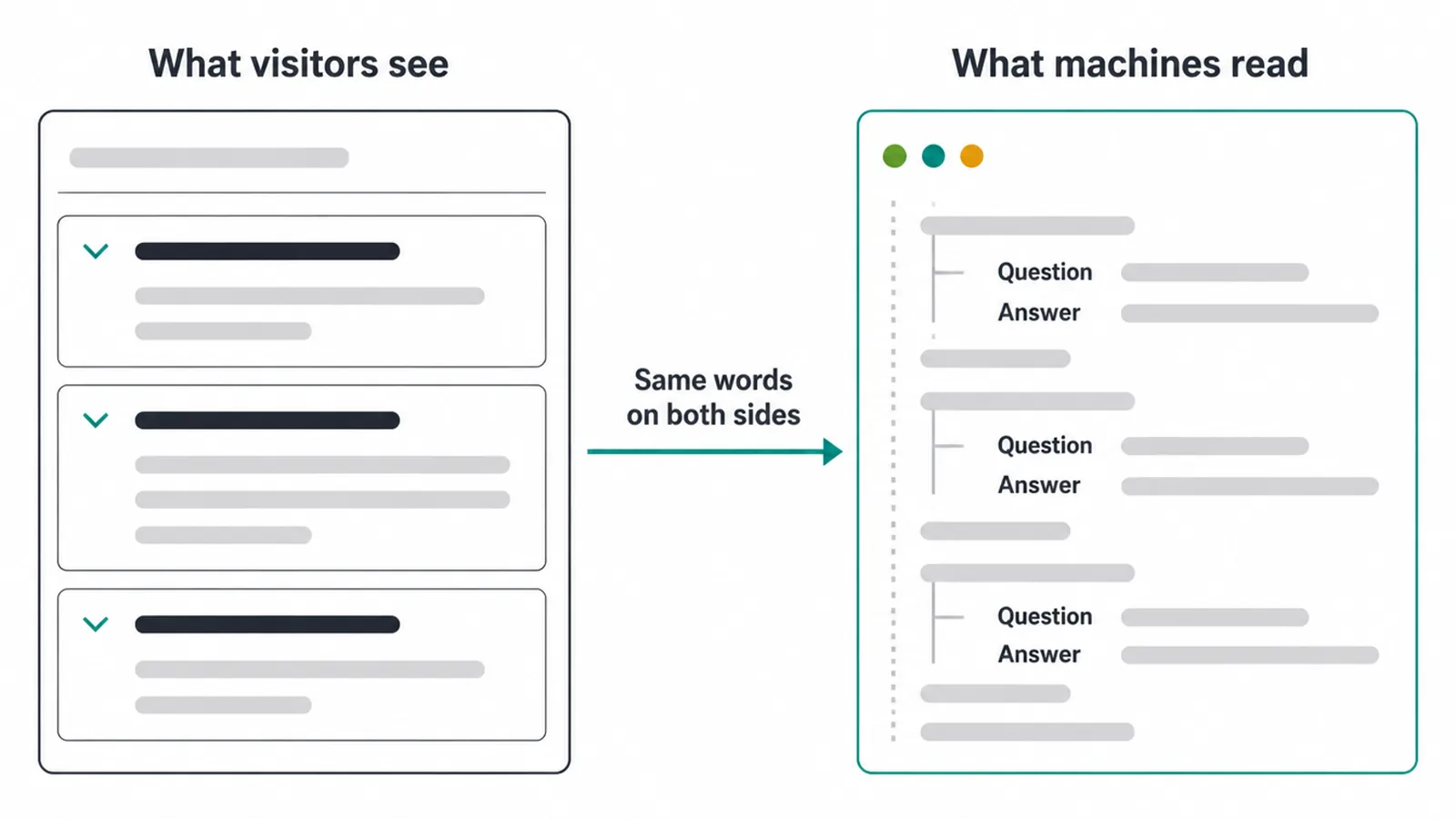
FAQ schema is code that labels the question and answer pairs on a page so search engines and AI tools can read them clearly.
It is usually written as JSON-LD, a small block of structured data that sits inside a <script> tag in your page. It does not change anything a visitor sees. It just tells machines, in plain terms, "this is a question, and this is its answer."
It is one type of schema among many. If you want the full picture of how structured data works, read our guide to schema markup. FAQ schema is just the slice that handles question and answer content. It uses the FAQPage type from Schema.org, and inside it you list each Question with its acceptedAnswer.
Think of it as a label, not a billboard. It works behind the scenes. A good FAQ section on the page is what people read.
The schema is the machine-readable copy of that same content. The two should always match. For where this fits in the bigger on-page picture, our on-page SEO checklist walks through the rest.
2. What changed with FAQ rich results?
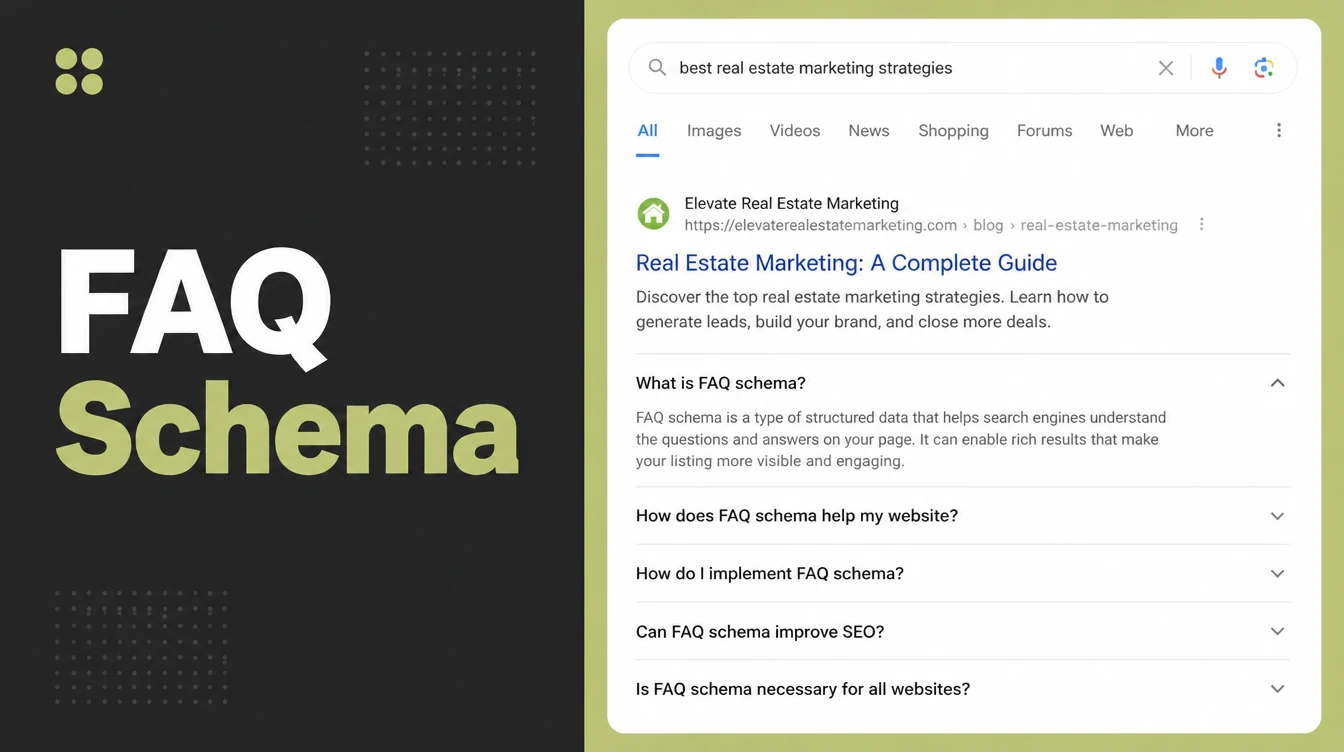
Here is the honest core. FAQ schema used to earn a visible FAQ dropdown in Google Search, then Google took that reward away in two steps. The code still works. The Google bonus does not.
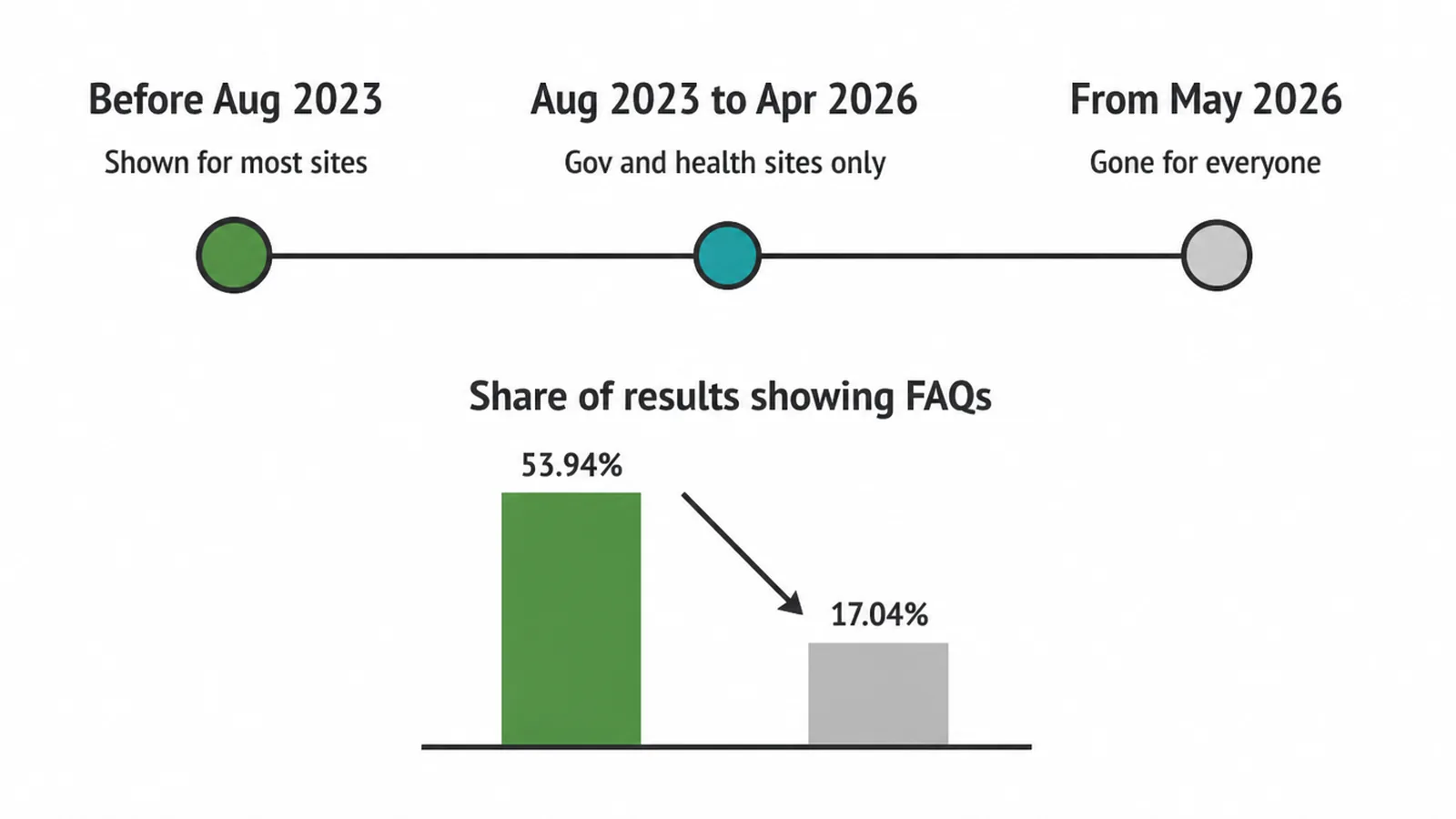
Before 2023, almost any page could add FAQ schema and win an expandable FAQ block under its search result. It got over-used fast. People stuffed marketing copy into fake "questions" to grab more space on the page.
So in August 2023, Google limited FAQ rich results to well known government and health sites. The effect was instant and large. A Portent study of 31,316 keywords found the share of SERPs showing FAQs dropped from 53.94% to 17.04% between February and August 2023.
Then came the final step. Google retired FAQ rich results and removed their documentation, and they stopped appearing in Google Search for everyone from 7 May 2026. Even the gov and health exception is gone.
The FAQPage type is still a valid Schema.org type, and Google confirms that unused structured data does not cause problems for Search. So nothing breaks if you keep it. You just will not see a dropdown.
| Period | Before August 2023 | August 2023 to April 2026 | From May 2026 |
|---|---|---|---|
| FAQ dropdown in Google | Shown for most sites | Gov and health sites only | Gone for everyone |
| Is the markup valid? | Yes | Yes | Yes, still valid |
| Main reason to use it | Win the SERP dropdown | Clarity, niche eligibility | Clarity and AI or machine reading |
| Risk of keeping it | Low | Low | Low, it is ignored if unused |
If you want to track how your pages actually show up over time, our Search Console guide shows you where to look. Just do not expect an FAQ rich result line in there anymore.
3. Is FAQ schema still worth adding?
Honest verdict: not for a Google rich result, because that is gone, but yes for a few quieter reasons. FAQ schema is no longer a quick win. It is now a clarity and future-proofing choice.
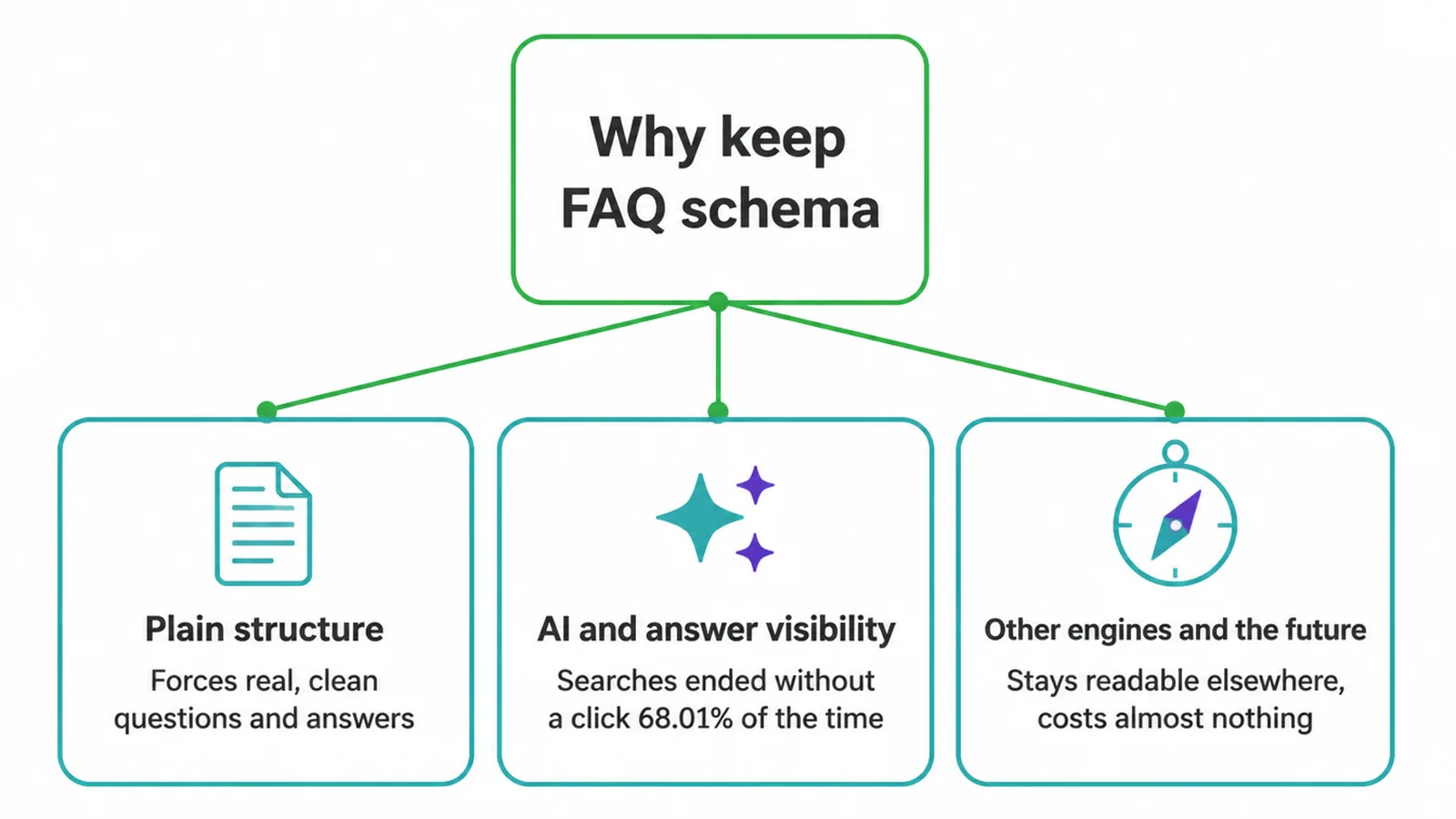
The first reason is plain structure. Marking up your questions and answers forces you to write real, clean Q&A content. That is good for readers, and good for machines that parse your page. The second reason is AI and answer visibility. More search journeys end inside an answer box, not on your site.
US Google searches ended without a click 68.01% of the time between January and April 2026, and AI Overviews now appear on a sizeable share of searches (Semrush tracked them settling around 15.69% by November 2025).
We cannot promise FAQ schema lifts your AI visibility by any exact amount, and you should be wary of anyone who claims a number. But structured, machine-readable answers give your content a cleaner shape for tools that lift and reuse text.
The third reason is other engines and the future. Not every search tool follows Google's choices. Valid FAQPage markup stays readable elsewhere, and it costs you almost nothing to keep.
If your SEO setup already adds it, leave it. If you are building a strategy from scratch, our SEO service can help you decide where structured data actually earns its place.
4. How to add FAQ schema the right way
FAQ schema is simple to add if you do it in the right order. Start with the content, not the code.
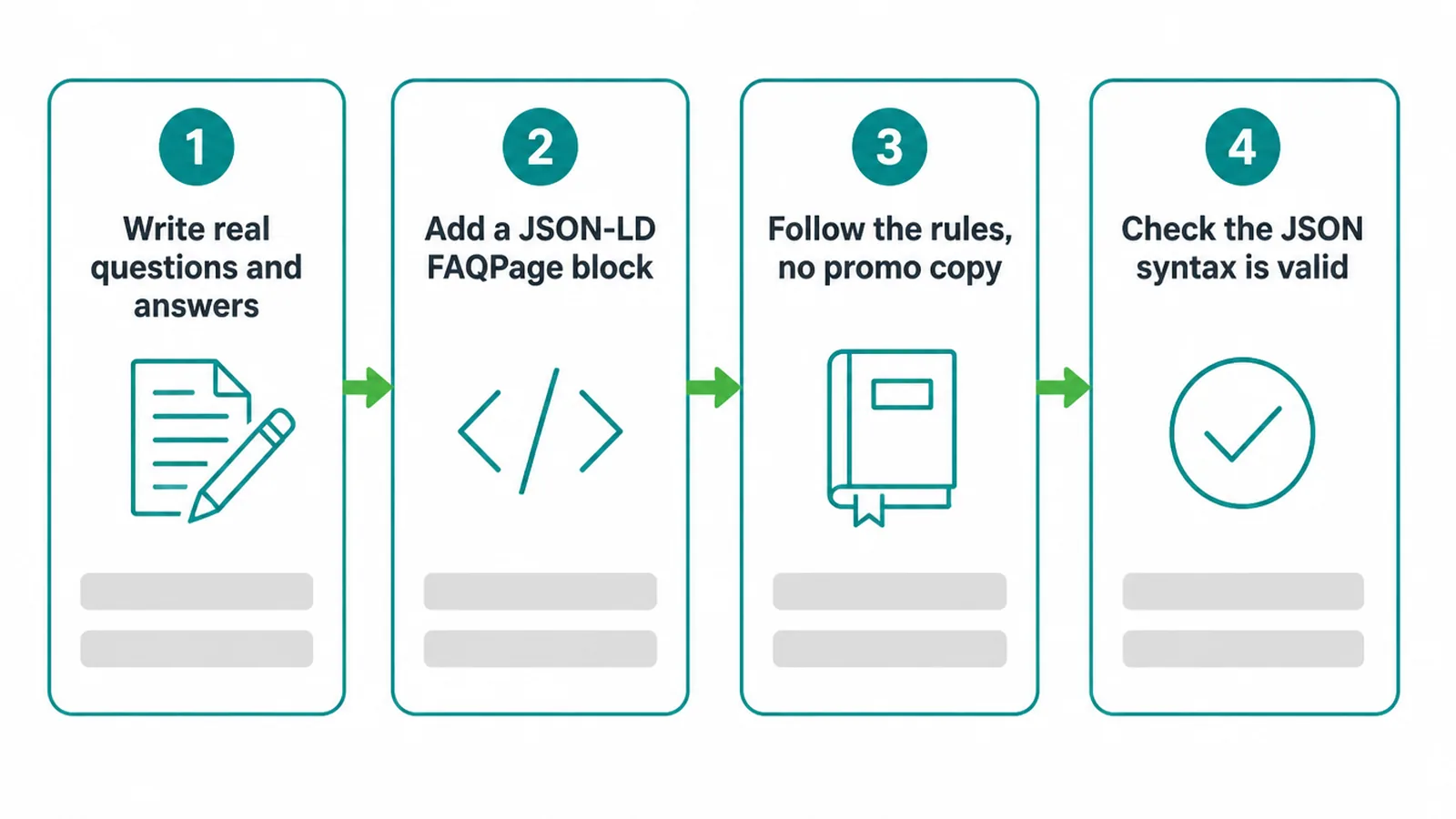
First, write real questions and answers that visitors can see on the page. The schema must describe content that is actually there. Do not invent hidden questions just to fill the markup.
Second, add a JSON-LD FAQPage block inside a <script type="application/ld+json"> tag. Inside it, each entry has a Question with a "name" and an acceptedAnswer with "text". The answer text in the code must match the visible answer word for word.
Third, follow the rules. Use FAQPage only on genuine FAQ pages. Google says FAQPage markup should never be used for advertising or promotional content. Do not stuff keywords. Do not turn sales copy into fake questions.
Fourth, check your JSON syntax is valid, with balanced braces and quotes. Note that Google is removing FAQ support from the Rich Results Test, so a generic JSON-LD validator is the safer tool now.
Most modern content systems and SEO plugins can add this for you automatically when you build a real FAQ section. If yours does, you usually do not need to touch raw code at all. You just write the Q&A, and the tool wraps it in valid markup.
5. When FAQ schema is worth it (and when to skip it)
FAQ schema is worth it when you have a genuine FAQ page, you care about being quoted in AI answers, and your CMS can add the markup with little effort. In those cases it is a small, low-risk improvement to how machines read your content.
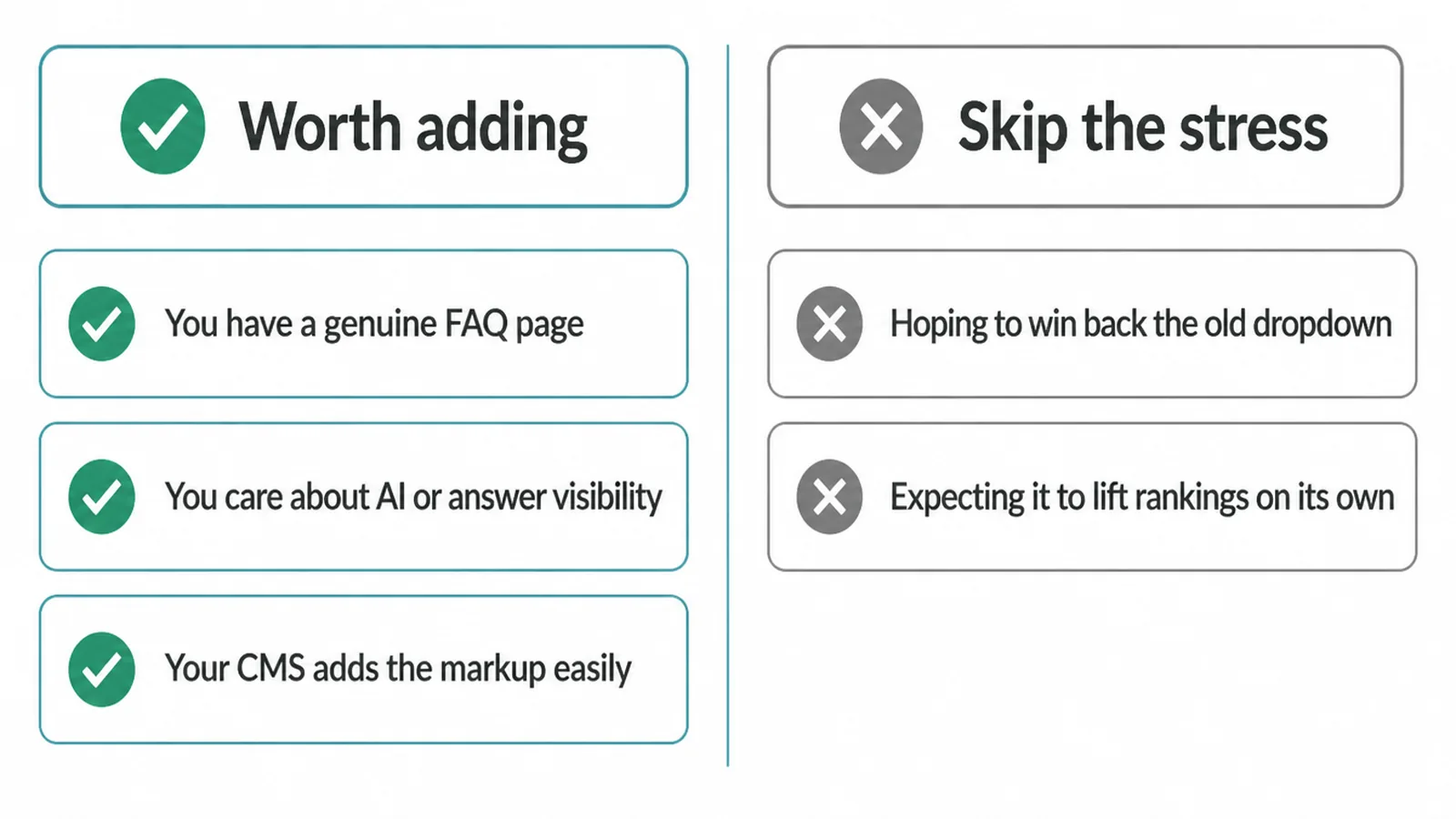
Skip the stress in two cases. One, do not add FAQ schema hoping to win back the old Google dropdown. It is gone, and no markup brings it back.
Two, do not expect FAQ schema to lift your rankings on its own. It is a labelling tool, not a ranking signal. If your pages are not showing up, the fix is usually content, links, and the basics, not schema.
And please do not rip out FAQ schema you already have. It does no harm. Google ignores unused structured data, so leaving it costs you nothing and keeps your content tidy for the next engine that does read it.
Spend the time you saved on writing better answers instead. If you want a second pair of eyes on your whole setup, get in touch with us and we will tell you what is worth doing and what is not.
FAQ schema: quick answers
1. What is FAQ schema?
FAQ schema is a small piece of code that labels the question and answer pairs on a page so search engines and AI tools can read them clearly. It is one type of structured data, usually written as JSON-LD inside a script tag. It does not change what people see on your page.
2. Does FAQ schema still work in 2026?
The markup is still valid and safe to use, but it no longer earns a special FAQ dropdown in Google Search. Google stopped showing FAQ rich results for everyone from 7 May 2026. The code can still help machines understand your page, which matters for AI answers and other engines.
3. Did Google remove FAQ rich results?
Yes. Google first limited FAQ rich results to authoritative government and health sites in August 2023. Then it fully deprecated FAQ rich results, so they stopped appearing in Google Search for everyone from 7 May 2026. The schema type itself was not removed.
4. Should I remove FAQ schema from my pages?
No, you do not need to remove it. Google says unused structured data does not cause problems for Search. The markup still helps machines parse your questions and answers, so leaving it in place is fine and low risk.
5. Does FAQ schema help AI search?
FAQ schema can help AI search, but no one can promise a number. Clean question and answer markup makes your content easy for machines to lift and reuse. As more searches end inside AI answers and overviews, structured, clear answers have a better chance of being read and quoted.
6. How do I add FAQ schema?
First write real questions and answers that people can see on the page. Then add a JSON-LD FAQPage block in a script tag, with each Question name and its acceptedAnswer text matching the visible answer word for word. Only use it on genuine FAQ pages, never for ads or promotional copy, and check the JSON syntax is valid.
7. What sites still get FAQ rich results?
None. Between August 2023 and May 2026 the dropdown was limited to well known government and health sites. From 7 May 2026 it stopped appearing for everyone, so no site gets an FAQ dropdown in Google Search now.
8. What is the difference between FAQPage and QAPage schema?
FAQPage is for a page where you ask and answer your own questions, like a help or FAQ page. QAPage is for a page where users ask a question and other users post answers, like a forum thread. Use FAQPage for your own help content, not QAPage.