Link Building Services 2026: What Is Worth Paying For?

Link building services are worth paying for when links are the real thing holding a site back and the provider earns them through honest outreach. Cheap bulk links break Google's rules and can bring a manual action. Seed Light does outreach and digital PR, and will say plainly when paid links are the wrong move.
Key takeaways
- Google defines link spam clearly. It is "the practice of creating links to or from a site primarily for the purpose of manipulating search rankings" (Google Search Central). A lot of cheap link building services do exactly this.
- Paid links must be marked nofollow or sponsored. Google says a paid link is only fine when it passes no ranking credit (Google Search Central). That is the opposite of what most "boost your rankings" link sellers promise.
- Backlinks still matter. They are a confirmed Google ranking factor (Ahrefs), so the goal is real. The method is where people get burned.
- Bad links can earn a penalty. Google issues "Unnatural links to your site" manual actions (Google Search Console Help) that can tank your rankings.
- Slow and safe beats fast and risky. Real outreach takes months. Promises of hundreds of links fast are a warning sign (Search Engine Journal).
1. Are link building services worth it?
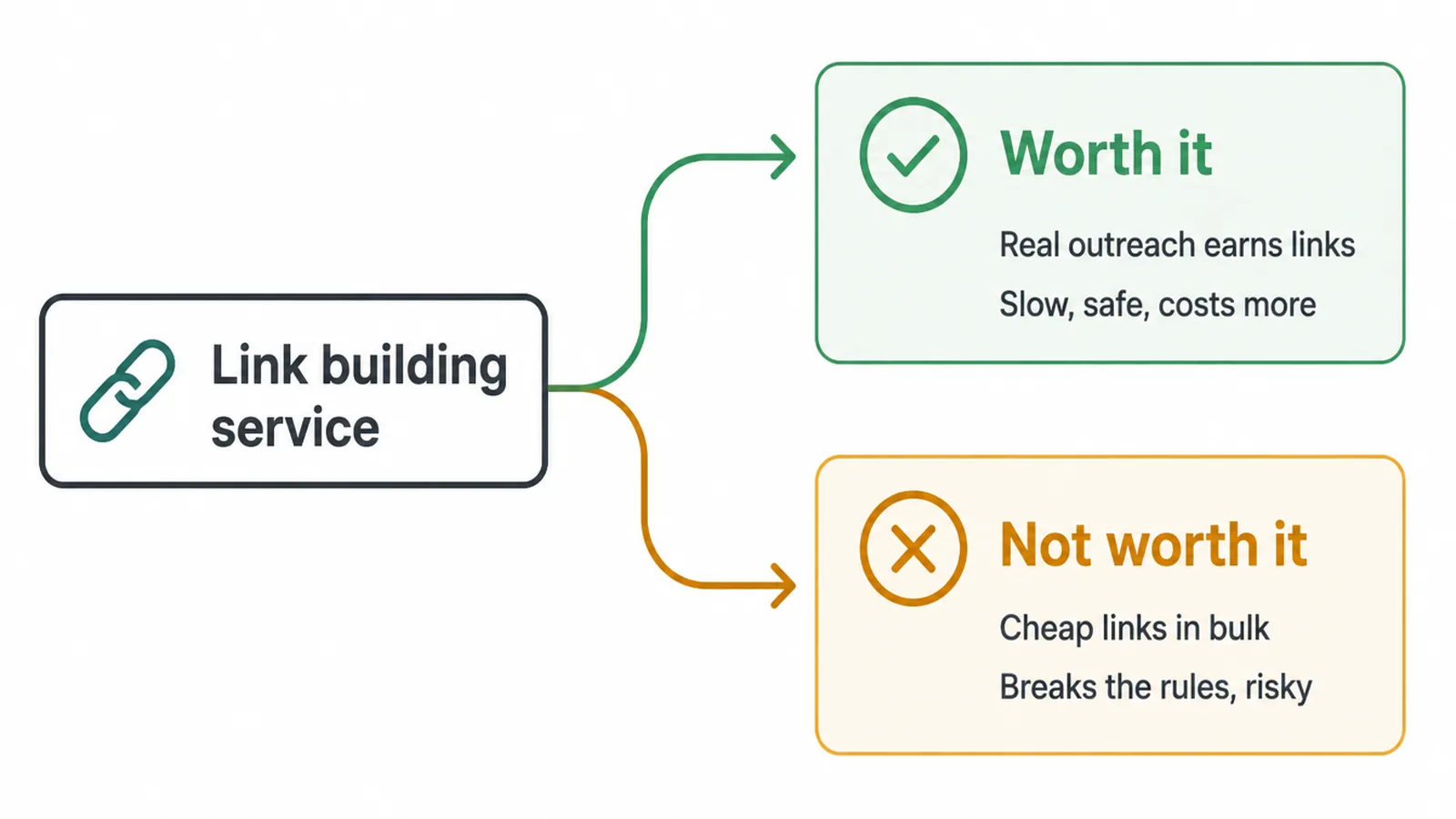
It depends. Link building services are worth it when links are the real thing holding your site back, and when the provider earns those links through honest outreach.
They are not worth it when they sell cheap links in bulk, because that can break Google's rules and hurt you. So the short answer is yes for the careful kind, no for the spammy kind.
Here is the part that trips people up. Backlinks are an important ranking signal. So wanting more of them is smart. The danger is in how you get them.
A link earned because a real site chose to point at your useful page is gold. A link bought from a network that exists only to sell links is a liability.
If you are new to all this, start with our pillar on how to get backlinks. It covers the whole picture. This post is the narrower question of whether to pay someone to do it for you.
2. What link building services actually do
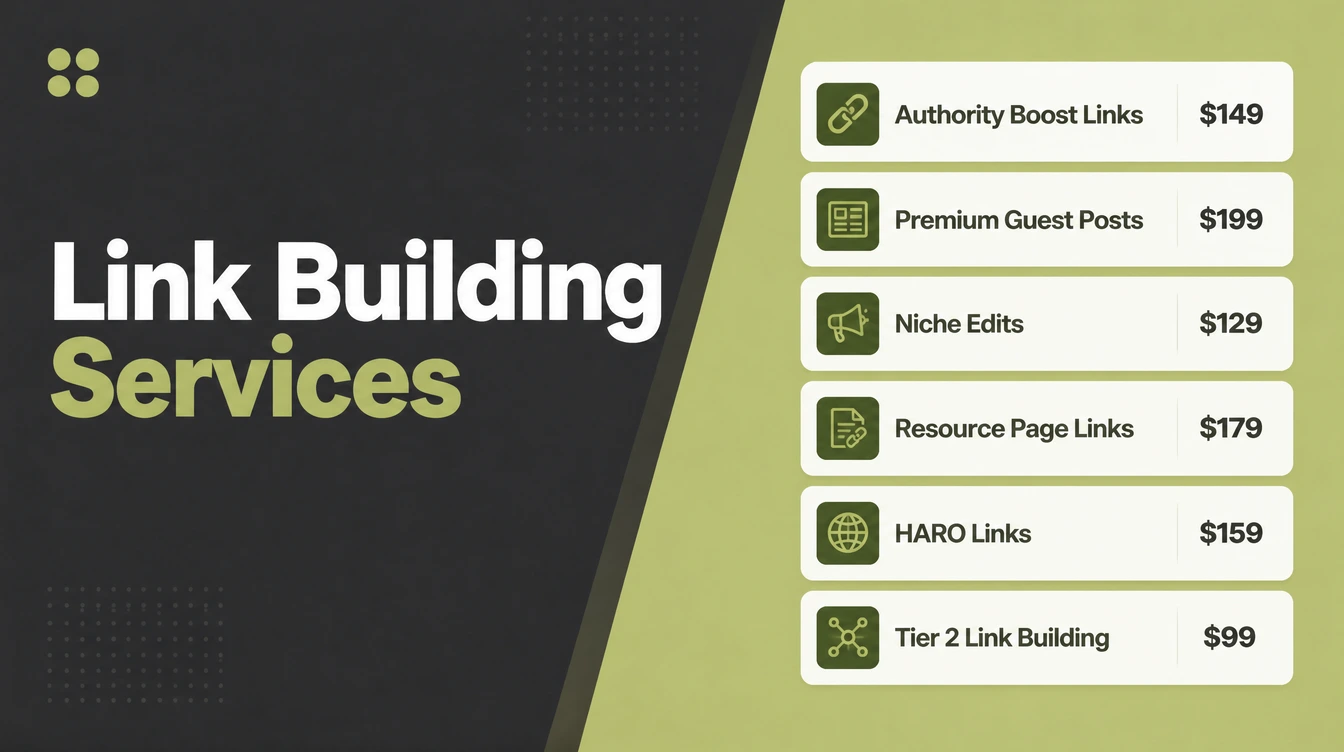
Most link building services fall into a few buckets. Knowing them helps you spot the safe ones from the risky ones.
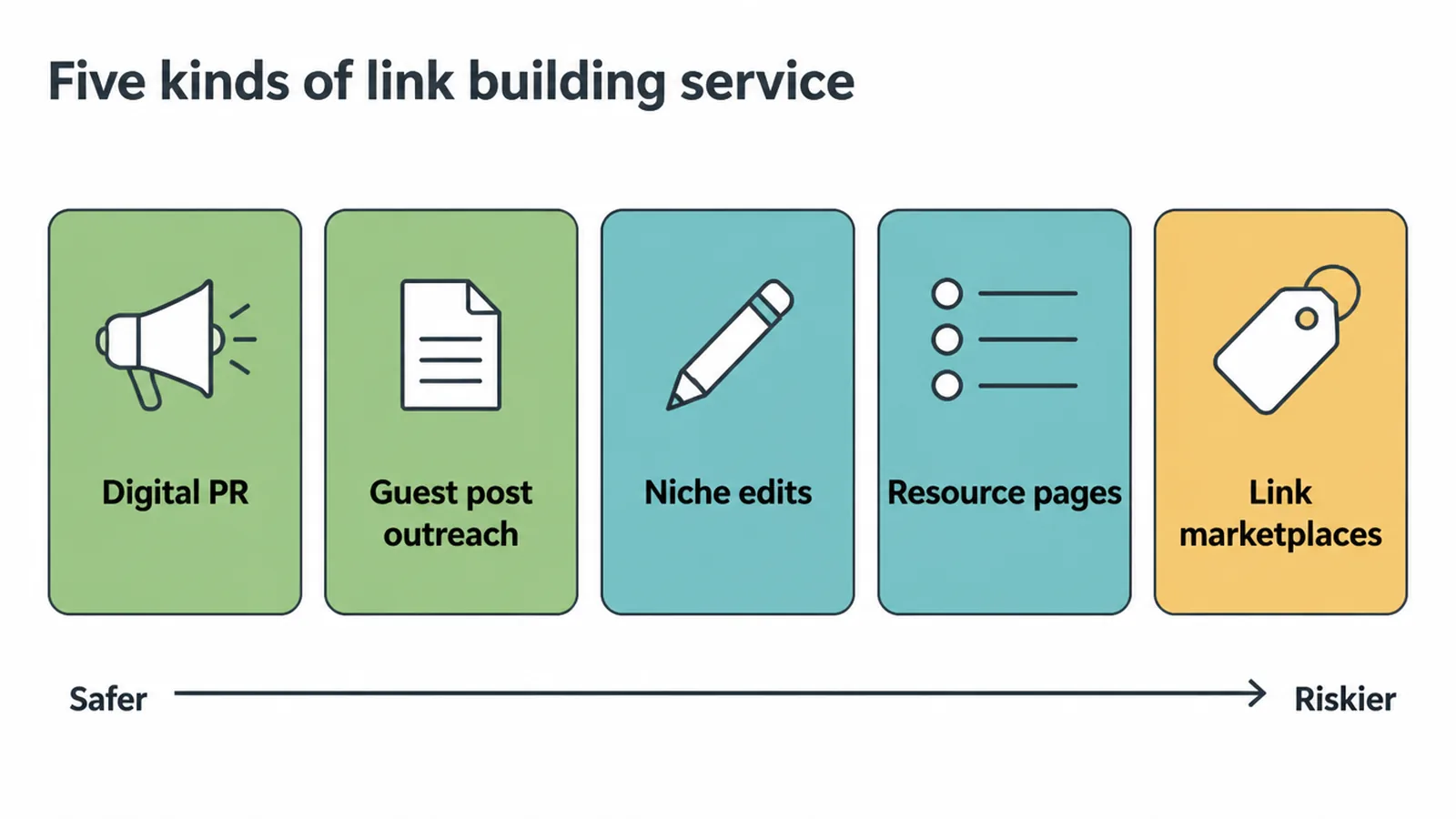
- Digital PR. They create something worth talking about (a study, a tool, a story) and pitch it to journalists and bloggers. This earns real links. It is the safest, slowest, and usually the priciest.
- Outreach for guest posts. They write articles for real sites in your niche, with a natural link back. Fine when the site is real and the post helps readers. Risky when it is bulk and keyword-stuffed.
- Niche edits. They get your link added into an existing article on another site. Sometimes legit, often a dressed-up way of buying a link.
- Resource and listicle outreach. They ask to be added to "best of" or resource pages. Low risk when the fit is genuine.
- Link marketplaces. A catalogue of sites that will publish a link for a fee. This is usually buying links with extra steps.
The first two can be done well. The last few slide quickly into paying for links. If you want to try some of this yourself first, our roundup of free link building tools shows you how to find the opportunities.
3. The honest warning: what Google actually says
Before you pay anyone, read Google's own rules. This is the part most link building services do not put on their sales page.
Google defines link spam as "the practice of creating links to or from a site primarily for the purpose of manipulating search rankings" (Google Search Central). If a service exists to manipulate rankings with links, that is the definition.
Google is specific about money. Its link spam list includes "exchanging money for links, or posts that contain links" and even "sending someone a product in exchange for them writing about it and including a link" (Google Search Central). So both cash-for-links and gifts-for-links count.
There is a legal way to pay for a link. Google says paid links are fine only when they are marked with rel="nofollow" or rel="sponsored", which tells Google to pass no ranking credit (Google Search Central).
Read that twice. The whole reason people buy links is the ranking credit. A correctly marked paid link gives none. So a service promising rank-boosting paid links is promising the one thing Google works to ignore.
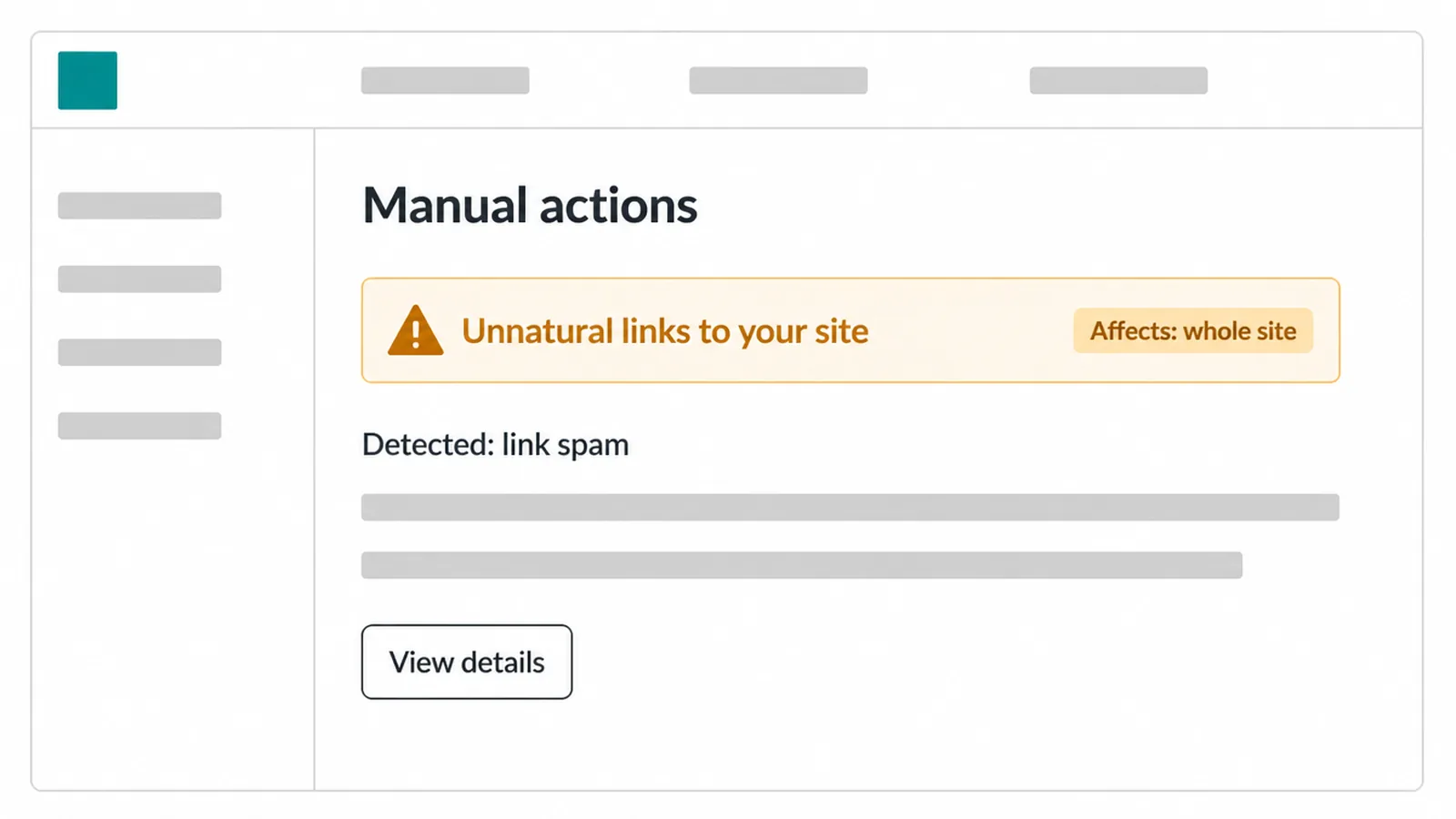
Google also names specific tactics as spam: low-quality directory and bookmark links, automated link creation, and guest posts or advertorials with stuffed anchor text that pass ranking credit (Google Search Central). When it catches this, it can hand out an "Unnatural links to your site" manual action (Google Search Console Help).
You will see it flagged in your account, and your rankings can drop. If you do not check that tool regularly, our guide on using Google Search Console shows you where these warnings appear.
4. Legit links vs risky links
Picture two paths. One is slow and safe. One is fast and risky.
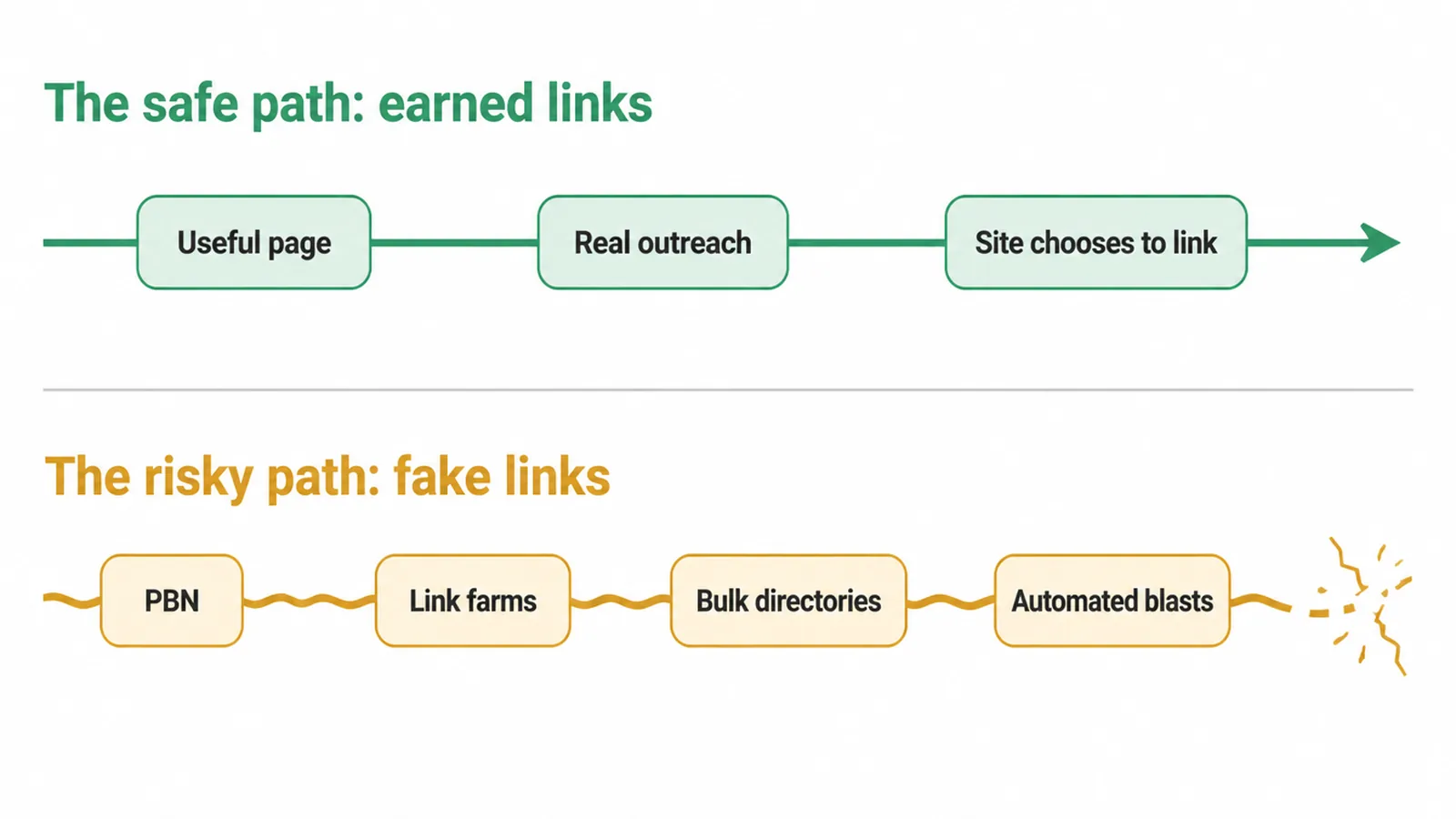
The safe path is earned links. Digital PR and real outreach get other people to choose to link to you because your page is genuinely worth it.
This is slow, it is pricey, and Google loves it. Turning mentions of your brand into links is part of this too, which we cover in our post on unlinked brand mentions.
The risky path is fake links. The worst offender is a PBN, or private blog network. A PBN is a group of low-value websites that one person controls, built only to point links at client sites and fake popularity.
It can lift you for a while, then collapse and drag your rankings down with it. Link farms, mass low-quality directories, and automated blast tools are the same idea in different clothes. Google calls all of these link spam.
The test is simple. Would this link exist if Google did not? If the only reason a page links to you is to game search, it is the risky kind.
5. Green flags vs red flags
You do not need to be an SEO expert to vet a provider. You just need to know what good and bad look like.
Search Engine Journal warns, "Vague promises are red flags." It also gives this example: "We will get you to #1 in 30 days." The article explains that no agency controls Google (Search Engine Journal).
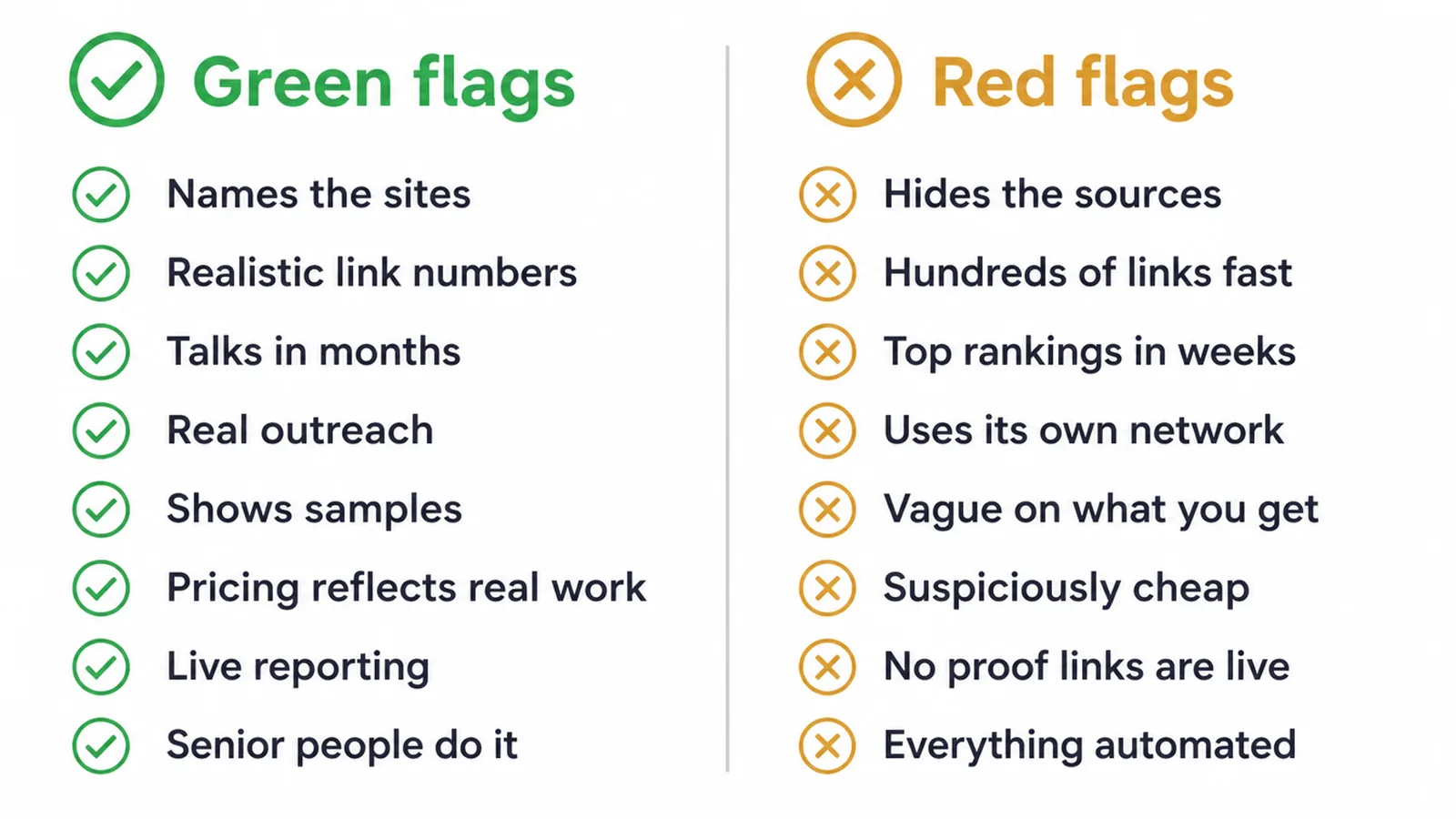
| Green flag (good sign) | Red flag (walk away) |
|---|---|
| Tells you exactly which sites links come from | Will not show you the sources |
| Promises a realistic number of quality links | Promises hundreds of links fast |
| Sets expectations in months, not days | Guarantees top rankings in weeks |
| Does real outreach to real sites | Uses its own network of sites (a PBN) |
| Shows you sample placements before you buy | Vague about what you actually get |
| Pricing reflects real human work | Suspiciously cheap for the volume |
| Live reporting you can check | No proof the links ever went live |
| Senior people do the work | Everything is automated |
If a provider hits mostly the left column, it is worth a conversation. Mostly the right column, and you are buying risk.
6. DIY vs done-for-you
You do not have to pay at all. Plenty of small businesses build their first links themselves, and it is safer because you control the quality.
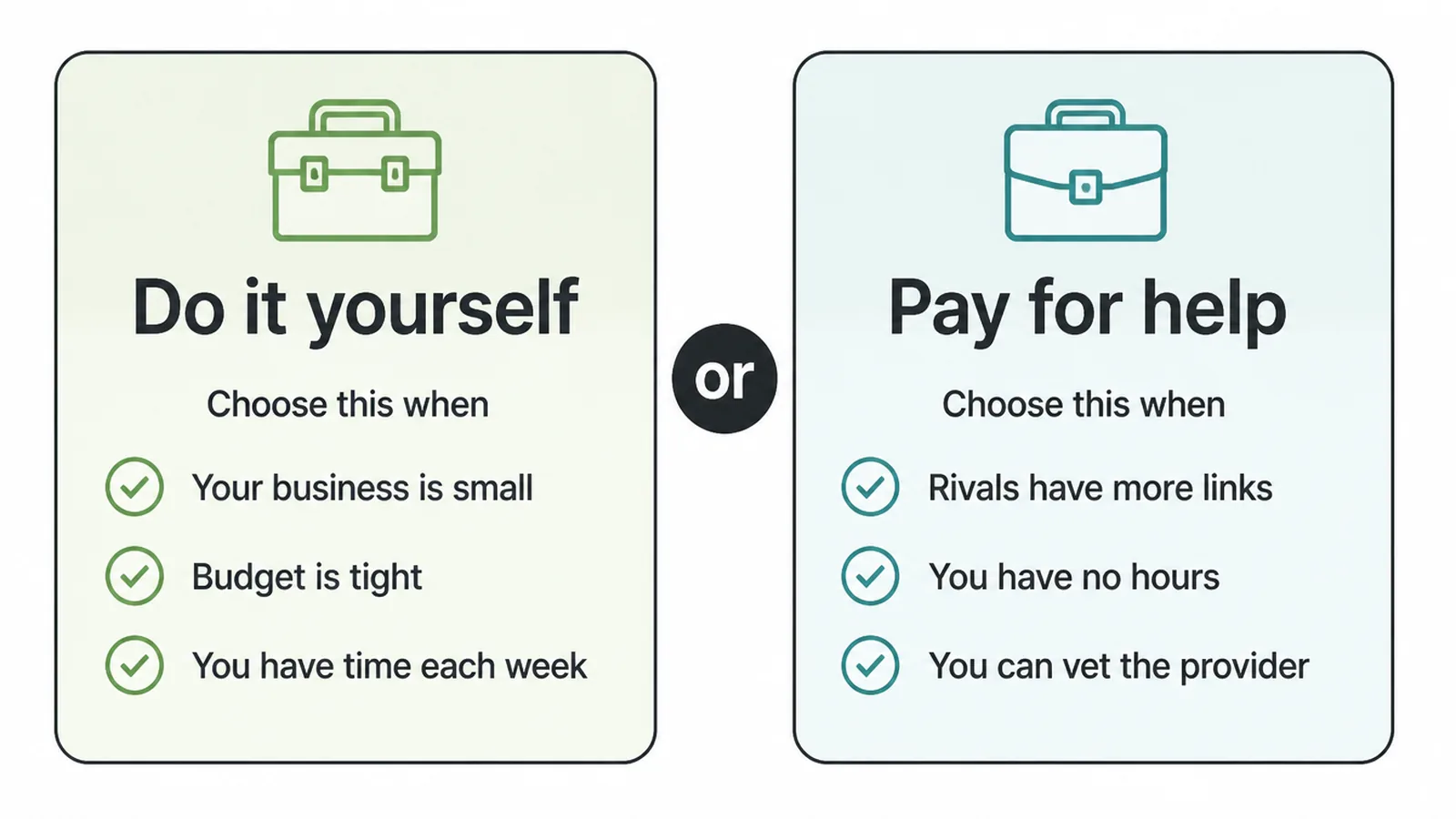
Do it yourself when your business is small, your budget is tight, and you have a little time each week. Start by finding gaps with our list of link building tools. Then try pitching journalists who need expert quotes, one of the routes in our guide to how to get backlinks.
And reclaim links from places that already mention your name, using our walkthrough on unlinked brand mentions. None of these cost much beyond your time, and they teach you what a good link looks like.
Pay for help when you are in a competitive market where rivals have far more links, when you simply do not have the hours, and when you can vet a provider properly using the table above. Done-for-you is fine. Done-for-you cheaply and blindly is how sites get penalised.
7. How to choose a safe link building service
If you decide to pay, here is how to choose a link building service without getting burned. Run through this short list on your first call.
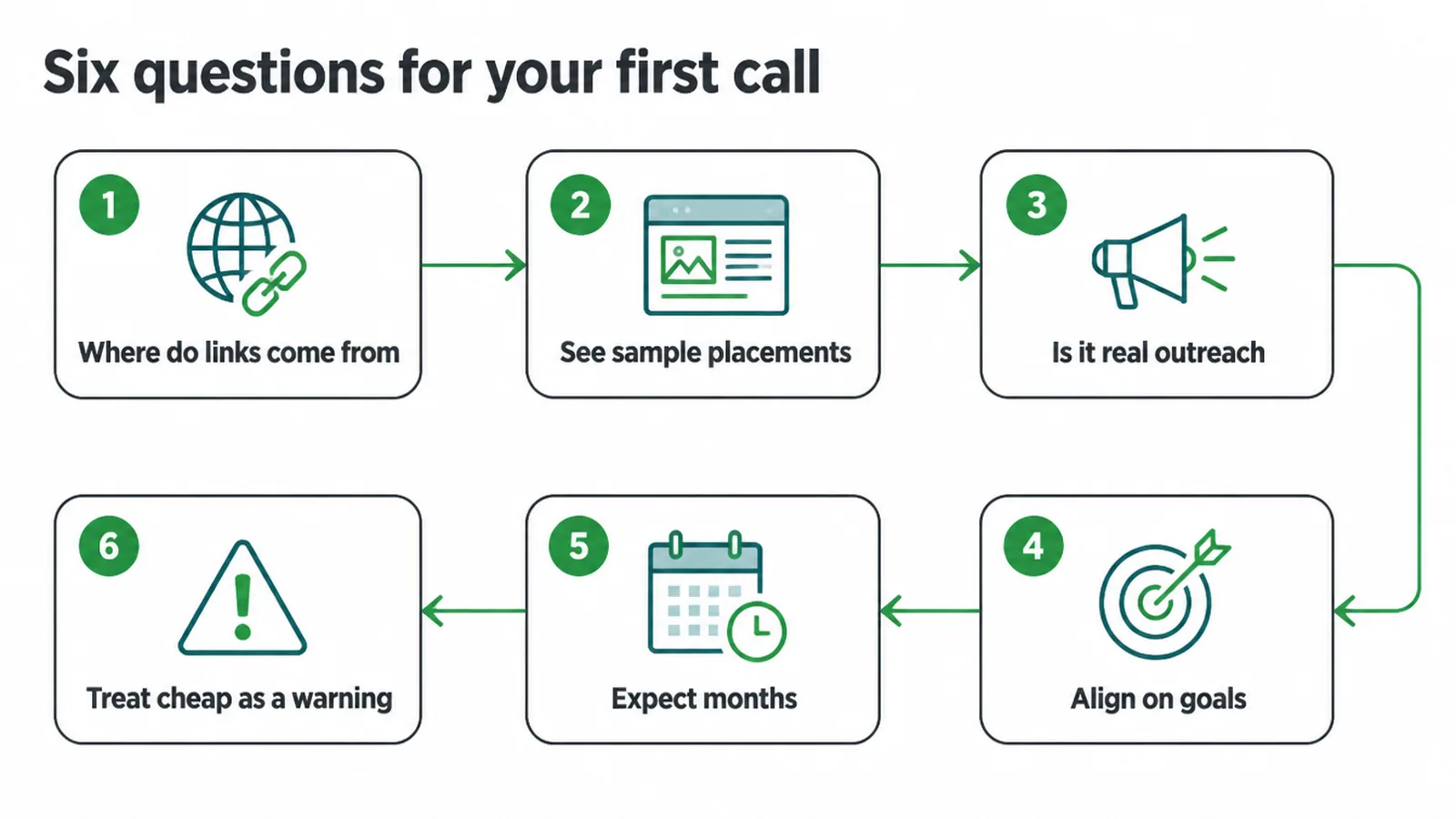
- Ask where the links come from. A good provider names real sites and explains how they vet them. Vagueness is your cue to leave.
- See sample placements. Ask for live examples of links they have built. Read them. Do they look like real, useful articles, or thin pages built to sell links?
- Confirm it is real outreach. They should be pitching sites they do not own, not feeding you links from their own network.
- Align on goals. Links should support a clear aim, like ranking a specific page.
- Expect months. Anyone promising fast top rankings is making a promise they cannot keep safely.
- Treat cheap as a warning. Quality outreach costs real money. A deal that feels too good usually means automated, risky links.
Link building is one piece of a bigger plan. It works best when your pages are already solid and your site is set up to rank. If you would rather have one team handle the whole thing, from links to the site itself, our SEO service covers the search side of it.
We do the safe, slow, real kind, and we are happy to tell you honestly when paid links are not the answer. Get in touch and we will give you a straight read on your situation.
Frequently asked questions
1. Are link building services worth it?
Whether link building services are worthwhile depends on how they work. Services that do real outreach and digital PR can help when links hold your rankings back. Cheap bulk links can break Google's rules and put your site at risk. Choose careful outreach over volume.
2. Is buying backlinks against Google's rules?
Buying a link that passes ranking credit is against Google's rules. Google says paying for links to boost rankings is link spam. A paid link is only fine when it is marked as nofollow or sponsored, which tells Google to pass no ranking credit. So a service that promises rank-boosting paid links is selling you something Google works to ignore or penalise.
3. Can paid links hurt my site?
Yes. If Google decides your links are unnatural, it can ignore them so you get nothing, or it can hit your site with a manual action that drops your rankings. Cleaning up bad links after the fact is slow and painful. That is why a slow, safe approach beats a fast, risky one every time.
4. How much do link building services cost?
Real outreach and digital PR are not cheap, because they take human time and relationships. Services that promise hundreds of links for very little money are doing it the risky way, and the low cost is a warning sign. Think of it like anything else. Cheap and fast usually means low quality, and quality work takes time and costs more.
5. What is a PBN?
A PBN is a private blog network. It is a group of fake or low-value websites that one person controls, built only to point links at client sites and fake popularity. Google treats PBNs as link spam. They can work for a while, then collapse and take your rankings down with them. Avoid any service that uses them.
6. Is guest posting safe?
Guest posting is safe when it is done for readers on relevant sites. A genuine guest post on a real site, written for real readers, can be fine. A guest post bought in bulk with stuffed keyword links, on a site that exists only to sell links, is link spam. The test is simple. Would this post exist and help readers even if there were no link in it?
7. How long does link building take?
Months, not weeks. Real outreach means finding the right sites, pitching them, and waiting for replies and publishing. Any service that promises top rankings in weeks is making a promise it cannot safely keep. Patience is part of the deal, and a good provider will set that expectation up front.
8. Can I do link building myself?
Yes, especially if your business is small and you have a bit of time. You can find link gaps with free tools, turn mentions of your name into links, and pitch journalists. It is slower than paying someone, but it is safe and it teaches you what good links look like. Pay for help when you are in a competitive market and short on time.