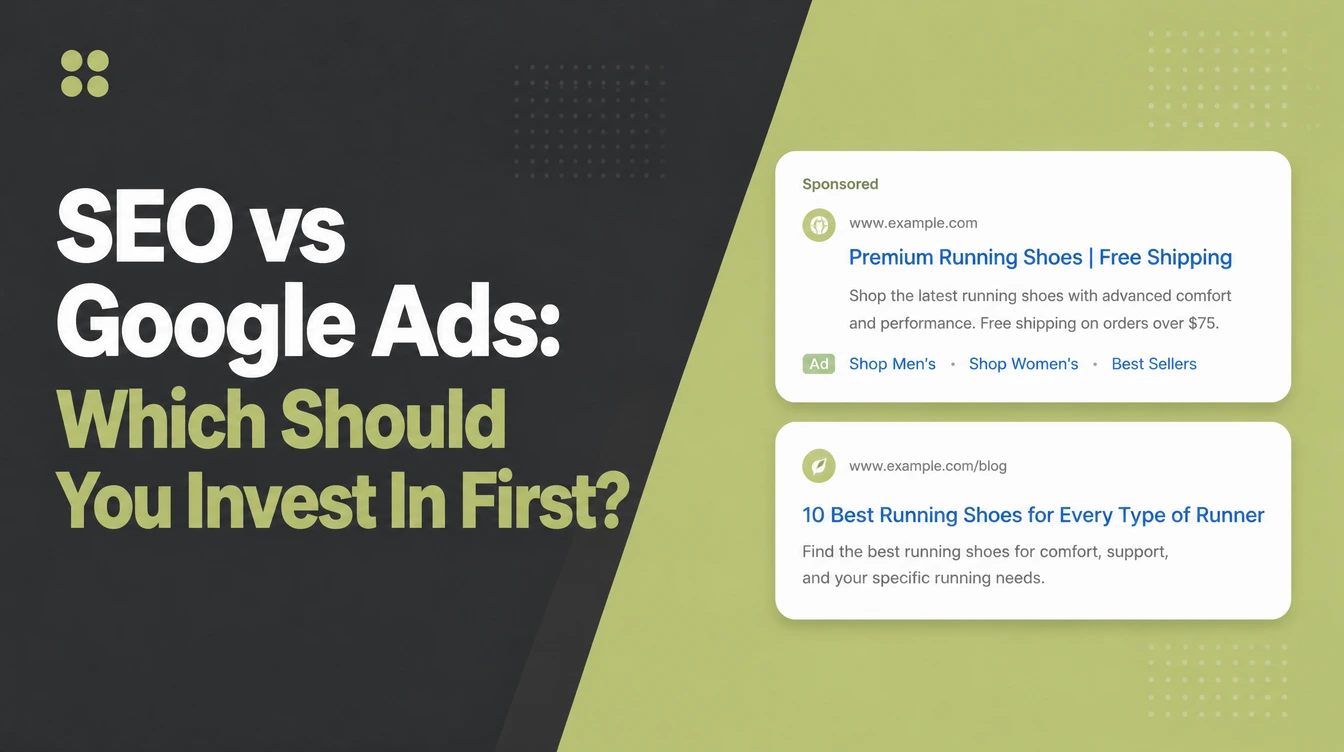
SEO vs Google Ads 2026: Which Should You Invest In First?

Google Ads and SEO serve different timelines. Ads can go live the same day and stop when budget stops. For SEO, early movement often shows in three to six months, with fuller results over four to twelve. Ahrefs found AI Overviews correlate with 58% lower CTR for the top result. Seed Light runs Ads for now and SEO for later.
Key takeaways
Short on time? Here is the whole SEO vs Google Ads decision in five lines before we break it down.
- Ads are for speed. You can switch Google Ads on today and appear at the top of results straight away. They stop the moment you stop paying.
- SEO compounds. Early movement often shows in three to six months, with fuller results over four to twelve (Ahrefs, 2024).
- AI Overviews correlate with lower CTR. Their presence correlates with 58% lower click-through rate for the top result (Ahrefs, 2026).
- Paid is gaining share. Paid click share doubled in major product categories in a single year while organic fell (Search Engine Land, 2024).
- Most small businesses should do both. Run Ads for now, build SEO for later, and let one feed the other.
1. The short answer on SEO vs Google Ads
Here is the honest version. SEO vs Google Ads is not a fight with one winner. They solve different problems, and the right pick depends on what you need this month.
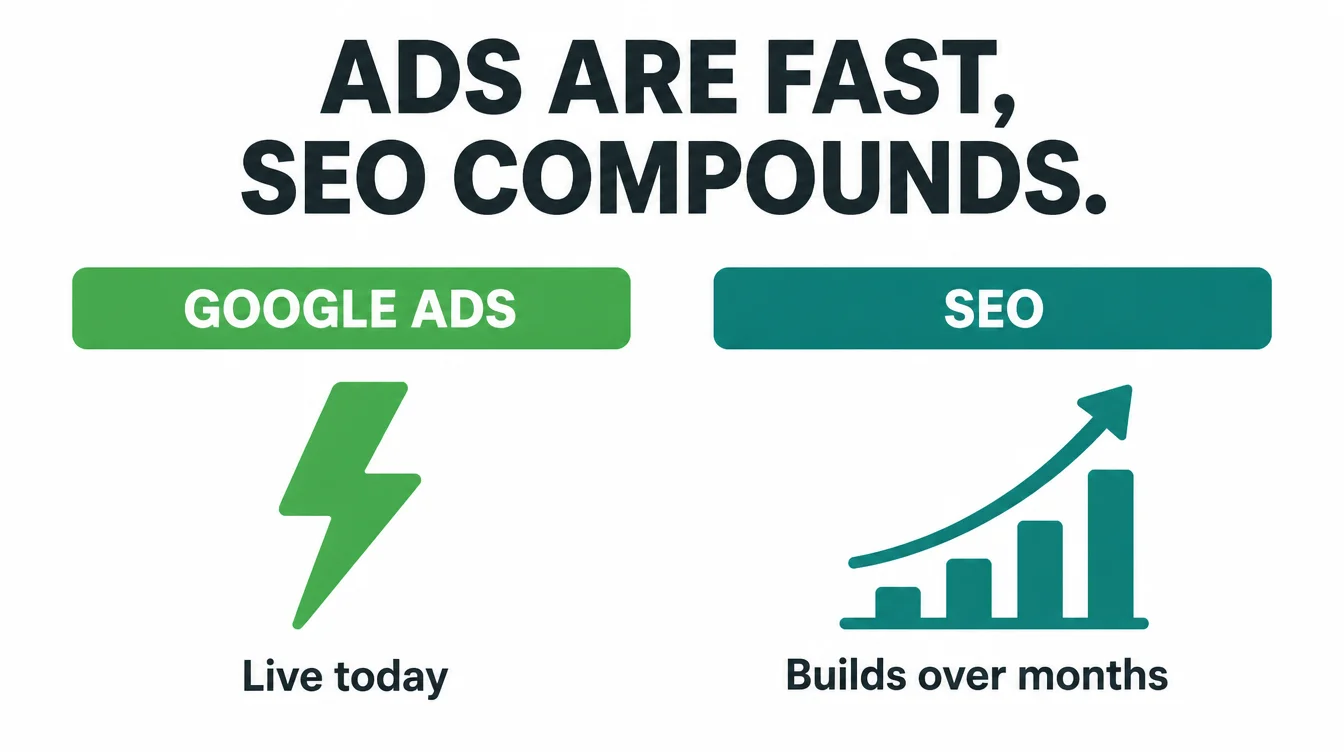
Use Google Ads for speed. You flip them on and customers see you at the top today. Use SEO for compounding. It is slow to start, but the work stacks up and keeps bringing in leads long after you stop touching it.
For most small businesses, the smartest plan is to sequence both: Ads carry you now, SEO carries you later. To put figures against the slow lane, our free SEO ROI calculator models what organic traffic is worth over time.
That is the whole idea in three lines. The rest of this guide explains why, so you can pick with confidence. If you are brand new to search, start with what SEO actually is first, then come back.
2. What SEO is and how it pays off
SEO means search engine optimisation. In plain terms, it is the work you do to show up in the free, organic results on Google without paying for each click. You improve your pages, earn links, and answer what people search for, and over time Google ranks you higher.
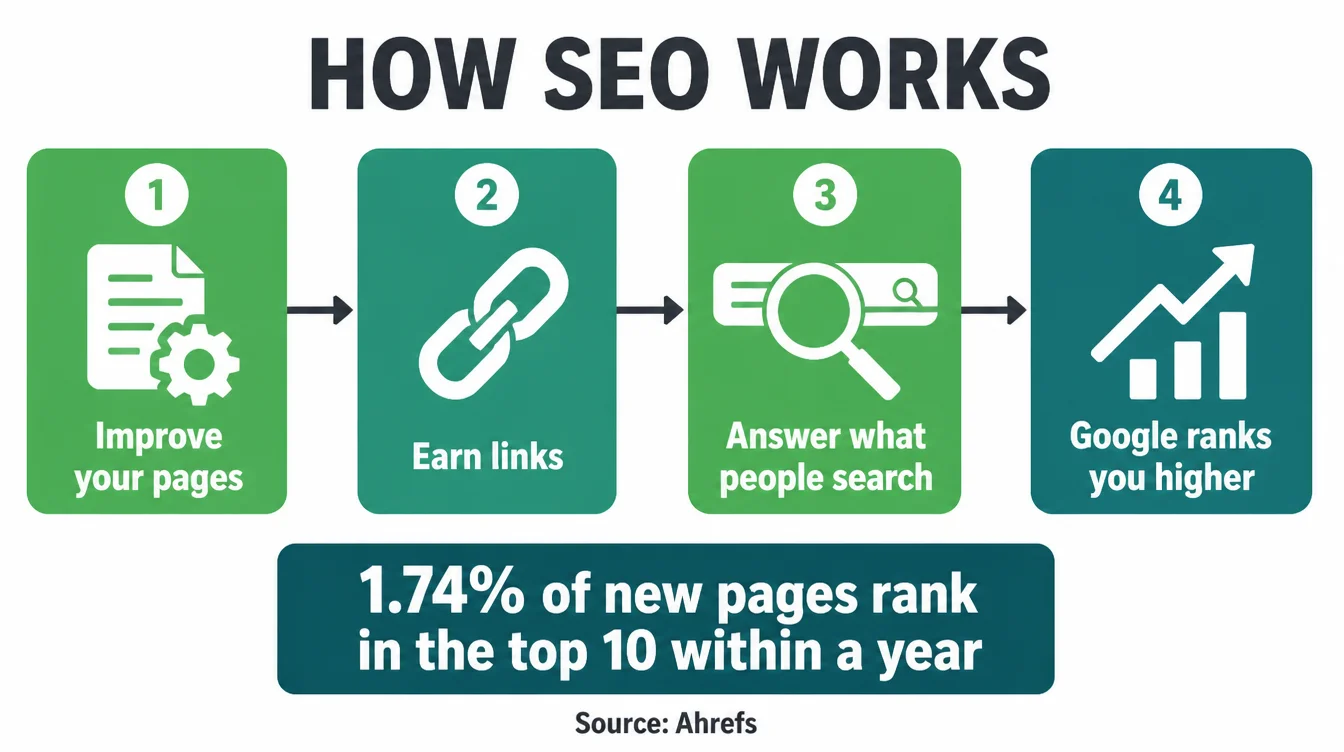
The catch is patience. SEO is slow, and that puts owners off. According to Ahrefs, only 1.74% of newly published pages rank in the top 10 within a year (Ahrefs, 2023).
Even so, the payoff is real. Once a page ranks, it keeps earning customers without paying for each one, which is why we treat SEO as an asset you own.
To set expectations properly, read our guide on how long SEO takes, and when you are ready to climb, how to rank higher on Google walks through the moves.
3. What Google Ads is and how it pays off
Google Ads is the paid system. You bid to appear at the very top of the search results for the terms you choose, and you pay only when someone clicks. That is the pay-per-click model. Turn it on, and you are visible in minutes, not months.
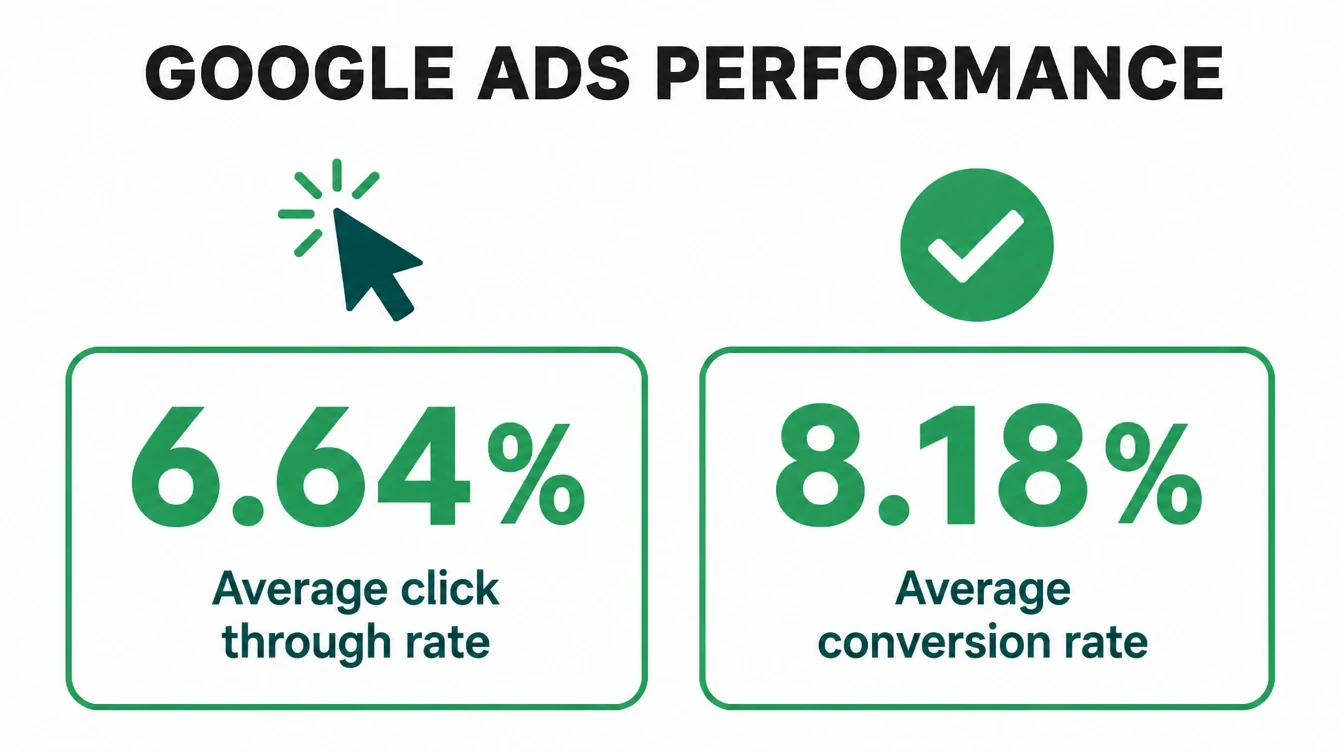
The numbers back up the appeal. Across 13,474 search campaigns measured to March 2026, the average Google Ads search campaign saw a click-through rate of 6.64% and a conversion rate of 8.18%, at an average cost per lead of $66.69 (WordStream, 2026).
In other words, a healthy chunk of people who click then take action. Because you control the targeting, you can show up only for the exact searches that bring buyers, which is the whole craft of paid search management, which makes Ads a sharp tool for quick, measurable leads.
If you want a hand setting them up, see our digital marketing service.
4. Speed: who wins this month
This one is not close. For getting customers this month, Google Ads wins by a mile.
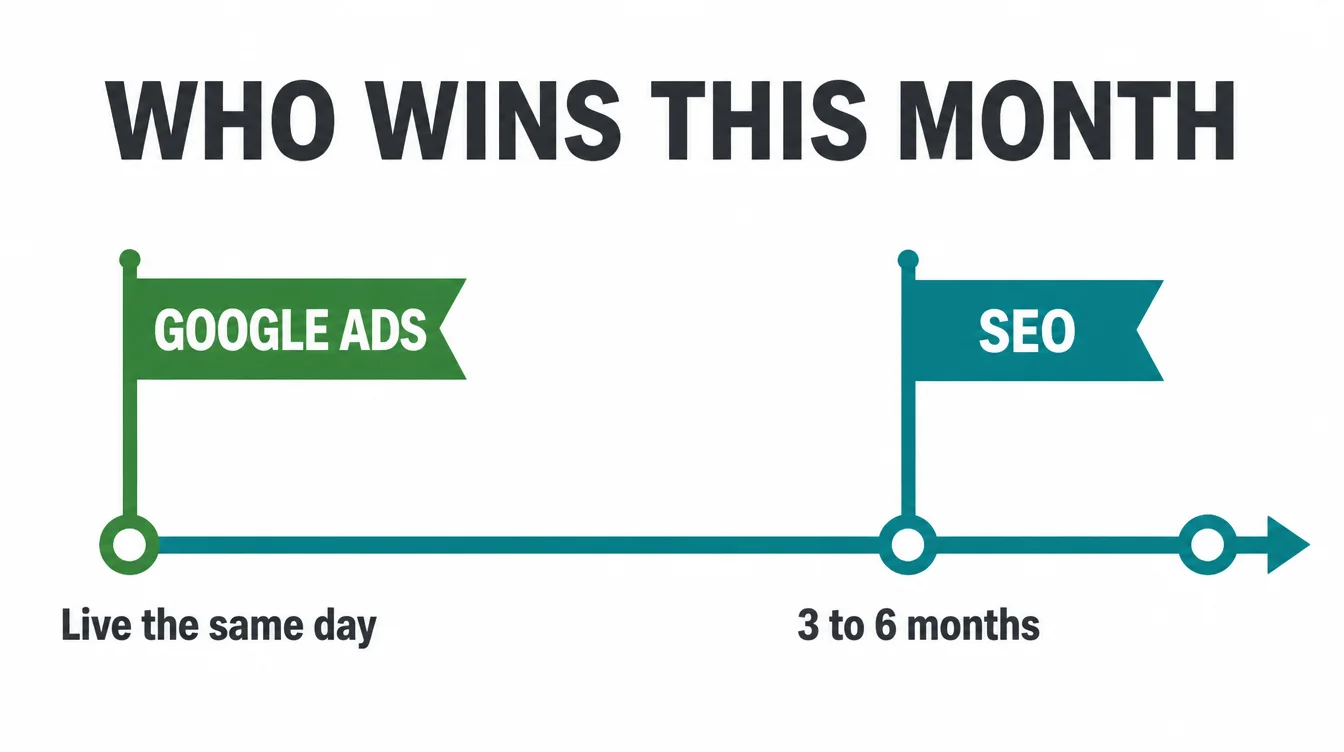
With Ads, you can launch a campaign and appear at the top of the page the same day. SEO cannot match that speed. Early movement often shows in three to six months, with fuller results over four to twelve; Ahrefs places the early range at three to six months (Ahrefs, 2024).
Therefore, if you have just opened, you have a slow season to fix, or you are launching something new and need leads now, Ads are the obvious first move. SEO will catch up, but it needs a head start.
5. Cost: rented clicks vs an owned asset
Cost is where the two split most clearly, so it helps to think about structure rather than any single figure.
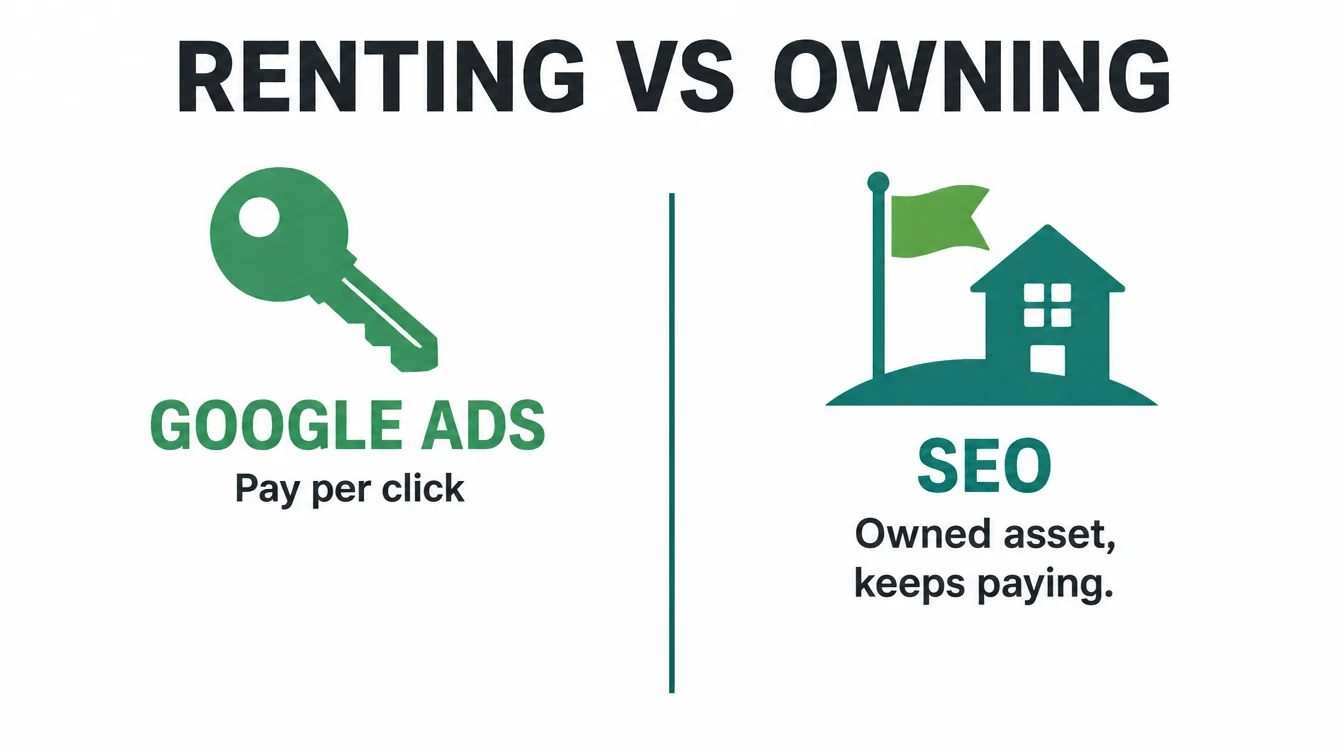
Google Ads is rented traffic
Google Ads is rented traffic. You pay for every click, and the visibility stops the moment your budget stops. That is the real cost, and it does not change with the market.
Worth noting, though: the long run of rising costs broke this year. WordStream reports that "for the first time in five years, overall average cost per lead in Google and Microsoft Ads has actually gone down" (WordStream, 2026).
Cheaper leads are good news, but the underlying deal is the same. Your spend buys results today and buys nothing tomorrow.
SEO is an asset you own
SEO is the opposite. It costs more effort upfront and is slow to repay, yet once a page ranks it keeps delivering customers without a fee per click. Over time, that drives your cost per lead down, because the same page works for months or years.
To put it simply, Ads are like renting, while SEO is like buying. Renting is easy to start and easy to stop. Buying is harder upfront but becomes yours.
6. Trust and clicks: where attention really goes
People often assume ads grab all the attention. The data tells a more balanced story, so it is worth a close look.
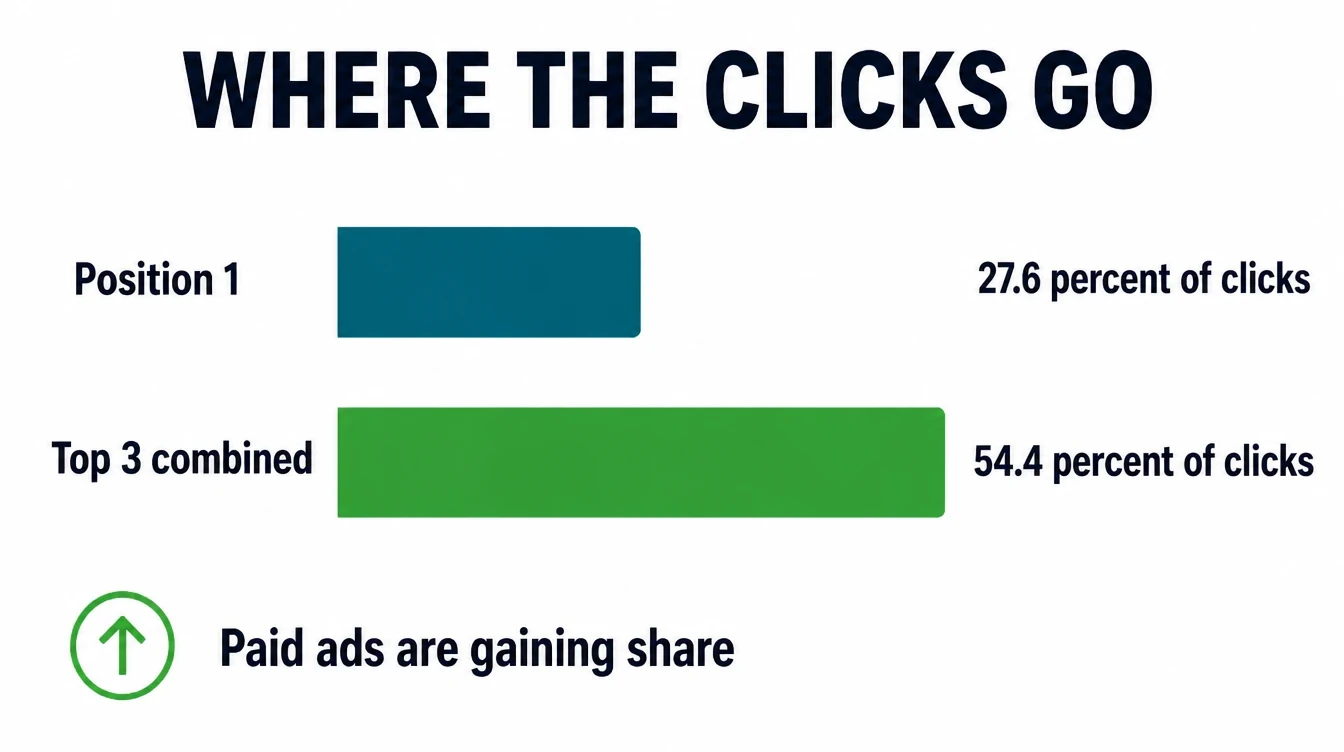
Organic results still take the biggest slot, and every position you climb still counts. But the old benchmark figures need a health warning. The much-quoted 27.6% clickthrough rate for position one comes from a dataset collected before AI answers existed, and it no longer describes what you get today.
What an AI Overview does to the top result
Here is the current picture. Ahrefs looked at 300,000 keywords using December 2025 Search Console data and found that "the presence of an AI Overview now correlates with a 58% lower average clickthrough rate for the top-ranking page" (Ahrefs, 2026).
Eight months earlier the same study measured 34.5%, so the gap is widening. Ranking first still beats ranking tenth by a wide margin. It just buys less than the old numbers suggest.
Paid is gaining share fast
However, paid is gaining share fast. One study found paid click share doubled in major product categories in a single year, while organic click share fell by double digits (Search Engine Land, 2024).
The takeaway is simple. Organic is still the larger pool of trust and clicks, but paid is no longer a small slice you can ignore.
7. Longevity: why SEO compounds
If speed is the case for Ads, longevity is the case for SEO. This is the part owners underrate most.
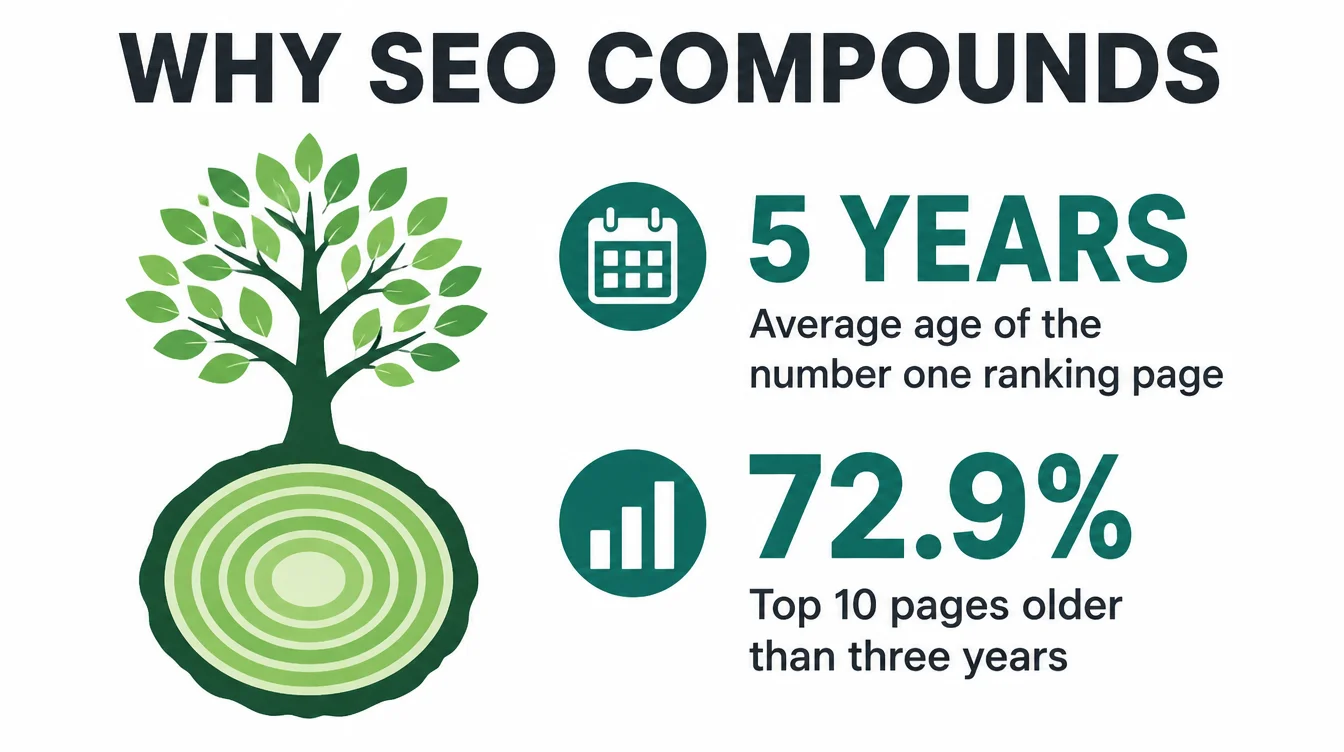
SEO compounds because rankings stick. Ahrefs found that the number one ranking page in Google is, on average, five years old, and 72.9% of pages in the top 10 are more than three years old (Ahrefs, 2023). In short, the pages winning today were planted years ago and have kept earning ever since.
| What matters | SEO | Google Ads |
|---|---|---|
| Speed | Early movement in 3 to 6 months, fuller results in 4 to 12 | Can go live the same day |
| Cost structure | Effort upfront, lower cost per lead over time | Pay per click, stops when spend stops |
| Longevity | Compounds, top pages are years old | Ends the moment you pause the budget |
| Trust and clicks | Organic earns the biggest share of clicks | Gaining share, but rented attention |
| Best for | Long-term, lower-cost growth you own | Fast leads and quick, testable data |
That table is the whole comparison in one view. Ads buy you the present. SEO buys you the future. Neither alone is the full answer for most small businesses.
8. When to choose Ads, when to choose SEO, when to do both
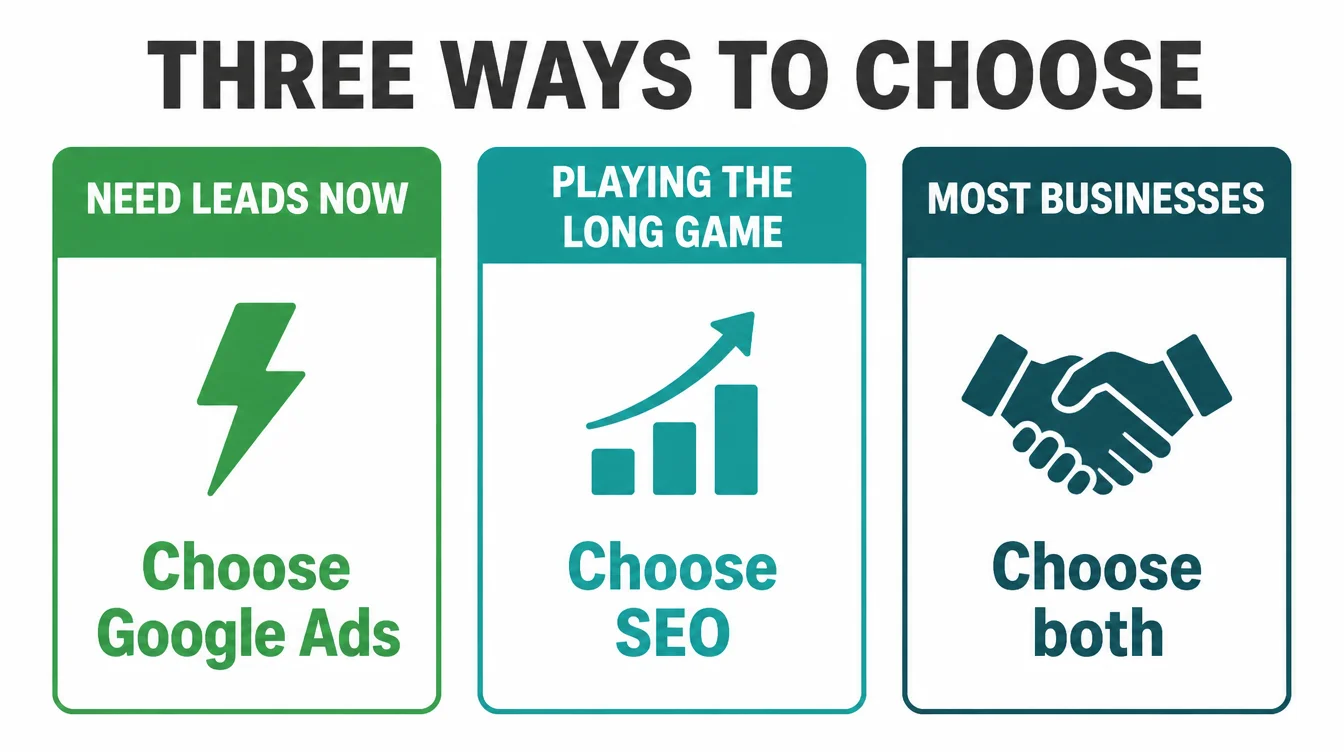
Time for the decision. Match your situation to one of these three, and you will know where to put your money.
What AI answers change about this choice
One thing has shifted under both channels, and it is worth a minute before you decide. Google now often answers the question at the top of the page with an AI Overview, and fewer people scroll past it. That squeezes organic clicks hardest, which is the 58% figure above.
Ads have moved into that space too. Google now runs text and Shopping ads inside AI Overviews, served from your ordinary Search, Shopping and Performance Max campaigns, with no new campaign type to set up (Google Ads Help).
So paid placement follows the reader into the AI answer, while organic has to earn a citation to be seen there.
The practical read is not "give up on SEO". Being the page an AI answer quotes is now part of the SEO job, and our guide on how to rank in AI Overviews covers how.
But it does mean the honest case for Ads is a little stronger than it was two years ago, and any comparison that ignores AI answers is out of date.
Choose Google Ads when you need leads now
If you need customers this week, have a slow season to rescue, or are launching something new, lead with Ads. They give you traffic and real data fast, and you can pause them the instant you have enough work.
Choose SEO when you are playing the long game
If you have more time than budget, or you are building something you plan to run for years, lean into SEO. It is the lower-cost, owned channel that keeps paying off.
Our SEO service is built around exactly this. To compare the two channels on the same footing, our free customer acquisition cost calculator works out what a customer costs you on each.
Choose both when you can, which is most of the time
For most small businesses, running both is the winning move. Google itself frames Ads and SEO as complementary rather than rivals (Google, 2024).
- Run Ads to cover you now.
- Learn which search terms turn into real customers.
- Build SEO pages around the ones that work.
- As your rankings climb, ease off ad spend on terms you already own.
Curious how Google Ads stacks up against social ads next? See our guide on Google Ads vs Facebook Ads, our Facebook ads service page, or browse the rest of the Seed Light blog.
Frequently asked questions
1. Is SEO or Google Ads better for a small business?
Neither is better in every case. It depends on what you need right now. If you need leads this week, Google Ads wins, because you can switch them on today and customers see you at the top straight away. If you want results that keep paying off long after you stop, SEO wins, because the work compounds. Most small businesses are best served by running Ads for speed and building SEO for the long term.
2. Which is cheaper, SEO or Google Ads?
The cheaper option depends on the time frame. Google Ads charges for each click, so costs stop when you stop paying. SEO takes more effort upfront and is slow to pay off, but a ranking page can bring customers without paying for every visit. Over time, SEO often has a lower cost per lead, while Ads cost less to start.
3. Can I do SEO and Google Ads at the same time?
Yes, and for many small businesses that is the smartest plan. Ads cover you now while SEO is still warming up. You also learn which search terms turn into real customers from your Ads data, then you build SEO pages around the terms that work. As your organic rankings climb, you can slowly pull back ad spend on the terms you already rank for and put it elsewhere.
4. Do Google Ads help my SEO rankings?
Not directly. Paying for Google Ads does not lift your organic rankings, and Google has said the two systems are separate. What Ads can do is help indirectly. They send traffic to your site, build brand awareness, and show you which keywords convert, and that knowledge makes your SEO smarter. So Ads support your overall marketing, but they are not a shortcut to a higher organic position.
5. Should I start with Ads or SEO?
Google Ads suits a business starting from zero that needs traffic and data soon. SEO's early movement often shows in three to six months, with fuller results over four to twelve, so begin it alongside Ads when the budget allows. With little budget and more available time, start with SEO and add Ads later when cash allows.
6. How long until SEO catches up with Google Ads?
SEO's early movement often shows in three to six months, with fuller results over four to twelve. Google Ads can start immediately by comparison. Running both lets Ads carry traffic while SEO builds, and ranked pages can keep working without a payment for each click. Competition and the age of established pages affect where a project lands within that range.
7. Do people still click organic results or only ads?
Organic results still take the biggest share of clicks, but that share is shrinking. The widely quoted figure of 27.6% for the number one organic result comes from an older dataset and no longer describes a results page with an AI Overview on it. Ahrefs measured 300,000 keywords in December 2025 and found the presence of an AI Overview correlates with a 58% lower clickthrough rate for the top-ranking page. Paid search is also gaining ground. Organic is still the larger prize, but it is a smaller prize than it was.