How to Rank in AI Overviews: Pages and Signals to Review

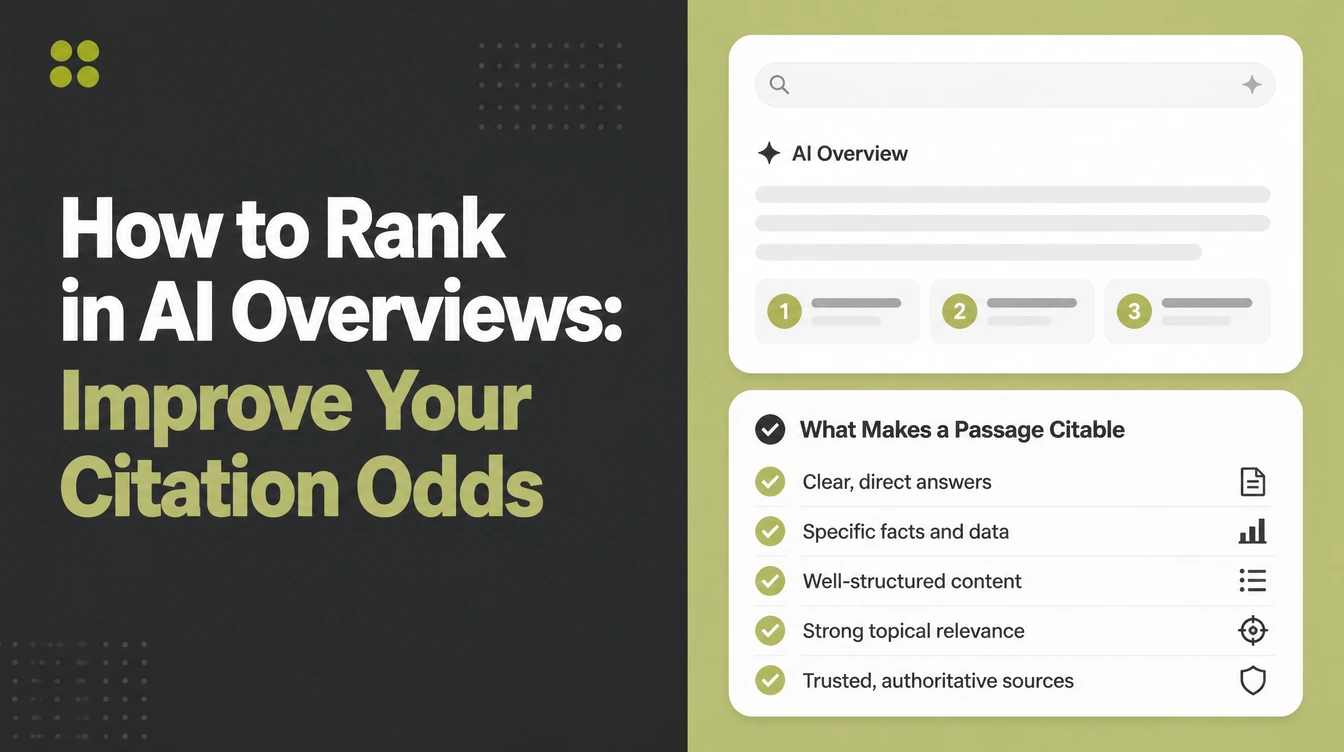
You get cited in AI Overviews and ChatGPT by answering the question in a clear passage near the top of the page, keeping the content fresh, and building mentions elsewhere. Ahrefs found only 38% of AI Overview citations come from the top 10 results. Seed Light checks whether AI tools mention your business.
Key takeaways
Short on time? Here is how to rank in AI Overviews and get cited by ChatGPT in five lines, before we break each step down.
- The #1 spot matters less now. Only about 38% of AI Overview citations come from pages ranking in the top 10, down from roughly 76% in July 2025 (Ahrefs, 2026).
- Write answer-first. Lead each section with a clear, direct answer under a question heading so machines can lift it cleanly.
- Be a citable source. A controlled study found adding cited sources, quotations, and stats lifted visibility up to 40% (Princeton, 2024).
- Get mentioned elsewhere. Business websites make up 58% of ChatGPT local sources, with mentions at 27% and directories at 15% (BrightLocal, 2025).
- Stay open and fresh. Let AI crawlers in and keep pages current. AI assistants cite content that is 25.7% fresher than organic results (Ahrefs, 2025).
1. What GEO is (and how it differs from SEO)
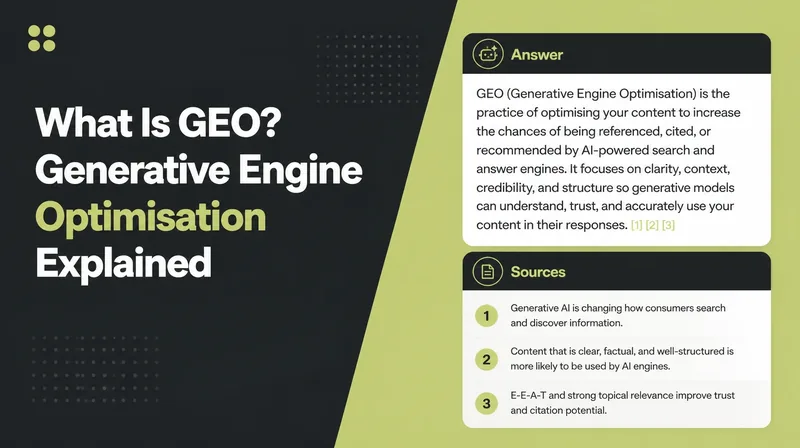
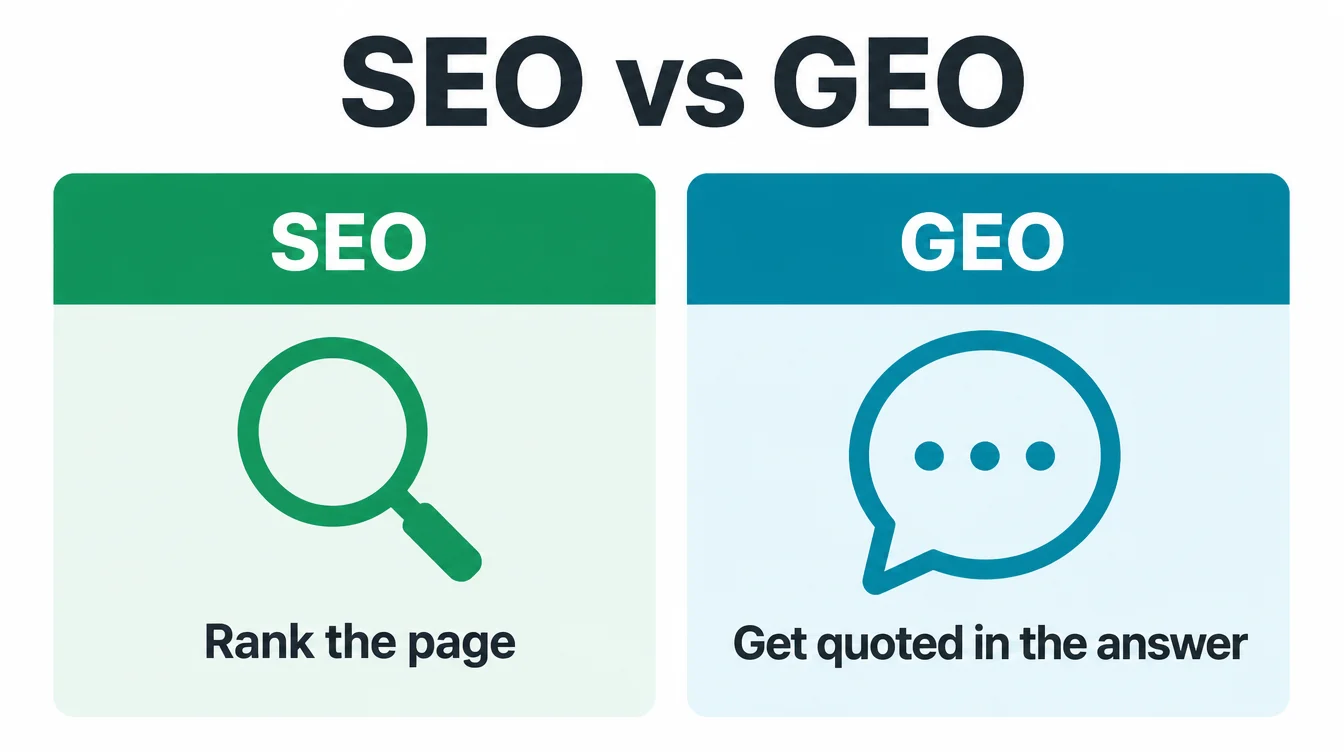
Generative engine optimization, or GEO, is the work of getting your business quoted inside AI answers. Think Google AI Overviews and ChatGPT. Instead of only winning a blue link, you want the AI to name you as the source.
Here is why this is suddenly urgent. Search now often answers the question on the page, so fewer people click through. In fact, 68.01% of Google searches ended without a click (SparkToro, 2026). Meanwhile AI Overviews have spread fast.
They appeared on around 6.5% of queries in January 2025, peaked just under 25% in July, then settled at under 16% by that November (Search Engine Land, 2025). Through 2026 the trackers all point up again, though they disagree on the exact share, so treat any single figure as a rough guide.
So how does GEO differ from plain SEO? SEO tries to rank a page so a person clicks it. GEO tries to get your words pulled into the answer itself, where there may be no click.
Good SEO still helps, and you can read the basics in our guide to what SEO is. But GEO leans harder on clear answers, real data, and being mentioned in the right places.
2. How AI Overviews and ChatGPT pick their sources
AI systems do not simply copy the top result. They scan many pages, look for ones that answer the exact question, and prefer sources that back claims with facts. Then they stitch a few together into one answer and cite them.
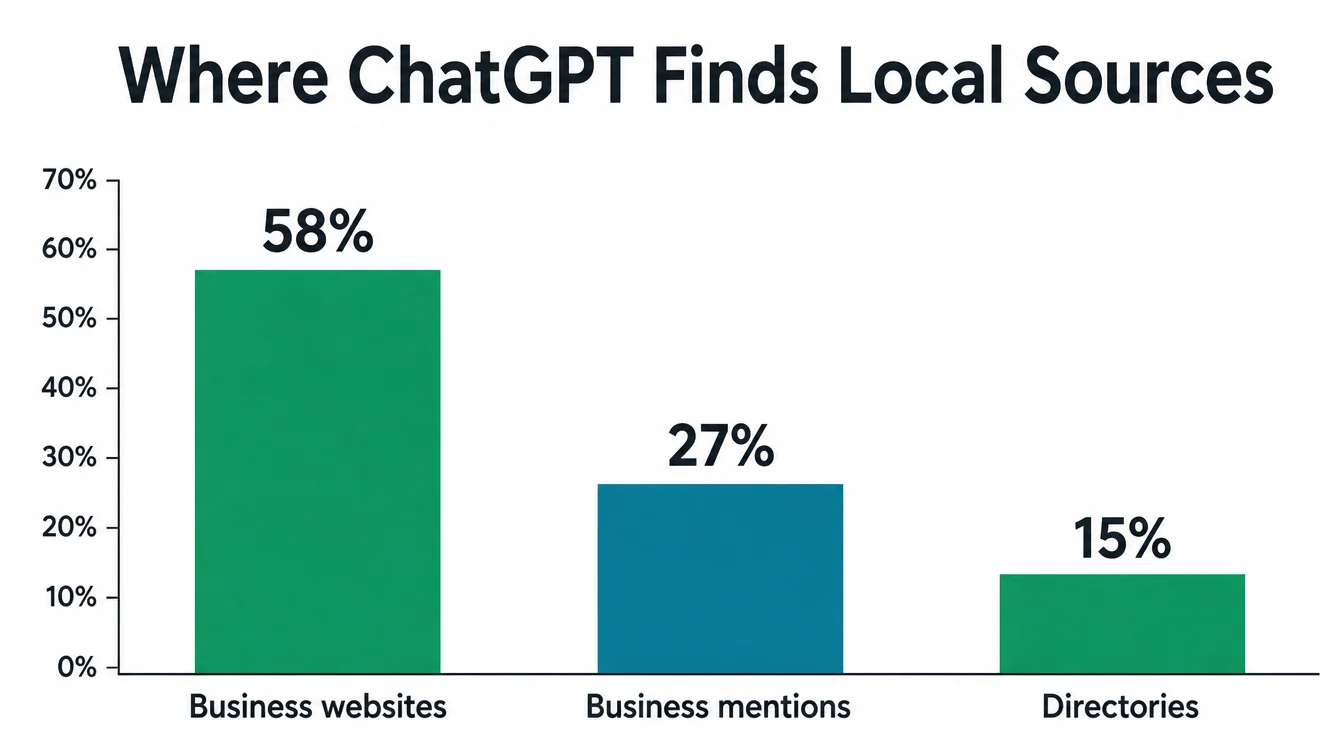
What feeds these answers? It depends on the tool. For ChatGPT, business websites make up 58% of all local search sources, with business mentions on other sites at 27% and directories at 15% (BrightLocal, 2025).
In other words, your own site is the biggest lever, but what other sites say about you matters a lot too.
The practical takeaway is simple. Make your own pages clear and factual, then get named correctly on third-party pages. The rest of this guide walks through how, one step at a time.
3. You do not need to rank #1 anymore (the citation decoupling)
For years the rule was simple: rank first or get nothing. That rule is breaking. AI answers now cite pages from right across the results, including ones well below the top.
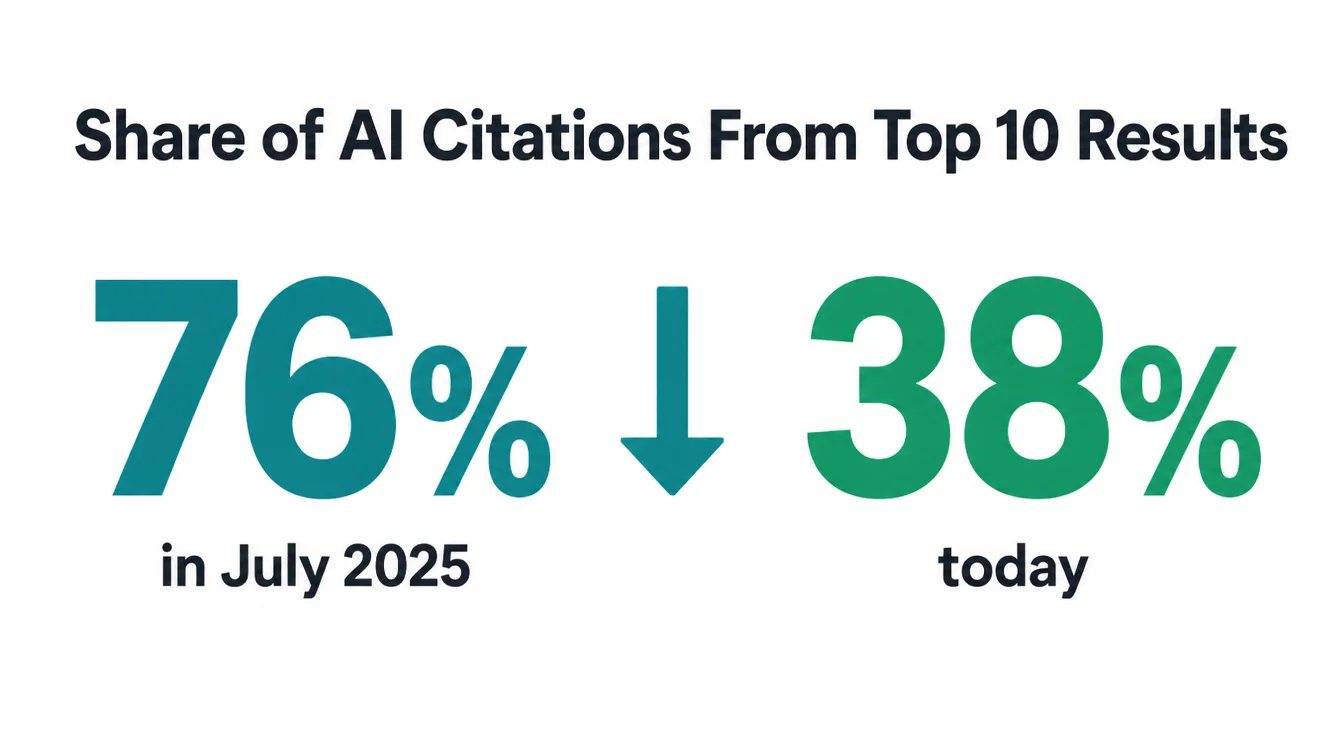
The numbers show it clearly. Ahrefs found that only about 38% of AI Overview citations now come from pages ranking in the top 10, down from roughly 76% in July 2025 (Ahrefs, 2026).
So a page sitting at position 14 can still be quoted if it answers the question better than the page at position 1.
This is great news for small businesses. You do not have to outspend a big competitor for the top spot. Instead, you can win the citation by being the clearest, best-sourced answer to a specific question.
That said, ranking still helps, so it is worth following our guide on how to rank higher on Google alongside this one.
4. Write answer-first content with clear question headings
AI systems want to lift a clean answer. So give them one. Lead each section with a direct, plain answer in the first sentence or two, then add the detail underneath. Do not bury the point three paragraphs down.
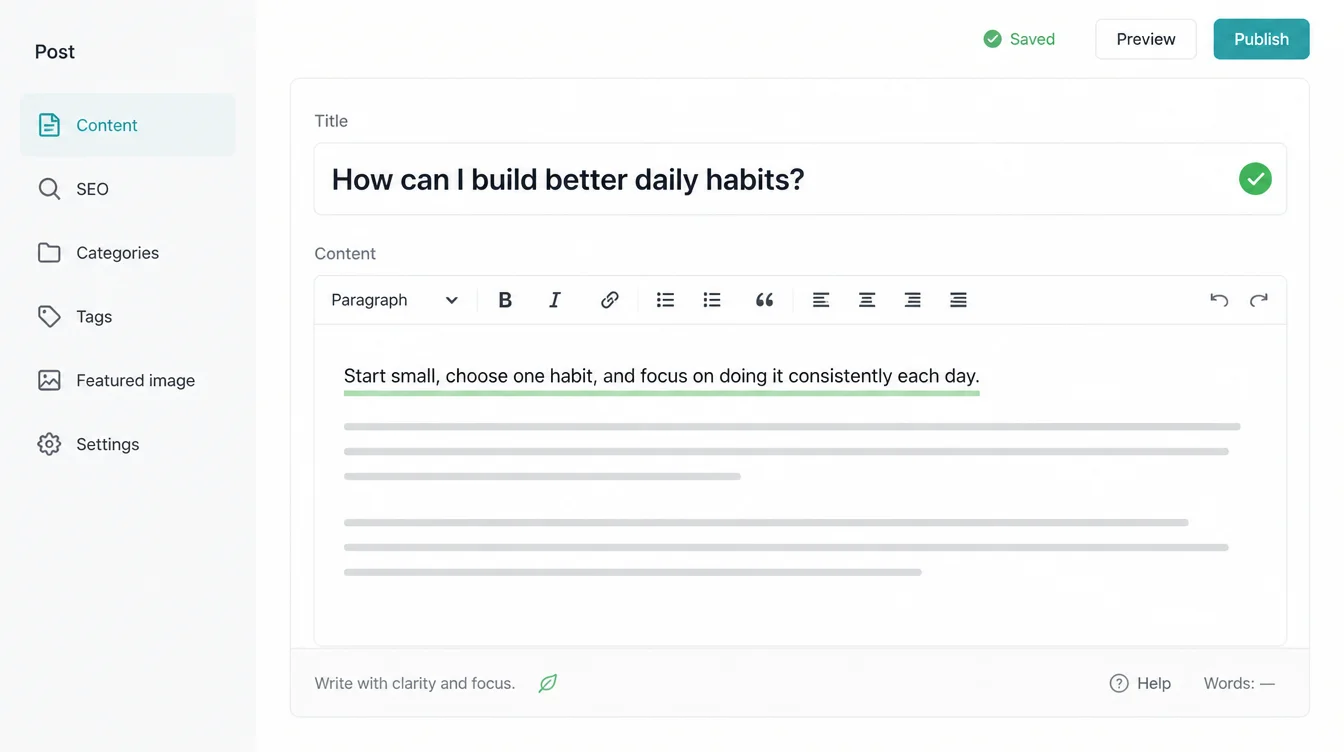
Use question headings that match how people actually ask. "How much does a website cost?" beats "Pricing." "How do I get more customers?" beats "Growth solutions." When your heading is the question and your first line is the answer, a machine can quote you without guessing.
Keep the writing simple too. Short sentences, plain words, one idea per paragraph. This helps your human readers and makes your content easier for an AI to parse. For more on page structure that supports this, see our on-page SEO checklist.
5. Be a citable source (back claims with stats and original data)
AI answers favour content that proves its point. A page that says "reviews matter" is weak. A page that names a real figure and the study it came from is quotable. Numbers, sources, and quotes give the AI something solid to cite.
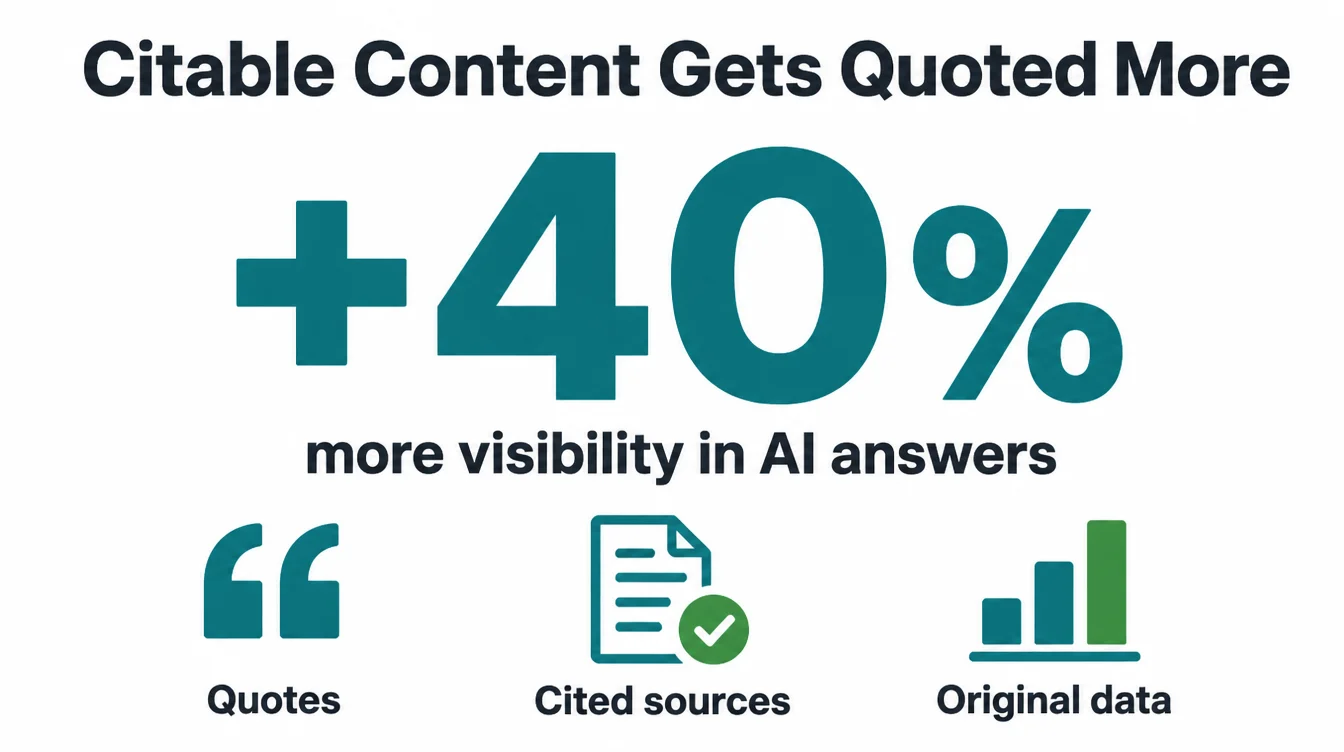
There is solid evidence for this. In a controlled academic study, researchers found that adding cited sources, quotations, and statistics to a page boosted its visibility in AI answers by up to 40% (Princeton, 2024). That was a test environment, not a traffic promise, but the direction is clear.
Original data is the strongest play of all. A small survey of your customers, a price breakdown, or a before-and-after result from real work gives the AI a fact it can find nowhere else. When you own the data, you become the source everyone else has to cite.
6. Get mentioned on third-party sites and reviews
Your own site is only part of the picture. AI tools also weigh what other pages say about you. So getting named on reputable third-party sites makes you look established and trustworthy.
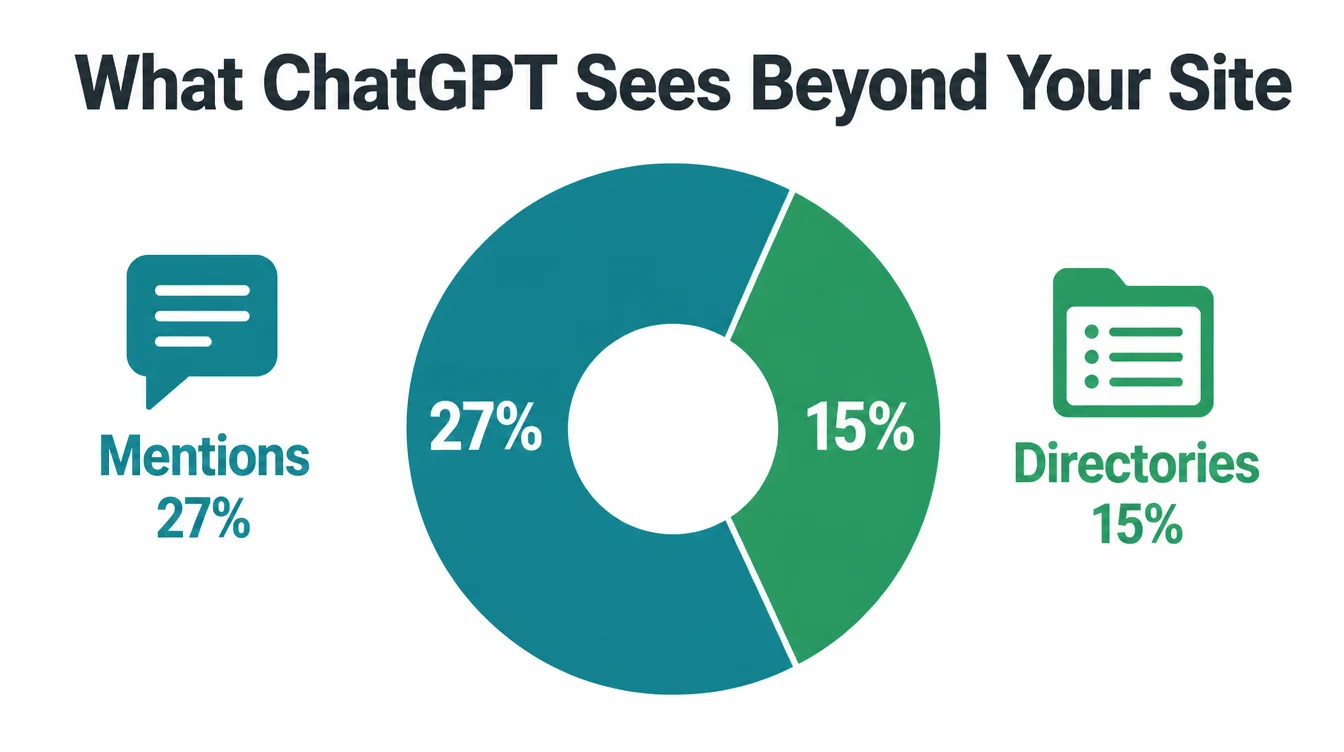
The data backs this up. For ChatGPT local search, business mentions on other sites account for 27% of sources and directories for another 15% (BrightLocal, 2025). Together that is a big chunk of what feeds the answer.
So where should you focus? Get listed accurately on the main directories for your industry. Earn a few honest reviews. Get quoted in a local roundup or a partner's blog. You do not need hundreds of mentions, just a handful of correct, reputable ones that describe your business the same way every time.
7. Add structured data so machines understand you
Structured data is a small piece of code that labels your content for machines. It tells a system "this is a business, this is its address, this is an FAQ, this is a review." When the labels are clear, the AI is less likely to guess wrong about you.
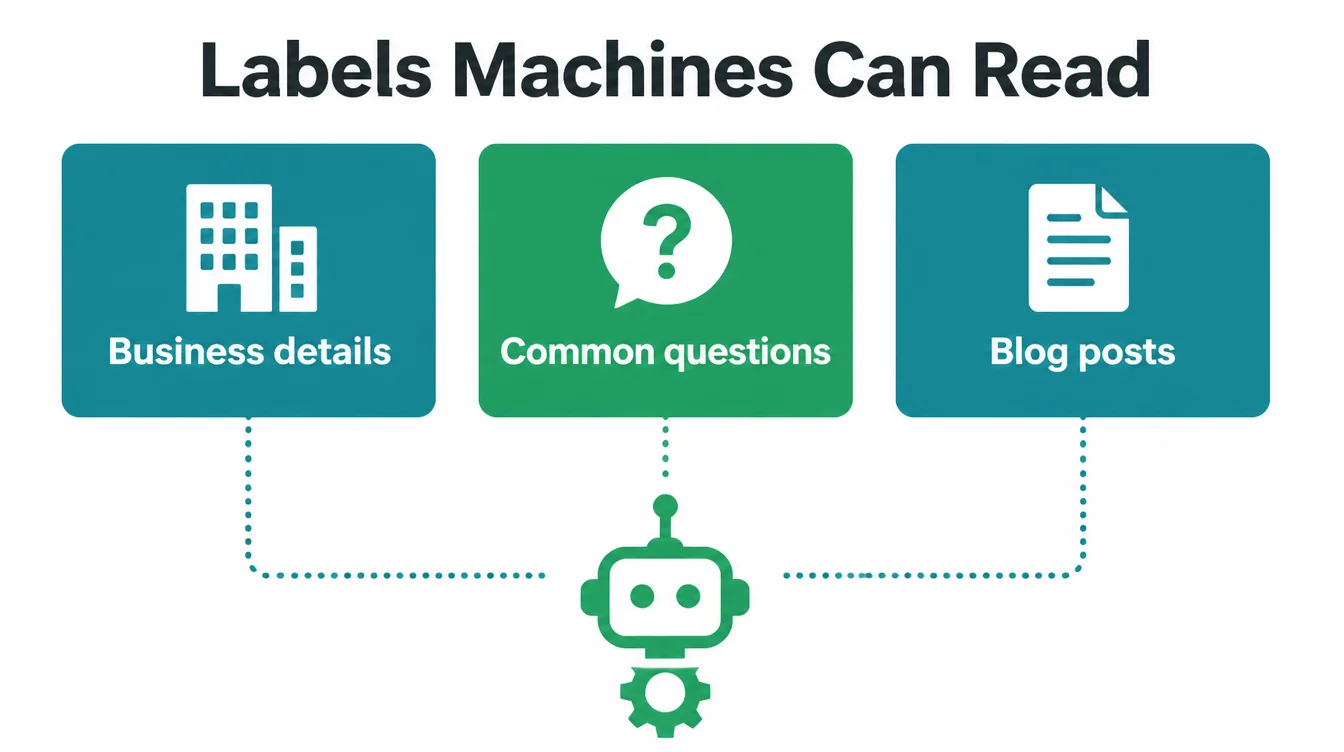
For a small business, a few schema types do most of the work: Organization or LocalBusiness for your details, FAQPage for your common questions, and Article for your blog posts. Each one hands the machine clean facts instead of asking it to read between the lines.
One correction worth knowing. FAQ markup no longer wins you a rich result. Google retired the FAQ rich result on 7 May 2026, so those drop-down questions no longer show under your listing (Search Engine Journal, 2026).
Google also says the markup can stay, because it causes no problems and FAQPage is still a valid type. So add it to describe your content, not to chase a listing that has gone.
You do not need to be a developer to start. Many website platforms add basic schema for you, and our plain-language guide on schema markup explained walks through the rest. Clear labels make it easier to be understood, and being understood is the first step to being cited.
8. Keep content fresh
AI assistants lean toward recent pages. A stale page that has not moved in three years looks risky next to one updated last month. So freshness is a real ranking and citation signal as well as good housekeeping.
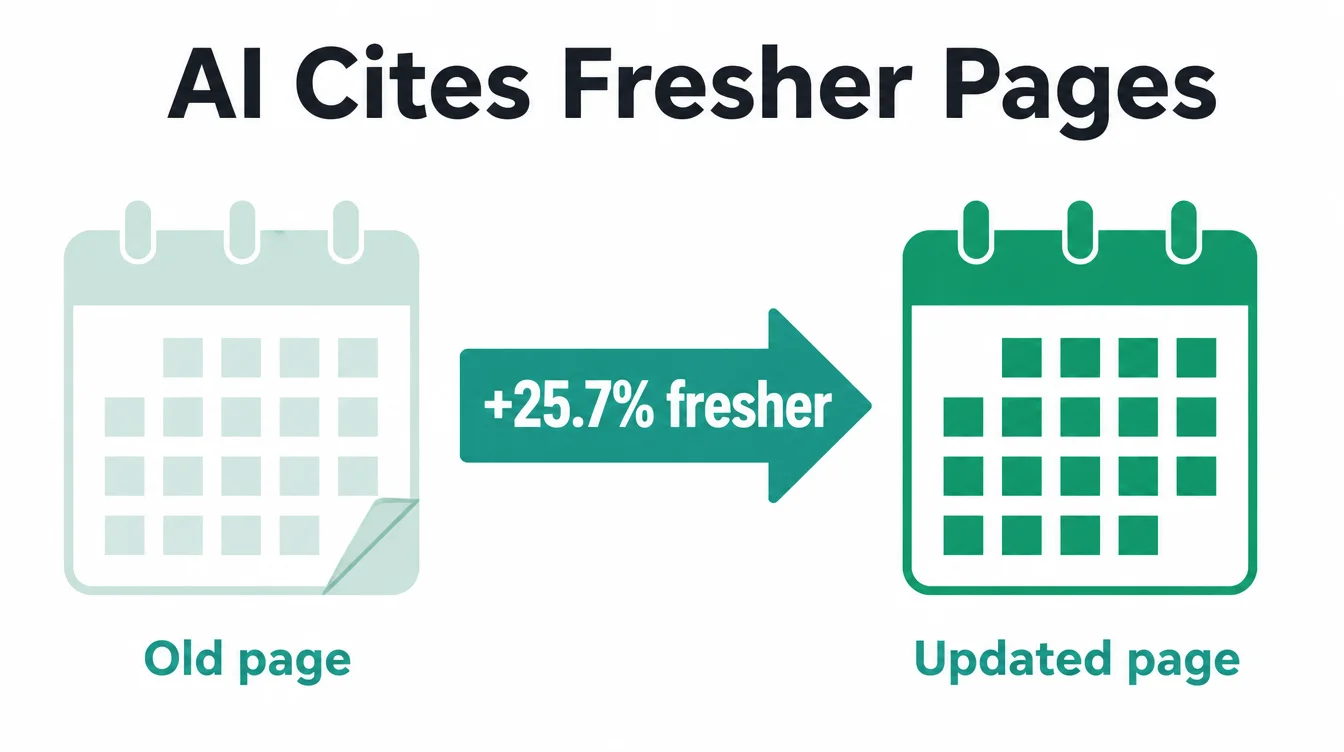
The research is striking here. Ahrefs found that AI assistants cite content that is 25.7% fresher than what organic search results return (Ahrefs, 2025). So old content is at a real disadvantage when an AI decides who to quote.
You do not need to rewrite everything. Pick your most important pages, refresh the figures, update the date, and add anything new every few months. A light, regular update beats a big rewrite once a year.
9. Make sure AI bots can crawl you (Googlebot, OAI-SearchBot, PerplexityBot, Claude-SearchBot)
None of this matters if the AI cannot read your page. AI systems use named crawlers to fetch content, and blocking the wrong one takes you out of the answer before the game even starts.
The trick is knowing which crawler does what, because two of the four names people usually copy into robots.txt have nothing to do with whether you get cited. Our free AI visibility checker fetches a page and reports which of those crawlers it lets in.
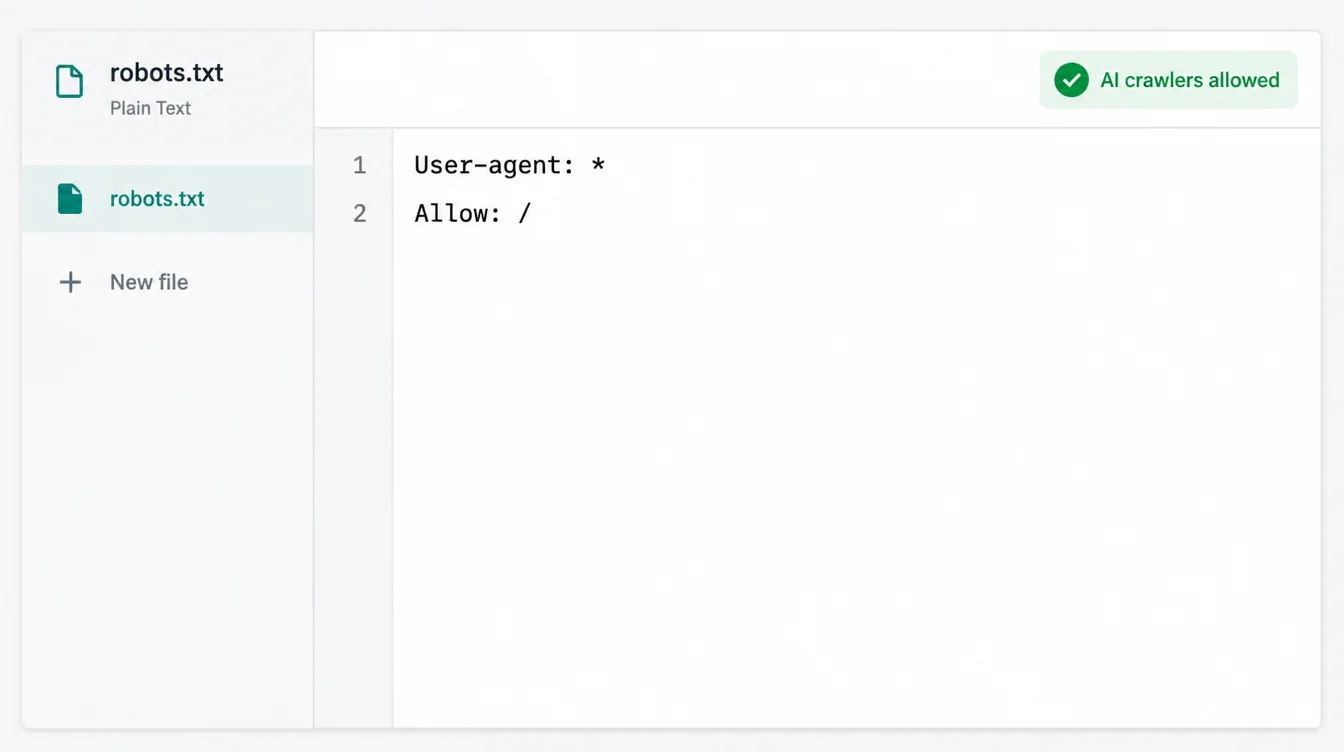
Split them into two groups. The discovery crawlers are the ones that decide whether you can be cited: Googlebot for Google Search and the AI features inside it, OAI-SearchBot for ChatGPT search (OpenAI, 2026), PerplexityBot for Perplexity, and Claude-SearchBot for Claude search (Anthropic, 2026). The training crawlers are GPTBot, Google-Extended, ClaudeBot and CCBot.
They collect text that may be used to train models. OpenAI states that a site opted out of OAI-SearchBot will not show in ChatGPT search answers, while disallowing GPTBot only means the content should not be used in training. So blocking a training crawler does not remove you from AI search.
Google-Extended is the one people get wrong. It covers Gemini model training and grounding in the Gemini app and Vertex AI. It does not decide whether you show up in Google Search, and Google states plainly that it is not a ranking signal (Google Search Central).
AI Overviews are served through ordinary Googlebot access, so if you want out of Gemini training but still want AI Overview citations, blocking Google-Extended alone does that.
So do two things. First, open your robots.txt and confirm the four discovery crawlers are allowed. Second, make sure your key pages are not hidden behind a login or built so heavily on scripts that a simple bot sees an empty page.
If a crawler can read it, the AI can quote it. To learn more about how AI is changing small business marketing, see our AI for small business guide.
10. A GEO checklist
Here is the whole guide as a checklist you can work through. Pick a few items, finish them, and come back next week for the rest. You do not have to do it all at once.
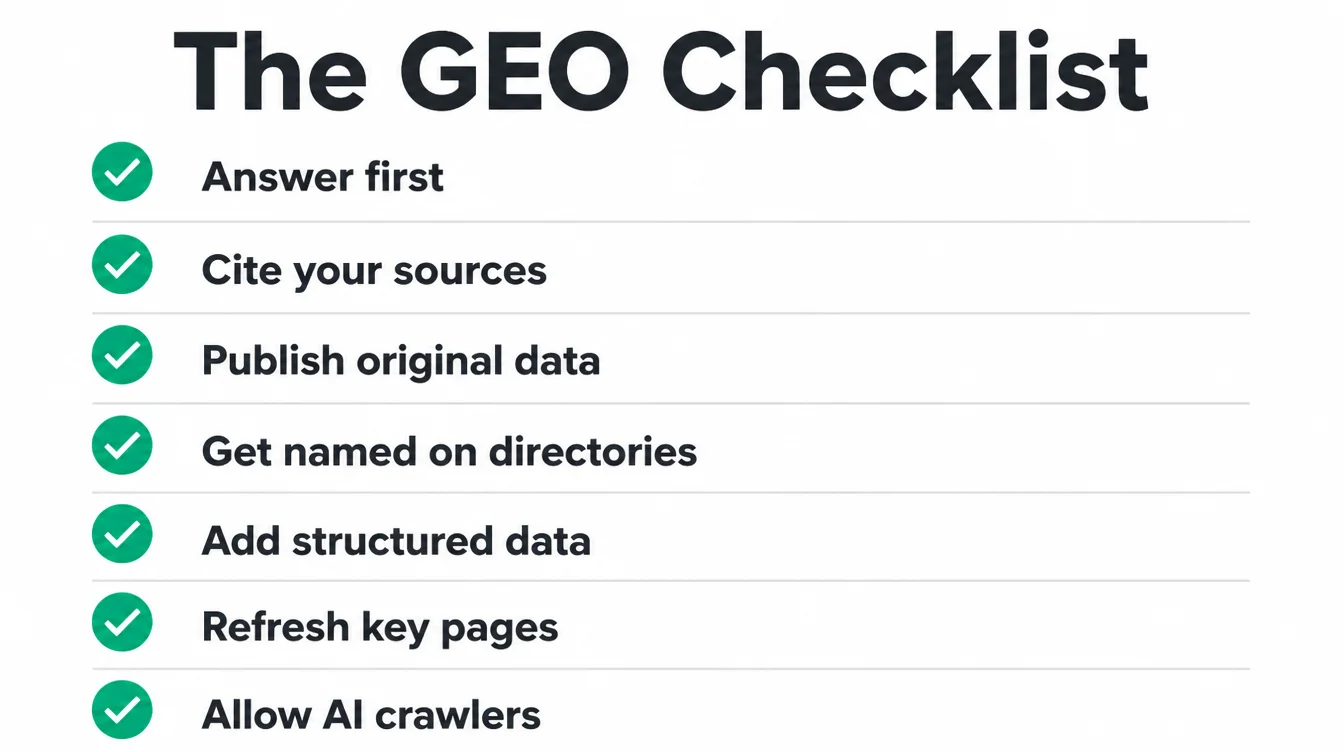
| Action | Why it helps you get cited |
|---|---|
| Lead each section with a direct answer under a question heading | Lets an AI lift a clean answer without guessing what you mean |
| Back claims with stats, quotes, and named sources | A controlled study found this lifted AI visibility up to 40% |
| Publish original data your customers give you | Makes you the only source for a fact others have to cite |
| Get named correctly on directories and reviews | Mentions and directories are 42% of ChatGPT local sources |
| Add Organization, FAQPage, and Article schema | Hands machines clean facts instead of asking them to guess |
| Refresh key pages and update the date every few months | AI cites content that is 25.7% fresher than organic results |
| Allow Googlebot, OAI-SearchBot, PerplexityBot and Claude-SearchBot in robots.txt | These four fetch the pages behind search results and AI answers |
Work down the list once a month and your presence in AI answers builds steadily. For more practical guides, browse the Seed Light blog or see our AI search optimisation services.
Frequently asked questions
1. How do AI Overviews choose their sources?
AI Overviews pull from a mix of pages that answer the question clearly, wherever they sit in the rankings. The system looks for content that gives a direct answer, backs it with facts, and matches the exact question being asked. Ahrefs found that only about 38% of AI Overview citations now come from pages ranking in the top 10, down from roughly 76% in July 2025, so clear answers can beat raw ranking.
2. Do I need to rank #1 to get cited by AI?
No. The link between ranking first and getting cited has weakened. Ahrefs found only about 38% of AI Overview citations come from pages in the top 10, so a page sitting lower can still be quoted if it answers the question better. Focus on giving a clear, well-sourced answer to a specific question rather than chasing the number one spot.
3. What is generative engine optimization (GEO)?
Generative engine optimization, or GEO, is the practice of getting your business mentioned and cited inside AI answers like Google AI Overviews and ChatGPT. Instead of only trying to win a blue link, you write content that AI systems can quote, back claims with stats, earn mentions on other sites, and keep your pages open to AI crawlers. The goal is to be the source the AI pulls from.
4. Is GEO the same as SEO?
GEO and SEO overlap, but they target different outcomes. SEO aims to rank a page so a person clicks it. GEO aims to get content quoted inside an AI answer, where there may be no click. GEO leans harder on direct answers, original data, third-party mentions and structured data.
5. How do I get my business mentioned by ChatGPT?
ChatGPT leans on business websites and third-party sources. BrightLocal found business websites make up 58% of local search sources in ChatGPT, with business mentions on other sites at 27% and directories at 15%. So keep your own site clear and factual, and get named on reputable third-party pages, reviews, and directories. The more places describe you correctly, the more likely you are cited.
6. How do I let AI crawlers access my content?
Googlebot, OAI-SearchBot, PerplexityBot and Claude-SearchBot fetch pages for search and AI answers. GPTBot, ClaudeBot and CCBot collect training data. Google-Extended controls Gemini training and grounding in Gemini Apps and Vertex AI, but it does not affect Google Search inclusion or ranking. Check robots.txt and keep key pages accessible.
7. Does fresh content help with AI citations?
Yes. AI assistants lean toward recently updated pages. Ahrefs found AI assistants cite content that is 25.7% fresher than what organic search results show. So a page with a recent update date, current figures, and a quick refresh every few months stands a better chance of being quoted than one that has sat untouched for years.