AI Website Builder vs Web Designer 2026: Which Is Better?

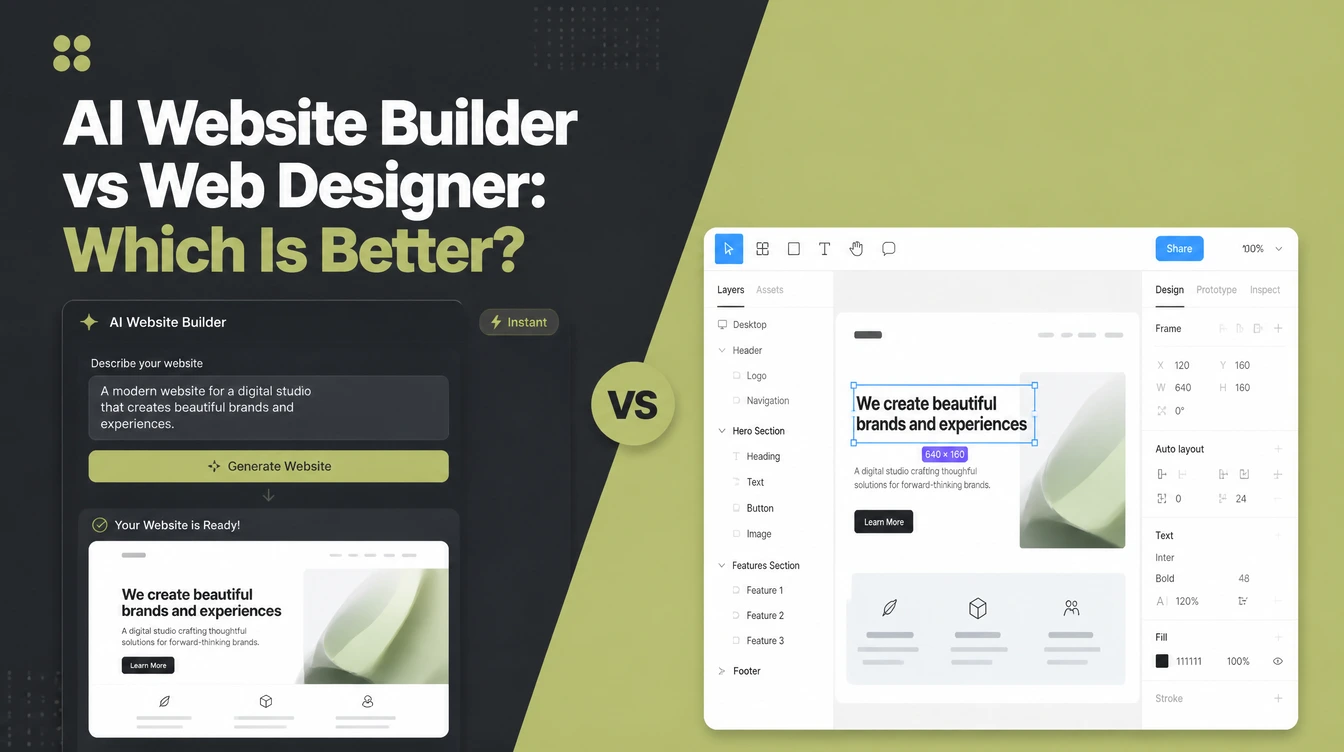
Use an AI website builder when you need a simple, presentable site fast and you are happy to do the writing and the decisions yourself. Hire a designer when the site has to bring in customers, rank in search, and stay yours without platform lock-in. Seed Light will tell you honestly which one you need.
Key takeaways
Short on time? Here is the honest version in five lines before we dig into each point.
- It is really three choices. DIY with an AI builder, DIY without one, or hire a designer. Each fits a different stage and budget.
- AI builders are genuinely good now. They power 41% of small business sites, while just 12% are custom-built (Clutch, 2025).
- No study proves AI sites rank or convert worse. It depends on the build, not the tool, so be wary of anyone quoting an exact penalty.
- The hidden cost is ownership. Many AI builders are hard to leave, so you often rent your site rather than own it (TechRadar, 2024).
- Hire a designer when the site has a real job. Selling online, custom features, a competitive market, or simply protecting your own time.
1. The honest short answer: it is three options, not two
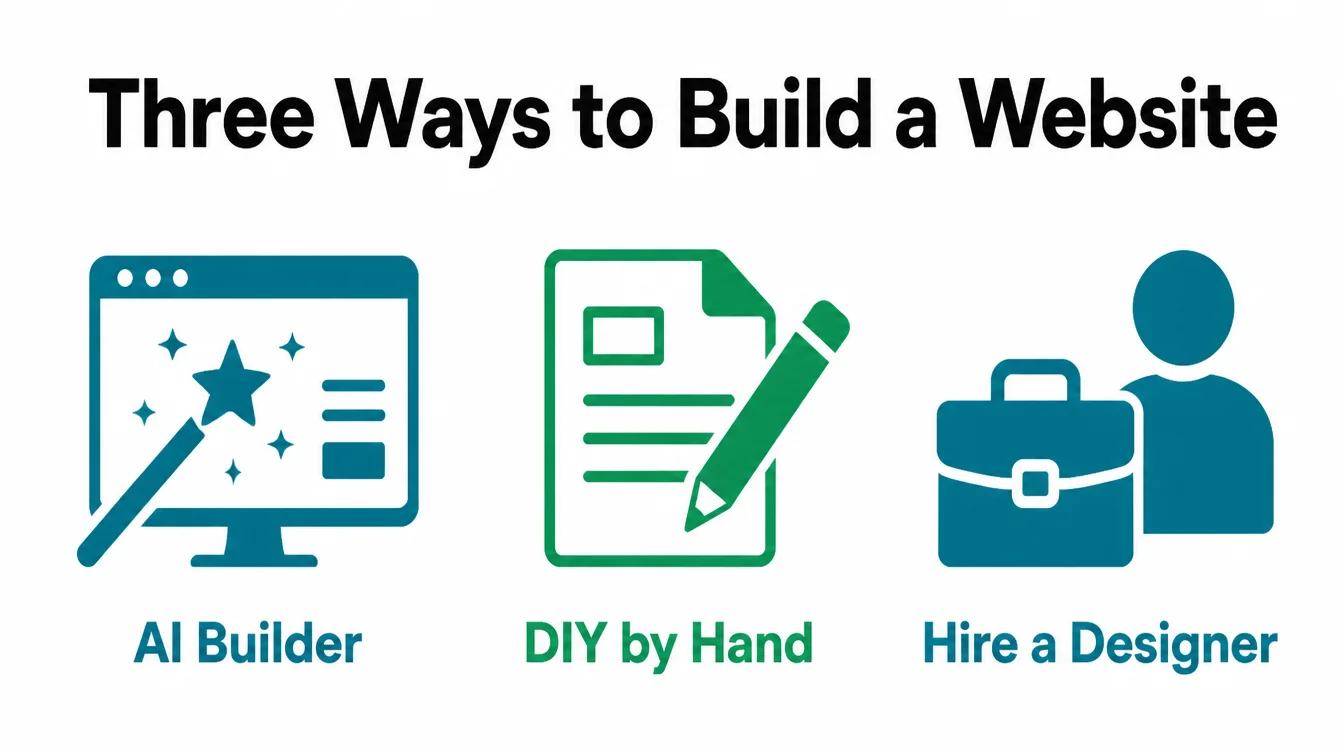
An AI website builder vs a web designer is not a clean fight, because it is not really two options. It is three.
You can build it yourself with an AI builder, build it yourself the old-fashioned way, or hire a professional. Most "AI vs designer" articles skip that middle reality and push you to one side.
Here is the truth from someone who sells the designer route. AI builders are good now, and they fit a lot of small businesses. The right answer depends on what the website actually has to do for you.
A simple "here is who we are, here is how to reach us" site is a very different job from a site that has to win customers in a crowded market.
So before you pick, ask one question. Is your website a digital business card, or is it meant to bring in real work? If it is the first, an AI builder is often plenty. If it is the second, the decision gets more interesting, and that is what the rest of this guide unpacks.
2. What AI website builders are good at
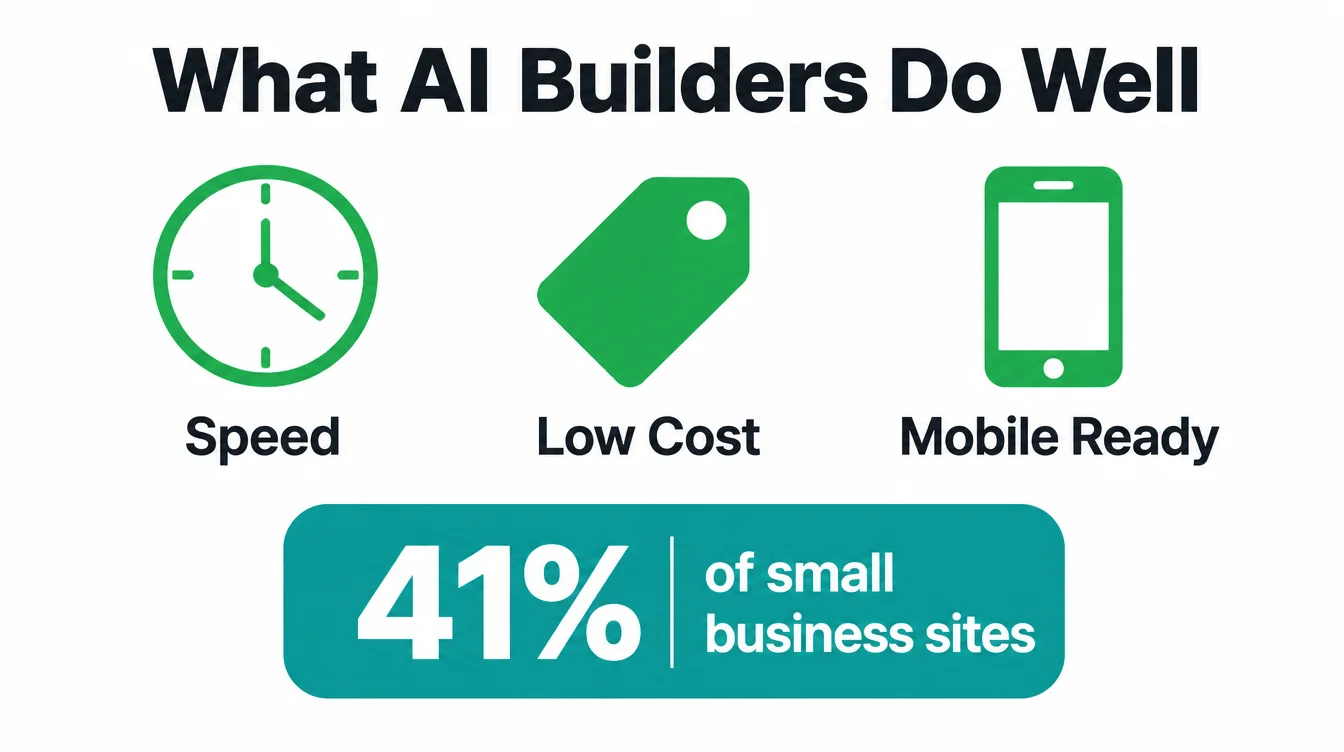
Let us start by giving AI builders their due, because they have earned it. DIY builders like Wix and Squarespace now power 41% of small business sites, while only 12% are custom-built (Clutch, 2025). That is not an accident. They solve real problems for real owners.
Speed
You can describe your business, answer a few questions, and have a presentable site online the same day. For an owner who needs to exist online by Friday, that is huge.
Low upfront cost and no code
The barrier is tiny. You pay a small monthly fee and you do the work, with no developer to brief and no quote to wait for. For testing a new idea, that low risk is exactly right.
Decent defaults
Modern builders ship sites that look tidy and work on a phone out of the box. That matters, since mobile was 49.36% of worldwide web traffic in August 2026 (StatCounter, August 2026). A clean, responsive default beats a custom site left unfinished.
So if your needs are simple and your budget is tight, an AI builder is a sensible, modern choice. There is no shame in it. For more ways AI is helping owners, see our guide to AI for small business.
3. Where AI builders fall short
Now the other side, told just as plainly. An AI builder is brilliant at building. It is much weaker at the thinking that happens before the building, and that thinking is usually what separates a site that earns from a site that just exists.
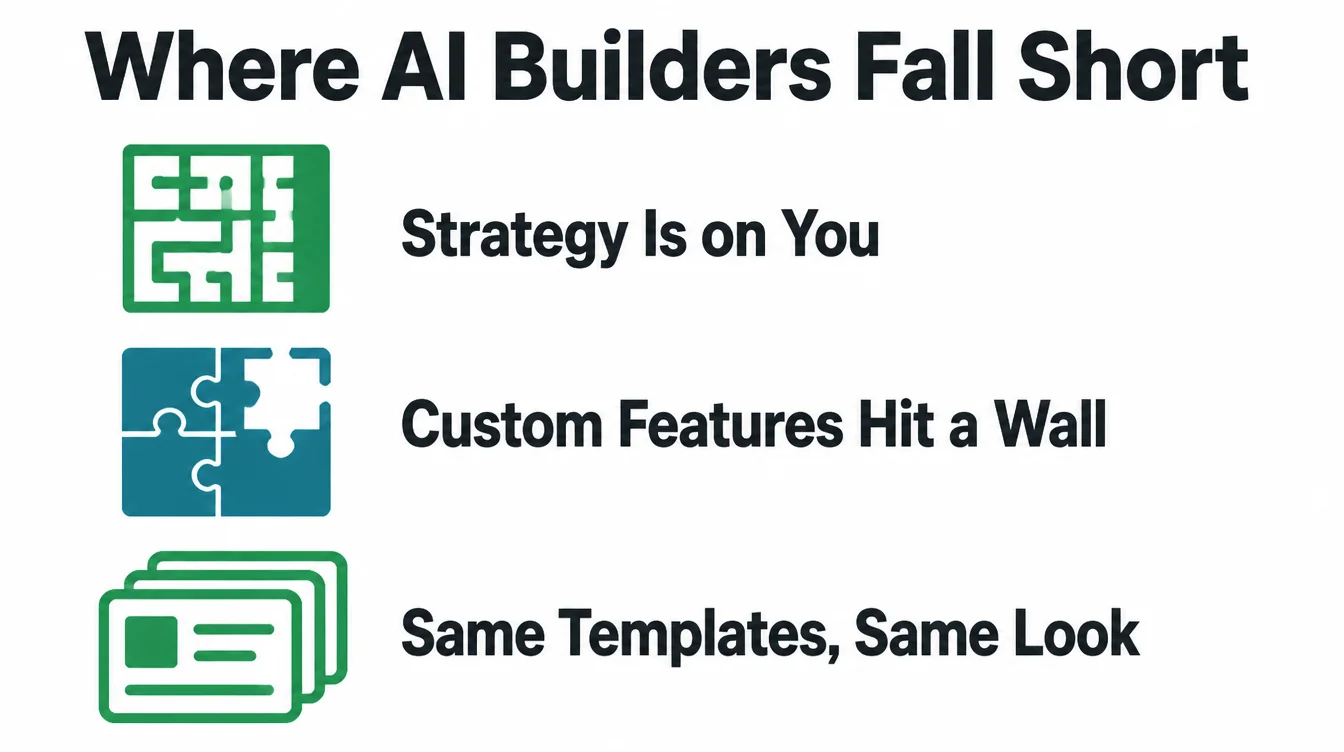
Strategy is on you
The tool will not tell you what to say, who you are talking to, or what one action the page should drive. It fills a template with your words. If those words are vague, the site is vague. A good designer starts with your goal and works backward, because the layout is the easy part.
Custom features hit a wall
The moment you need something the template did not plan for, a booking flow tied to your system, a specific checkout, an unusual layout, you are stuck working around the tool instead of with it.
Same templates, same look
Because thousands of businesses start from the same handful of templates, sites can blur together. In a market where buyers compare three tabs at once, looking like everyone else is a quiet disadvantage. If you are weighing platforms, our Wix vs WordPress comparison digs into that trade.
None of this makes AI builders bad. It makes them a tool, and tools have limits. The question is whether your website lives inside those limits or needs to push past them.
4. The truth about SEO and AI builders
This is where you will hear the most nonsense, so let us be careful. You may have read that AI-built sites rank far worse, sometimes with a scary exact percentage attached.
Here is the honest position: there is no credible head-to-head study proving AI-built sites rank or convert worse than designer-built ones. Anyone quoting a precise penalty is making it up.
What actually decides ranking is the build, not the badge on the tool. Google cares about speed, mobile-friendliness, clear structure, and genuinely useful content. An AI builder can produce all of that, and so can a sloppy designer fail at all of it. The platform is not the deciding factor. The work is.
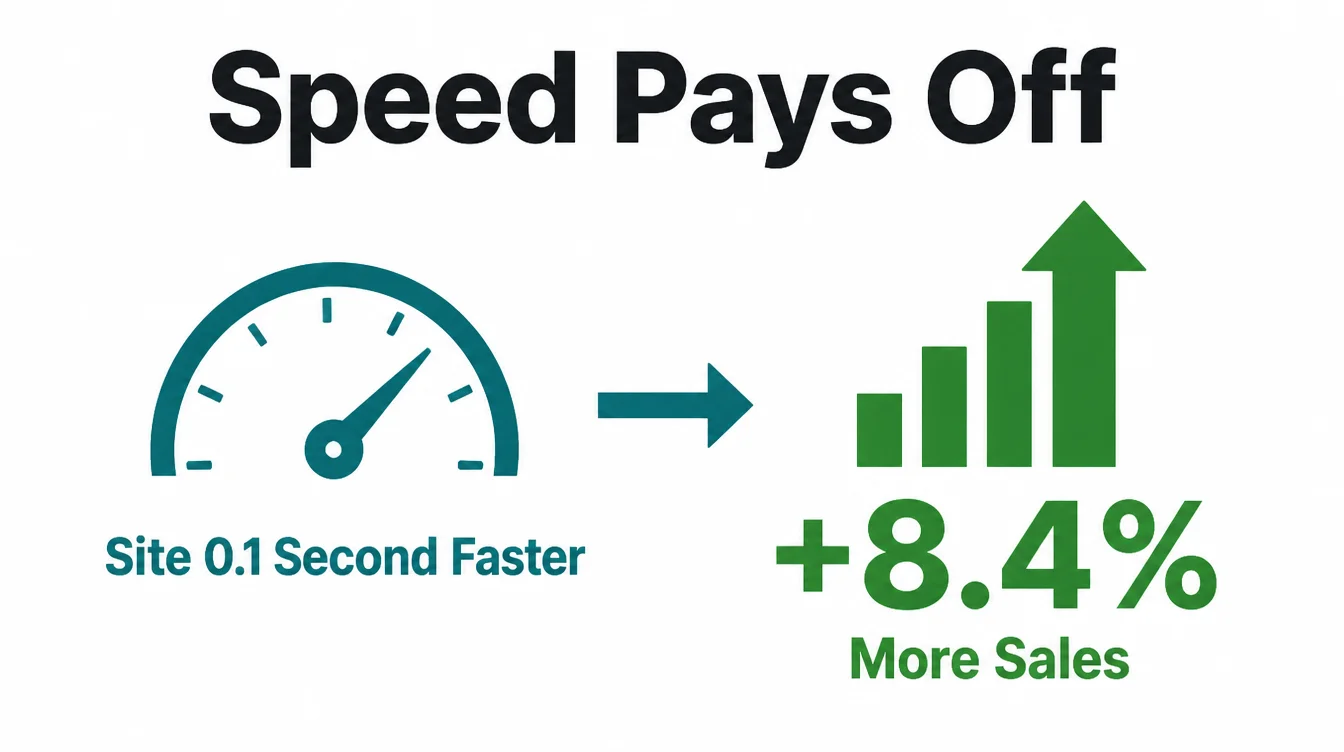
Speed deserves a real number, though, because it ties to money as well as rank. A 0.1 second speed gain lifted retail conversions by 8.4% in Google's own case study (web.dev, 2020).
So whichever route you pick, a fast, clean build pays off. For the full money picture, read our guide to how much a website costs.
5. Ownership and lock-in: the long-term cost few mention
Here is the part the glossy ads skip, and it is the most important practical difference. With most AI builders, you are not buying a website. You are renting one. The site lives inside the platform, and the platform sets the rules.
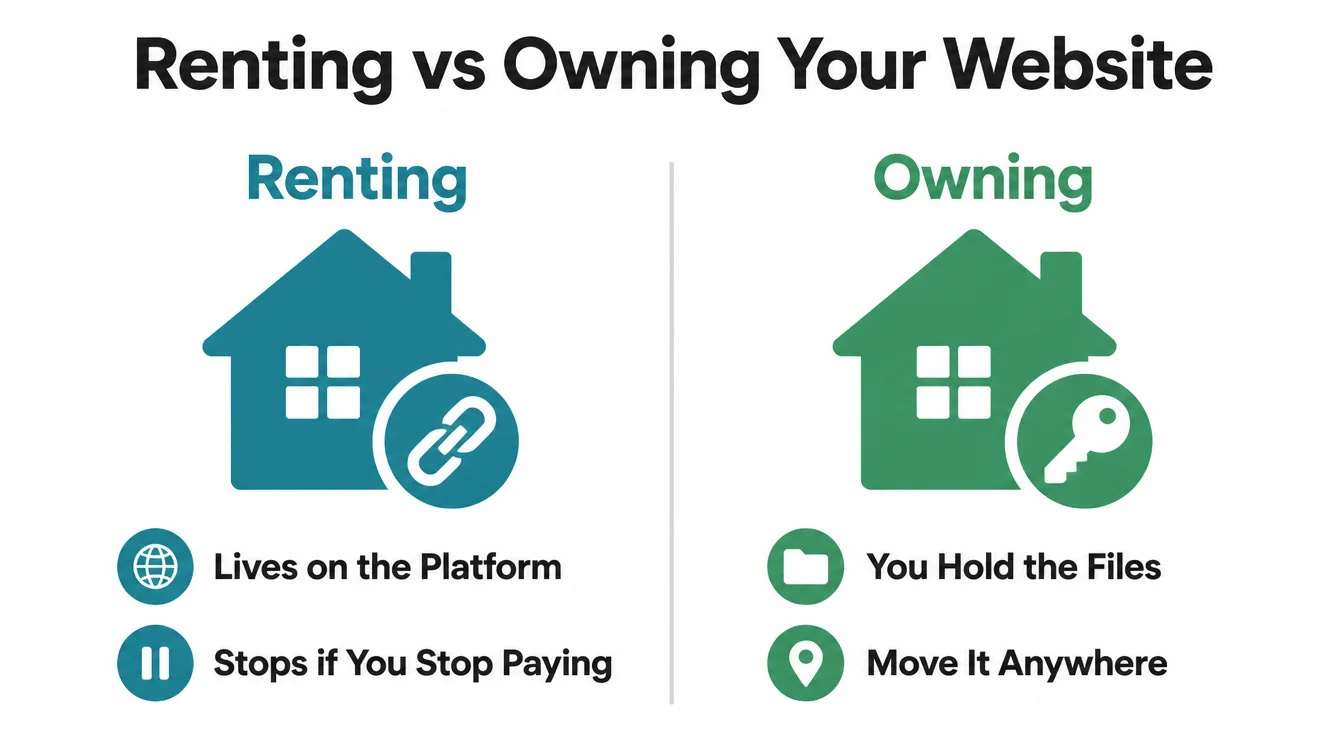
Stop paying, and the site goes dark. Want to move to a better tool later? Many AI builders make export difficult, locking your design and content inside their system so leaving means rebuilding from scratch (TechRadar, 2024).
That is not a flaw in a quick test site, but it becomes a real cost once the site matters to your income.
By contrast, a designer building on an open, portable platform hands you something you actually own. You keep the domain, the content, and a working copy you can take anywhere. So when you compare price, compare the right thing.
A low monthly fee with no exit can cost more over a few years than a one-off build you control. Ownership is a feature, even though no one prices it on the box.
6. Design and trust: first impressions count
Visual design contributed to credibility assessments in Stanford's research. In that study, 46.1% of people assessed a site's credibility based partly on its visual design, the factor they named most (Stanford Web Credibility Project).
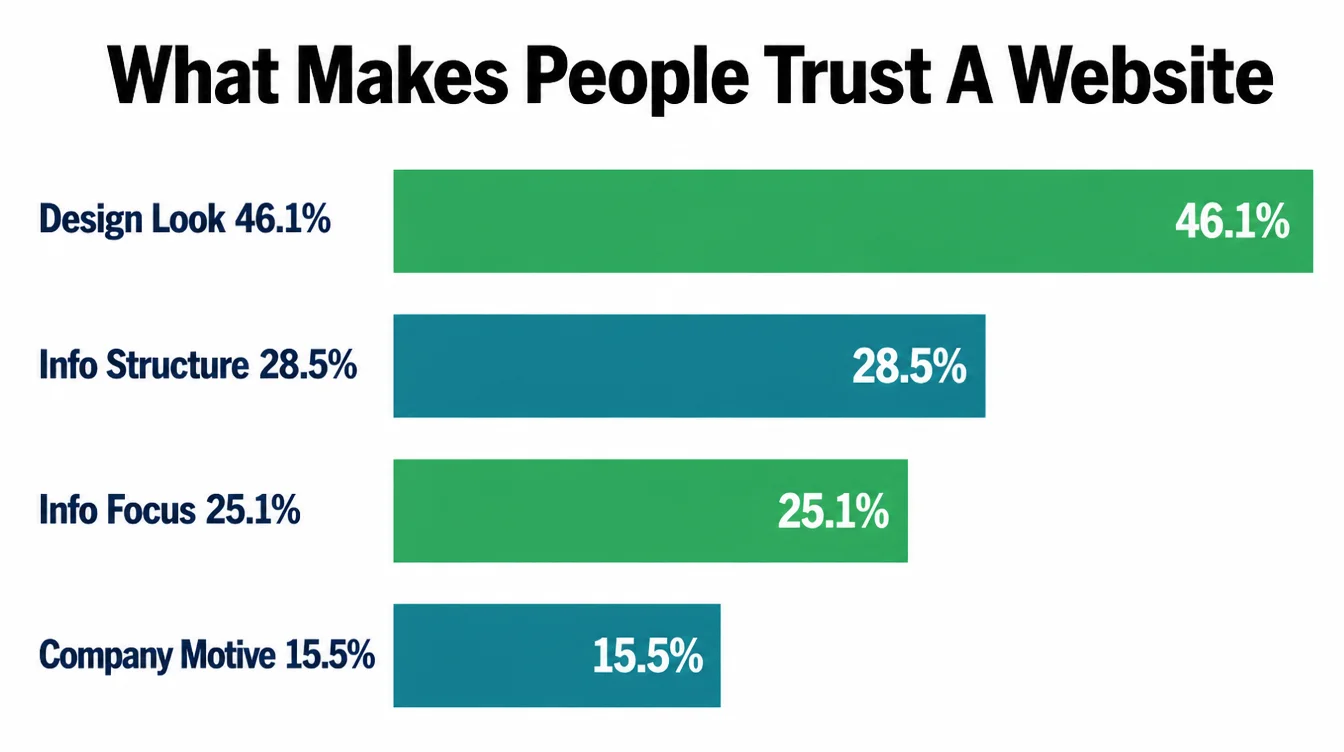
An AI builder can produce a tidy, professional look, and for many businesses that is enough.
The gap shows up in the harder cases: a distinctive brand, a layout shaped around how your customers actually decide, the small touches that make a stranger trust you in seconds. That is craft, and craft is what you pay a designer for.
So the design question is not "ugly versus pretty." It is "good enough versus built to win." In a calm market, good enough sells.
In a competitive one, where buyers compare you side by side, the difference in trust can decide the sale. To judge a partner well, see how to choose a web design company.
7. When DIY with an AI builder is the right call
Let us be specific, because this route is genuinely right for a lot of owners. An AI builder is a smart choice when several of these are true.
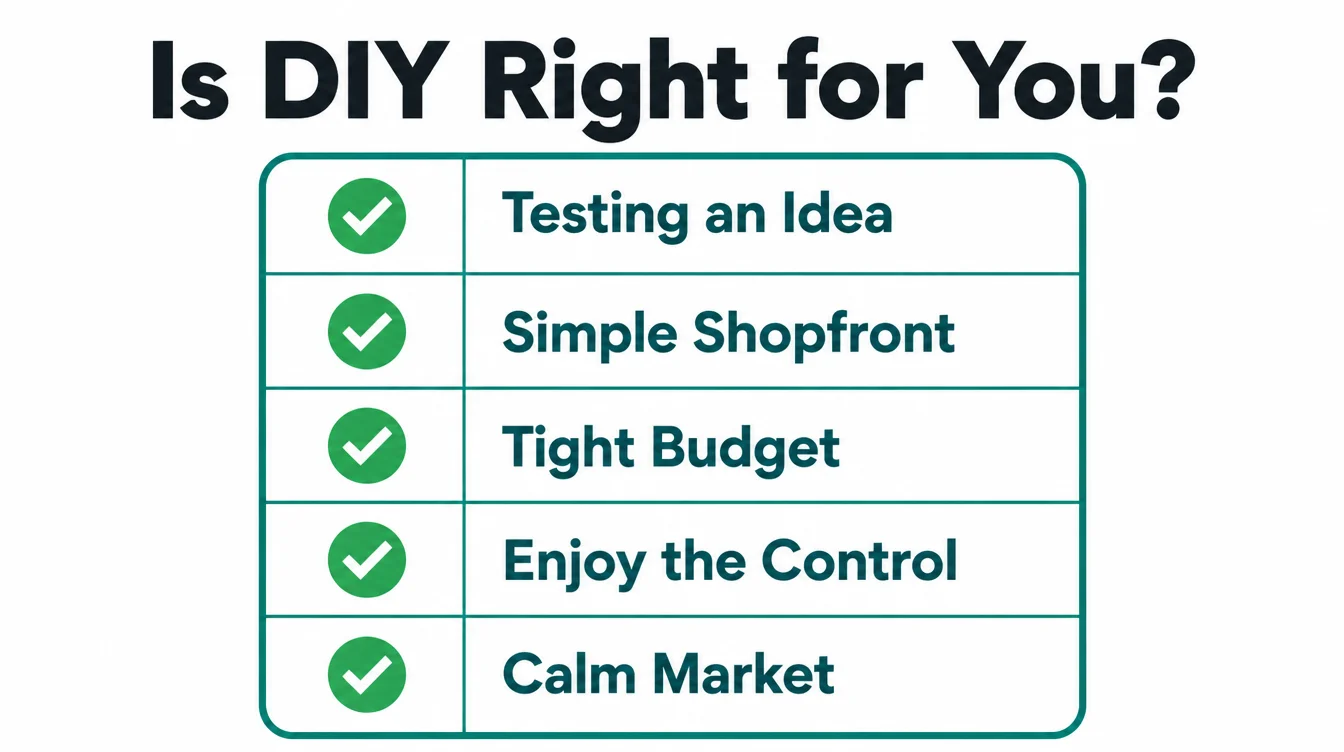
- You are testing an idea. You want online cheaply and fast to see if the offer lands before you invest.
- The site is a simple shopfront. A few pages, your story, your services, a way to contact you.
- Your budget is tight right now. A small monthly fee fits, and a larger one-off build does not yet.
- You enjoy the control. You like tweaking it yourself and you have the time to do it.
- Your market is not cut-throat. You are not fighting ten polished competitors for every click.
If that sounds like you, do not overthink it. Get a clean AI-built site live, write honest copy, keep it fast, and start serving customers. You can always upgrade later. For the foundations, our small business website guide covers what every site needs.
8. When to hire a designer
Now the flip side, just as plainly. Hiring a web designer earns its cost when the website has a real job to do. Look for these signs.
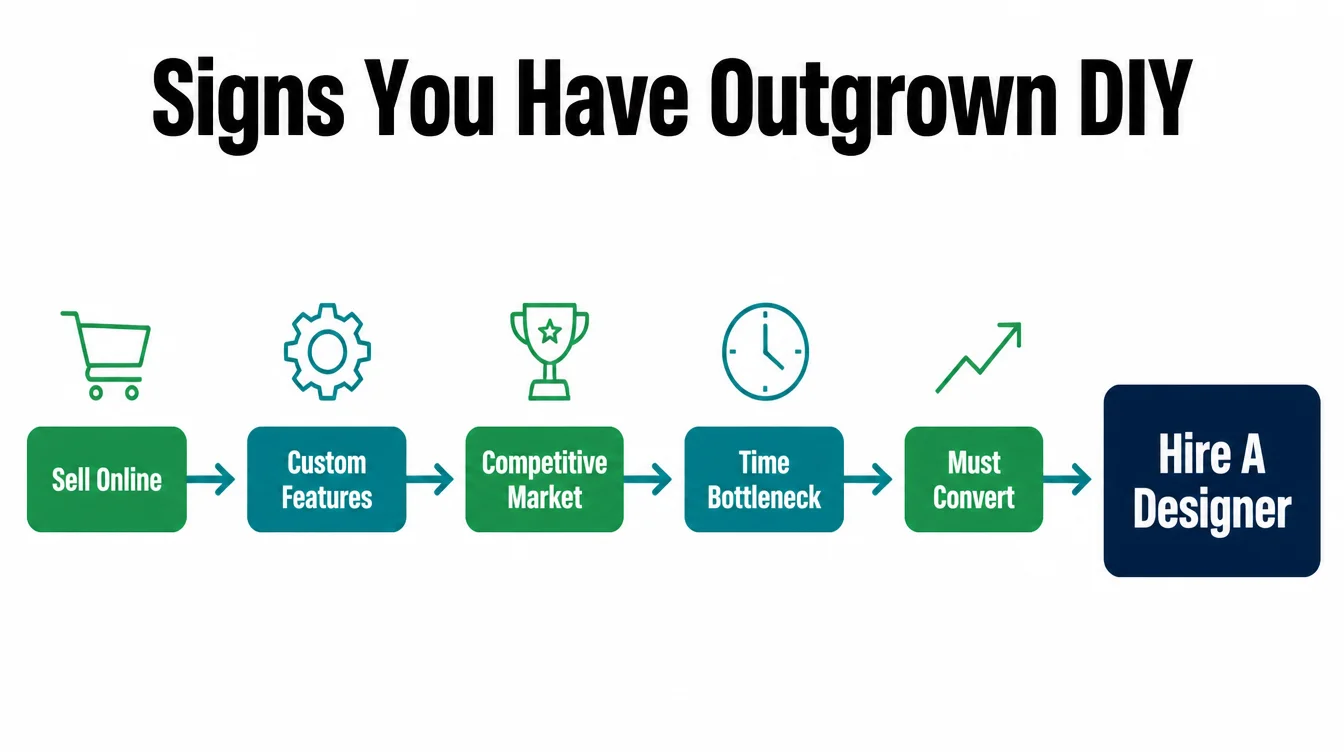
- You sell online. A real checkout, products, and payments deserve a build that handles edge cases, not a template you fight.
- You need custom features. Bookings, calculators, integrations, anything a template did not plan for.
- Your market is competitive. When buyers compare you side by side, design and trust decide who wins.
- Your time is the bottleneck. Every hour spent wrestling a builder is an hour not spent serving customers.
- The site must convert. You need a page built to turn visitors into customers, which is strategy, not styling.
That last point is the heart of it. A designer is not selling you a prettier template. They are selling you a plan. See how we approach web design for small businesses if the site is carrying weight.
9. How to decide
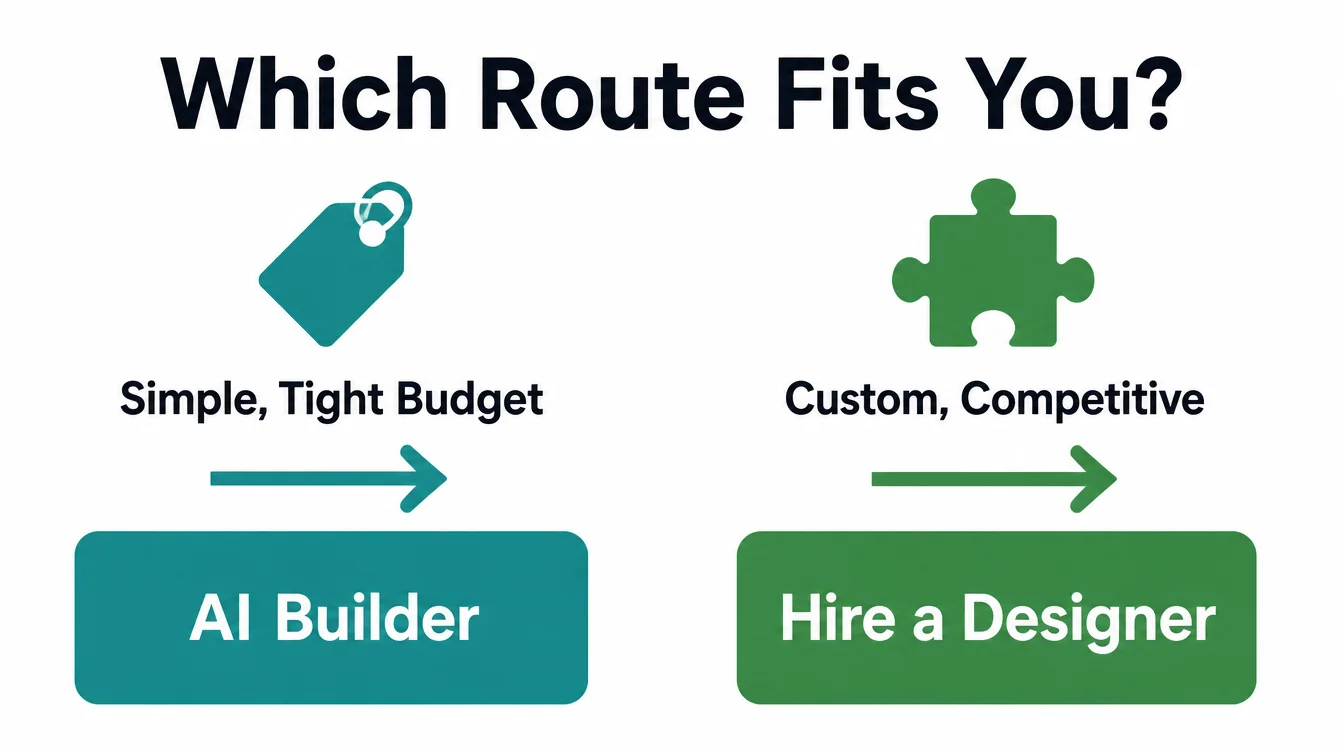
Put it together and the choice gets simple. Match the route to the job the website has to do, not to the loudest marketing. The table below lays the two build paths side by side so you can see the trade at a glance.
| Factor | AI website builder | Hiring a designer |
|---|---|---|
| Time to launch | Fast, often the same day | Slower, planned over weeks |
| Cost predictability | Low monthly fee, plus your time | Larger one-off, but clear and fixed |
| Design and strategy | You supply it; the tool styles it | Built around your goals from the start |
| Custom features | Limited to what the template allows | Built to fit your exact needs |
| SEO control | Good basics; depends on your input | Full control of the technical build |
| Ownership | Often rented; export can be hard | You own a portable site you can move |
| Support | Help centre and chat, do-it-yourself | A named person who knows your business |
Read the table as a guide, not a verdict. A tight budget and a simple need point clearly to an AI builder. A competitive market, custom features, or a site that must sell point to a designer.
And remember the third truth: you can start on an AI builder today and book a proper redesign when the site outgrows it. Browse the Seed Light blog for more plain-language guides.
Frequently asked questions
1. Are AI website builders any good?
Yes, for the right job. Modern AI builders can put a clean, mobile-friendly site online fast, and DIY builders like Wix and Squarespace now power 41% of small business sites (Clutch, 2025). They are great when you need a simple, presentable site quickly and you are happy to do the writing and decisions yourself. They are weaker when you need real strategy, custom features, or a site built to convert, because the tool follows a template, not your goals.
2. Do websites made with AI rank on Google?
Websites made with AI can rank on Google. There is no credible head-to-head study proving AI-built sites rank worse than designer-built ones. What matters is the build: fast loading, mobile support, clear structure and useful content. Ranking depends on the work you put in rather than the tool's logo.
3. Is it cheaper to use an AI builder than hire a designer?
Upfront, almost always yes. An AI builder costs a low monthly fee and your time, while a designer is a larger one-off investment. The honest catch is the long view. Your time has value, a DIY site often needs a rebuild as you grow, and switching builders can mean starting over. So an AI builder is cheaper to start, but not always cheaper over a few years.
4. Do you own a website built with an AI builder?
Mostly you rent it. You own your content and usually your domain, but the site itself lives inside the platform. If you stop paying, the site goes offline, and many AI builders make it hard to export a working copy you can move elsewhere (TechRadar, 2024). An open platform or a designer build on something portable gives you a site you can take with you. Read the export terms before you commit.
5. When should I hire a web designer instead?
Hire a designer when the website carries real weight for your business. That means you sell online, you need custom features a template cannot do, you are in a competitive market where design and trust decide the sale, or your time is better spent serving customers. Just 12% of small business sites are custom-built (Clutch, 2025), so a strategic, made-for-you site is also a way to stand out from template-heavy competitors.
6. Can I start with an AI builder and hire a designer later?
Absolutely, and many businesses do. Starting with an AI builder gets you online cheaply while you test your offer and learn what customers want. Later, when the site needs to do more, you bring in a designer with real knowledge of what works. To make the move easier, pick a builder that lets you export your content and keep your own domain, so you are not starting from zero.