How to Choose a Web Design Company: 10 Questions to Ask

Judge a web design company on how it answers ten plain questions: who does the work, what you own at the end, how changes and dates are handled, what support costs after launch, and what the full price covers. Seed Light answers all ten before anyone commits to anything.
Key takeaways
Short on time? Here is how to choose a web design company in five lines before we break each question down.
- Judge the answers, not the portfolio. A pretty gallery proves they can make things look nice. The 10 questions below prove they can be trusted with your business.
- Most businesses do not need custom. 83% of small businesses now have a website, yet just 12% are custom-built (Clutch, 2025).
- Speed and mobile are not extras. Mobile is 49.36% of web traffic worldwide, and a 0.1-second speed gain has lifted retail conversions 8.4% (StatCounter, August 2026; web.dev).
- Own your assets. Get your domain, hosting login, admin login, and design files in writing before you pay.
- Deadlines slip everywhere. Wellingtone reports that only 36% of organisations always or mostly complete projects on time, so ask how they handle scope and dates (Wellingtone, 2026).
1. Why the questions you ask matter more than the portfolio
Learning how to choose a web design company usually starts with the wrong move. You look at portfolios. The galleries are gorgeous, every one looks great, and you end up more confused than when you started.
A pretty portfolio only proves a company can make one thing look nice. It says nothing about whether they will answer your calls, hit your dates, or hand over your accounts at the end.
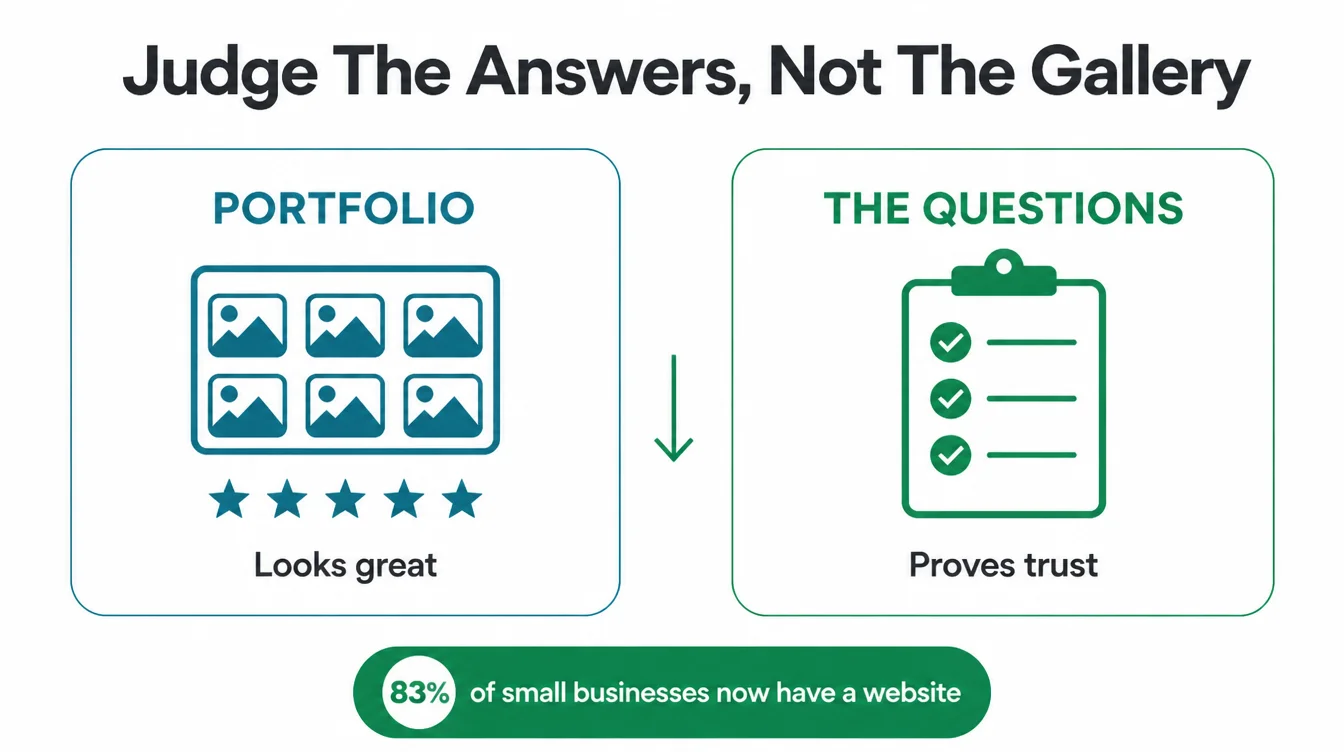
The answers do. Specifically, the way a company replies to ten simple questions tells you almost everything about what working with them will feel like.
For context, websites are no longer a nice-to-have. 83% of small businesses now have a website, up from 64% in 2018, and only 17% remain offline (Clutch, 2025).
The market is crowded with builders, which makes choosing well harder, not easier. The same questions work whether the company is local or remote, whether you need web design in Kuala Lumpur or a team on the other side of the world.
Looks still count, of course. A landmark Stanford study found that nearly half of all consumers, 46.1%, judged the credibility of a site based in part on the appeal of its overall visual design (Stanford Web Credibility Project).
However, design is the easy part to fake in a sales pitch. Trust, ownership, and follow-through are not. New to all of this? Start with our plain guide to a small business website, then come back and ask the questions below.
2. Questions about the work: 1 to 4
Start here. These four questions tell you whether the company can actually build something that works.
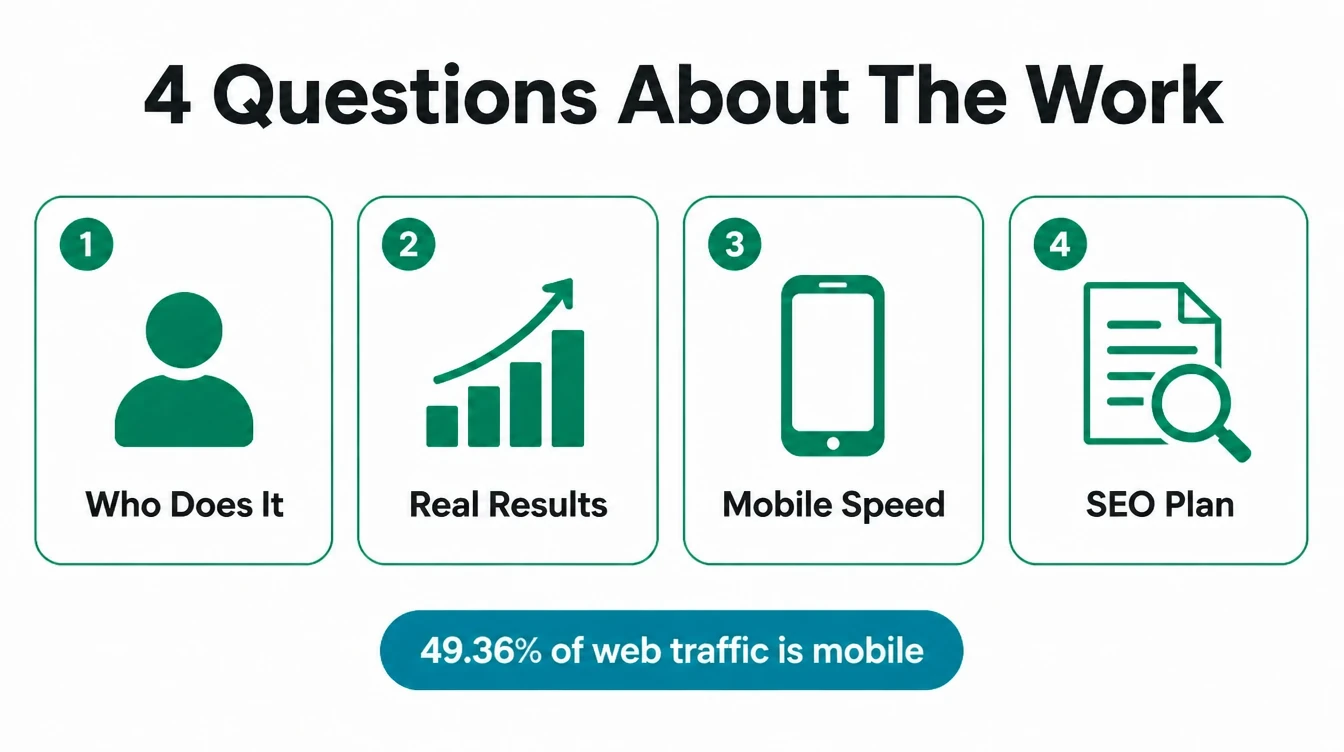
1. Who will actually do the work?
You want to know whose hands touch your site. A good answer names the people, or at least the roles, and is honest about who designs, who builds, and who you will talk to. A bad answer is vague, or the friendly salesperson goes quiet once a junior you never met takes over.
For context, web builds split across in-house teams at 37%, owners going it alone at 8%, and outsourced partners at 45% (Clutch, 2025). Ask where you fit.
2. Can you show results as well as looks?
A screenshot proves a site exists. It does not prove it brought in customers. Ask for examples where the site helped the business, with a reference you can call.
A good company offers names and numbers it can stand behind. A bad one only shows you a gallery and changes the subject when you ask what happened next. Honest beats flashy every time.
3. Do you build for mobile and speed?
This is not optional. Mobile is 49.36% of web traffic worldwide (StatCounter, August 2026). Furthermore, speed turns into money: a 0.1-second improvement lifted retail conversions 8.4% and average spend 9.2% in one well known study (web.dev).
A good company tests on real phones and talks about load times. A bad one says "it's responsive" and moves on. For how long this all takes, see how long it takes to build a website.
4. How do you handle SEO?
You do not need a magic ranking promise. You need a site built so search engines can read it. A good answer covers clean structure, fast pages, proper headings, and a sensible plan to grow over time.
A bad answer is either silence or a guarantee of "page one in a month." By contrast, nobody can promise rankings, and anyone who does is selling, not building. See how we approach web design.
3. Questions about ownership and after launch: 5 to 6
This is where good relationships quietly go wrong. Many owners only learn what they do not own when they try to leave. Ask now, before you sign anything.
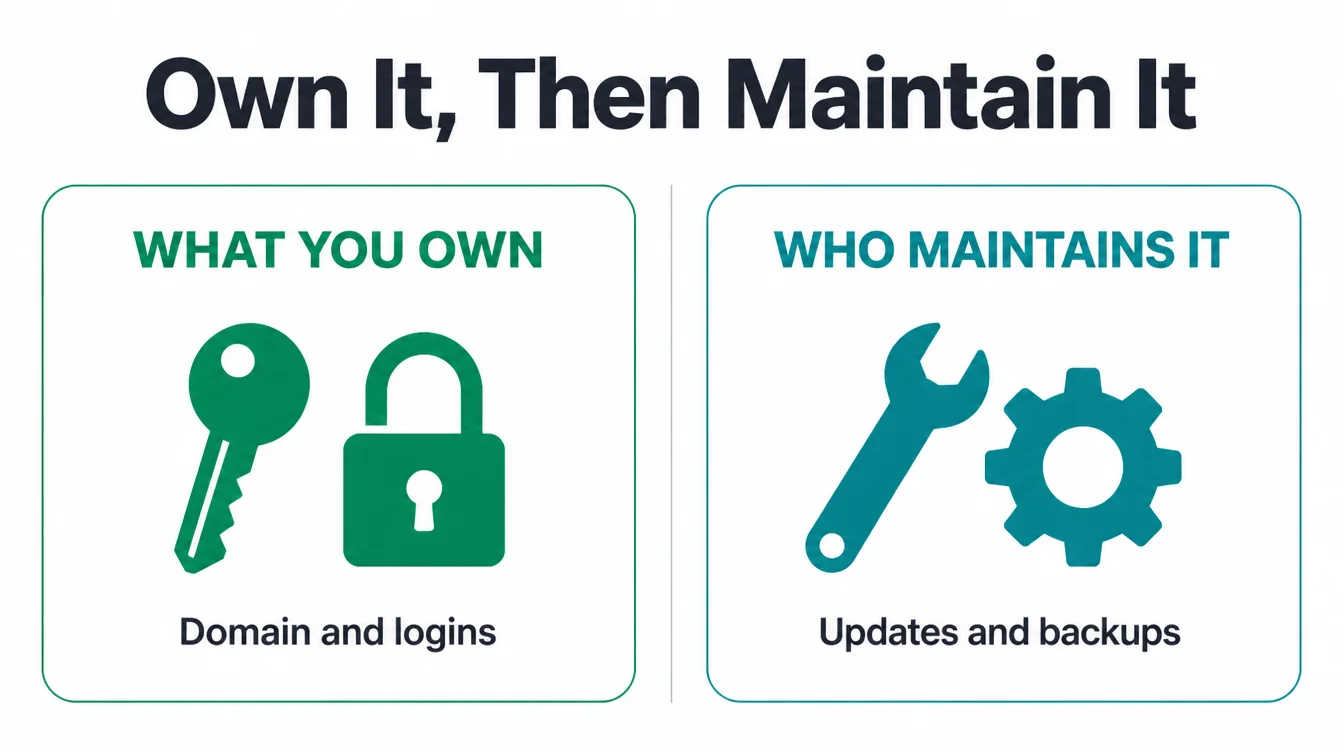
5. What do I own at the end?
Be specific and ask about each item: the domain name, the hosting login, the admin login to the content system, and the files for your logo and main images.
A good company registers the domain in your name, gives you every login, and hands over the files without being chased. A bad one keeps the domain in its own account or "manages everything for you" in a way you cannot undo. In particular, watch for vague replies here.
6. Who maintains it after launch?
A website is not a one-time job. It needs updates, backups, and the odd fix. A good answer explains what care looks like, whether you can do bits yourself, and what they handle.
A bad answer pretends a finished site never needs attention, then vanishes the week after launch. Meanwhile, the cleanest setups let you make small edits yourself and call for help on the big stuff. Our team also handles ongoing web design and development when sites grow.
4. Questions about process and the exit: 7 to 10
The last four questions are about how it actually feels to work together, and how cleanly you can walk away if you ever need to.
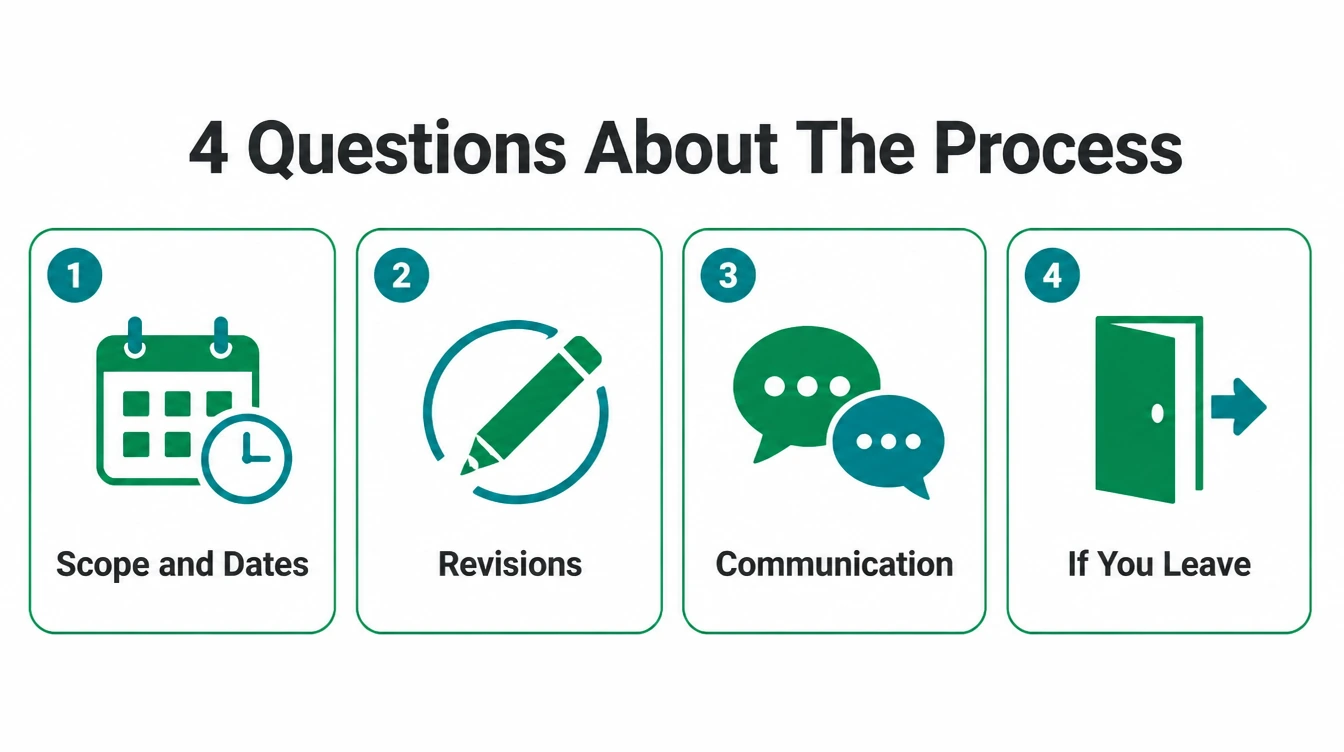
7. How do you handle scope changes and deadlines?
Projects slip. Wellingtone reports that only 36% of organisations always or mostly complete projects on time (Wellingtone, 2026).
A good company has a clear way to handle changes and a written timeline with stages. A bad one is fuzzy about dates, then blames you when things drift. Therefore, ask exactly what happens when the work grows.
8. What is your revision process?
You will want changes. The question is whether that is built in or treated as a nuisance. A good answer says how many rounds of changes are included and how feedback works.
A bad answer is endless vague tweaks with no structure, or a sudden extra charge the first time you ask for a different colour. Clarity here saves a lot of friction later.
9. How do we communicate, and how often?
Slow replies during the sale rarely get faster after you pay. A good company tells you who your contact is, how to reach them, and when you will hear updates.
A bad one is hard to pin down before you have even signed. As a result, treat the proposal stage as a preview. The way they talk to you now is the way they will talk to you for the whole project.
10. What happens if I want to leave?
Ask it plainly, even if you love them. A good company explains how you would take your domain, files, and content elsewhere, with no drama and no hostage situation.
A bad one gets defensive, buries an exit clause, or makes leaving so painful you feel trapped. A clear exit plan matters when the scope or deadline changes.
| Question | Green-flag answer | Red-flag answer |
|---|---|---|
| Who does the work? | Names the people or roles, and your point of contact | Stays vague, then a stranger takes over |
| Can you show results? | Offers references and outcomes you can check | Only shows a gallery, dodges what happened next |
| What do I own? | Domain in your name, all logins, files handed over | Keeps the domain or logins under their account |
| How do you handle deadlines? | Written timeline with stages and a change process | Fuzzy on dates, blames you when it slips |
| What if I leave? | Clean handover of domain, files, and content | Gets defensive or buries a painful exit clause |
5. What to own before you pay
Five things should end up in your hands. Write them into the agreement before any money changes hands. If a company resists handing these over, that tells you more than any portfolio could.
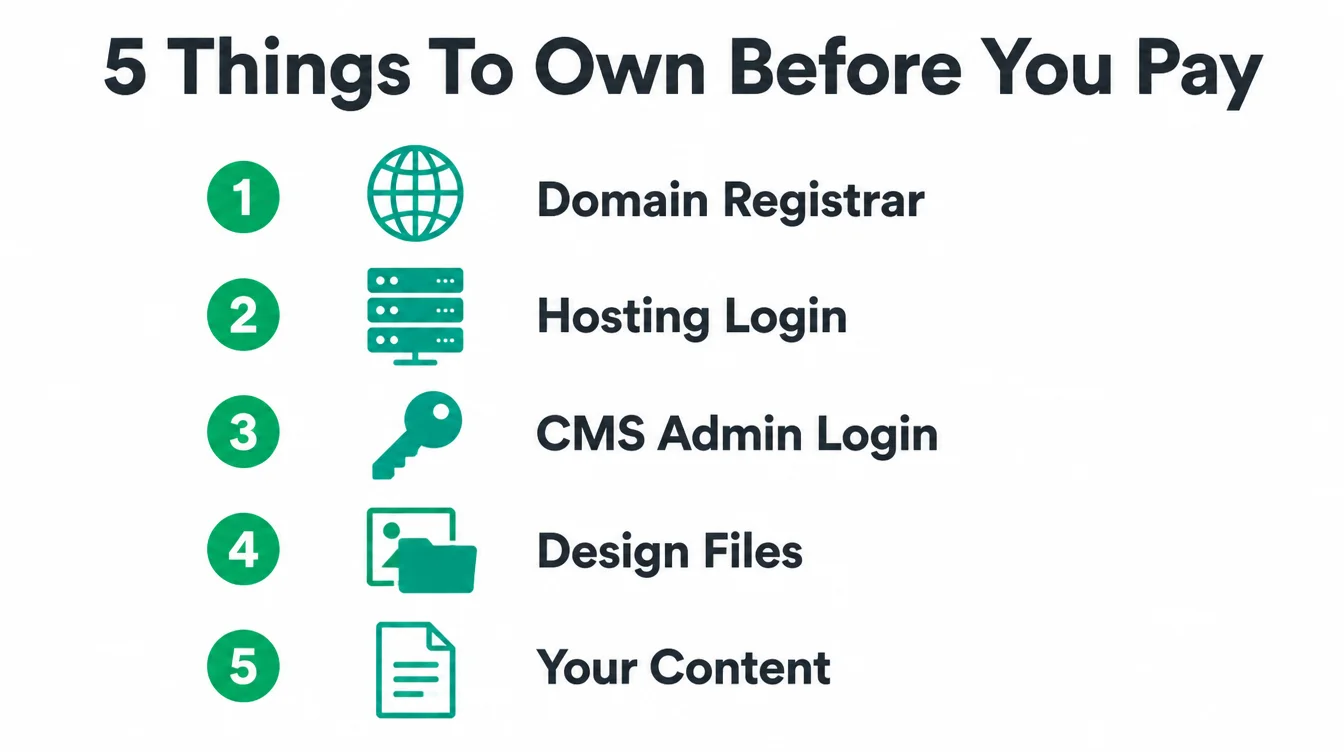
- Your domain registrar account. The domain name should be registered to you, in an account you log into. Not theirs.
- Your hosting login. You need access to where the site lives, even if they manage it day to day.
- Your CMS admin login. Full admin access to the system that runs your site, so you can update content and add people.
- Your design files. The logo, key images, and source files, in formats you can reuse.
- Your content. The words and photos are yours. Get a copy you can take anywhere.
Thinking about the platform too? Our comparison of Wix versus WordPress covers how each one affects ownership and how freely you can move later.
6. Red flags to walk away from
Some warning signs are worth ending the conversation over. None of these is about skill. They are about trust, and trust is the part a portfolio cannot show you.
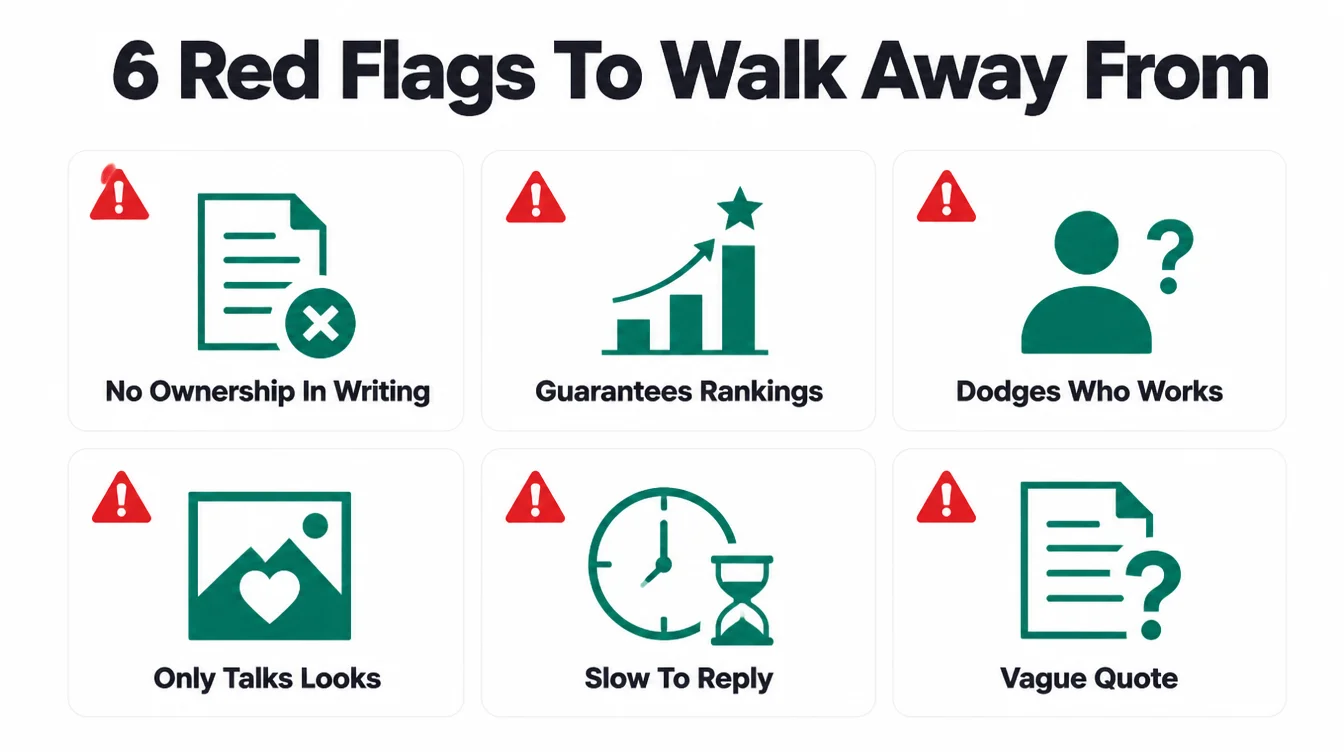
- They will not put ownership in writing. If your domain, logins, and files are not promised on paper, assume you do not get them.
- They guarantee rankings. Nobody controls search engines. A ranking promise is a sales line, not a plan.
- They dodge who does the work. Vague answers here usually mean a handoff you will not enjoy.
- They only talk about awards and looks. Pretty is easy. Reliable, fast, and honest is the hard part.
- They are slow or evasive during the sale. This is their best behaviour. It rarely improves after you pay.
- The quote is impossible to compare. A vague one-line price often hides a thin scope, which we sort out next.
7. How to compare quotes fairly
Two quotes are almost never the same thing wearing different price tags. One might include mobile testing, three rounds of changes, and a full handover. The other might be a template filled in once, with no testing and no logins. Comparing the totals alone is how owners get burned.
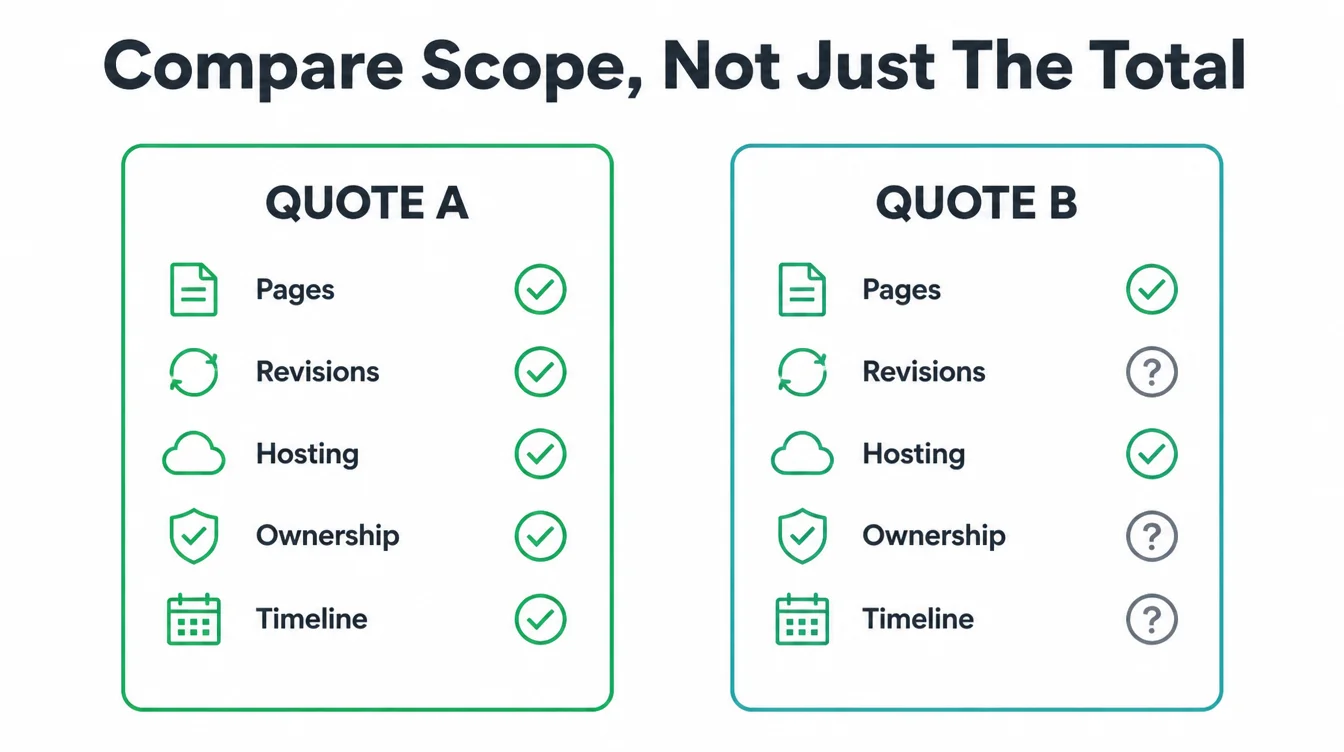
Compare the scope instead. For each quote, list the pages, the rounds of revisions, who hosts it, what you own, who maintains it, and the timeline. Specifically, put them side by side until the work matches. Only then does the price tell you anything useful.
It also helps when a company explains how it builds a quote openly, because you can see what shapes the number before you even ask for one. A cheap scope is not a cheap result if you pay again to fix what was left out.
For the full breakdown of what shapes a quote, read how much a website costs, which covers the cost drivers without throwing numbers at you.
Remember the custom question too. Only about 12% of small business sites are custom-built, and a good template can be fast and easy to update (Clutch, 2025). A trustworthy company recommends the approach that fits your goals, not the one that earns it the most.
For more practical guides, browse the Seed Light blog, and if you want to see how we scope a build ourselves, that is set out on our web design service page.
Frequently asked questions
1. How do I choose a web design company?
Pick the company by the answers they give, not the prettiness of their portfolio. Ask who will actually do the work, ask to see results as well as looks, and ask what you own at the end. A good partner answers plainly and puts it in writing. If someone dodges ownership, hides who does the build, or only talks about awards, keep looking. The questions in this guide sort the real partners from the risky ones.
2. What questions should I ask a web designer before hiring?
Ask ten things: who does the work, can you show results, do you build for mobile and speed, how do you handle SEO, what do I own at the end, who maintains it after launch, how do you handle scope changes and deadlines, what is your revision process, how do we communicate, and what happens if I want to leave. Good answers are specific and in writing. Vague or defensive answers are the warning.
3. What should I own when a website is finished?
You should own your domain name registered in your own account, your hosting login, your admin login to the content system, and the files for your logo and key images. Without these you cannot move, update, or sell your site freely. Ask for them in writing before you pay. A trustworthy company hands everything over without a fight and never holds your assets hostage to keep you tied to them.
4. Is a cheaper web design quote a red flag?
Not on its own, but a quote you cannot compare is. A low number often hides a thin scope, no mobile testing, no revisions, or no handover of your accounts. Compare what each quote includes, line by line. List the pages, the rounds of changes, who hosts it, and what you own. When two quotes cover the same work, you can finally compare them fairly. The cheapest scope is rarely the cheapest result.
5. How do I know if a web design company is reliable?
Look for clear answers, real references, and a written timeline with stages. Reliable companies tell you who does the work, show results as well as screenshots, and explain how they handle changes and missed deadlines. They also say plainly what happens if you leave. Slow replies and broken promises during the sales chat usually get worse after you pay, so treat the proposal stage as a preview of the working relationship.
6. Should I hire a freelancer or a web design company?
Both can do great work. A freelancer is often cheaper and more personal, but you carry more risk if they get sick or go quiet. A company usually has cover and a clearer process, though you may not meet the person who builds your site. Either way, the questions are the same. Ask who does the work, what you own, and who maintains it after launch, then judge the answers.
7. Do I need a custom website or a template?
Most small businesses do not need a fully custom build. Only about 12% of small business sites are custom-built, and a well chosen template can be fast, cheap, and easy to update. Custom makes sense when your needs are unusual or you want a distinct look. Ask the company to recommend an approach based on your goals and budget, not on what earns them the most, and to explain the trade-offs plainly.