How Long Does It Take to Build a Website? Timelines by Scope

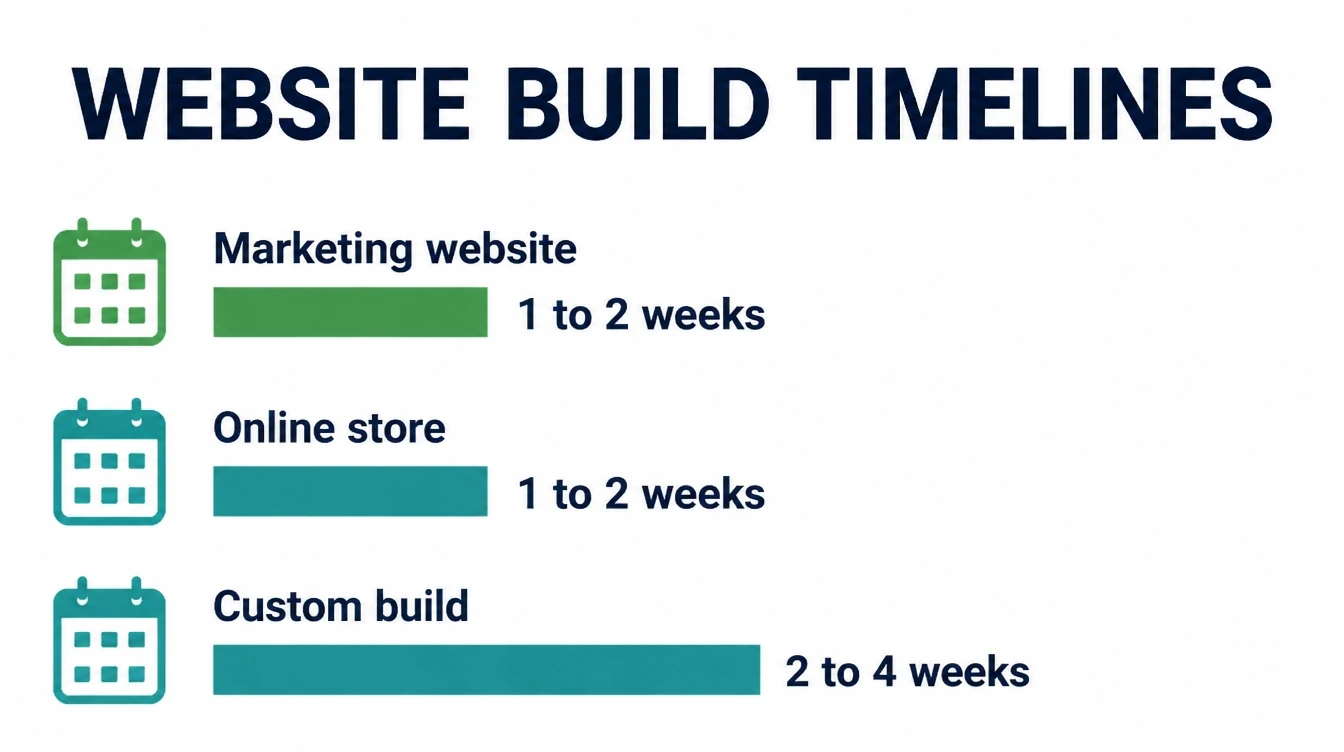
At Seed Light, a marketing website typically takes 1 to 2 weeks once content is ready. An online store also takes 1 to 2 weeks, or 2 to 4 weeks for a custom build. Page count, integrations, content readiness, feedback and revision rounds move the dates.
Key takeaways
Short on time? Here is the whole answer in five lines before we break it down.
- The short answer. At Seed Light, a marketing website typically takes 1 to 2 weeks once content is ready. An online store also takes 1 to 2 weeks, or 2 to 4 weeks for a custom build.
- Build time is not the same as elapsed time. The coding can take days. The calendar stretches because of content, feedback, and revisions.
- Your content is the number one delay. Most projects stall waiting on text and photos, not on the developer.
- Timelines slip everywhere. Wellingtone reports that only 36% of organisations always or mostly complete projects on time (Wellingtone, 2026).
- You control the speed. Have your content ready, keep scope tight, and reply to drafts fast, and you land at the short end.
1. Website build time: the short answer
How long does it take to build a website? At Seed Light, a marketing website typically takes 1 to 2 weeks once content is ready. An online store also takes 1 to 2 weeks, or 2 to 4 weeks for a custom build. Page count, integrations and approval rounds can move either range.
An online store build in Penang follows the same planning process, with the dates set by products, payments, shipping rules and content readiness.
Here is the part that surprises people. The actual coding is usually the fast bit. The work that fills the calendar is content, feedback, and revisions. Furthermore, the platform matters less than you think.
Most small business sites are not custom anyway: just 12% are custom-built, and 83% of small businesses now have a site, up from 64% in 2018 (Clutch, 2025).
So if a vendor quotes you a flat number of weeks with no questions about your content, treat it with care. The honest answer always depends on a few things you control. Let us look at the most important distinction first.
2. Build time vs elapsed time
This is the idea that explains almost every "why is my website taking so long" question. There are two clocks running on every project, and they are not the same.
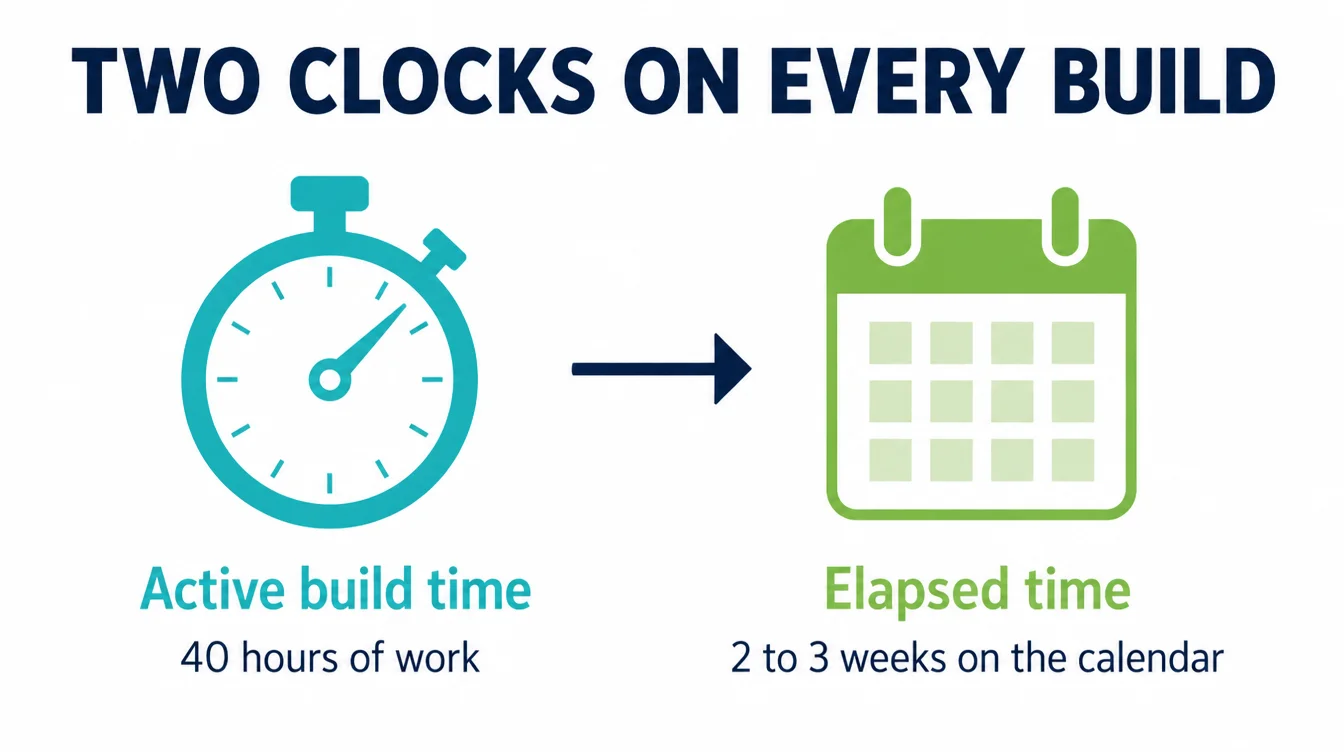
Active build time is work hours
Active build time is the hours someone spends actually making your site. For context, one analysis of more than 4,000 sites found the majority took under 100 hours to code, and a custom small-business theme took around 40 hours to build (Impact).
That same build runs about 65 hours for a junior and 40 for a senior, so experience changes the hours too.
Elapsed time is the calendar
Elapsed time is how many days pass from start to launch. This is the number you feel. A site that takes 40 hours of work does not launch in one week, because those hours sit between waiting: waiting for your photos, waiting for sign-off, waiting for the next round of edits.
As a result, a small build that is "done" in 40 work hours commonly takes 1 to 2 weeks on the calendar.
By contrast, a vendor who only quotes build hours is telling you half the story. The number that matters to you is elapsed time, and you have more control over it than the developer does.
3. How long by site type
Not every site is the same job. A one-page brochure and a full online store are different builds with different timelines. Here is how the common types compare.
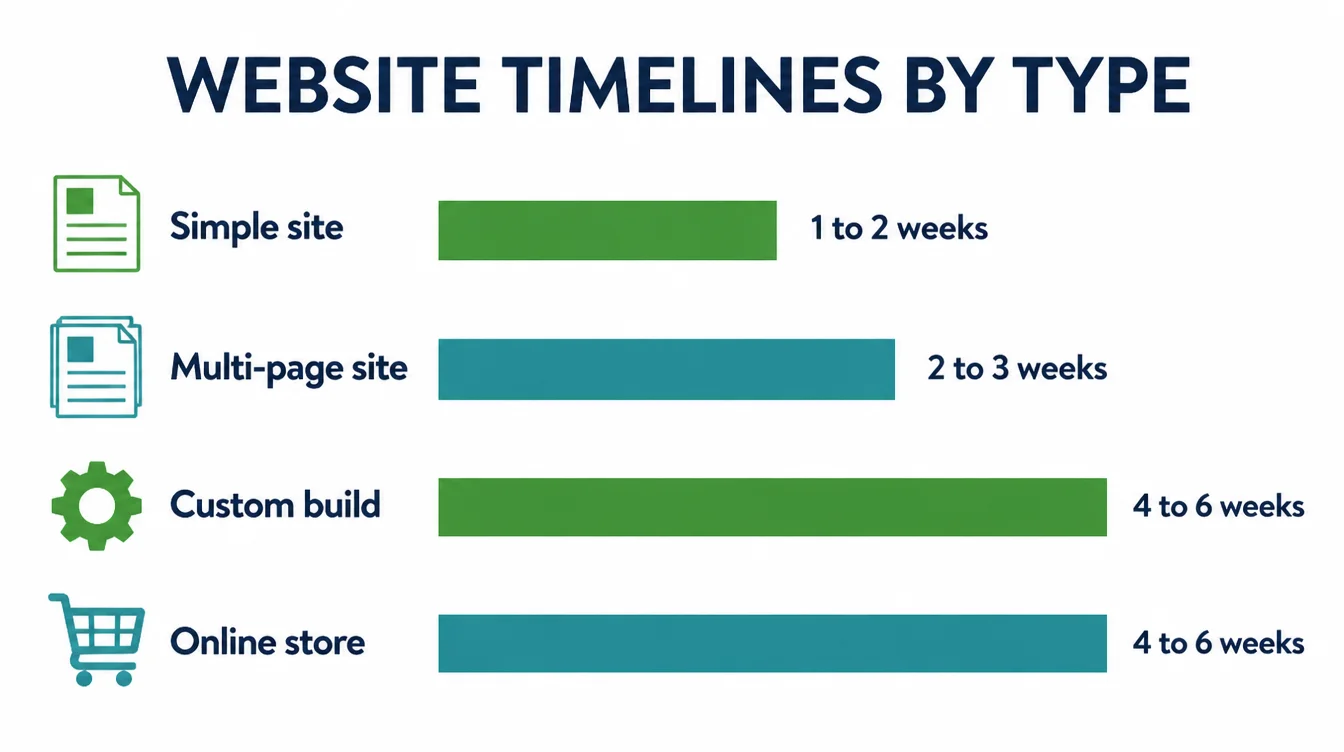
| Website type | Typical active build time | Typical elapsed time | What drives it |
|---|---|---|---|
| Simple or brochure site | Low, often a couple of days of work | About 1 to 2 weeks | How fast your text and photos are ready |
| Multi-page marketing site | Moderate, spread over more pages | About 1 to 2 weeks | Page count, content, and feedback speed |
| Custom build | Higher, bespoke design and features | About 2 to 4 weeks | Design rounds, custom features, approvals |
| Online store | Higher, products and checkout setup | About 1 to 2 weeks, or 2 to 4 for a custom build | Product content, payment and shipping setup |
Simple and multi-page marketing sites
A small marketing site is the most common build, and it is quick when the content is ready. The pages are familiar: home, about, services, contact.
Specifically, the more pages you add, the more text and photos you owe, which is what nudges the calendar from one week toward two. If you are weighing platforms first, our Wix vs WordPress guide can help.
Custom builds and online stores
Custom design and online stores live at the longer end for good reasons. A custom build adds discovery and design rounds. A store adds product pages, payment setup, shipping rules, and order testing.
Meanwhile, both depend heavily on content you supply. For the technical side of these builds, see our web design and development services.
4. What actually drives the timeline
Four things decide whether your site lands in two weeks or drags into two months. None of them is "how fast the developer types."
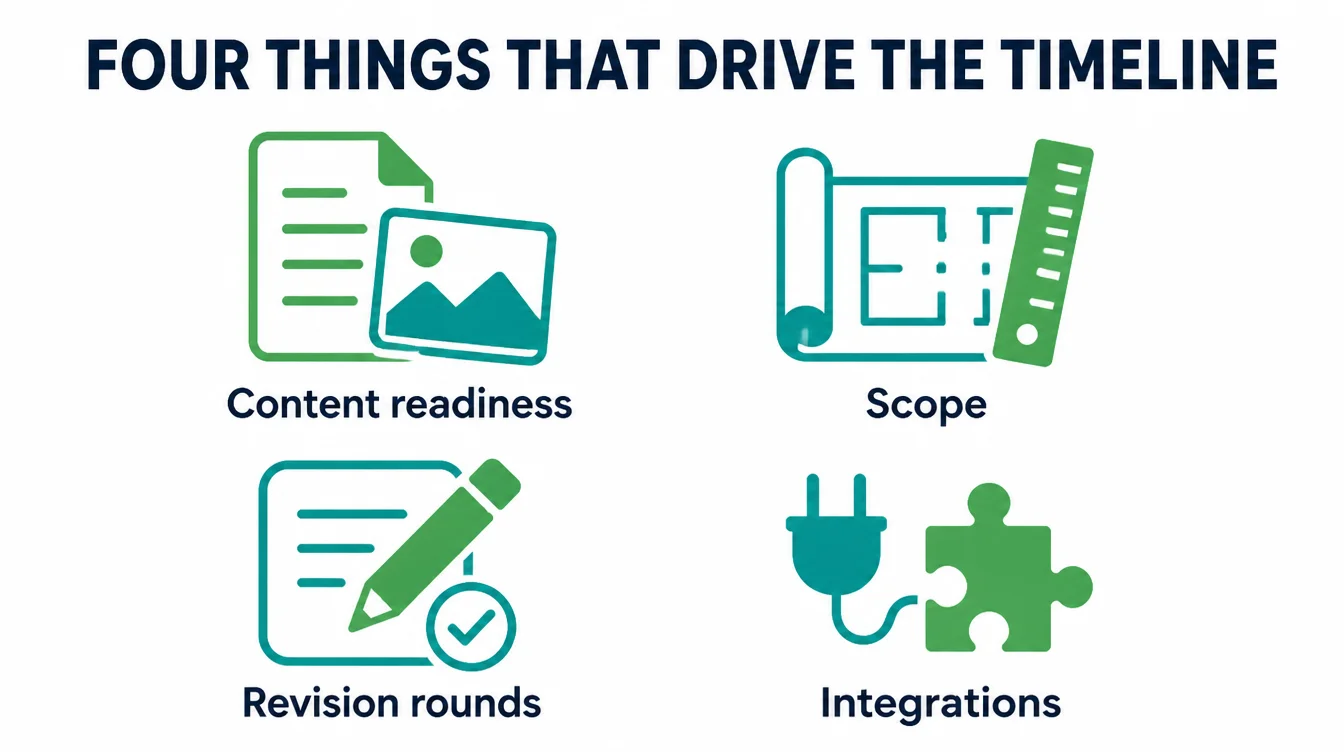
Content readiness
This is the number one delay, full stop. A page cannot be finished with no words and no images on it. If your content is ready before the build starts, the project flows. If it is not, the build keeps pausing.
Scope
More pages and more features mean more time. A five-page site is faster than a twenty-page one. Adding a booking system, a members area, or a store mid-project resets part of the plan, so decide your scope early.
Revision rounds
Every round of changes adds calendar days. One or two focused rounds are normal and healthy. Five scattered rounds, each with a few small notes, can quietly double your elapsed time.
Integrations
Anything that connects to another tool adds testing time: payments, email marketing, a booking app, a CRM. In particular, payment and checkout setup is why stores sit at the longer end of the range.
5. The biggest delay: your content
If you only fix one thing to speed up your build, fix this. Content is what stalls more projects than anything else, and it is the part you own. The good news is that it is fixable before the build even starts.
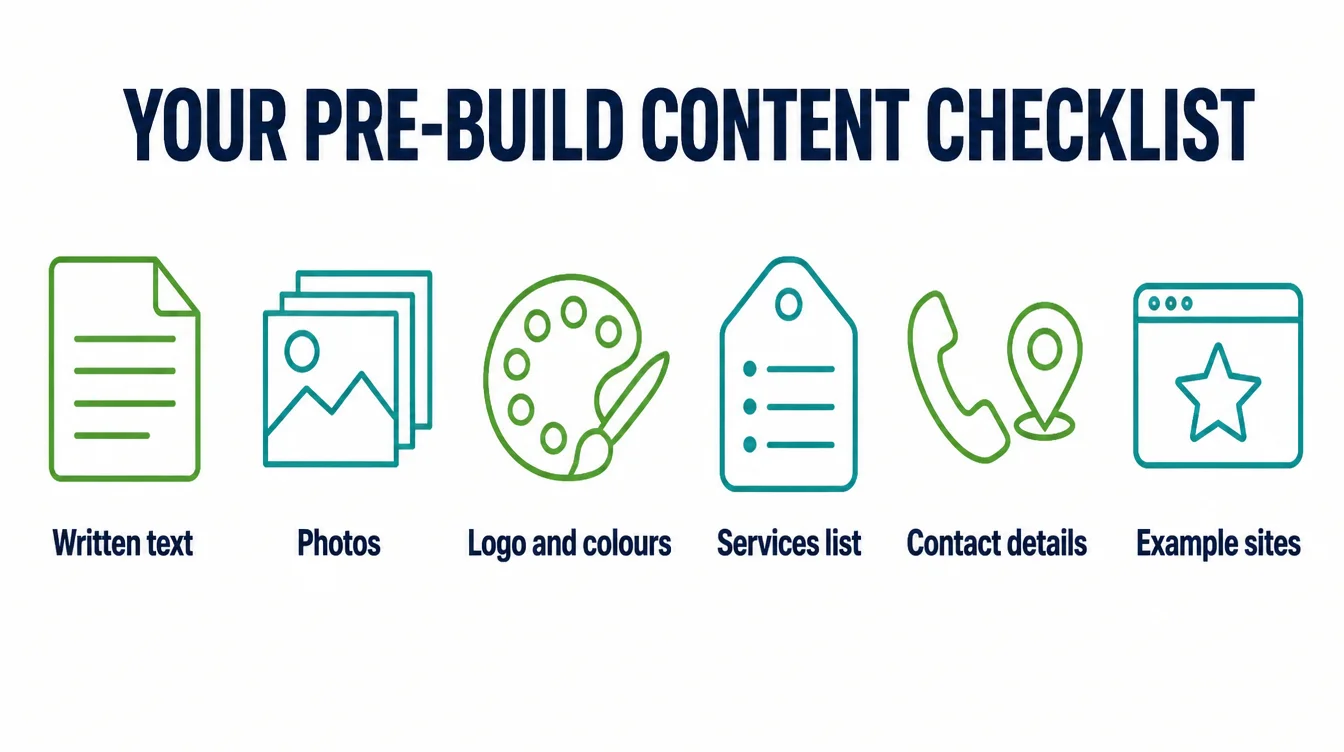
Here is a simple pre-build content checklist. Have these ready before the project kicks off:
- Your written text. The actual words for your home, about, services, and contact pages, not "I will write that later."
- Your photos. Real images of your work, your team, and your space, sized and chosen.
- Your logo and brand colours. A clean logo file plus the colours and fonts you want to use.
- Your services and prices. A clear list of what you offer, even if prices stay off the public site.
- Your contact details. The exact name, address, phone, and hours you want shown everywhere.
- Your examples. Two or three sites you like, so the look is agreed before design begins.
Therefore, the single best thing you can do for your timeline happens before the build, not during it. For a planning guide aimed at owners, read our piece on building a small business website.
6. What one round of revisions really costs
Owners often picture revisions as a quick afternoon. On the calendar, they cost more than that, and it is easy to see why.
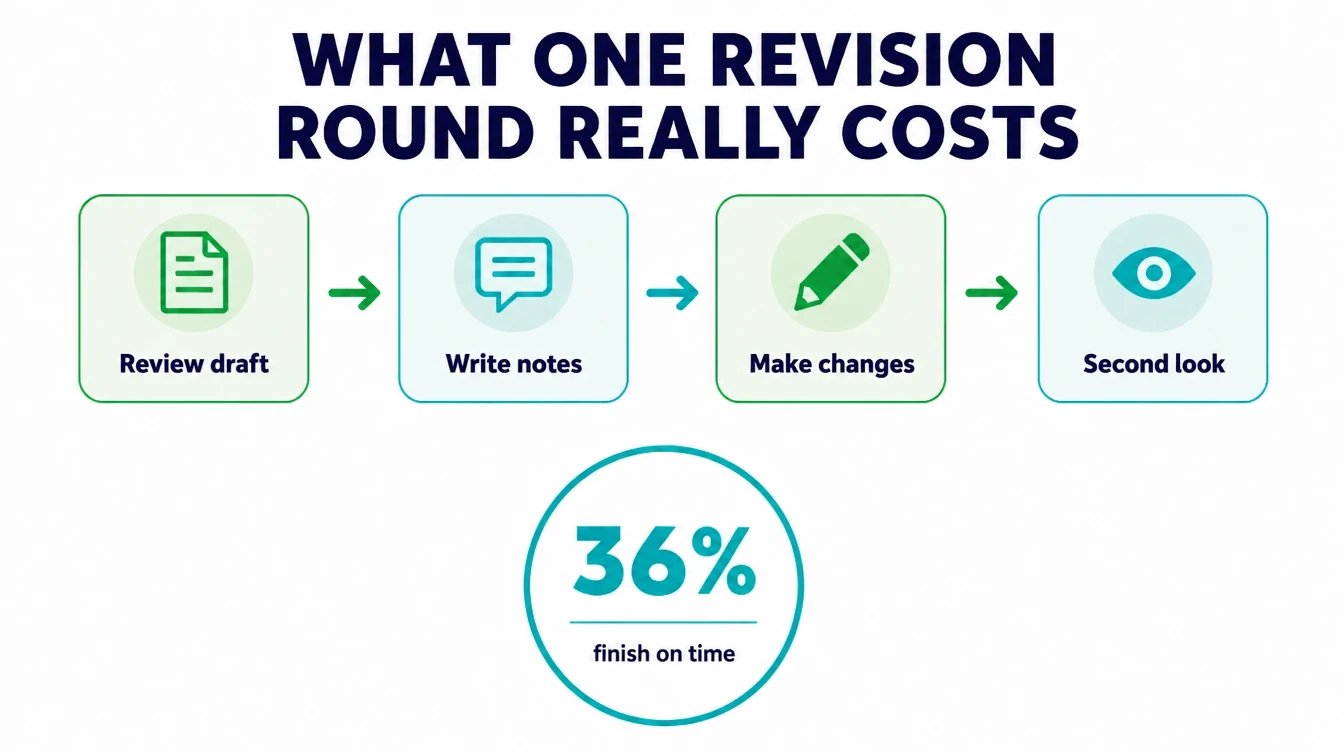
A single revision round is rarely just the editing time. First you review the draft, which can take a few days to get to. Then you write up your notes. Then the changes get made. Then it comes back for another look.
Each handoff adds waiting, so even a small round of edits often eats several calendar days. As a result, scattering edits across five rounds instead of grouping them into one or two is one of the most common ways a 2-week project becomes a 4-week one.
This is not unique to websites. Wellingtone reports that only 36% of organisations always or mostly complete projects on time (Wellingtone, 2026).
Feedback gaps and changing requirements add time. Group your edits into one clear list per round and reply quickly.
7. Our standard turnaround and why
So you have a clear benchmark, here is how Seed Light works. A marketing website takes 1 to 2 weeks once content is ready. An online store also takes 1 to 2 weeks, or 2 to 4 weeks for a custom build. We hold to that on most projects, and the conditions that keep it on schedule are the same ones above.
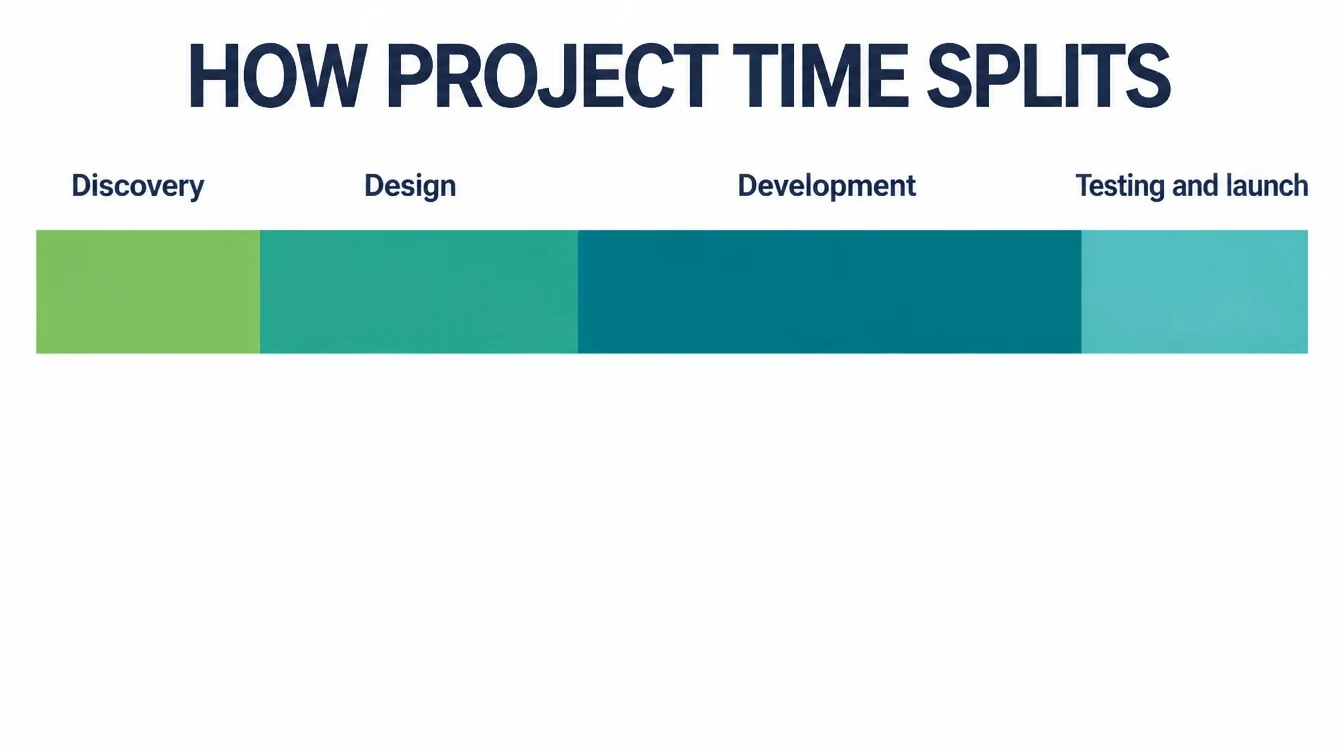
Those ranges hold when three things are true. Your content is ready before we start. Your scope is agreed and does not grow mid-build. And you reply to drafts within a day or two and keep your edits to focused rounds.
When all three line up, projects land at the short end. When content trickles in or feedback goes quiet, the calendar stretches no matter how fast the build itself moves.
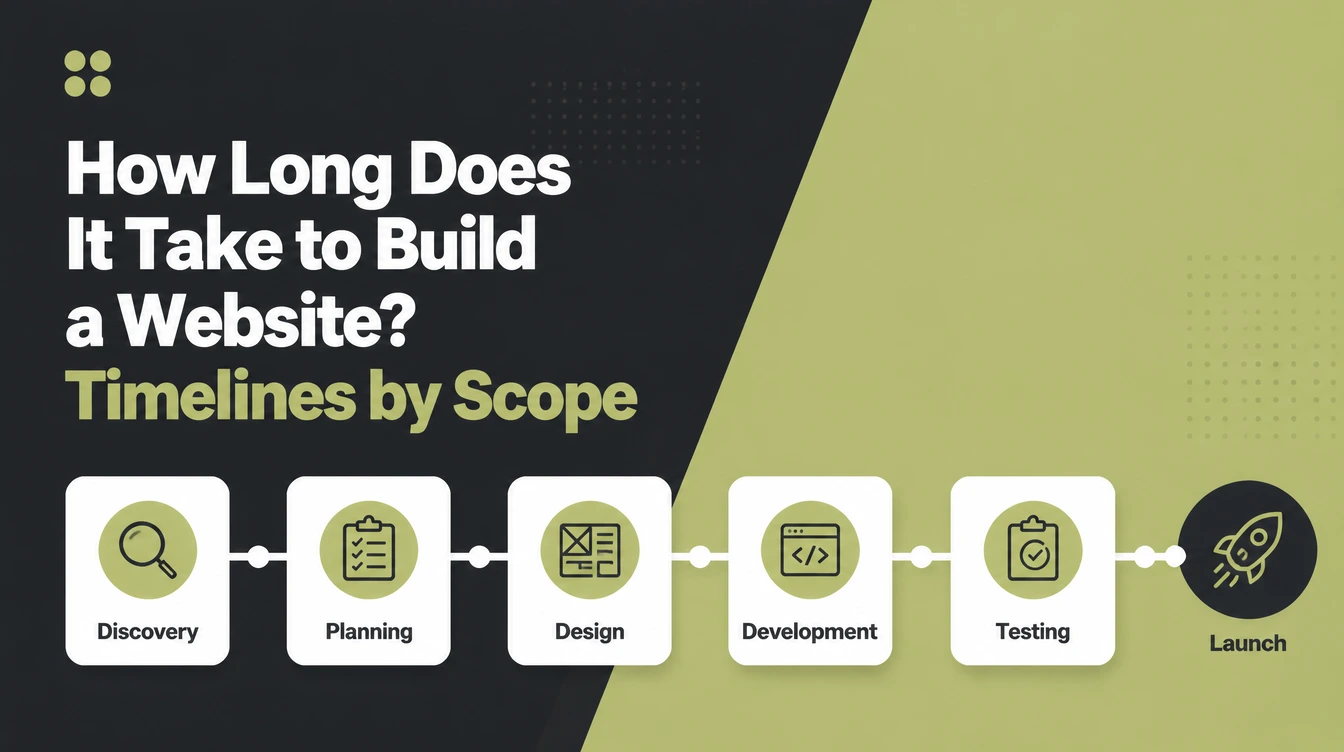
Every build moves through the same phases: discovery, design, development, and then testing, revisions, and launch. Every one of those phases waits on you at some point, which is why your habits set the pace. Curious about budget too? See our guide on how much a website costs.
8. How to make your build faster
You have more power over the timeline than the developer does. These five habits keep almost any build at the short end of its range.
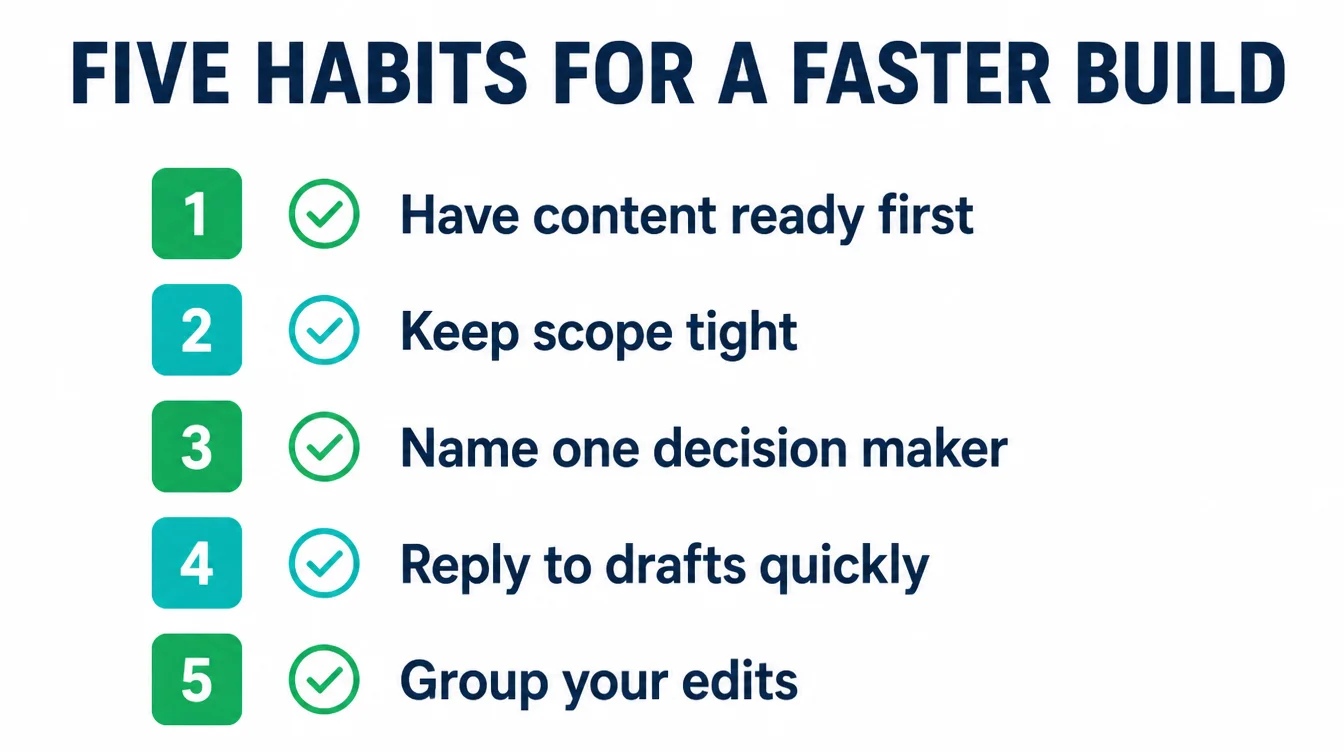
Have your content ready first
This is the big one. Work through the checklist above before the project starts. A build with content ready on day one rarely stalls.
Keep your scope tight
Decide what the site needs to do and resist adding features mid-build. A clear, smaller scope launches sooner and you can always add more later.
Name one decision maker
Feedback by committee is slow. Pick one person to gather opinions and give the final word, so drafts do not sit waiting for everyone to agree.
Reply to drafts quickly
Aim to review and respond within a day or two. Fast replies are the cheapest way to shave a week off your elapsed time.
Group your edits
Collect your changes into one clear list per round instead of sending them one at a time. Fewer, fuller rounds beat many scattered ones. Planning a refresh of an old site?
Our website redesign guide walks through it, and you can see how we build at web design services or browse more guides on the Seed Light blog.
Frequently asked questions
1. How long does it take to build a website?
At Seed Light, a marketing website typically takes 1 to 2 weeks once content is ready. An online store also takes 1 to 2 weeks, or 2 to 4 weeks for a custom build. Page count, integrations, content readiness, feedback and revision rounds move the dates.
2. How long does it take to build a WordPress website?
A standard WordPress marketing site usually takes about 1 to 2 weeks of elapsed time, similar to other platforms. WordPress does not add much to the timeline on its own. A simple theme-based build is fast, while a heavily customised theme or lots of plugins adds testing time. As with any platform, your content and your feedback speed drive the calendar far more than the tool does.
3. How long does it take to build a custom website?
A custom website typically takes about 2 to 4 weeks for a small business. Custom design and bespoke features add discovery, design, and development hours that a template skips. Industry data shows a custom small-business theme can take around 40 hours of build work for a senior developer, and the elapsed time is longer because design rounds and approvals get spread across days, not packed into one sitting.
4. How long does it take to build an online store?
An online store usually takes 1 to 2 weeks once content is ready, or 2 to 4 weeks for a custom build. A store has extra steps a brochure site does not: product pages, payment setup, shipping rules, and order testing. The biggest delay is product content. If you have your product names, descriptions, prices, and photos ready, the build moves fast. If you build them as you go, expect the longer end.
5. Why do websites take so long to build?
Website builds take time because content, feedback and revisions add waiting between work. Wellingtone reported that only 36% of organisations always or mostly complete projects on time. That figure covers organisations, not individual website projects. Preparing content and grouping feedback helps keep a website schedule moving.
6. How can I speed up my website build?
Have your content ready before the build starts. Write your text, gather your photos, and collect your logo and brand colours up front. Keep your scope tight, decide who gives feedback, and reply to drafts within a day or two. Group your edits into one clear list instead of dribbling them out. These habits remove the waiting that causes most delays and keep you at the short end of the timeline.