

Key takeaways
- Published rates give you a starting range. Malaysian providers publish roughly RM2,500 to RM50,000 for a business website, with the SME middle sitting near RM4,000 to RM15,000.
- Scope sets where you land in that range. Pages, custom design, an online store, copywriting and integrations are what a quote is really pricing.
- The build is one part of the cost. Domain, hosting, maintenance and changes keep coming after launch, and they are not optional.
- Cheap usually gets paid twice. A rushed build that breaks on phones or gets nothing from Google costs more once you fix or rebuild it.
- Ask for an itemised quote. Same lines from every builder, or the numbers cannot be compared at all.
Published market rates put a credible small business website at roughly RM4,000 to RM15,000, with template-led builds starting near RM1,500 and custom corporate platforms running well past RM30,000 (WDD, 2026).
That spread is real rather than sloppy, because a website is a job, not a product. This guide shows the published numbers first, then the seven things that decide where inside them your own quote lands.
1. What providers actually publish
Most cost guides refuse to name a figure. These five providers publish theirs, so you can check every one yourself. Read them as the market's opening position rather than as your price.
| Source | Published figures | What it covers |
|---|---|---|
| WDD | Template RM1,500-6,000; custom SME RM8,000-30,000; corporate RM30,000-120,000+; "most professional business websites cost between RM4,000 and RM15,000" | Three named price bands with what belongs in each |
| KeepDesign | Brochure site (5-8 pages) RM2,500-6,000; corporate with CMS (10-20 pages) RM6,000-15,000; online store RM8,000-30,000; custom application RM20,000-150,000+; hosting and maintenance RM1,200-6,000 a year | Bands by site type, plus the annual running cost |
| ZenWeb | "From RM1,500 freelancer builds to RM50,000 agency projects. Most SMEs pay RM3,000-10,000 upfront" | A one-off build compared with a monthly subscription model |
| Specflux | Landing page from RM700; multi-page site from RM2,500; online store from RM4,000 | Starting prices by page type |
| Walk Production | The same 10 to 15 page corporate brief quoted at about RM5,000 by a budget studio, RM12,000 by a mid-range agency and up to RM25,000 by a premium one | One brief priced by three tiers of provider |
For a wider view, WebFX surveyed 250 US marketing professionals and publishes a range of "$1,000 to $30,000+" for web design in 2026 (WebFX, 2026). US rates run high for the same work, so treat that as the ceiling rather than the benchmark.
Three things are worth noticing in that table. The bands overlap heavily, so a single number tells you almost nothing on its own. Every provider bands by scope rather than by quality.
And the same written brief can come back at a multiple of itself depending on who is quoting, which is exactly why the rest of this guide is about scope.
To judge a quote against what the site would need to bring in, our free website ROI calculator works from your own traffic and close rate.
2. The short answer: it depends on scope
A website is not one thing. A simple one-page site for a local shop is a small job. A 30-page site with online payments, booking, and search-engine work is a big one. So the price gap between them is huge, and that is normal.
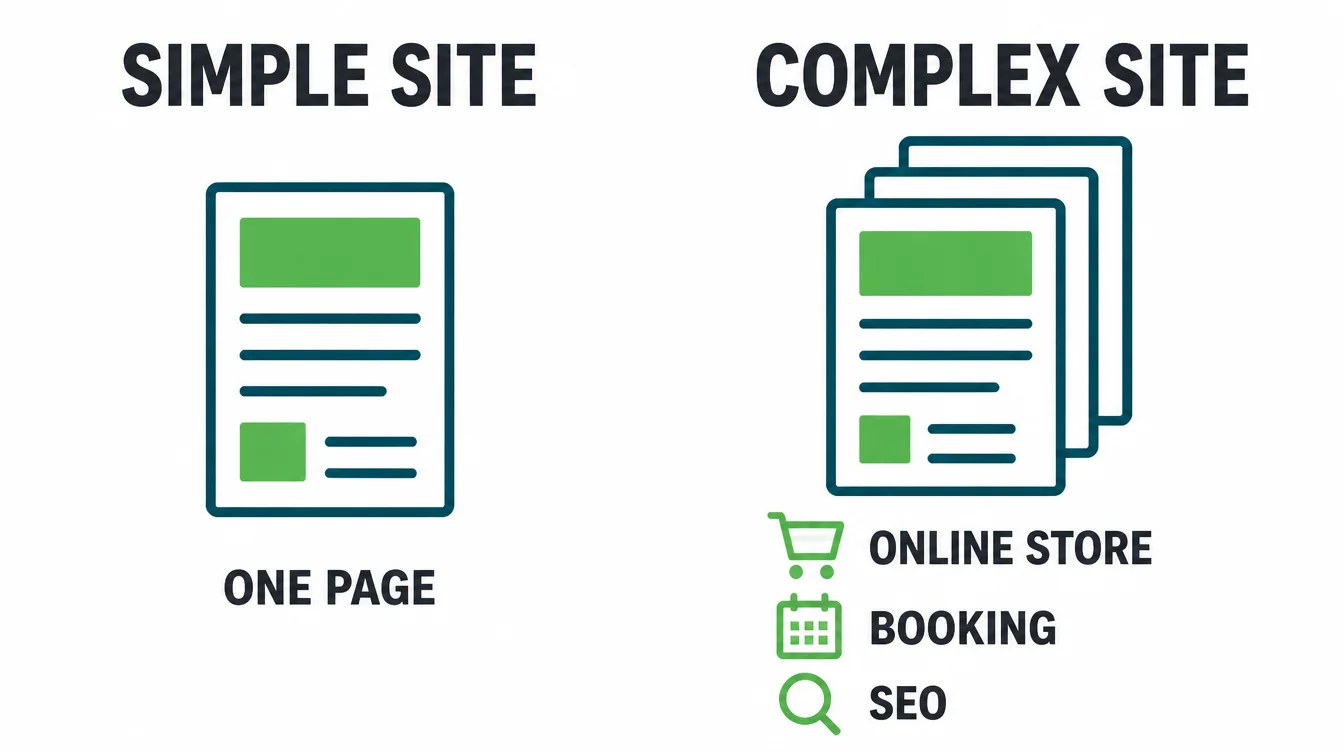
Think of it like building a room versus building a house. Same trade, very different amount of work. When someone gives you a price, what they are really pricing is the amount of work, the skill level of the people doing it, and how custom it all is.
So the useful question is not "how much is a website." It is "what do I need this website to do, and what does that work add up to." Once you know your scope, the price starts to make sense.
3. The main things that drive the price
Almost every quote you get is shaped by the same handful of factors. The more of these you need, and the more custom you want them, the higher the price climbs.
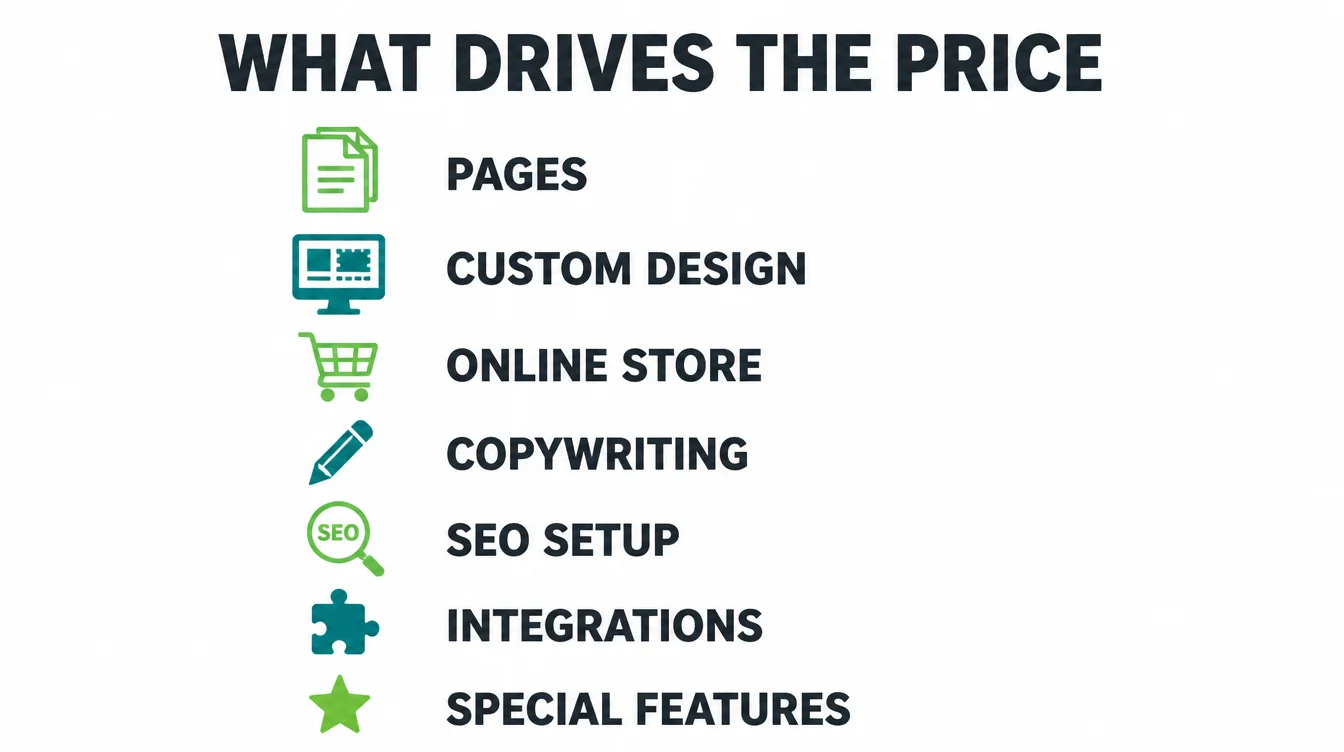
Here are the big ones, plain and simple:
- Number of pages. A one-page site is cheap. A site with many service pages, location pages, and a blog is more work, so it costs more.
- Custom design vs a template. A template is faster and cheaper. A design built just for your brand takes more time and more skill, so it costs more.
- Online store and payments. Selling online adds a lot. You need a cart, a checkout, payment setup, and product pages, which is why an online store is one of the biggest price jumps.
- Copywriting. Words sell. If someone writes your pages for you instead of you handing over the text, that is real work and it is priced as such.
- Search-engine setup (SEO). Basic on-page SEO so Google can find and rank you is often included. Deeper SEO work, like keyword research and content, costs more.
- Integrations. Booking tools, CRMs, email signup, live chat, and payment systems all need wiring up. Each one adds a little time.
- Special features. Member logins, calculators, multi-language, and custom code are all extra because they are not standard.
4. Freelancer vs agency vs DIY builder
Who builds your site changes both the price and what you get. There is no single right choice. It depends on your budget, your time, and how much you want done for you.
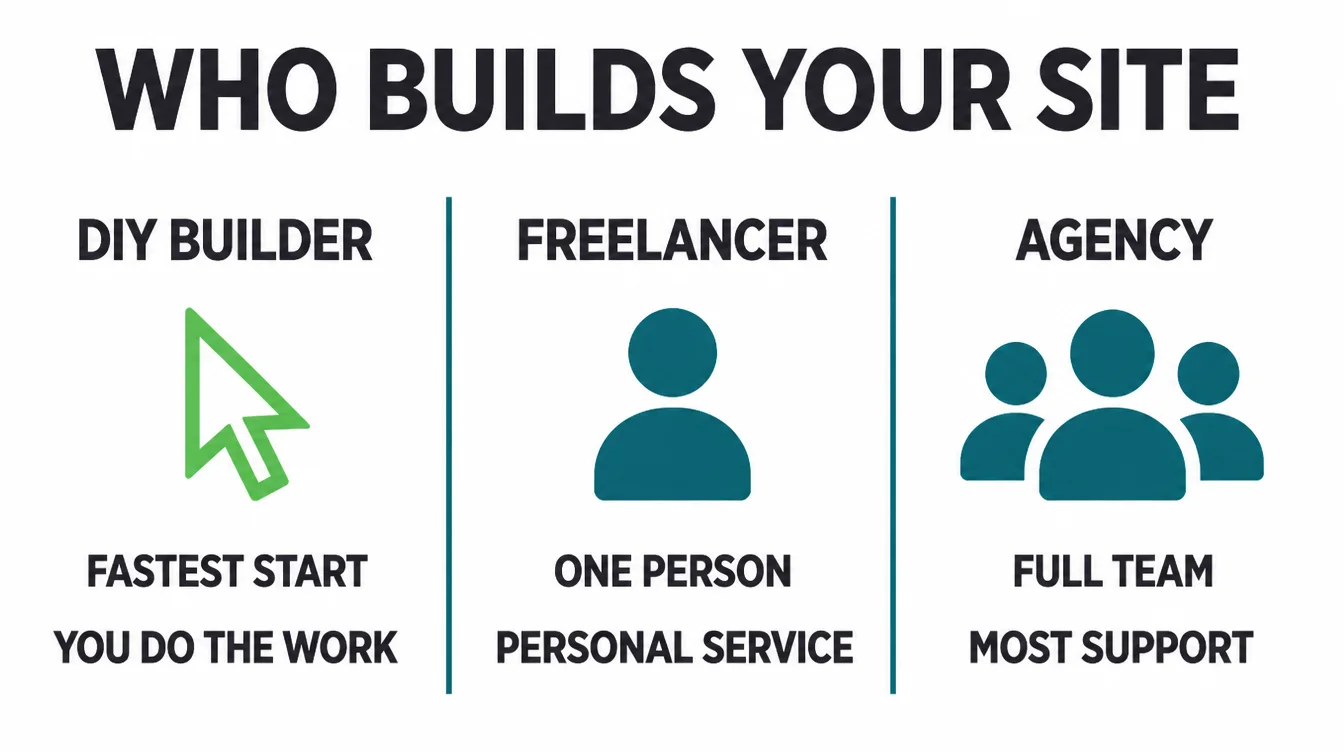
A DIY builder is the cheapest way in. You drag and drop blocks yourself. It works for a very simple site if you have time and patience. The trade-off is that the work, and every fix, is on you. Many people start here and get stuck.
A freelancer costs more than DIY and usually less than an agency. You get a real person doing the work. The trade-off is that one person can only do so much, and if they get busy or go quiet, your project waits.
An agency costs the most because you are paying for a team, not one person. You get design, build, copy, and SEO under one roof, plus someone to call when something breaks. The trade-off is the higher price. The upside is less risk and less of it falling on you.
5. The one-off build vs the costs that keep coming
This is the part most people miss. The build price is the first cost of several. A website is like a car: there is the price to buy it, and then there is fuel, servicing, and the odd repair.
KeepDesign puts published hosting and maintenance at RM1,200 to RM6,000 a year (KeepDesign, 2026), which is the order of magnitude to budget for.
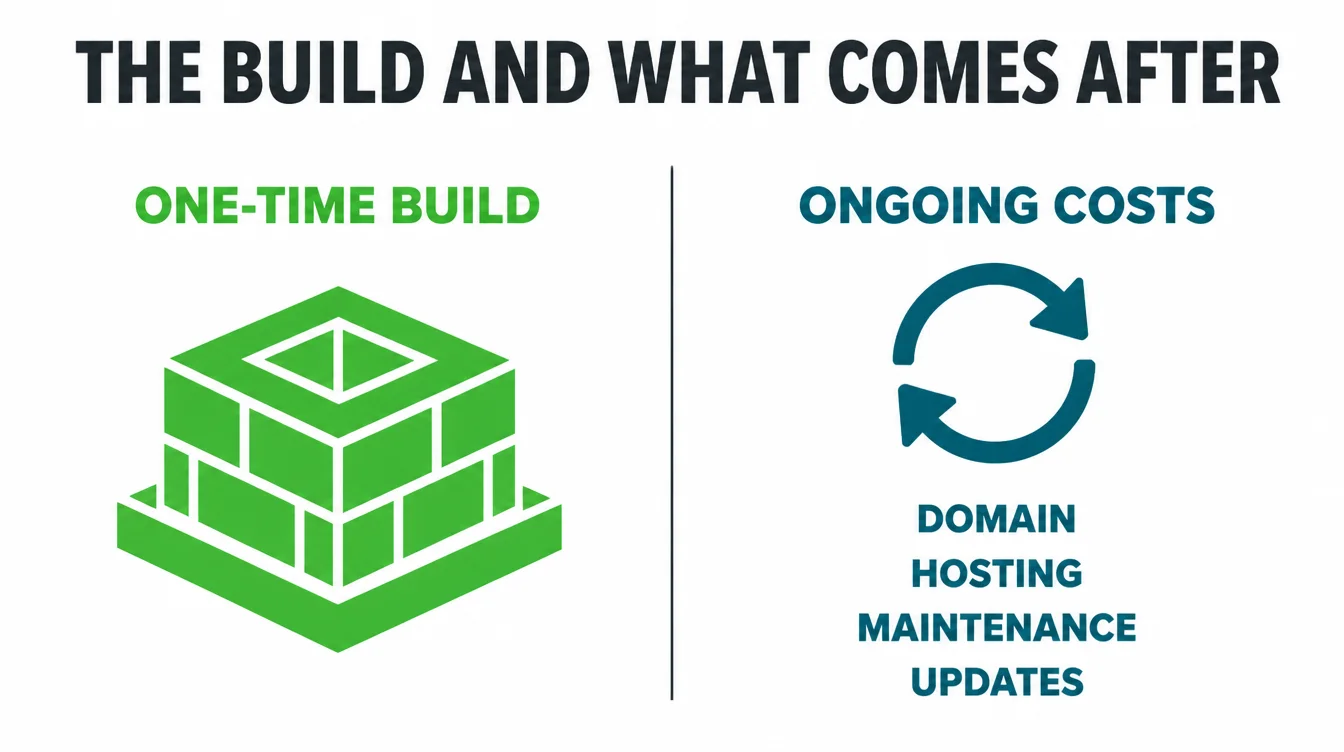
When you budget, plan for both the upfront build and the smaller costs that keep coming after launch. They are not optional.
A site that is never updated slowly breaks and falls behind, which is the job a website maintenance plan covers. Our website maintenance checklist shows what that work involves if you would rather do it yourself.
- Domain name. Your web address. A small yearly cost you keep paying to keep your name.
- Hosting. Where your site lives so people can see it. Usually a monthly or yearly cost.
- Maintenance. Updates, backups, security checks, and small fixes. You can do this yourself or pay someone to keep an eye on it.
- Changes over time. New pages, new photos, new offers. Your business changes, so your site needs to change too.
- Tools and plugins. Some add-ons, like booking or email tools, carry their own ongoing cost.
6. Why the cheapest option often costs more later
The lowest quote feels safe. It is easy on your wallet today. But cheap and good rarely live in the same place, and the gap usually shows up later.
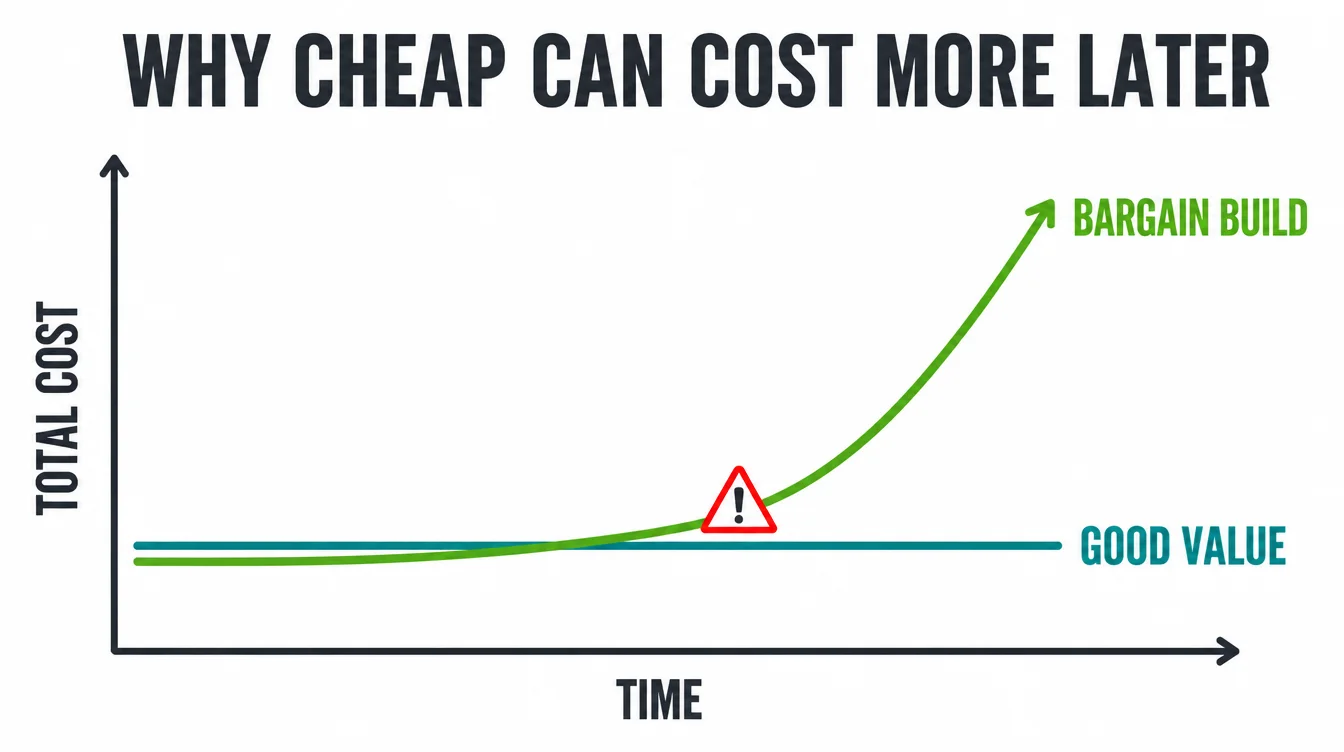
A bargain site is often built fast on a shaky base. It might look fine on the day it launches. Then it loads slowly, breaks on phones, or gets nothing from Google. So you pay someone else to fix it, or you rebuild the whole thing. Now you have paid twice.
There is also the cost of lost business. If your site does not load well or does not turn visitors into customers, you lose sales every single day it is live. That hidden cost can dwarf whatever you saved on the build.
This does not mean expensive always wins. It means you should weigh the price against what you actually get. The goal is good value.
7. How to get a quote you can actually compare
Two quotes can look miles apart and still both be fair, because they include different things. The only way to compare them is to make each one itemised. That means the work is broken into clear lines, not hidden inside one big figure.
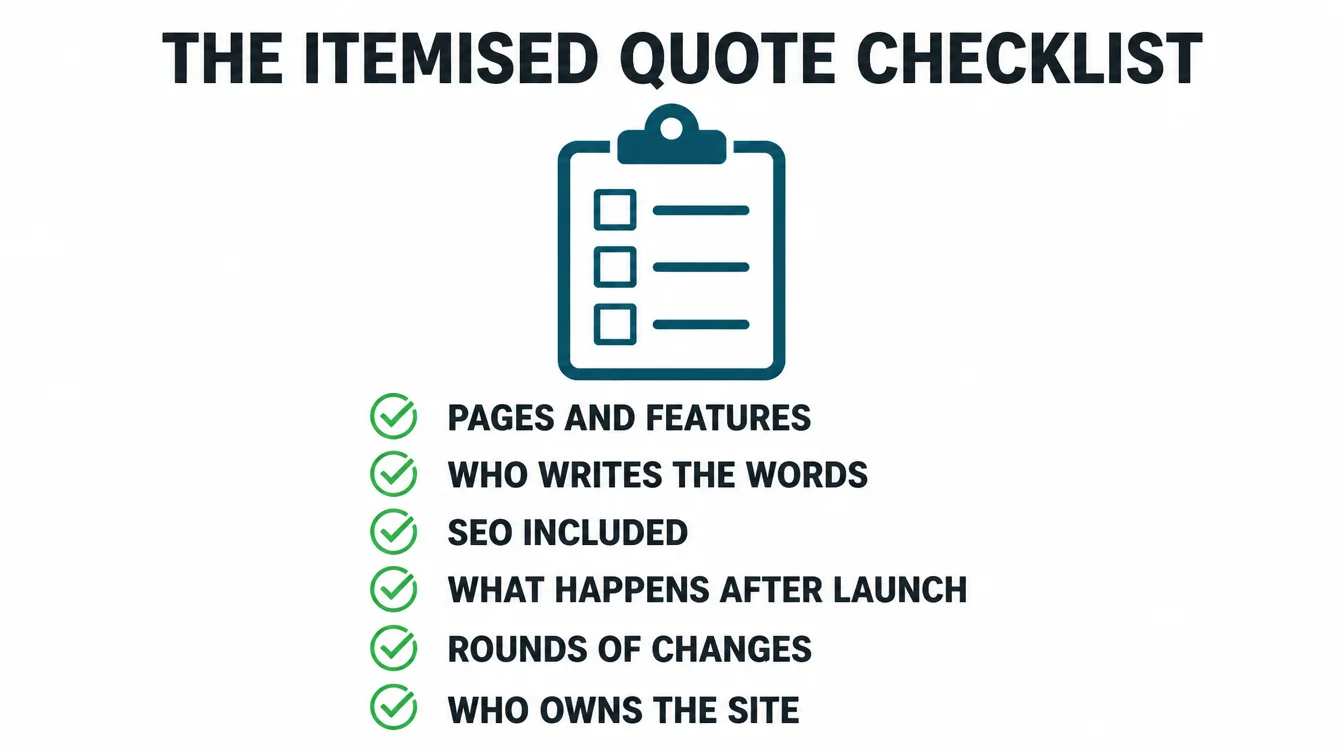
Ask every person you talk to for the same breakdown. When the quotes are itemised the same way, the real differences jump out. You can see who included copywriting, who included SEO, and who left things out that you will have to pay for later.
A clear, itemised quote is also a sign of an honest builder. People who do good work are usually happy to show you exactly what you are paying for.
- What pages and features are included, listed one by one
- Whether the words on the page are written for you or supplied by you
- Whether basic SEO setup is included or charged separately
- What happens after launch, and what that ongoing cost looks like
- How many rounds of changes are included before extra fees start
- Who owns the site and the domain when the work is done
- How long the build will take, with a clear start and finish
8. Red flags to watch for in a quote
Some warning signs come up again and again. None of them mean run away on their own. But if you see a few together, slow down and ask more questions before you pay anything.
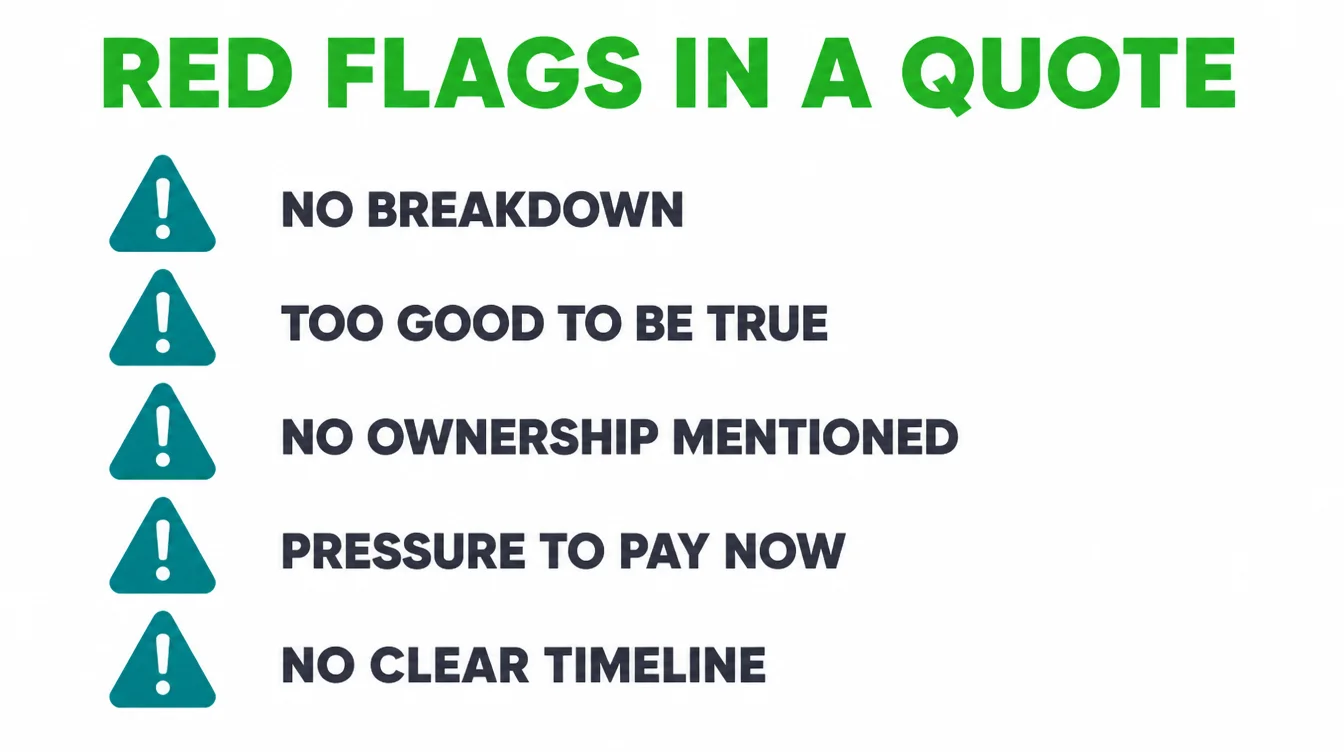
Trust your gut. A good builder makes the price clear and answers questions without dodging. If you feel confused or rushed, that feeling is data.
- One big number with no breakdown of what it covers
- A price that sounds too good to be true, with no detail on how
- No mention of who owns the site or domain at the end
- Pressure to pay the full amount right now or lose the deal
- Vague timelines, or no clear finish date at all
- No answer on what happens after launch when you need a change
- Promises of guaranteed top Google rankings, which nobody can truly promise
9. How to use all of this
Start by writing down what you actually need the site to do. Number of pages, an online store or not, who writes the words, and what features matter.
That short list is your scope, and your scope sets your price. Location changes nothing here; a Melaka business is quoted the same way as a Penang one.
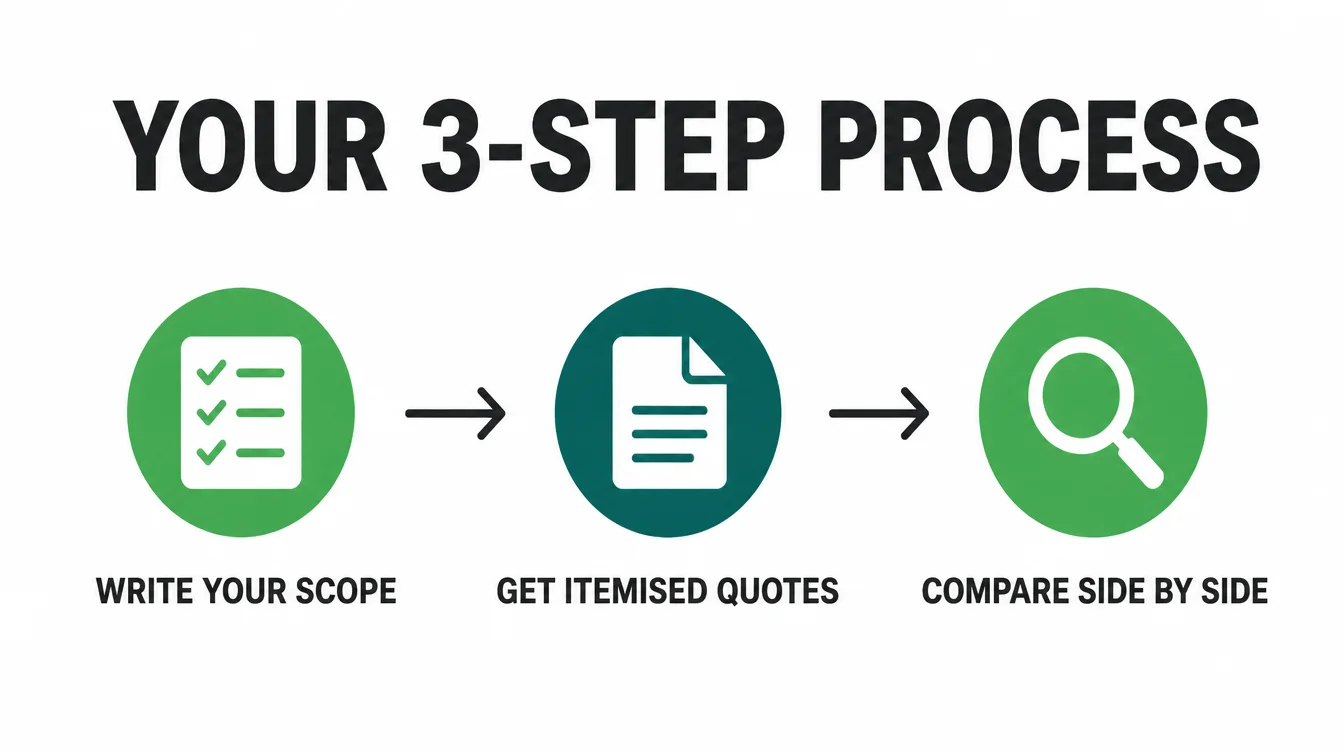
Then get a few itemised quotes and line them up against each other. Use the checklist above. You are looking for the clearest value and the least risk.
If you want a real sense of what drives a number before you talk to anyone, our pricing page walks through how a quote is built, line by line, and what moves it up or down.
After a short scoping call you get an itemised quote, so nothing is guesswork. It is a calm way to get your bearings before you commit to anything. When you are ready to scope a build, see how we approach web design.
Frequently asked questions
1. How much does a small business website cost?
Published market rates are the honest starting point. Malaysian providers put a brochure site at roughly RM2,500 to RM6,000, a corporate site with a CMS at RM6,000 to RM15,000, and an online store at RM8,000 to RM30,000, with template builds starting near RM1,500. Those are each provider's own figures, cited in the table above, and your own quote depends on scope.
2. What decides how much a website costs?
The biggest drivers are the number of pages, whether the design is custom or built on a template, whether you sell online, who writes the words, and how many tools need wiring up. The more of these you need, and the more custom you want them, the higher the price. Your scope sets your price, so write your scope down first.
3. Is a cheap website worth it?
Sometimes, but be careful. A bargain site is often built fast on a shaky base, so it can load slowly, break on phones, or get nothing from Google. If you end up fixing or rebuilding it, you pay twice. Weigh the price against what you actually get, and aim for good value rather than the lowest number.
4. What ongoing costs does a website have?
Plan for the domain name, hosting, and maintenance such as updates, backups, and security checks. You will also want changes over time, like new pages and new offers, and some tools or plugins carry their own ongoing cost. These costs are smaller than the build, but they are not optional. A site that is never updated slowly breaks and falls behind.
5. How do I get an accurate quote?
Write down what you need the site to do, then ask every builder for an itemised quote that lists pages, features, copywriting, SEO, rounds of changes, ownership, and what happens after launch. When the quotes are broken down the same way, the real differences jump out and you can compare them fairly.