AI Customer Service 2026: Automate Without Losing Trust

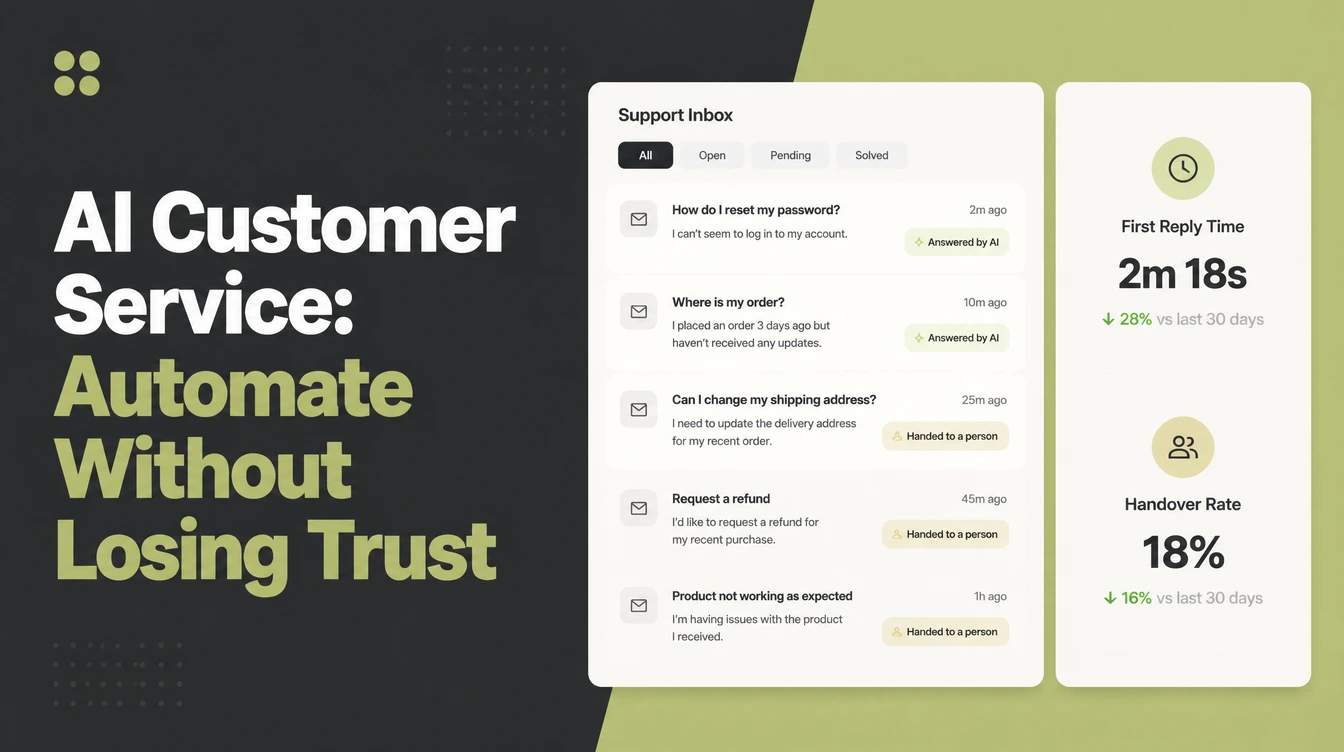
AI customer service is worth it for high-volume, low-stakes questions like hours, prices and order status, where an instant reply beats waiting. It handles complex or emotional issues badly, and most people still want a human available, so always offer that route. Seed Light sets up AI support that hands over cleanly.
Key takeaways
Short on time? Here is the honest verdict on AI for customer service before we dig into each part.
- It is good at the boring stuff. AI handles repeat questions, replies fast, and works at 2am, which is why 51% of small businesses have added it to support (Talkdesk).
- People still want a human. 75% of consumers prefer talking to a real person, and 89% say that option should always exist (Five9, SurveyMonkey).
- The hype is ahead of reality. Just 6% of small business workers actually automate workflows with little human involvement today (US Chamber Foundation).
- Set it up kindly. Always offer a human, label the bot, and scope it to FAQs only. A clumsy bot frustrates 56% of people (Five9).
- Worth it depends on volume. Lots of simple, repeat questions means yes. A handful of complex ones means no.
1. What AI for customer service can do well
Let us start with the good news, because AI for customer service is genuinely useful for some jobs. It is fast, it never sleeps, and it does not get bored answering the same question for the hundredth time. For a busy owner, that is real relief.
Here is what it does well. First, it answers routine FAQs instantly, so customers get your hours, prices, and booking link without waiting. Second, it works around the clock, which matters because a message at midnight gets a reply instead of sitting until morning.
Third, it deflects the easy stuff so your team only sees questions that truly need a person. To put hours against that, our free time savings calculator turns a repeated task into a monthly figure.
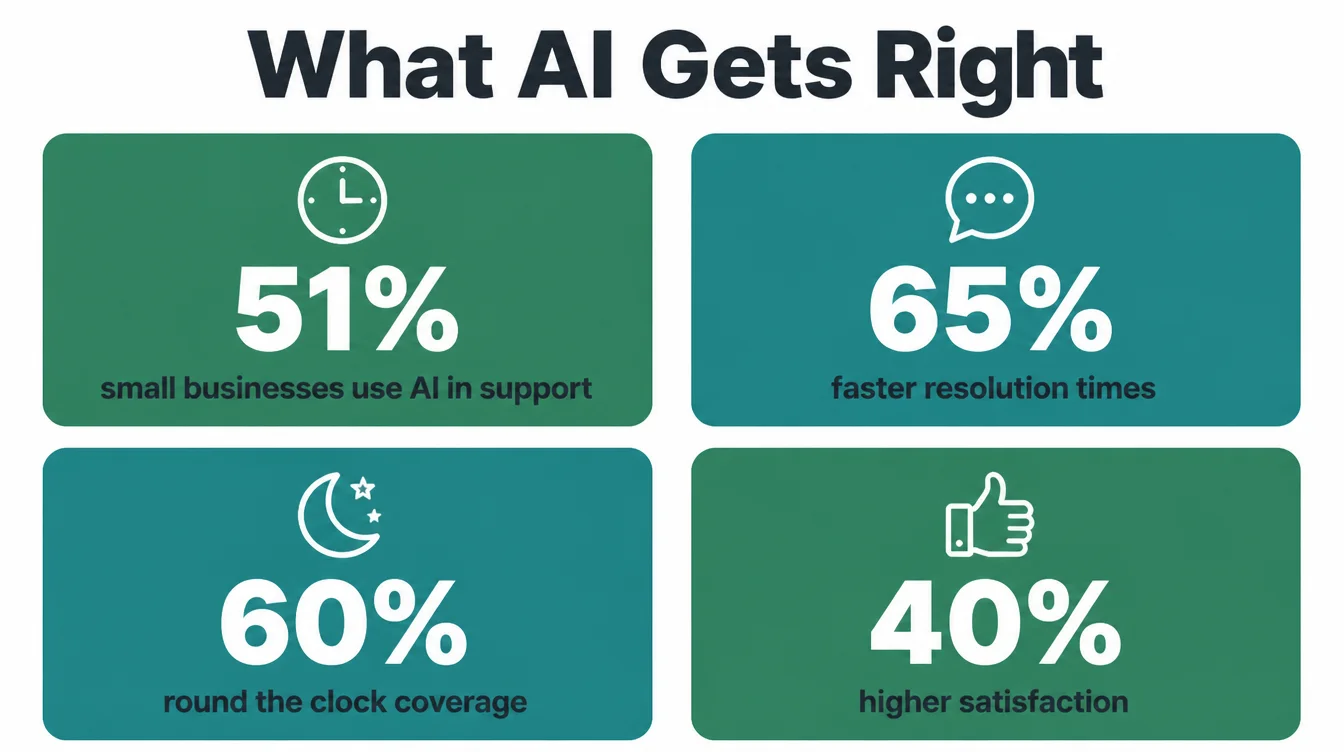
The numbers line up. A Talkdesk small business survey found 51% of small businesses have integrated AI into customer service, and they reported faster resolution times (65%), round-the-clock support (60%), and higher customer satisfaction (40%).
So when the job is "answer the same simple thing, fast," AI fits well. If you want the wider view, see our guide to AI for small business.
2. What AI for customer service cannot do
Now the honest part. AI is good at simple, but it is weak exactly where customer service gets hard. The moment a question turns complex, costly, or emotional, people want a human, and a bot in the way starts to feel like a wall.
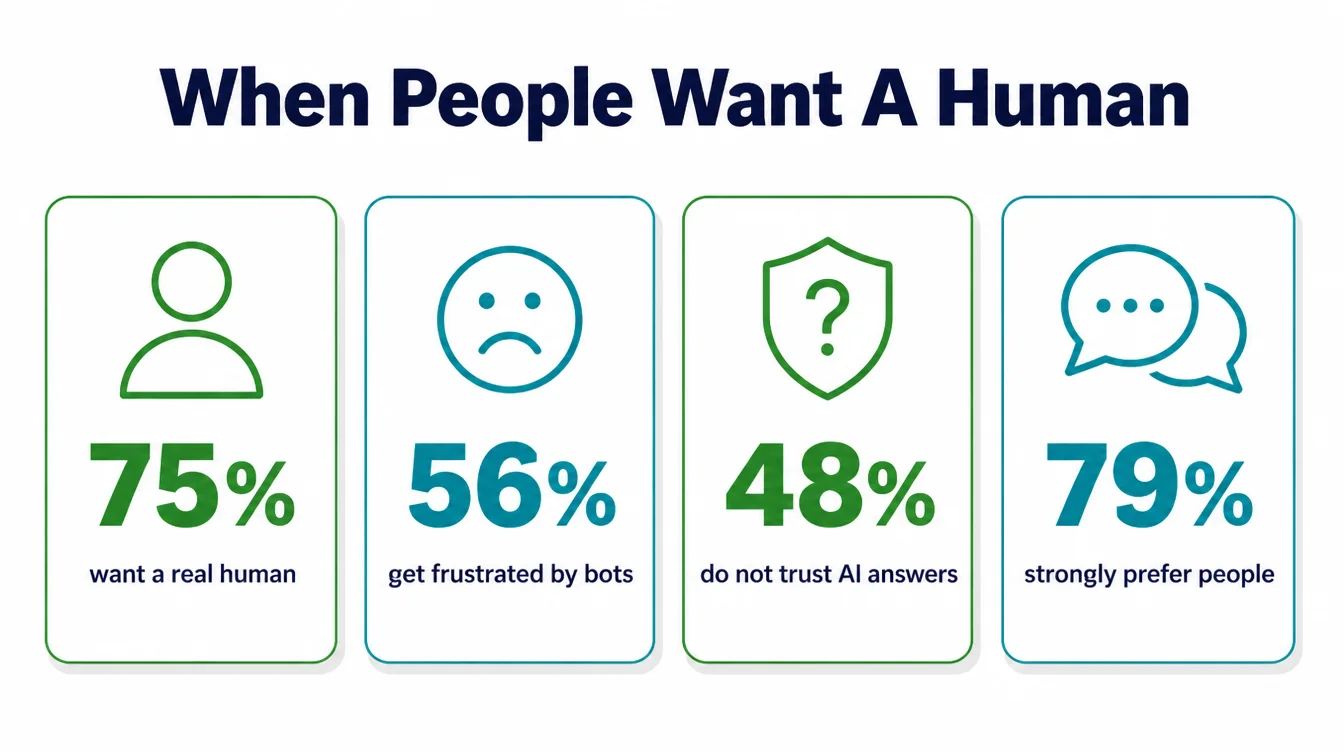
The research is blunt about this. A Five9 study found 75% of consumers prefer talking to a real human, 56% are often frustrated by AI customer-service chatbots, and 48% do not trust the information provided by AI bots.
On top of that, a SurveyMonkey report found 79% of people strongly prefer interacting with a human over an AI agent.
So a bot that pretends to be a person, or one that traps people in a loop with no way out, does real damage. It can lose you the exact customer you were trying to serve.
AI cannot read tone, cannot own a mistake, and cannot make someone feel heard. For anything where trust is the product, a human still wins.
3. The honest math: when AI is worth it
Strip away the hype and it comes down to one thing: volume. AI for customer service earns its keep when you get the same simple questions over and over and cannot keep up. It wastes your time when you do not.
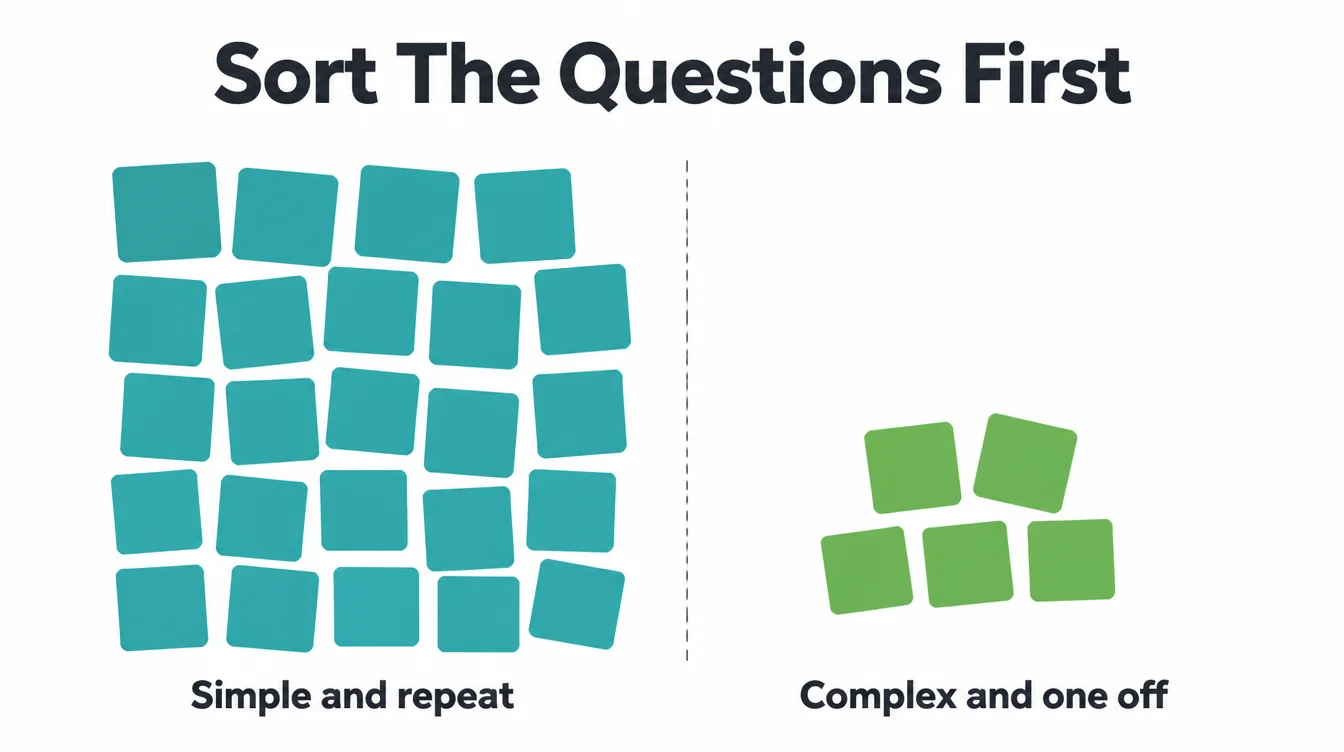
Try this. For one week, jot down every question a customer asks and drop it into two piles: simple and repeat, or complex and one-off.
If the simple pile is huge, like "Are you open Sunday?" forty times, AI can clear that load and give people instant answers. If the complex pile is bigger, a bot will mostly get in the way.
Five9 found that 56% of consumers were frustrated by AI customer-service chatbots. A clear route to a person gives complex questions somewhere to go.
AI is worth it when the simple pile is big enough that the time you save clearly beats the few people a careful, well-scoped bot might irritate. Before you reach for a bot, it is also worth asking whether you should add a chatbot at all.
4. The hype versus the reality
You have probably read that AI is about to run all of customer service. The gap between that story and what is actually happening is wide, and it is worth seeing clearly before you spend a cent.
Here is the reality on the ground. A US Chamber Foundation study found that half of all workers at small businesses already use AI, but mostly to boost productivity, not to automate jobs.
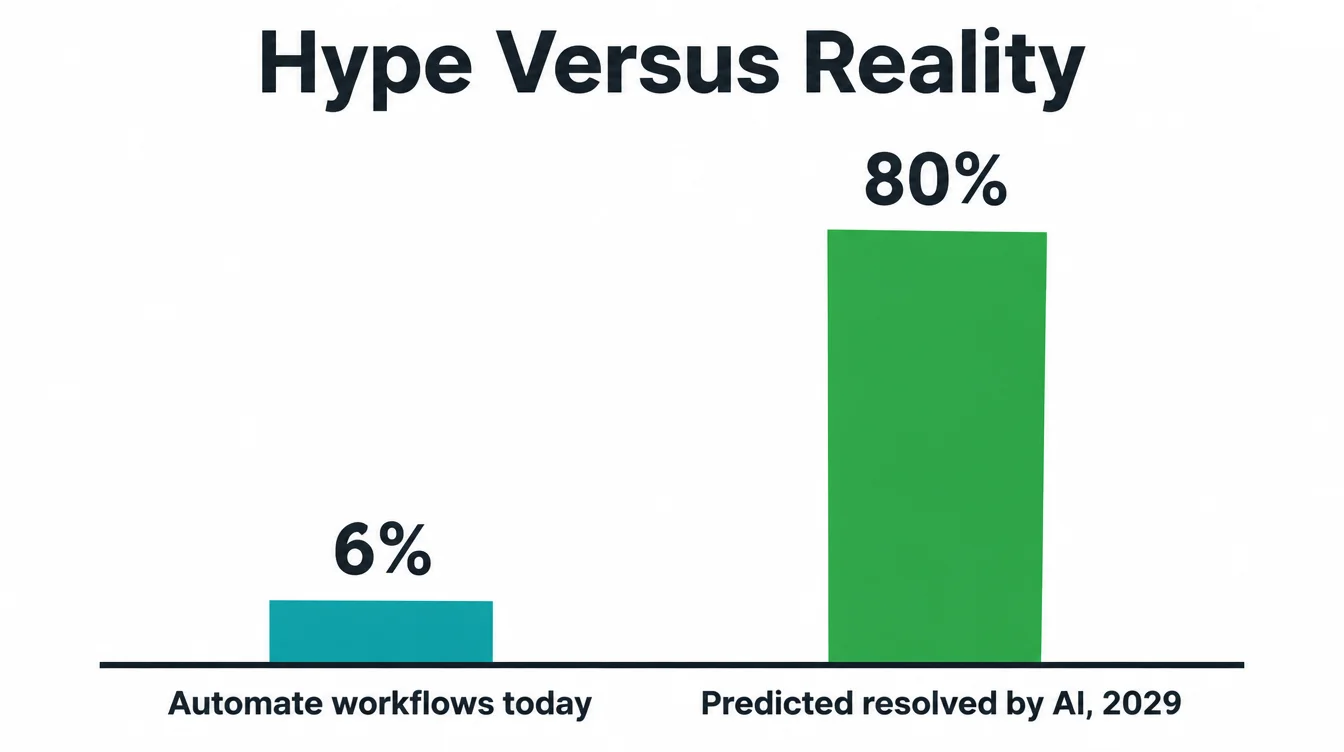
In fact, just 6% automate workflows with minimal human involvement. So most real use today is a person using AI as a helper, not a bot running solo.
The future picture is bolder. Gartner predicts that by 2029, agentic AI will autonomously resolve 80% of common customer service issues without human intervention, alongside a 30% reduction in operational costs. That is a real signal worth watching.
Still, notice the gap: 6% real automation today versus an 80% prediction for years out. As a result, you should plan for where AI helps now, not for a headline that has not arrived. For a grounded look at the tools, read our roundup of the best AI tools for small business.
5. How to set it up without annoying customers
If your simple pile is big and you decide to try AI, how you set it up decides everything. The same bot can feel like a helpful shortcut or an infuriating wall depending on three choices.
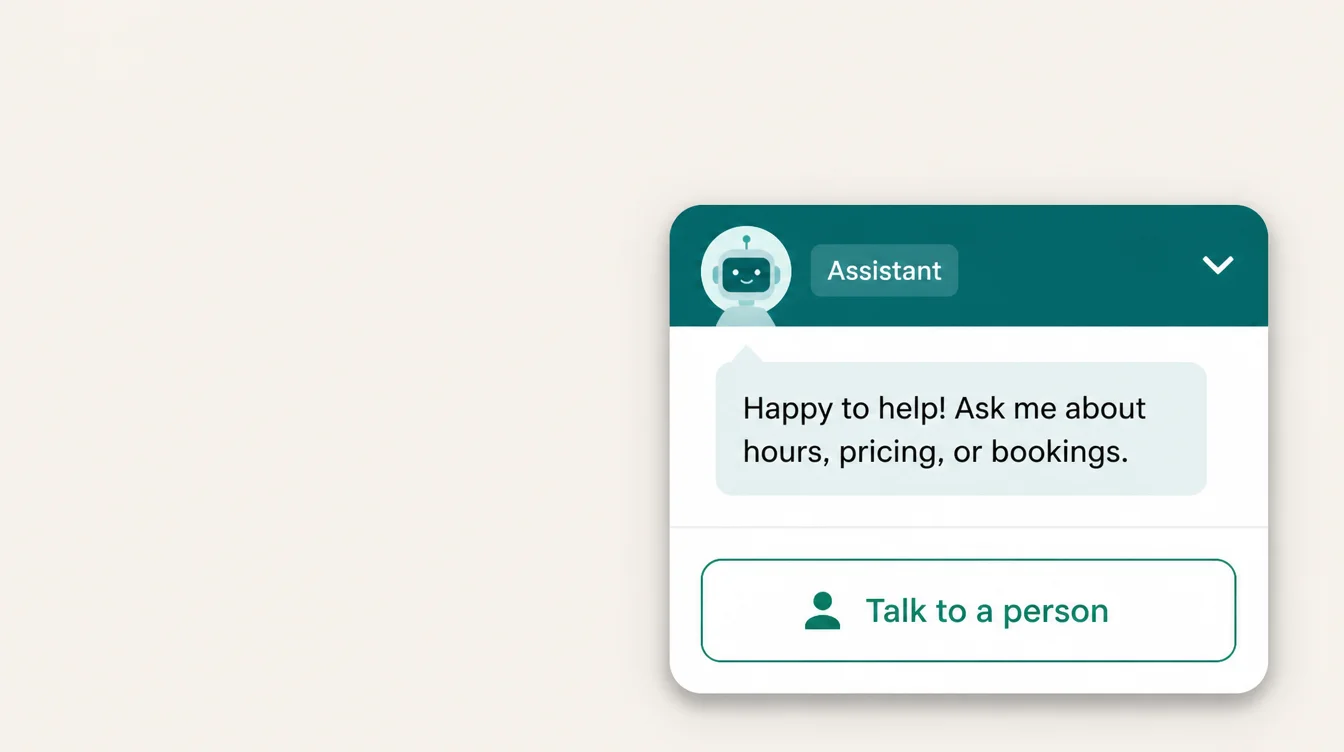
First, always offer a human. A SurveyMonkey report found 89% of people believe companies should always offer the option to speak with a real person, so put a clear "talk to a human" path on every screen. Second, label it as a bot.
People forgive a bot for being a bot, but they do not forgive being tricked. Third, scope it tightly to the FAQs it can actually answer, and have it hand off the moment it is unsure instead of guessing.
Done that way, the bot becomes a fast lane for easy questions and a polite usher to a person for everything else. To go deeper on building these flows, see our guide to AI automation for small business and our AI and automation services.
6. Which questions to let AI handle, and which need a human
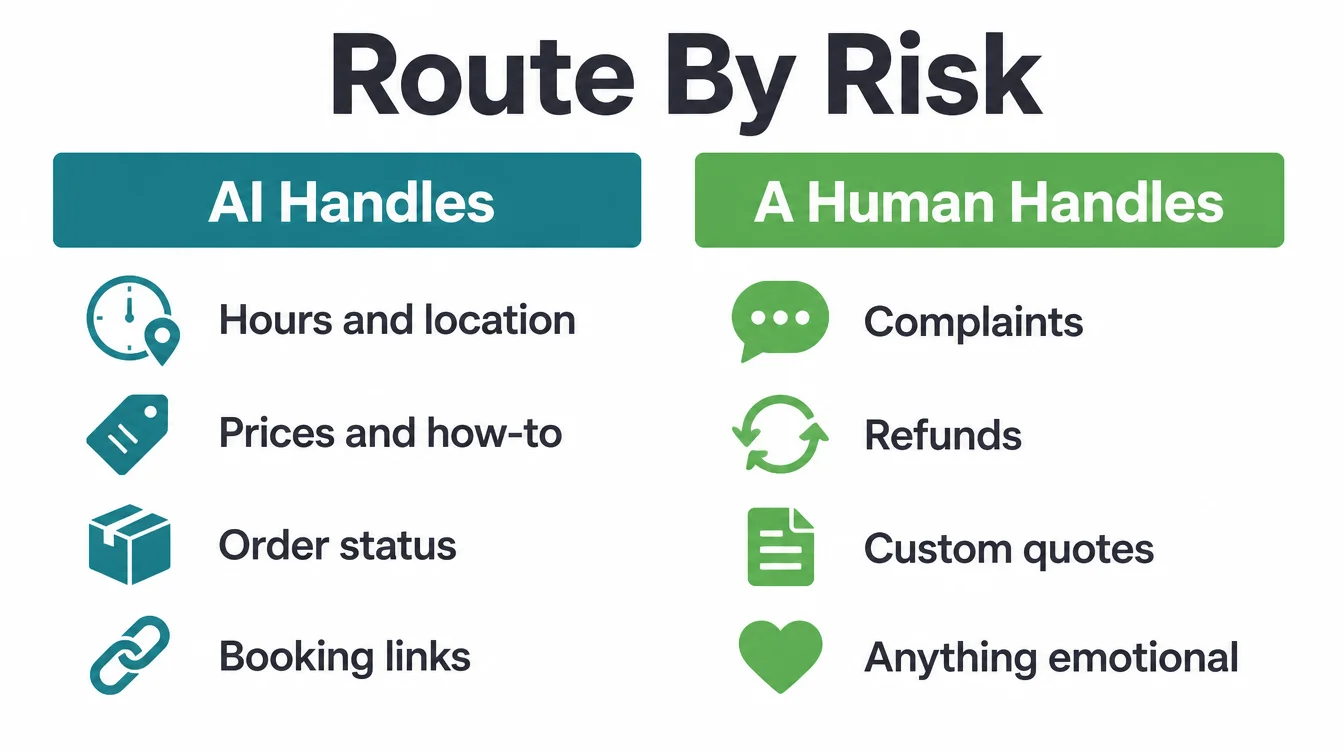
The cleanest way to think about this is by risk. Low-risk, repeat questions are perfect for AI. High-risk, personal, or money-sensitive ones belong with a person. The table below sorts the common ones for you.
| Question type | Best handled by |
|---|---|
| Opening hours and location | AI |
| Prices and basic how-to answers | AI |
| Order status and booking links | AI |
| Simple "do you offer this" questions | AI |
| Complaints and upset customers | A human |
| Refunds and billing disputes | A human |
| Custom quotes and tailored advice | A human |
| Anything emotional or high-stakes | A human |
The rule behind the table is simple. If getting the answer wrong would cost you a customer or a sale, a person handles it. Everything else can go to AI. When in doubt, route to a human, because the downside of an annoyed customer is far bigger than the time you save.
7. Is AI for customer service worth it for your business?
Let us bring it home with a short decision checklist. Run through these and your answer will be obvious. There is no shame in deciding "not yet," since the right tool depends entirely on your situation.
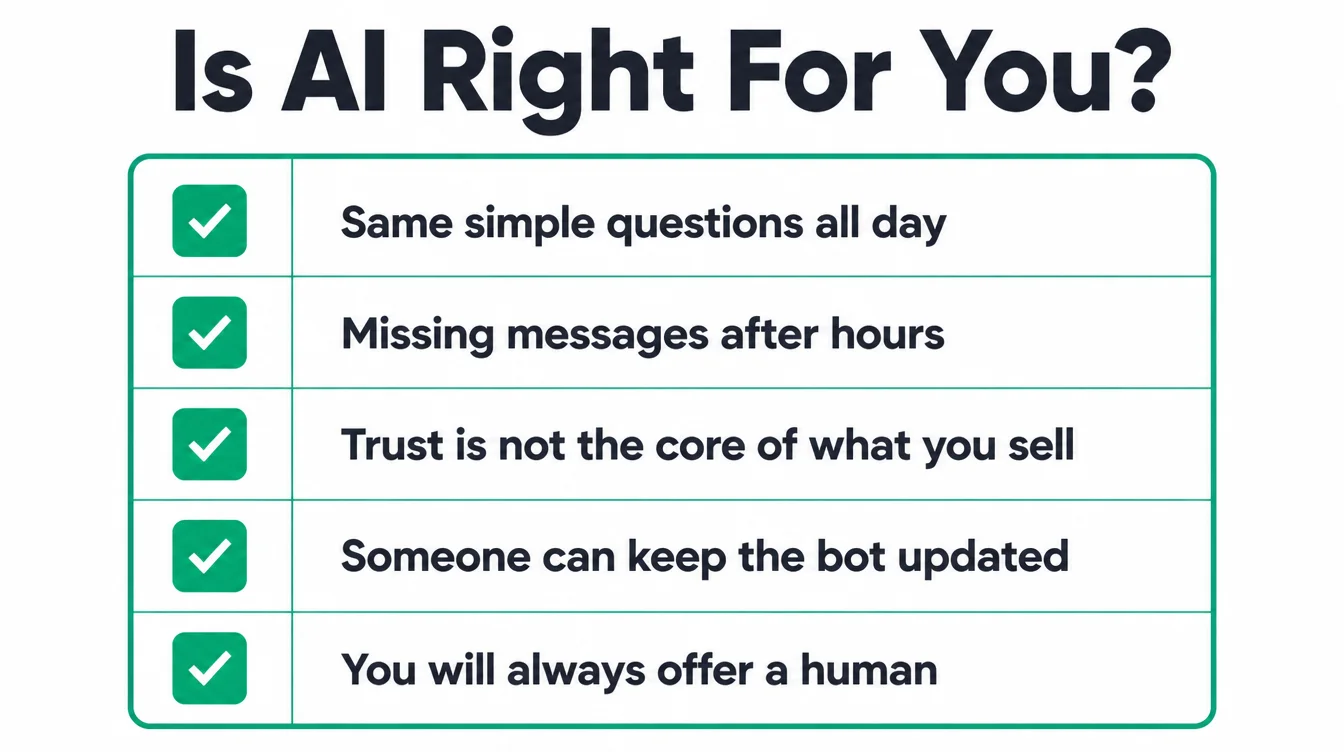
- Do you get the same simple questions all day? If yes, AI helps. If you get a few varied ones, a person is faster.
- Are you missing messages after hours? If customers go quiet because you replied too late, an always-on bot for FAQs can save those leads.
- Is trust the core of what you sell? For coaching, care, or high-value services, lead with a human and keep AI to the edges.
- Can you keep the bot updated? A bot with stale answers is worse than none. If no one will maintain it, skip it.
- Will you always offer a human? If you cannot promise an easy way out to a person, you are not ready.
Mostly "yes" on the first two and "yes" on the last one means AI is likely worth a careful trial, scoped to your FAQs, which is the kind of setup our AI and automation service handles.
Otherwise, your time is better spent elsewhere first, like a clear small business website that answers half these questions before anyone has to ask. For more practical guides, browse the Seed Light blog.
Frequently asked questions
1. Is AI customer service worth it for a small business?
AI customer service can be worthwhile for repeated, simple questions such as opening hours, prices or order status when you cannot answer quickly enough. A Talkdesk survey found small businesses value faster resolution and round-the-clock support. Keep people available for conversations that need judgement or care.
2. Can AI replace customer service staff?
No, not safely, and the numbers back that up. A Five9 study found 75% of consumers prefer talking to a real human, and 48% do not trust the information AI bots give them. AI works best as a first layer that handles routine questions and hands the hard or emotional ones to a person. Think of it as a filter that frees up your team, not a way to remove them.
3. Do customers prefer chatbots or humans?
Most people still prefer humans. A SurveyMonkey report found 79% of people strongly prefer interacting with a human over an AI agent, and 89% believe companies should always offer the option to speak with a human. People will happily use a bot for a quick answer. They want a person the moment things get complex, costly, or stressful.
4. What should AI handle vs a human?
Let AI handle repeat, low-risk questions: hours, location, prices, booking links, order tracking, and basic how-to answers. Send anything complex, emotional, or money-sensitive to a human, like complaints, refunds, custom quotes, and anyone who sounds upset. A good rule is that if getting it wrong would cost you a customer or a sale, a person should handle it.
5. When should a small business NOT use AI for support?
Skip it if you only get a handful of questions a day, since a person can clear those faster than you can set up and maintain a bot. Skip it if most of your conversations are complex or emotional, like coaching or care work, where trust is the product. A Five9 study found 56% of consumers are often frustrated by AI chatbots, so a clumsy bot can cost you more than it saves.
6. How do I add AI support without annoying customers?
Three rules. First, always offer a clear way to reach a human, since 89% of people say that option should always exist. Second, label the bot as a bot so people are not tricked. Third, scope it tightly to the FAQs it can actually answer, and have it hand off the moment it is unsure rather than guessing. Done that way, the bot speeds up easy questions without trapping people.