What Is GEO in 2026? Generative Engine Optimisation Explained

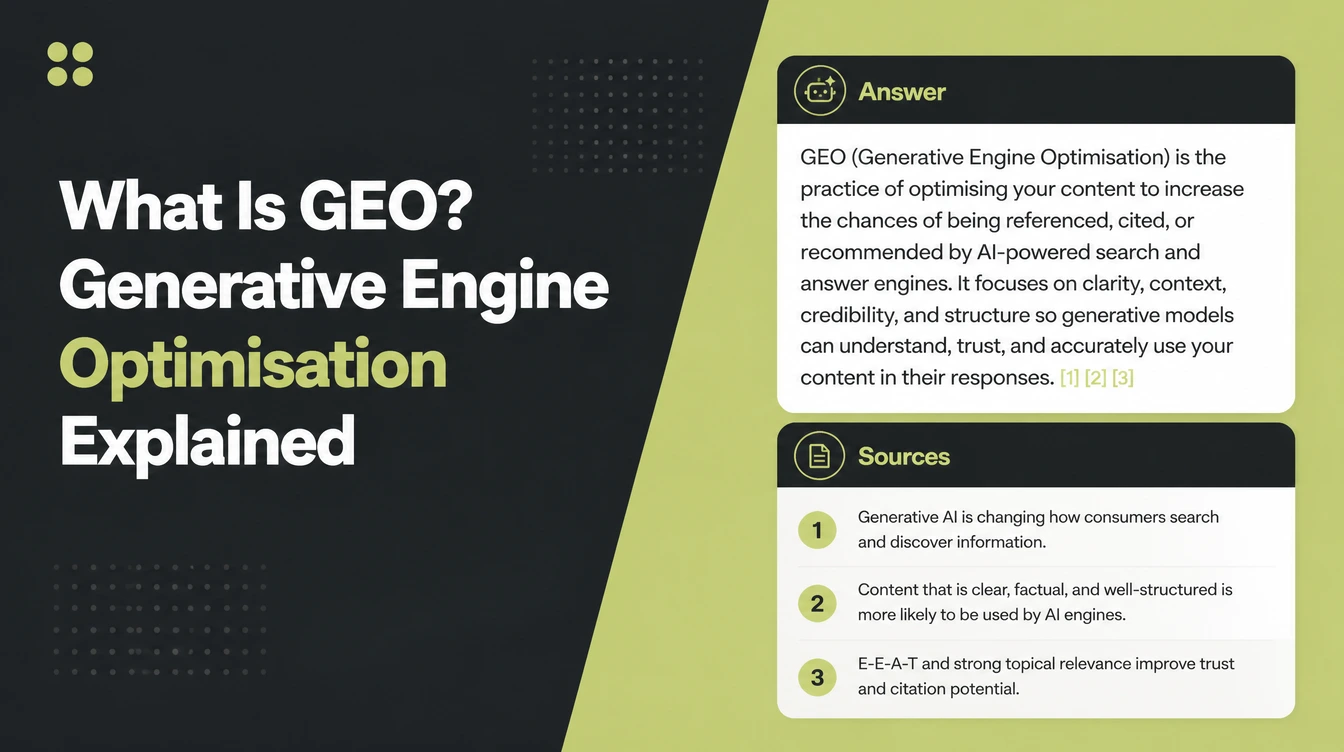
Generative engine optimization is the practice of shaping content so AI answer tools like ChatGPT, Perplexity and Google AI Overviews cite it as a source. The Princeton-led research that named GEO found cited statistics and quotes lifted visibility by up to 40 percent in a controlled test. Seed Light treats it as a layer on top of SEO.
Key takeaways
Short on time? Here is the whole explainer in five lines before we break it down.
- GEO means getting cited in AI answers. It is the practice of shaping content so tools like ChatGPT and Google AI Overviews name you as a source.
- The term came from research. A Princeton-led paper first defined GEO and found certain methods lifted visibility by up to 40% in a controlled test (arXiv, 2023).
- AI summaries are spreading. They appeared on 18% of Google searches in one study, and clicks drop when one shows (Pew Research, 2025).
- GEO is not separate from SEO. It builds on the same signals: clear content, structure, and trust.
- Do your SEO basics first. A thin site with no foundation gives AI nothing to cite.
1. What GEO is, in plain words
Generative engine optimization (GEO) is the practice of shaping your content so AI answer tools cite it. That is the whole idea. When someone asks ChatGPT, Google AI Overviews, or Perplexity a question, the tool writes an answer. GEO is about being one of the sources that answer is built from.
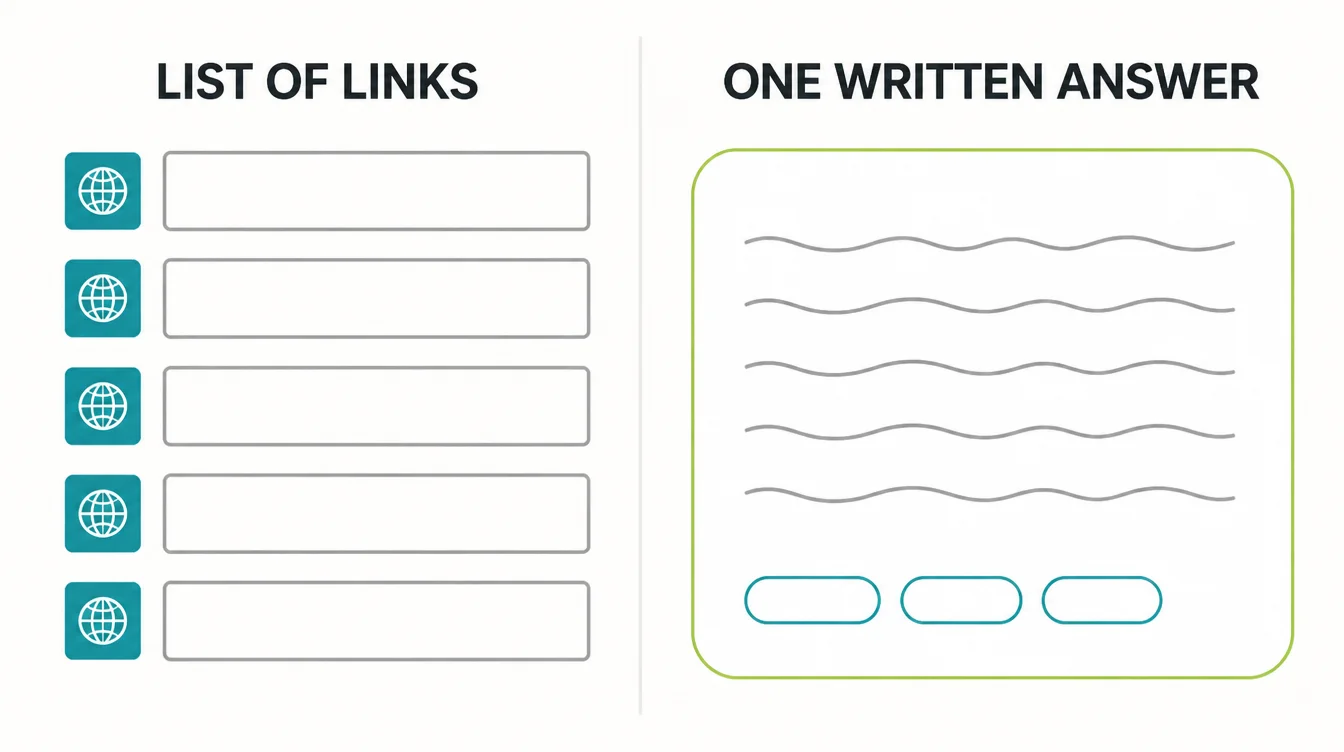
Here is the difference in everyday terms. Old search hands you a list of links and you pick one. A generative engine reads many pages, then writes a single answer and sometimes names its sources. So instead of fighting for a click, you are fighting to be quoted.
For a refresher on the older discipline this builds on, read our explainer on what SEO is. GEO is the AI-era cousin of that work, and it sits in our wider AI for small business series.
2. Where the term came from
GEO is not a marketing buzzword someone invented to sell a course. It started in academic research. A team led by researchers at Princeton, along with collaborators from Georgia Tech, Allen Institute for AI, and IIT Delhi, published the first paper on it in late 2023.
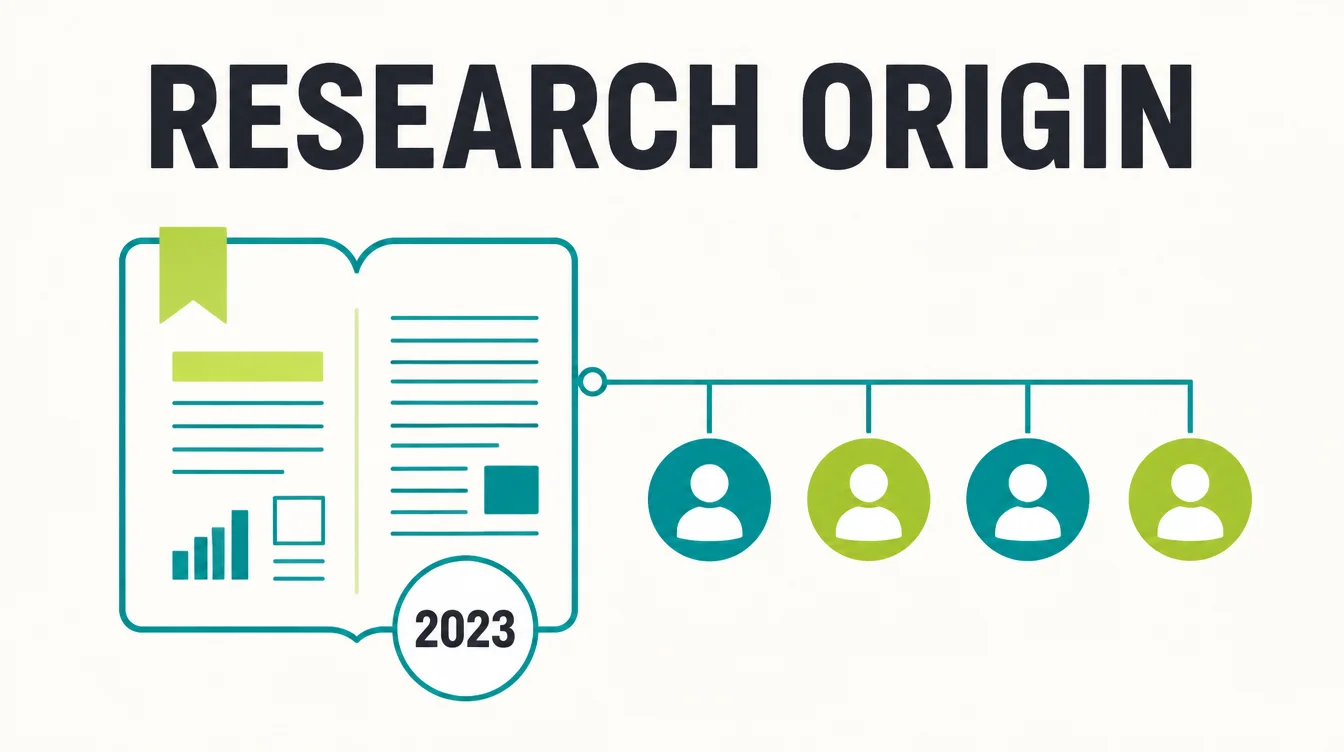
The paper defined "Generative Engine Optimization (GEO), the first novel paradigm to aid content creators in improving their content visibility in generative engine responses" (arXiv, 2023). In plain terms, the researchers gave a name to a real new problem: how do you get noticed when an AI writes the answer?
Notably, the same study tested specific tactics and found that "GEO can boost visibility by up to 40% in generative engine responses." That sounds huge, so read the next part carefully.
That number came from a controlled academic benchmark, not from live website traffic. The researchers also stressed that "the efficacy of these strategies varies across domains," meaning what worked for one topic did not always work for another.
3. How GEO differs from SEO
The simplest way to see the difference is side by side. SEO and GEO share a lot of DNA, but they aim at different end results. The table below lays it out.
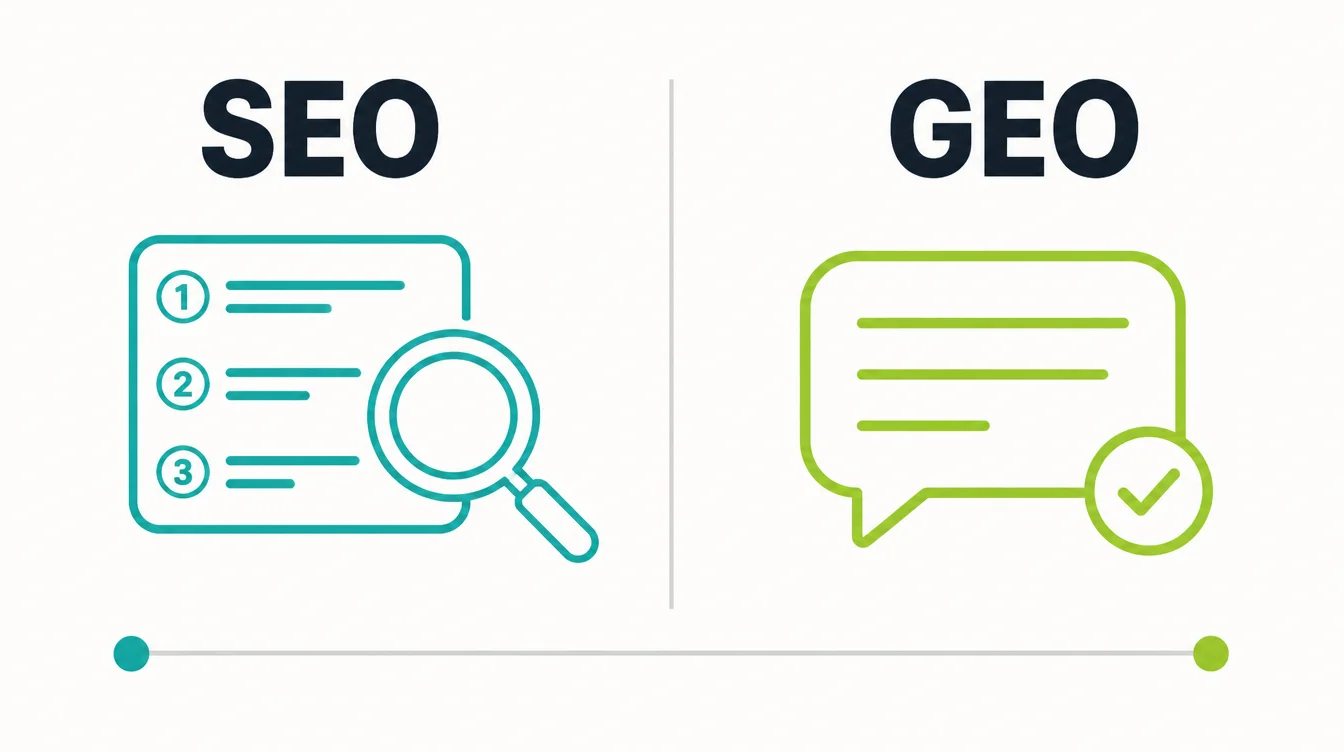
| SEO | GEO |
|---|---|
| Goal is a high rank in a list of links | Goal is a citation inside an AI-written answer |
| Success is a click to your site | Success is your business being named or quoted |
| You optimise for a search engine | You optimise for a generative engine |
| Keywords and backlinks carry weight | Clear answers, stats, and quotes carry weight |
| Mature, well-understood practice | New, still being figured out |
That said, do not treat them as rivals. The two overlap heavily. Strong content, a fast site, clean structure, and real trust help with both. Want the link-ranking side? Our guide on how to rank higher on Google covers it.
4. GEO vs AEO vs AIO
You will see three acronyms thrown around, and honestly, they describe nearly the same work. Here is one line on each so you can stop worrying about the labels.
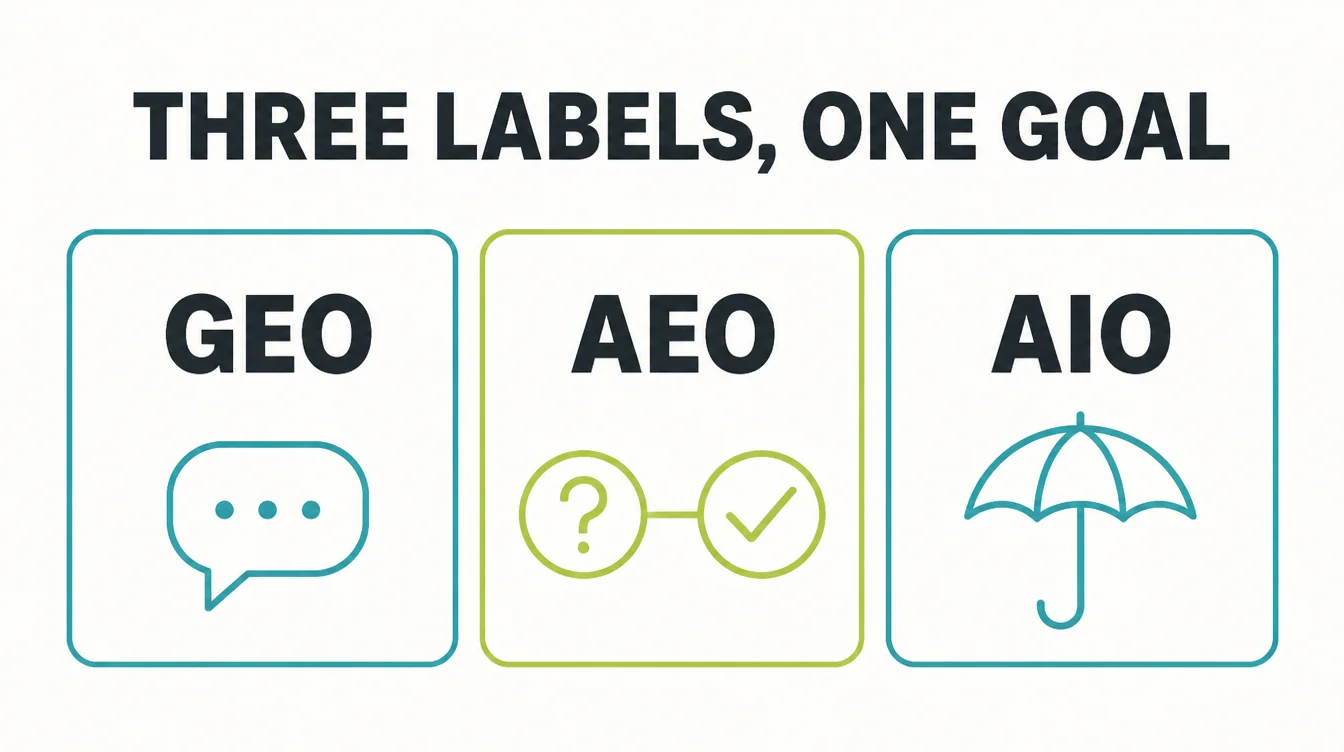
- GEO (generative engine optimization): getting cited by AI answer engines.
- AEO (answer engine optimization): directly answering questions so a tool can lift your answer.
- AIO (AI optimization or AI search optimization): a broad umbrella term for all of it.
In practice, they point at the same goal: show up well when AI does the answering. So pick whichever word your team likes and move on.
5. Why it matters now
This used to be a niche concern. Not anymore. AI summaries are spreading across search fast, and they change how people behave when they see one.
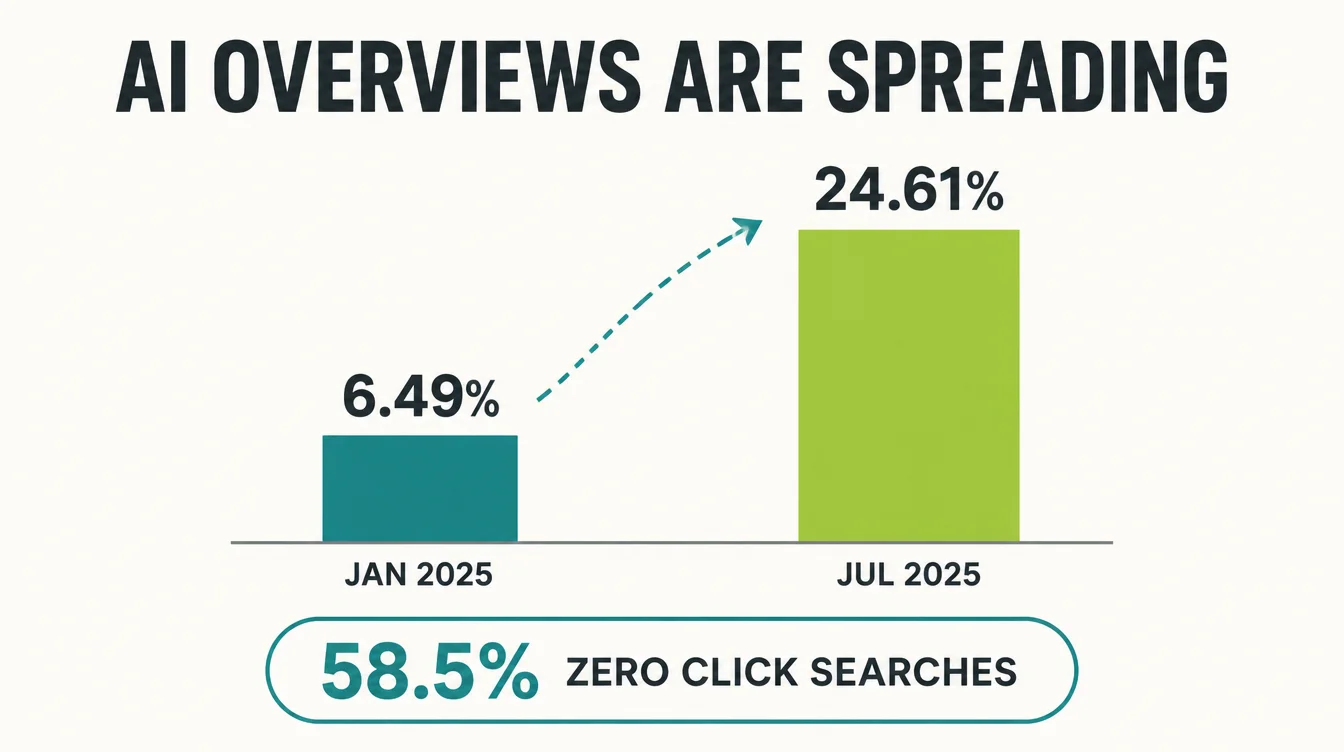
Consider the spread. One study found AI Overviews appeared on Google results for as few as 6.49% of queries in January 2025, then rose to 24.61% by July (Semrush, 2025).
Pew Research found that across its sample, "18% of all the Google searches in our study generated an AI summary" (Pew Research, 2025).
Crucially, those summaries cut clicks. In the Pew study, only 8% of searches with an AI summary led to a link click, versus 15% without one, and just 1% of users clicked a link inside the summary itself.
That fits a wider pattern: SparkToro reported that 58.5% of American Google searches ended in zero clicks (SparkToro, 2024). On top of that, people increasingly trust AI for recommendations; reliance on AI for local picks jumped "from 6% in 2025 to 45% today" (BrightLocal, 2025).
6. What kind of content gets cited
So what actually earns a mention? The Princeton-led research tested a range of tactics, and a few stood out. Content that cited statistics, quoted credible sources, and answered the question directly tended to get pulled into AI responses more often.
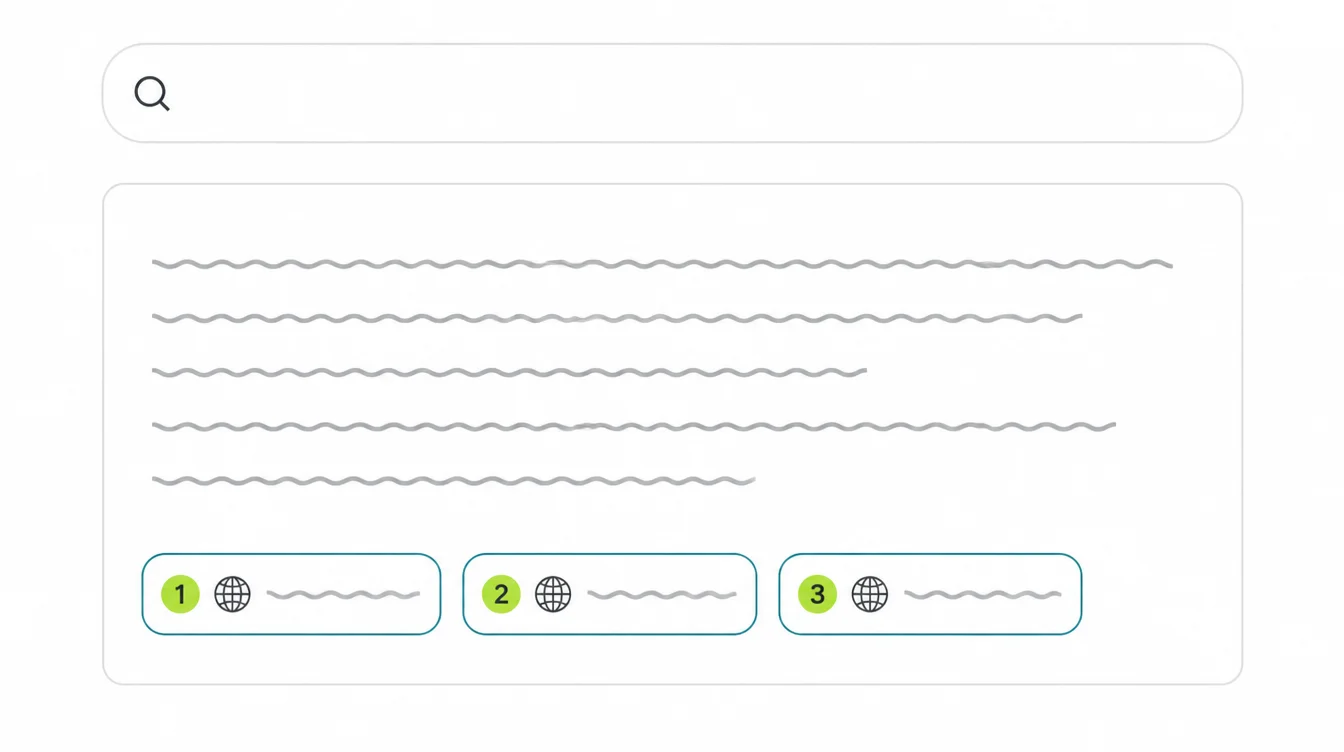
In other words, the AI rewards content that looks trustworthy and easy to lift. A clear answer near the top, a real statistic with a source, a short quote from an expert, and clean structure all help. Vague, padded writing does not give the AI a clean line to quote.
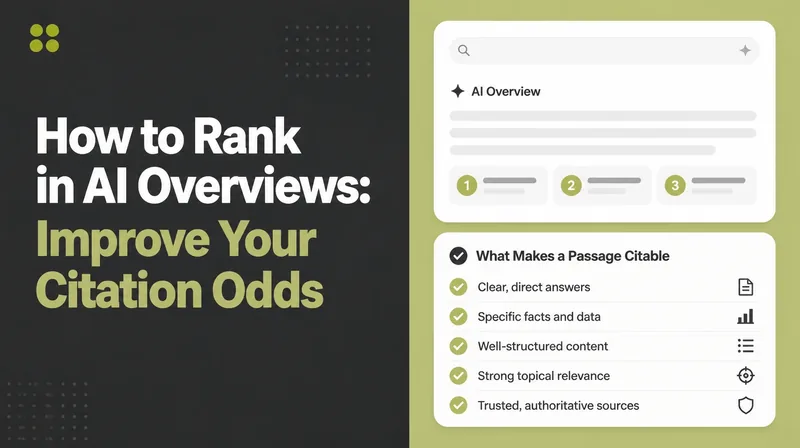
Two more things help here. First, schema markup gives AI tools tidy, labelled data about your business; our explainer on schema markup covers that. Second, for the practical, step-by-step version of all this, see our sister how-to on how to rank in AI Overviews.
7. Is GEO worth your time yet?
Here is the honest verdict. For most small businesses, do your SEO basics first. GEO is real and growing, but it is a layer you add on top of a solid foundation, not a shortcut around one.
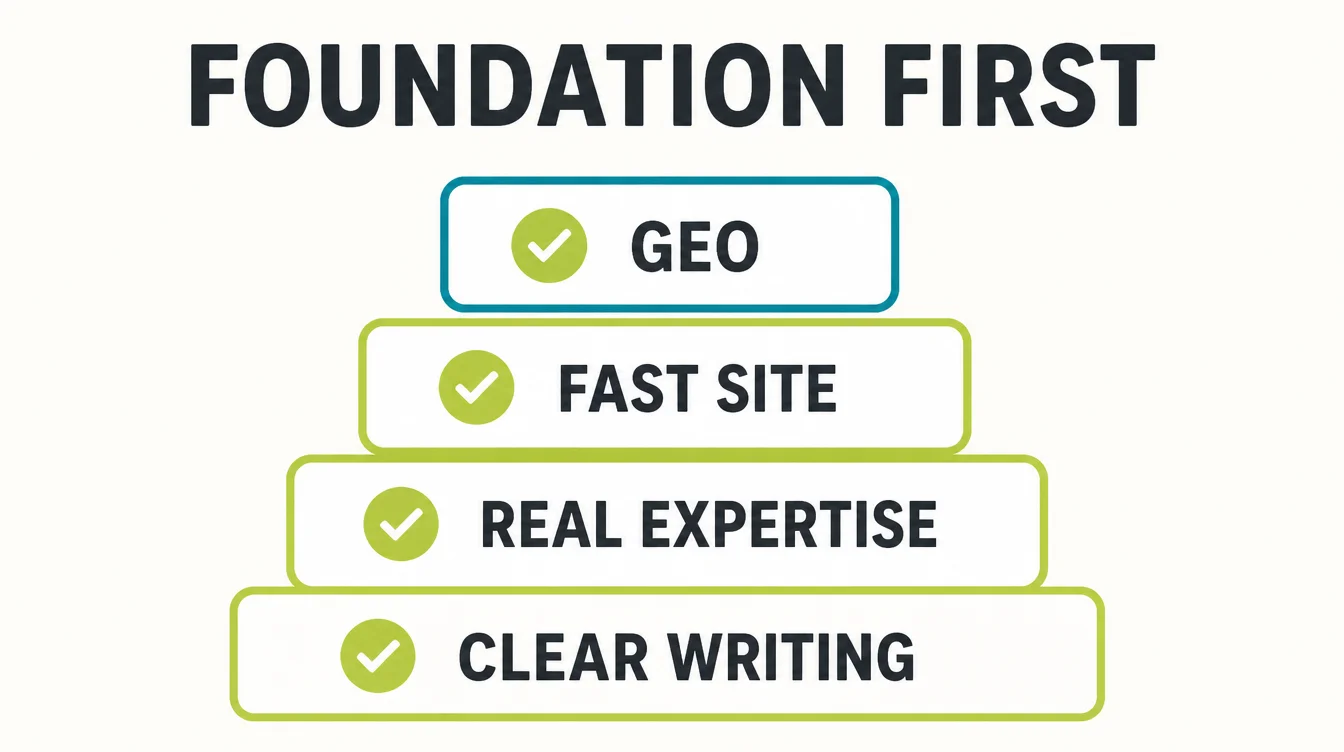
The reason is simple. The same things that help you get cited by AI, clear writing, real expertise, a fast and trustworthy site, also help you rank in normal search.
AI tools still lean on those signals to decide what to quote. As a result, a thin website with no SEO foundation gives an AI nothing worth citing in the first place.
So treat GEO as worth understanding, not worth obsessing over yet. Get the fundamentals right: write genuinely useful pages, add real stats and sources, keep your site fast, and earn trust.
Then the GEO work becomes a small extra step on top of what you already publish. If you want help with the foundation and the AI-search layer on top, see our AI search optimisation service or browse more guides on the Seed Light blog.
Frequently asked questions
1. What is generative engine optimization (GEO)?
Generative engine optimization (GEO) is the practice of shaping your content so AI answer tools cite it. Generative engines like ChatGPT, Google AI Overviews, and Perplexity write an answer instead of showing a list of links. GEO is about being one of the sources that answer is built from, so your business gets named when someone asks an AI a question in your field.
2. What is the difference between GEO and SEO?
SEO aims to win clicks by ranking a page high in a list of blue links. GEO aims to win a mention inside an AI-written answer, where there may be no list at all. The two overlap a lot, because strong content, clear structure, and trust help with both. The goal is just different: a ranked link versus a cited source.
3. What is GEO vs AEO vs AIO?
GEO, AEO and AIO are near-synonyms for the same shift. GEO, generative engine optimization, focuses on getting cited by AI answer engines. AEO, answer engine optimization, focuses on directly answering questions so a tool can lift your answer. AIO, AI optimization or AI search optimization, is a broad umbrella term. In practice they describe the same work, so do not get stuck on labels.
4. Will GEO replace SEO?
No, not for now. GEO sits on top of SEO. AI tools still lean on the same signals search engines use, like clear content, structure, and trust, to decide what to cite. So you cannot skip the basics and jump to GEO. Think of GEO as a newer layer you add once your SEO foundation is solid, not a replacement for it.
5. Does GEO actually work?
There is early evidence it can. The Princeton-led research that named GEO found certain methods, like adding cited statistics and quotes, lifted content visibility by up to 40% in generative engine responses. That was a controlled academic benchmark, not a live-traffic promise, and the researchers noted results varied by topic. So it is promising, but treat the figure as a lab result.
6. Is GEO worth it for a small business yet?
For most small businesses, do your SEO basics first. The same things that help you get cited by AI, like clear writing, real expertise, and a fast, trustworthy site, also help you rank in normal search. AI summaries are growing fast, so it is worth understanding GEO. But a thin website with no SEO foundation has nothing for AI to cite in the first place.