Digital Marketing for Small Business: A Starting Plan

Start with the foundation: a fast website that works on a phone, and a complete Google Business Profile. Then pick one channel that matches how your customers find you, give it ninety days, and measure it. Spreading yourself across five channels is why most small business marketing stalls. Seed Light builds the foundation and runs one channel properly.
Key takeaways
Short on time? Here is the whole approach in five lines before we break it down.
- Fix the foundation first. A fast website and a complete Google Business Profile make every channel work harder, and both are cheaper than buying more traffic.
- Reviews drive decisions. 97% of consumers read reviews for local businesses, so they are one of the cheapest wins you have (BrightLocal, 2026).
- Email pays back the most. It returns about 36 times what you spend, more than any other channel (Litmus).
- Do not do a bit of everything. Pick one channel that matches how your customers find you and give it ninety days.
- Measure, then scale what works. Track the cost of each lead and only spend more behind what pays for itself.
1. The mistake most owners make
The most common mistake in small business marketing is doing a little bit of everything. You post on social one week, boost a post the next, dabble in ads, half-build a website, and start an email list you never send to.
Each effort gets a fraction of your attention, so none of them ever gets enough to work.
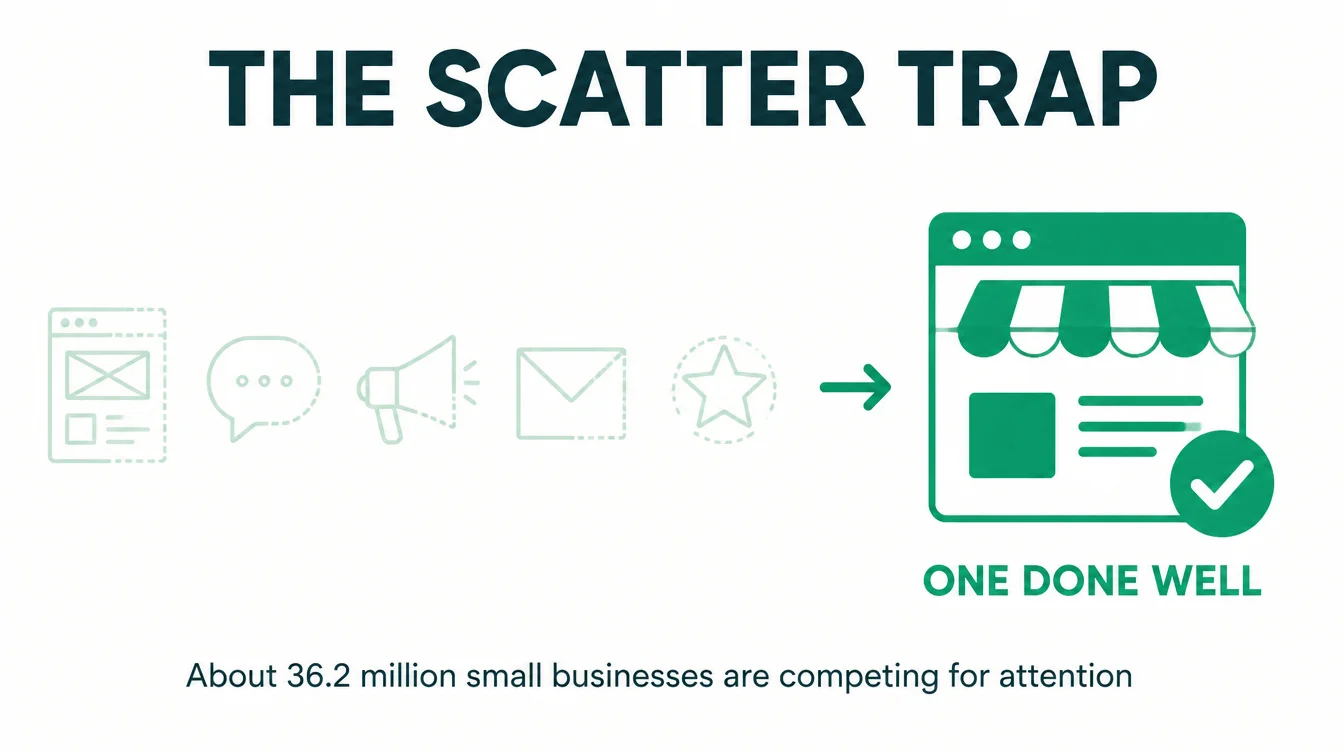
It is an easy trap. Marketing advice comes from every direction, and each new tactic sounds like the one. Meanwhile you are running the actual business. So you spread yourself thin across five channels and judge each one before it has had a chance to pay off.
Here is the better way to think about it. Small businesses make up the vast majority of companies in almost every economy, so attention, not effort, is the scarce resource.
The winners are not the ones doing the most. They are the ones doing one or two things consistently. So the goal of this guide is simple: help you pick where to start and ignore everything else for now.
2. Start with the foundation: a fast website and Google Business Profile
Before you touch any channel, get the foundation right. Marketing sends people somewhere to decide, and that somewhere is your website and your Google Business Profile. If either one is broken, every channel you run leaks the visitors it works to earn.
A website that is fast and works on a phone
Your website is the one place online you fully control. Social platforms and ad accounts can change their rules overnight, but your site is yours.
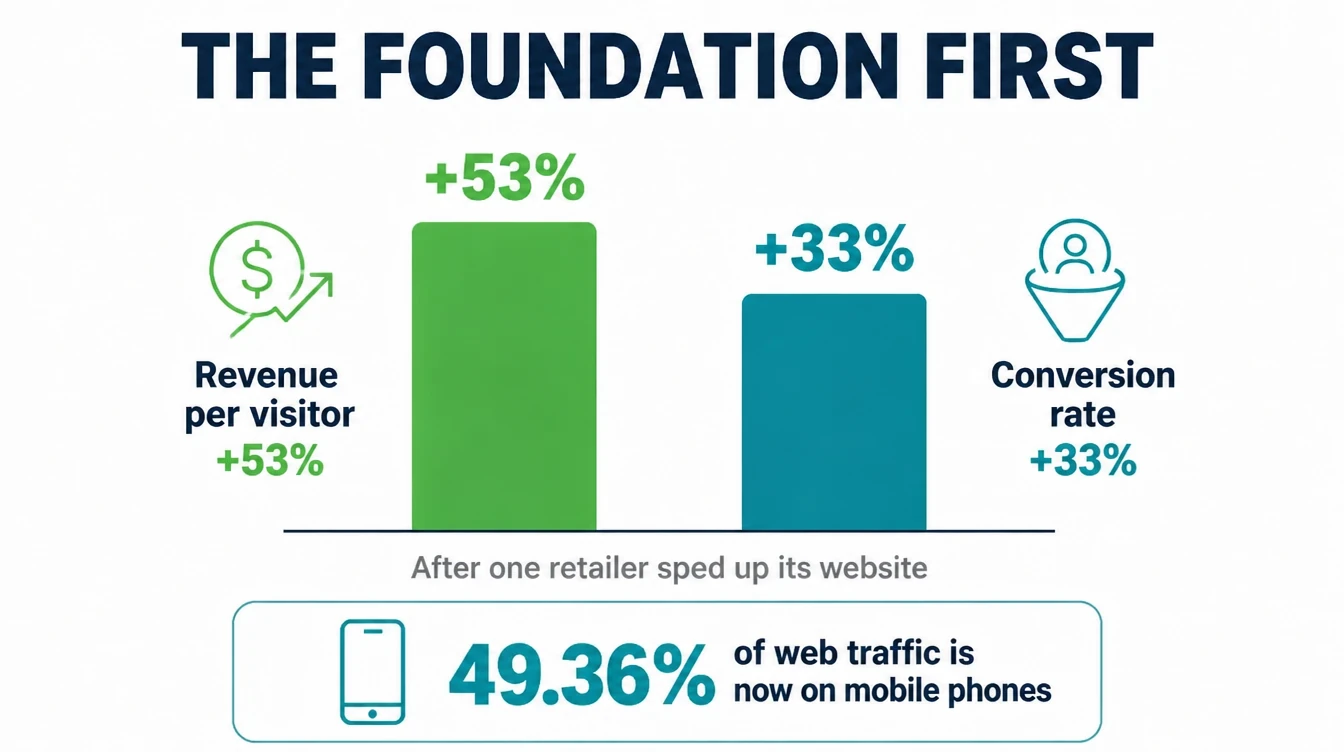
About half of all web traffic now comes from mobile devices, around 49.36 percent, so a site that is slow or clumsy on a phone loses customers before they read a word (StatCounter, August 2026).
Speed pays back as well. When the retailer Rakuten improved its Core Web Vitals, the scores that measure how fast and stable a page feels, it raised revenue per visitor by 53.37 percent and conversion rate by 33.13 percent (web.dev, 2022).
That is the cost of a slow site, paid quietly every day. For what a good small business site needs, read our guide on building a small business website.
A complete Google Business Profile
Your Google Business Profile is the free listing that shows up on the map and in local results. Pick the most specific category that fits you, fill in every field, add real photos, and keep your hours current.
It costs nothing and it is often the first thing a new customer sees. Treat it as part of your foundation, not an afterthought.
3. Reviews and local search
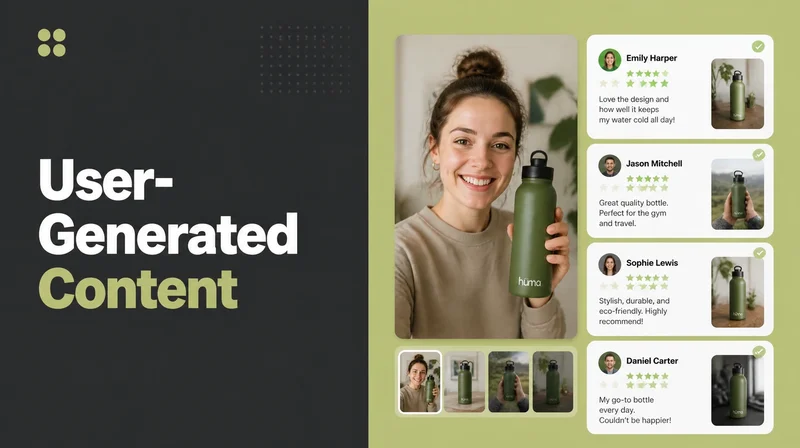
Reviews are the cheapest marketing you have, and most owners barely touch them. They do double duty. They help you show up in local search, and they convince the people who find you to actually pick you. For a buyer comparing two similar businesses, the one with more recent, better reviews wins.
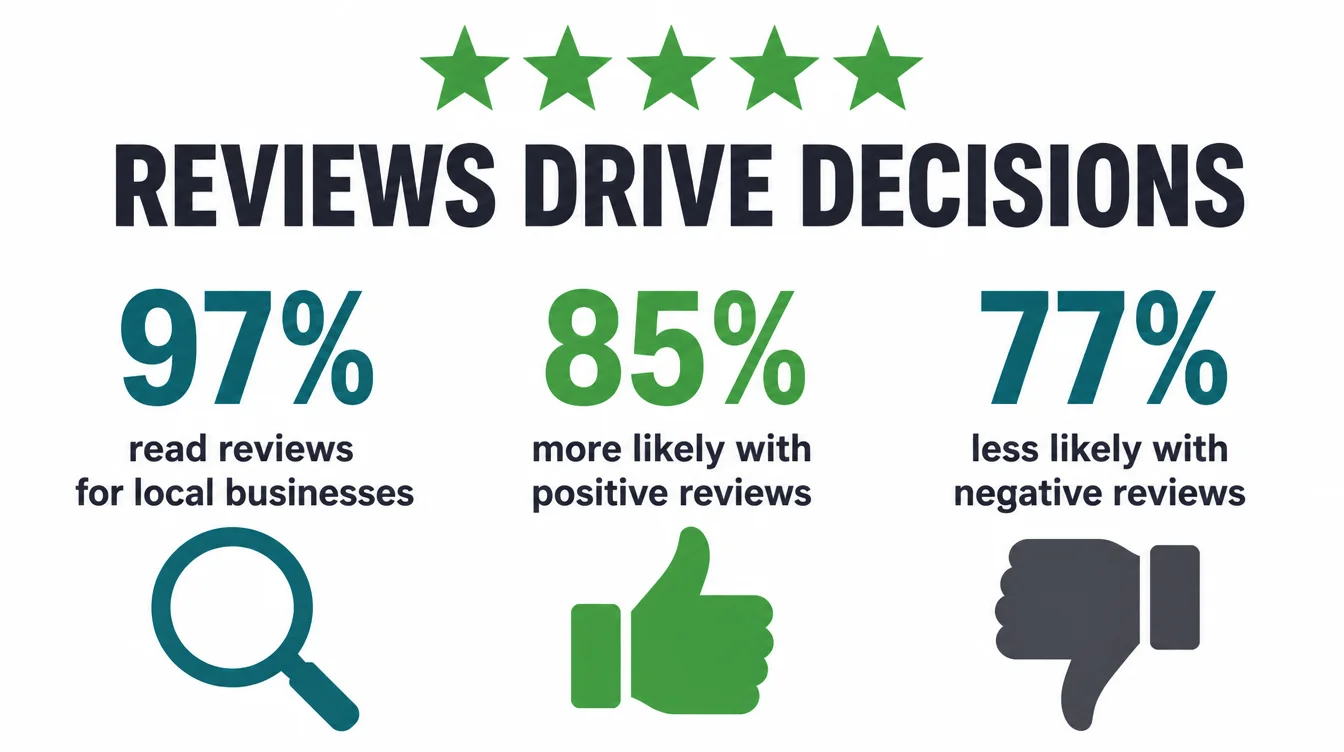
The research is blunt about how much they matter. Some 97% of consumers read reviews for local businesses, and 85% say positive reviews make them more likely to use a business, while 77% say negative ones make them less likely (BrightLocal, 2026).
In other words, reviews are not a vanity metric. They are a buying signal.
So build a simple habit. Grab the direct review link from your Business Profile and send it to every customer this week, then keep going. A steady trickle of fresh reviews beats one big burst that then goes quiet. For the full system, see our guide on local SEO for small businesses.
4. SEO: free traffic that compounds
SEO means getting your website to show up when people search for what you do, without paying for each click. It is slower than ads, but it compounds.
Once a page ranks, it keeps bringing in visitors month after month, and you do not pay per visit. That makes it one of the best long-term bets a small business can make.
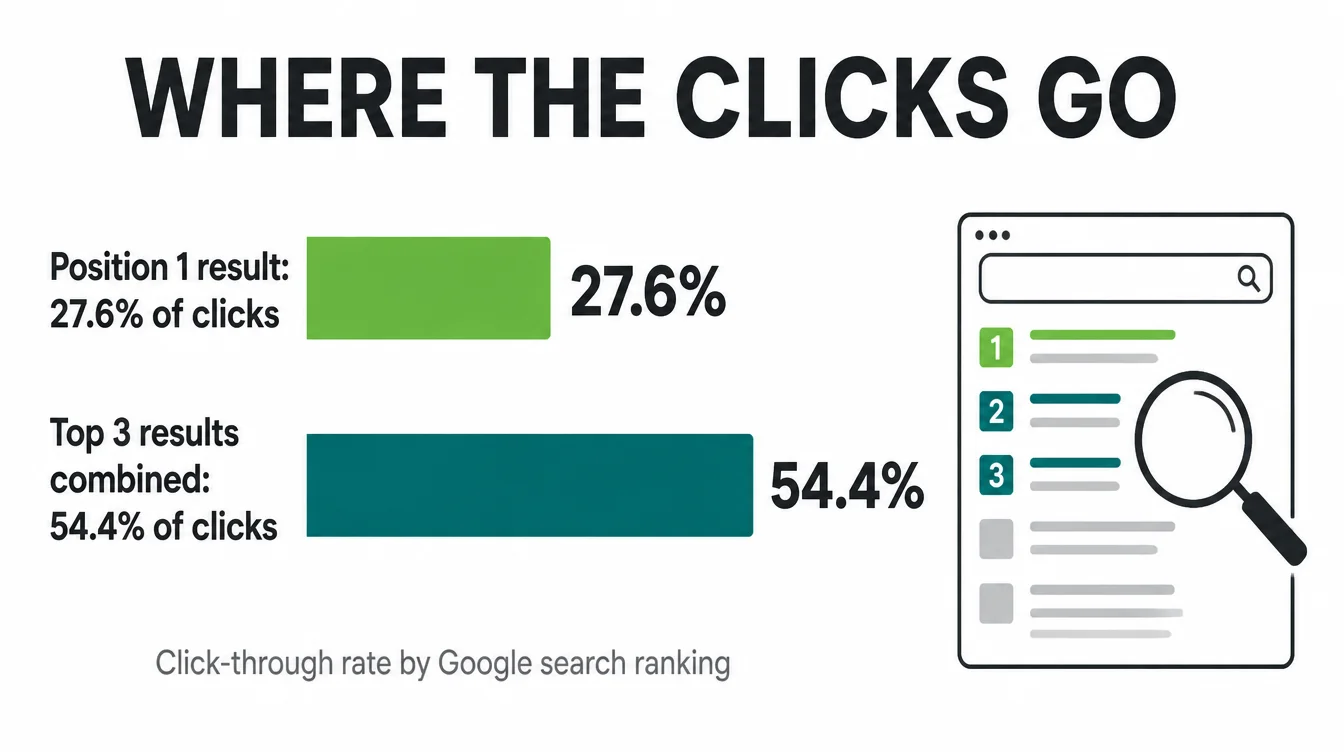
The prize is bigger than most owners think. The number one result in Google has a click-through rate of 27.6 percent, and the top three results together take 54.4 percent of all clicks (Backlinko, 2023). So the gap between page one and page two is not small. It is most of the traffic.
Getting started is less technical than it sounds. Write pages that answer the real questions your customers ask, keep your site fast and mobile-friendly, and earn links by being genuinely useful.
If you are brand new to it, our plain-language explainer on what SEO is covers the basics, and our SEO services page shows how we approach it for small businesses. SEO and ads are not rivals either, and our guide on SEO versus Google Ads helps you weigh the two.
5. Email: the channel you own
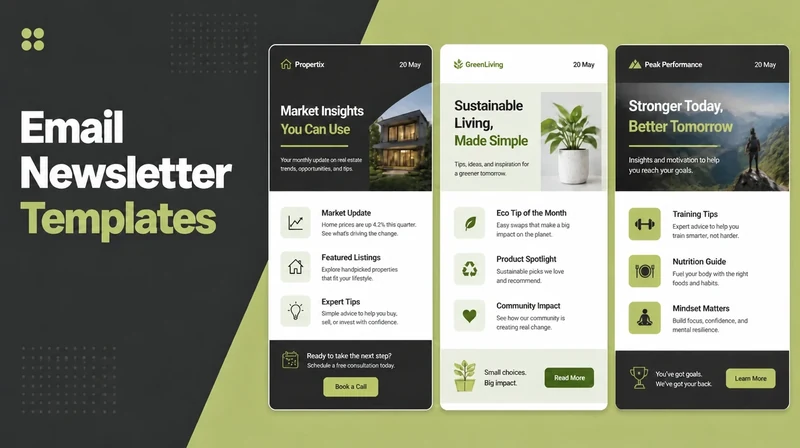
Email is the most underrated channel in small business marketing. It is not flashy, but it pays back more than anything else. The reason is simple: you own the list. No algorithm decides who sees your message, and no platform can take your audience away. You email them directly.
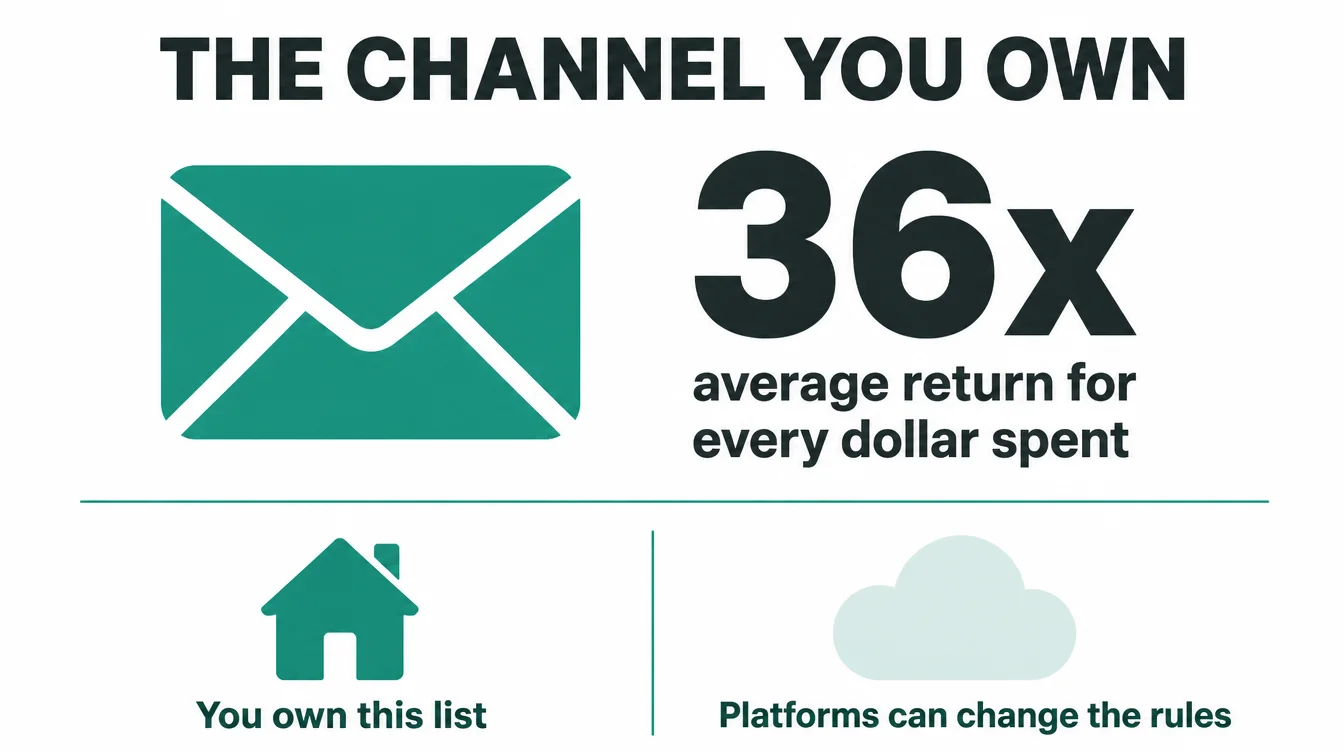
The numbers back it up. Email returns about 36 times what you spend, more than any other channel (Litmus, a vendor that studies email marketing). That return comes from talking to people who already know you: past customers, leads who were not ready yet, and fans who asked to hear from you.
Start collecting addresses today, even if you do not know what you will send. A box at the counter, a checkbox at checkout, a simple form on your site.
Then send something useful once or twice a month: a tip, an offer, a heads-up. Consistency matters more than polish. For a step-by-step start, read our guide on email marketing for small business.
6. Paid ads: when you need leads now
Paid ads are the fastest way to get in front of buyers. Where SEO and email build over time, ads buy attention the moment you switch them on. If you need leads this month, not next quarter, ads are the answer.
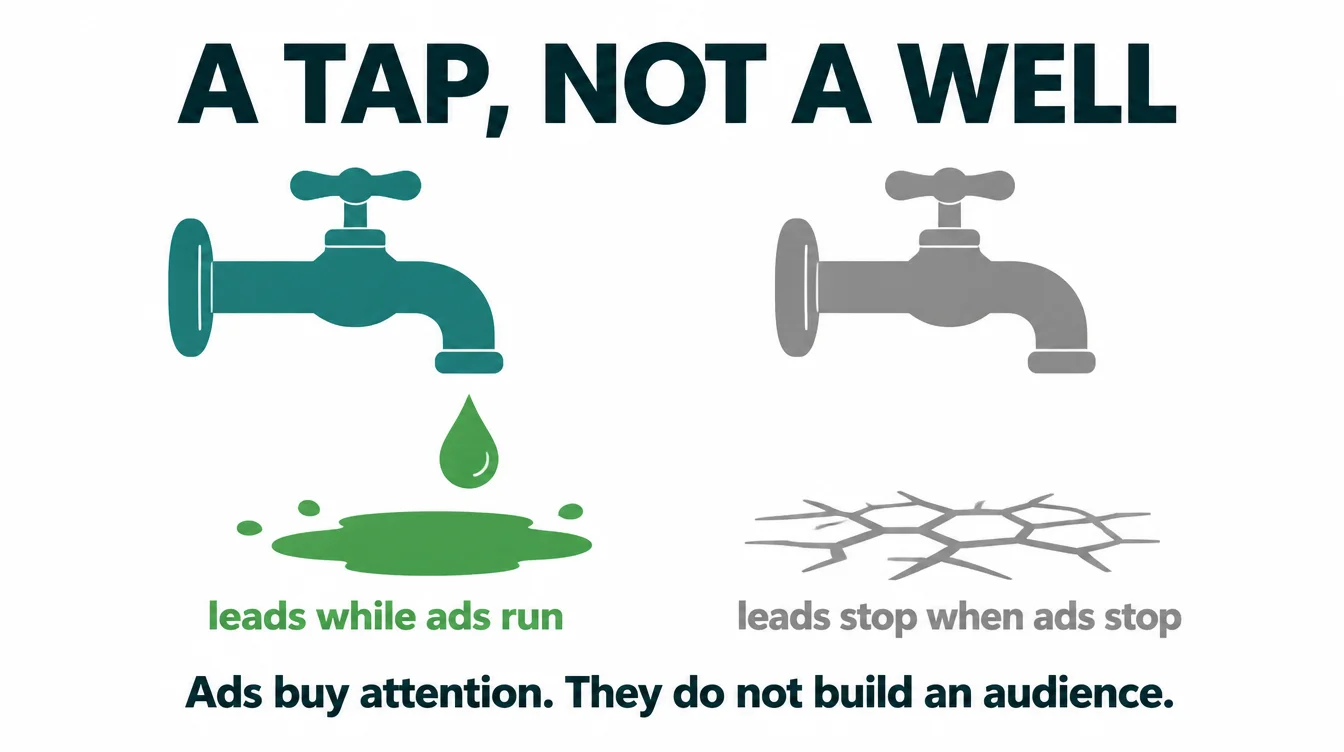
The trade-off is that they stop the instant you stop paying, so they are a tap, not a well. On Facebook and Instagram, Meta ads do the same job for people who are browsing rather than searching.
The most common starting point is Google Search ads, because they reach people at the exact moment they are looking for what you sell. That intent is what makes search ads convert.
To learn the ropes, see our guide on Google Ads for small business, and weigh it against organic search in SEO versus Google Ads.
One rule keeps ads from becoming a money pit: know your numbers. Track what each lead costs and what a customer is worth to you, then make sure the ads bring back more than they cost.
Our explainer on what a good ROAS is shows how to measure that, and our digital marketing services page shows how we run and measure ads against break-even ROAS.
7. Social media: amplify, do not lead with it
Social media is where most owners want to start, and for most it is the wrong first move. Here is the trap. Social rewards posting constantly, the reach is unpredictable, and it rarely puts you in front of someone at the moment they are ready to buy.
You can pour hours in and have little to show for it. If social still belongs in your plan, hand the accounts to a social media marketing agency that reports the enquiries the posts bring in.
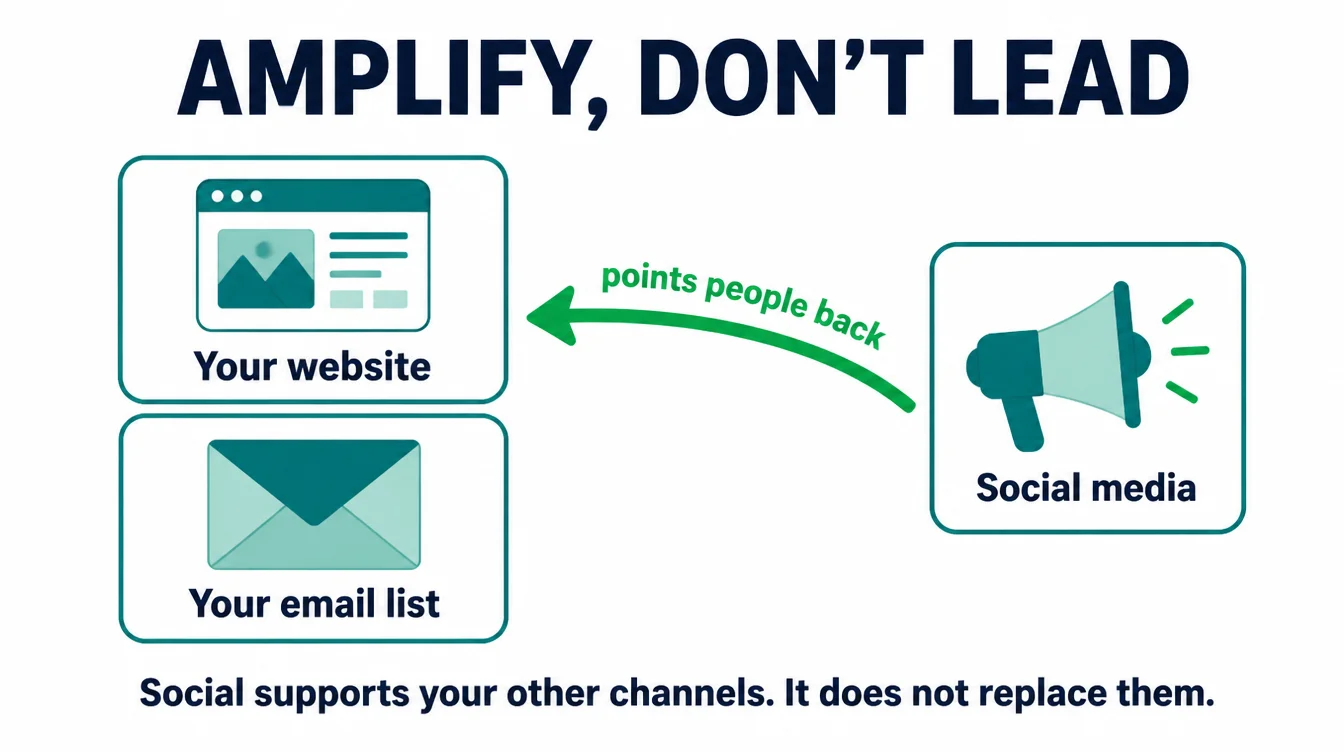
That does not mean skip it. It means use it for what it is good at: amplifying. Social is great for staying top of mind, showing your work, sharing reviews, and reminding past customers you exist.
It supports your other channels rather than carrying the load alone. So treat it as the speaker, not the engine.
If you do post, keep it simple and sustainable. One channel, a realistic schedule you can actually keep, and content that points people back to the things you own: your website, your email list, your offers. A post that quietly drives someone to your site is worth more than ten posts that just collect likes.
8. How to choose where to start: a decision framework
With six channels on the table, the question is not which is best. It is which is best for you, right now. The answer comes down to one thing: how close is the channel to a buying decision for your specific customers? Start with whatever sits closest to someone choosing you.
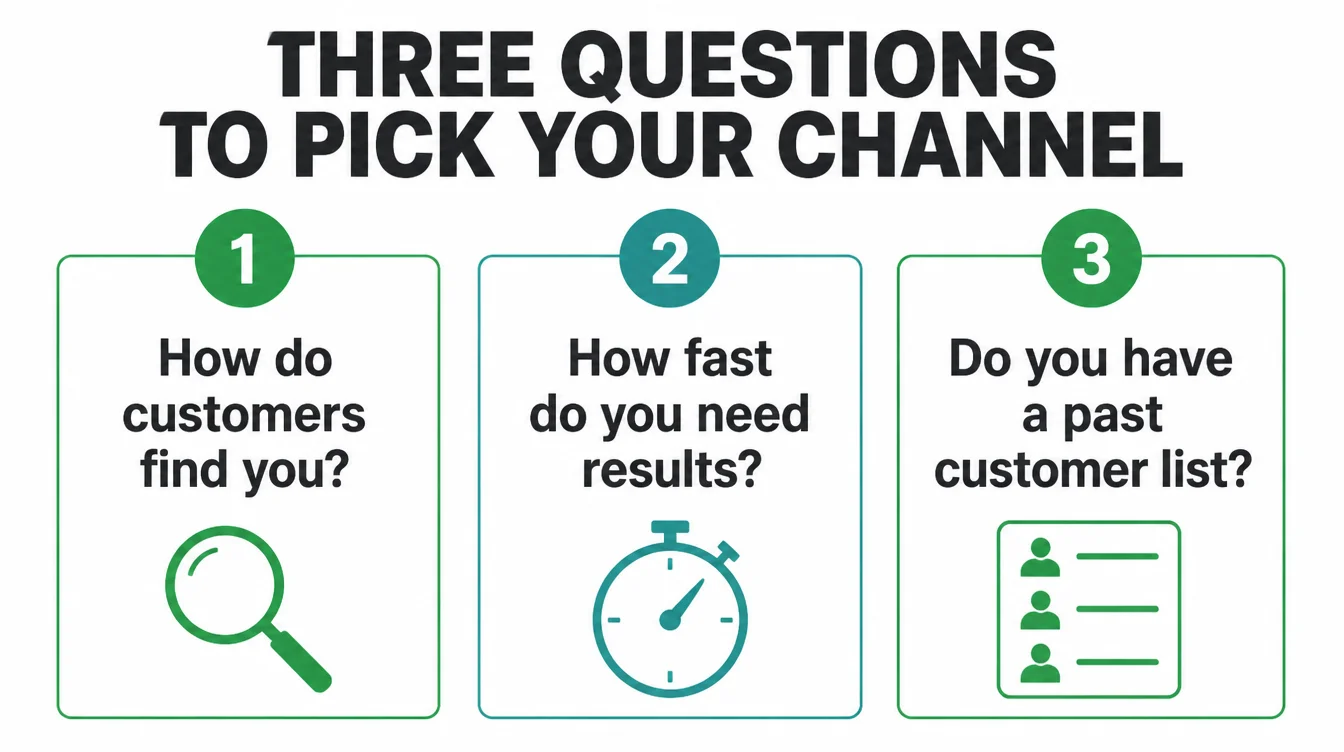
Walk through three quick questions. First, how do people already find businesses like yours? If they search for what you do, lean toward SEO and your profile. Second, how fast do you need results?
If the answer is this month, ads jump up the list. Third, do you have a list of past customers? If yes, email is a quick win you are leaving on the table.
The table below maps common business types to a sensible first move. It is a starting point, not a law. The goal is to remove the paralysis so you can pick one channel and commit, instead of spreading yourself across all six and wondering why none of them works.
| If you are a... | Start here |
|---|---|
| Local service business (plumber, salon, clinic) | Google Business Profile and reviews, then SEO |
| Shop or restaurant with a physical location | Google Business Profile, reviews, and local search |
| Business that needs leads fast | Paid search ads, with clear tracking from day one |
| Business with lots of past customers | Email to your existing list, then SEO |
| Online or e-commerce store | SEO and email, with paid ads to test demand |
| Brand-new business with no audience yet | Foundation first: website and profile, then ads to learn |
9. Your first 90 days: a simple plan
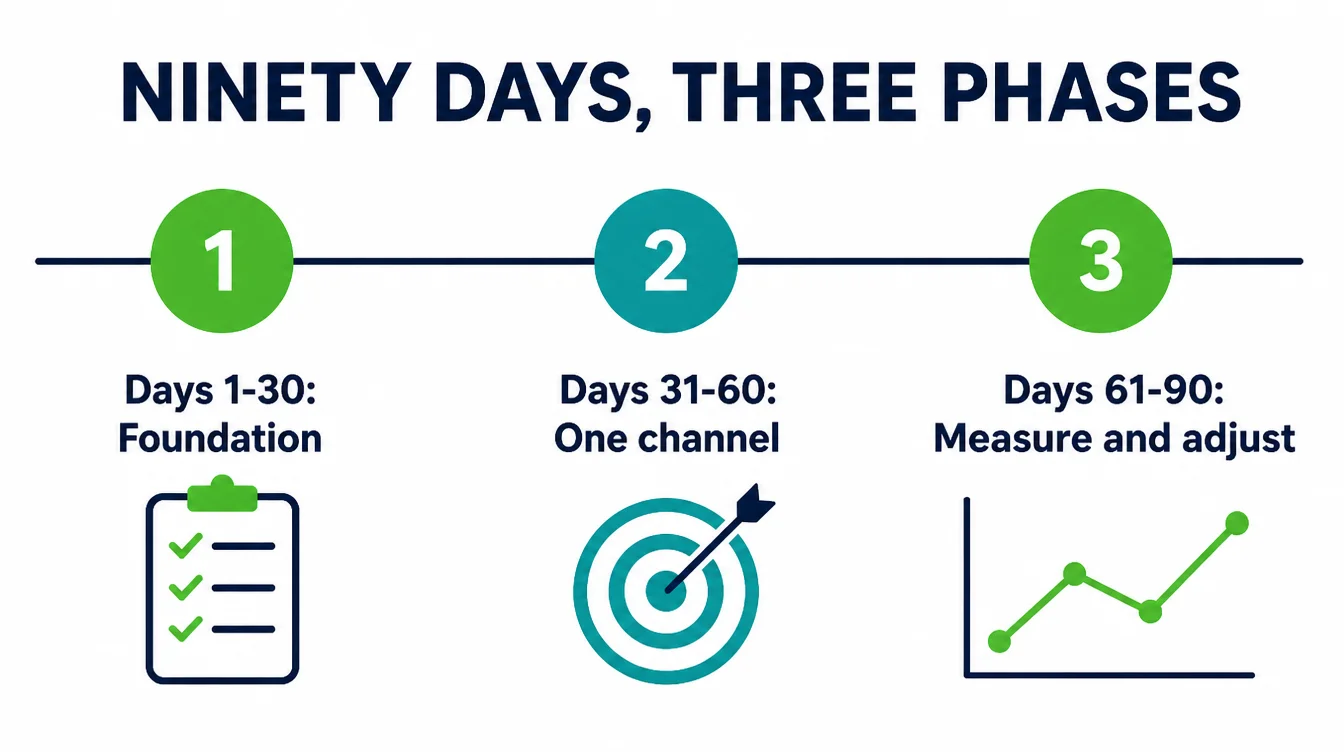
Ninety days is long enough to set things up and see early signs, and short enough to stay focused. The plan below splits it into three phases. Do not skip ahead. Each phase makes the next one work better.
| Phase | Focus | What to do |
|---|---|---|
| Days 1 to 30 | Foundation | Fast, mobile-friendly website live; Google Business Profile complete; review link ready and sent to every customer |
| Days 31 to 60 | One channel | Pick the channel that fits your business and commit. Set up tracking so you can see leads and what they cost |
| Days 61 to 90 | Measure and adjust | Check the numbers. Spend more behind what is working, fix or cut what is not, and only then consider a second channel |
Notice what is not in the plan: a second channel in month one, a fancy social calendar, or a big budget. The discipline of doing one thing well is the whole point.
By day ninety you will have a working foundation, one channel you understand, and real numbers instead of guesses. If you are setting the budget for that first channel, our free marketing budget calculator gives you a starting split to argue with.
10. How to tell if it is working
Marketing only works if you can see it working. Without numbers, you are guessing, and guessing is how owners pour money into channels that never paid them back. So before you scale anything, set up a way to measure. It does not need to be complex. It needs to be honest.
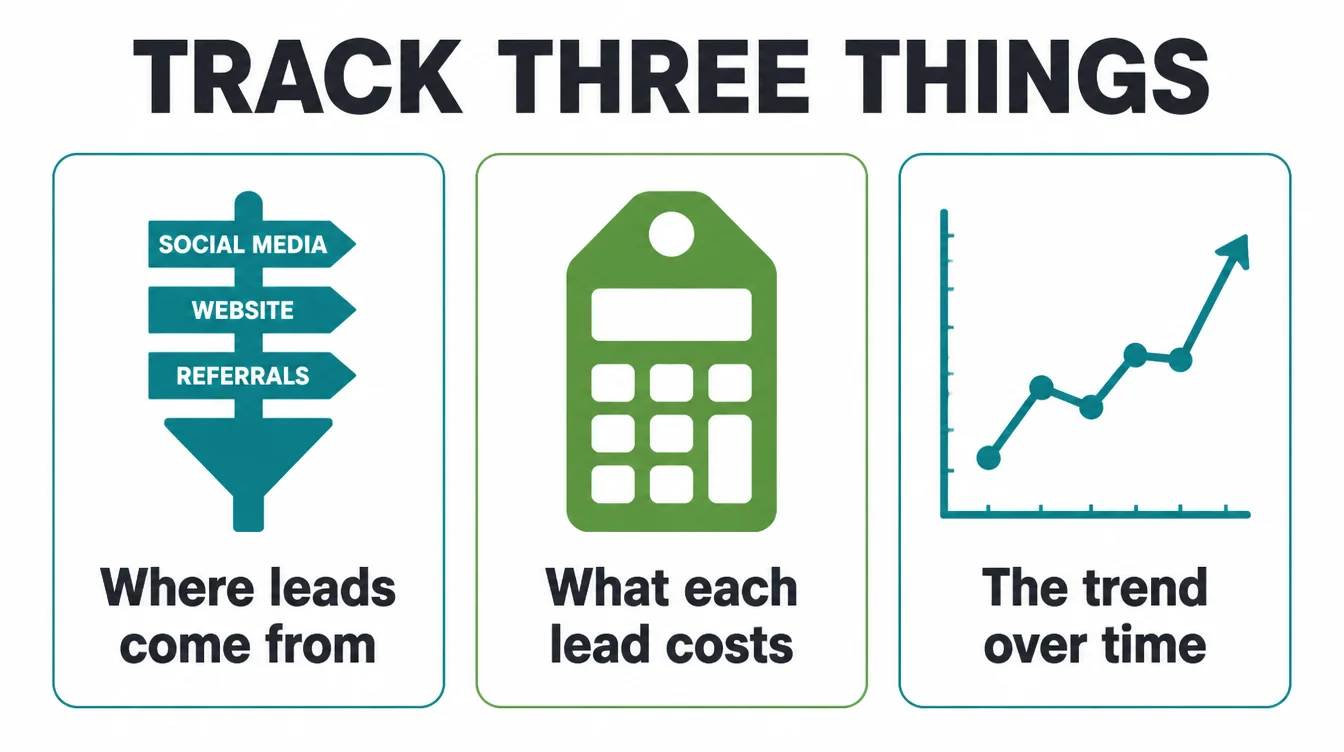
Track three things. First, where your leads and sales come from, so you know which channel earns its keep. Second, what each lead and each customer costs you, so you can compare channels fairly.
Third, the trend over time, because a channel trending up at day sixty is worth keeping even if it has not paid off yet. One quick check: are your channels pointing people back to the things you own, your website and your email list, rather than just collecting attention?
Then act on what you see. Spend more behind what works, fix or cut what does not, and resist the urge to add a new channel until your current one is steady. That is the whole game.
For more practical guides, browse the Seed Light blog, or if you would rather hand the whole plan off, see how our digital marketing service picks the channel mix and get in touch for the honest next step.
11. Why we start almost every client with the foundation
For context on where this advice comes from, Seed Light has worked with small businesses since 2017. The current lead, sales and ad-return figures are published on our results page.
The order above, foundation first and then one channel, is where we start almost every time.
Frequently asked questions
1. How do I start digital marketing for a small business?
Start with the foundation before any channel. Make sure you have a fast website that works on a phone and a complete Google Business Profile. Those two let every other effort land somewhere useful. Then pick one channel that matches how your customers find you, give it ninety days, and measure it. Do not spread yourself across five channels at once. One done well beats five done badly.
2. What is the most cost-effective marketing for a small business?
For most small businesses, email and local search are the most cost-effective. Email returns about 36 times what you spend, more than any other channel, according to Litmus, and you own the list so no platform can take it away. Local search and reviews are mostly free and bring in people who are ready to buy. Paid ads work too, but they cost money the moment you turn them off, so build the free foundation first.
3. Which channel should a small business start with?
Start with whichever channel matches how people already find businesses like yours. If customers search for what you do, start with SEO and your Google Business Profile. If you need leads this month, start with paid ads. If you have a list of past customers, start with email. The right first channel is the one closest to a buying decision, not the one that feels exciting.
4. Do small businesses really need a website?
Yes. Your website is the one place online you fully control, and it is where most of your marketing sends people to decide. Social profiles and ad platforms can change their rules or disappear, but your site is yours. It also feeds your local search results. A slow or messy site quietly leaks every visitor your other channels work to earn, so it is the first thing to get right.
5. How long does digital marketing take to work?
Digital marketing timelines depend on the channel. Paid ads can bring leads within days because you buy attention directly. For SEO and content, early movement often shows in three to six months, with fuller results over four to twelve. Treat the first ninety days as setup and learning, then judge whether each channel is trending up.
6. How much should a small business spend on marketing?
There is no single right number, and a percentage rule matters less than discipline. Start small with one channel, track what each lead and sale costs you, and only scale a channel once it pays for itself. The goal is not to spend a lot. The goal is to know your numbers so every extra bit you spend brings back more than it costs. Spend behind what is working, cut what is not.