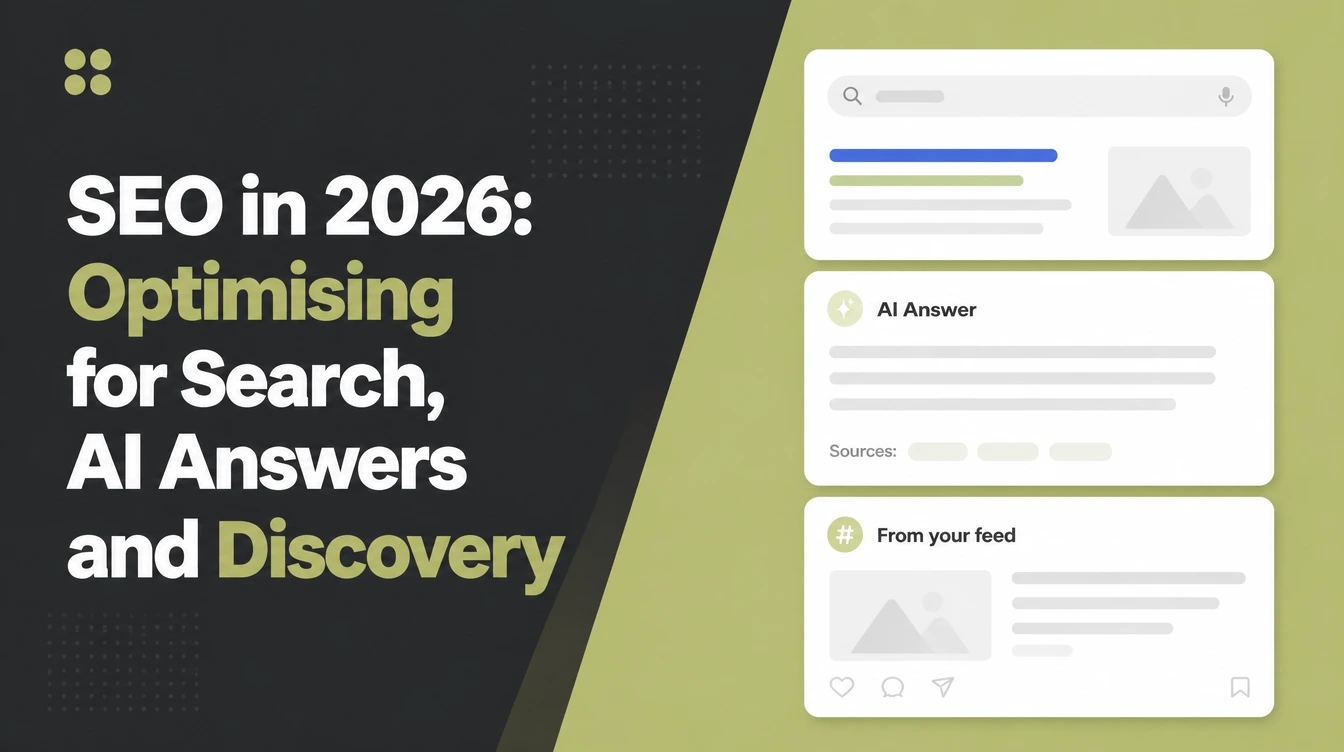
SEO in 2026: Optimising for Search, AI Answers and Discovery

SEO in 2026 means showing up wherever people search, since most Google searches now end without a click and customers also ask AI assistants, social platforms and Amazon. Pick the two or three surfaces your customers actually use and set them up properly. Seed Light helps small businesses work out which ones.
Key takeaways
Short on time? Here is the honest summary of seo 2026 before we unpack it.
- The click is shrinking. SparkToro measured 68.01% of US Google searches ending without a click between January and April 2026, so even rank #1 does not guarantee a visit (SparkToro, 2026).
- Google is still huge. It handled 73.7% of all desktop searches, so this is not the death of Google (SparkToro and Datos, 2026).
- Search is spreading. People now ask AI tools, search social and YouTube, and start product searches on Amazon.
- AI summaries cut clicks. With an AI summary present, users clicked a result in just 8% of visits versus 15% without one (Pew Research, 2025).
- Pick two or three surfaces. You cannot be everywhere, so go where your customers already are and own those.
1. The old goal: be #1 on Google
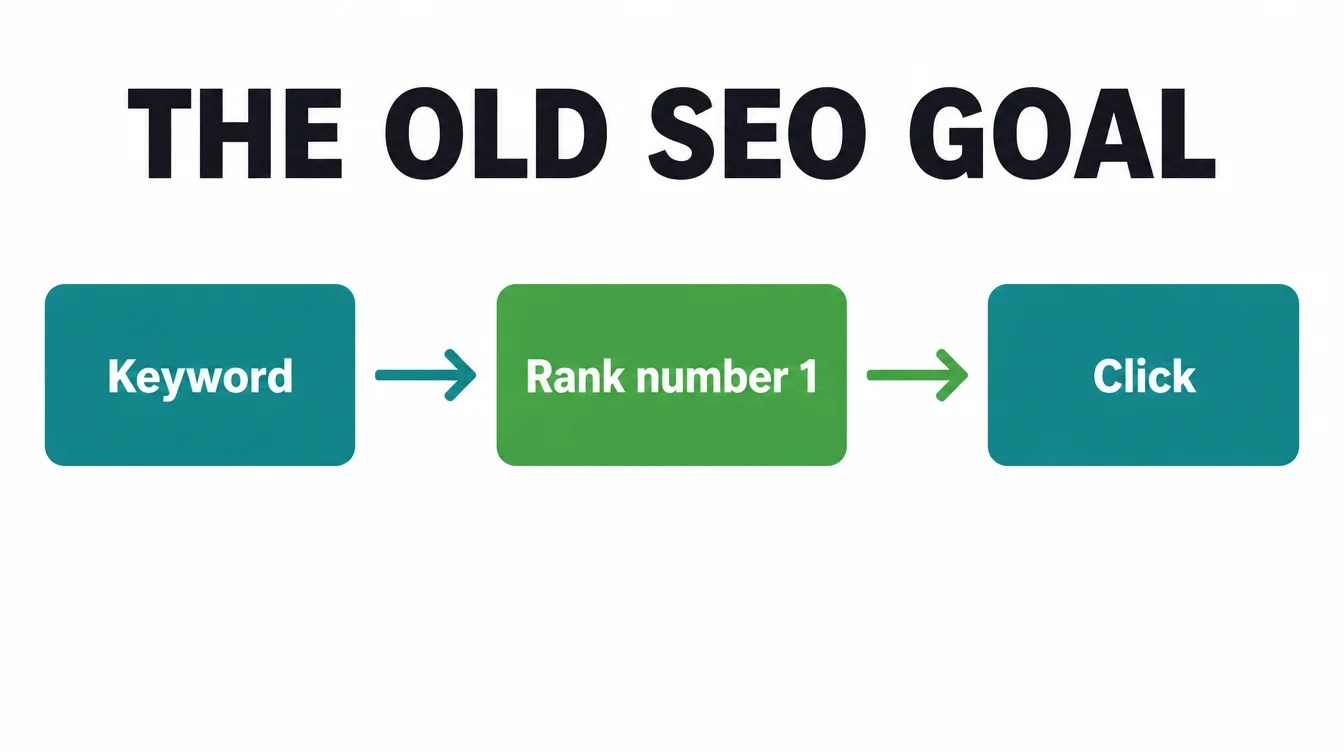
For years the whole game was simple. Pick a keyword, climb to the top of Google, and watch the clicks roll in. If you sat at #1, you won the customer. That model built a generation of small business websites, and for a long time it worked.
It still has real value. People run an enormous number of Google searches every single day, and the top spot still earns trust and visits.
So nobody should rip up their Google strategy. If you are new to the basics, our guide on what SEO is and our walkthrough on how to rank higher on Google still apply.
However, the ground under that goal has moved. The problem is not that ranking stopped mattering. The problem is that ranking high no longer means what it used to. A #1 result in 2026 often sits below an answer the searcher never scrolls past.
2. What changed: the click is disappearing
Here is the headline shift. SparkToro measured US Google searches from January to April 2026 and found 68.01% of them ended without a click (SparkToro, 2026).
In other words, most searches now end on the results page itself. People get their answer and move on, and your beautiful #1 ranking never gets the visit.
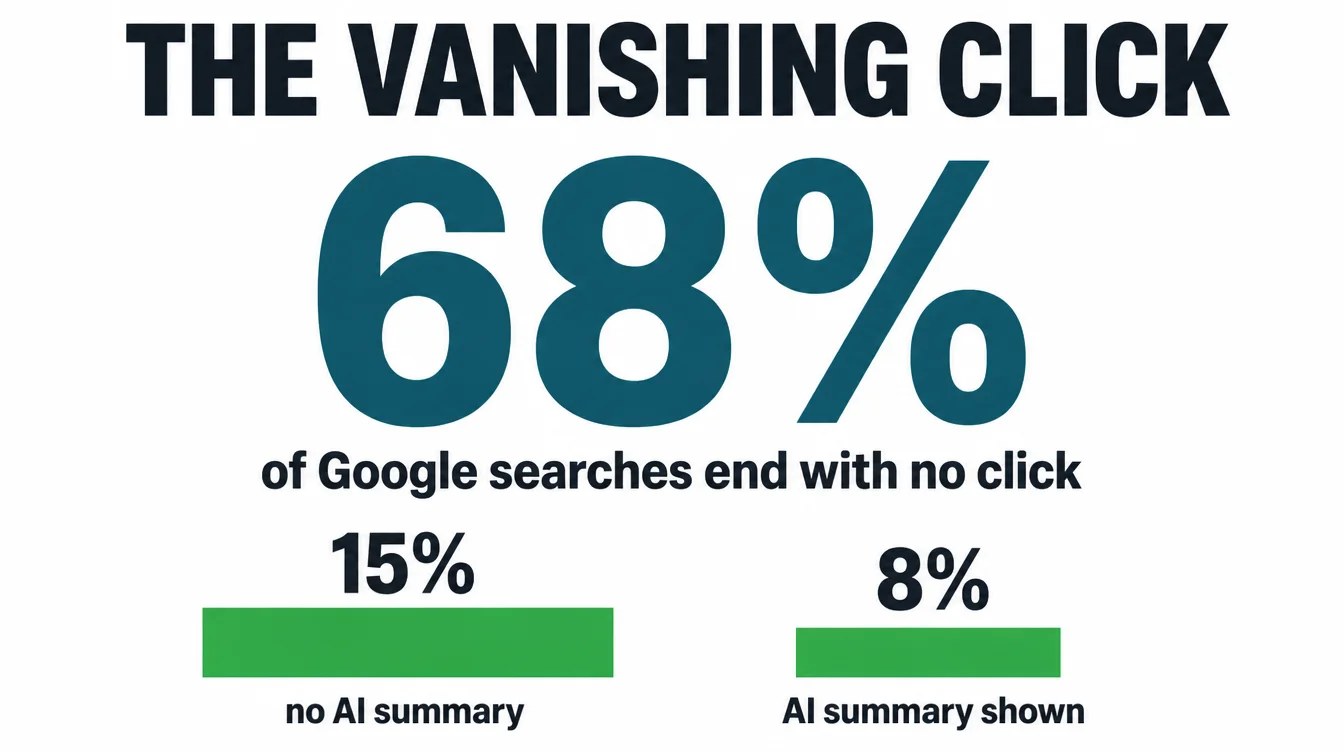
AI summaries are a big reason why. Pew Research found that around one in five Google searches in March 2025 produced an AI summary (Pew Research, 2025).
When that summary appears, the click rate drops sharply. Users clicked a regular result in just 8% of visits with a summary, versus 15% without one, and clicked a source inside the summary in only 1% of cases.
The effect has deepened since. Ahrefs studied 300,000 keywords against December 2025 Search Console data and found that "the presence of an AI Overview now correlates with a 58% lower average clickthrough rate for the top-ranking page" (Ahrefs, 2026).
Eight months earlier the same measurement was 34.5%. So this is not a one-off dip. It is a trend still moving in one direction.
So the lesson is not "give up on Google." Instead, the lesson is that a ranking and a visit are no longer the same thing. You can rank perfectly and still get skipped, because the answer arrived before the click.
3. Search now happens everywhere (AI, social, YouTube, Amazon, maps)
The other big change is that Google is no longer the only front door. People search wherever they happen to be. Meanwhile, each surface answers a slightly different kind of question.
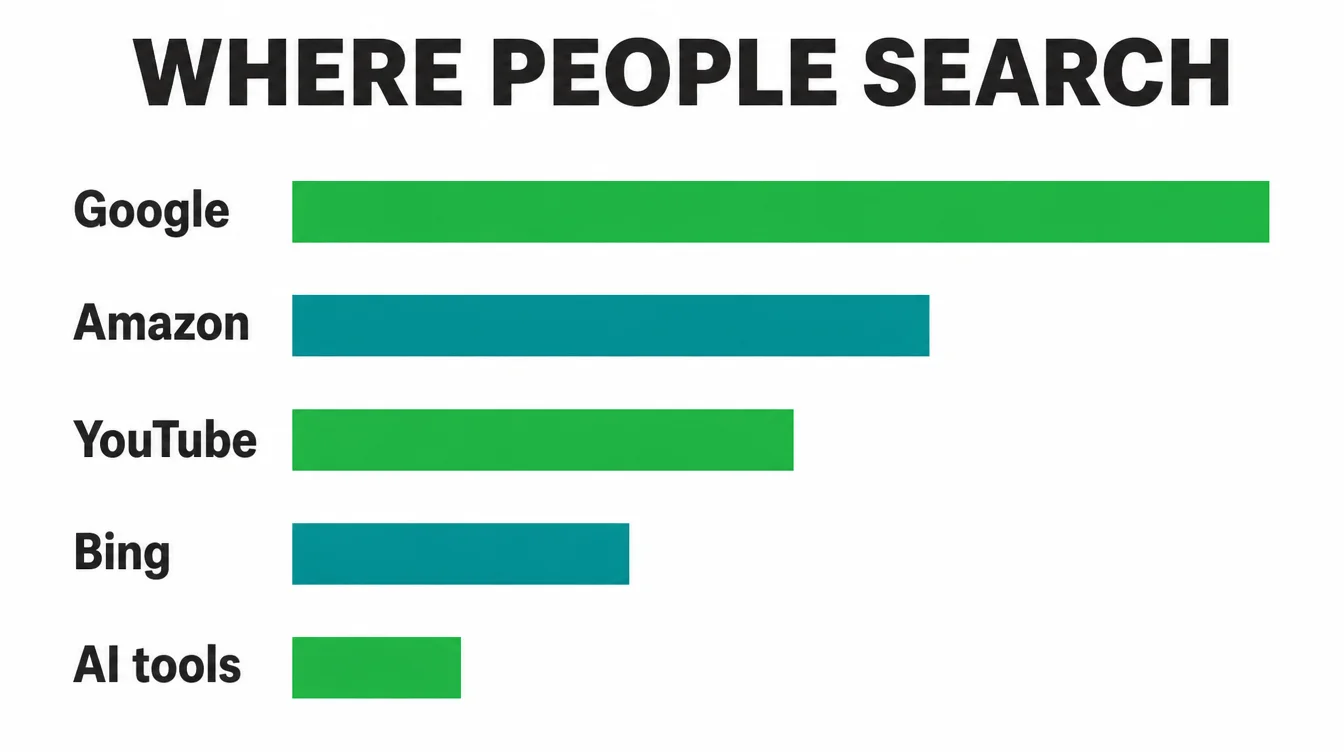
It helps to be clear-eyed about the size of each one. SparkToro and Datos found that Google alone was responsible for 73.7% of all desktop searches, and that Amazon, Bing, and YouTube still receive more desktop search activity than ChatGPT (SparkToro and Datos, 2026).
So AI is rising fast, yet the classic platforms still carry most of the volume.
Shopping shows the pattern clearly. eMarketer reported that 57% of US consumers started their online shopping searches on Amazon, while 42% started on a search engine (eMarketer and Jungle Scout, 2024).
Social search matters too, and showing up there takes a steady feed, which is the job a social media marketing agency handles. Adobe reports that 49% of people have used TikTok as a search engine (Adobe). And for local choices, AI is climbing quickly, which we cover next.
4. Being cited inside the answer is the new win
Put those two shifts together and the goal changes. If most searches end without a click, then the win is no longer "be the link they click." Instead, the win is "be the business the answer describes." You want to be cited inside the AI summary, named in the recommendation, and quoted in the snippet.
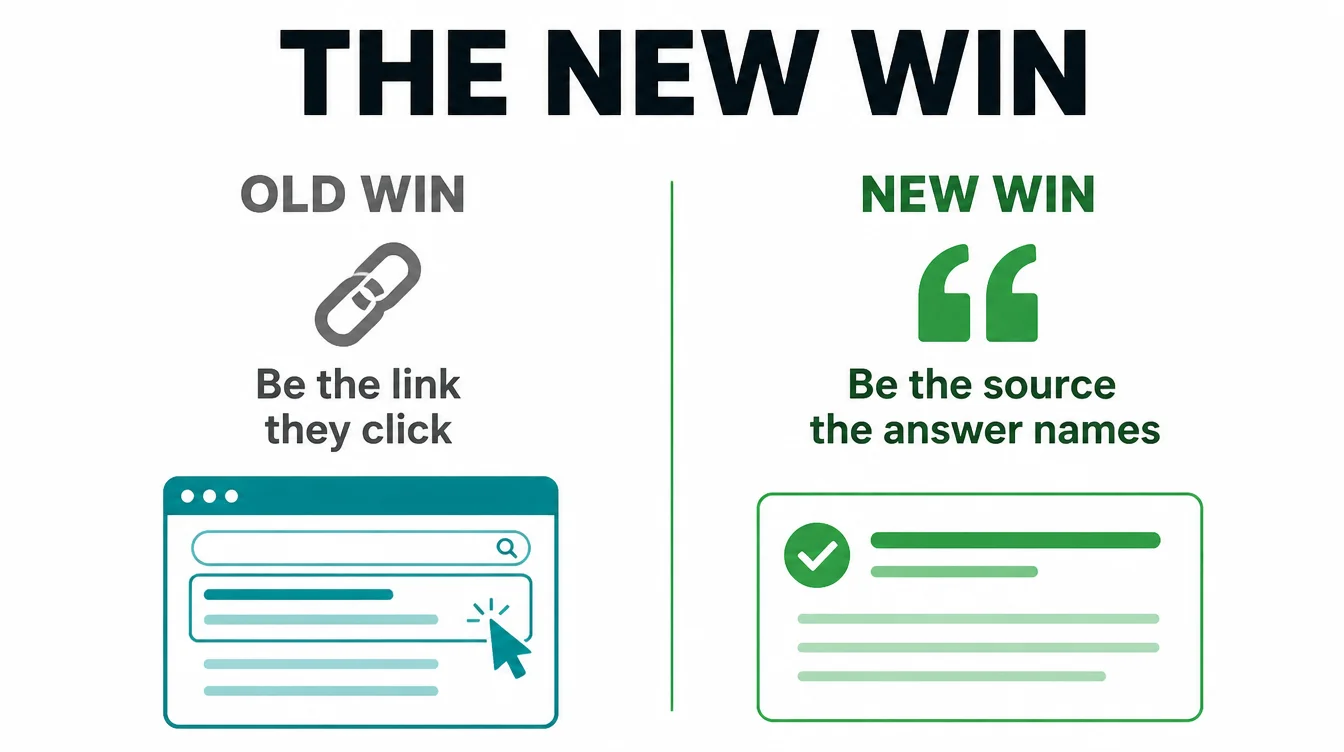
This is the heart of what people now call generative engine optimization. Rather than chasing a blue link, you make your business the clear, trustworthy source an AI tool reaches for. Our guides on how to rank in AI Overviews and what generative engine optimization is go deeper on the how.
The good news is that this is not a brand new skill. The same things that earn a citation are the things that earn trust: plain answers, honest information, and consistent details. So you are not abandoning SEO. You are pointing it at the answer box instead of only the link list.
5. What this means for a small business (you cannot be everywhere)
Here is where many owners panic. "So now I need Google, AI tools, TikTok, YouTube, Amazon, and maps?" No. That reaction is exactly the wrong one. You have limited time and limited money, and spreading yourself thin across every surface is how you end up weak on all of them.
The honest truth is that you cannot be everywhere, and you do not need to be. Your customers are not everywhere either. A local plumber and a craft brand sell to people who search in very different places.
So the smart move is to find the few surfaces your specific buyers use and win those, instead of chasing every shiny new channel.
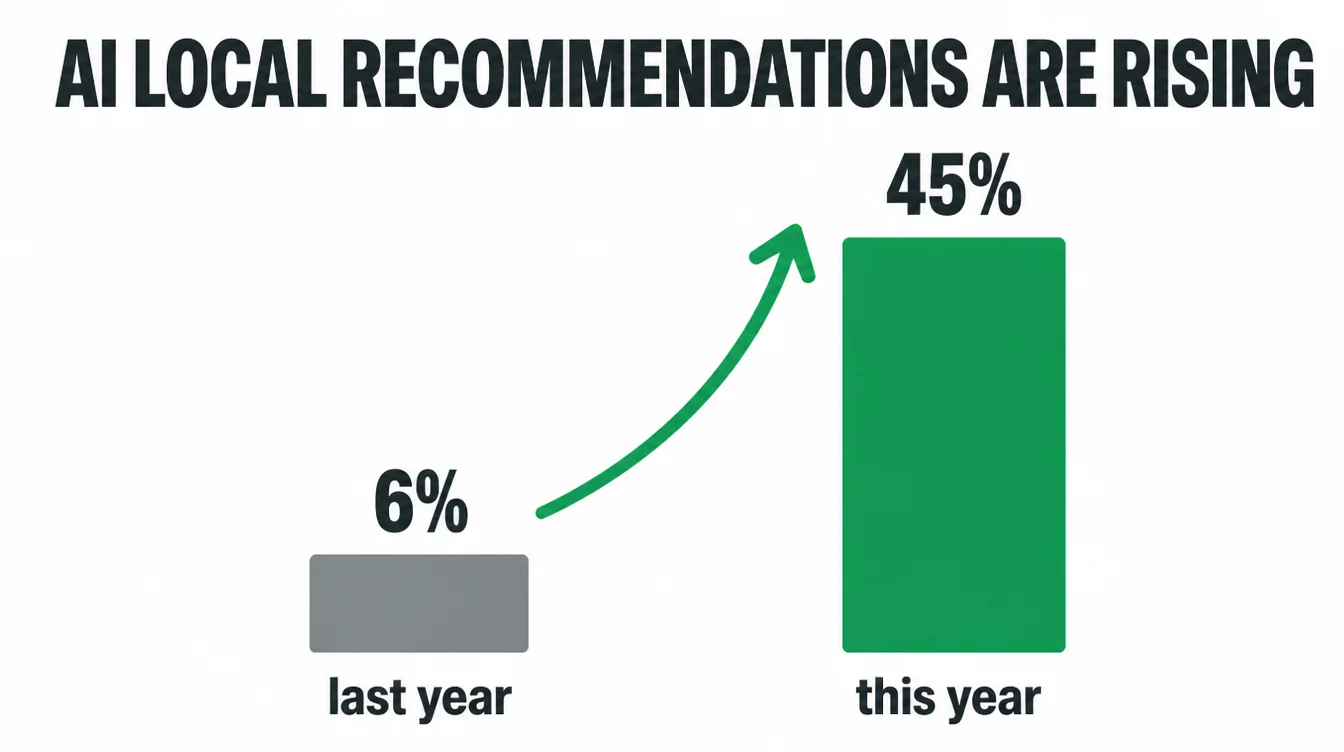
Notice, too, that AI for local choices is growing fast. BrightLocal found use of AI for local recommendations rising from 6% last year to 45% (BrightLocal, 2026). That is a real shift, but it still points back to the same basics, which is reassuring rather than scary.
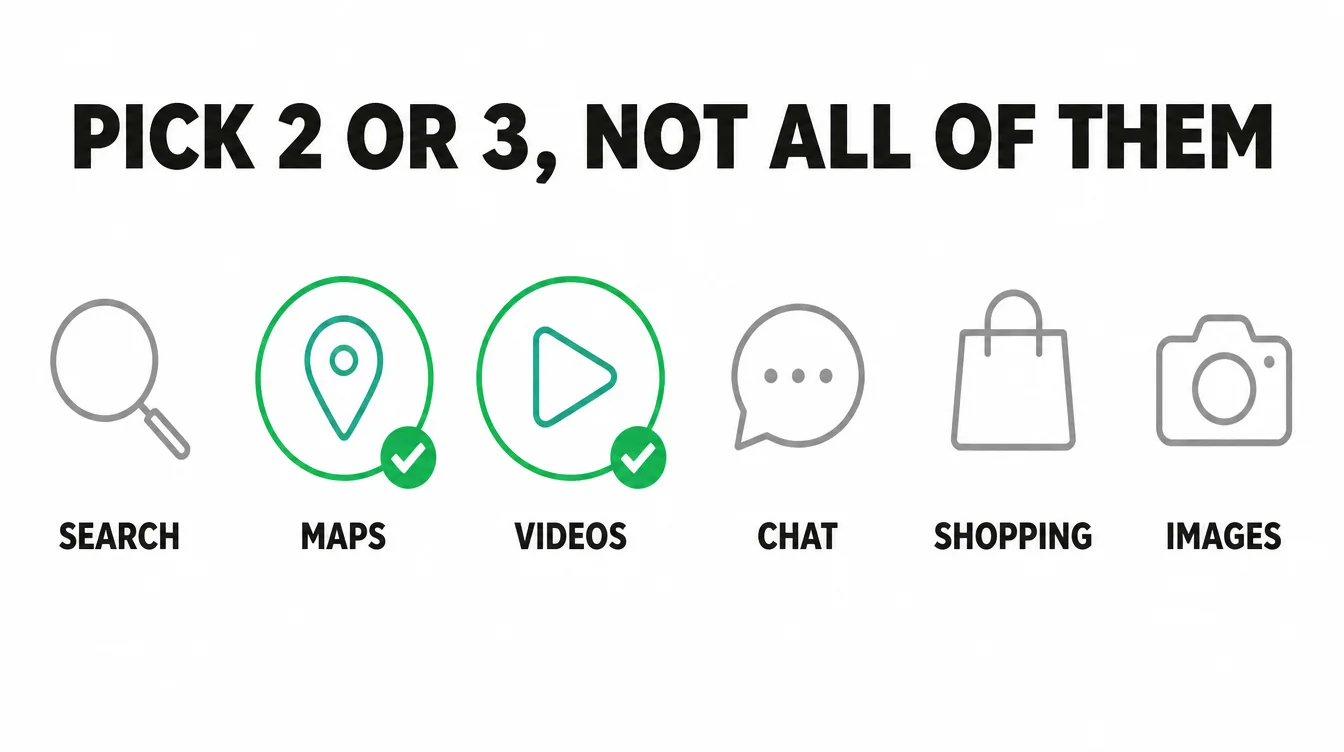
6. Pick 2 or 3 surfaces where your customers already are
So how do you choose? Start with what your customers are trying to do, then match the surface to the task. Below is a simple way to decide where to spend your effort first.
| If your customers... | Start here |
|---|---|
| Look for a nearby service or shop | Google Business Profile, reviews, and maps |
| Ask an AI tool for a recommendation | A clear website FAQ and consistent business details |
| Buy physical products online | Amazon listings with strong titles and reviews |
| Search for how-to and ideas visually | YouTube or TikTok with short, helpful videos |
| Compare options before they call you | A simple comparison or pricing page on your site |
Pick the two or three rows that sound most like your buyers and ignore the rest for now. Furthermore, you can always add a surface later once the first ones are solid. Depth beats breadth every time, especially when you are doing this alongside running the business.
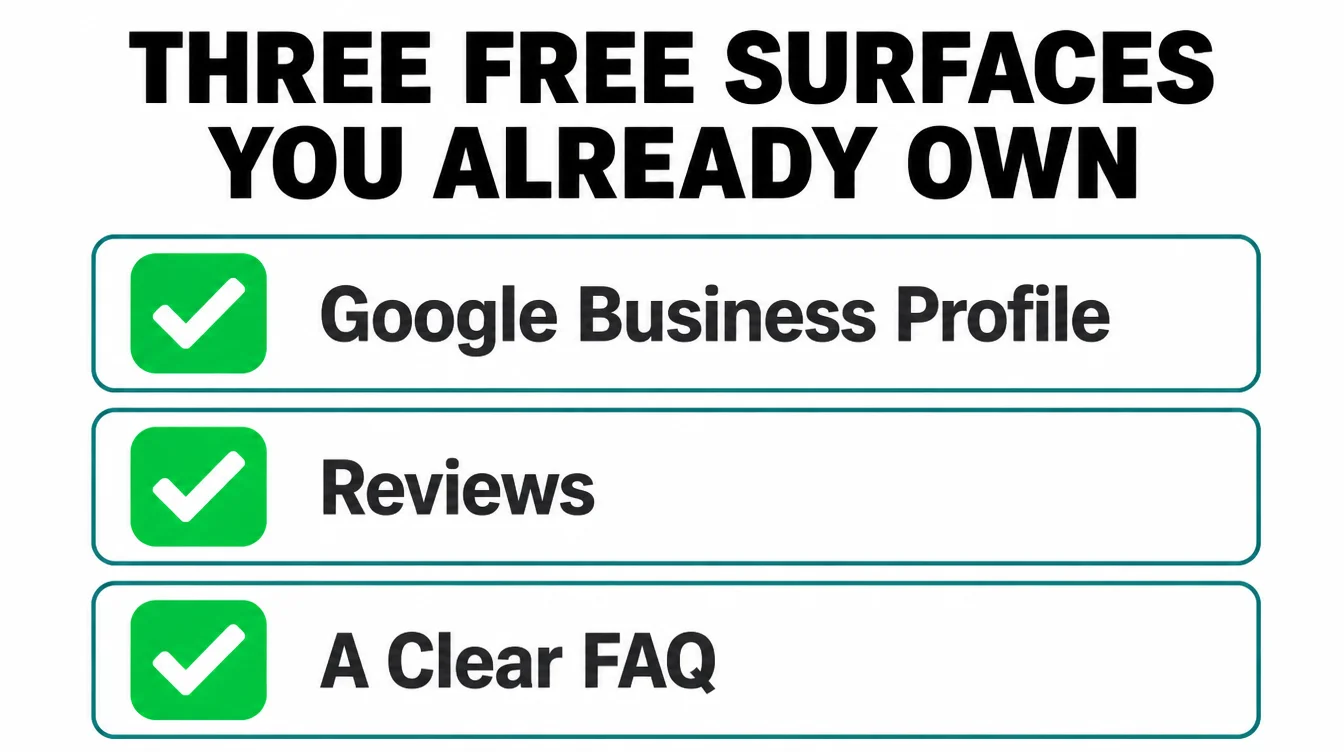
7. The owned surfaces you are probably neglecting (Google Business Profile, reviews, a clear FAQ)
Before you chase any new channel, look at what you already own. Most small businesses leave easy wins sitting untouched here, and these surfaces feed every other one, including AI tools that read them to describe you.
Your Google Business Profile
This is the single highest-value free surface for most local businesses. Pick the right primary category, fill in every field, add real photos, and keep your hours current. Our Google Business Profile checklist walks through each step.
Your reviews
Reviews help you rank and help you get picked, and they are exactly what AI tools quote when someone asks for a recommendation. Ask one customer this week, then make it a weekly habit. A steady trickle beats a one-time burst.
A clear FAQ
A plain FAQ page answers the real questions buyers ask, in the same words they use. That is gold for both featured snippets and AI summaries. For the bigger picture, see our guide on local SEO for small businesses.
8. What to do this quarter
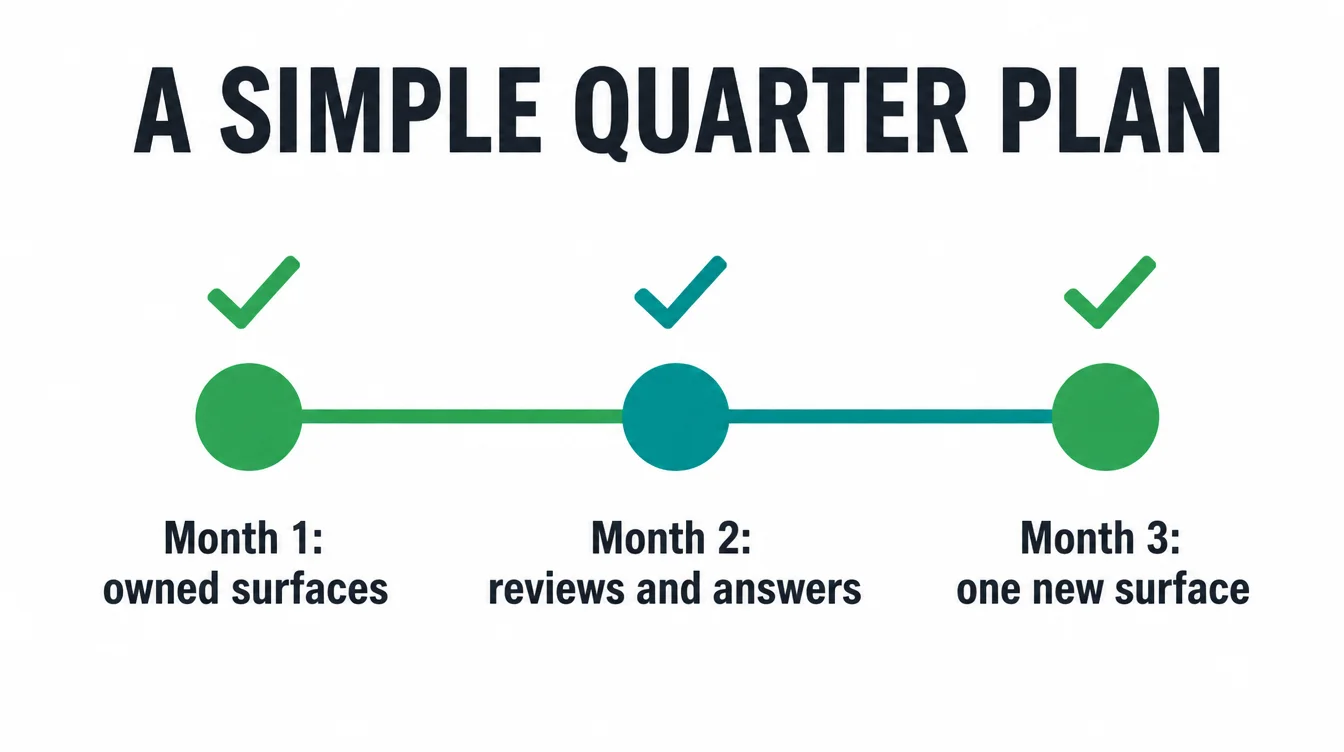
You do not need a giant strategy. You need a short, doable plan you will actually finish. Therefore, here is a simple quarter that fixes the owned surfaces first, then adds one new one.
| Month | Focus | One concrete action |
|---|---|---|
| Month 1 | Owned surfaces | Complete your Business Profile and add a clear FAQ to your site |
| Month 2 | Reviews and answers | Set a weekly review ask and answer buyer questions in plain words |
| Month 3 | One new surface | Pick the surface your customers use most and post or list there |
Work it in that order and you build a base that holds up across Google, AI tools, and beyond.
To keep going, browse the Seed Light blog, see how we approach SEO for small businesses, or read how we get brands quoted in AI answers with AI search optimisation. Slow, steady, and focused is exactly what good seo 2026 looks like.
Frequently asked questions
1. Is SEO dead in 2026?
No. SEO is not dead, it is bigger than Google. The goal has shifted from ranking a single blue link to showing up wherever your customers search. People still run billions of searches every day, but those searches now spread across AI tools, social apps, video, and shopping sites. So you still need to be findable. You just cannot rely on one Google ranking to carry your whole business anymore.
2. Is ranking #1 on Google still worth it?
Yes, but it is worth less than it used to be. SparkToro measured US Google searches from January to April 2026 and found 68.01% of them ended without a click. So even the top spot does not guarantee a visit if an AI summary or a featured snippet answers the question on the page. Ranking high is still a strong signal and still sends real traffic. Just treat it as one win among several, not the only finish line.
3. Where do people search besides Google?
Almost everywhere. SparkToro and Datos found that Amazon, Bing, and YouTube still receive more desktop search activity than ChatGPT, so the big classic platforms are far from gone. On top of those, people ask AI tools for recommendations, search TikTok and Instagram for ideas, look up local spots in maps apps, and start product searches on Amazon. The mix depends on your audience and what they are trying to do.
4. Do AI Overviews reduce clicks?
Yes, they appear to. Pew Research found that with an AI summary present, users clicked a regular search result in just 8% of visits, versus 15% without one. They clicked a source inside the summary in only 1% of cases. So when an AI summary answers the question, fewer people click through. The practical takeaway is to make sure your business is the source the summary describes, as well as a link below it.
5. What is search everywhere optimization?
Search everywhere optimization means making your business easy to find and easy to recommend across every place people search, Google included. That includes AI tools, social apps, video, maps, and shopping sites. The core idea is the same as classic SEO: be clear, be consistent, and be useful. The difference is you spread that effort across the two or three surfaces where your specific customers already look.
6. Where should a small business start?
Start with the surfaces you already own and the customers you already have. For most local and service businesses that means a complete Google Business Profile, a steady flow of fresh reviews, and a clear FAQ on your website. Those three are free, fast to fix, and feed every other surface, including AI tools. Once those are solid, pick one extra surface your audience uses and go deep there.
7. Should I worry about AI search for my small business?
Worry is the wrong word, but you should pay attention. BrightLocal found use of AI for local recommendations rising from 6% last year to 45%, so a growing share of buyers now ask an AI tool before they choose. The good news is that the same basics that help you on Google, a clear profile, honest reviews, and plain answers on your site, are also what AI tools read. So you prepare for both at once.