What a private GP can and cannot do for you in Scotland
The honest version, including the things we will send you back to the NHS for and the things we simply cannot offer.
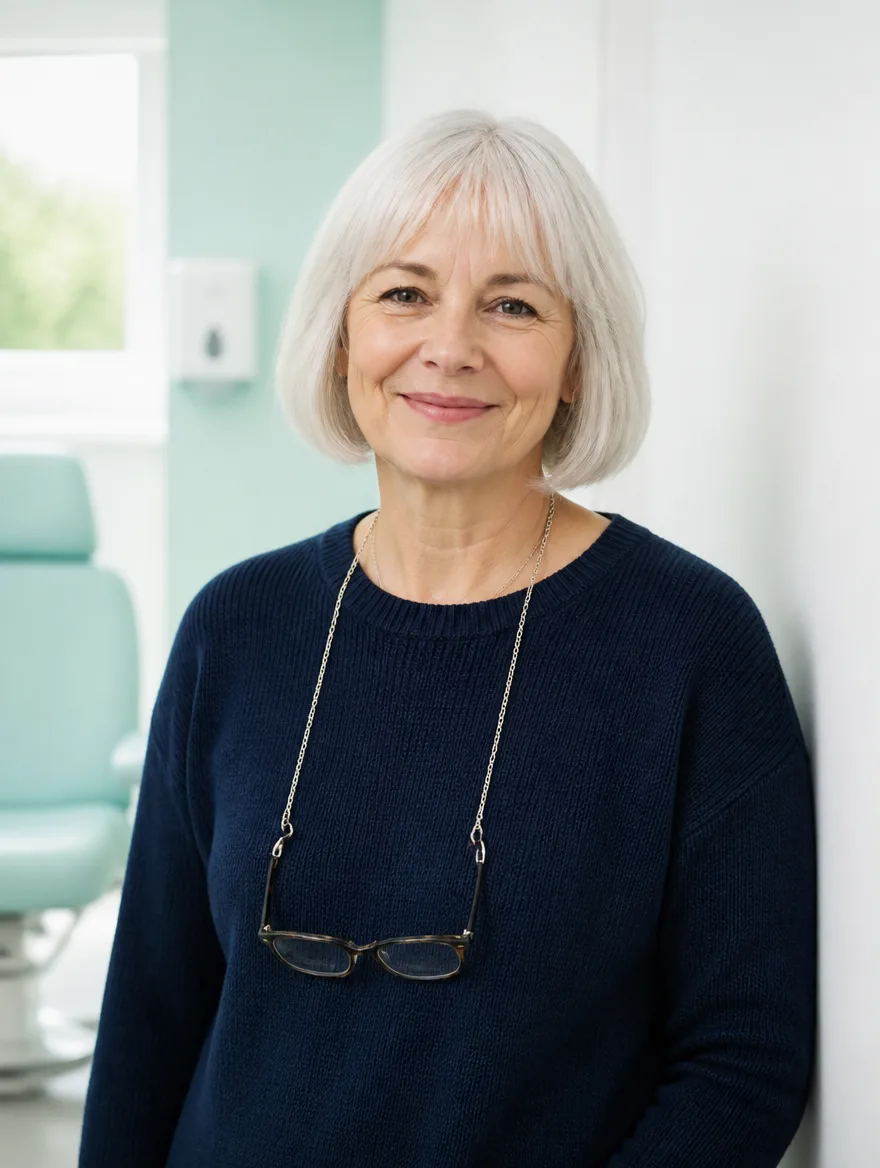
Dr Elspeth RankinFounder & Clinical Director, GP · GMC 4718203
People arrive here with one of two expectations, and both of them are wrong. The first is that paying means everything happens faster and better. The second is that private general practice is somehow not proper medicine. It is worth setting out what this actually is.
What changes when you pay
Time, mostly. A standard NHS appointment in Scotland is ten minutes and a GP may see thirty-odd patients in a day. Ours is thirty minutes, and a first appointment is forty-five. That single difference accounts for most of what patients notice: being examined properly, being asked about the thing that was not the reason you booked, and leaving with an explanation rather than a leaflet.
The second thing that changes is access to diagnostics. Bloods are taken in this building, usually in the same visit, and results come back in about forty-eight hours. An ultrasound can generally be arranged within a week or two rather than a season. That is not because private radiologists are better; it is because there is less demand chasing the same scanner.
The third is continuity, if you want it. You can see the same GP every time. It sounds like a small thing and it is not: continuity of care is one of the few features of general practice with a genuinely good evidence base behind it.
What does not change
The medicine. The guidelines we work to are the same national ones. The threshold for prescribing an antibiotic is the same. The reason your sore throat does not need one is the same reason it did not need one on the NHS.
This matters because there is an unspoken expectation that a private appointment should produce a prescription, a scan, or a referral, on the grounds that you have paid for something. A consultation that ends with "this is viral, here is what to watch for, come back if it changes" is a completely legitimate outcome and it is what you have paid for: someone with the time to be sure.
Paying should buy you time and access. It should never buy you a different standard of evidence.
Things we will send you back to the NHS for
- Emergencies. We are not an emergency service and we do not have emergency facilities. Chest pain, breathlessness at rest, stroke symptoms, severe bleeding, a very unwell child: 999, or NHS 24 on 111 out of hours.
- Serious mental illness and crisis care. We offer talking therapies for anxiety, low mood and insomnia. We are not a substitute for the community mental health team, and where somebody needs one we say so.
- PrEP and complex sexual health. NHS Lothian's sexual health service does this well and does it free. We refer rather than charge you for a worse version.
- Anything requiring admission. If you need to be in hospital, you need to be in hospital, and in Scotland that is almost always going to be an NHS one.
The prescribing question
We issue private prescriptions, which you take to any community pharmacy. You pay the pharmacy the cost of the medicine plus their dispensing fee. In Scotland, where NHS prescriptions carry no charge, this is a real and sometimes uncomfortable difference: a medicine that would be free from your NHS practice will cost you money here. For common generics it is usually a few pounds. For some newer drugs it is not.
We tell you this before we write the prescription, and if the sensible answer is "get this from your own GP", we say that too and write the letter that makes it easy.
Who is regulated by whom
Independent clinics in Scotland are regulated by Healthcare Improvement Scotland. You will read a great deal online about the Care Quality Commission; that is England only and it does not apply to us. Our doctors are on the GMC register, our nurses on the NMC register, our physiotherapists on the HCPC register, and all of those are public registers you can search yourself. Any clinic that will not give you a registration number is telling you something.
Is it worth it
For some people, plainly yes: a problem that needs sorting this week, a symptom that needs a proper half hour, a long-term condition that has drifted for years. For others, honestly, no — if your NHS practice is responsive and your problem is not urgent, keep your money.
We would rather tell you that on the phone than after you have paid £145 to hear it.
This article is general information, not advice about your situation. If something here applies to you, book an appointment or speak to your own doctor. Ravelston Health is not an emergency service. If you need urgent help call 999, or NHS 24 on 111 when your GP practice is closed.
Book an appointment
Most appointments are available within five working days. Book online or call us.