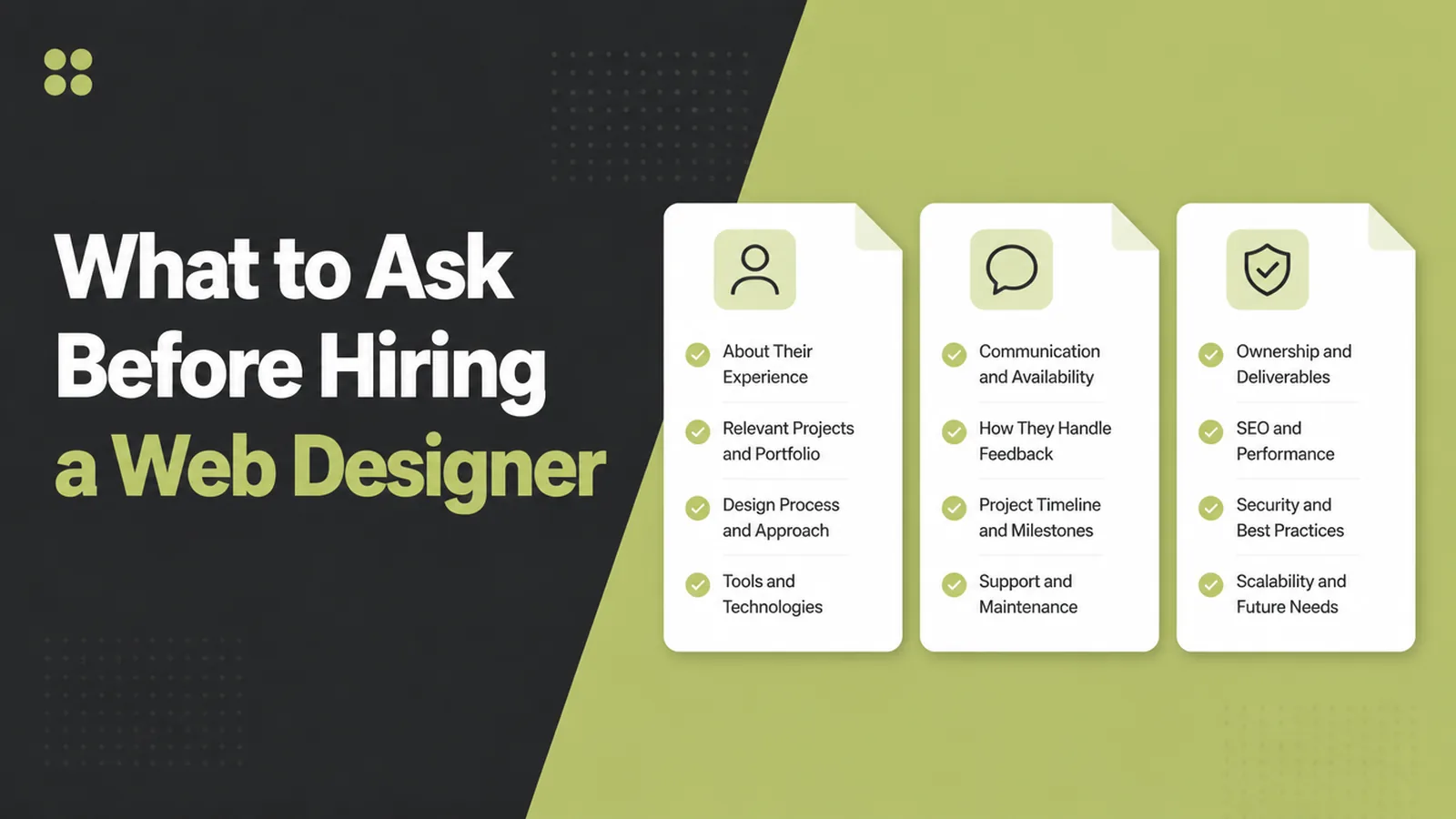
What to Ask Before Hiring a Web Designer

Choosing a web designer comes down to three questions: what is included, who writes the content, and what happens after launch. Seed Light answers those in writing before any price, because two honest quotes can differ fivefold simply by assuming different answers to them.
Two quotes for the same website can differ by a factor of five, and both can be honest.
They are describing different jobs. One includes the words, the photographs and a year of support; the other installs a template and hands you a login.
This guide covers what you are actually buying, why quotes resist comparison, and the questions that make two proposals describe the same piece of work.
Key Takeaways
- You are buying three things. A design, the content inside it, and what happens afterwards.
- Price gaps are usually scope. Mark the inclusions before you compare numbers.
- Ask who writes the words. Copywriting is the most common silent exclusion.
- Ask what revisions cost. Two rounds included and a rate after is a fair answer.
- Own the accounts yourself. Domain, hosting and analytics in your business name.
Choosing a web designer is less about portfolios than people expect. Most of the risk sits in what was never written down.
The portfolio tells you whether somebody can make a site that looks right. The questions below tell you whether yours will be finished.
Choosing A Web Designer: What You Are Buying
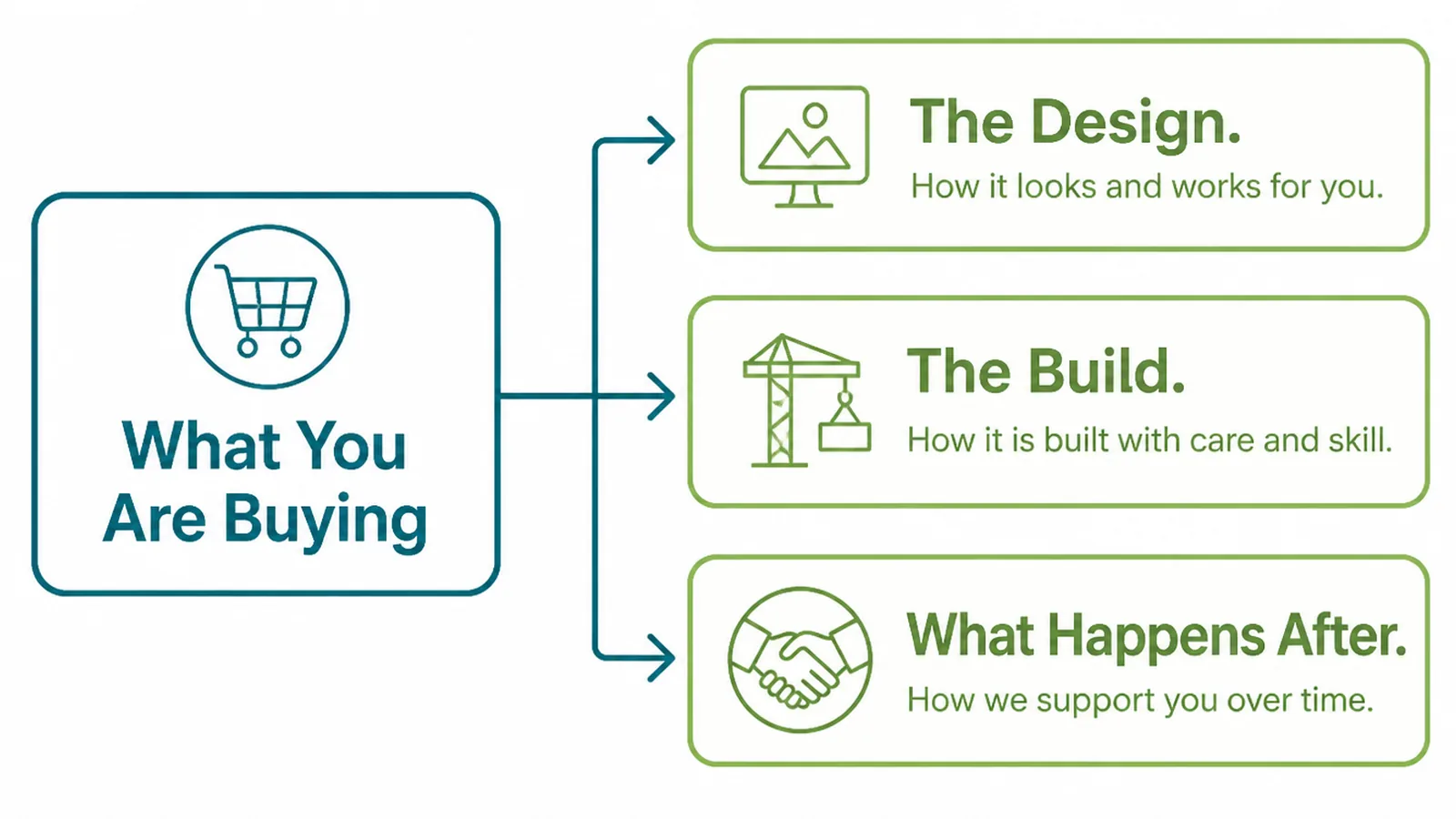
Every website engagement is three things stacked together, and each one can be included, excluded or quietly assumed.
- The build. Design, layout and the technical work that makes pages exist.
- The content. Words, photographs and anything else that fills those pages.
- The afterwards. Hosting, updates, backups, changes and whoever answers when it breaks.
The middle one is where most projects stall and most quotes disagree. A designer assuming you will write the copy and a client assuming the opposite is the single most common cause of a site sitting unfinished.
The third decides what the next two years feel like. A cheap build with no support arrangement becomes expensive the first time something needs changing urgently.
Think about which of the three you can cover internally. Plenty of businesses write their own copy well and have nobody who can safely apply an update, and the right supplier is the one that fills the gap you actually have.
Ask about all three before discussing price. The answers reframe every number that follows.
Choosing a web designer is largely a question of which of the three you need most. A business with its own writer and an in-house marketer is buying something quite different from one that needs the whole thing taken off its hands.
Say which you are. It saves a supplier guessing and saves you paying for a service you were going to do yourself.
Why Quotes Are Hard To Compare
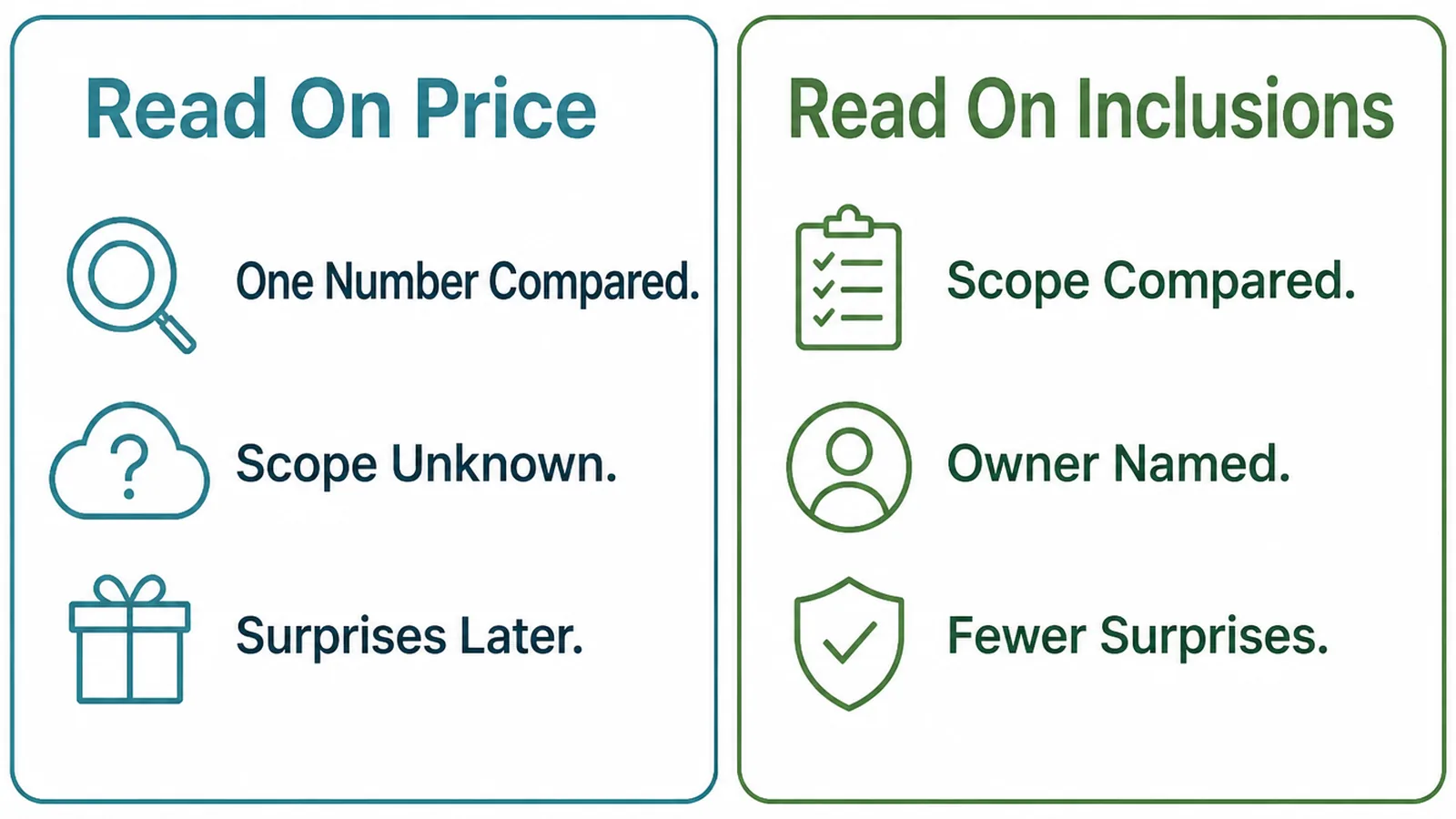
Web design quotes are written by suppliers for their own process, so two of them rarely describe the same units.
One quotes per page, one quotes a project fee, one quotes a day rate with an estimate. None of that is evasive, and it does make the numbers meaningless side by side.
The useful move is to stop comparing prices and start comparing inclusions. Write the rows yourself and fill them in from each proposal.
Where a row is blank, ask. A quote that omits copywriting is not cheaper, it is smaller, and the difference will be paid later in your own time.
Expect some honest variation to remain. Experience, speed and how much thinking is included are real differences, and they are easier to weigh once the scope matches.
Watch the payment terms too. A deposit and staged payments against milestones is normal; paying everything up front removes any leverage you might need later.
How To Choose A Web Designer, Step By Step
Three steps. The first costs you an afternoon and makes the other two straightforward.
1. Write Down What You Need
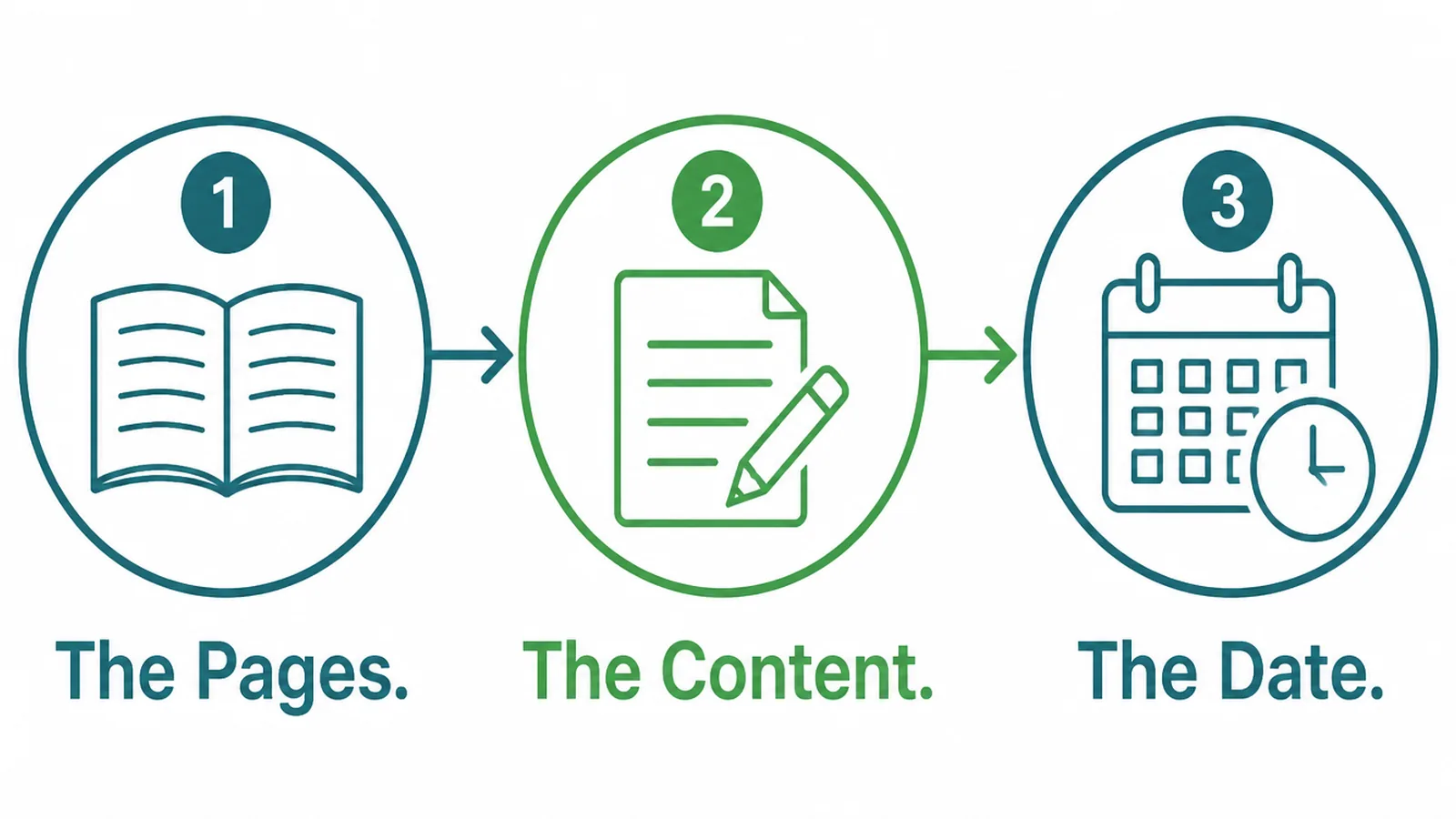
Send every supplier the same short document. Without one, each quote answers a slightly different question.
- The pages. What they are and what each one is for, in a line each.
- The content. What exists already and who will produce the rest.
- The date. When it needs to be live, and what is driving that date.
Add a budget range. Suppliers can then tell you what fits, rather than guessing at a number and losing on a misunderstanding.
Send it to three suppliers at most. More than that and the comparison becomes a job of its own, and the quality of your attention drops before the quotes arrive.
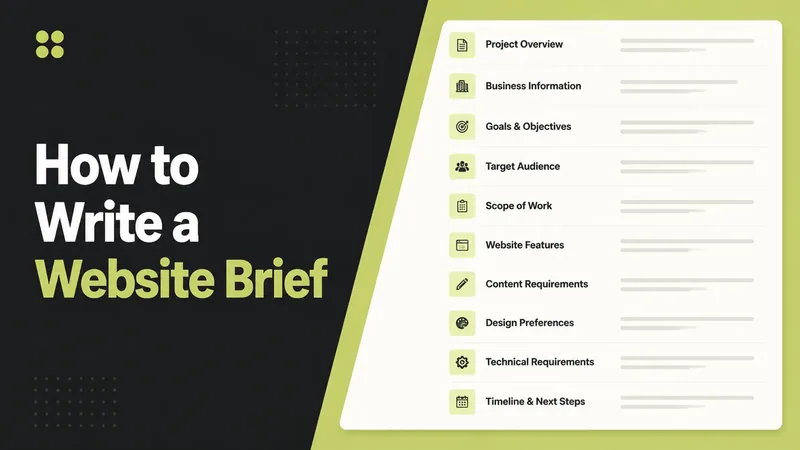
This is a short brief rather than a specification. Writing a website brief covers the longer version if the project is substantial.
2. Read The Quote Properly
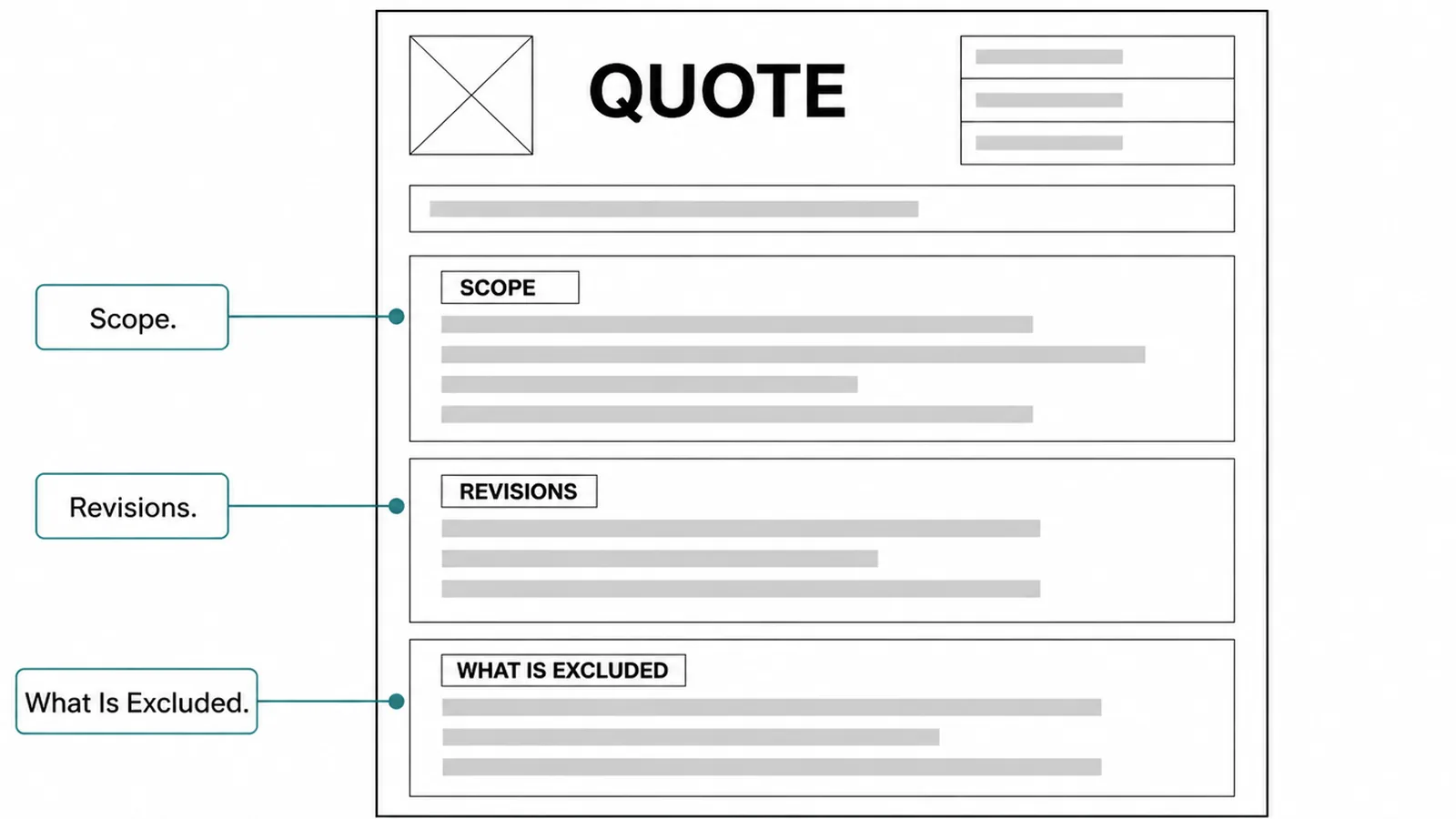
Read the exclusions first. They are usually at the bottom, in smaller type, and they are the part that decides what the project really costs.
- Scope. How many pages, which templates, and what counts as one page.
- Revisions. How many rounds are included and the rate once they are used.
- Exclusions. Copywriting, photography, stock images, hosting, migration, training.
Ask one blunt question of every supplier: what is not included that people usually expect to be. The answer is informative, and so is how comfortably it is given.
A supplier who answers that question plainly is telling you how the project will go.
Check how the design process is described while you are there. A proposal that names the stages and what you have to supply at each one has been through this before.
3. Ask What Happens After Launch
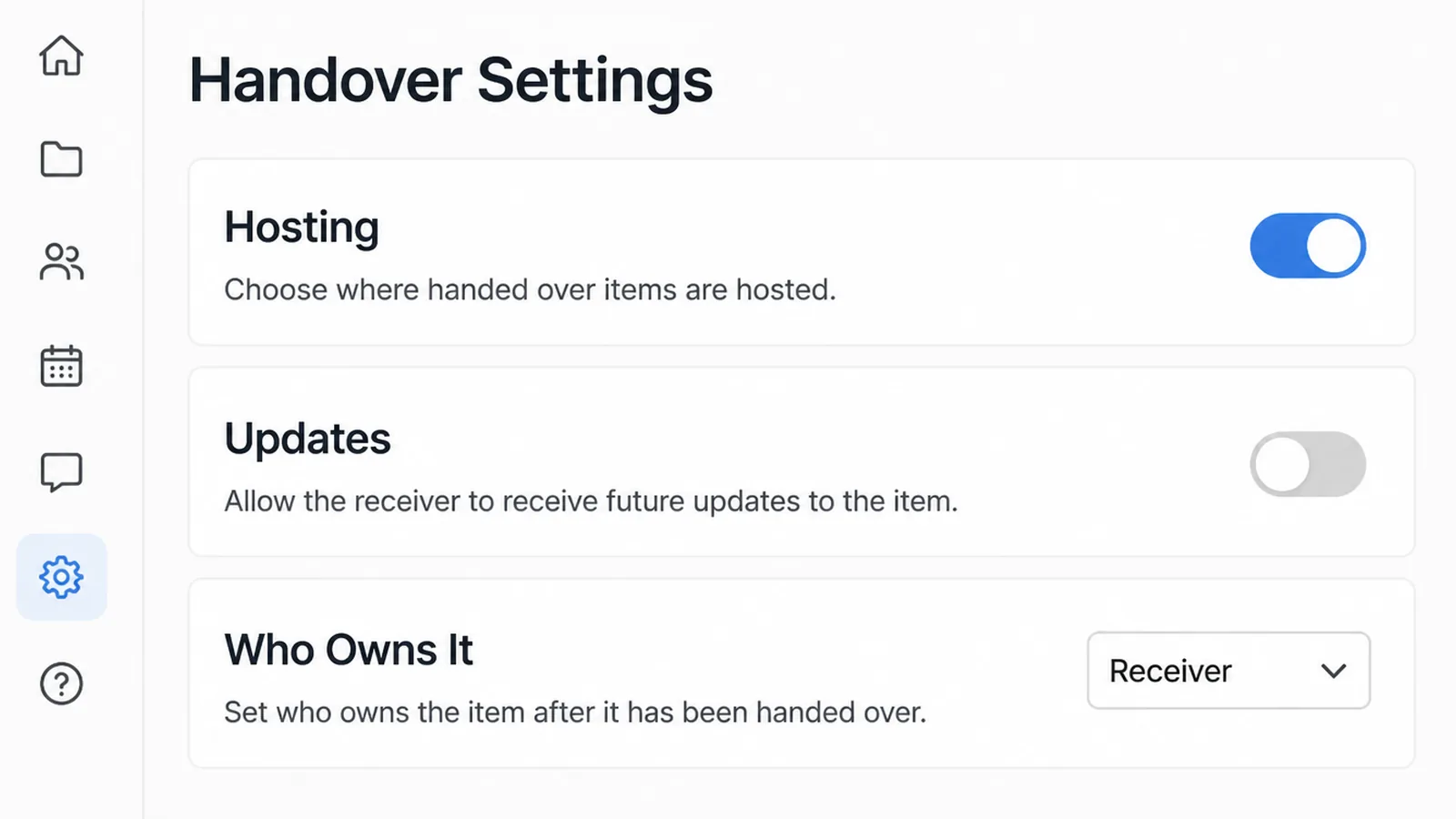
Most of a website's life happens after launch, and most quotes stop at it.
- Hosting. Where it lives, what it costs, and whether that bill comes to you or through them.
- Updates. Who applies them, how often, and whether backups are taken and tested.
- Ownership. Whose name the domain, hosting and analytics accounts are in.
Ownership is the one to settle in writing. Accounts in a supplier's name are normal and easy to arrange, and they become a negotiation the day you want to move.
Ask what a small change costs and how long it takes. "A new price on the services page next Tuesday" is the realistic test, not a hypothetical redesign.
Ask whether you can make that change yourself, too. Some suppliers build sites you can edit, some do not, and neither is wrong as long as you know which you are buying.
And ask what happens if they are unavailable. A freelancer with a holiday booked and a client with a seasonal rush is a conversation worth having early.
Questions Worth Asking
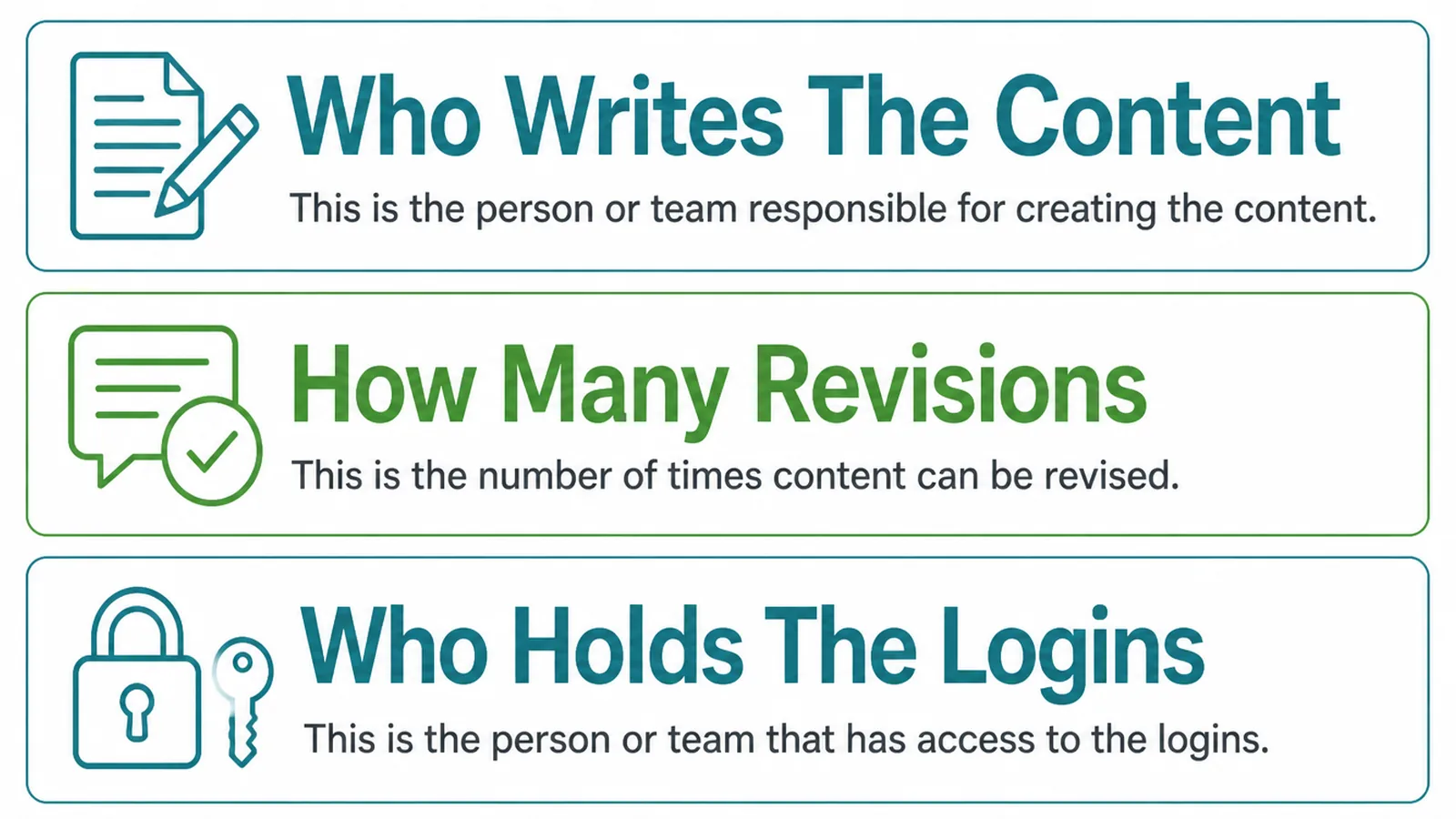
If you only ask three things, ask these.
- Who writes the words. The commonest exclusion and the commonest cause of delay.
- What happens when we disagree. How revisions work and who resolves a deadlock.
- Can I speak to a client from last year. Not the showcase one, the ordinary one.
That third question is worth more than any portfolio piece. A client a year on can tell you how changes get handled, how quickly messages are answered, and whether the site still works.
Ask them one specific thing: what happened the last time they needed something urgently. The answer to that is the service you are actually buying.
Ask about a project that went badly as well. Everyone has one, and the answer tells you how problems are handled rather than whether they occur.
Listen for whether the client is blamed. A supplier who describes a late project entirely as somebody else's fault is describing how your project will be explained.
Comparison Tools
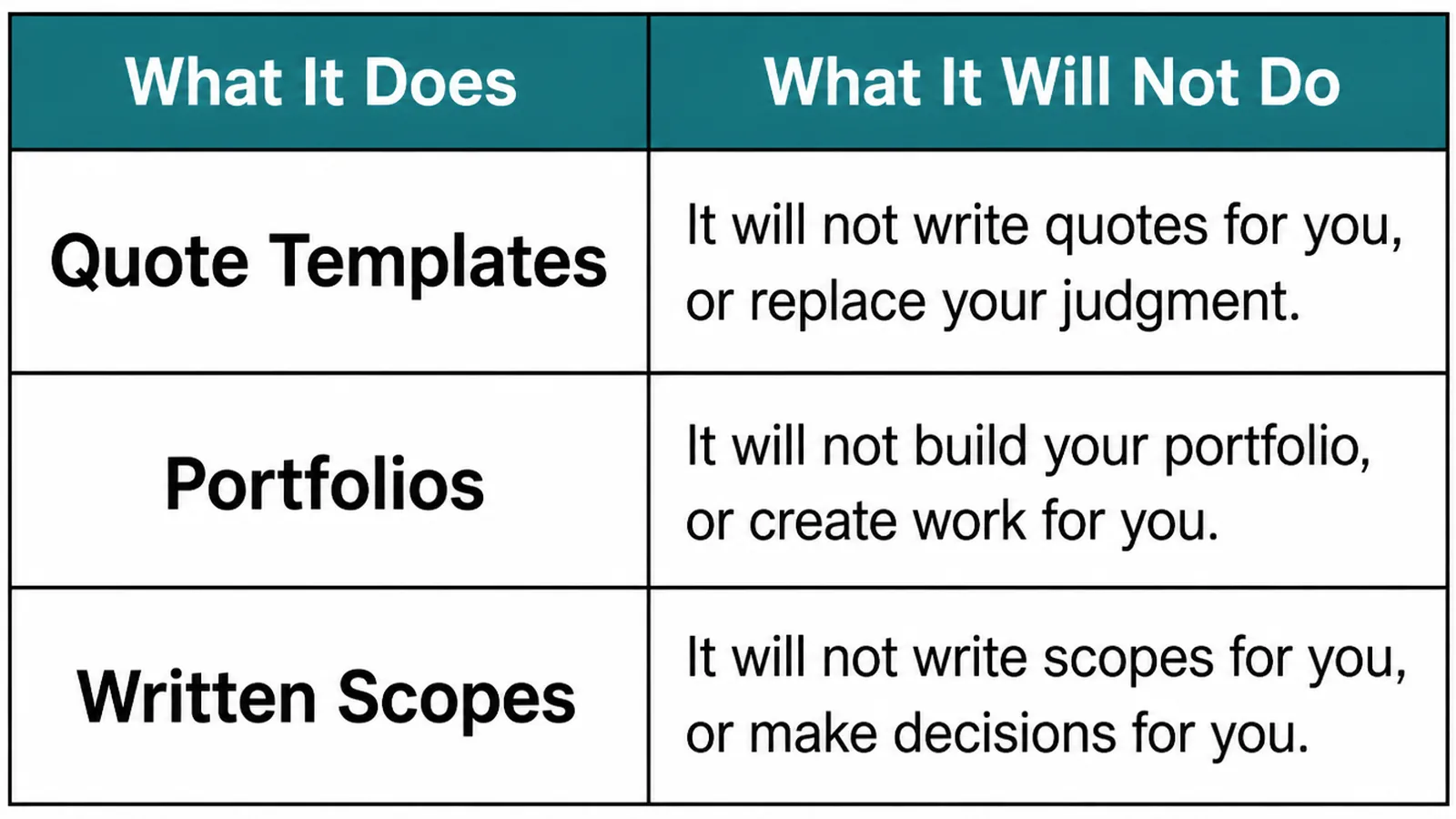
| What it does | What it leaves to you |
|---|---|
| A comparison sheet lines quotes up row by row | Filling the blanks by asking, rather than assuming |
| Portfolios show finished work and the kind of business they serve | Finding out who actually built it and when |
| Reviews and references describe what working together was like | Asking the ordinary client rather than the showcase one |
One caution about portfolios. Agencies change staff, and a site from three years ago may have been built by somebody who has since left.
Ask who will do your work and whether you will deal with them directly. For a small project the answer matters more than the company's size.
Check a few of their live sites on a phone as well. A portfolio image is a picture of a page; the real site tells you how it loads and whether the contact form still works.
Common Hiring Mistakes
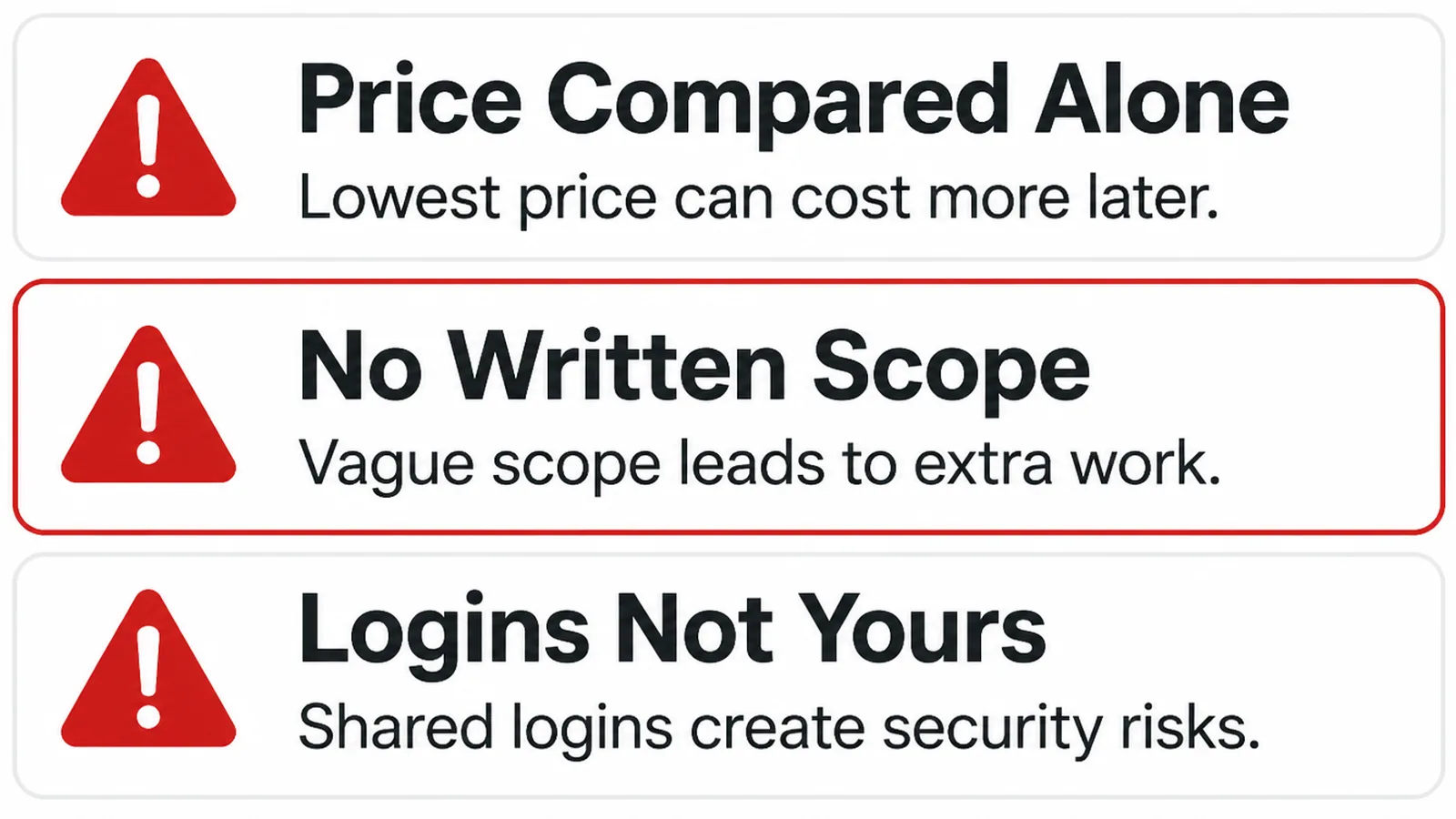
- Buying on price alone. The cheapest quote is usually the smallest scope rather than the best value.
- No written scope. A friendly conversation and a deposit, then a disagreement in month two.
- Accounts in their name. Convenient at the start and expensive the day you want to leave.
A fourth is choosing on design taste alone. A beautiful portfolio built for restaurants tells you little about whether somebody can build the booking flow your clinic needs.
Taste still matters, and it is the easiest thing to judge and the least predictive. Plenty of attractive sites were handed over unfinished.
Look for a supplier who has solved your kind of problem, then judge the appearance second.
FAQs
How do I compare two very different quotes?
Put them side by side and mark what each one includes: pages, copywriting, photography, revisions, training and support. Most large gaps turn out to be scope rather than rate. Once the inclusions match, the remaining difference is the one worth discussing.
Should I hire a freelancer or an agency?
Both work. A freelancer gives you one person who knows your project; an agency gives you cover when that person is unavailable. Ask who will actually do the work and who answers when something breaks, then decide which answer you are comfortable with.
What should a web designer ask me?
Who the site is for, what you want more of, who supplies the content, and when it needs to be live. A supplier who only asks how many pages you want is quoting a quantity rather than designing anything for you, and that is worth noticing early.
Who should own the website accounts?
You should. The domain, the hosting and the analytics belong in your name, with your designer added as a user. It costs nothing to arrange at the start and is the single most expensive thing to unpick later if the relationship ends.
Conclusion
Choosing a web designer is mostly about making two proposals describe the same job.
Send everybody the same short brief, read the exclusions before the price, and settle hosting, updates and ownership in writing before any work starts.
If you would like a quote read by somebody who writes them, see how we approach web design, or get in touch and we will tell you what is missing from the one in front of you.