How to Choose a Domain Name

A good domain name is easy to say, easy to spell and registered in your own name. Seed Light tests a shortlist by saying each one down the phone before buying, because a name that needs spelling out twice costs you enquiries every week for as long as you own it.
A domain name is one of the few business decisions you cannot quietly change your mind about.
It ends up on vehicles, invoices, signage and in other people's address books. It gets read aloud over a bad phone line and typed from memory three days later.
This guide covers the three jobs a name has to do, why a keyword-stuffed address can work against you, and how to keep control of the one you choose.
Key Takeaways
- Say it out loud first. If it needs spelling twice, it will need spelling forever.
- Short beats descriptive. A name you can remember outruns one that explains itself.
- Keyword domains cost you distinctiveness. They read as generic and age badly.
- Register it in your own name. Not your designer's, not your cousin's.
- Lock it and leave auto renew on. An expired domain takes your email too.
Most domain advice is about availability. The harder test is whether somebody can repeat it correctly a day later.
That is a human problem rather than a technical one, which is why the shortlist should be read aloud before anybody opens a search box.
What A Domain Name Has To Do
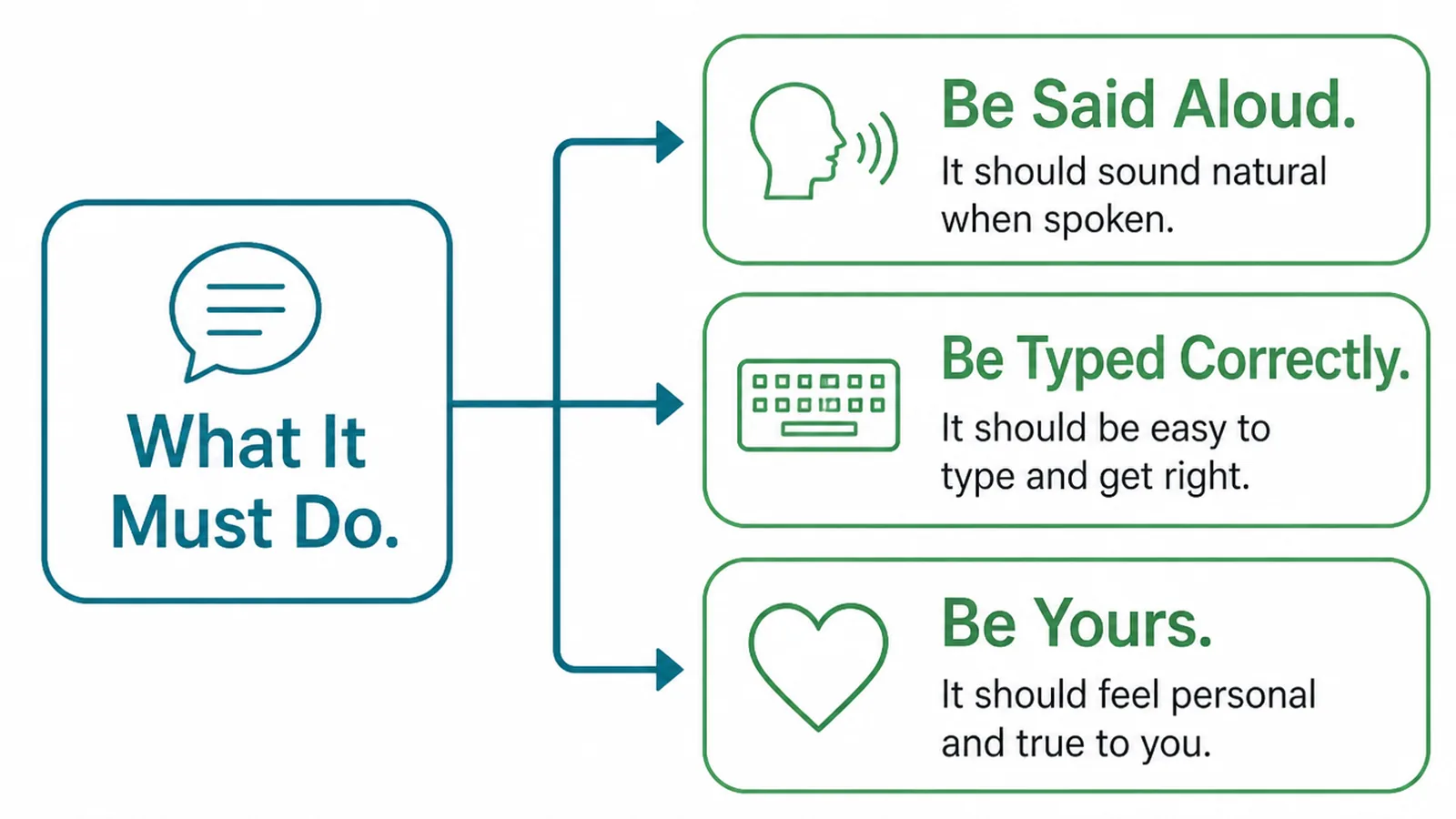
A web address works for you in three separate situations, and they pull in slightly different directions.
- Said aloud. Over the phone, across a counter, in a van window seen at speed.
- Typed from memory. Hours later, by somebody who heard it once and did not write it down.
- Read in a result. Beside nine competitors, where it has one line to look credible.
The second is the one that quietly decides everything. A name that is almost right in somebody's memory sends them to a competitor or to a parked page.
Hyphens, numbers and words with two spellings all fail that test. So does anything that sounds like a different word when spoken quickly.
Deliberate misspellings fail it hardest. A clever respelling is a permanent tax: every customer who hears it types the ordinary version first and lands nowhere.
The third situation is the least important and the one people worry about most. Credibility in a search result comes from the page, not the address above it.
Weigh the first two against each other where they disagree. A name that looks neat written down and falls apart when spoken is the wrong way round, because far more people will hear it than read it first.
Why Keyword Names Can Work Against You
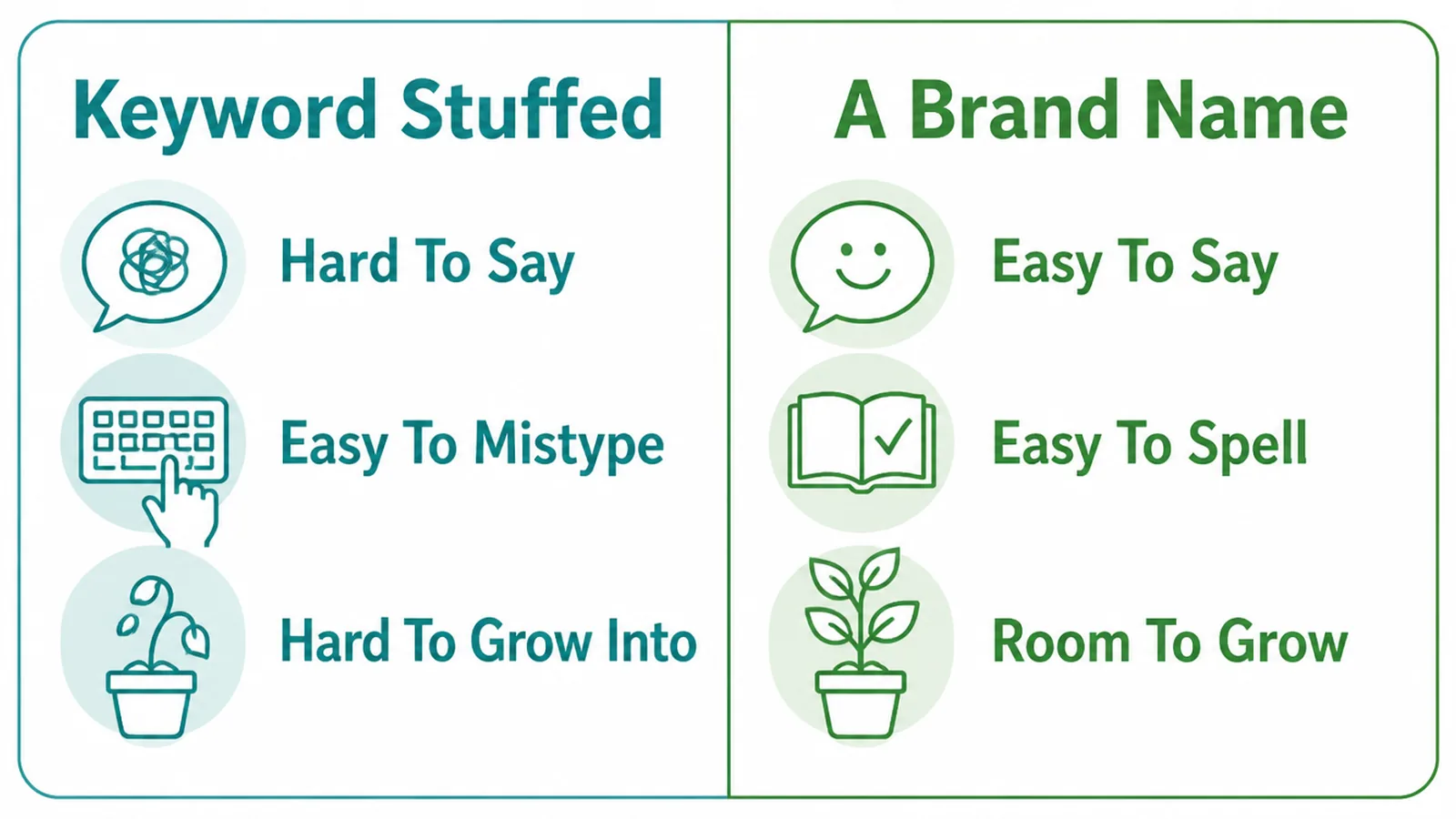
There is an old instinct to put the service and the town into the address, on the theory that it helps you rank.
It reads exactly like what it is. A long descriptive address signals a small operation that chose its name for a machine, and it is hard to say and harder to remember.
It also traps you. A name built around one service makes the second service look like an afterthought, and a name built around one town makes the next town a problem.
A brand name grows more valuable every time somebody says it. A keyword name stays exactly as valuable as the keyword, and the keyword can change.
None of this means the words have to be meaningless. Short, pronounceable and connected to what you do is a perfectly good target; the fault is the shopping list, not the meaning.
Plenty of strong names are an ordinary word used slightly differently. They are easy to say, easy to spell, and they leave room for the business to change shape underneath them.
How To Choose A Domain Name, Step By Step
Three steps, and the first one costs nothing and eliminates most of the shortlist.
1. Say It Out Loud First
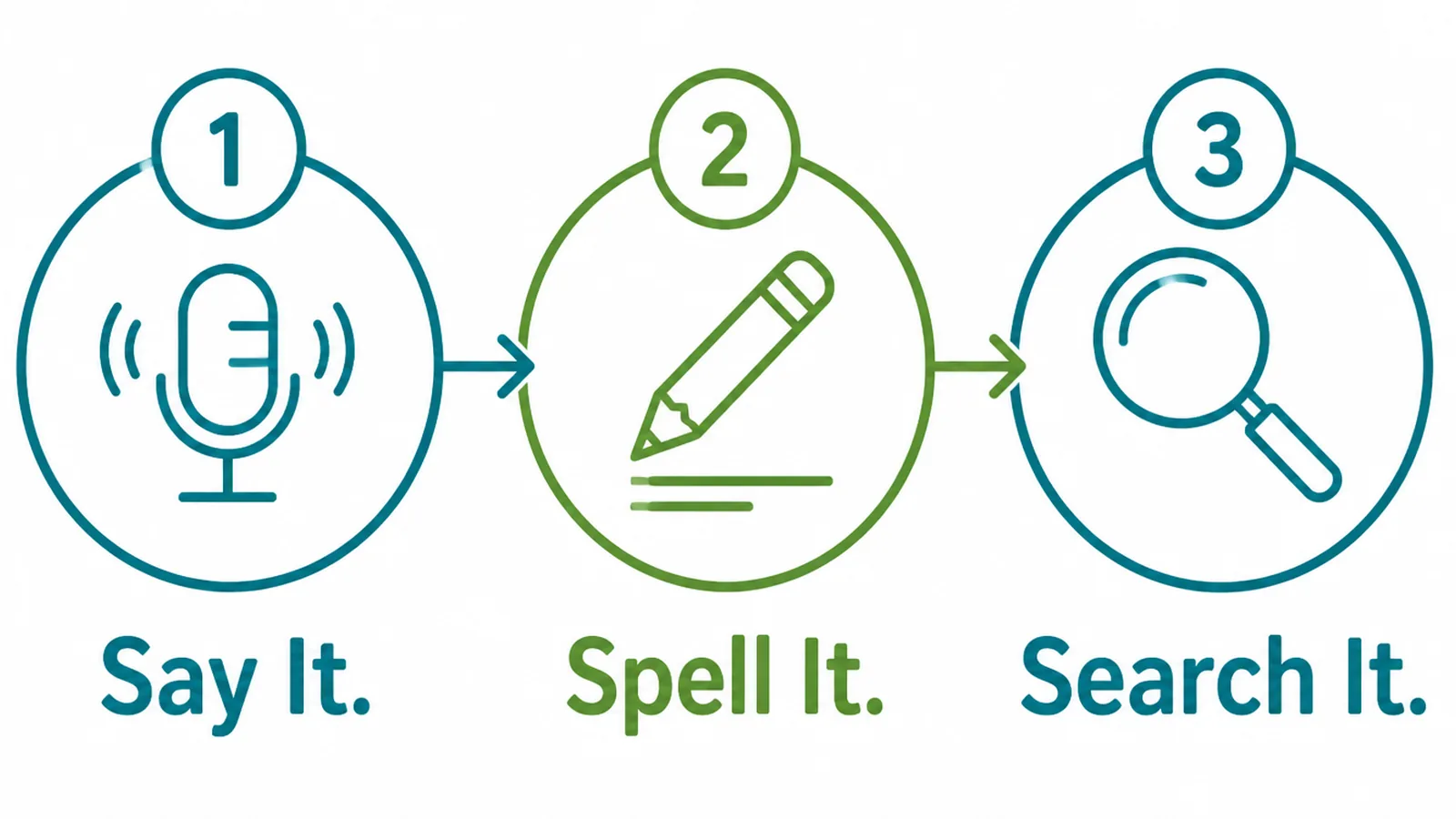
Take the shortlist and run each candidate through three tests in a single sitting.
- Say it. Down a phone, to somebody who has not seen it written. Then ask them to repeat it.
- Spell it. Ask them to write it down. Anything that needs clarifying is a name that will need clarifying weekly.
- Search it. Check what already exists under that name, including businesses in other trades.
That third check matters more than it sounds. Sharing a name with a larger business in another industry means permanently competing for your own name in the results.
A name that survives all three with no explanation is worth more than a cleverer one that does not.
Check the trade mark registers too, before any of this becomes signage. A quick search at your national office is free and far cheaper than a rename.
2. Check The Registration
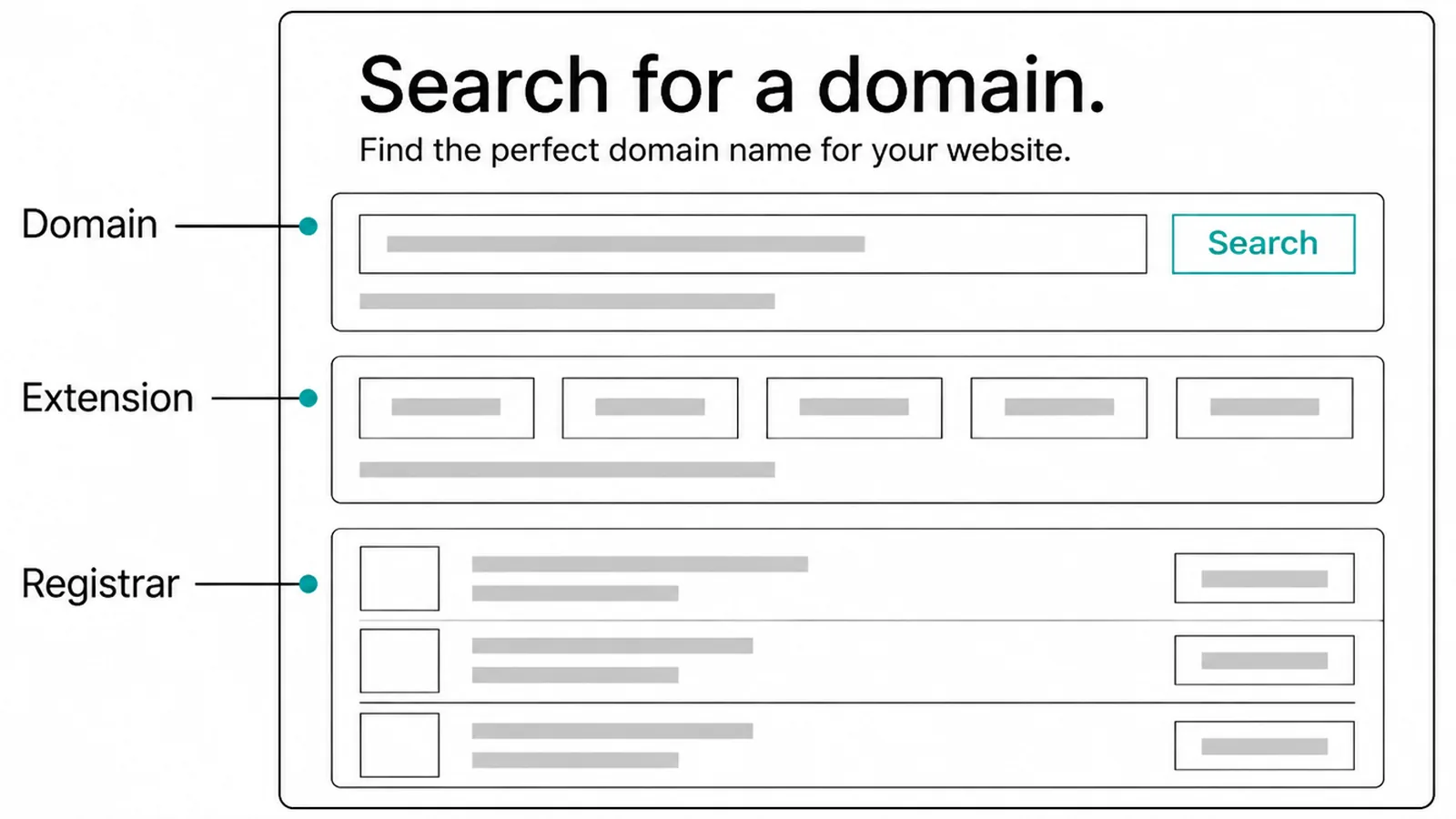
Domain registration itself is a five minute job. The decisions around it last longer.
- The domain. The name itself, without hyphens, without numbers, as short as it can be.
- The extension. What your customers expect to type, usually a local one or .com.
- The registrar. Who you buy from, how renewals are priced, and how easy a transfer is.
Watch the renewal price rather than the first year. Introductory pricing is normal, and a cheap first year beside an expensive renewal is a decision you make again every year.
Buy several years at once if the registrar allows it. It costs the same and removes a renewal you could forget.
Buy it on your own card, in your own business name, with your own email on the account. That one sentence prevents the most common and most expensive problem in this subject.
If an agency offers to handle it, let them manage it from an account you own. Convenience now is worth very little against the week you need to move and cannot.
Keep the login details somewhere a second person in the business can reach. Domain registration is the one account where a single point of failure takes the website and the email together.
3. Keep Control Of It
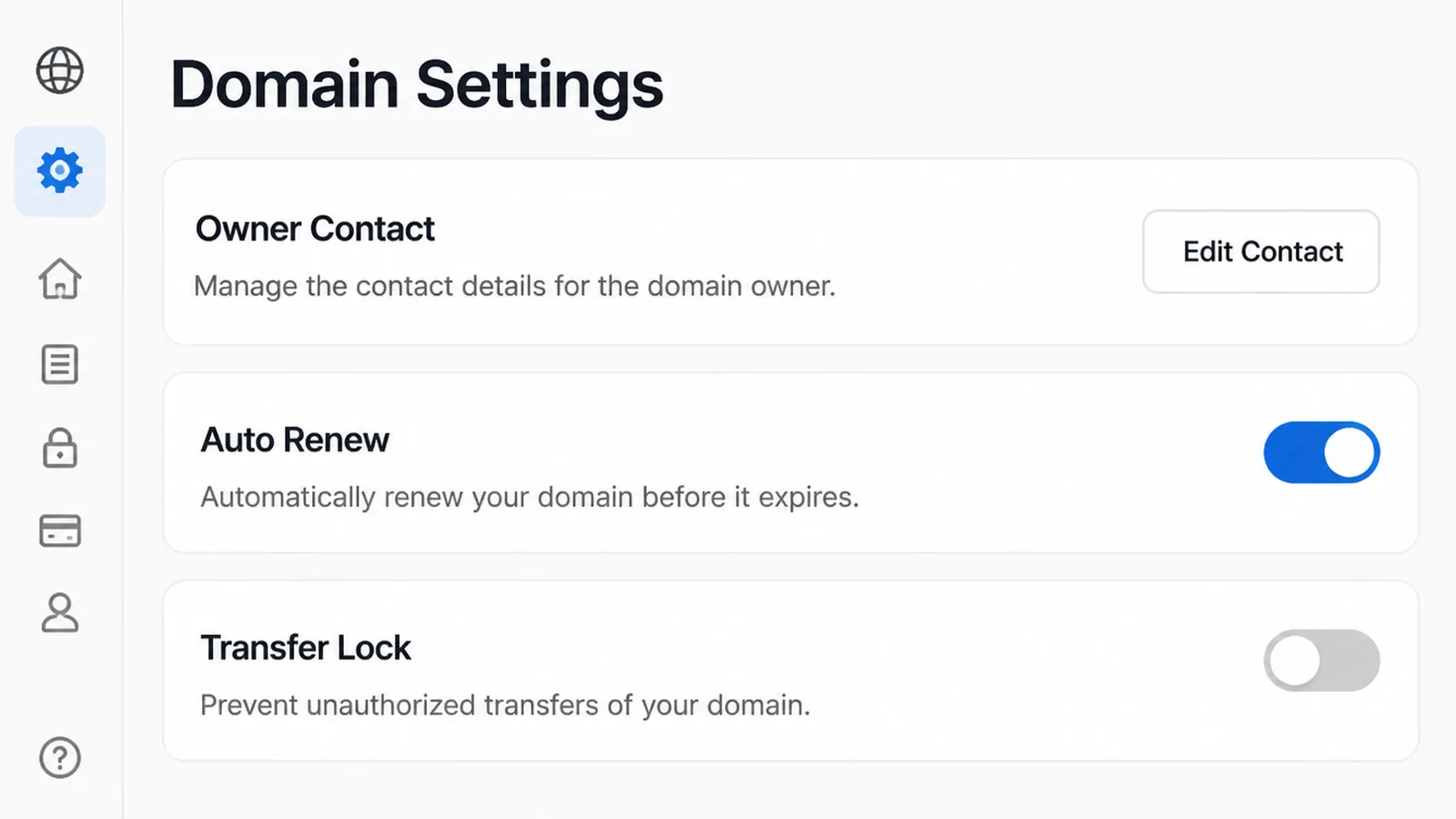
A domain is rented, and the rent is due whether anybody is watching the inbox or not.
- Owner contact. An address somebody reads, not a staff member who left two years ago.
- Auto renew. On, with a card that is not about to expire, checked once a year.
- Transfer lock. On, so nobody can move the name without unlocking it deliberately.
Put the renewal date in a calendar as well. Auto renew fails quietly, and the first sign is usually a customer asking why your website has disappeared.
Remember that the domain carries your email. Losing it does not take down a marketing page, it takes down the way customers reach you and the way you reset other accounts.
What Makes A Name Workable
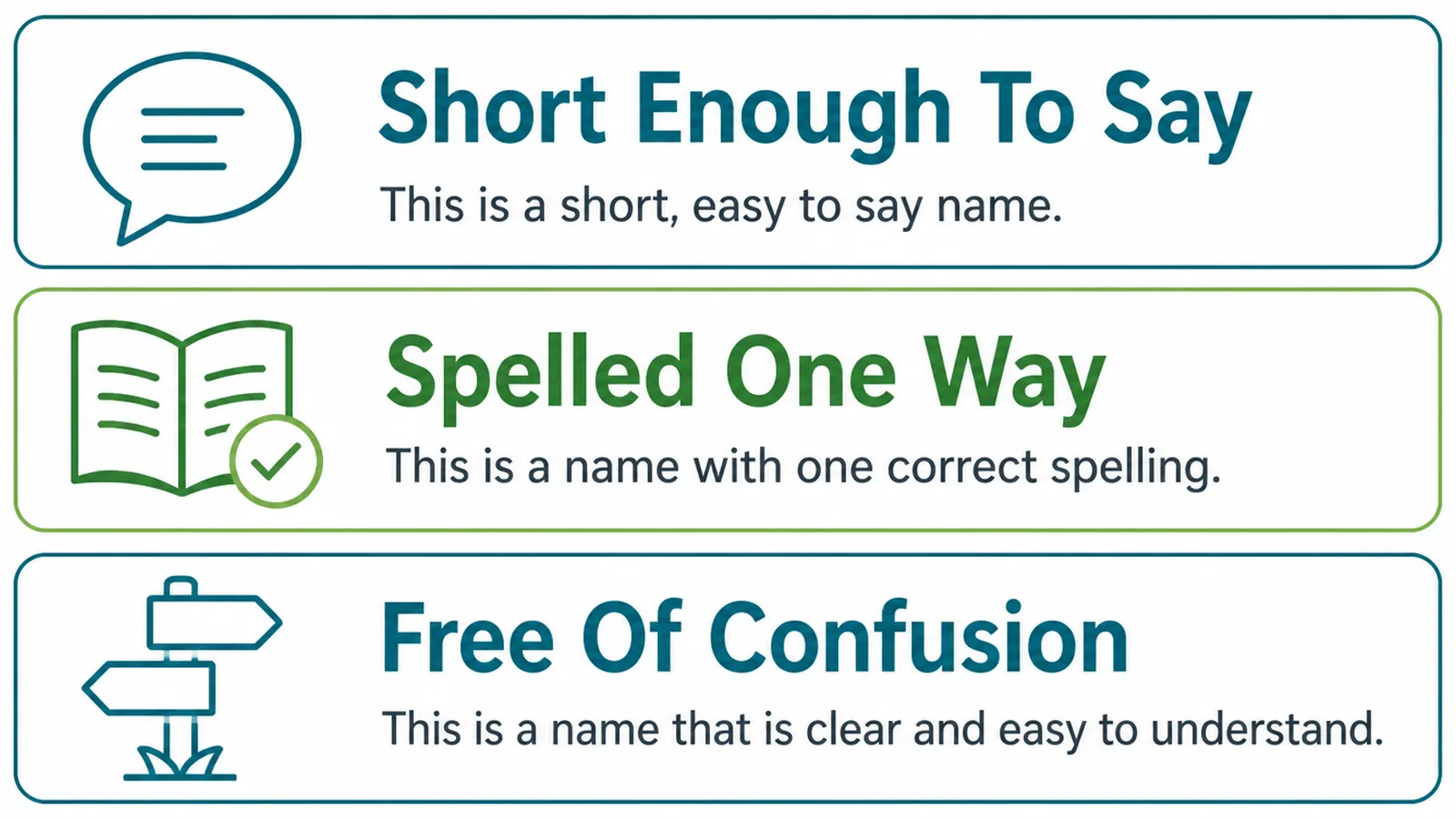
When two candidates are close, these are the tie breakers.
- Short. Fewer syllables to say and fewer characters to mistype.
- Unambiguous. One spelling, one pronunciation, no words that sound like other words.
- Durable. Still right if you add a service, a branch or a second town.
Durability is the one people trade away first and regret longest. Businesses change shape more often than they change names.
A quick way to test it: write down the business you might be running in five years, then read the name next to it. If it narrows you, keep looking while it is still cheap to.
If you already own an awkward name and the business is trading well, keep it. A rename has real costs across listings, printing and search, and awkward is survivable where invisible is not.
Fix the symptoms instead. A clear spelling on your listings and a redirect from the common mistyping take most of the pain out of a name you are stuck with.
Domain Tools
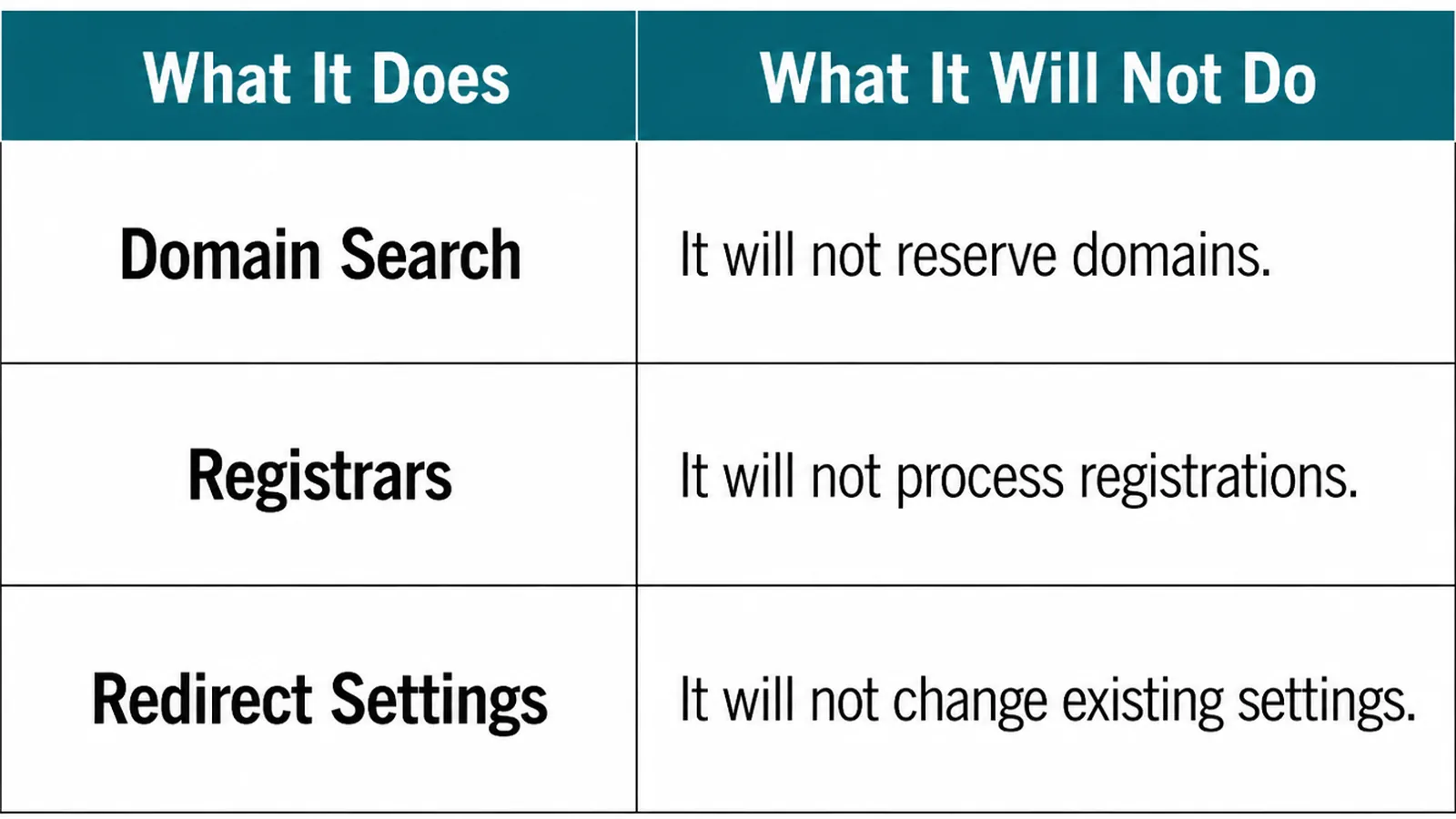
| What it does | What it leaves to you |
|---|---|
| Availability search tells you what is free right now | Whether the name survives being said out loud |
| Name generators produce hundreds of combinations | Rejecting the ninety per cent that sound like software |
| Registrar dashboards hold renewals, locks and contacts | Actually opening them once a year to check |
Generators are useful for breaking a deadlock and dangerous as a shortcut. They optimise for availability, and availability is the weakest of the criteria here.
Use one for raw material, then put every survivor through the three tests. The best name on a generated list is usually the one that sounded ordinary.
Give yourself a day between the shortlist and the purchase. Names that felt clever on the evening you wrote them often read differently in the morning.
Common Domain Mistakes
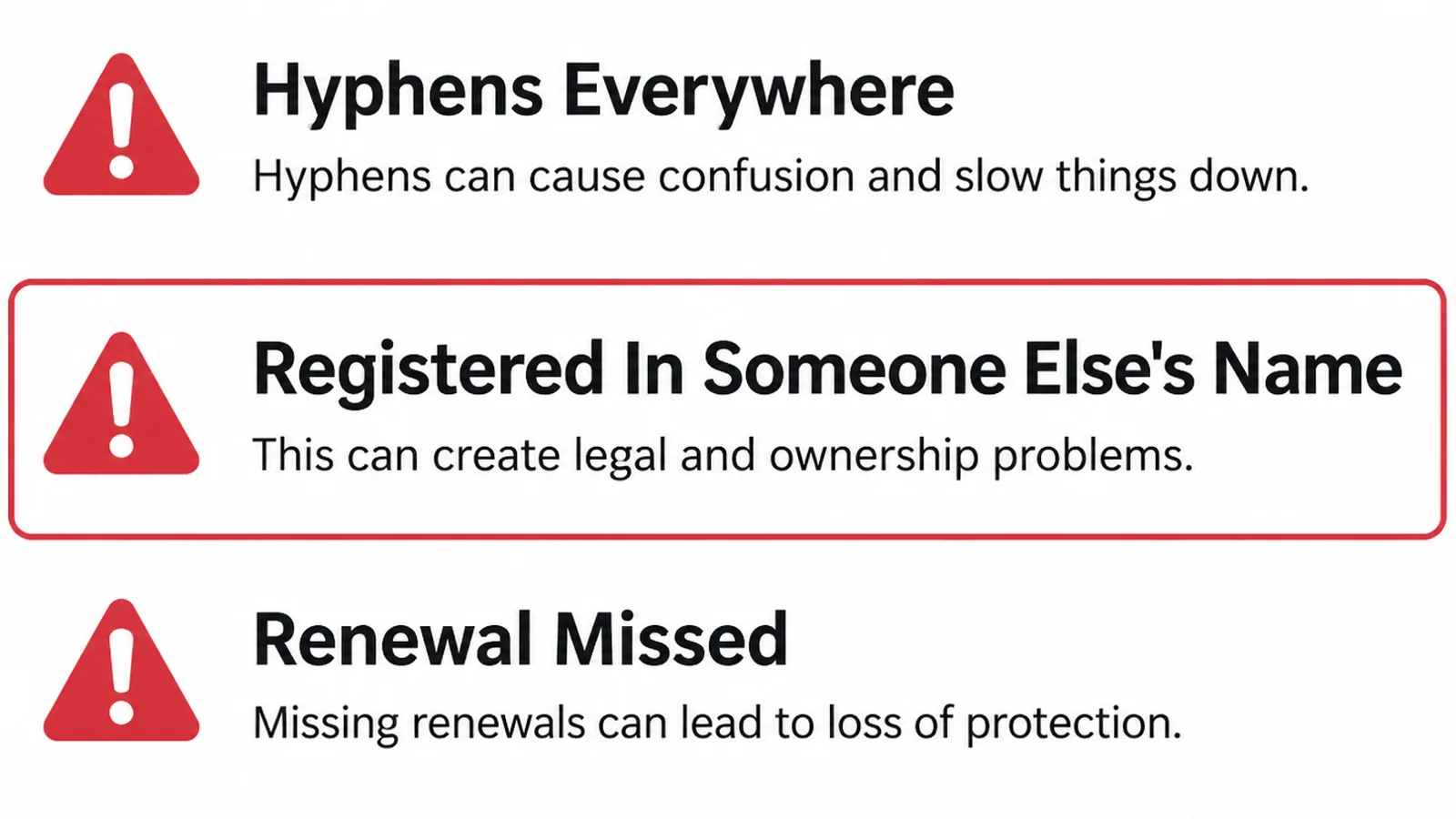
- Registered to somebody else. The designer, the agency, or a relative who set it up.
- Hyphens and numbers. Fine on a screen, unusable on a phone call or a van.
- Letting it lapse. Auto renew off, old card, notice sent to an address nobody opens.
There is a fourth worth naming: building the business on a free subdomain supplied by a website builder. It works until you move, and then every link, listing and printed card points somewhere you no longer control.
Buying a proper domain early costs very little. Moving to one later costs a rebuild of every listing you have ever created.
FAQs
Should I buy a .com or a local extension?
Buy the one your customers expect to type. A local extension signals a local business and reads naturally in your own market, while a .com travels further. If both are available and affordable, take both and point one at the other rather than deciding forever.
Do keywords in a domain help rankings?
Not in the way people hope. A keyword domain can read as generic and makes you harder to remember, while a brand name grows more valuable the more it is said. Choose a name you can live with for a decade, then earn the rankings with the site itself.
How many domains should I own?
One that you use, plus the obvious misspellings if they are cheap. Buying dozens of variations rarely pays for itself, and every extra renewal is one more thing to lose track of. Point any spares at the real site rather than building on them.
What happens if my domain expires?
The site and the business email stop working, usually before you notice. Recovery is possible for a while and gets expensive once a domain has been released, so keep auto renew on, the card current, and the notice address one somebody actually reads.
Conclusion
Choosing a domain name is three tests and one administrative habit.
Say it, spell it, search it, then register it in your own name with the lock on and auto renew running. Everything else in this subject is noise compared with those two.
If you are naming something new and want a second opinion, see how we handle brand work, or get in touch and we will say your shortlist back to you down the phone.