How to Write a Website Brief

A website brief settles what the site is for, who it is for, and who supplies the content. Seed Light asks for those three before quoting, because a project that starts with a page list and no owner for the words is the one that stalls halfway and gets blamed on the designer.
Most website projects go wrong in the first week, quietly, in writing.
Somebody sends a list of pages. A quote comes back against that list. Three weeks later the site is waiting on copy nobody agreed to write, and the launch date everybody assumed was never actually set.
This guide covers what a website brief has to settle, why a page list settles none of it, and how to write one in an afternoon.
Key Takeaways
- A brief settles decisions, not aesthetics. Purpose, audience, content owner, date.
- A page list is a quantity, not a brief. It says nothing about what any page is for.
- Name who writes the words. This is where most projects stall.
- Give a budget range. Otherwise you cannot compare what comes back.
- Agree what finished means before anybody starts, including rounds of review.
A good website brief is short and specific. It is a list of decisions somebody has already made.
That is why it is worth your afternoon rather than your designer's. The decisions in it are yours, and no supplier can take them for you.
What A Website Brief Has To Settle
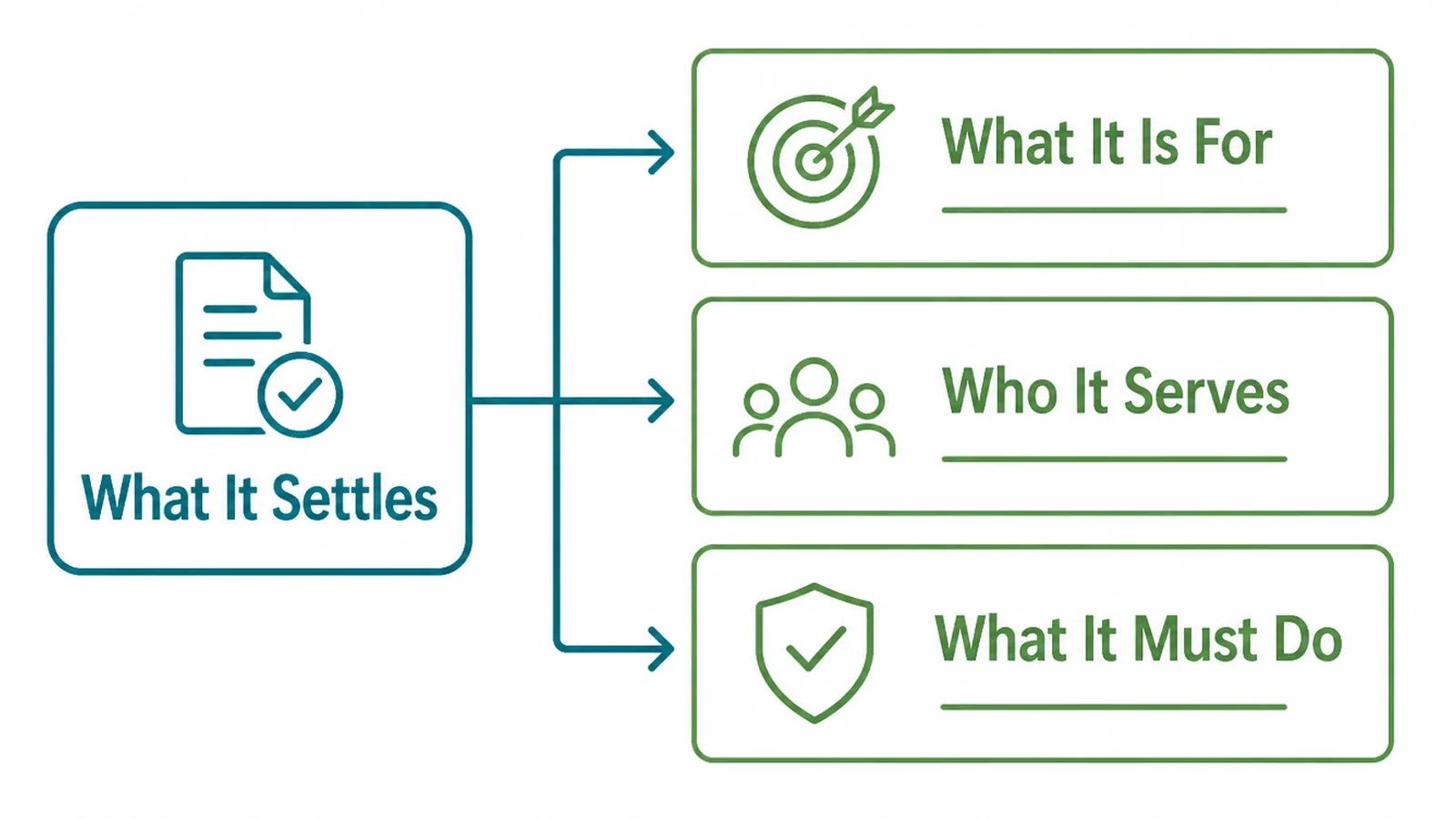
A design brief exists to answer three questions in a way both sides can point at later.
Call it a project brief, a design brief or website requirements. The label changes nothing; what matters is that the three answers are written down where both sides can see them.
- What the site is for. The one thing you want more of when it is live.
- Who it is for. The customer you want, described well enough to write to.
- Who supplies the content. Every word and every photograph, with a name beside it.
The third is the one that decides whether the project finishes on time. Design moves quickly; copy waits for somebody to sit down and write it.
Write it as a plain sentence. "We want enquiries from homeowners in Penang for kitchen work, and I will write the service pages by the end of the month."
That sentence does more than three pages of adjectives. It gives the designer a reader to write for and a date to plan around.
Website requirements in the technical sense come later and matter less. Whether you need a booking form or a shop is a question a supplier can ask; who the site is for is one only you can answer.
Keep the whole thing in plain language. A brief written in the vocabulary of web projects is harder for you to check and no easier for anybody else to read.
Why A List Of Pages Is Not A Brief
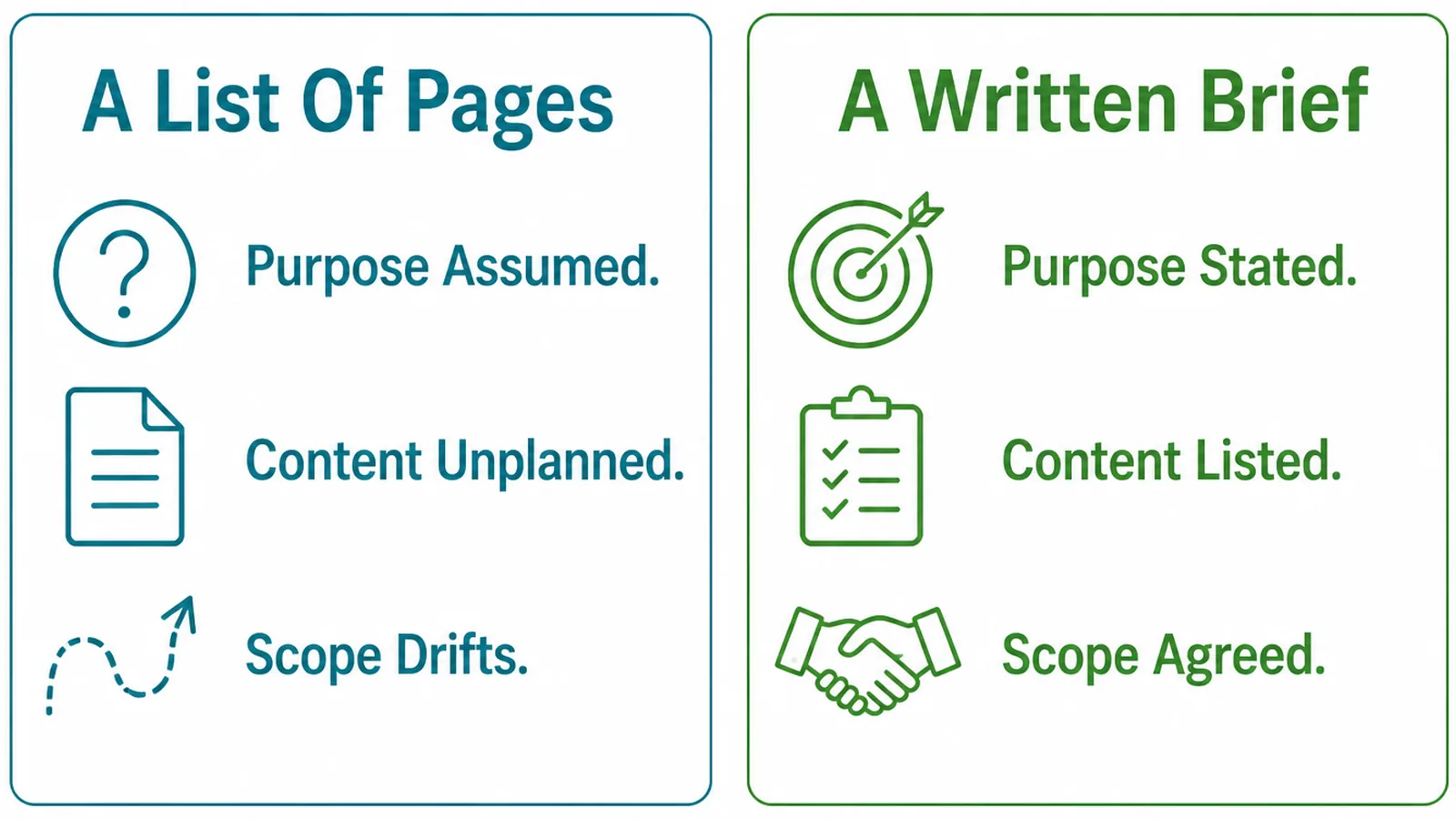
A page list is the most common thing sent to designers, and it answers a question nobody asked.
Eight pages tells a supplier how much work there is. It says nothing about what any page has to achieve. That is the part deciding whether the site is any good.
Worse, it hides disagreement. Two people can read "About page" and picture entirely different things, and nobody finds out until the first draft.
Add one line to each page saying what it is for and you have most of a brief. "Services: explain the three jobs we take on and what they usually cost."
That single line changes what gets built. It also gives you something to judge the result against that is not personal taste.
How To Write A Website Brief, Step By Step
Three steps, and none of them need design vocabulary. If you can describe your business to a new employee, you can write this.
1. Say What The Site Is For
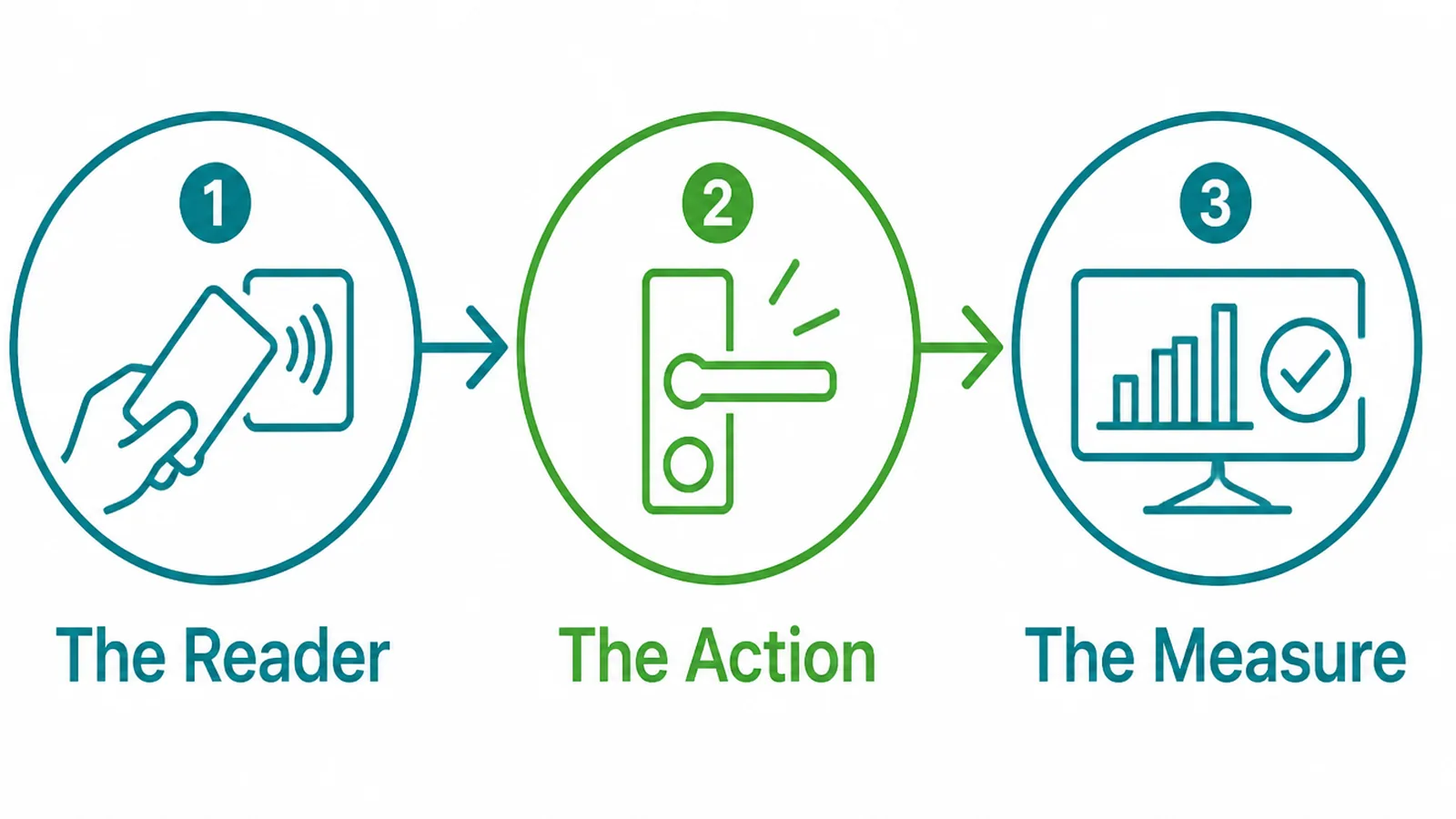
Start with the outcome rather than the artefact, and keep it to three sentences.
- The reader. Who you want arriving, in ordinary words rather than a marketing persona.
- The action. What you want them to do: call, send an enquiry, book, buy.
- The measure. How you will know, even roughly, that it worked.
The measure is the one people leave out, and it is what stops a launch being judged on whether everybody likes the colours.
It does not need to be sophisticated. "More enquiries than the ten or so we get a month now, from people who already know what they want" is a perfectly good measure.
Write down where you are today as well. Briefing a designer without a starting number means nobody can tell afterwards whether the new site made any difference.
Name the customers you do not want as well. A site that quietly filters out the jobs you dislike is worth as much as one that attracts more work.
2. Write The Brief Down
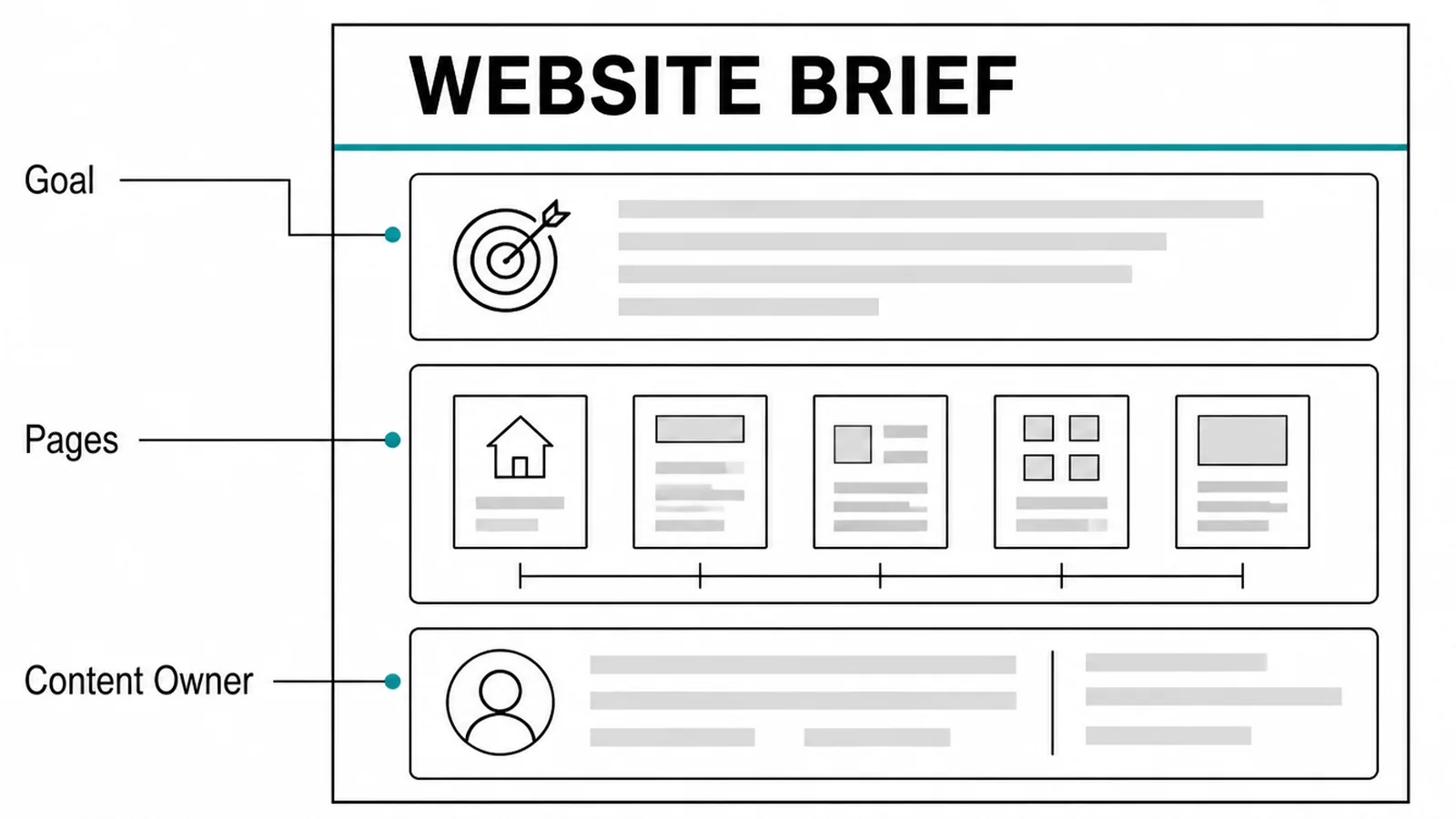
A two page document is enough. Put the three sentences at the top, then the practical detail underneath.
- Goal. The three sentences from step one, unchanged, at the top where they are read first.
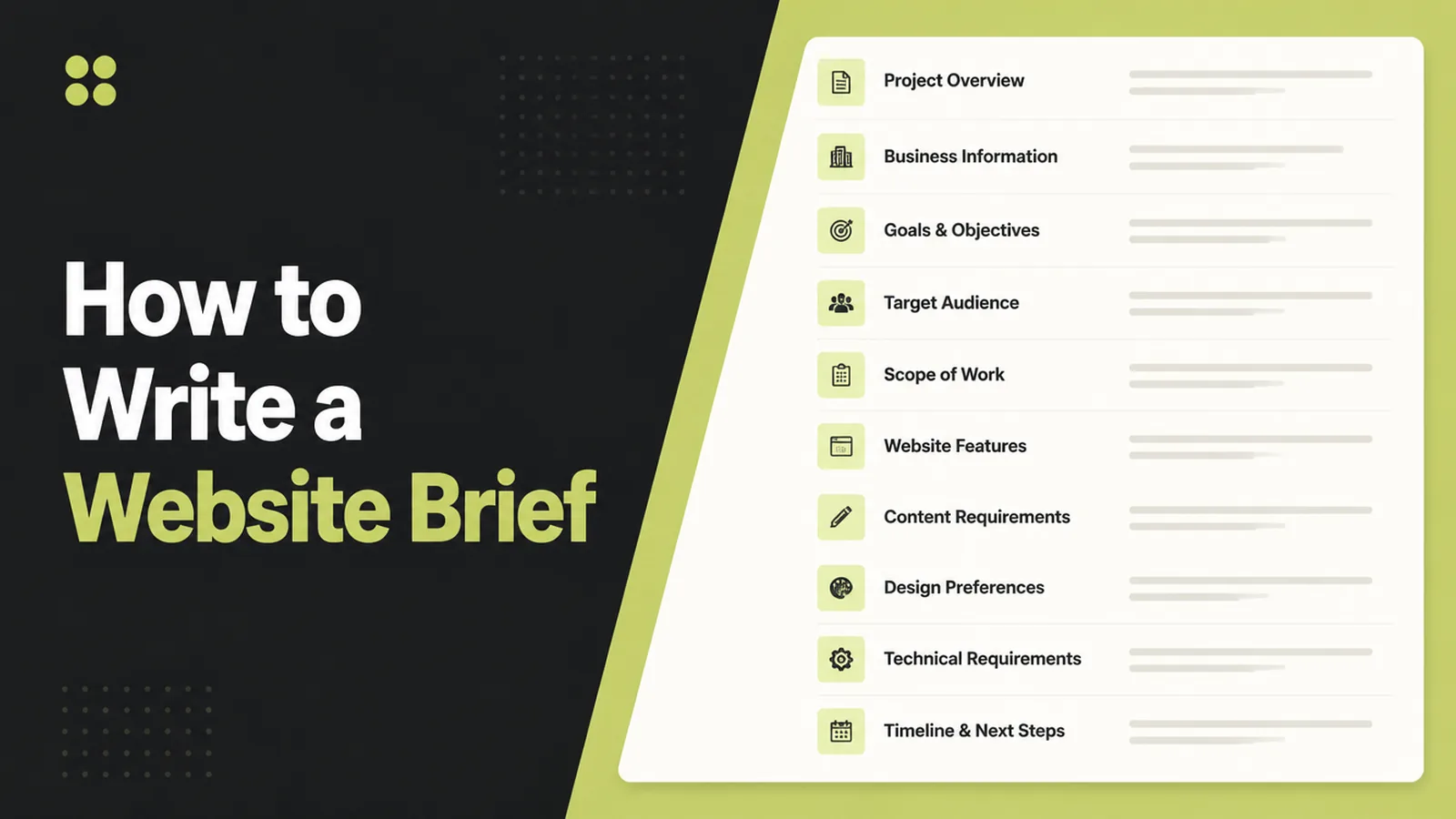
- Pages. Each page with one line saying what it is for and what must appear on it.
- Content owner. A name beside every page, for words and for photographs separately.
Add the practical constraints that are real: a launch date and why it matters, a budget range, anything that has to be kept from the current site, and anybody who must approve.
Keep that list honest. A constraint nobody will actually enforce belongs in conversation rather than in the document.
Include examples of sites you like, with one line each on what you like about them. A link with no explanation is read as "make it look like this". That is rarely what anybody means.
Say what you dislike too, and be specific about it. Knowing you hate sliders and stock photography of handshakes saves two rounds of revisions.
3. Agree How It Will Be Judged
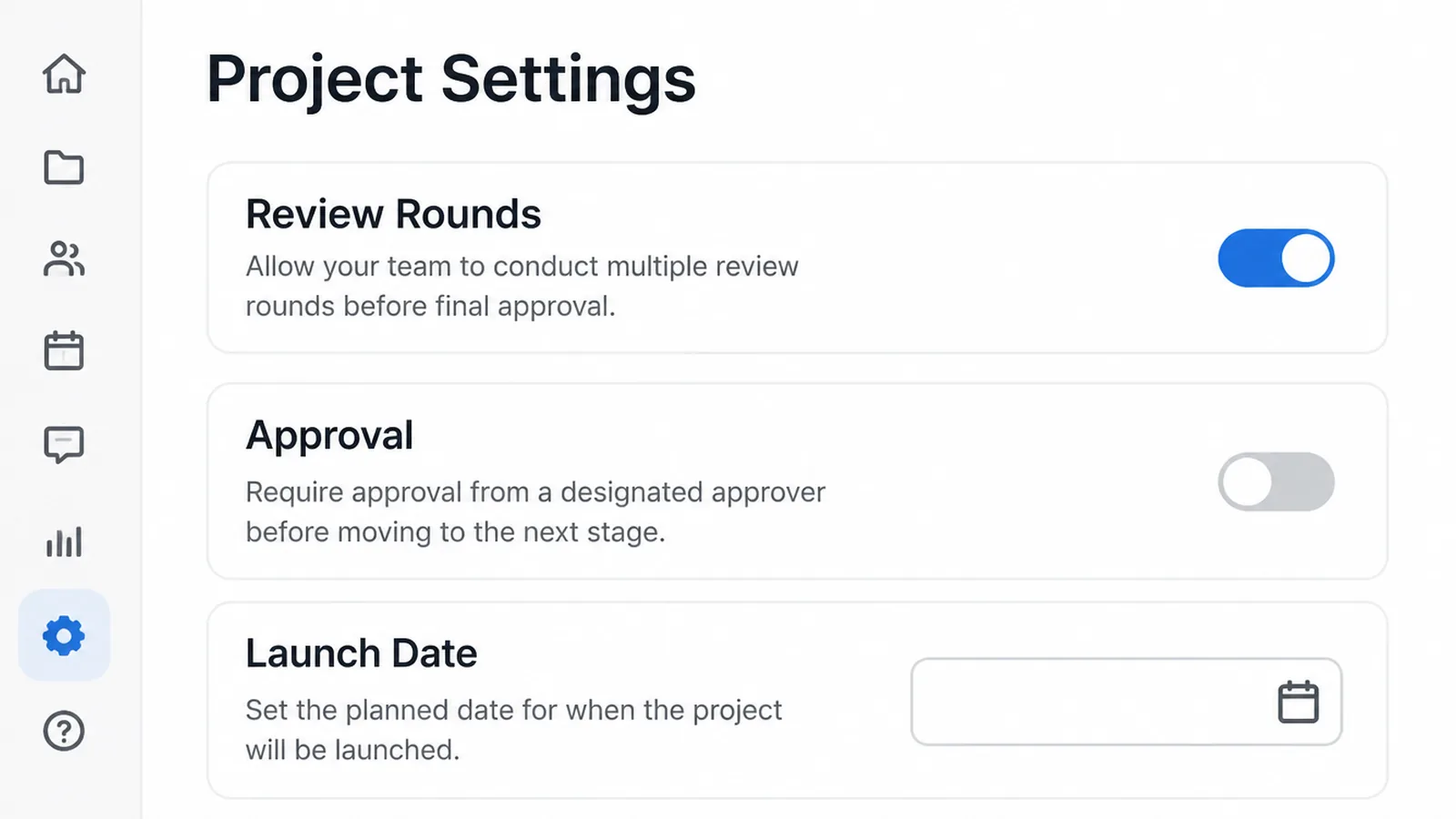
This is the part that turns a brief into a working arrangement rather than a wish list.
- Review rounds. How many are included, and what happens when they run out.
- Approval. Who signs off, and how long they get before the project waits on them.
- Launch date. The real one, with what has to be true by then from your side.
Most friction in web projects comes from the second of those. A committee of five with no named decision maker will produce contradictory feedback, and the supplier will do their best with the average.
Name one person who decides. Others can comment; one person resolves disagreements.
Write down how feedback is given as well. Comments collected in one document beat four separate messages sent on a Friday evening.
Agree what happens if your side slips, too. Most projects that overrun do so waiting for content, and a date with no consequence attached is a hope.
What Every Brief Should Carry
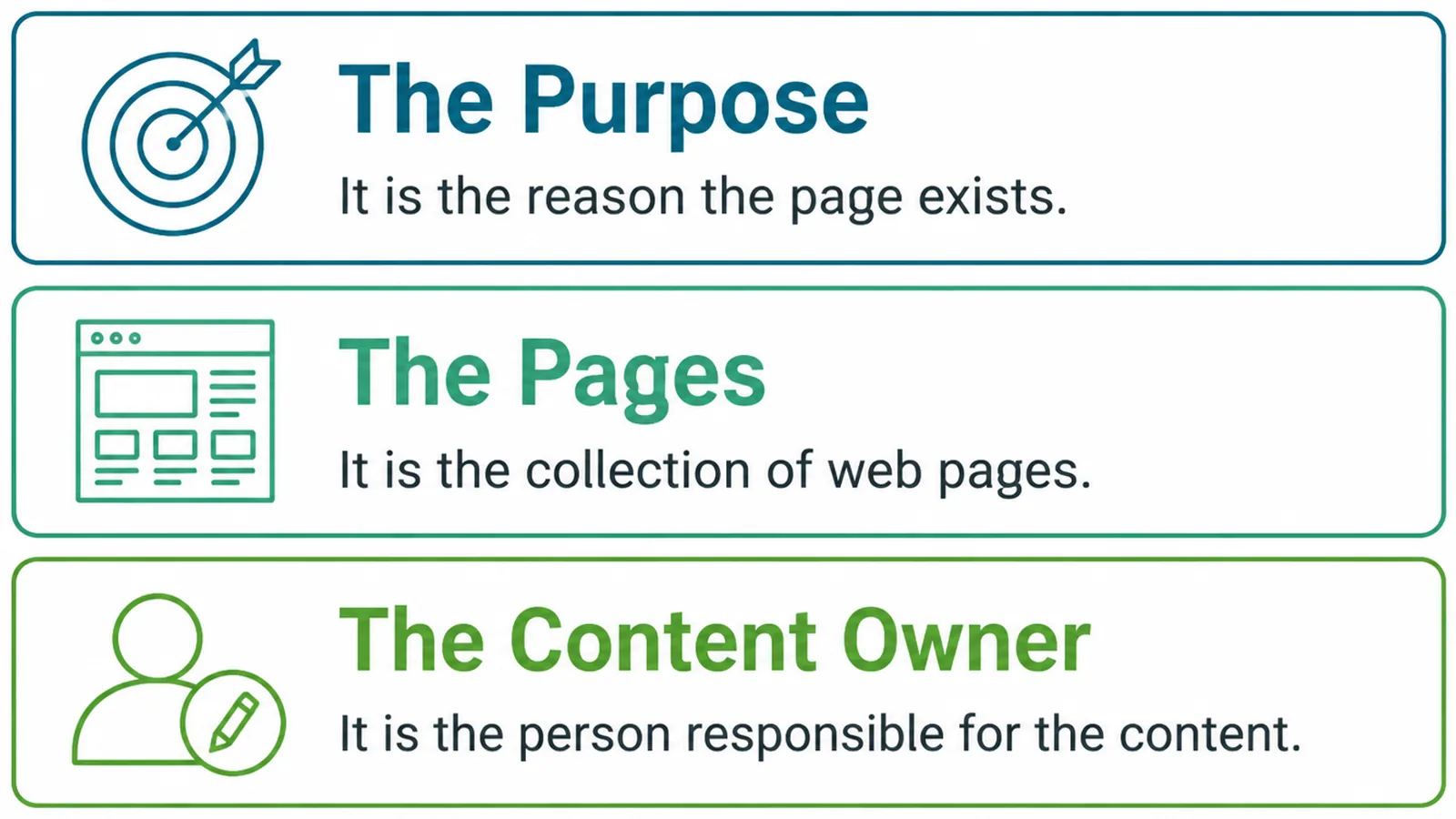
Whatever shape it takes, these three have to be in it somewhere.
- The purpose. The one outcome you want more of once the site is live.
- The inventory. What exists already: copy, photographs, logo files, testimonials.
- The constraints. Budget range, date, technical requirements, anything that cannot change.
The inventory is the most skipped and the most useful. Half the delays in a website project are a photograph nobody has or a logo that only exists as a picture on a letterhead.
Spend an hour collecting what you have before you send anything. It also tells you honestly how much writing and photography the project really needs.
Put the files somewhere shared while you are at it. A project brief that links to a folder of real assets is immediately more useful than one that promises them.
Brief Tools
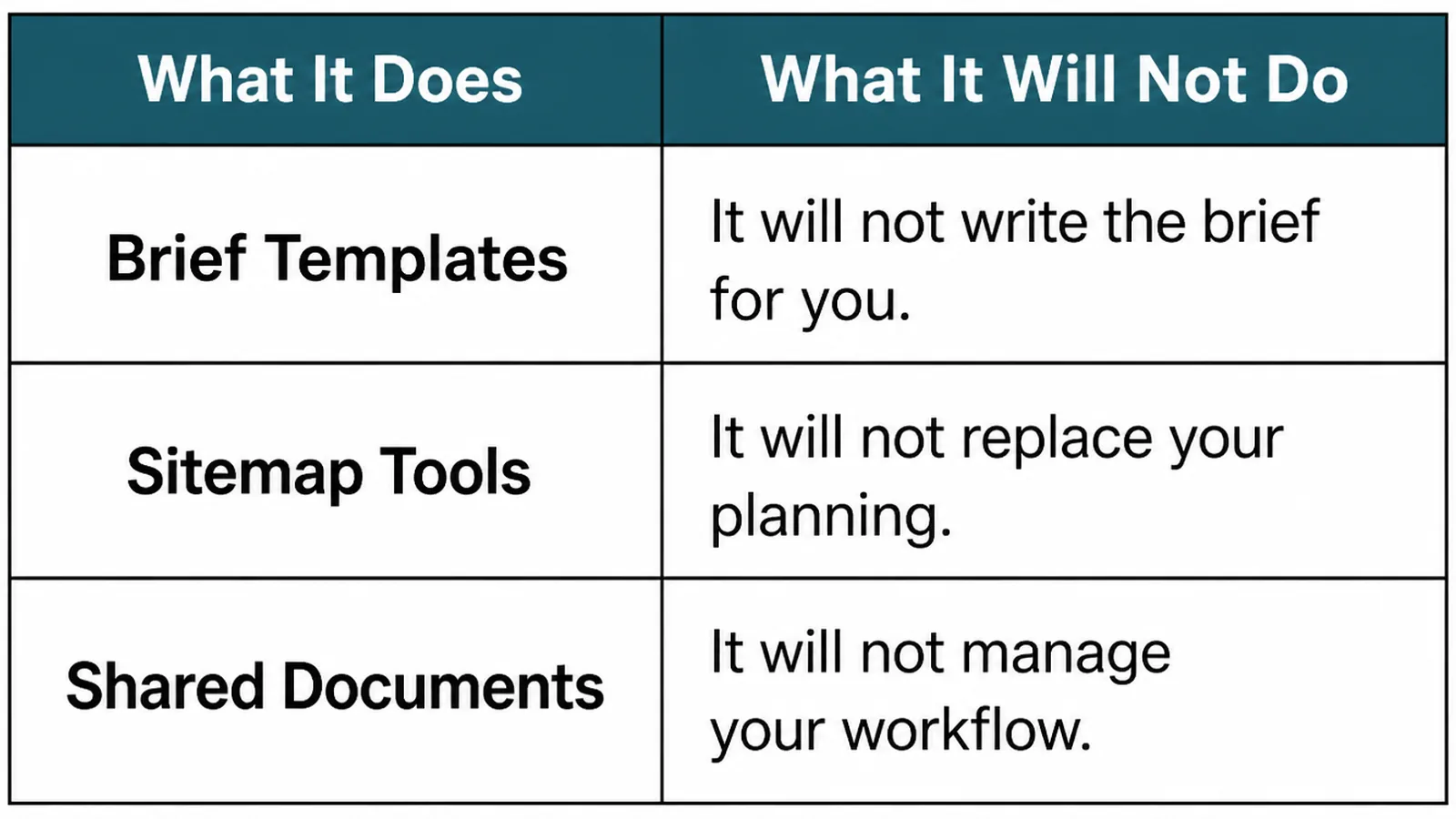
| What it does | What it leaves to you |
|---|---|
| Brief templates give you the questions in a sensible order | Answering them with decisions rather than adjectives |
| Shared documents keep one version everybody can comment on | Deciding who resolves a disagreement in the comments |
| Example galleries show you what you like and dislike | Saying why, which is the part a designer can use |
A template is a prompt rather than an answer. The questions are easy to copy and the useful part is the sentence you write underneath each one.
If a template asks for brand values and tone words, answer briefly and move on. Those sections rarely change what gets built, and the time is better spent on the page purposes.
Keep the brief somewhere both sides can see the current version. A brief that exists in three email attachments is a brief nobody is working from.
Common Brief Mistakes
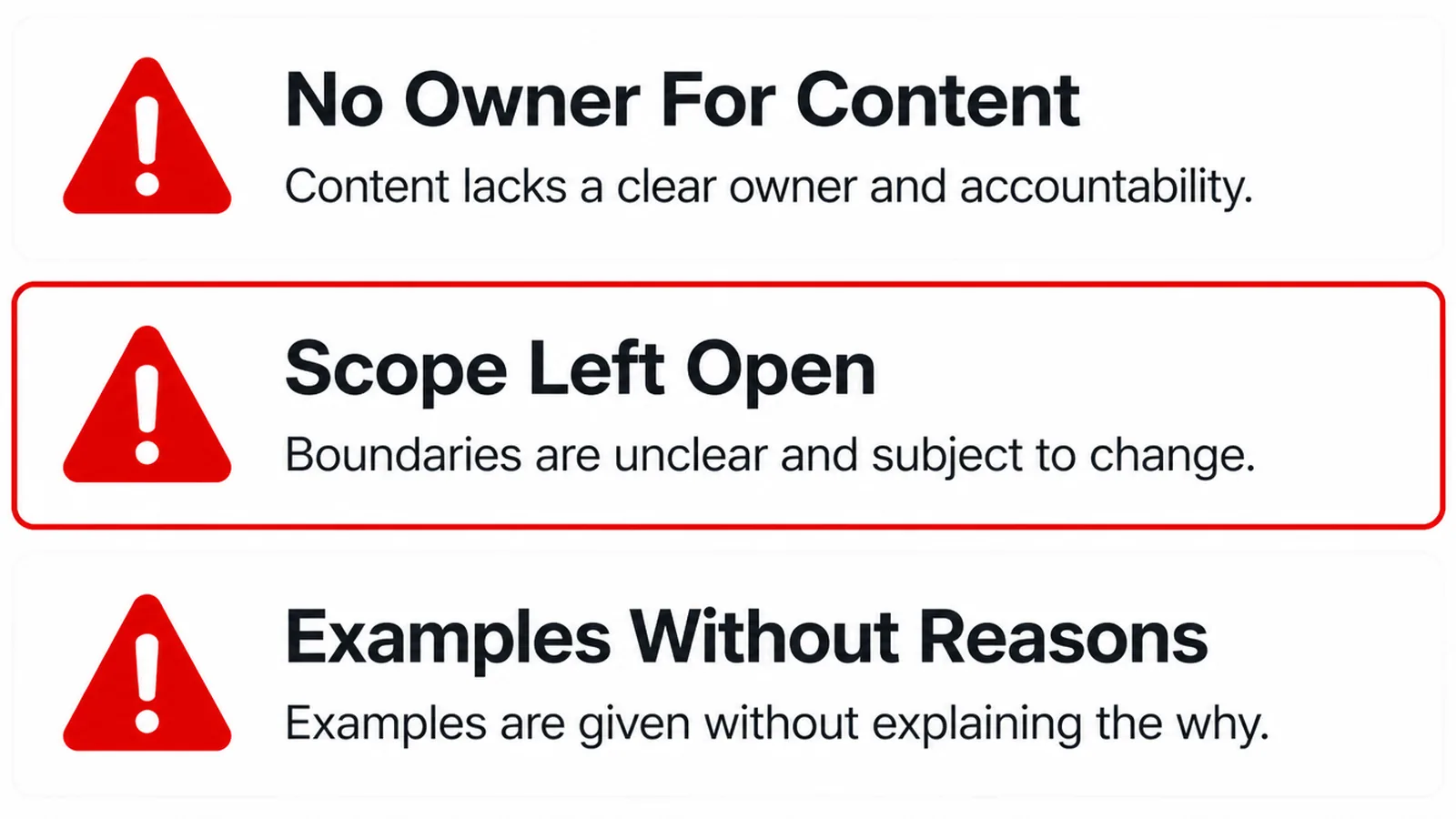
- No content owner. Everyone assumes somebody else is writing the words.
- Adjectives instead of decisions. Modern, clean and professional, which describe nothing.
- No budget. Proposals arrive aimed at four different projects and cannot be compared.
A fourth is quieter and costs more over time: briefing only the launch. A site is not finished when it goes live, and nobody has agreed who updates it in March.
Put one line in the brief about what happens after launch. Who makes changes, who keeps it updated, and what that arrangement costs.
FAQs
How long should a website brief be?
Two pages is usually enough for a small business site. What matters is that it answers the purpose, the audience, the pages, the content owner and the date, rather than how many words it takes. A long brief full of adjectives settles less than a short one full of decisions.
What if I do not know what I want?
Describe the problem rather than the solution. Say what enquiries you want, who you want them from, and what currently gets in the way. A designer can work from that; nobody can work from a request for something modern and clean.
Who should write the brief?
Whoever will make the decisions, which in a small business is usually the owner. It can be drafted with help, and it should not be written by the supplier alone. A brief a designer wrote for you is a quote wearing different clothes.
Should the brief include a budget?
Yes, as a range. Without one you get proposals aimed at different projects and no way to compare them. A range lets a designer tell you honestly what fits inside it, which is far more useful than finding out after three weeks of conversation.
Conclusion
A website brief is three sentences about purpose and audience, a page list with a reason beside each line, and a name against every piece of content.
Add the budget range, the date and who approves, and you have removed most of the ways a project goes slowly wrong.
If you would like a brief read before you send it out, see how we approach web design, or get in touch and we will tell you what is missing from it.