

Key takeaways
- You cannot make shipping free. You can only lower the real cost and decide who pays it.
- Packaging and carrier choice are where most stores overpay. Fix those two first.
- Shipping is a sales problem too. Extra costs like shipping and fees are the number one reason people abandon carts.
- Volume is bargaining power. As you ship more, you qualify for better rates, alone or through a platform that pools volume.
- Returns are shipping paid twice. Clearer photos and sizing quietly shrink your total bill.
- A free-shipping threshold protects margin. Build the cost into the order, not into a giveaway.
Here is the honest truth about how to reduce shipping costs: you cannot make shipping free. You can only lower the real cost and decide who pays it. Every parcel costs money to move, and pretending otherwise just hides the bill somewhere else.
The good news is there is plenty of slack to squeeze. Most stores overpay on packaging, default to a single carrier, and quietly eat the cost of returns.
Shipping also matters right at the till. Extra costs like shipping, tax and fees are the number one reason people abandon their carts, cited by 39% of shoppers, and the average documented abandonment rate sits at 70.22% (Baymard). Fix the cost and you fix a lot of lost sales.
New to how any of this works? Start with our guide to ecommerce shipping, then come back here for the savings.
1. What actually drives your shipping cost?
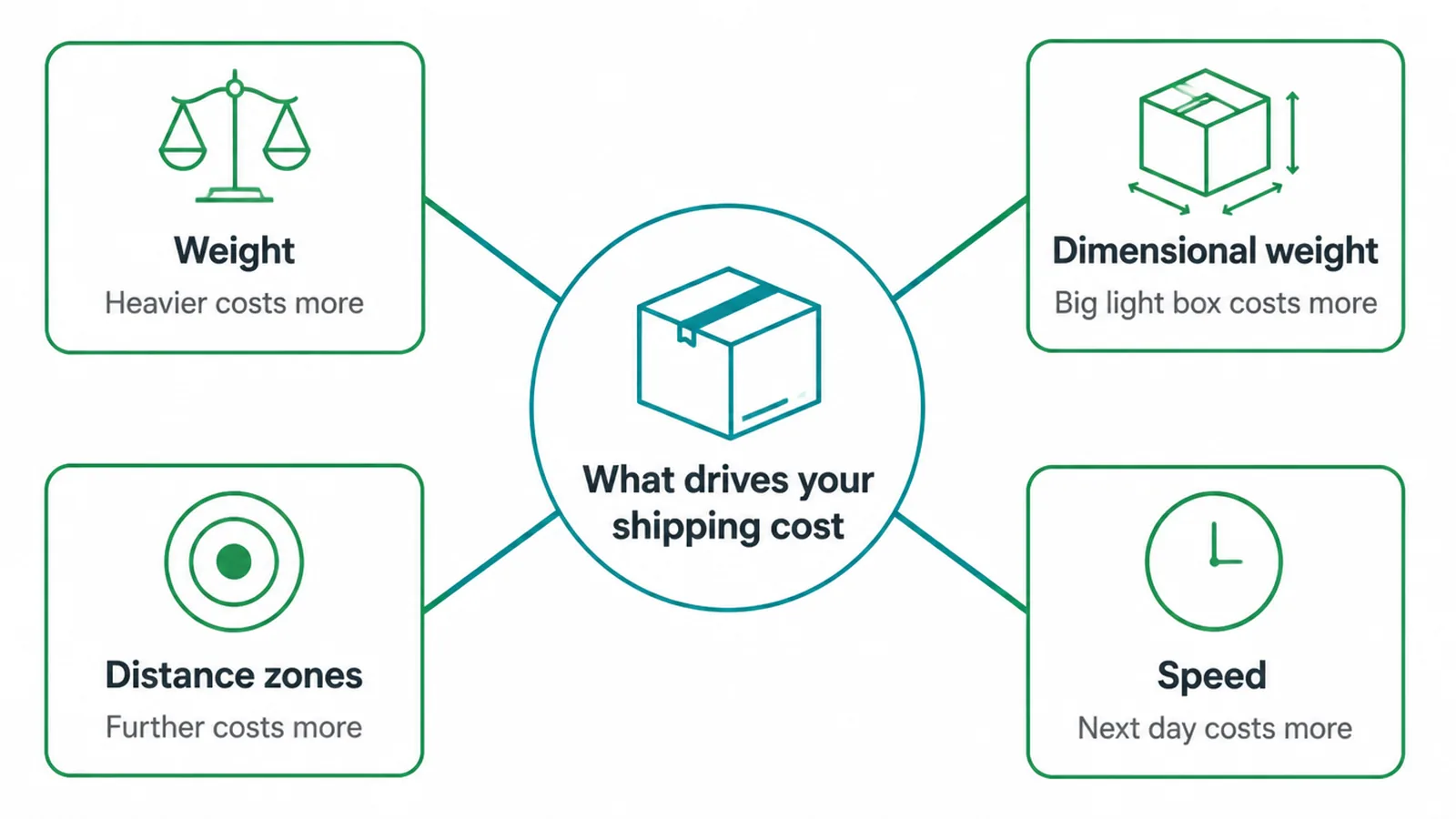
Before you can cut a cost, you need to know what you are paying for. Four things move the price of a parcel.
- Weight, which is obvious. The heavier the item, the more it costs to carry.
- Dimensional weight, which is size. A big, light box can cost more than a small, heavy one, and this catches a lot of owners out.
- Distance, usually sold as zones. The further your parcel travels, the more you pay.
- Speed. Next-day is dear, a few days is cheaper.
What you control and what you do not
Here is the honest framing. You do not control the customer's address or how heavy your product really is. What you do control is the box you put it in, the carrier you hand it to, the speed you offer, and how often a parcel goes out twice because of a return.
Those are the levers. The rest of this post works through them one by one, starting with the biggest and easiest win.
2. Right-size your packaging first
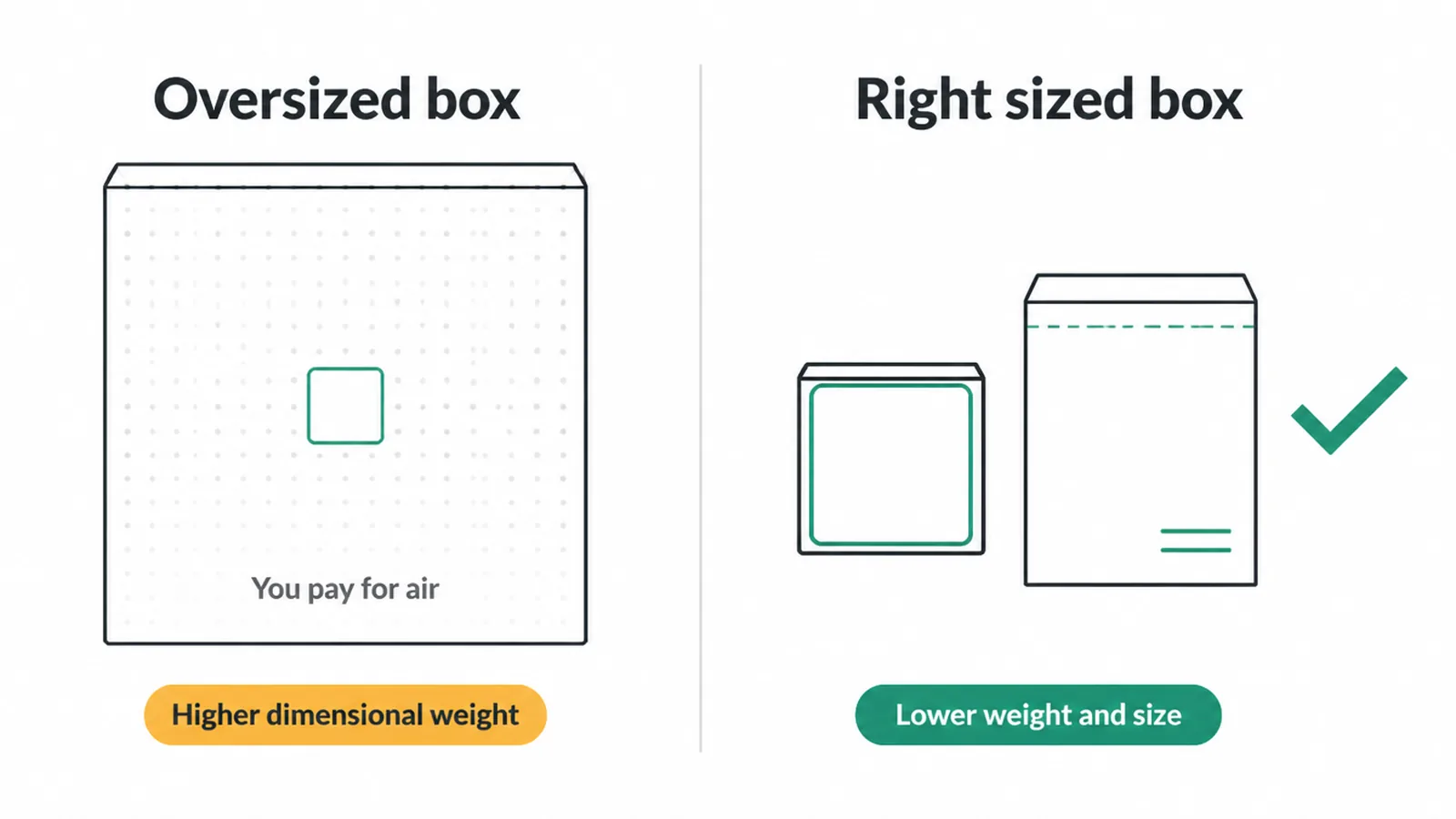
Packaging is the fastest win, and most stores get it wrong. The culprit is dimensional weight. Carriers charge you the greater of a parcel's actual weight and its dimensional weight, which is worked out from the box size.
So if you ship a small item in a big box full of air, you pay for that air. A right-sized box or a padded mailer can drop the price of the exact same product, because you are no longer paying to move empty space.
Match the box to the product
Start by matching the box to the product. Keep a small range of sizes rather than one giant default. Swap heavy boxes for lighter ones where the item allows, and use mailers for anything soft or flat. Lighter void fill helps too.
None of this is glamorous, and the saving on a single parcel looks tiny. But you ship the same shapes over and over, so a small cut per parcel stacks up fast across a month. This is one of the few changes that lowers both your weight and your dimensional weight at the same time.
3. Compare carriers instead of defaulting to one
Most stores pick one carrier early on and never look again. That is a quiet, ongoing overpay. No single carrier is cheapest for every parcel.
One might win on light items, another on heavy ones, another on a certain zone or a certain speed. When you only ever use one, you are paying their price on parcels where a rival would have been cheaper.
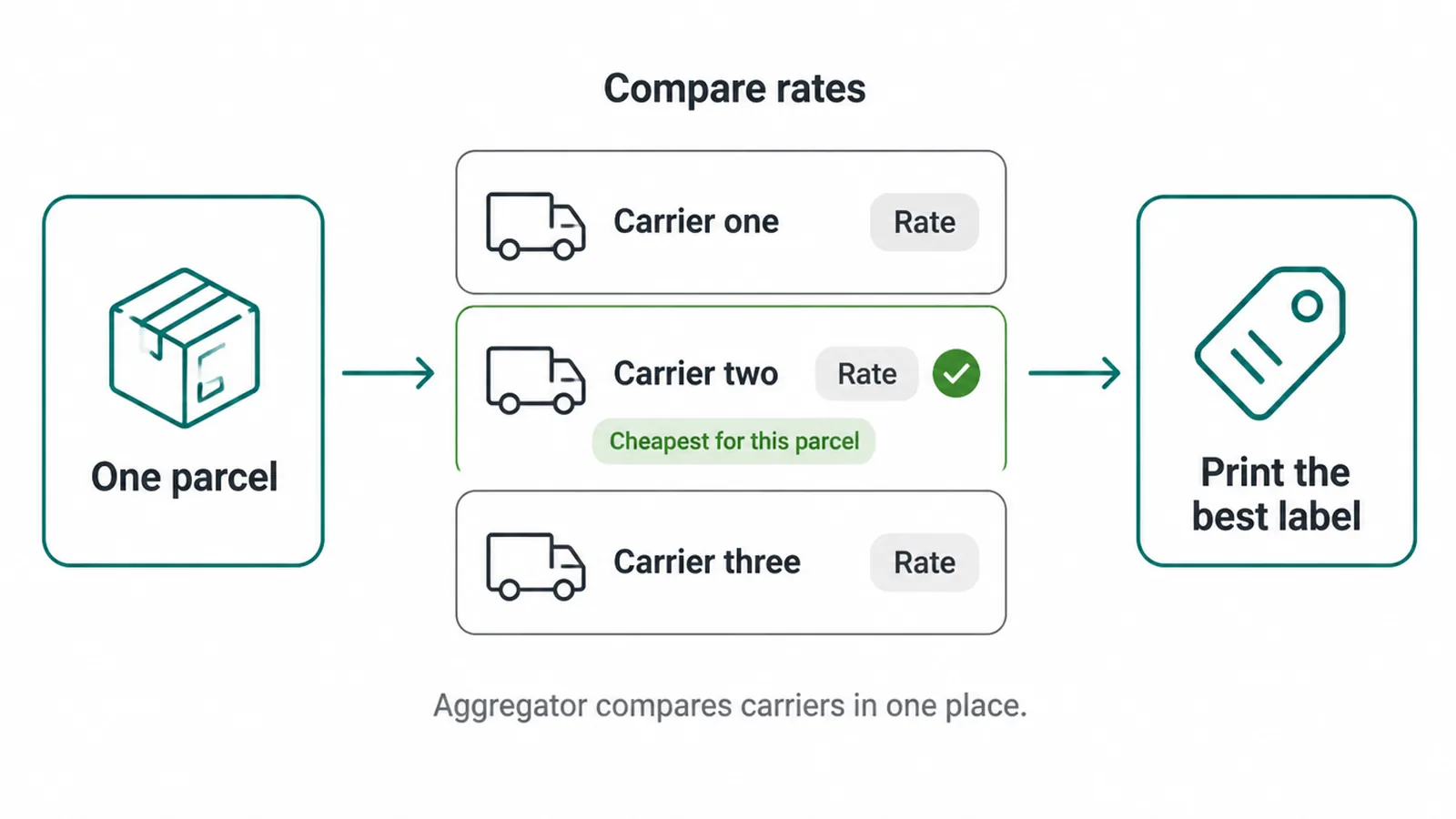
The simple move is to compare. For a small store you can literally check two or three carriers by hand and route each parcel to whoever is cheapest for that shape and destination.
Where a shipping aggregator earns its keep
As you grow, that gets tedious, and this is where a shipping aggregator earns its keep. An aggregator is a platform that connects several carriers, buys discounted labels, and shows you the rates side by side in one place. You print the best label without logging into five different sites.
Do not forget regional or local carriers either. For short-distance parcels they often beat the big national names, and they are worth a quick test on your busiest routes.
4. Grow into better rates
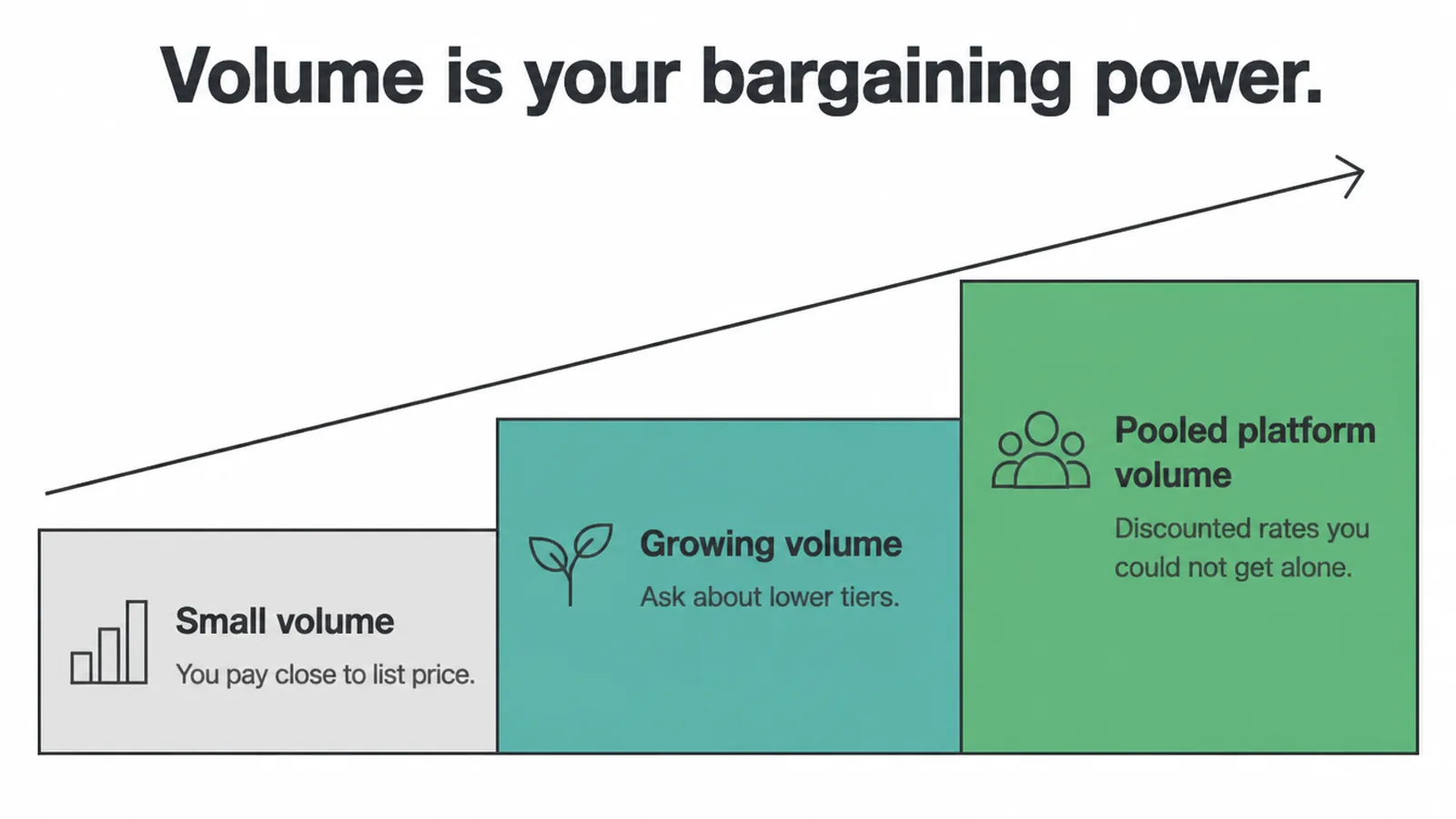
Carriers reward consistency. The more you ship, and the more predictable your volume, the more room you have to ask for a better deal. When you are tiny, you pay something close to list price.
As your volume climbs, you gain bargaining power, and that bargaining power is worth using. Ask your carrier what tiers exist and what you need to hit to unlock a lower one. Many owners never ask, so they never find out they qualified months ago.
Two paths to cheaper labels
You do not have to be huge to benefit, either. This is the second reason shipping platforms are handy. Many pool the volume of thousands of small sellers and pass discounted rates down to you, rates you could never negotiate alone at your size. So there are two paths to cheaper labels:
- Grow your own volume and negotiate directly.
- Borrow the pooled volume of a platform.
Small stores usually start with the platform and negotiate directly once their own numbers get big enough to matter. Either way, the message is the same. Volume is the lever, so use whatever volume you can reach.
5. Offer the right shipping options
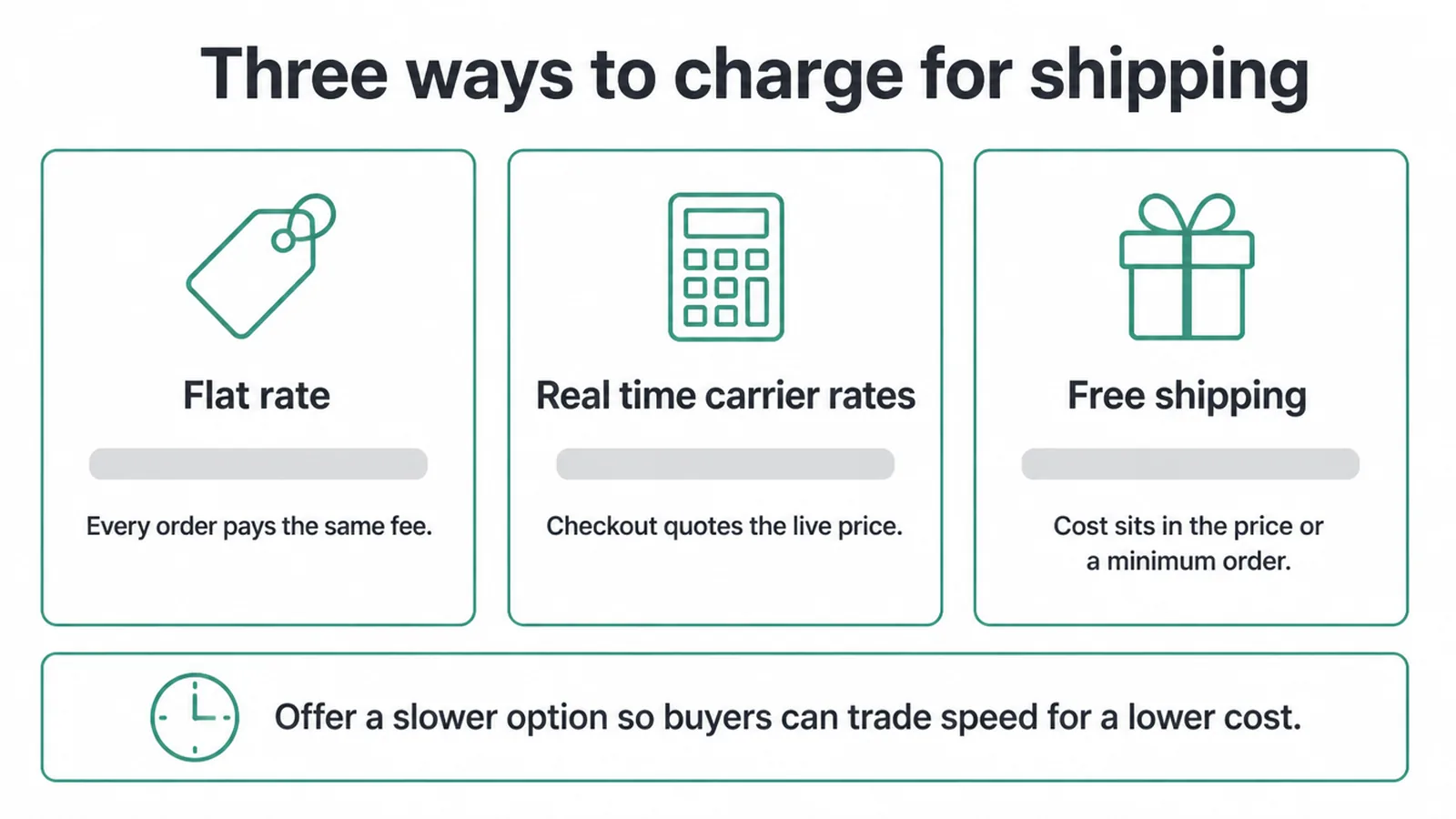
How you present shipping at checkout is its own lever. You broadly have three models.
- Flat rate, where every order pays the same simple fee.
- Real-time carrier rates, where the checkout quotes the live price for that basket and address.
- Free shipping, where the cost is hidden inside the product price or a minimum order.
Most stores end up mixing them, and that is fine.
Give the buyer a choice of speed
One underused move is to give the buyer a choice of speed. Plenty of shoppers do not need it tomorrow.
If you offer a cheaper, slower option next to the fast one, a good share of people will happily pick slow and save you the premium. You lower your cost and they feel in control, which is a rare win-win.
The one rule is to keep the choice clear and honest at the checkout. A confusing or surprising shipping step is a classic conversion killer, and our guide to checkout optimization walks through how to keep that moment smooth so the cost you present does not scare people off.
6. Use a free-shipping threshold, not a giveaway
Free shipping is powerful because it removes the biggest objection at the till. Remember, extra costs are the top reason carts get abandoned. But free shipping is never actually free.
Someone always pays, and if you are not careful that someone is you, straight out of your margin. The trick is to make the order pay for it, not your profit.
Let the order cover the cost
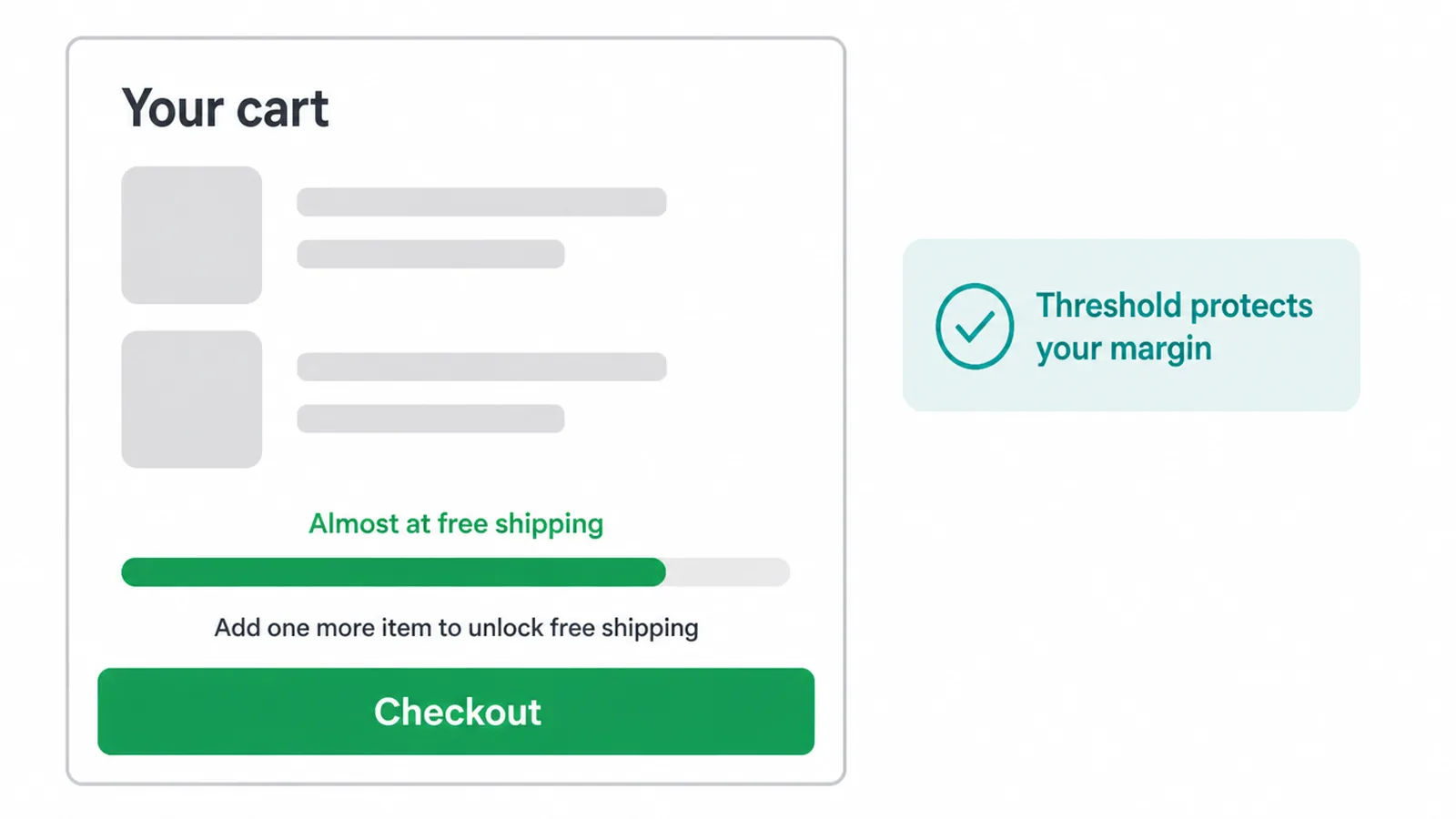
The cleanest way is a threshold. Offer free shipping once an order passes a minimum value you have chosen so the extra items cover the shipping cost. The buyer feels rewarded, often adds another item to reach it, and your margin stays intact.
The alternative is to build the shipping cost quietly into your product prices so the checkout reads free while the number still adds up for you. Both approaches beat a blanket giveaway.
Set the threshold using your real numbers, not a figure you copied from a competitor, because their margins and their basket sizes are not yours.
7. Cut returns to cut hidden shipping
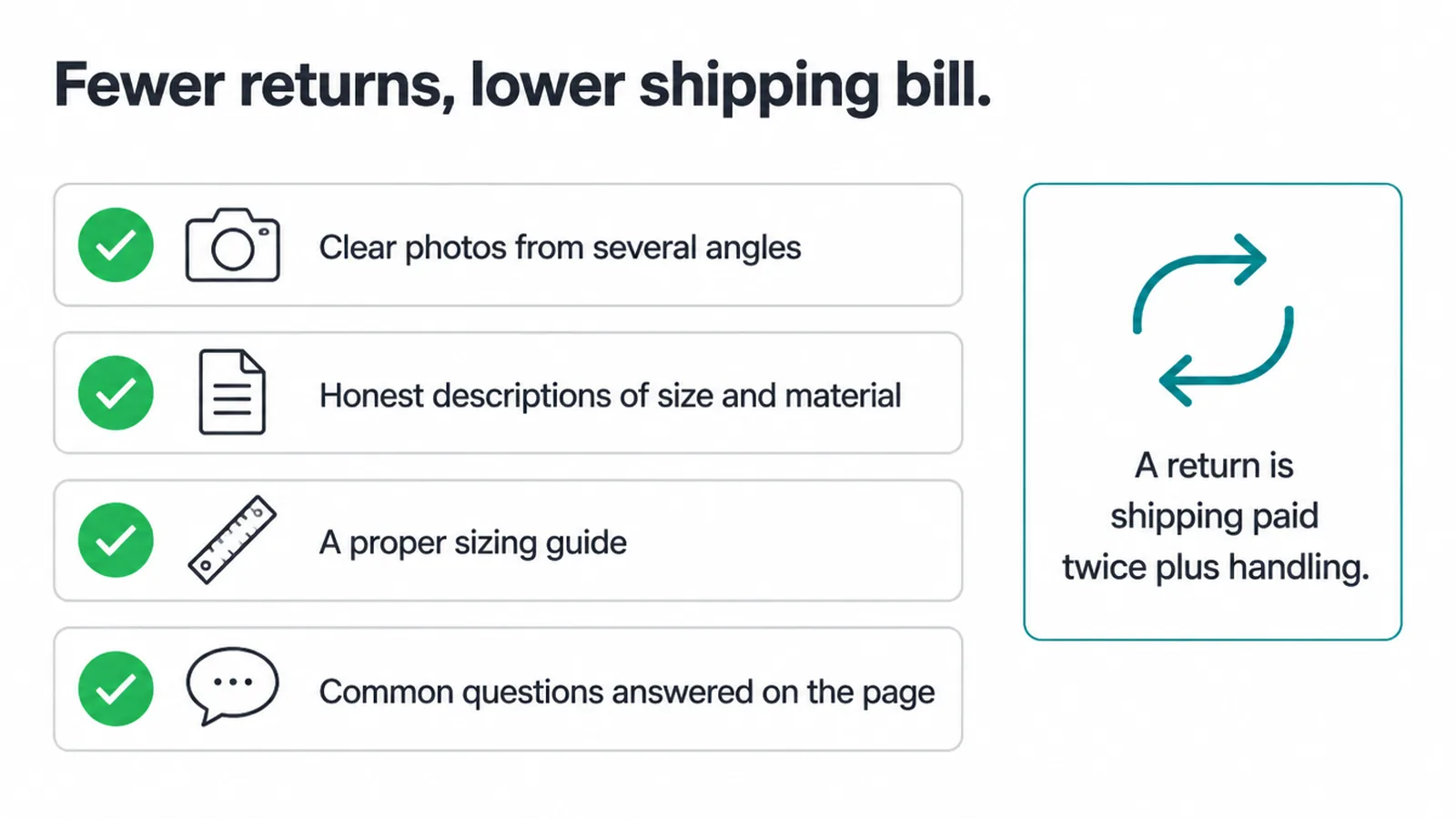
Returns are the shipping cost nobody puts on the whiteboard. Every return is shipping paid twice, out to the customer and back to you, plus the handling to check, repack and restock the item.
A store with a high return rate is bleeding shipping money even when its label prices look sharp. So one of the best ways to lower your total shipping bill is to send fewer parcels back in the first place.
Close the gap before they buy
Most returns come from a gap between what the customer expected and what turned up. You close that gap with better information before they buy.
- Clear, accurate photos from several angles.
- Honest descriptions that state the real size, material and fit.
- A proper sizing guide for anything worn.
- Answers to the common worries right there on the product page.
This is the same work that lifts your sales, so it pays twice, and our guide on how to increase your website conversion rate covers the product-page details that quietly reduce both bounces and returns.
8. Fulfil closer to your customers
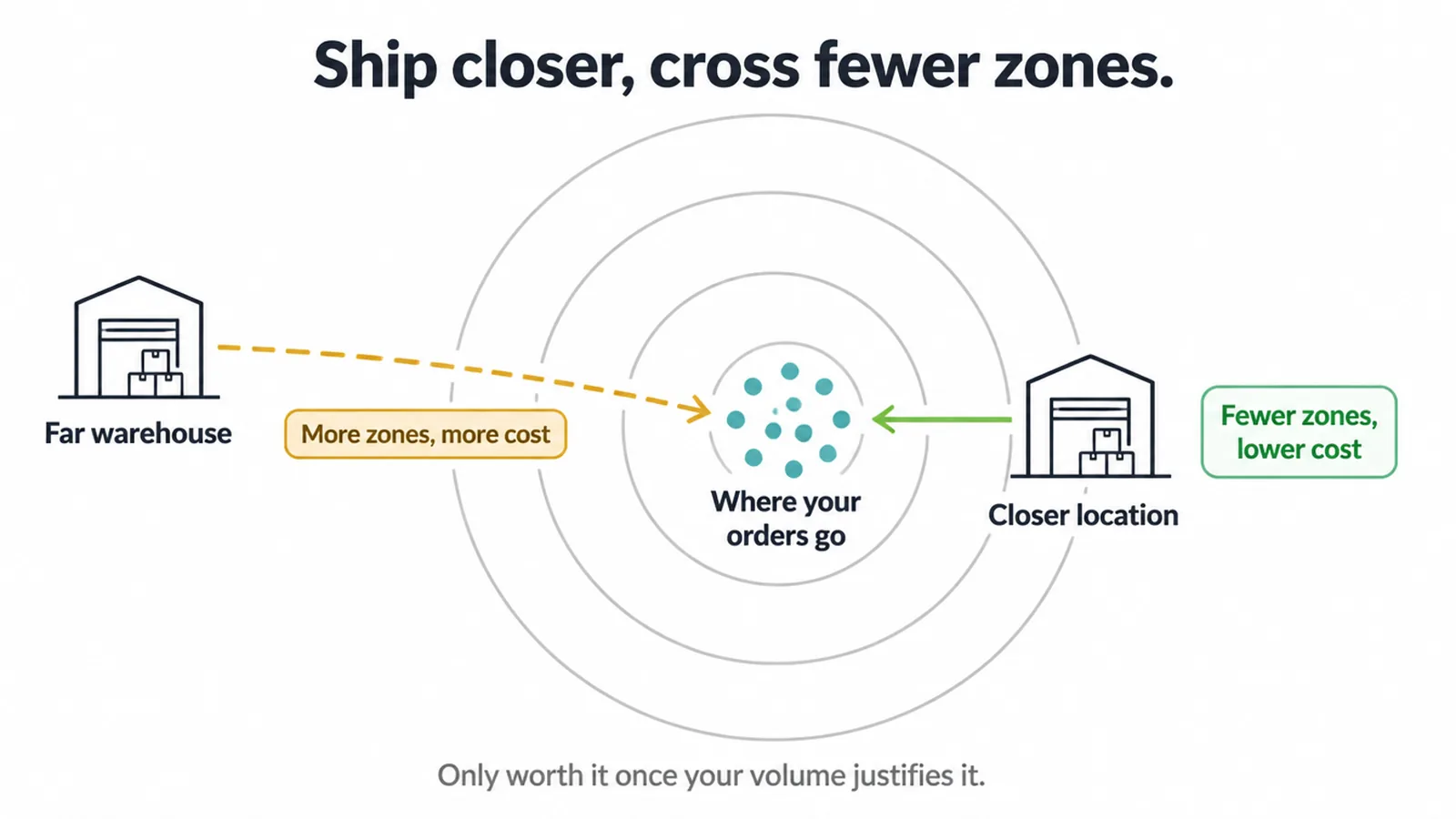
Distance costs money, so the further a parcel travels, the more you pay in zone charges. If a big chunk of your orders head to one region far from your warehouse, every one of those parcels is paying for the long trip.
Shipping from a location closer to your buyers cuts the zones a parcel crosses, and that lowers the cost on your busiest routes.
Start simple, do not overbuild
Now, do not overbuild this. A second warehouse or a fulfilment partner is a real commitment, and it only makes sense once you have the order volume to justify it.
Start simple. Look at where your orders actually go. If they cluster in one area, that is your signal that regional fulfilment might pay off later.
Until then, the earlier levers, packaging, carriers and returns, will give you far more saving for far less effort. File this one under "when you are bigger" and revisit it when your shipping map tells you to.
9. The tactics at a glance
Here is the whole playbook in one place. Read across each row: the tactic, how it actually lowers your cost, and the thing to watch so it does not backfire.
Work top to bottom. The tactics near the top give most stores the biggest saving for the least effort, and the ones near the bottom are worth it only once you are shipping serious volume.
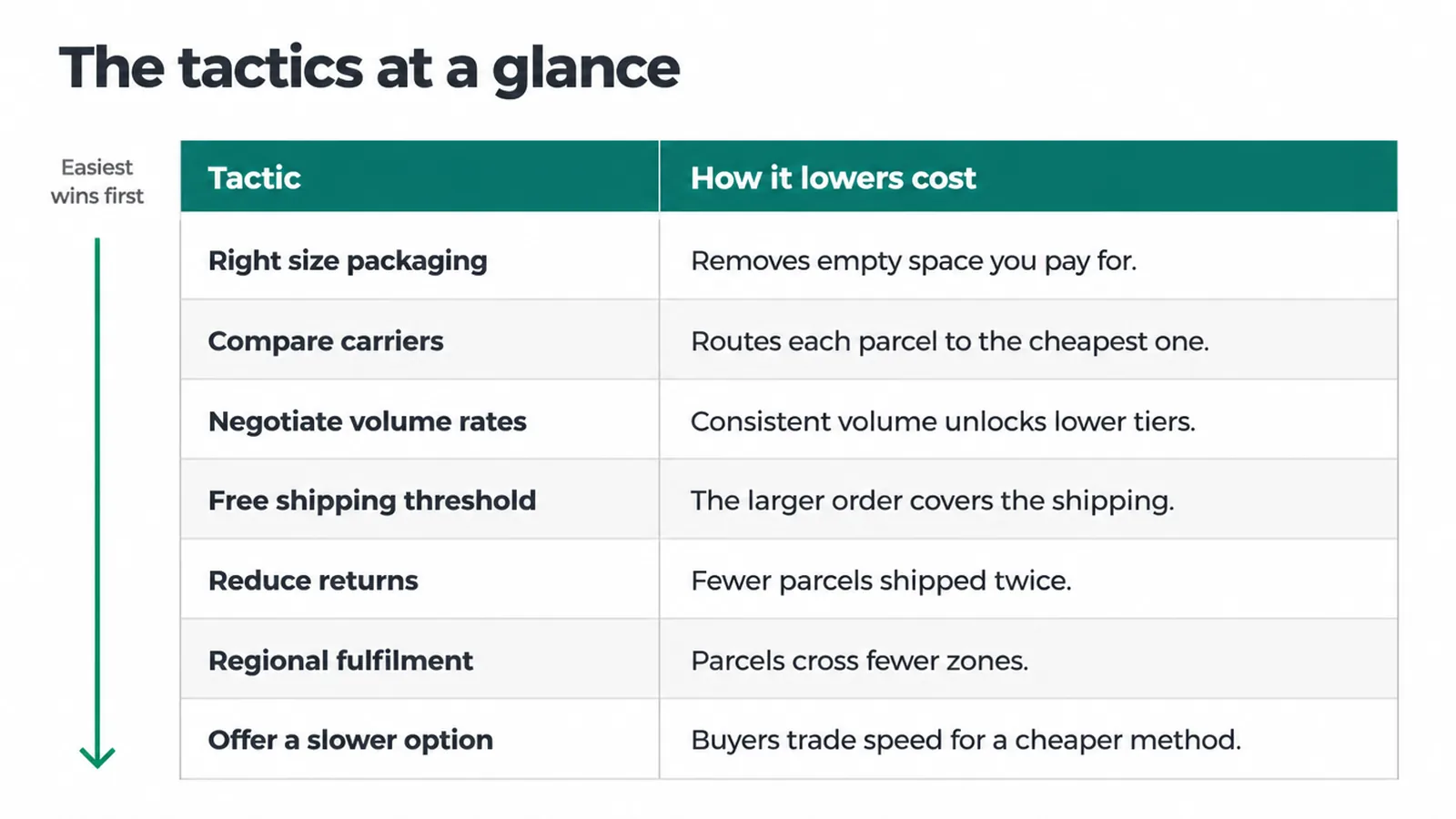
| Tactic | How it lowers cost | Watch out for |
|---|---|---|
| Right-size packaging | Cuts actual and dimensional weight by removing empty space | Too little protection means damage and a costly return |
| Compare carriers or use an aggregator | Routes each parcel to the cheapest carrier for its shape and zone | Managing several accounts by hand gets messy as you grow |
| Negotiate volume rates | Consistent volume unlocks lower tiers, alone or via a pooled platform | Chasing a tier by over-shipping can cost more than it saves |
| Free-shipping threshold | The larger order covers the shipping instead of your margin | Set too low and you give away shipping on small baskets |
| Reduce returns | Fewer parcels shipped twice, plus less handling | Vague photos or sizing raise returns and hidden cost |
| Regional fulfilment | Ships closer to buyers so parcels cross fewer zones | Only worth the overhead once your volume justifies it |
| Offer a slower option | Lets buyers trade speed for a cheaper method you avoid the premium on | Keep delivery times honest so expectations stay clear |
FAQ
1. How can I reduce shipping costs?
Right-size your packaging, compare carriers instead of defaulting to one, qualify for volume discounts as you grow, reduce returns, and fulfil closer to your customers. Most savings come from packaging and carrier choice.
2. What is dimensional weight?
It is a price based on a package's size as well as its weight. Carriers charge the greater of actual weight and dimensional weight, so an oversized box for a small item costs you more.
3. Should I pass shipping costs to customers or absorb them?
Both are valid. You can charge shipping, build it into the product price, or set a free-shipping threshold. The right mix depends on your margins, because extra costs at checkout are the top reason people abandon carts.
4. Does free shipping actually help?
It removes the biggest checkout objection, but it is never truly free. It works only when the cost is built into your pricing or covered by a minimum order that protects your margin.
5. How do I negotiate better shipping rates?
Consistent volume is your bargaining power. As you ship more, ask carriers or use a shipping platform that pools volume to access discounted rates you could not get alone.
6. What is a shipping aggregator?
A platform that connects several carriers, buys discounted labels and compares rates in one place, so you are not stuck with a single carrier's pricing.
7. How does packaging affect shipping cost?
Smaller, lighter, right-sized packaging lowers both actual and dimensional weight, so choosing the correct box or mailer is one of the fastest ways to cut cost.
8. How do returns affect shipping costs?
Every return is shipping paid twice plus handling. Clear product information, accurate photos and good sizing guidance reduce returns, which quietly lowers your total shipping bill.
10. Turn a cheaper shipping bill into more sales
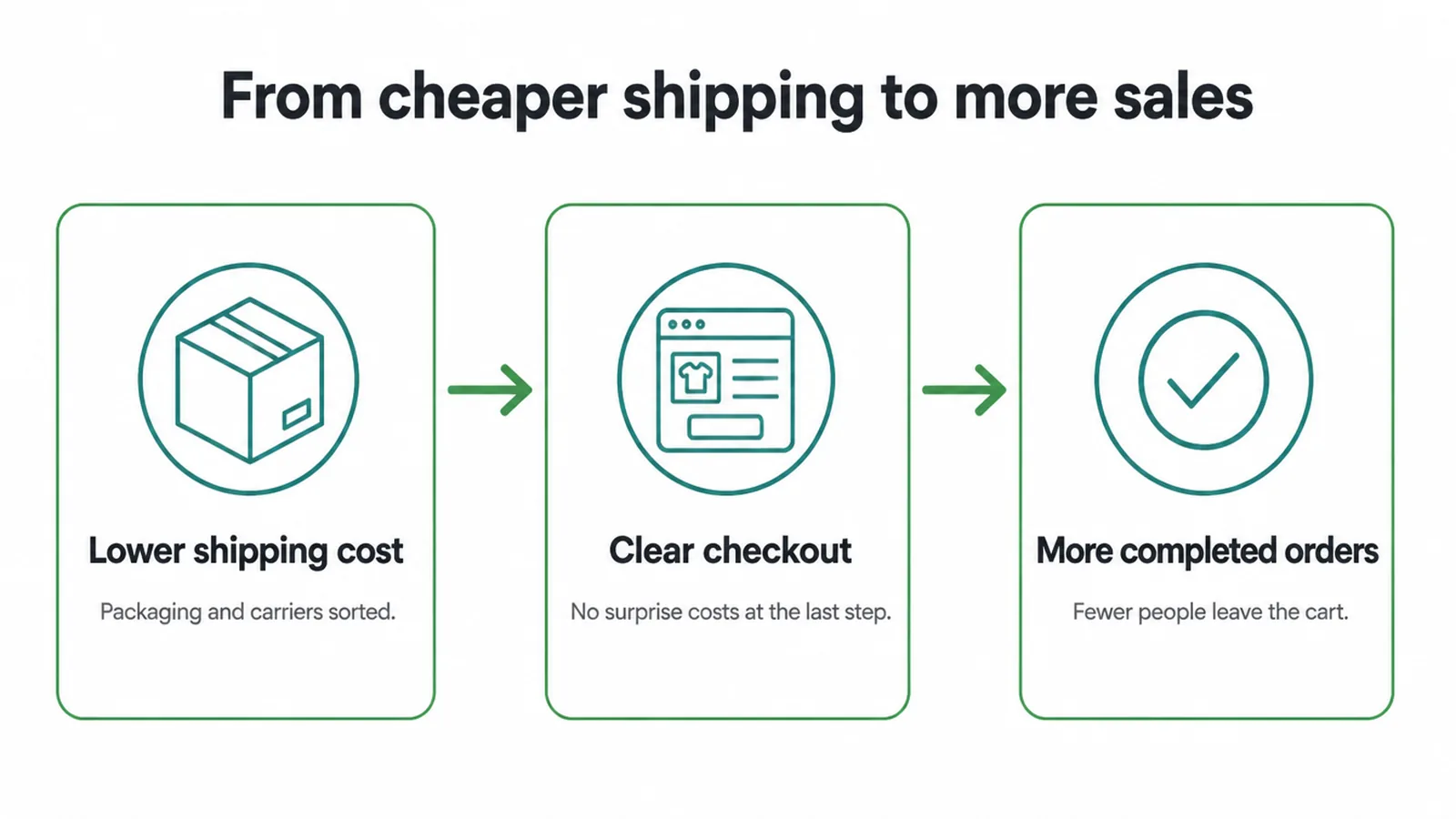
Lower shipping cost is only half the win. The other half is a store that presents that cost clearly, so people actually check out instead of bailing at the last step. That is our bread and butter.
If your packaging and carriers are sorted but your checkout still leaks buyers, plugging that leak is where our store design work starts. Want a second pair of eyes on where your store is losing orders? Tell us where it hurts and we will help you find the leak.
About the author
Gregory Yeoh is the founder of Seed Light, a web design and digital marketing agency that builds websites and runs marketing for small businesses. He has watched plenty of stores overpay on shipping and, worse, scare off ready buyers with a clumsy checkout. This guide exists to help you cut the real cost and present what is left honestly, without the hype or the invented figures.