

Key takeaways
- Shipping is a loop: order in, pack it, buy a label, hand it to a carrier, buyer gets tracking. Set it up once.
- Four decisions run it: carrier or app, the rates you show, how you pack, and how you handle returns.
- Free shipping is a pricing decision, not a gift. You build the cost into the price or set a minimum order.
- Extra costs are the top reason people abandon carts, cited by 39% of shoppers, and the average abandonment rate is 70.22% (Baymard).
- Show the full total early. Surprise fees at the payment step are what kill the sale.
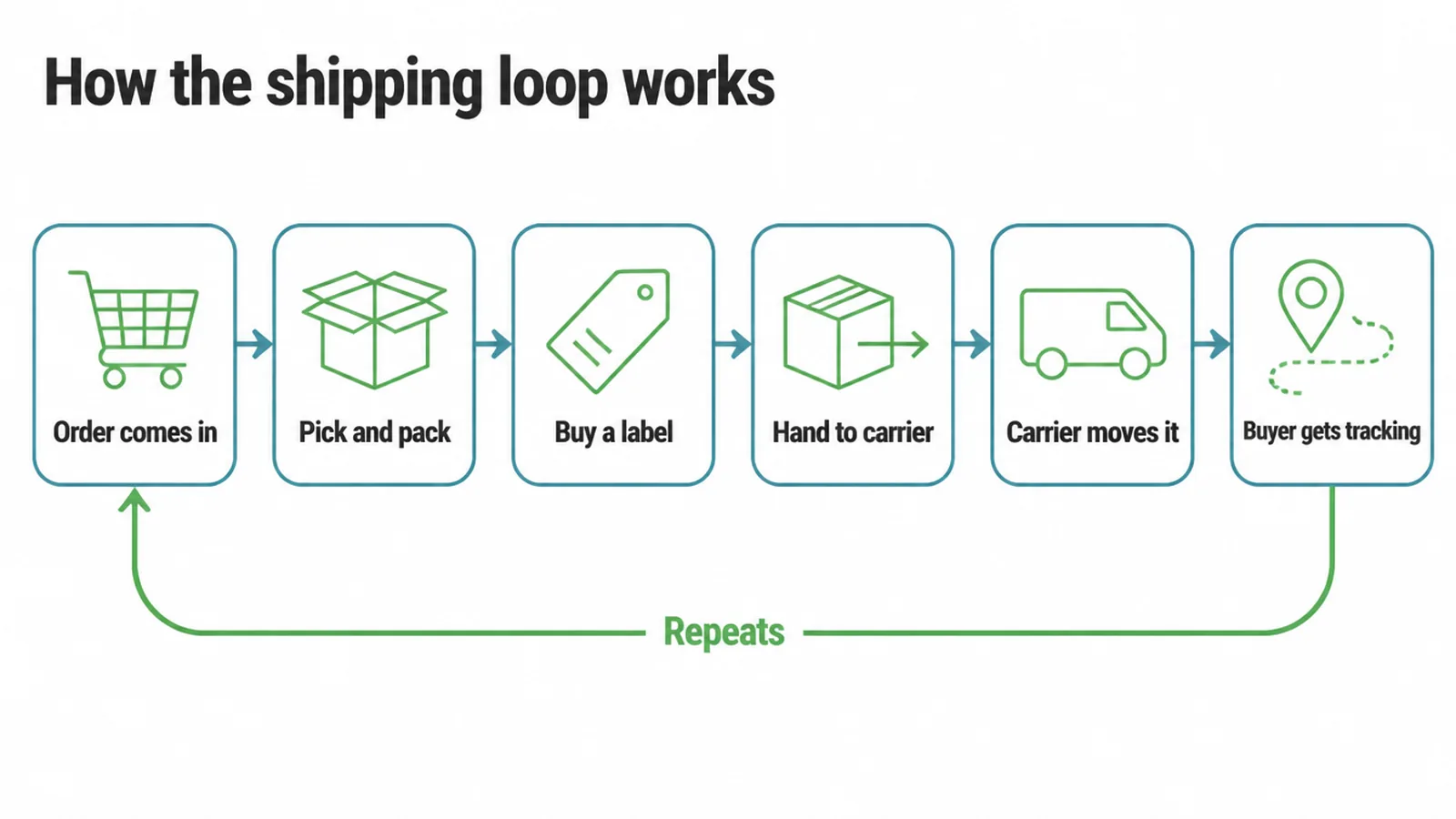
Ecommerce shipping is how a product gets from your shelf to your customer's door, and how you charge for it. An order comes in, you pack it, buy a label, hand it to a carrier, and the buyer gets tracking. That is the whole loop.
For a small store it comes down to four decisions:
- which carrier or app you use
- what rates you show at checkout
- how you pack
- how you handle returns
Get those right and shipping runs quietly in the background. Get them wrong and you lose the sale at the very last step, because extra costs like shipping are the number one reason people abandon carts (Baymard).
1. How ecommerce shipping works
The flow is the same for almost every store.
- A customer places an order.
- You pick the items and pack them.
- You buy a shipping label, either straight from a carrier or through a shipping app built into your store.
- You hand the parcel to the carrier, or they collect it.
- The carrier moves it, and your customer gets a tracking link so they can watch it arrive.
That is it. Once you have set up your rates and your label process, most of this repeats on autopilot.
The two points that need your attention
Your real job sits at two points in that loop. First, deciding which rates to show at checkout, because that is what the buyer sees and reacts to. Second, deciding how the label gets bought, because that is what eats your time on busy days.
Everything else is packing and handing over parcels. If you are still setting the store itself up, our guide on how to start an online store covers the pieces that come before shipping, so this slots in once your products are live.
2. Carriers versus shipping apps
You have two ways to buy labels, and the difference matters more than it sounds.
Going direct with a carrier
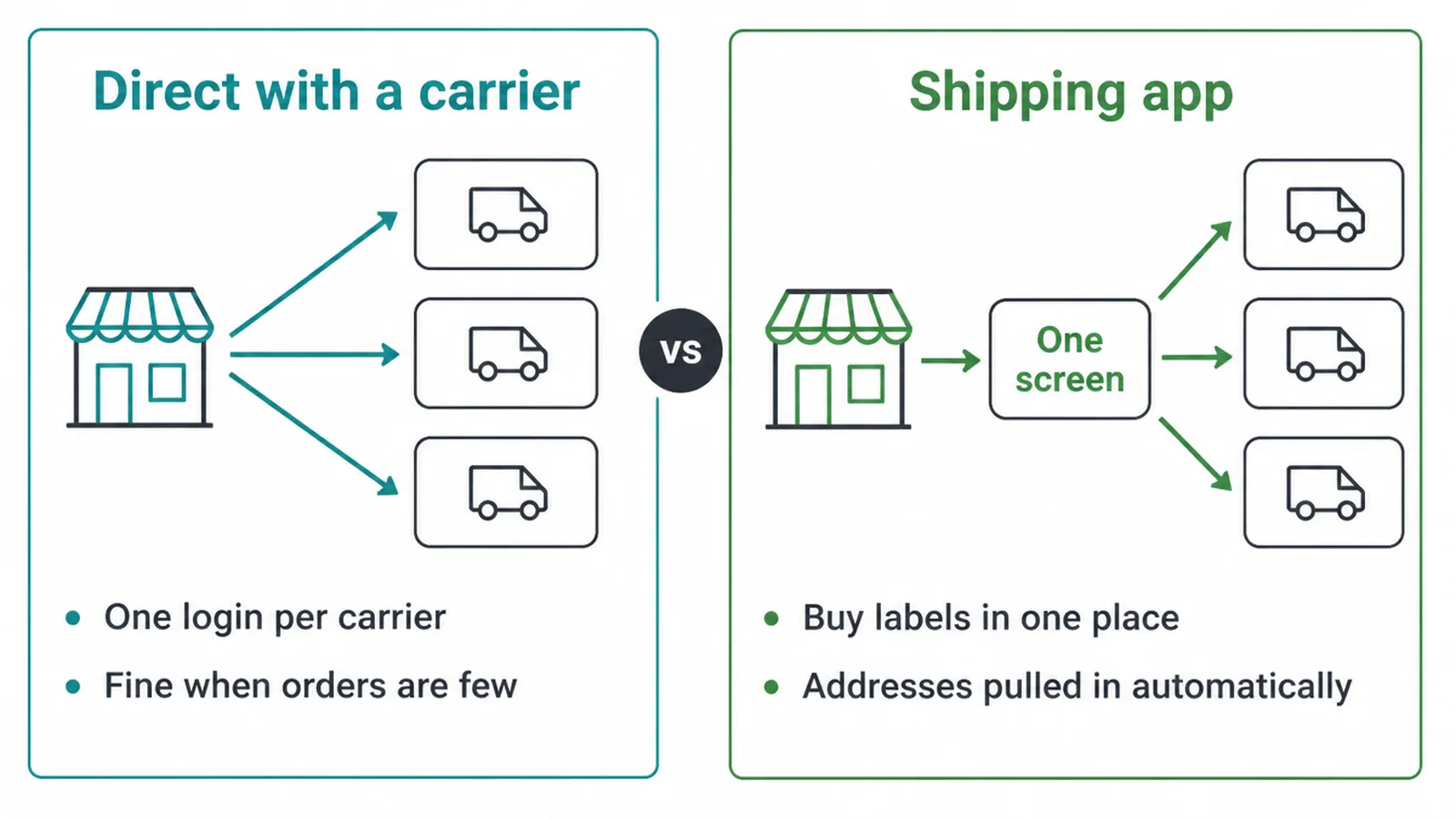
The first is going direct with a carrier. You open an account with a courier or postal service, log into their system, and buy each label there.
It works, and for a store shipping a trickle of orders it is fine. The downside is time. Juggling two or three carriers means two or three logins and no single view of your shipments.
Using a shipping app
The second way is a shipping app, also called an aggregator. It plugs into your store, connects several carriers at once, and lets you buy labels and track parcels from one screen.
It usually pulls order details in automatically, so you are not retyping addresses. For most growing stores this saves the most time. Start direct if you are tiny, then move to an app the moment logging into carriers starts eating your evenings.
3. Shipping rate options at checkout
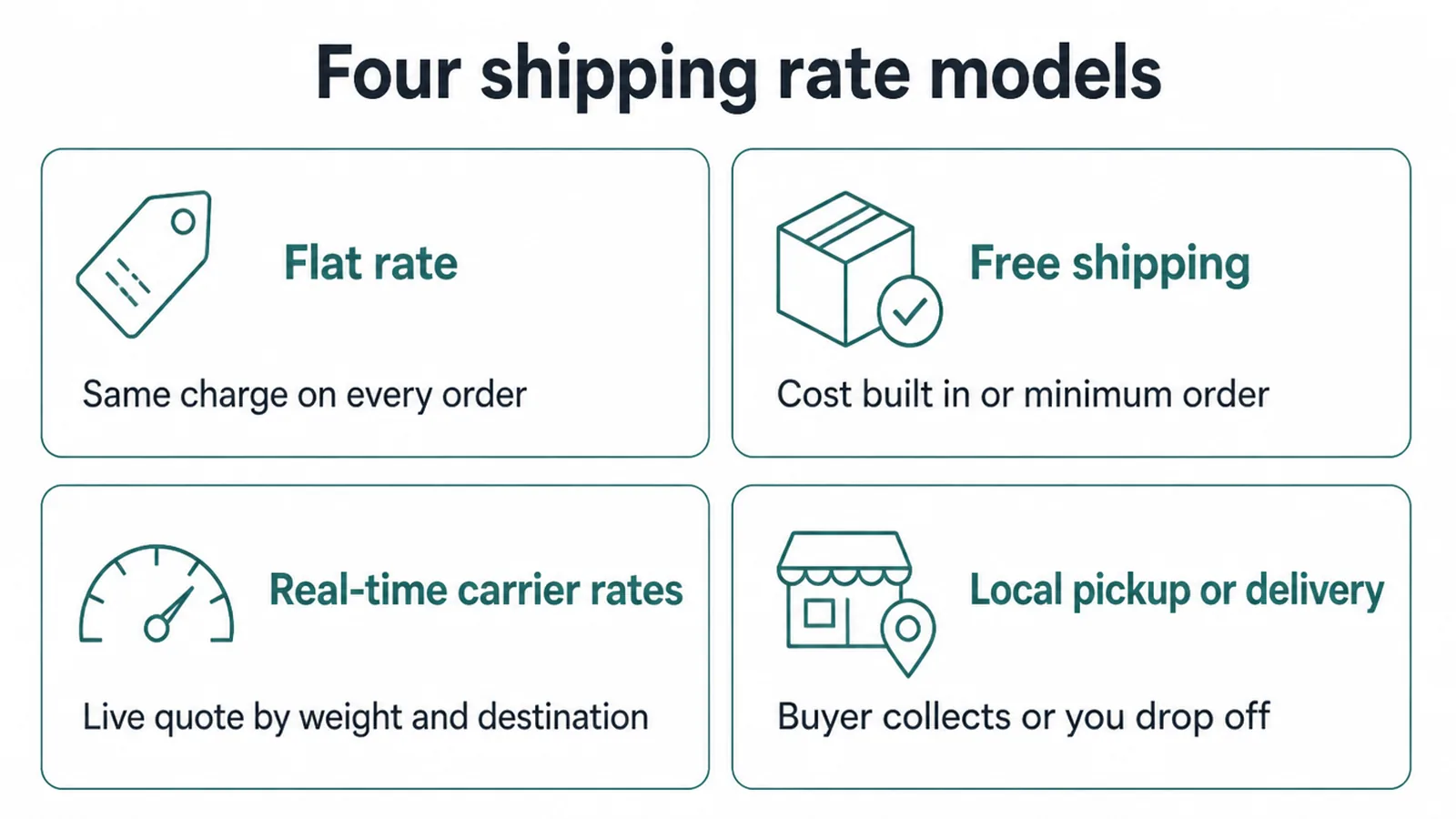
The rate you show at checkout shapes whether people buy. There are four common models, and most small stores use two or three of them together rather than picking just one.
The trick is to keep the list short. A shopper faced with one clear default and one faster option will decide quickly. A shopper faced with eight rows of choices will stall, and a stalled shopper often leaves. Below is how the four models work and who each one suits.
| Option | How it works | Best for |
|---|---|---|
| Flat rate | Every order pays one set shipping charge, whatever the weight or distance. | Small catalogues where items are similar in size and weight. |
| Free shipping | The buyer pays nothing extra, because you build the cost into the price or trigger it at a minimum order. | Stores with margin to spare that want to remove the checkout objection. |
| Real-time carrier rates | The store pulls a live quote from the carrier based on weight, size and destination. | Varied or heavy catalogues where a flat rate would over or undercharge. |
| Local pickup or delivery | The customer collects from you, or you drop it off nearby, skipping the carrier. | Stores with a physical location or a tight delivery area. |
You do not have to choose one forever. Many stores run a flat rate or free-shipping threshold as the everyday default, add a faster carrier rate for people in a hurry, and switch on local pickup if they have a shopfront.
The setup lives in your store's shipping settings, and getting it clean is part of the build. If you would rather it was done properly from the start, our ecommerce website design work sets these rates up so checkout stays simple.
4. Should you offer free shipping?
Free shipping is a pricing decision, not a gift. The parcel still costs money to move, so someone pays for it.
Either you build the cost into your product prices, which means the shipping is quietly baked in, or you set a minimum-order threshold so the buyer only unlocks it once their basket is big enough to cover it.
Both are fine. What matters is that your margin can carry it, because "free" that you cannot afford will bleed you slowly.
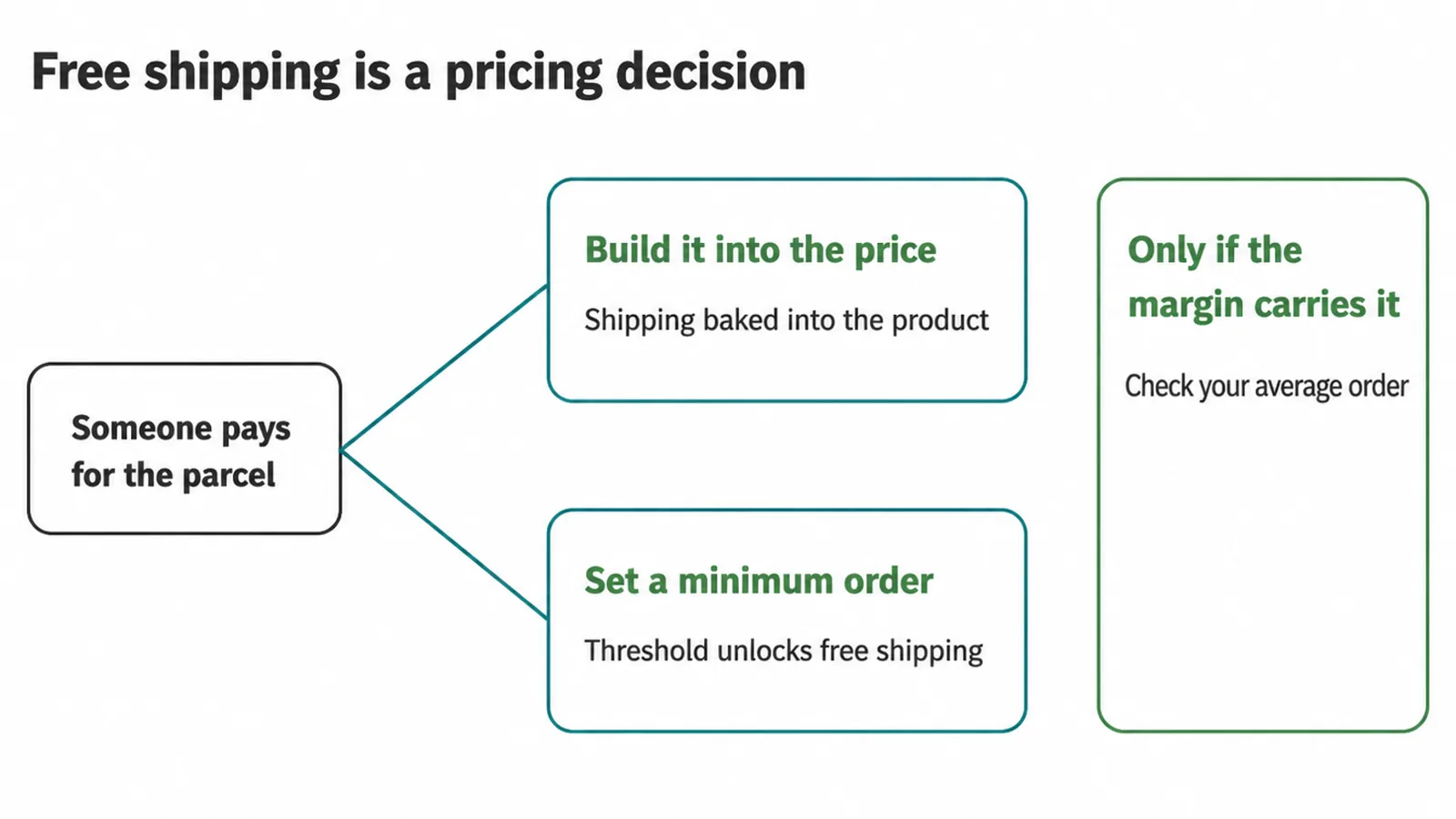
The upside is real. Extra costs at checkout, shipping chief among them, are the single biggest reason shoppers abandon their carts, named by 39% of them (Baymard). Removing that objection can smooth the path to buying.
So run the numbers on your average order and your typical parcel. If a threshold covers the cost without scaring people off, use one. If the maths does not work, a clear flat rate beats a free-shipping promise you have to claw back elsewhere.
5. Packaging basics
Packaging is a quiet cost centre, so it pays to get it right early. Two rules cover most of it.
- Use the right size. A box far bigger than its contents wastes material and often bumps you into a higher shipping band, so you pay to ship air.
- Protect the goods. A product that arrives broken becomes a refund, a return label and a bad review all at once, which costs far more than the padding would have.
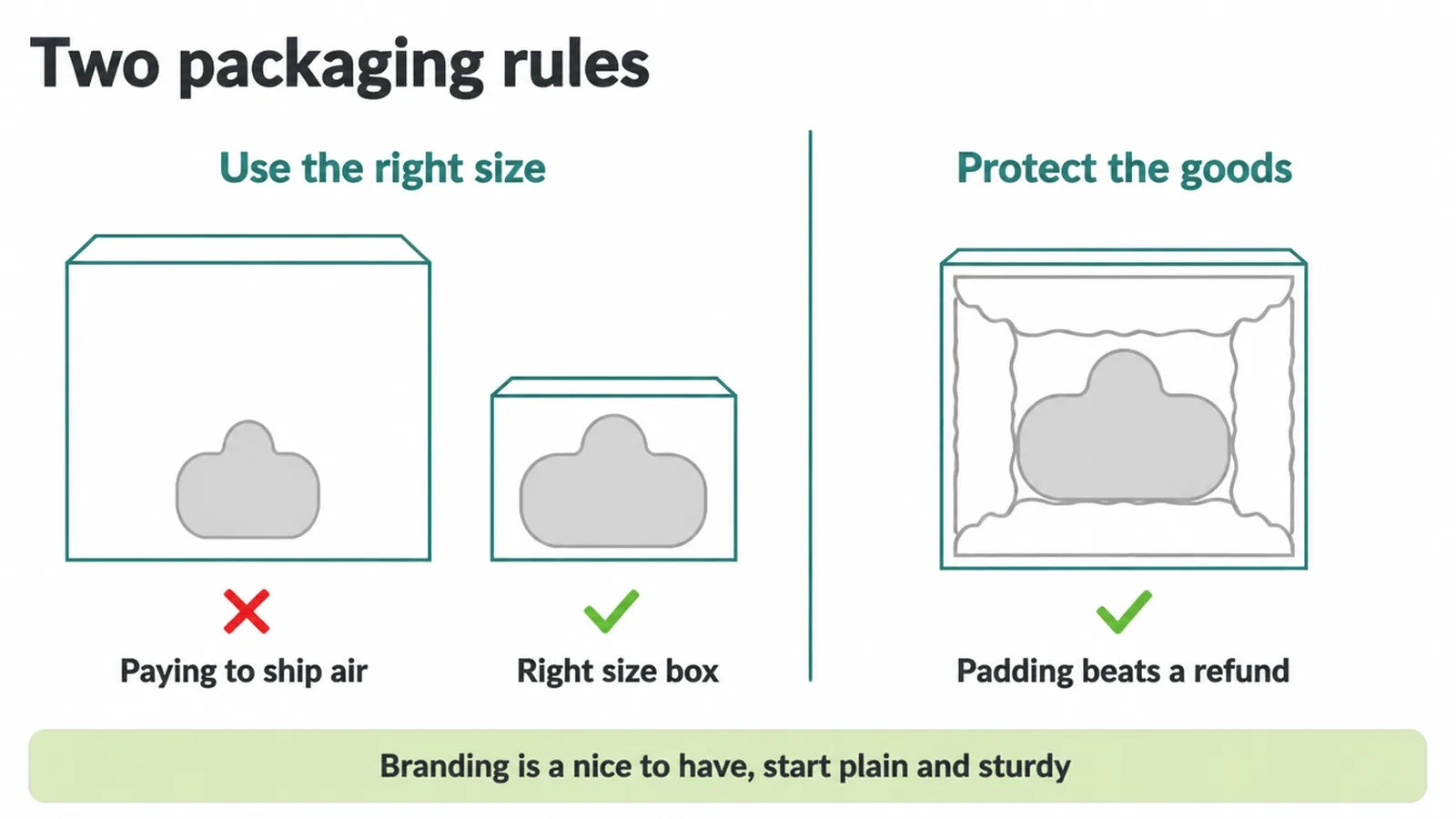
Branding sits on top of those two. A printed box or a thank-you note feels lovely and helps you stand out, but it is a nice-to-have, not a must.
Start plain and sturdy, then add branding once orders are steady. If you want to trim what shipping costs you overall, from packaging to carrier deals, our guide on how to reduce shipping costs goes deeper than we can here.
6. Tracking and notifications
Once a parcel is on its way, tracking is your best friend, because it answers the question customers ask most: "where is my order?".
Every carrier gives a tracking number, and your job is to get it in front of the buyer without them having to chase you. Most stores and shipping apps do this automatically, sending a link the moment the label is bought.
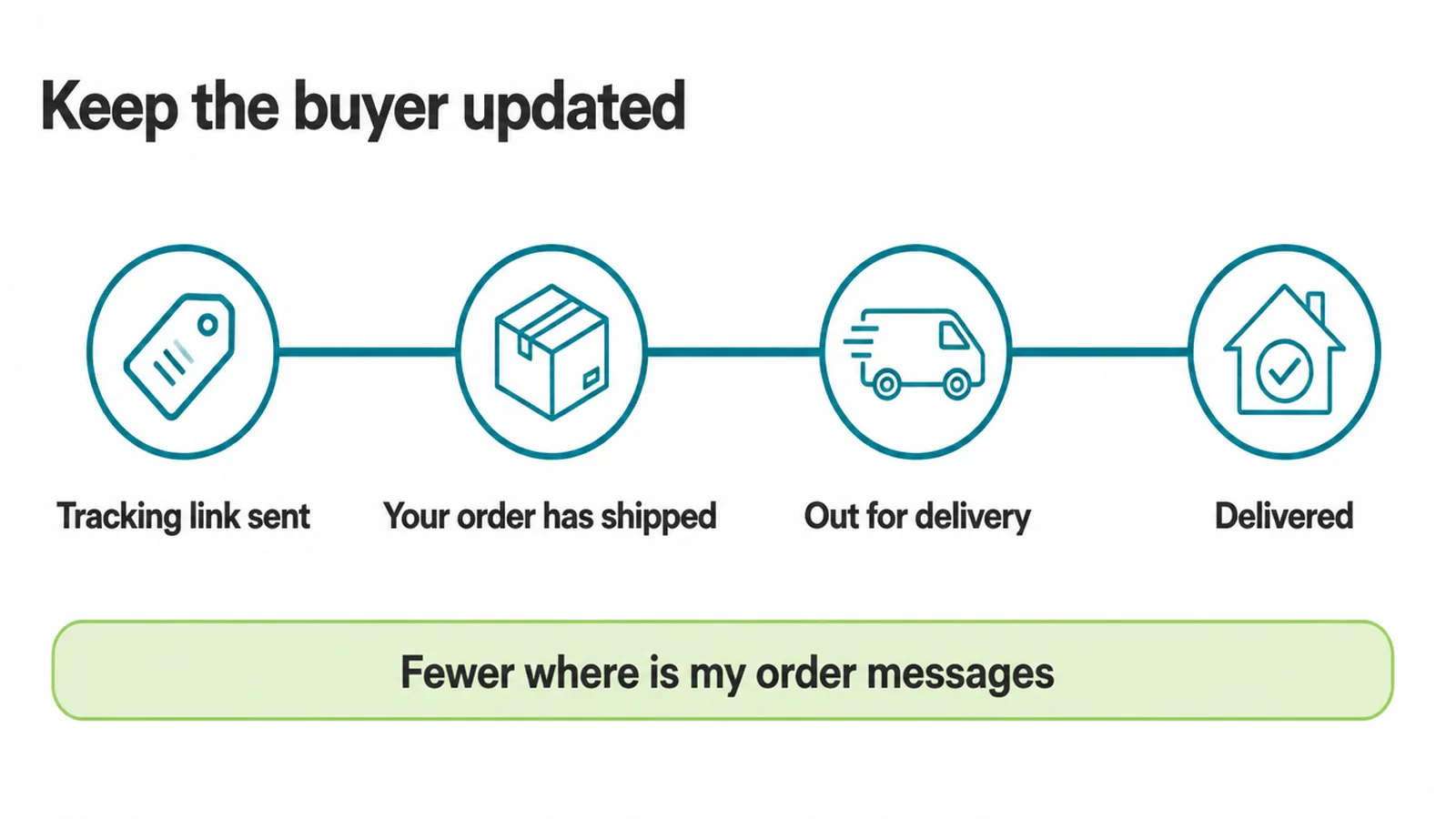
Go a step further and send status updates along the way. A short "your order has shipped", then "out for delivery", then "delivered" keeps the buyer calm and cuts the number of support messages you have to answer.
Those notifications do double duty. They reassure a nervous first-time customer, and they quietly build trust for the next order. Set them up once, and they run in the background for every parcel after that.
7. Returns and exchanges
Returns feel like the boring part, but a good policy sells before anyone buys. Shoppers read it while deciding, and a vague or hidden one makes them nervous.
In fact an unsatisfactory returns policy is a named reason people abandon carts, cited by 15% of them (Baymard). So write it clearly, put it where people can find it, and keep the language plain.
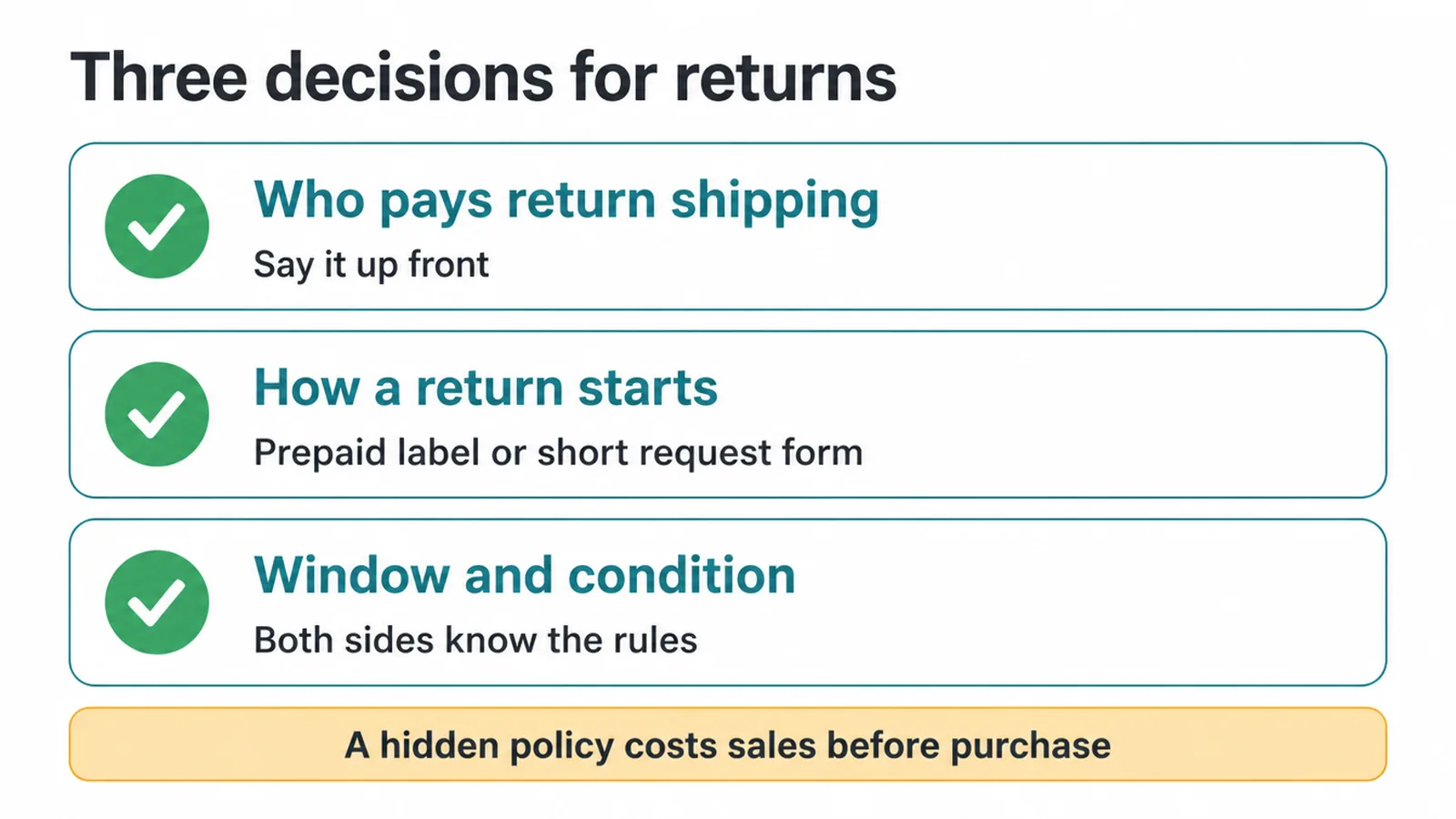
Three decisions cover it.
- Decide who pays return shipping, you or the customer, and say so up front.
- Give a simple way to start a return, either a prepaid label or a short request form, so nobody has to email you and wait.
- Set a clear window and condition, so both sides know the rules.
Handled well, returns become routine instead of a fight, and the buyer who had a smooth return often comes back. A messy return does the opposite and costs you the repeat order.
8. International shipping basics
Selling abroad opens up new buyers, but it adds a few wrinkles worth knowing before you switch it on.
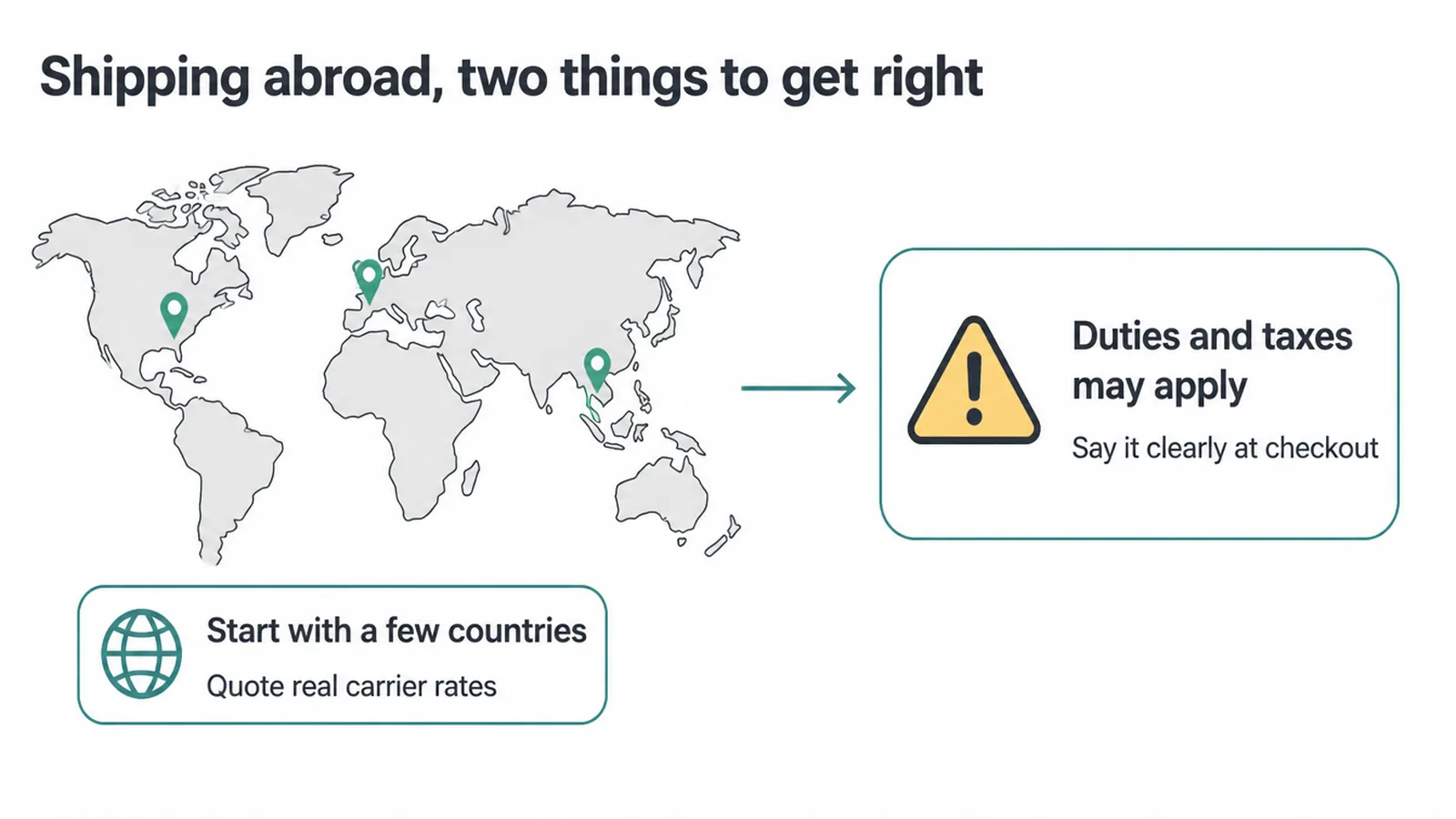
The big one is that you almost always need to charge for international shipping, because the parcels cost more to move and vary a lot by destination. Quote real carrier rates rather than guessing, so you are not eating the difference on every overseas order.
Customs duties and taxes
The second thing is customs. Duties and taxes may land on the buyer's end when the parcel arrives in their country, and if they are not warned, that surprise bill turns into an angry message or a refused delivery. State clearly at checkout that duties or taxes may apply.
Start with a few countries
The simplest way to start is small. Pick a few countries you already get interest from, set real rates for them, add the duties note, and grow the list once the process feels smooth. You do not have to ship worldwide on day one.
9. Build a simple shipping strategy
Put it all together and a solid shipping setup is not complicated. Start with a default rate that is easy to understand, usually a flat rate or a free-shipping threshold.
Add one faster option for the people who want it, and local pickup if you have somewhere to offer it. Resist the urge to list every possible service. Fewer, clearer options help people decide, which is the whole point.
Protect the sale at the finish line
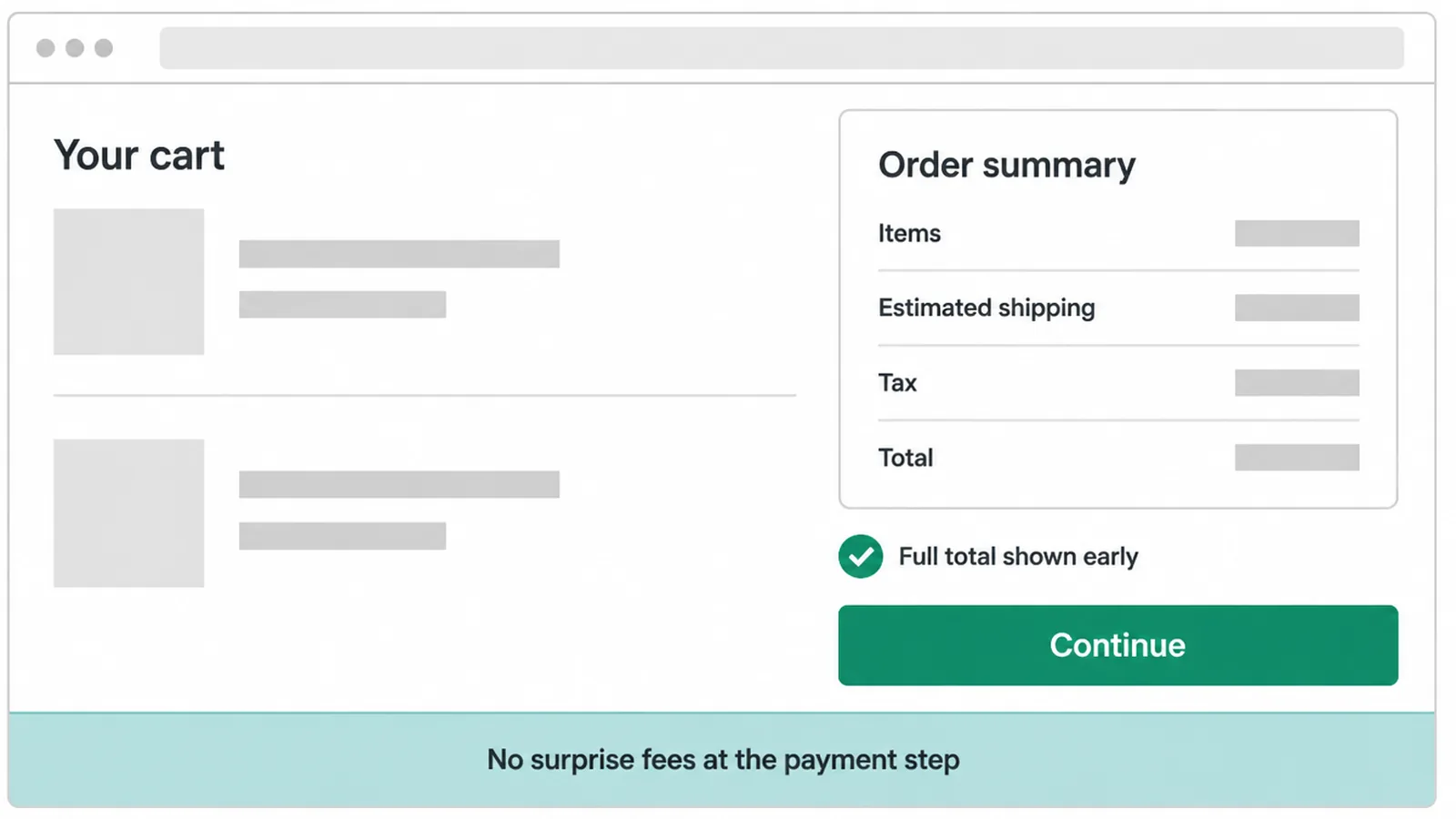
The most common mistake is hiding the true cost until the payment step, which is exactly when trust breaks. Show the full total, including estimated shipping and tax, as early as you can (Baymard). Never spring a fresh fee on someone about to pay.
Because extra costs are the number one reason carts get abandoned, this one habit protects more revenue than any clever tactic. The rest of the checkout matters too, and our guide on checkout optimization covers the steps around shipping that also win or lose the sale.
FAQ
1. How does ecommerce shipping work?
An order comes in, you pick and pack it, buy a label from a carrier directly or through a shipping app, hand it to the carrier, and the customer gets tracking. Your main job is choosing which rates to show at checkout and how the label gets bought.
2. What shipping options should I offer?
Usually a mix: a flat rate or free-shipping threshold as the default, an optional faster carrier rate, and local pickup if you have a location. Fewer, clearer options beat a long confusing list.
3. Should I offer free shipping?
It is a pricing decision, not a gift. You either build the cost into the product price or set a minimum-order threshold. Free shipping removes the biggest checkout objection, but only works if your margin can absorb it.
4. How do I calculate shipping rates?
Weigh and measure your typical packed order, check carrier zone pricing, then decide flat versus real-time. Small catalogues with similar-sized items suit flat rates, while varied or heavy items suit real-time carrier rates.
5. What is a shipping aggregator?
It is a platform, built into or plugged into your store, that connects multiple carriers, buys discounted labels, and syncs tracking automatically, so you are not logging into each carrier separately.
6. How do I handle returns and exchanges?
Write a clear, findable policy, decide who pays return shipping, and give a simple way to start a return with a prepaid label or a request form. A vague or hidden policy costs sales before purchase.
7. Do I need to charge for international shipping?
Usually yes, and you must make customers aware that customs duties or taxes may apply on their end. Start with a few countries, quote real carrier rates, and state clearly that duties may apply.
8. How do I reduce shipping-related cart abandonment?
Show the full total including estimated shipping as early as possible, offer a free-shipping threshold, and never surprise buyers at the payment step. Extra costs are the number one reason people abandon carts.
About the author
Gregory Yeoh is the founder of Seed Light, which builds websites and runs marketing for small businesses. He sets up a lot of online stores, and shipping is where good margins quietly leak and good sales quietly die at checkout.
We wrote this to help you set it up once, keep it simple, and stop losing buyers at the last step. If you want a hand getting your store's shipping and checkout right, tell us where you are stuck and we will help you sort it.