

Key takeaways
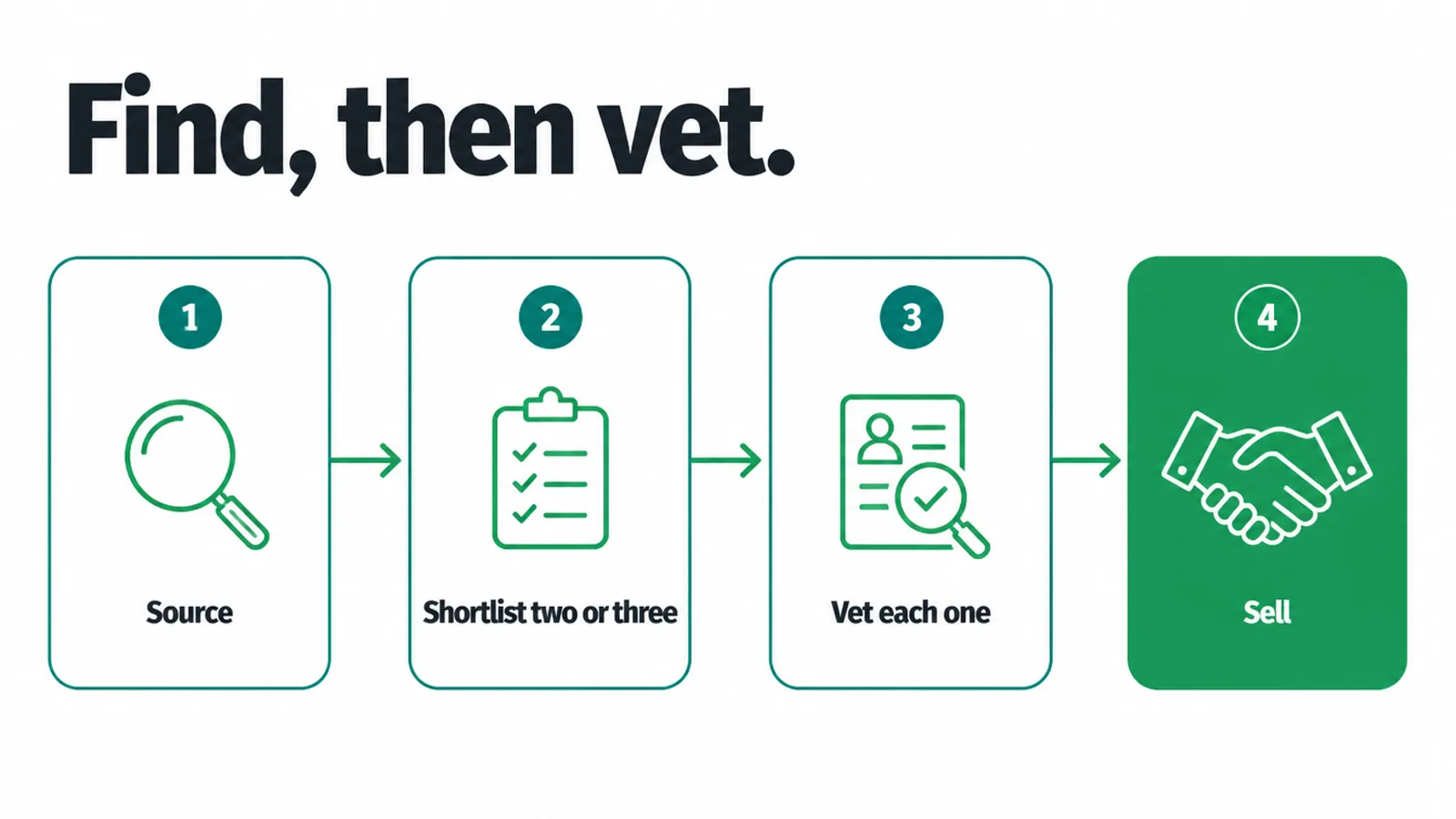
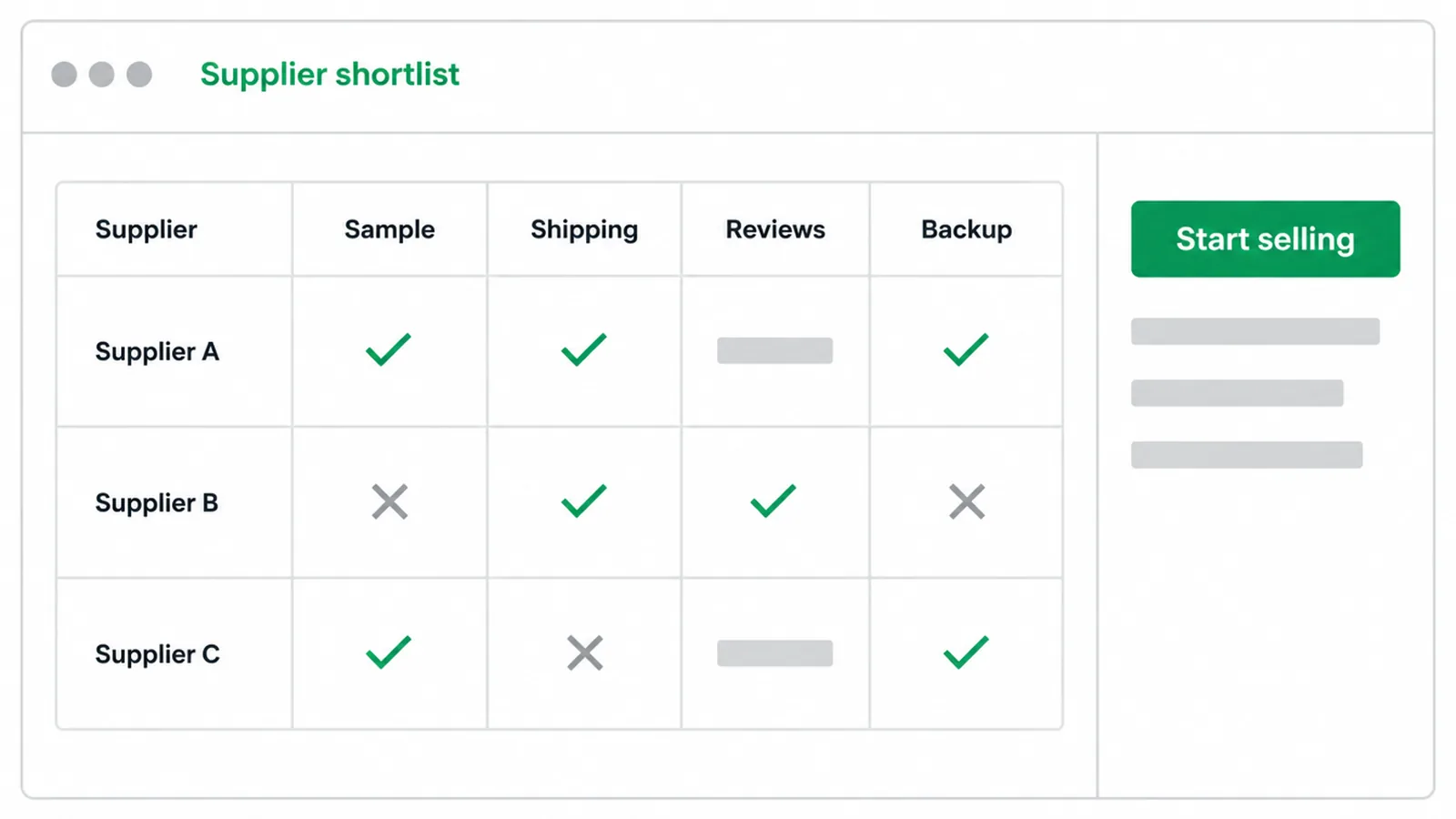
- Find, then vet. Source from a trusted marketplace or supplier app, then shortlist and test two or three before you commit.
- Order a sample. It is the single best test, because it checks quality, packaging, shipping time and communication all at once.
- Time the real shipping. Overseas parcels often take weeks, so know the true wait before a customer does.
- Most "scams" are not scams. They are quality or shipping failures that a sample would have caught.
- Keep a backup. A second supplier for your best-sellers protects you from stockouts and price hikes.
1. Finding dropshipping suppliers: the short answer
To find reliable dropshipping suppliers, source from a trusted marketplace or a supplier app that plugs into your store, then vet two or three of them before a single customer order goes out.
Vetting means ordering a sample, timing the real shipping, testing how fast they reply, and reading their order and review history. That is the whole game.
Here is the honest spine of this post. Supplier quality and shipping time are the number one risk in dropshipping. Get those right and most other problems shrink.
Get them wrong and you spend your days on refunds and angry emails. If you are still weighing up the whole model, our guide on how to start dropshipping covers that first. This post is about the suppliers themselves.
2. Where to find dropshipping suppliers
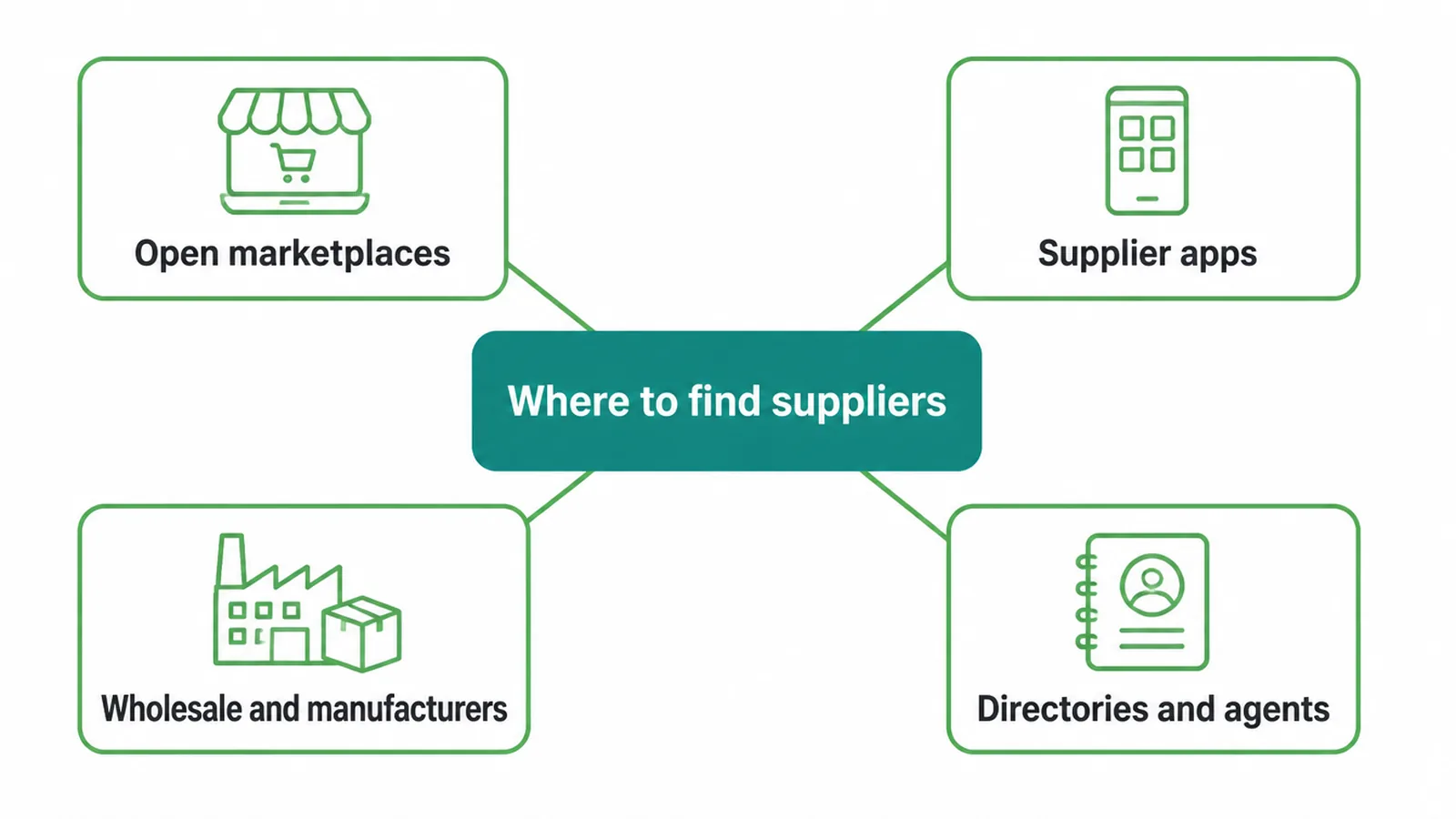
There is no secret list. Reliable suppliers live in a handful of well-known places, and each type suits a different stage. Your job is to know the categories, then vet whoever you pick. Do not chase a "top ten suppliers" ranking, because those are almost always paid placements dressed up as advice.
Open marketplaces
Marketplaces like AliExpress are where most new stores start. They are free to browse, packed with products, and you can order one unit at a time. The catch is that quality swings wildly between sellers, so you have to sort the good from the bad yourself.
One useful free tool is the AliExpress Dropshipping Center, which shows real sales data, delivery history and supplier performance so you can compare sellers on facts as well as star ratings.
Supplier apps and integrations
Supplier apps connect straight to your store and sync products, prices and orders for you. They save a lot of manual work, which is handy once you have a store live.
If you have not built one yet, our walkthrough on how to start an online store covers the setup. The trade-off with apps is a smaller product pool and a middleman markup, so still vet the supplier behind the app.
Wholesale and manufacturer platforms
Platforms like Alibaba connect you to wholesalers and factories. This is where you go for bulk pricing, custom packaging or a private-label product, usually once you have a proven best-seller. These suppliers often have a minimum order, so it is a step up in commitment.
The upside is protection: Alibaba's Trade Assurance is a free escrow-style scheme that holds your payment until you confirm you received the goods, and it covers late shipment or quality below the agreed contract, as long as you paid on the platform.
Directories and niche agents
Supplier directories can be a decent starting point, but treat them as a phone book, not a seal of approval. A listing usually means the supplier paid to be there, not that anyone checked them.
Niche suppliers and private sourcing agents are the other end of the scale. Once you are doing steady volume, an agent can source a specific product, handle quality checks and often speed up shipping. You still vet them the same way as anyone else.
3. Domestic or overseas suppliers?
There is no winner here, just a trade-off you choose on purpose. Overseas suppliers are usually cheaper, with far more choice, which is why most stores start there. The cost is speed. Parcels from overseas often take weeks to arrive, and communication can be slower across time zones and languages.
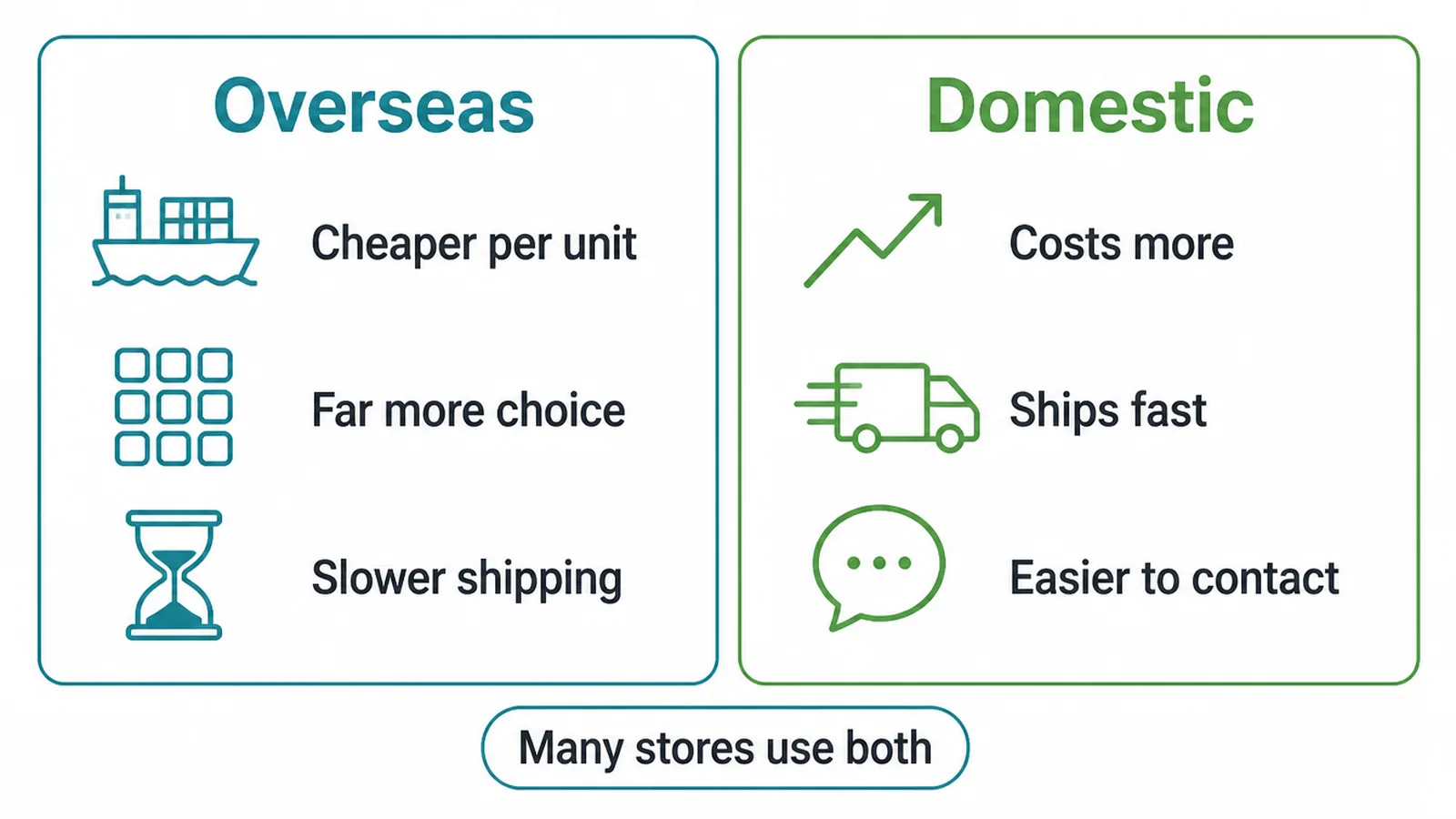
Domestic suppliers flip that. You pay more per unit, but shipping is fast, returns are simpler, and you can pick up the phone and get a clear answer. For some products, that speed is worth every extra penny, because a customer who waits three days is far happier than one who waits three weeks.
Shipping time shapes your whole customer experience, so it is worth planning early. Our guide to ecommerce shipping digs into the options. Plenty of smart stores use both: a domestic supplier for their hero products and an overseas one for the long tail.
4. How to vet a dropshipping supplier
This is the part that saves you. Never send a customer to a supplier you have not tested yourself.
Vetting is not hard, it just takes a little patience up front, and it pays for itself the first time it stops a bad supplier from wrecking your reputation. Run every shortlisted supplier through these six checks.
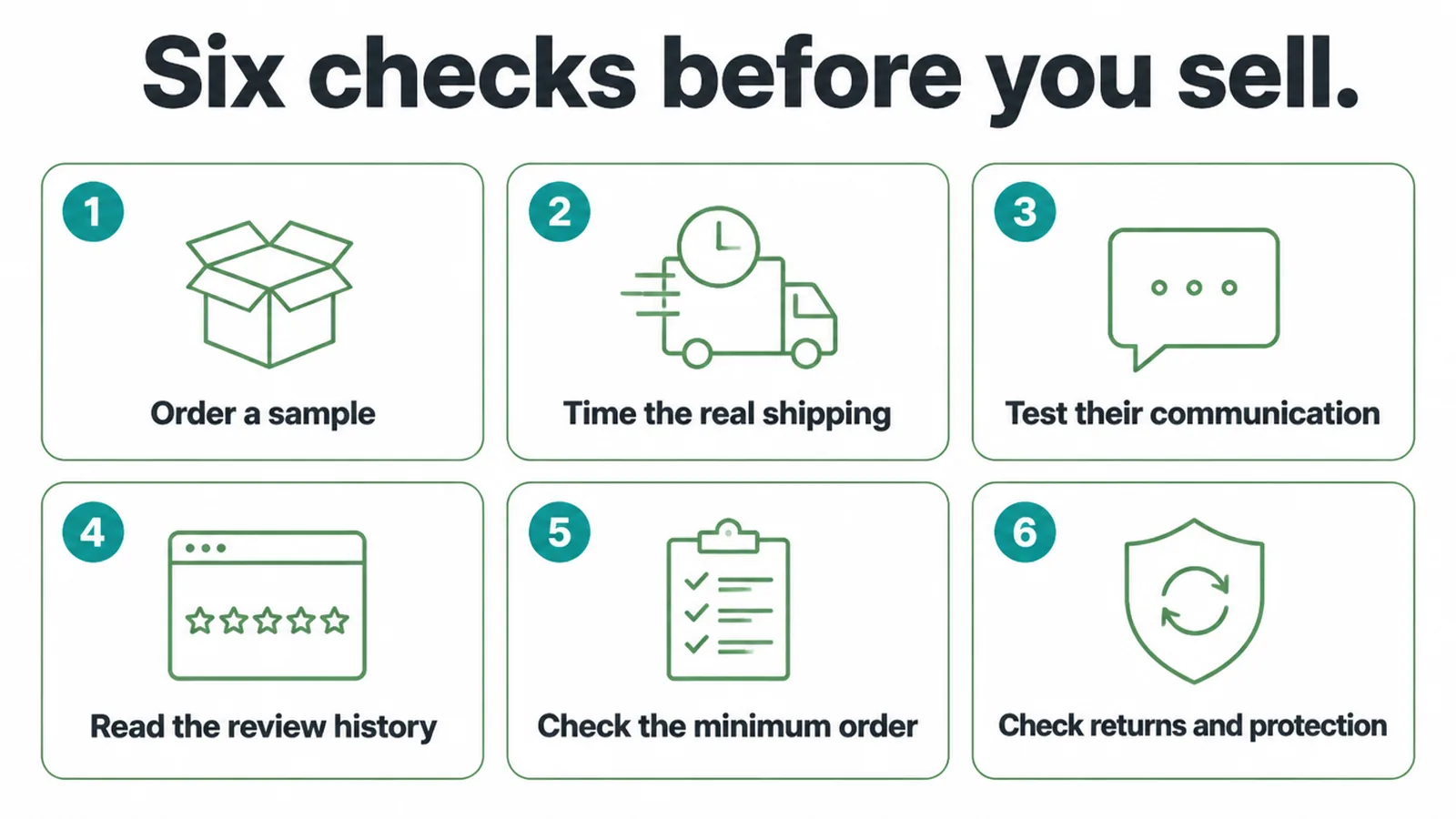
Order a sample
Buy the product yourself, as a normal customer would. This one step tests quality, packaging, shipping time and communication all at once, which is why it is the most reliable check you can run. Hold the item. Is it what the photos promised? Would you be happy if a friend received it?
Time the real shipping
Start a clock the moment you order and note when it actually lands. Ignore the optimistic estimate on the listing and trust the real number. This is the figure you will quietly promise your own customers, so you need it to be true.
Test their communication
Send a question before you buy and see how fast and how clearly they reply. A supplier who is slow or vague when they want your money will be worse once they have it. Quick, clear answers are a green flag.
Read the order and review history
A supplier with lots of orders and steady, detailed reviews is a safer bet than a shiny new account with a handful of five-star ratings. Look for patterns in the complaints. One angry review is noise. Ten saying the same thing is a warning.
Check the minimum order quantity
A minimum order quantity, or MOQ, is the fewest units a supplier will sell in one order, set to cover their fixed setup costs.
True dropshipping suppliers usually have no minimum, so if a "dropshipping" supplier demands a big upfront batch, they are really a wholesaler. That is fine, as long as you know which one you are dealing with.
Check returns and buyer protection
Find out what happens when an order arrives broken or never arrives at all. Is there a clear return or refund policy? Does the platform offer buyer protection if you pay on it? Know the answer before it becomes a live problem with a real customer waiting.
5. The supplier vetting checklist
Here is the whole thing on one page. Run each shortlisted supplier down the list and note the red flags. If two or three flags show up, walk away. There is always another supplier.
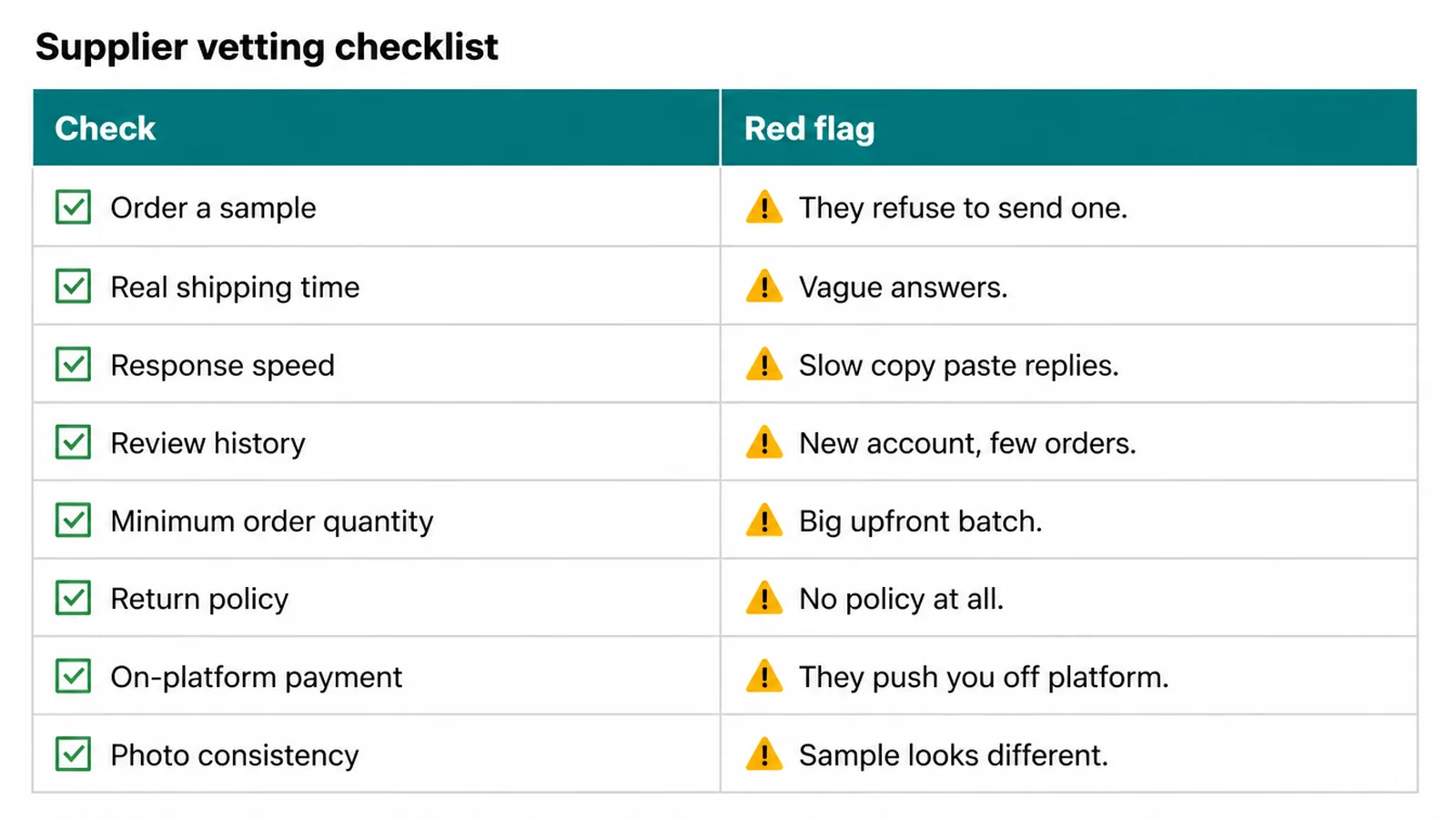
| Check | Why it matters | Red flag |
|---|---|---|
| Order a sample | Tests quality, packaging, shipping and communication in one go | They refuse or dodge sending one |
| Real shipping time | It becomes the promise you make your customers | Vague answers or wildly slower than the listing |
| Response speed and clarity | Predicts how they treat you once you have paid | Slow, confusing or copy-paste replies |
| Order and review history | Steady volume and detailed reviews signal a real operation | New account, few orders, repeated complaints |
| Minimum order quantity | Tells you if they are a dropshipper or a wholesaler | A big upfront batch from a "dropshipping" supplier |
| Return and refund policy | Decides who eats the cost when things go wrong | No policy, or a flat "no returns" |
| On-platform payment and protection | Buyer protection only works if you pay on the platform | They push you to pay off-platform |
| Product and photo consistency | Shows the real item matches what you will sell | Sample looks nothing like the listing photos |
6. Dropshipping supplier red flags
Most dropshipping horror stories are not really scams. They are quality slips and slow shipping that a sample order would have caught. Real theft is rarer than the internet makes out. Still, a few warning signs should make you close the tab, and they are easy to spot once you know them.
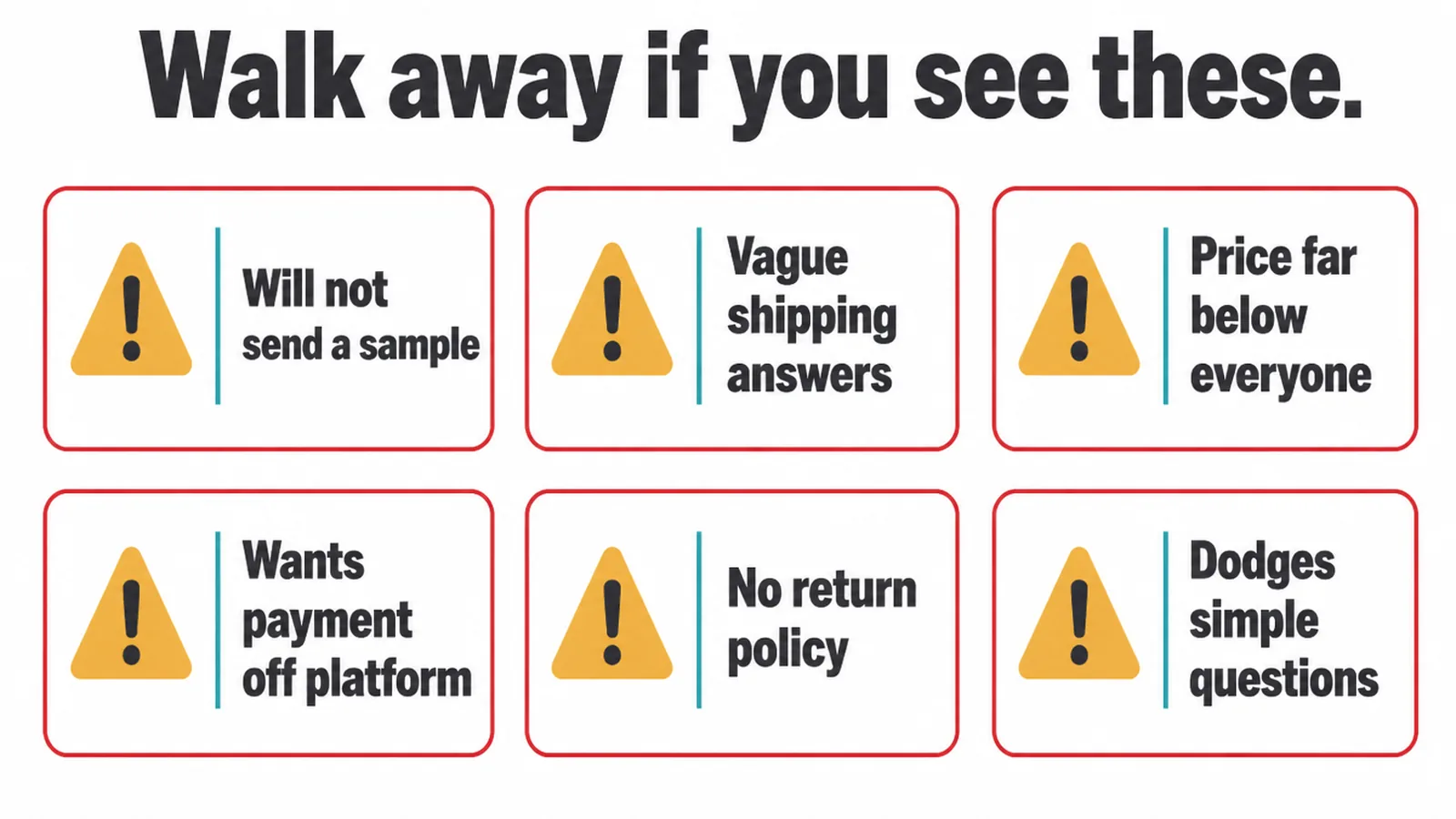
Walk away if a supplier will not send a sample. That is the loudest signal there is, because an honest supplier wants you to see the goods.
Be wary of vague shipping answers, since a supplier who cannot tell you when a parcel lands cannot be trusted with your customers. Distrust prices that sit far below everyone else, as that usually means a worse product, a longer wait, or both.
Never pay off-platform. The moment someone asks you to move the deal to a private transfer, you have lost every scrap of buyer protection.
A missing return policy is another flag, and so is a supplier who cannot answer a simple question and just keeps steering you back to the order button. None of these on their own is proof of a scam. Two or three together mean you have better options elsewhere.
7. Build a relationship and keep a backup
Once a supplier passes your checks, treat them like a partner, not a vending machine. Keep your early orders on the platform so the buyer protection stays live.
Communicate clearly, pay on time, and send steady volume. Suppliers give their best pricing, their fastest handling and their first pick of stock to the buyers who are easy to work with and predictable.
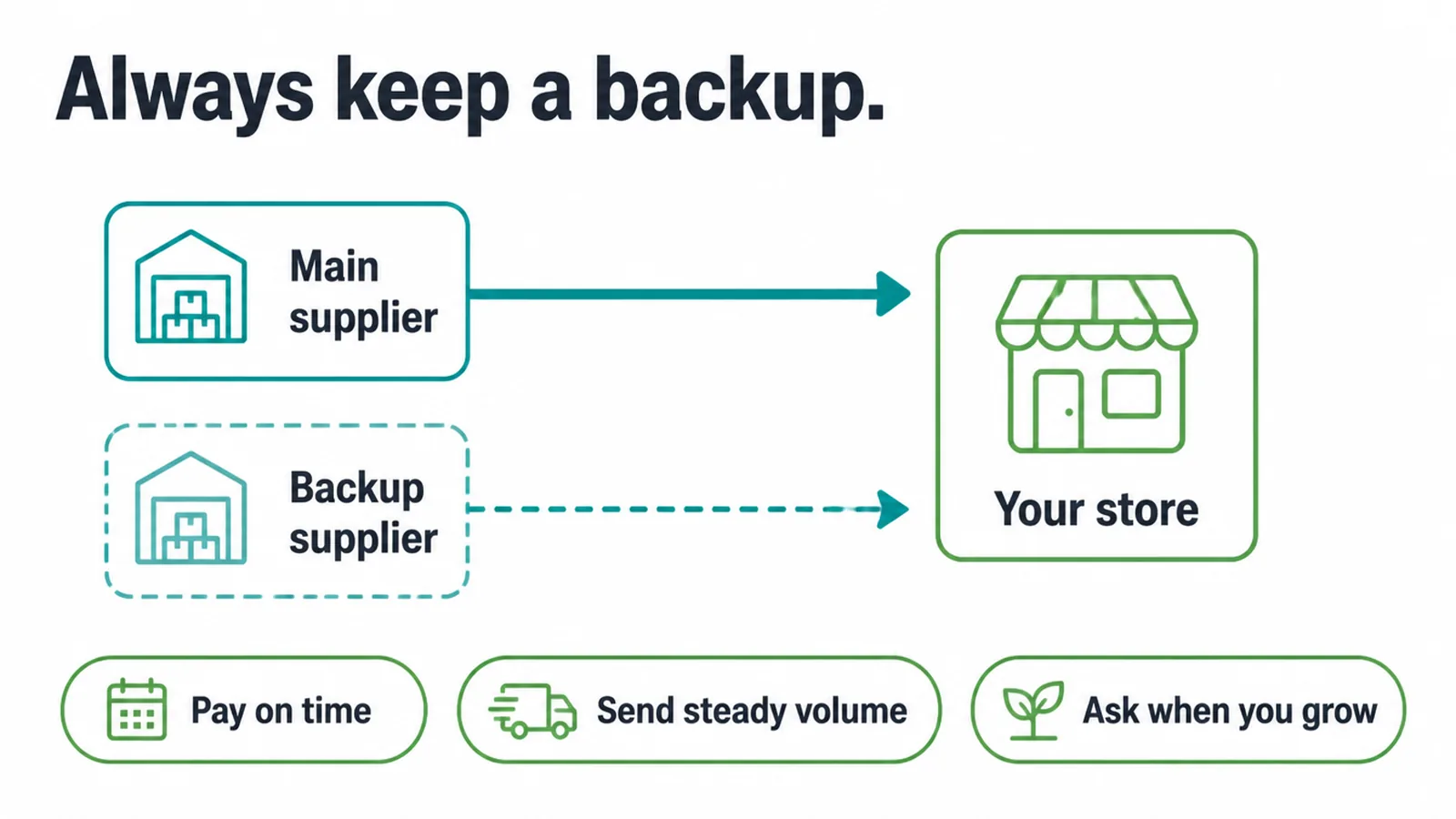
As one product becomes a real best-seller, you earn the right to ask for more. That is when you can raise custom packaging, faster shipping, or a small discount at higher volume. Ask politely and be ready to prove the numbers. A good supplier will often say yes, because your growth is their growth too.
One rule sits above all of this. Always keep a backup supplier for your best-sellers. Any single source can run out of stock, hike its prices, or let quality slip with no warning.
A vetted second supplier waiting in the wings means one bad week does not take your shop offline. It is cheap insurance, and you will be glad of it the day you need it.
8. Source from a trusted place, then vet before you sell
Finding reliable dropshipping suppliers comes down to two moves: source from a trusted place, then vet before you sell. Order a sample, time the real shipping, test how they communicate, read their history, and keep a backup for anything that sells well. Do that and you sidestep the risk that trips up most new stores.
Great suppliers still need a great shop to sell through. Turning all that careful sourcing into orders is the job of the shopfront, and that is where online store design earns its keep. Not sure where to start? Tell us what you plan to sell and we will point you in the right direction.
FAQ
1. How do I find a dropshipping supplier?
Start on an open marketplace like AliExpress or a supplier app that integrates with your store, then shortlist and vet two or three before you commit to any of them.
2. What is the best dropshipping supplier?
There is no single best one. The best supplier is the one that passes your own vetting for the specific product you sell, so be wary of top ten lists that are really paid placements.
3. How do I know if a supplier is reliable?
Order a sample yourself, time the real delivery, test how fast they reply, and check their order and review history and return policy before you send them a single customer.
4. Should I use domestic or overseas suppliers?
Overseas is usually cheaper with more choice but slower shipping, while domestic costs more but ships faster and is easier to communicate with. Many stores use both.
5. Do I need to order samples?
Yes. Ordering a sample is the single most reliable vetting step, because it tests product quality, packaging, shipping time and communication all at once.
6. What is a minimum order quantity?
It is the fewest units a supplier will sell in one order. True dropshipping suppliers usually have no minimum, while wholesale and manufacturer suppliers do.
7. How do I avoid dropshipping scams?
Never pay off-platform, use the marketplace's buyer protection, refuse suppliers who will not send samples or give vague shipping answers, and be suspicious of prices far below everyone else.
8. Can I have more than one supplier?
Yes, and you should. A backup supplier for your best-sellers protects you from stockouts, price hikes and quality slips from any single source.