
Key takeaways
- Retention beats endless ad-chasing. Getting a past buyer to return is usually calmer and cheaper than winning a stranger from scratch.
- The upside is real. Many first-time shoppers never order again, so there is a pool of past customers you can serve better.
- The wins are practical: a good post-purchase experience, email and SMS, loyalty, subscriptions, replenishment reminders, and genuinely good support.
- No gimmicks. A loyalty app on top of a bad product does nothing. Retention is earned, not bolted on.
- Measure your own rate. Research by Frederick Reichheld of Bain & Company found that modest retention gains can lift profits (Harvard Business Review).
1. What is customer retention, and why does it matter?
Customer retention means getting the customers you already won to buy from you again, instead of only chasing new first-time buyers. It matters because it is the calmer, cheaper path to growth.
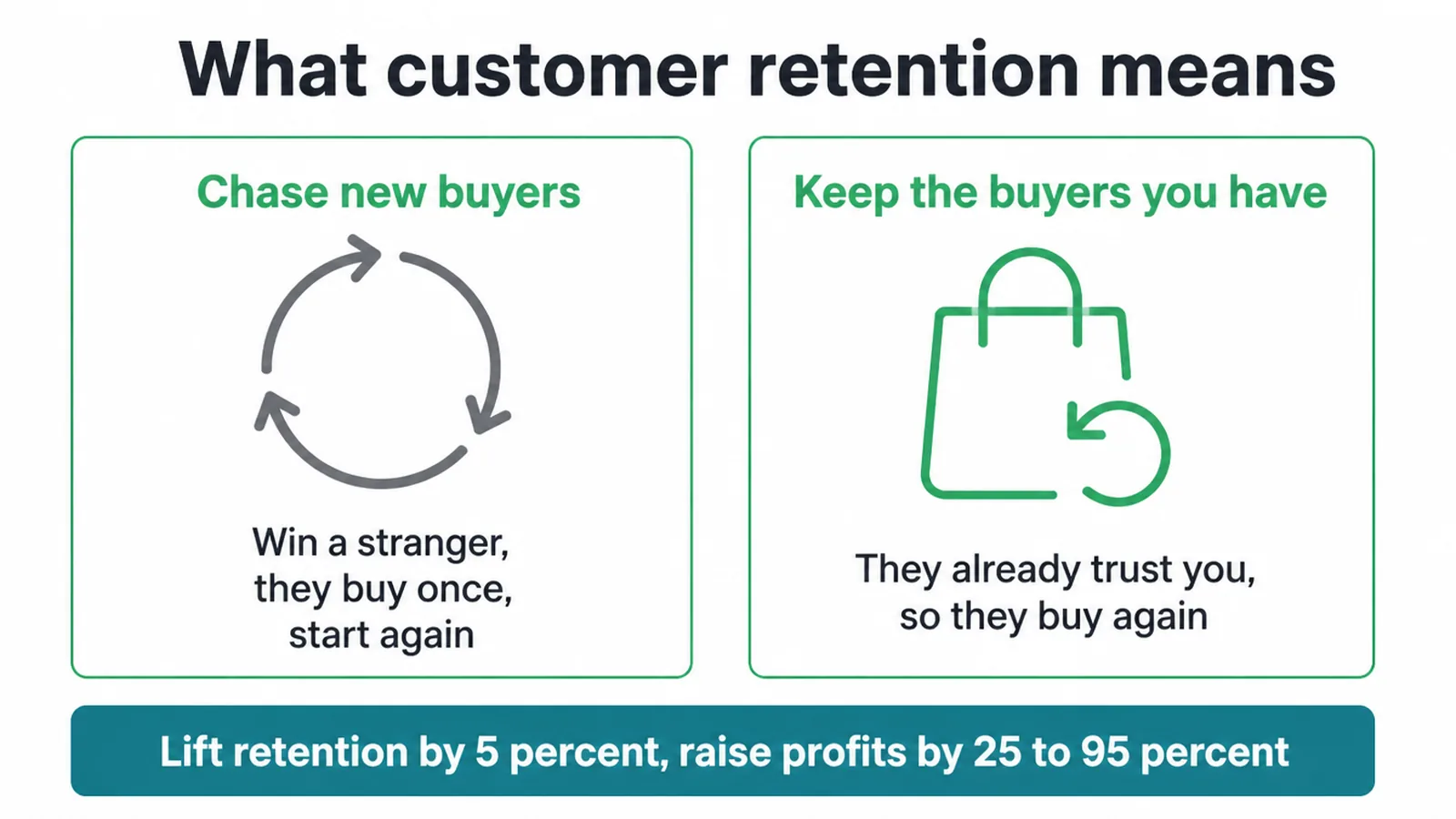
Research by Frederick Reichheld of Bain & Company found that increasing customer retention by 5 percent can raise profits by 25 to 95 percent, depending on the industry (Harvard Business Review).
Here is the honest part up front. Retention is earned by a good product and a good experience. It is not a discount gimmick you paste on at the end.
2. Why keeping customers beats chasing new ones
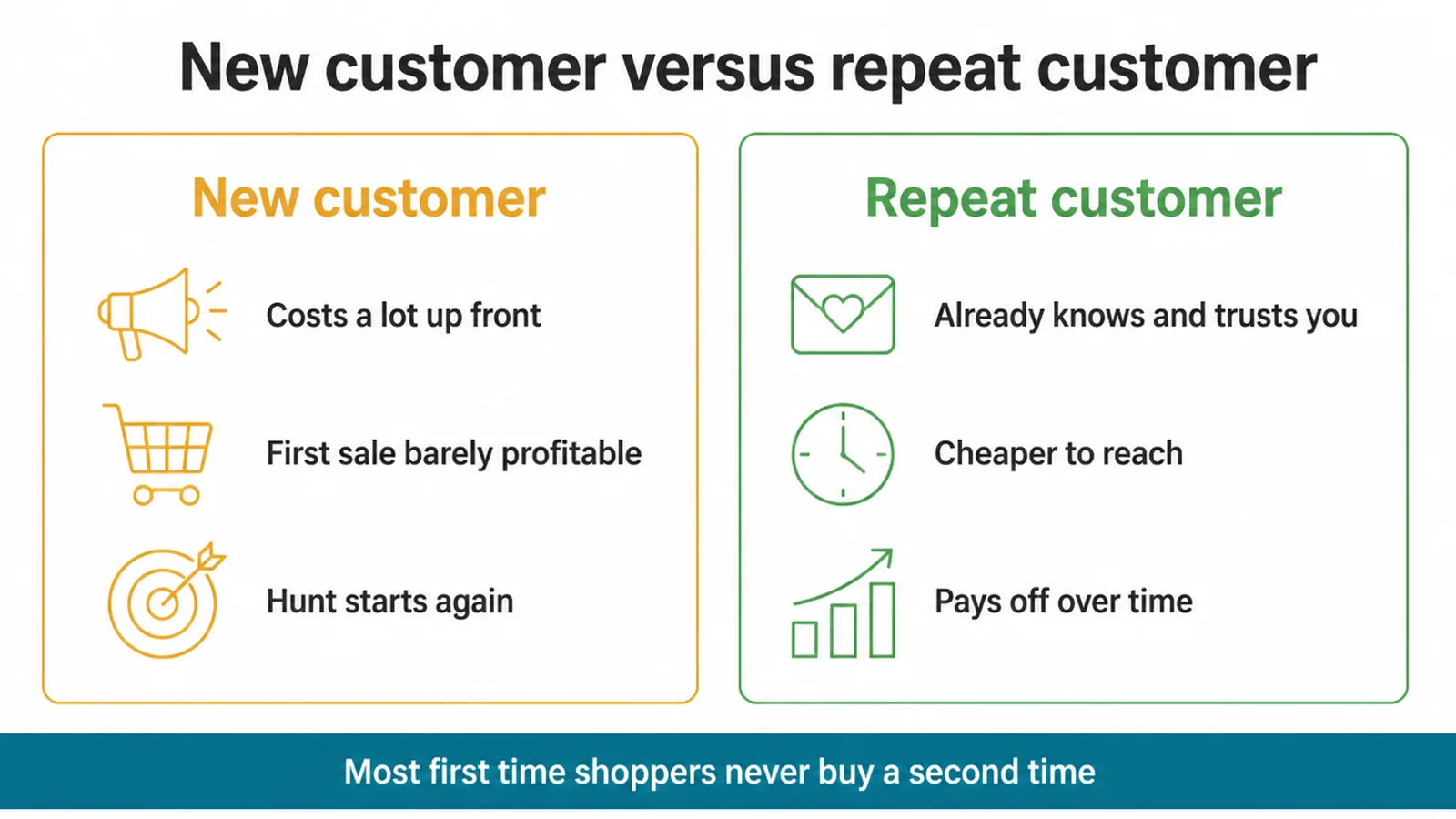
Think about how you grow right now. You spend money on ads, win a stranger, they buy once, and then you start the whole hunt again. That treadmill is expensive and tiring. Retention takes a different bet. It says the person who already trusted you with their card is your warmest, cheapest future sale.
The numbers back this up
The research above found that even a modest lift in retention can raise profits, with the effect varying by industry.
The reason is simple once you see it. Winning a customer costs a lot up front, so that first sale is often barely profitable, or even a loss. The relationship only starts to pay off later, as the cost to serve a loyal buyer falls and they buy more over time.
Many first-time shoppers never order again
The opportunity can be large because many first-time shoppers never order again. These are people who already know you and liked something enough to buy, but may need a reason to return.
You do not have to win them. You only have to give them a reason to return. If your store is not built to make that second visit easy, the shops we build are shaped around the repeat order rather than the first click.
3. The honest part: retention is earned, not bolted on
Before any tactic, a warning. You cannot buy loyalty with a points widget if the core experience is weak. A loyalty app on top of a bad product does nothing.
Slow shipping, a listing that oversells, a return process that feels like a fight, these quietly kill the second sale no matter how clever your email flow is.
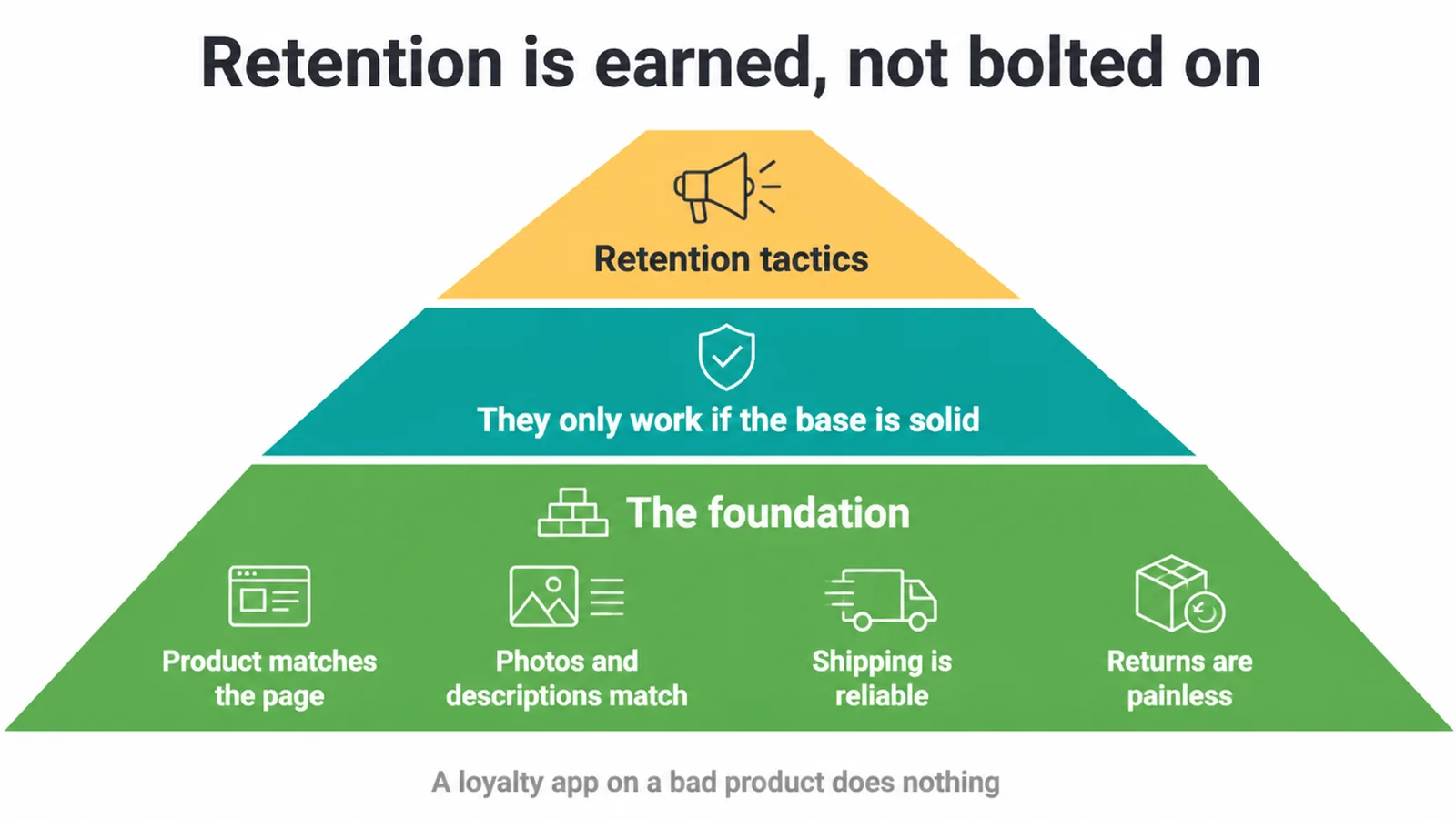
The foundation comes first
Before the tactics, get the basics right:
- A product that does what the page promised.
- Photos and descriptions that match what turns up at the door.
- Shipping that is reasonable and reliable.
- Returns that are painless.
Get those right and everything below works. Skip them and every retention trick just papers over a leak. Retention is a reward for delivering, not a substitute for it.
4. The moment after checkout
The minutes and days after someone pays are quietly the most important. The customer just handed you money and is now a little bit nervous. Did it go through? When will it arrive? Was this a good idea? Every clear, warm signal you send here builds trust. Every silence chips at it.
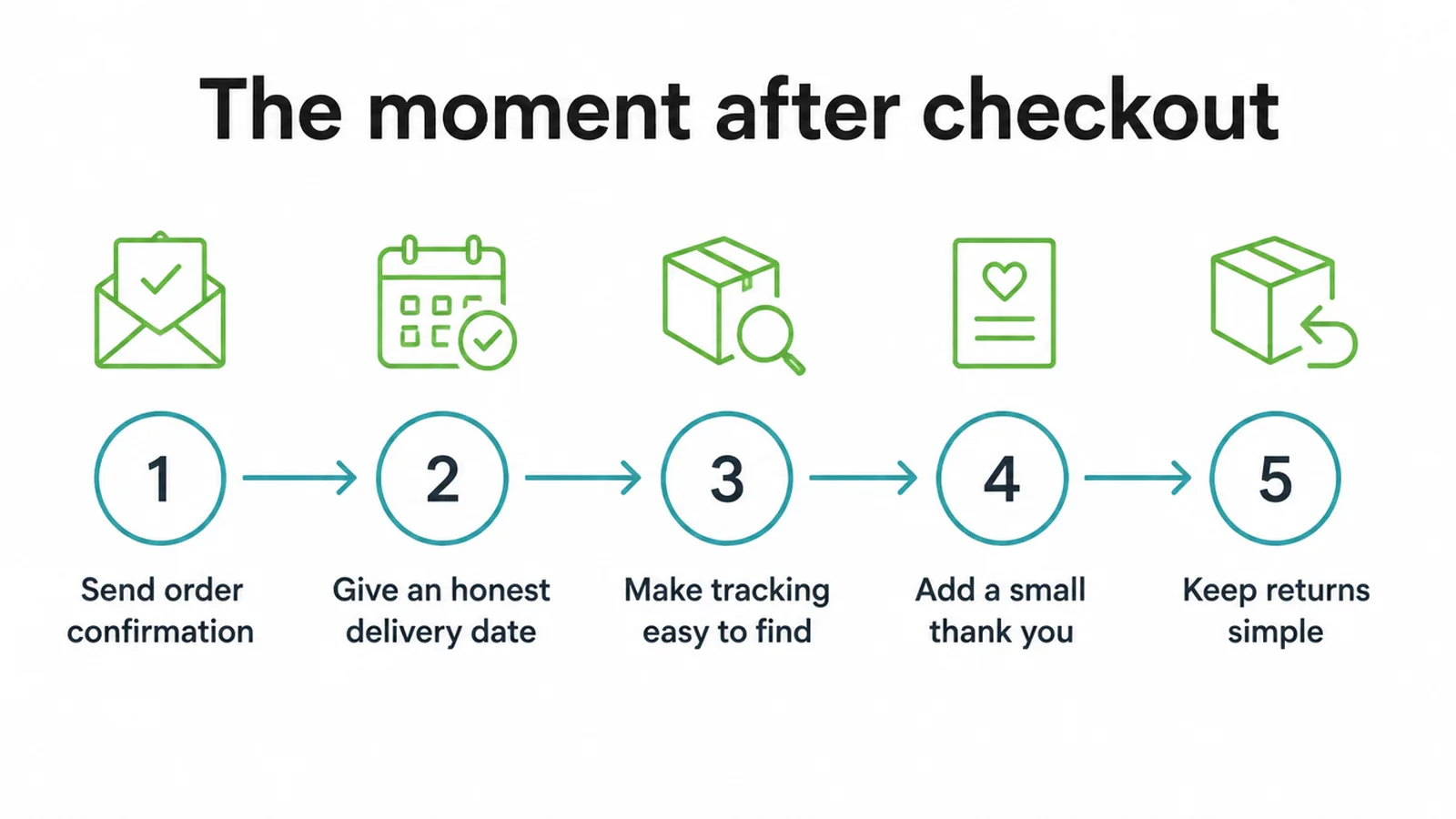
So handle it well:
- Send an order confirmation straight away.
- Set an honest delivery time and stick to it, rather than promising fast and running late.
- Make tracking easy to find.
- Put a small thank you in the box or the email, because it costs nothing and people remember it.
- Make returns simple, because a smooth return can support repeat buying when something goes wrong.
This is where a shopper decides, without saying it out loud, whether they will ever buy from you again.
5. Your cheapest retention channel
Email is the workhorse of retention, and it is close to free. You already have the address. You are not paying for another ad click. You are just staying in touch with someone who already likes you. The trick is to be useful, not noisy.
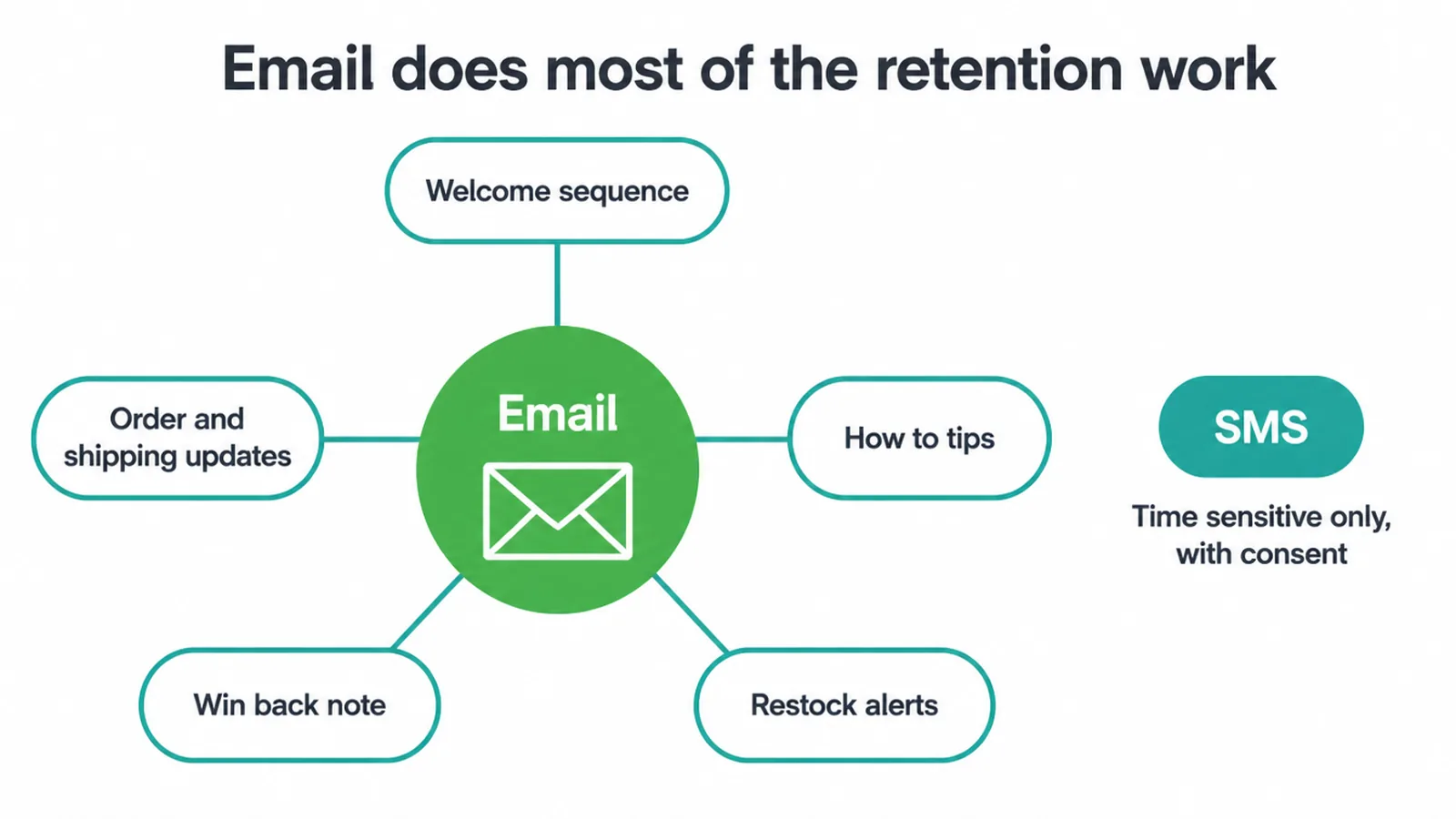
The flows that do most of the work
A few automated flows carry most of the load:
- A welcome sequence for new buyers.
- Order and shipping updates that keep them calm.
- The odd tip on how to get more out of what they bought.
- A win-back note for people who have gone quiet.
- Restock alerts when a sold-out favourite is back.
SMS sits alongside for the time-sensitive stuff, like a shipping update or a restock, as long as you have consent and you keep it rare. For the full playbook on setting this up without feeling like spam, read our guide to email marketing for small business.
6. Give a reason to come back
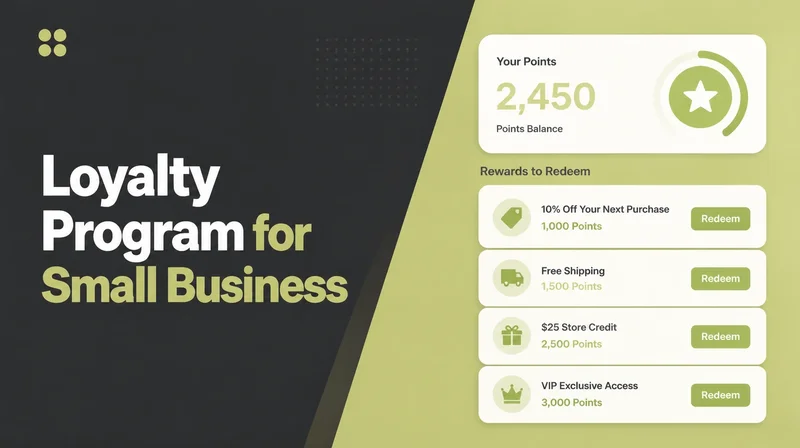
A loyalty program gives people a reason to pick you again. Points on every order, a tier that unlocks perks, a referral reward that turns a happy buyer into a source of new ones. Done well, it nudges a good customer back before they drift to a rival.
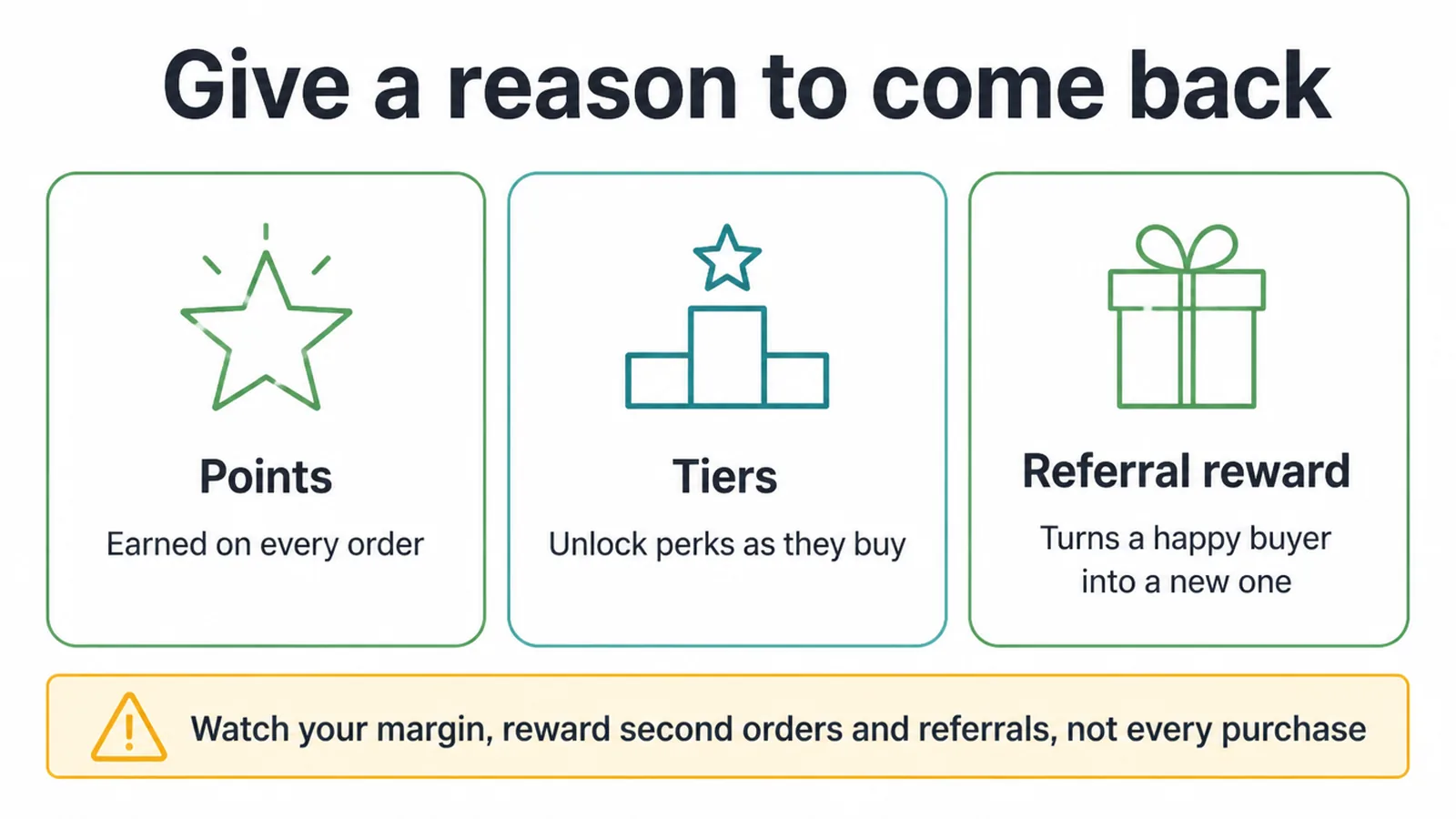
Watch your margin
The easy trap is to just discount yourself into loyalty, handing money away to people who would have bought anyway. Reward the behaviour you actually want, like a second order or a referral.
And remember rule one. A rewards scheme is a boost for a good store, never a rescue for a weak one. If you want the deeper version, our guide to a loyalty program for small business walks through the setups that keep customers without shredding your profit.
7. Turn one sale into many
If people buy the same thing on a regular cycle, a subscription can turn a single sale into a stream of them. Think anything that gets used up or replaced: coffee, supplements, skincare, pet food, refills.
A subscribe-and-save option lets a happy customer set it and forget it, and it smooths your revenue so you are not starting from zero each month.
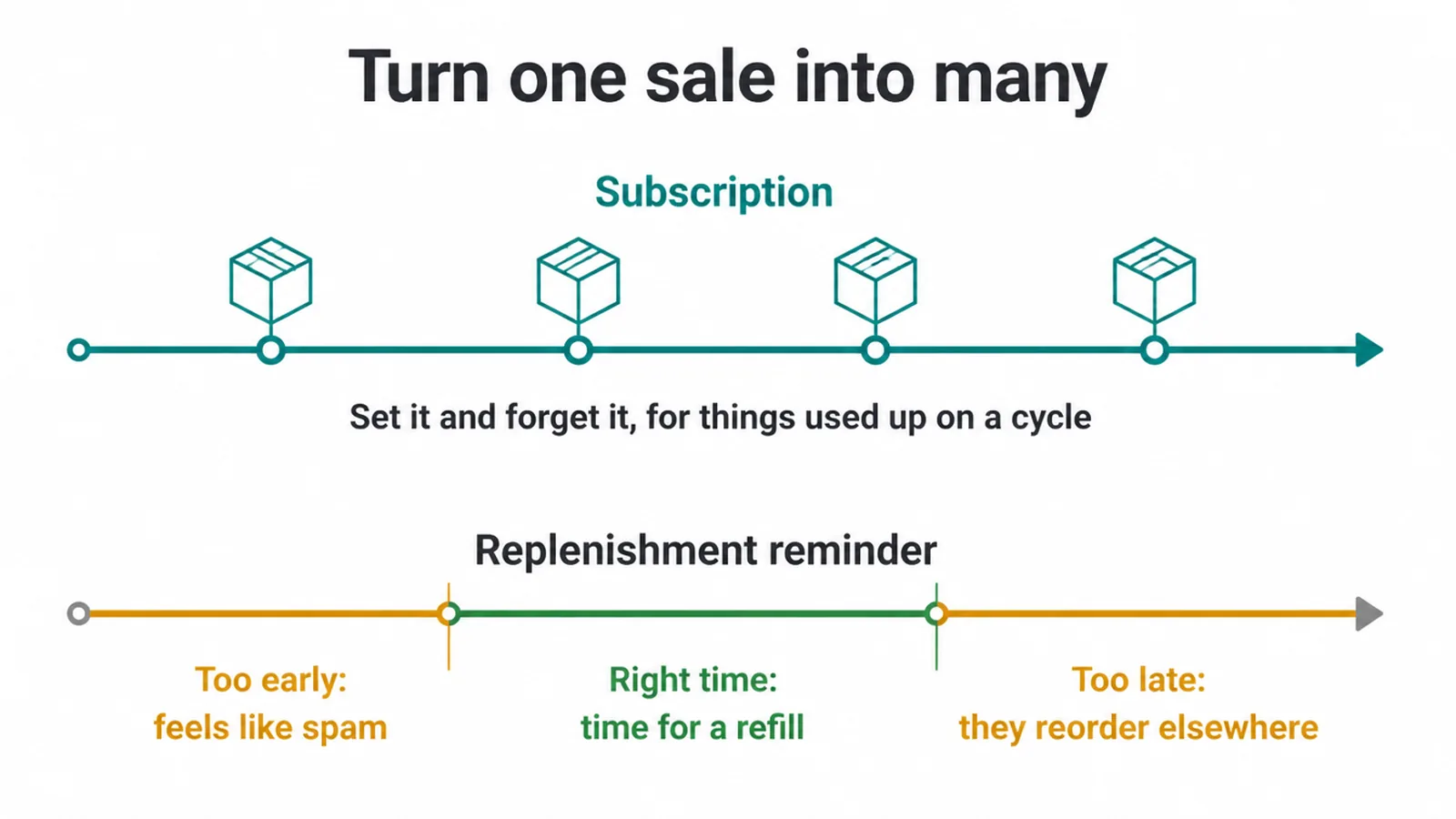
Replenishment reminders
Reminders are the lighter-touch cousin. Instead of locking someone into a plan, you simply nudge them when they are likely running low. "Time for a refill?" landing the week they usually run out feels helpful, not pushy. The timing is everything. Too early and it feels like spam, too late and they already reordered elsewhere.
Subscriptions only fit predictable repeat use, so do not force them onto a one-off big purchase. Our piece on the subscription business model covers when it fits and when it does not.
8. Good support turns a problem into loyalty
Here is a quiet truth. A customer who has a problem and gets it fixed fast often ends up more loyal than one who never had a problem at all. Support is not a cost centre. It is a retention channel hiding in plain sight.
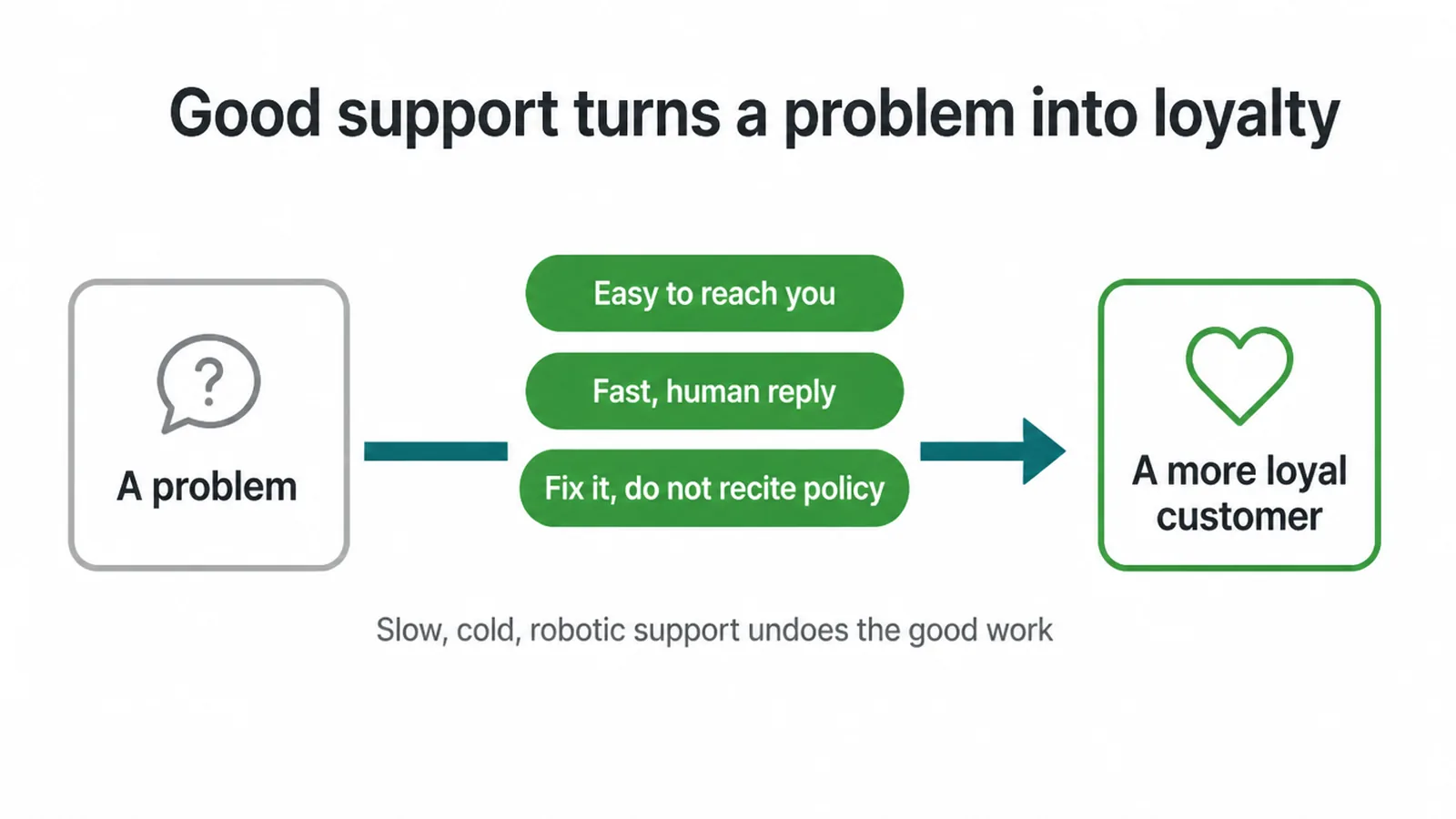
So make it easy to reach you and quick to get a real answer. Put your contact options where people can find them, not buried three clicks deep. Reply fast, sound like a human, and fix the thing rather than reciting policy.
Slow, cold, robotic support undoes all the good work above. Warm, fast support turns a bad day into a reason to come back. If you want help wiring this into your store and your marketing, tell us what your customers keep asking for and we will help you build the fix.
9. The retention tactics at a glance
Each tactic does a slightly different job, and each suits a different kind of store. The table below lays them side by side so you can pick the two or three that fit what you sell, rather than trying to run all of them at once.
Read across each row: what it does, who it fits best, and the trap to avoid.
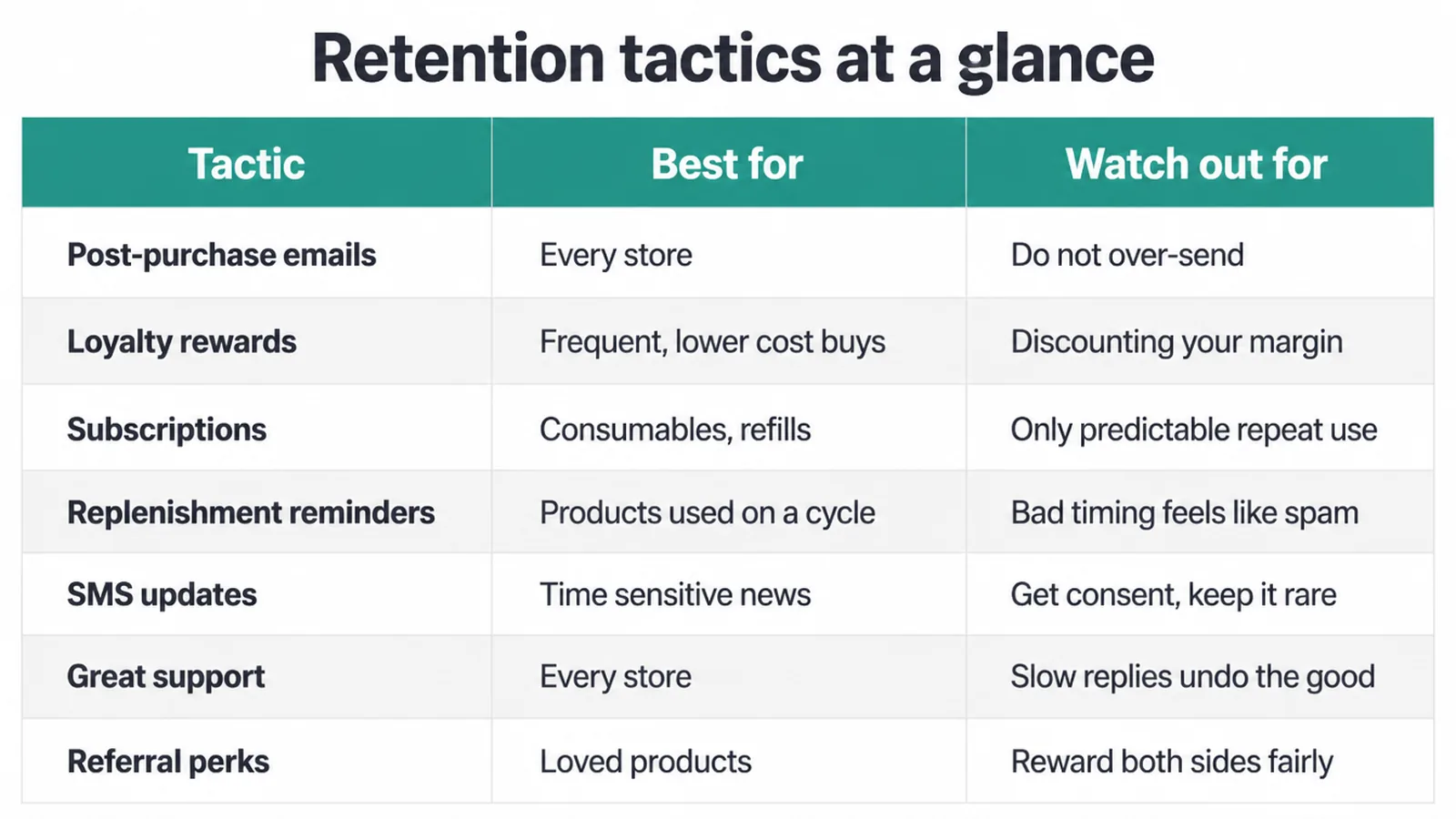
| Tactic | What it does | Best for | Watch out for |
|---|---|---|---|
| Post-purchase emails | Confirms, updates, thanks, and educates after the sale | Every store | Do not over-send; stay useful |
| Loyalty / rewards | Gives a reason to come back | Frequent, lower-cost buys | Discounting away your margin |
| Subscriptions | Turns one sale into recurring revenue | Consumables, refills | Only fits predictable repeat use |
| Replenishment reminders | Nudges a reorder when they run low | Products used up on a cycle | Bad timing feels like spam |
| SMS updates | Reaches people instantly for shipping and restocks | Time-sensitive news | Get consent; keep it rare |
| Great support | Fixes problems fast and builds trust | Every store | Slow replies undo the good |
| Referral perks | Turns happy buyers into new-customer sources | Loved products | Reward the referrer and friend fairly |
10. How to measure retention (and what to ignore)
Track a few honest numbers
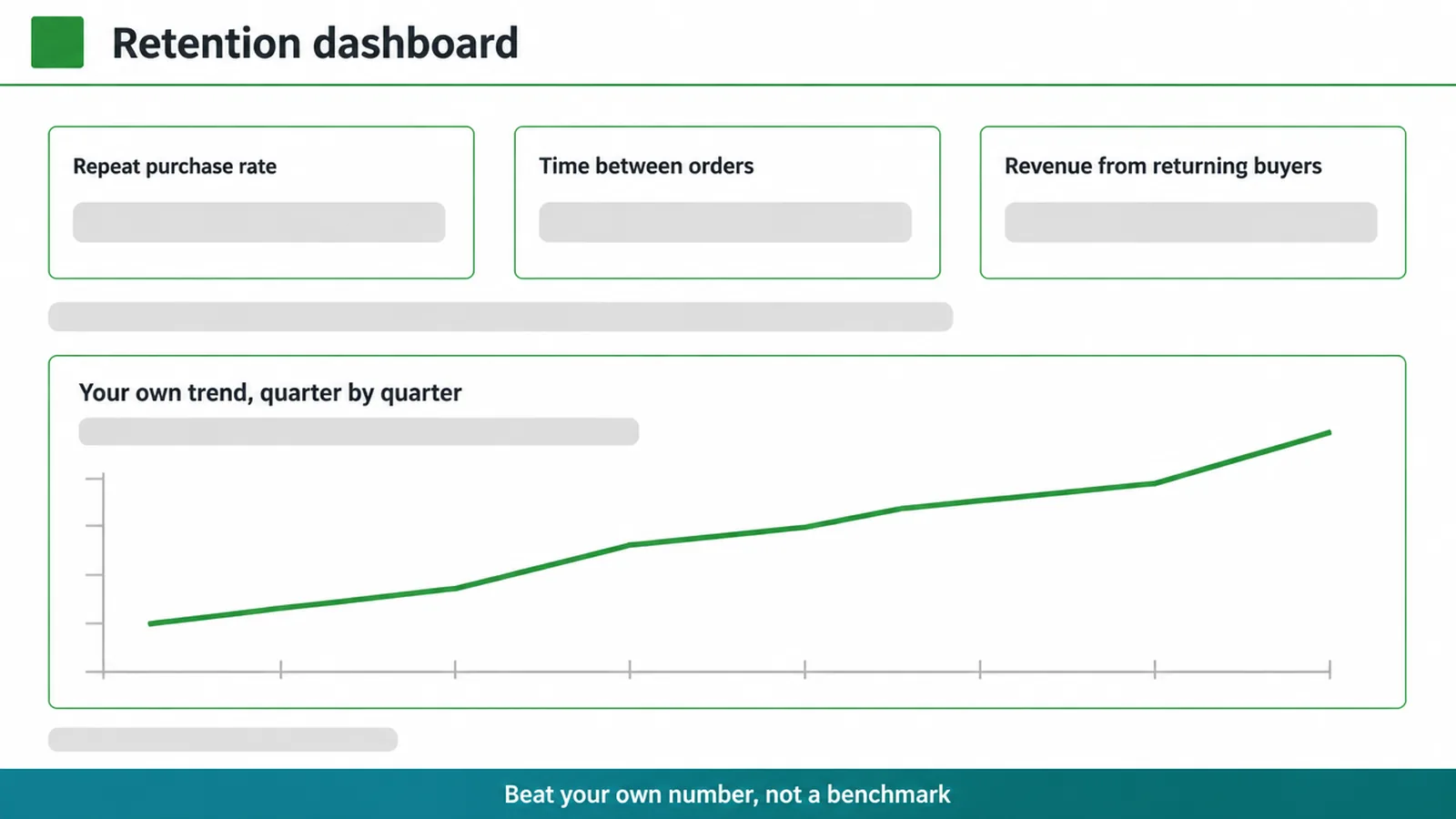
You cannot improve what you do not watch, but you also do not need a wall of dashboards. Watch three things:
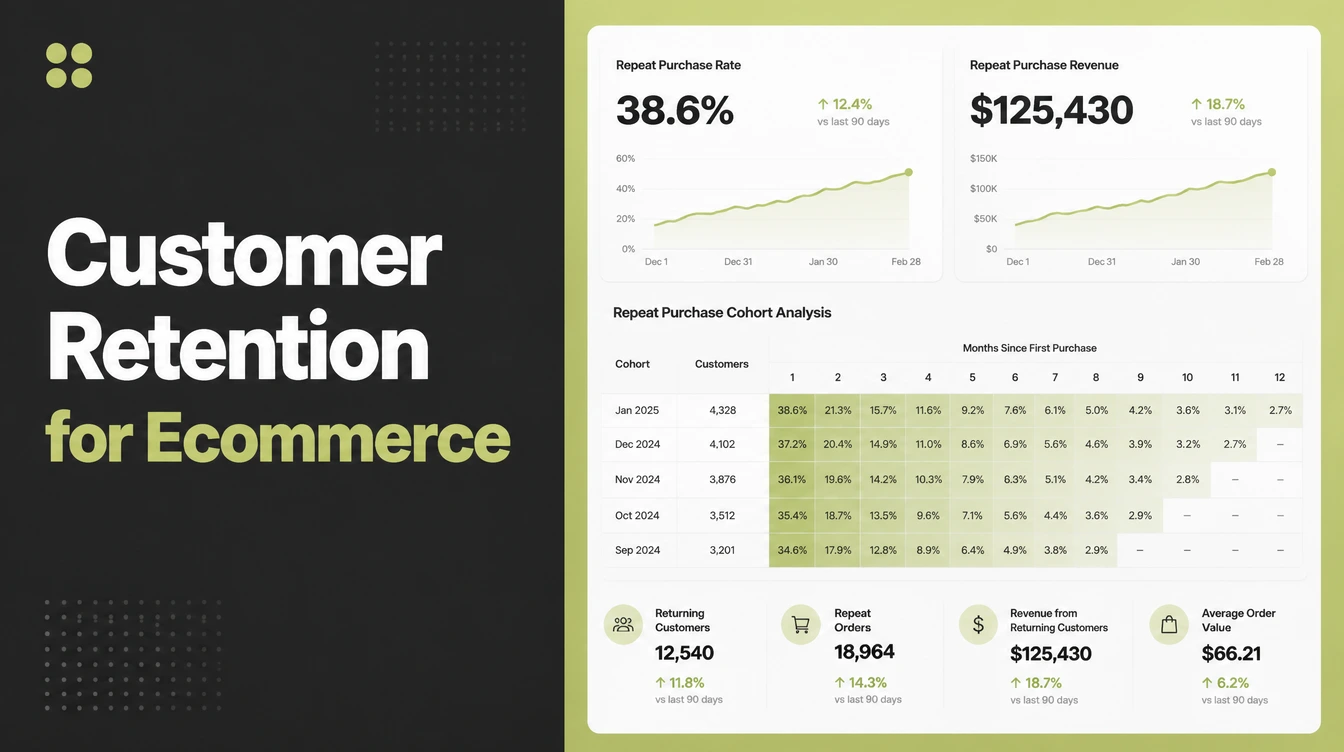
- How many of your customers come back and buy again, your repeat purchase rate.
- How long they usually wait between orders, so you know when to nudge.
- How much of your revenue comes from returning buyers versus brand-new ones, because a healthy store leans on a loyal core.
Do not chase someone else's benchmark
One firm warning to close on. Do not chase the retention benchmarks floating around online. What counts as good swings wildly by what you sell.
A store selling coffee will see people reorder far more often than one selling a mattress, and neither is doing anything wrong. Consumables repeat, big one-off purchases do not, and that is fine.
The only baseline that matters is your own. Measure where you are this quarter, change one thing, and aim to beat last quarter. Beat your own number, not someone else's screenshot.
FAQ
1. What is customer retention in ecommerce?
It is keeping the customers you already have so they buy from you again, instead of only chasing new first-time buyers. It is measured by how many customers come back and how often.
2. Why is customer retention important?
Research by Frederick Reichheld of Bain & Company found that even a modest lift in retention can raise profits. Repeat buyers can also cost less to reach because they already know and trust you.
3. Is it cheaper to keep a customer than to find a new one?
Usually yes. Winning a brand-new customer often takes more ad spend and effort, while a happy past customer can come back from a single email. It is not a magic ratio, but the pattern holds.
4. How do I get customers to buy again?
Deliver the order well, follow up after the sale, send helpful email and SMS, reward loyalty, remind them when they are due to reorder, and make support easy. Start with the product and the experience.
5. Do loyalty programs actually work?
They help when the product and service are already good. A points or rewards scheme gives a reason to come back, but it cannot rescue a weak product or slow shipping. It is a boost, not a fix.
6. What is a good customer retention rate?
It varies a lot by what you sell. Consumable and subscription products naturally repeat more than one-off big purchases. Track your own rate over time and aim to beat last quarter rather than chase a universal number.
7. How does email help retention?
Email lets you reach past customers for almost nothing. Order updates, how-to tips, restock and reorder reminders, and a simple thank you all bring people back without paying for another ad click.
8. Should I add a subscription option?
If people buy the same thing on a regular cycle, a subscribe-and-save option turns one sale into many and smooths your revenue. It only fits products that get used up or replaced on a predictable schedule.