
Key takeaways
- Lead with the benefit. Say what the product does for the buyer first, then use the specs as proof.
- Answer the real questions. Put the things people ask before buying right in the copy.
- Stay scannable. Short lines, bullets and white space beat a wall of text every time.
- Be specific and sensory. Real details the buyer can picture beat empty words like "premium".
- Rewrite the supplier blurb. Copy the manufacturer's words and search may show a rival's page, not yours.
The best product descriptions all do the same five things. They lead with the benefit, answer the buyer's real questions, stay scannable, use specific sensory words, and keep every claim honest.
The fastest way to learn those moves is to see a flat "before" turned into a working "after". So that is what this post is: five worked rewrites, then a fill-in template you can reuse.
Every example below is a made-up, generic product. A plain cotton t-shirt. A jar of chilli sauce. A candle. We use fake products on purpose, so you copy the pattern, not the words.
If you want the full step-by-step method behind these rewrites, read our guide on how to write product descriptions. This post is the show. That one is the tell.
1. What does a good product description look like?
A good product description makes five moves, and once you see them you cannot unsee them. Each example later shows one move on its own, so you learn a repeatable trick instead of a one-off. Here are the five, straight from solid guidance.
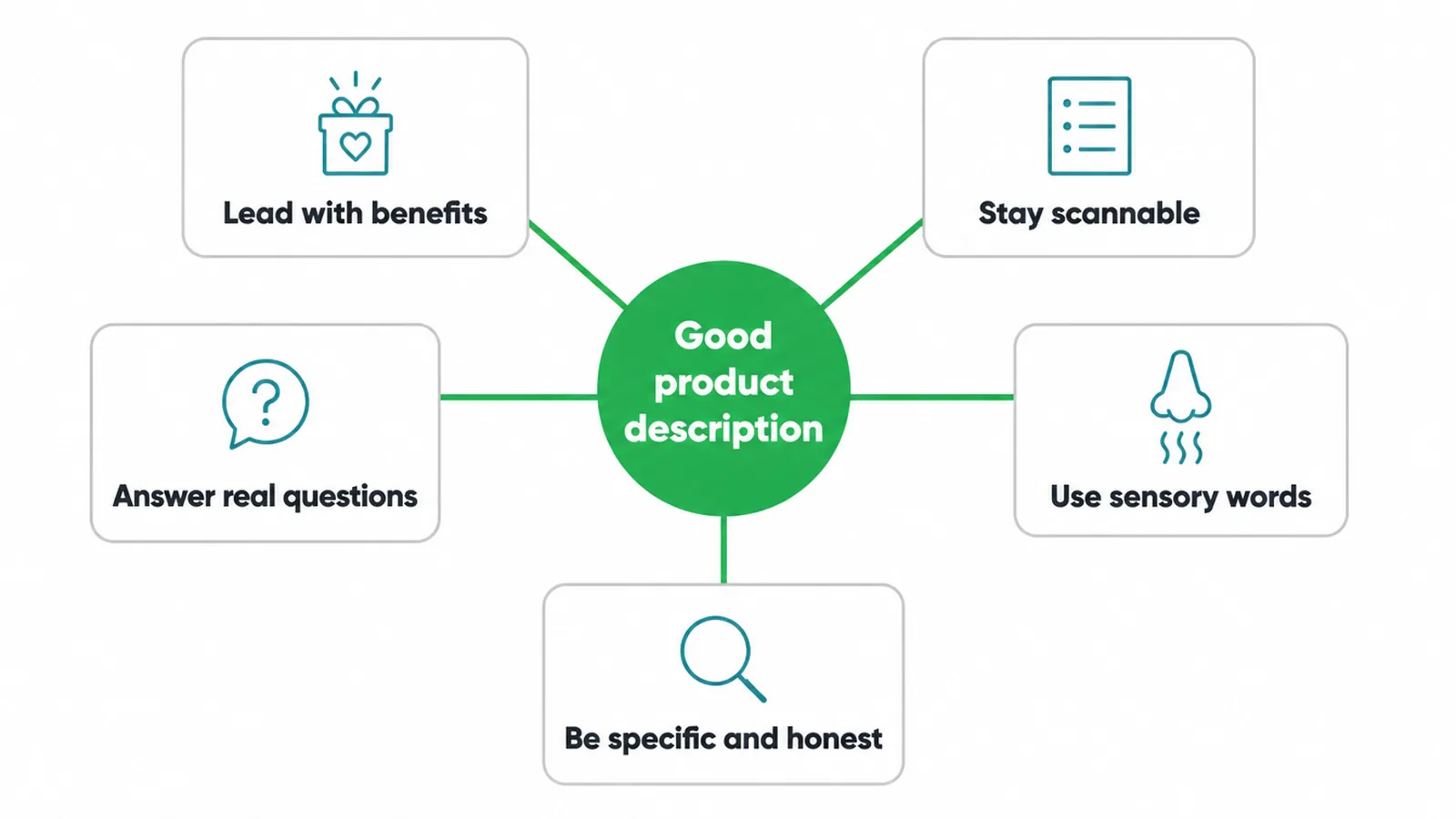
- Lead with benefits. Shopify advises you highlight the benefits so customers know how a product helps them, and organise features and benefits in a bulleted list (help.shopify.com).
- Stay scannable. It also advises making descriptions clear and scannable with headlines, bullet points and white space so they are easier to read (help.shopify.com).
- Answer real questions. Answer the questions customers actually ask about the product (help.shopify.com).
- Use sensory words. Use sensory adjectives so customers can imagine experiencing the product as they read (help.shopify.com).
- Be specific and honest. Be specific, because product details add credibility and vague claims like "excellent quality" lack substance (help.shopify.com).
That is the whole game. Now watch each move do its work.
2. Example 1: Lead with the benefit (a cotton t-shirt)
The most common mistake is a spec list that says nothing about the person wearing it. A benefit tells the buyer what they get. A feature is just a fact. Lead with the benefit, then use the feature as proof.
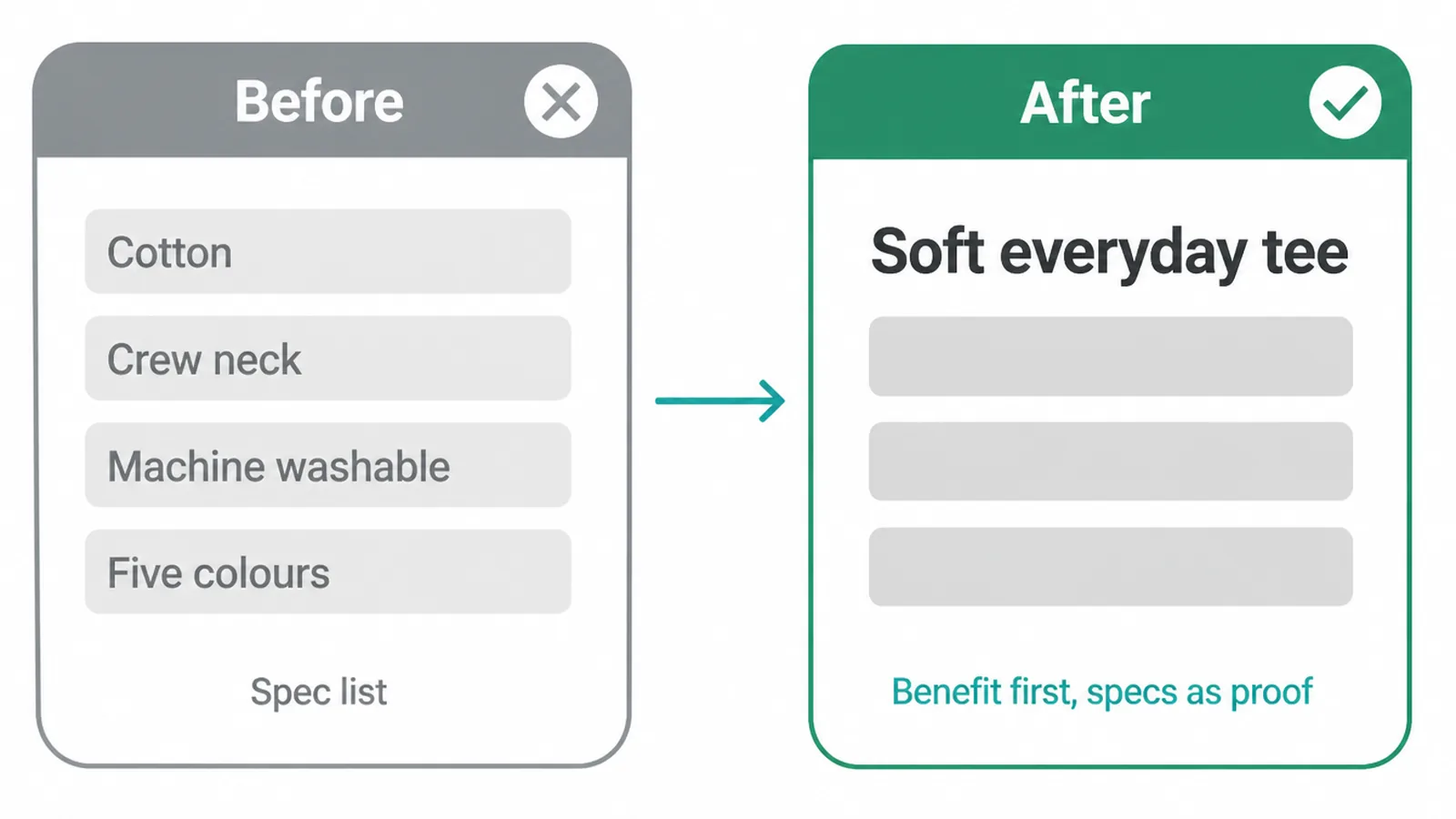
Before: "100% cotton. Crew neck. Machine washable. Available in five colours."
After: "The soft everyday tee you reach for first. Pure cotton so it breathes on a warm day. A crew neck that keeps its shape wash after wash. Comes in five colours, and it washes without shrinking."
Why the after works: It opens with what the shirt does for you, then folds the same specs in as support. Nothing was invented. The facts did not change.
We just put the benefit up front, where the buyer's eye lands first. Read the before out loud and it sounds like a label. Read the after and it sounds like a friend telling you why they like it.
3. Example 2: Make it sensory and specific (a jar of chilli sauce)
Food, drink and anything you experience with your senses needs words the reader can taste or feel. Vague copy could describe any jar on any shelf. Specific, sensory copy makes one jar feel real.
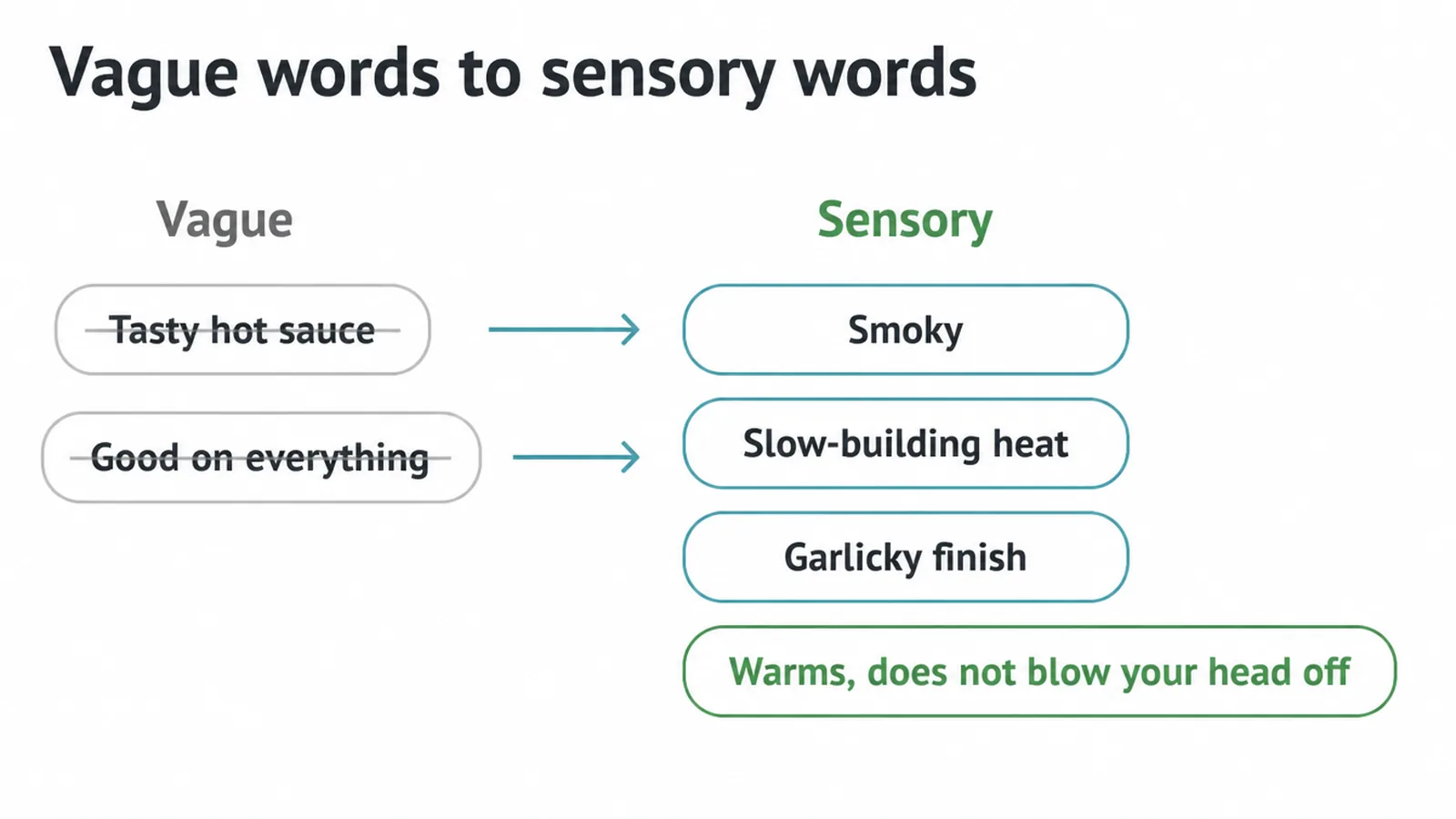
Before: "A tasty hot sauce. Good on everything."
After: "Smoky, slow-building heat with a garlicky finish. Stir a spoon into fried rice, or spread it on a fried-egg sandwich. It warms rather than blows your head off, so most people go back for a second helping."
Why the after works: It names the sensations and the exact way to use it, which is why sensory adjectives help so much (help.shopify.com).
It is also honest about the heat level, so nobody is surprised. "Tasty" and "good on everything" tell the reader nothing. "Smoky, slow-building heat with a garlicky finish" lets them picture the first bite before they buy.
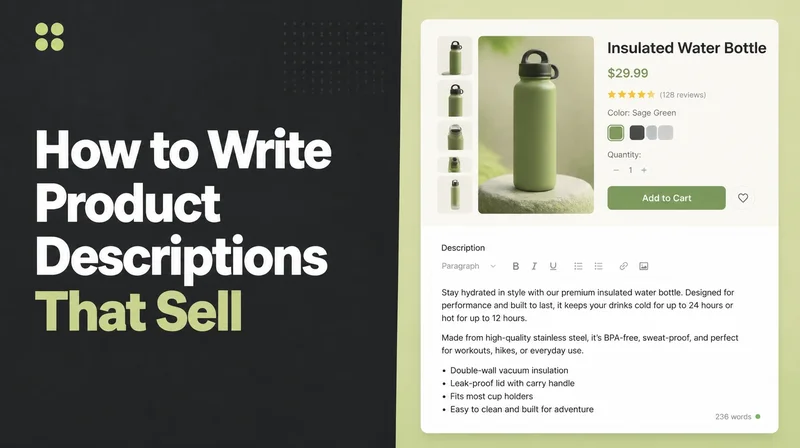
4. Example 3: Answer the buyer's questions (a steel water bottle)
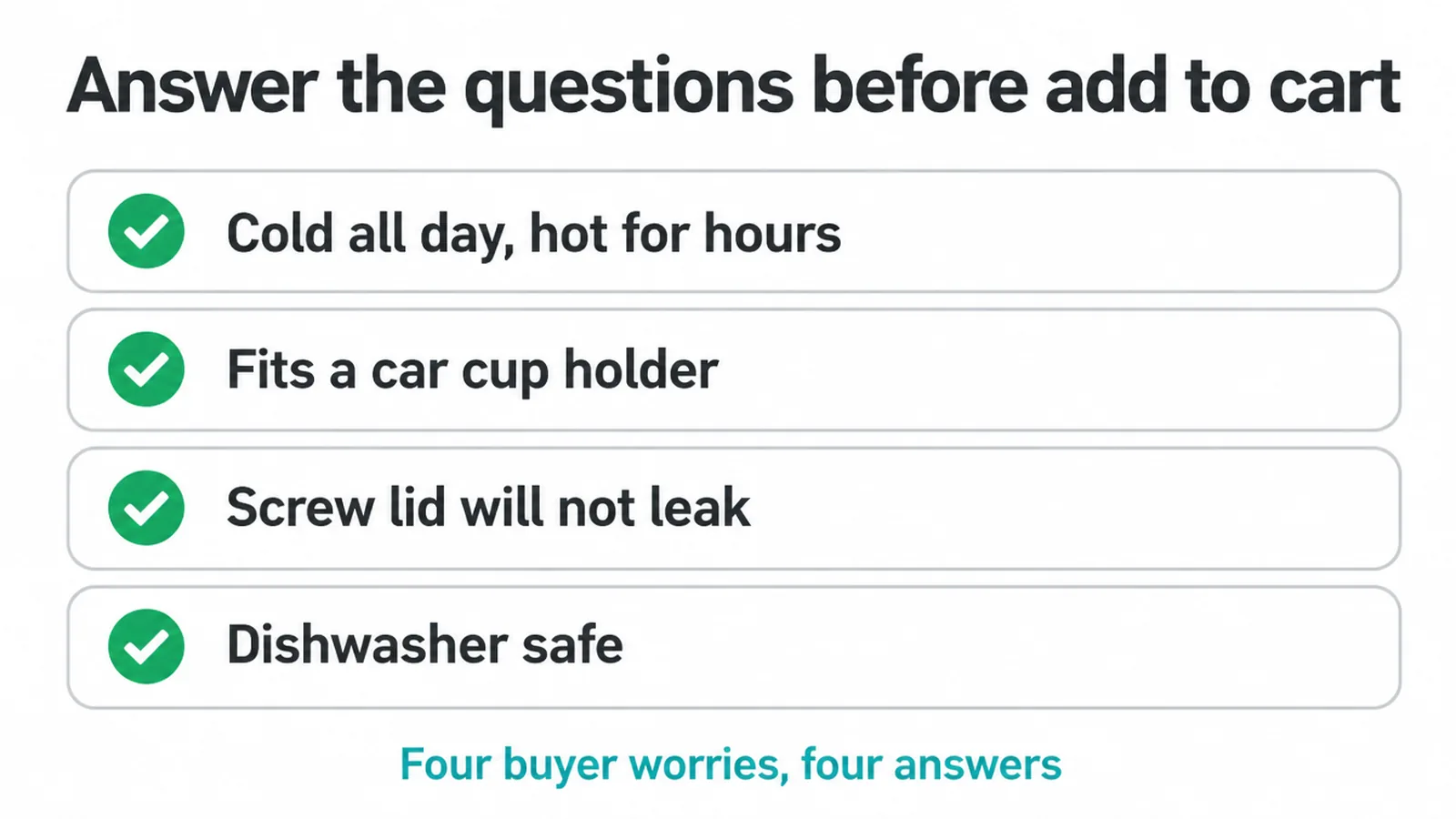
Every buyer has a short list of worries before they add to cart. Weak copy leaves those unanswered, so the buyer goes and hunts, or just leaves. Strong copy turns the FAQ into the description.
Before: "Durable insulated bottle. High quality."
After, as short bullets:
- Keeps drinks cold all day and hot for hours, thanks to double-walled steel.
- Slim base that fits a standard car cup holder.
- Screw lid that will not leak when it rolls around in your bag.
- Dishwasher safe, so no fiddly hand washing.
Why the after works: It answers the questions people actually ask before buying (help.shopify.com), and it does it in scannable bullets. "High quality" answers nothing. Reviews and buyer questions are gold here too, and they double as search-friendly content, which we cover in product page SEO.
5. Example 4: Make it scannable (a deep house clean)
This one is a service, not an object, to show the pattern works for services too. Services often get one dense paragraph of everything included, run together, that nobody reads. Structure does the selling.
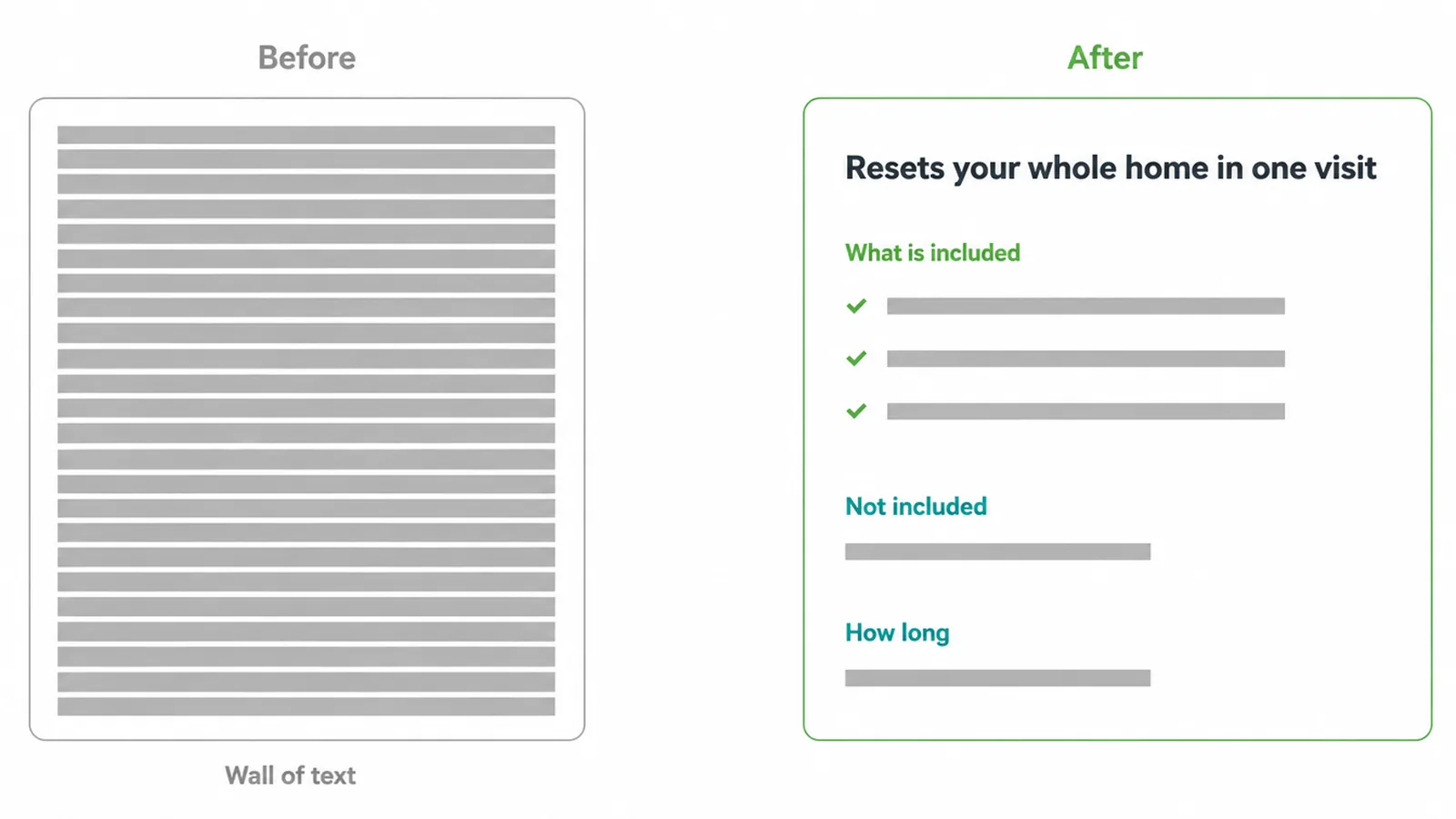
Before: "Our deep clean covers the whole home including kitchen worktops appliances inside and out bathrooms floors skirting boards window sills and we also do the oven and fridge on request and it usually takes a few hours depending on the size of your home."
After:
"A top-to-bottom clean that resets your whole home in one visit."
What is included:
- Kitchen worktops, plus appliances inside and out.
- Bathrooms scrubbed, floors mopped, skirting boards wiped.
- Window sills and dust traps most cleans skip.
Not included: oven and fridge deep clean, unless you add them on.
How long: around half a day for an average home.
Why the after works: A short promise line, a scannable list, an honest note on what is left out, and a time expectation. Same information, but now a busy person can read it in seconds. Clear and scannable beats a wall of text (help.shopify.com).
6. Example 5: Be honest and specific (a soy candle)
Handmade and premium-feeling products lean on adjectives, and that is the trap. "Premium", "luxury", "best quality", "amazing" are empty. They add zero substance. Specifics a maker can stand behind build far more trust.
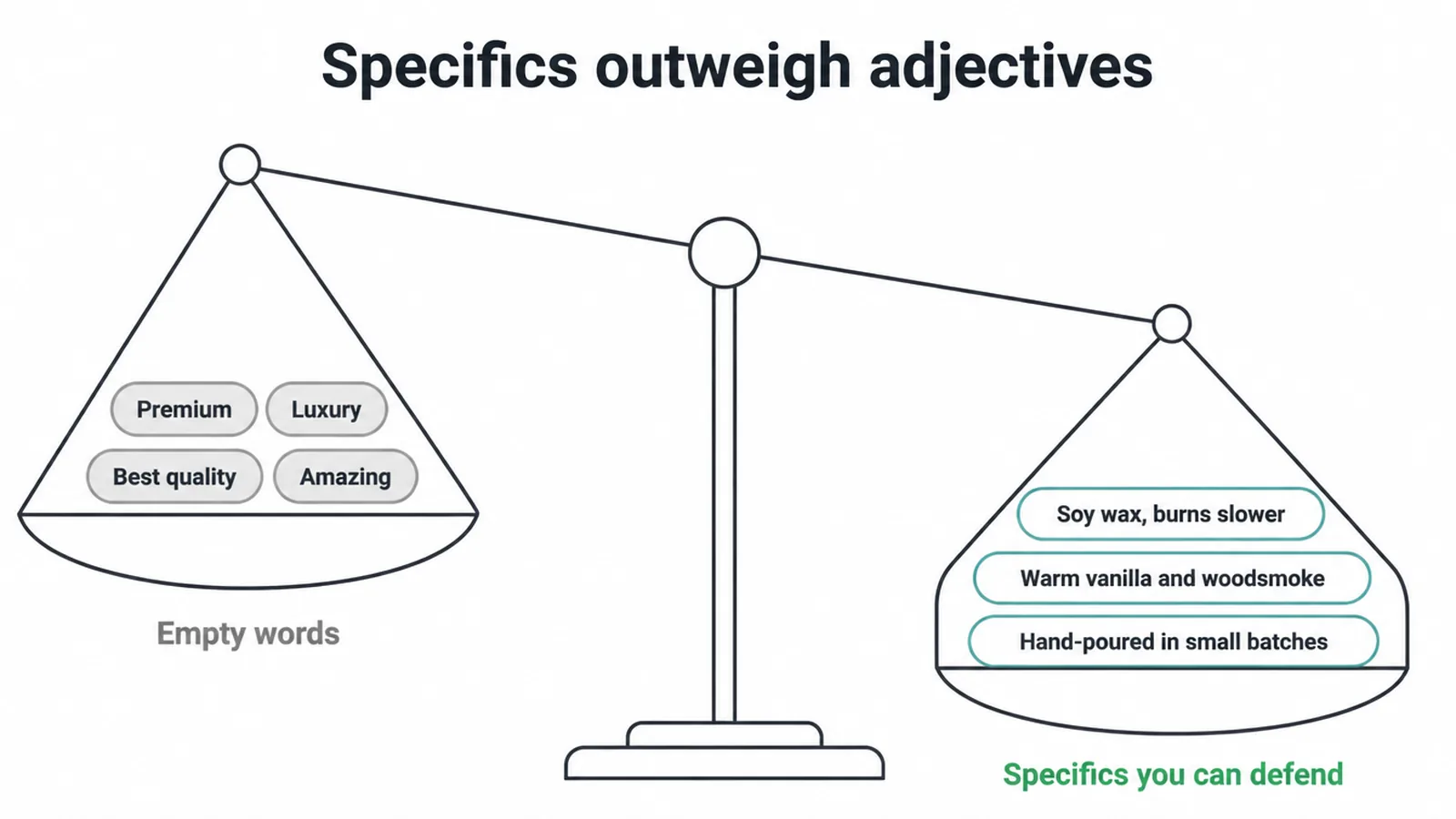
Before: "Premium luxury candle. Best quality. Amazing scent."
After: "Hand-poured in small batches from soy wax, which burns slower and cleaner than cheap paraffin. The scent is warm vanilla with a hint of woodsmoke, gentle enough to leave on while you read. Burns for a good long evening, many times over."
Why the after works: It swaps empty superlatives for details a real person can picture and a maker can defend. That matters because product details add credibility while vague claims lack substance (help.shopify.com).
And if you do claim yours is the best, keep it factual and give a plain reason (help.shopify.com). Specific and honest beats "premium" every time.
7. Example 6: Do not paste the supplier's blurb
This one is less about wording and more about a habit that quietly costs sales. When you resell an item, the supplier hands you a ready-made description. It is tempting to paste it and move on. Do not.
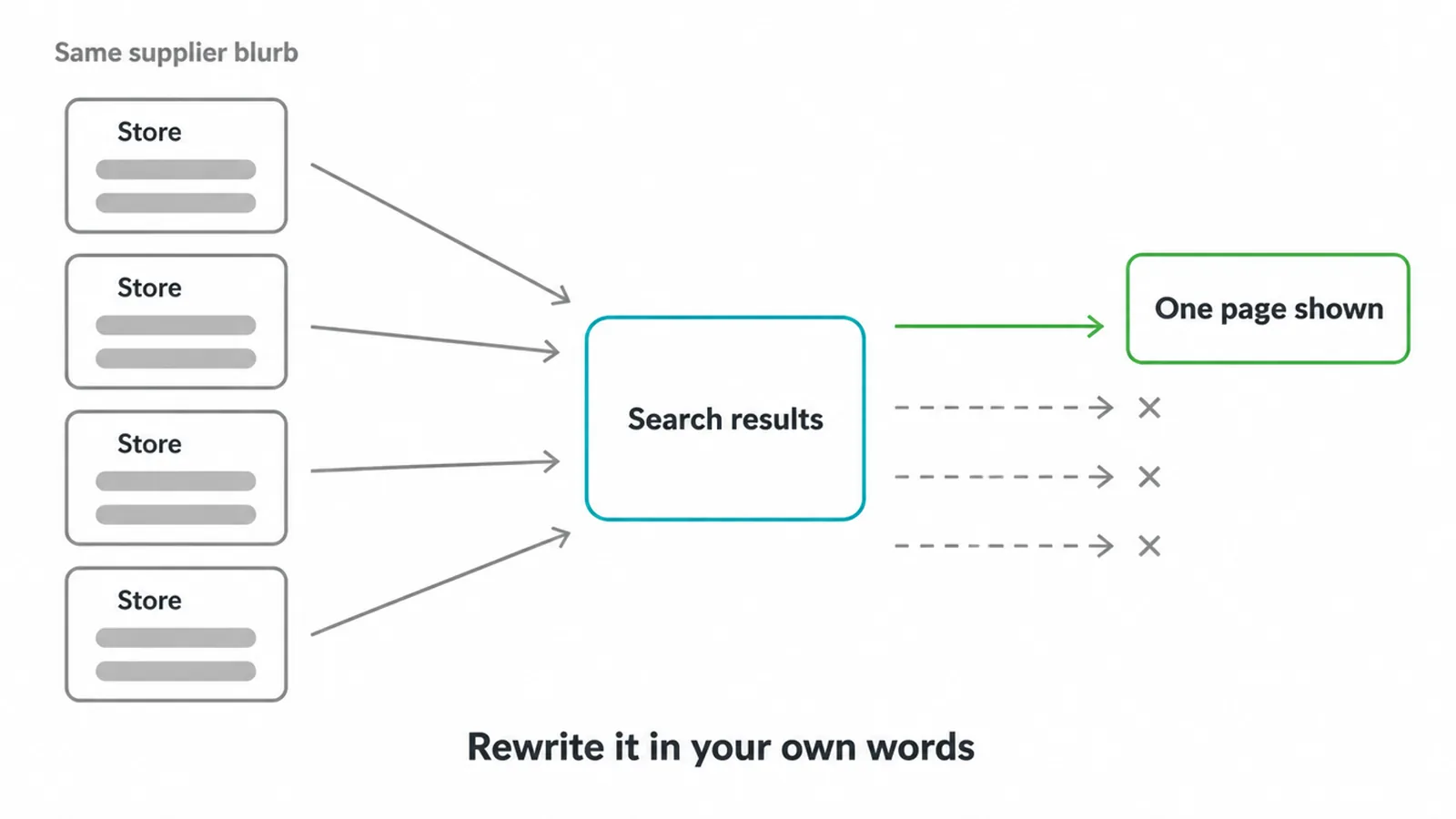
Before: the exact block of copy every other store selling the same item also uses.
After: the same product, re-described in your own plain voice, with the details that matter to your own customers.
Why the after works: There is no penalty for using the manufacturer's text, but Google's John Mueller notes that when the snippet is identical, Google will usually pick just one page to show, so a store using only supplier copy can be the one left out (searchenginejournal.com).
In plain words: copy everyone else's words and search may show a rival instead of you. Your own copy gets you found and lets you speak to your own buyers. More on that in product page SEO.
8. A fill-in product description template
Here is the reusable frame behind every "after" above. Copy the table, fill each row for your product, and you are done. It works for a t-shirt, a sauce, a bottle, a candle or a service.
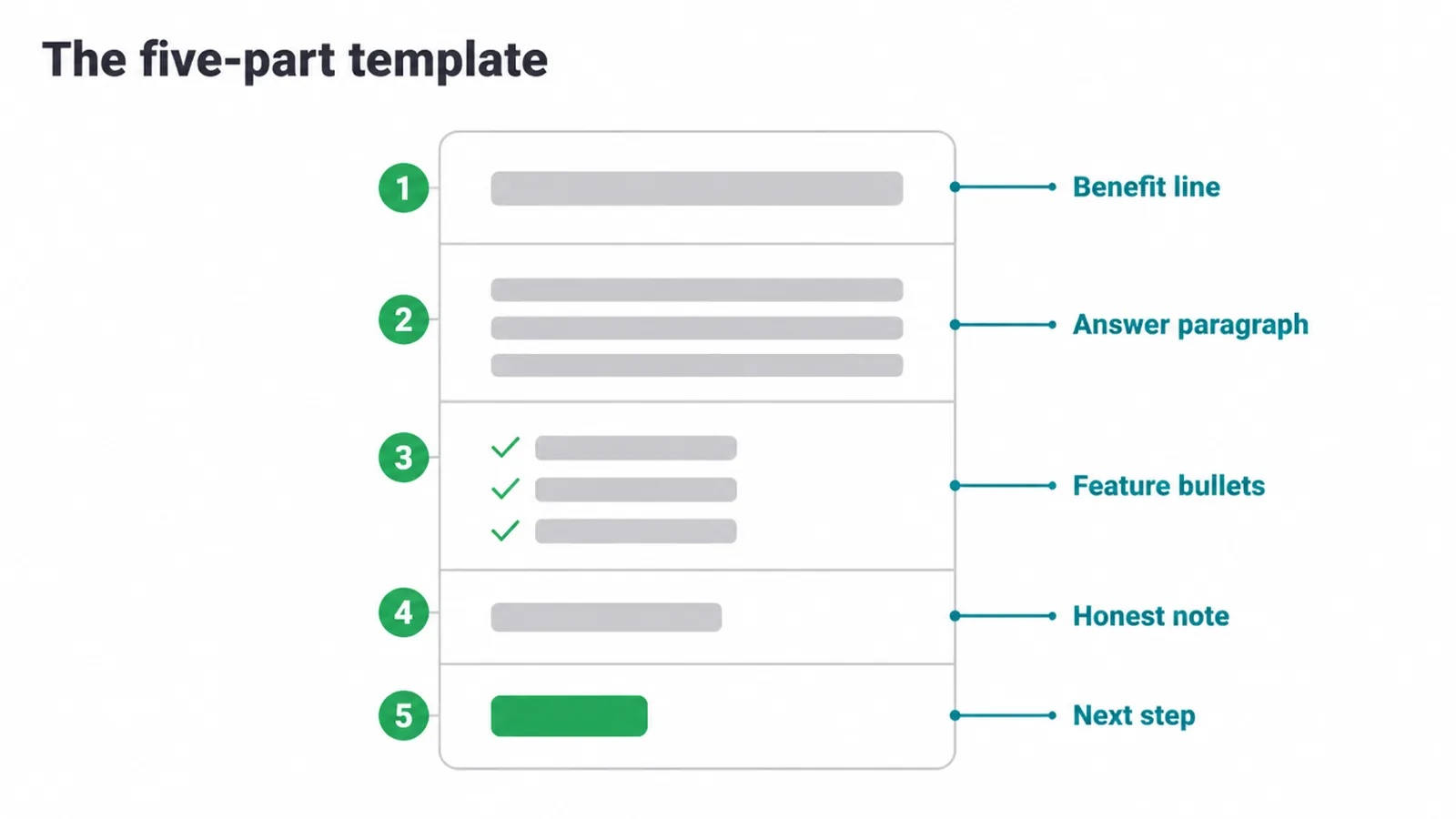
| Part of the description | What goes here | Example move (generic) |
|---|---|---|
| Benefit line | The main thing it does for the buyer, in one sentence | "The soft everyday tee you reach for first" |
| Answer paragraph | Reply to the top question a buyer has before buying | How it fits, how it washes, how long it lasts |
| Feature bullets | The specs, as scannable proof of the benefit | Cotton, crew neck, five colours |
| Honest note | One line that sets a fair expectation | "Runs slightly relaxed, size down for a snug fit" |
| Next step | A clear, low-pressure call to action | "Add to cart" or "Message us with any question" |
Do not treat the frame as a rigid mould. Some products need a longer answer paragraph, some need more bullets. Keep the order, adjust the depth to fit the decision the buyer is making.
9. Common mistakes these examples fix
Every rewrite above patches one common mistake. Run your own product pages past this quick list and you will spot most of them fast.
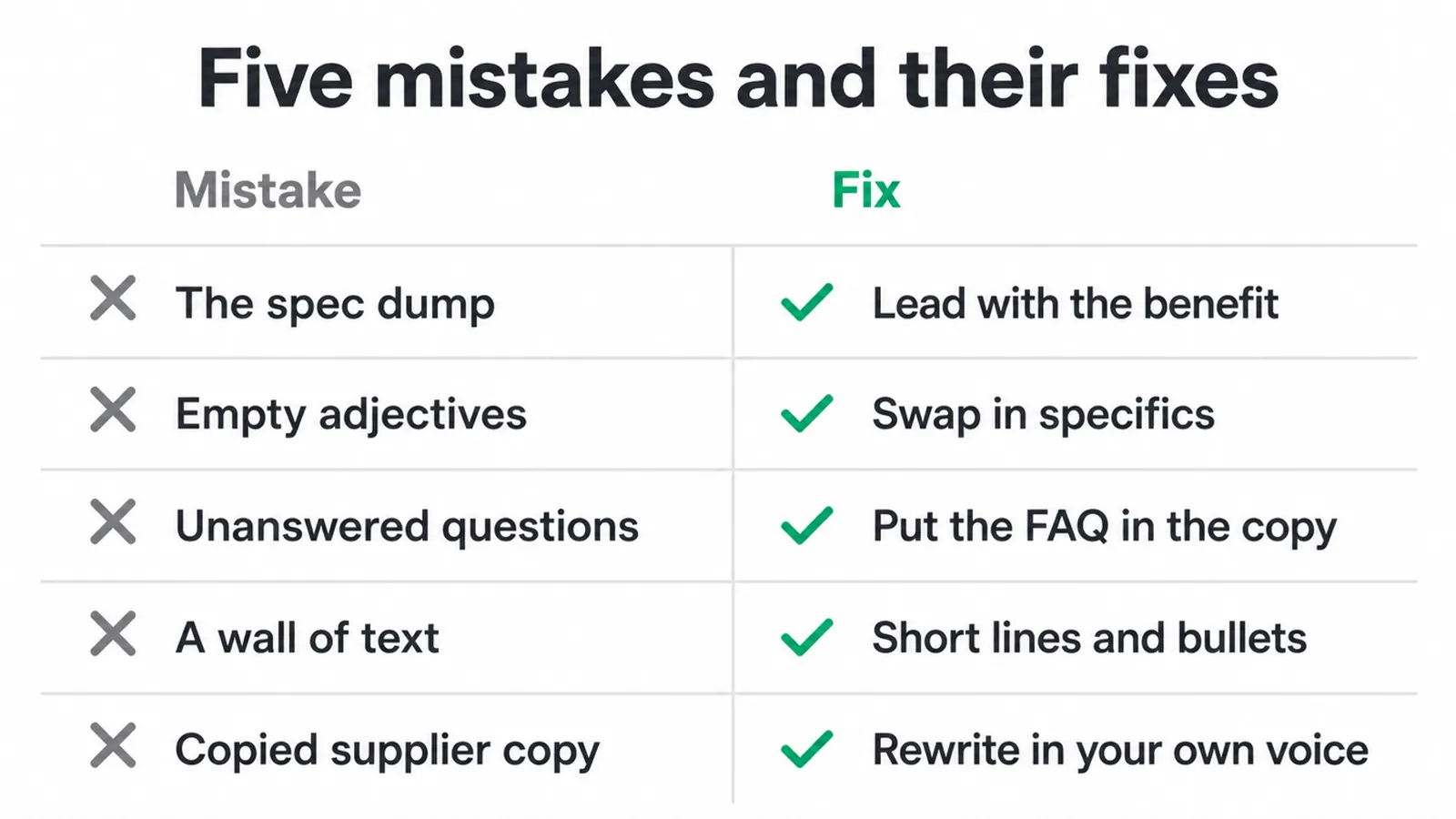
- The spec dump. A cold list of facts with no benefit. Fix: lead with what it does for the buyer.
- Empty adjectives. "Premium", "amazing", "best quality" with nothing behind them. Fix: swap them for specifics.
- Unanswered questions. The copy ignores what buyers actually worry about. Fix: put the FAQ in the description.
- A wall of text. One dense block nobody reads. Fix: short lines, bullets, white space.
- Copied supplier copy. The same blurb as every rival. Fix: rewrite it in your own voice.
For the full method behind all of these, read our companion guide on how to write product descriptions. And if your product pages need a proper home that actually sells, that is what our ecommerce website design work is for. We build stores where the product page does its job.
Frequently asked questions
1. What makes a good product description?
A good one leads with the benefit, answers the questions a buyer actually has, stays scannable with short lines and bullets, uses specific sensory words, and keeps every claim honest. It sells the outcome.
2. How long should a product description be?
Long enough to answer the buyer's questions and no longer. A simple, familiar item needs only a few honest lines and bullets. A bigger or more technical purchase needs more, because people have more to check before they buy. Write for the decision, not a word count.
3. Should I use the manufacturer's description?
It is safer to rewrite it in your own words. Pasting the supplier blurb means dozens of other stores show the exact same text, and search engines may pick just one page to display, which can be a competitor instead of you. Your own copy also lets you speak to your own customers.
4. What is the difference between a feature and a benefit?
A feature is a fact about the product, like double-walled steel. A benefit is what that fact does for the buyer, like keeps your coffee hot until lunch. Lead with the benefit, then use the feature as proof.
5. How do I make a product description more persuasive without lying?
Be specific and honest. Swap empty words like premium or amazing for real details the buyer can picture, and back up any big claim with a plain reason. Specific and true is more convincing than a pile of adjectives.
6. Do product descriptions really affect sales?
Yes. The description is often the last thing a buyer reads before deciding. Clear, benefit-led copy that answers their questions removes doubt, while a flat spec list or a copied blurb leaves them unsure and more likely to leave.
7. Can I use the same description style for a service?
Yes. A service still needs a short promise, a scannable list of what is and is not included, and honest expectations like how long it takes. The same pattern works, you just describe an outcome instead of an object.
8. What is the simplest template for a product description?
Open with the main benefit in one line, add a short paragraph that answers the top buyer question, list the key features and specs as bullets, add one honest note that sets expectations, and finish with a clear next step. Fill that frame for any product.