

Key takeaways
- What it is: customers pay a recurring fee for ongoing access, so you swap one-off sales for predictable recurring revenue.
- Three types: replenishment, curation and access. The framework comes from McKinsey's subscription research.
- The catch: it only compounds if people stay. Churn quietly eats the base you paid to build.
- Fit test: it works when there is a real repeating need. It fails when the need is one-off or the only value is a discount.
- Start small. One plan, test demand, add subscribe and save to an existing store, then watch month two and three retention before you scale.
A subscription business model is simple. Instead of selling something once, you charge a recurring fee, monthly or yearly, for ongoing access to a product or service.
The customer keeps paying, and you keep delivering. Done well, it turns a pile of one-off sales into a steady base of recurring revenue, and it pushes you to obsess over keeping people happy.
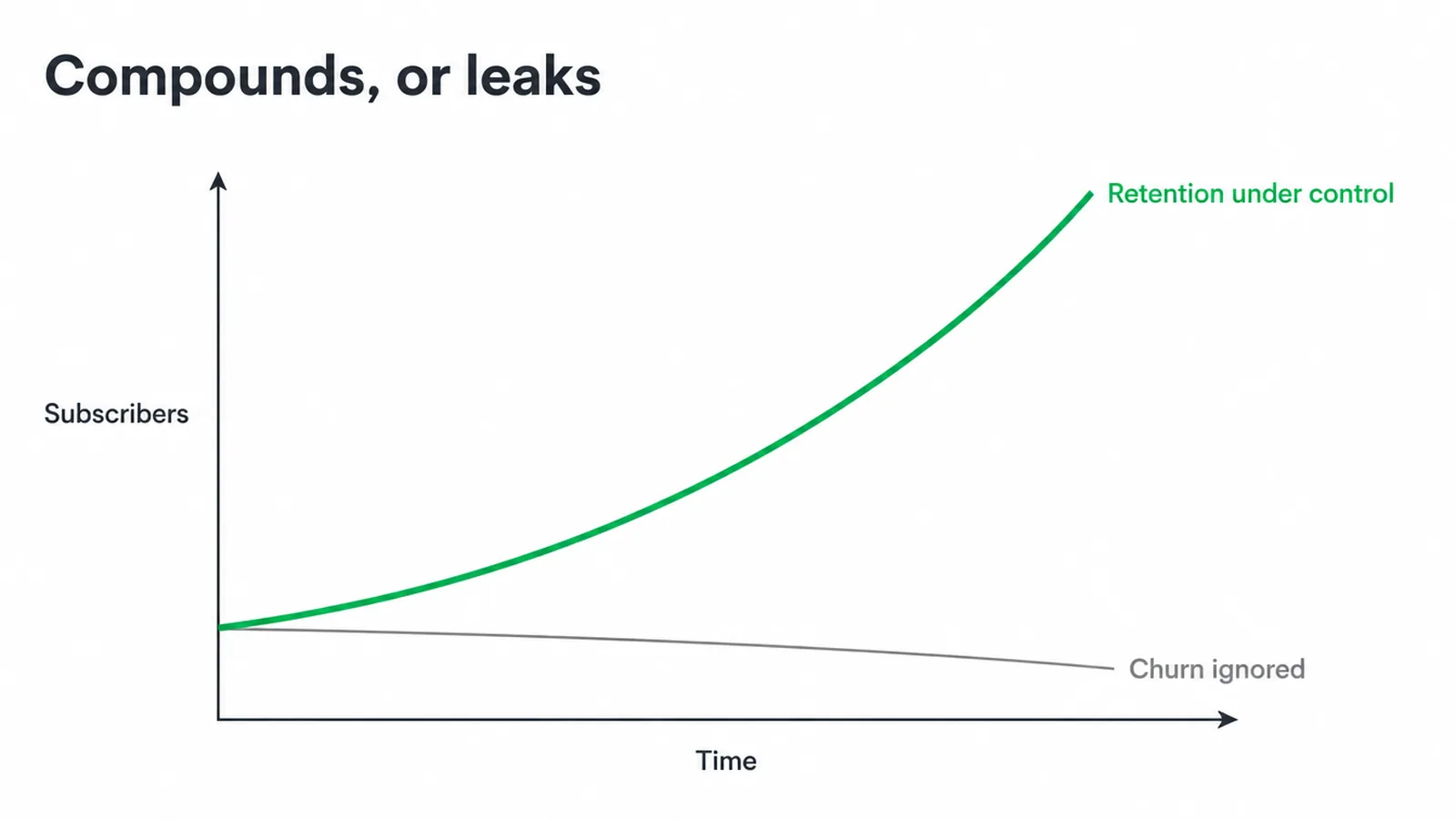
Here is the honest part though. Recurring revenue is powerful because it compounds, but it only compounds if people stay. Churn, the rate at which people cancel, quietly eats the base you paid to build.
This guide covers what the model really is, the three types, whether it fits your business, and how to start small.
1. What is a subscription business model?
A subscription business model charges customers a recurring fee for continued access to something, cycle after cycle. Think of the shift as win-once versus keep-earning.
With a normal sale, you win the customer, take the money, and start again from zero tomorrow. With a subscription, the same customer keeps paying every cycle for as long as they get value. That one change reshapes the whole business.
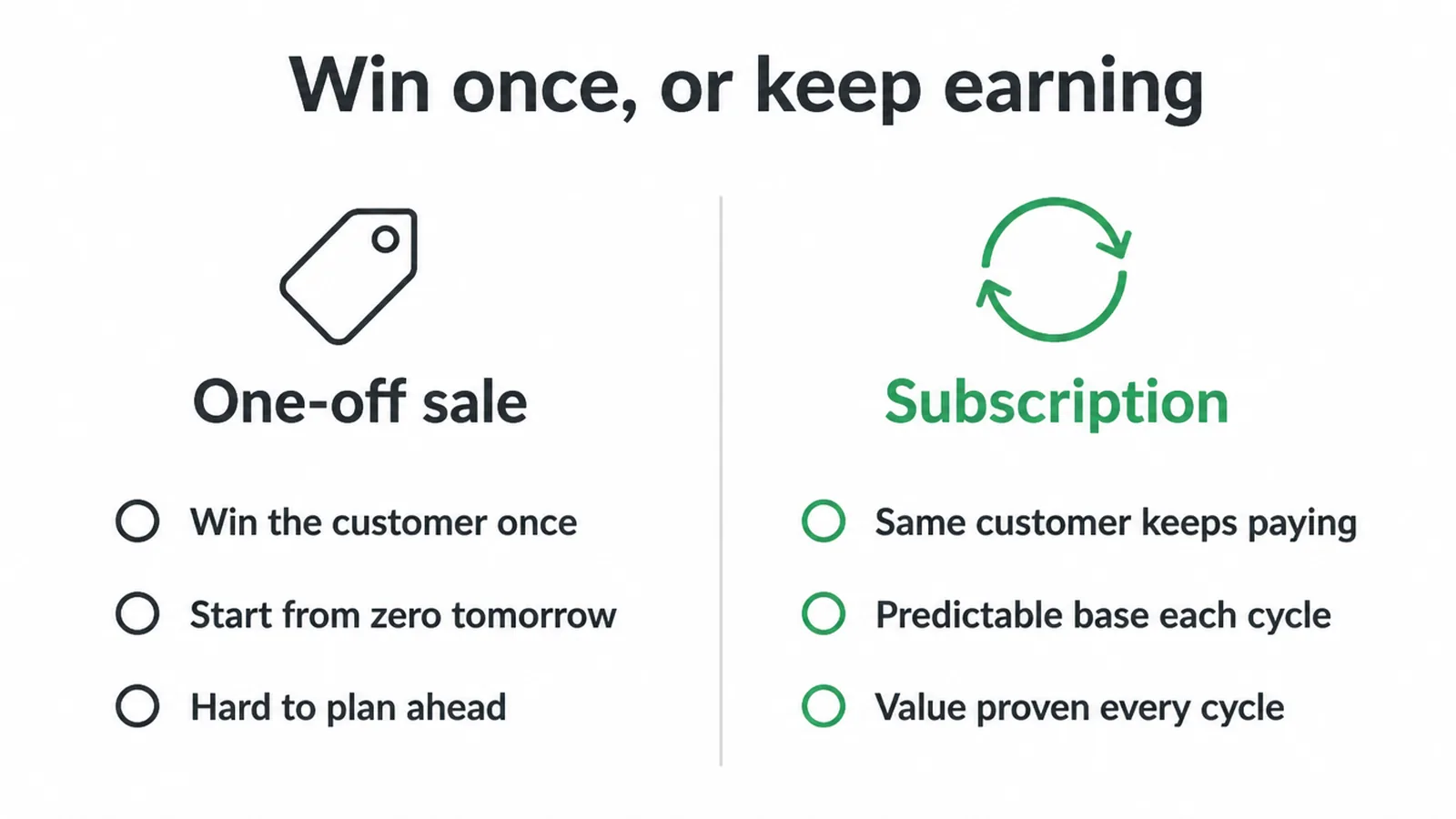
The upside is a predictable base. When you know roughly how many people are paying this month, you can plan stock, staff and spend with far less guessing. It also lifts lifetime value, because a customer who stays a year is worth many times a customer who buys once and vanishes.
And it quietly forces good behaviour. In a one-off business you can get away with a so-so product because you rarely see the buyer again. In a subscription, they vote every single cycle by staying or leaving. The model rewards businesses that keep delivering and punishes the ones that coast.
2. The three types of subscription models
Most subscriptions fall into three buckets, a framework that comes from McKinsey's research on subscription shoppers. Knowing which one you are matters, because each has a different promise and a different weak spot.
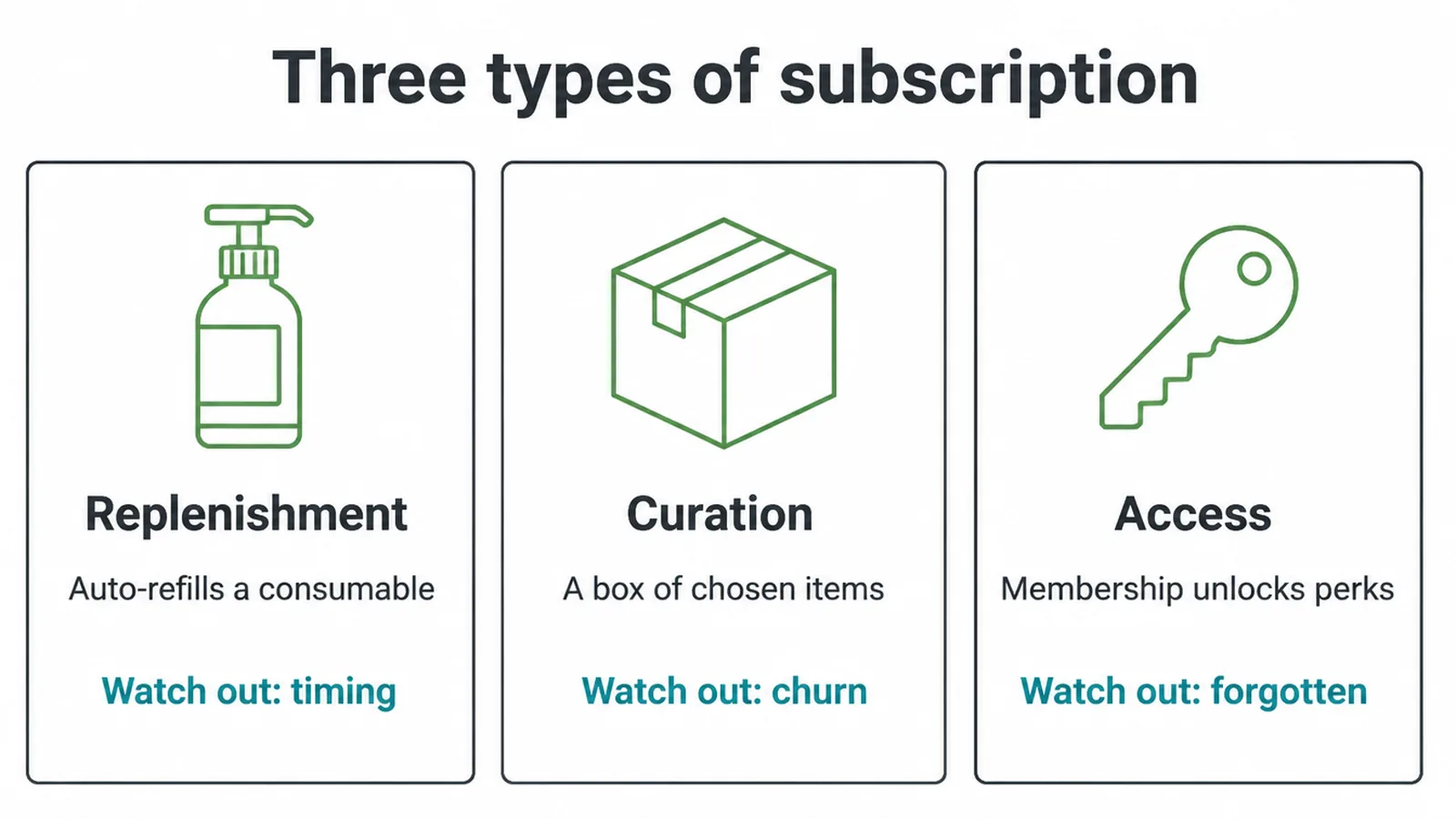
Replenishment auto-refills something people use up. Coffee, razor blades, pet food, supplements, printer ink. The pitch is convenience: never run out, never reorder. It is the stickiest type when the product is a genuine habit, because cancelling means going back to the hassle you were trying to escape.
Curation sends a box of chosen or surprise items on a schedule. Beauty samples, snacks, books, hobby kits. This is the most visible type, the one people picture when they hear "subscription box", and also the one McKinsey found churns fastest.
The thrill of the first few boxes fades, and once the surprise feels repetitive, people cancel quickly. Curation lives or dies on staying fresh.
Access is a membership that unlocks perks, content, or better pricing. Software, streaming, a gym, a members club, a "plus" tier with free delivery.
The value is the ongoing thing you can keep using, so the job is to make sure people actually use it. An access plan people forget they have is a cancellation waiting to happen.
| Type | What it is | Example fit | Watch out for |
|---|---|---|---|
| Replenishment | Auto-refills a consumable people use up on a schedule | Coffee, pet food, supplements, razors | Getting the timing right, so boxes do not pile up or run dry |
| Curation | A box of chosen or surprise items delivered on a cycle | Beauty, snacks, books, hobby kits | High churn once the surprise gets stale, so keep it fresh |
| Access | A membership that unlocks perks, content or pricing | Software, streaming, gyms, members clubs | People forgetting they have it, then cancelling on the next bill |
3. Why recurring revenue is valuable
Recurring revenue is worth chasing for three reasons, and none of them is a promise of easy money. The first is predictability.
A base of paying subscribers gives you a floor you can plan against, so decisions about stock, hiring and marketing rest on a number you can see instead of a hopeful guess. That calm is hard to overstate once you have felt the opposite.
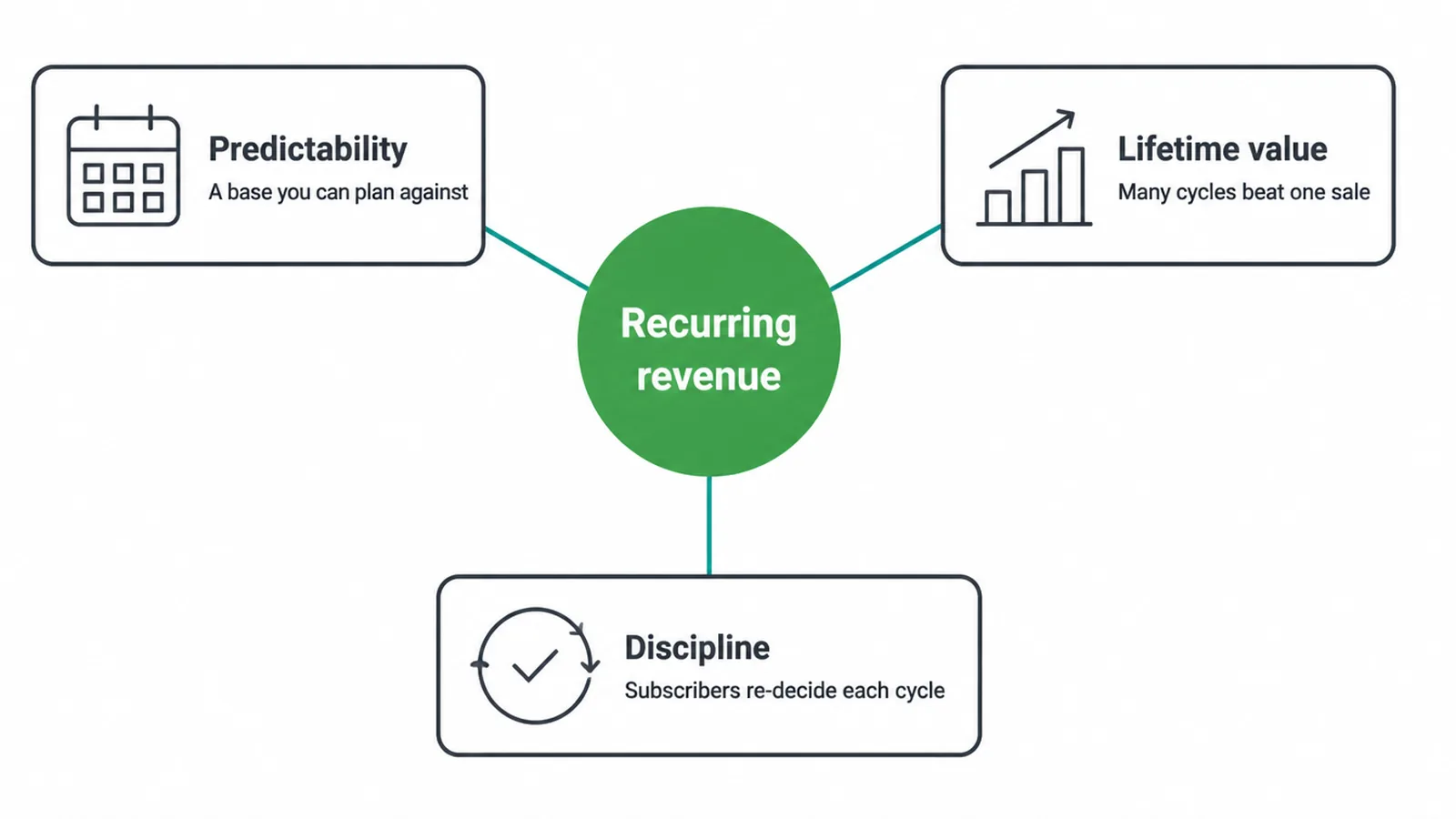
The second is lifetime value. A customer who stays for many cycles is worth far more than one who buys once, which means you can afford to work harder to win them in the first place.
The third, and the most underrated, is discipline. Because subscribers re-decide every cycle, the model forces you to keep the experience good and keep in touch. That habit of staying useful pays off across the whole business.
Staying in touch is where a lot of subscriptions quietly win or lose. A short, warm sequence of messages keeps the value front of mind so the next bill feels earned rather than sprung on people.
Our guide to email marketing for small business shows how to set that up without it feeling like spam. Recurring revenue rewards the businesses that keep showing up, not the ones that bill and go quiet.
4. Is a subscription model right for your business?
The honest answer is: sometimes. A subscription fits when your customers have a real, repeating need, and when your product gets used up, refreshed, or improved over time.
If people naturally reorder, or if there is always a fresh reason to come back, you have the raw material for a subscription. Coffee runs out. Software ships new features. A club adds new perks. Those are good signs.
When it fits badly
It fits badly in the opposite cases. If the need is one-off or rare, forcing a subscription onto it just annoys people. Nobody wants to subscribe to something they buy once every few years.
It also fails when the only value on offer is a discount, because a discount alone gives people no reason to stay once a cheaper option shows up. And if delivering every cycle costs you more than the subscriber pays over their life, the model works against you.
A quick self-test
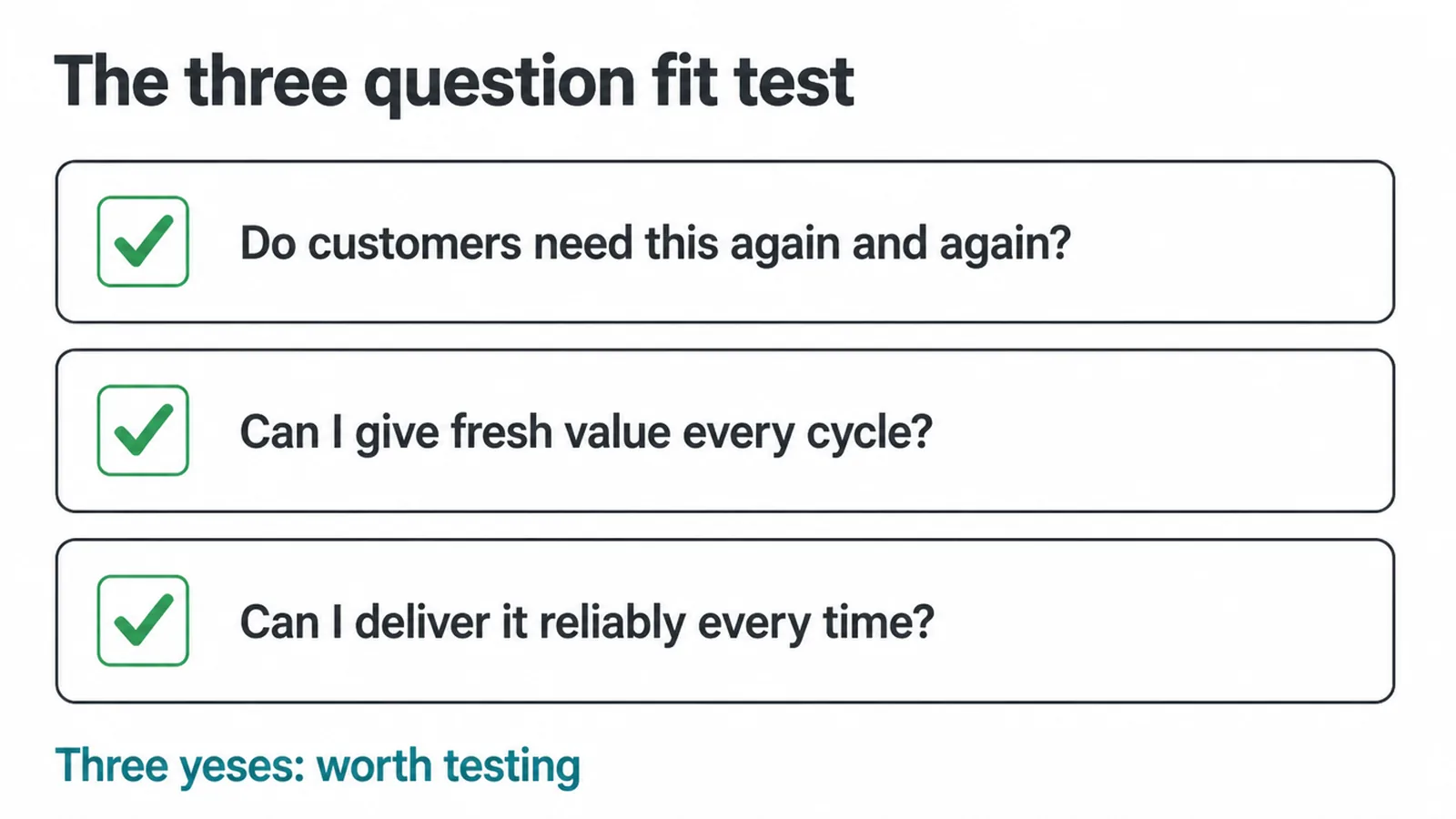
Ask yourself three things.
- Do my customers genuinely need this again and again?
- Can I keep giving them fresh value every cycle?
- Can I deliver it reliably without the logistics eating me alive?
Three honest yeses mean a subscription is worth testing. A no on any of them is a warning, not a wall, but you would want a plan for it.
If you are weighing this against a plain shop, our guide on how to start an online store covers the simpler route, and if you decide to build, our ecommerce website design work handles the subscribe-and-manage flows that make it stick.
5. The honest challenges nobody puts on the sales page
Churn comes in two flavours
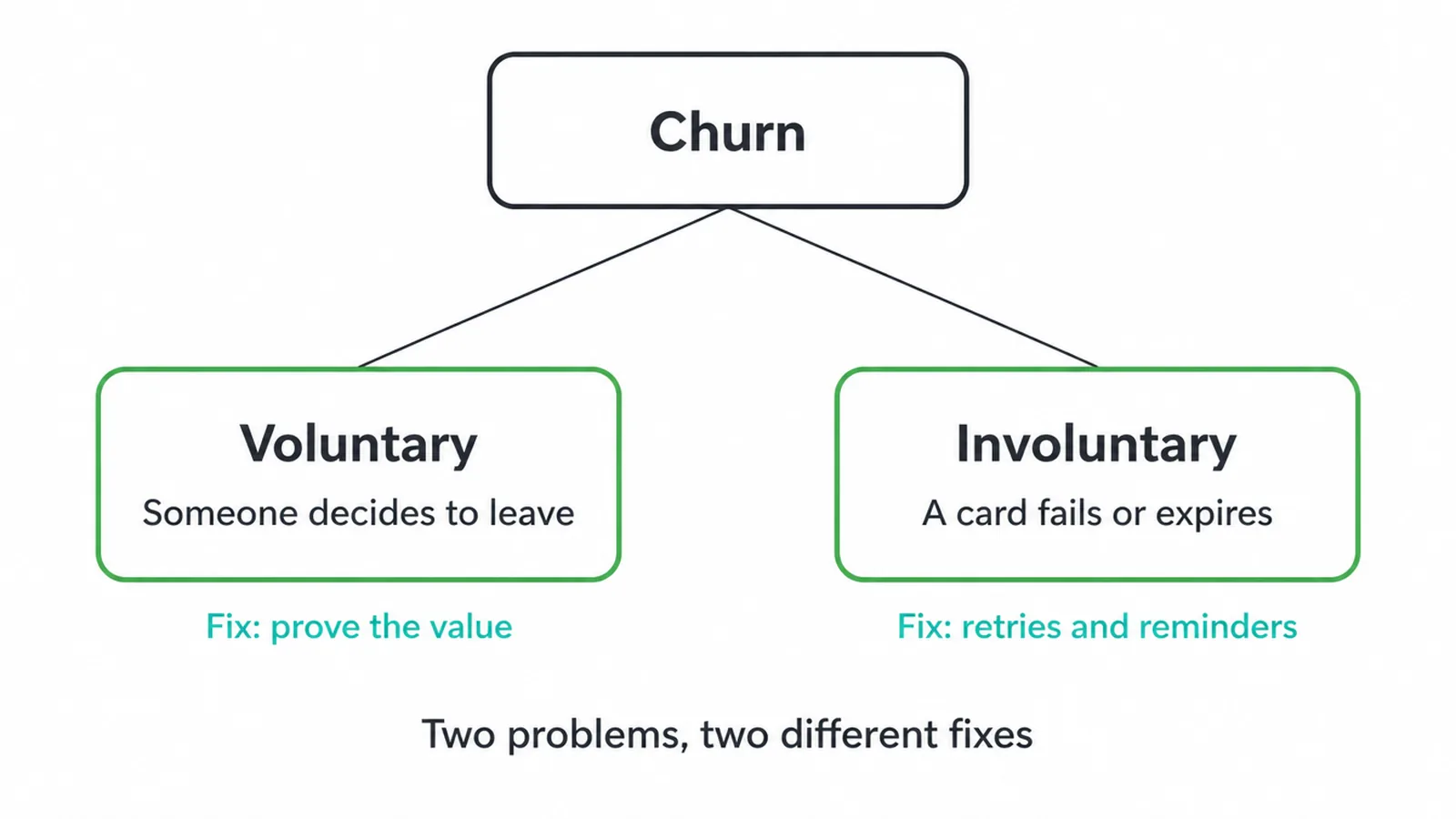
The biggest challenge is churn, and it deserves respect. Churn is the rate at which subscribers cancel, and it comes in two flavours. Voluntary churn is when someone actively decides to leave. Involuntary churn is when a card expires or a payment fails and the subscription lapses without anyone choosing it.
Payment platforms that watch billing across thousands of merchants separate the two on purpose, because you fix them in completely different ways. The point is that a chunk of your losses each month are not people rejecting you at all, they are broken card details you can often recover.
Churn hurts because it compounds against you. Every cycle you lose a slice of the base you spent money to build, so growth means running up a down escalator.
You are re-earning the customers you already have every single cycle, on top of winning new ones. That is the mental shift a lot of first-time subscription owners miss. The sale is never really closed.
Fulfilment never stops
Then there is fulfilment. A monthly box or refill is a logistics machine that never stops. Packing, shipping, stock, returns, and swaps all repeat forever, and a hiccup annoys the exact people you most want to keep.
On top of that, you have to justify the value again and again. A one-off buyer forgives a quiet month. A subscriber notices, because they are paying for it right now.
The upside is that making it easy to cancel and, better still, to pause actually builds trust, because people commit more freely to something they can step away from. This is the retention edge of your marketing funnel stages, the part most businesses forget once the sale lands.
6. How to reduce churn
You cannot kill churn, but you can tame it, and small wins stack up fast. Start with visible ongoing value. Remind people what they are getting, ship something fresh each cycle, and make the good stuff obvious so the next bill feels earned. Value that people forget is value that gets cancelled.
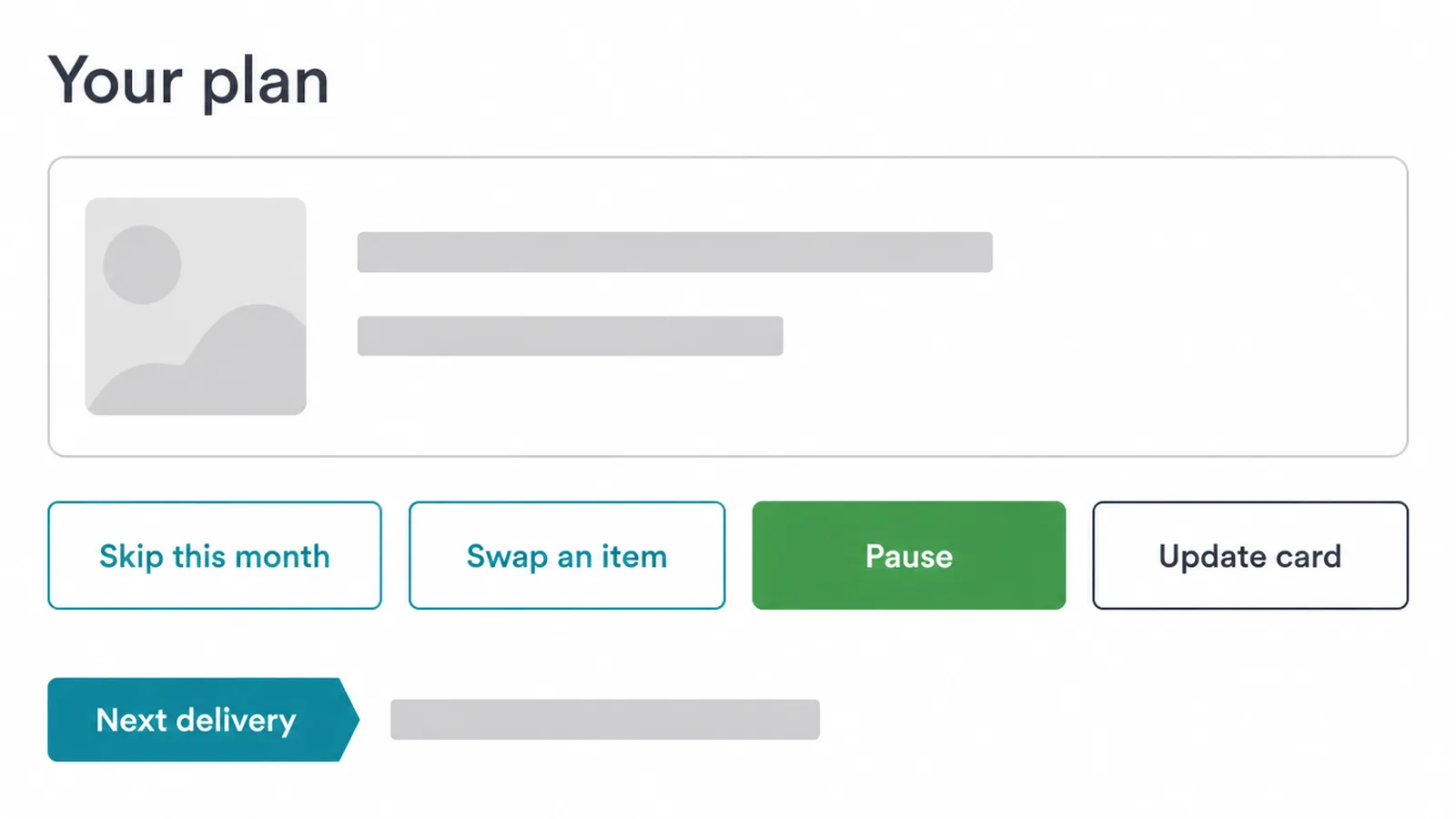
Make pausing as easy as cancelling
A "skip this month", "swap an item", or "pause for a while" option keeps the relationship alive when a hard cancel would end it for good.
Go after the failed-payment kind
Then go after involuntary churn. Simple retries and a friendly "your card needs updating" reminder recover subscribers who never meant to leave in the first place, which is some of the cheapest saving you will ever do.
Finally, stay in touch between bills with a helpful note or tip, so the value is never out of sight. None of this is fancy. It is mostly just not going quiet.
7. How to start a subscription business
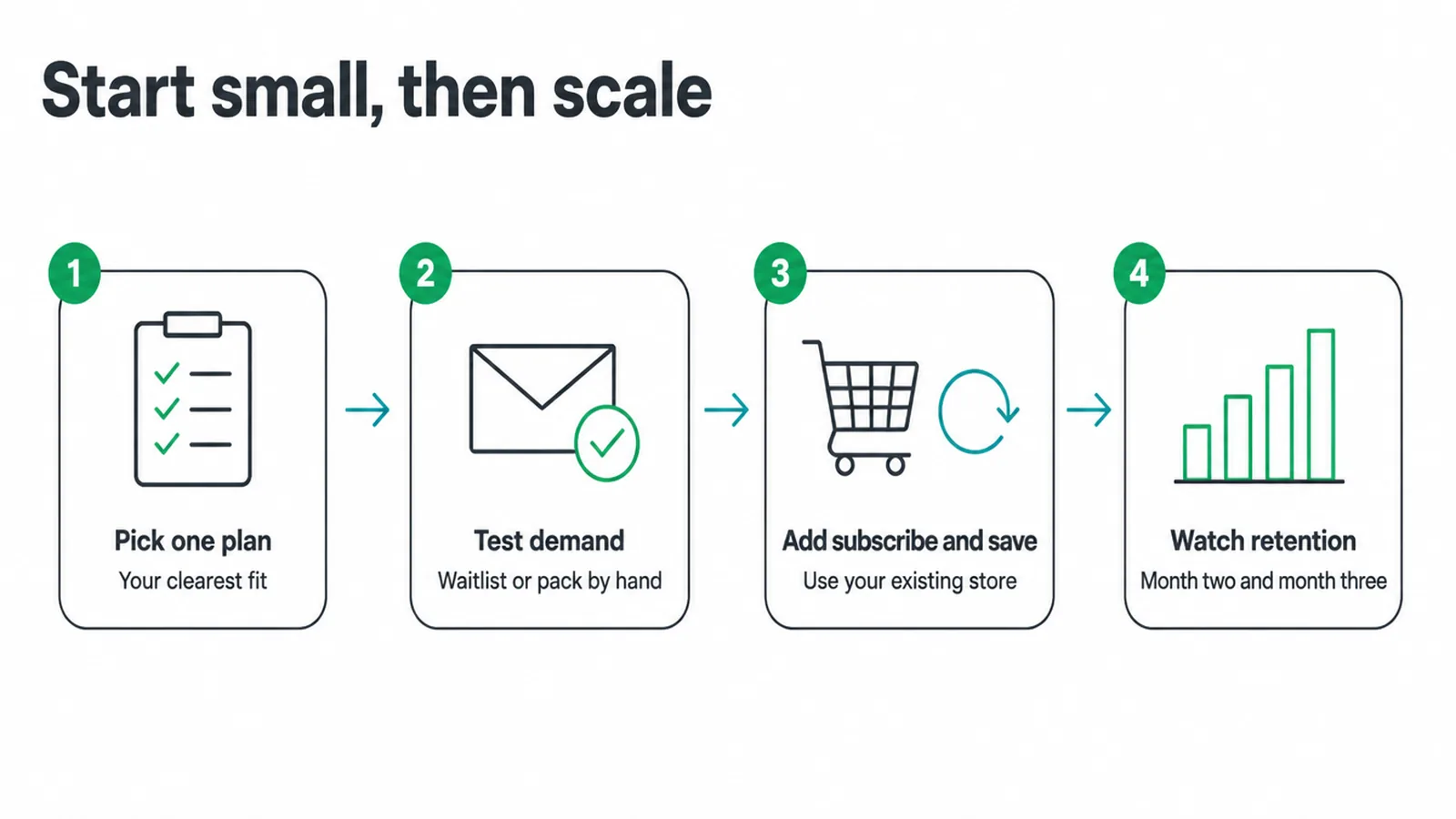
Start small, and resist the urge to build the whole machine on day one. Pick one product or one plan, the clearest, most obvious fit, and offer just that. A single plan you can deliver brilliantly beats a menu you cannot keep up with.
Validate demand before you automate
A waitlist, a simple pre-order, or a few weeks of packing boxes by hand will tell you whether people actually want this on repeat. Manual and clunky is fine at this stage, because you are testing the idea, not the software.
If you already run a store, the easiest on-ramp is a subscribe-and-save option on a product people reorder anyway. You learn whether recurring works for you without betting the business on it.
Watch month two and month three
Once orders come in, watch the numbers that matter, and they are not the launch-week ones. Look at month two and month three retention. First-month excitement flatters everything. The real question is how many people are still there after the novelty wears off, because that is the number the whole model rests on.
Only pour money and automation in once retention looks real. If you want a second pair of eyes on whether a subscription fits, or help wiring up the plans and billing, tell us what you are selling and we will help you pressure-test it before you build.
FAQ
1. What is a subscription business model?
A model where customers pay a recurring fee, monthly or yearly, for continued access to a product or service instead of paying once. It trades one-off sales for predictable recurring revenue.
2. What are the types of subscription models?
Three main types: replenishment, which auto-refills consumables; curation, which sends a box of chosen or surprise items; and access, which is a membership that unlocks perks, content or better pricing.
3. Is a subscription model right for my business?
It fits best when customers have a genuine repeating need and your product gets used up, refreshed or improved over time. It fits badly when the need is one-time or rare, or when the only value is a discount.
4. What is churn and why does it matter?
Churn is the rate at which subscribers cancel. It matters because subscriptions only compound if people stay, so a small monthly cancellation rate quietly erodes the base you spent money to build.
5. How do I reduce subscription churn?
Deliver visible ongoing value, make pausing easy instead of only cancelling, recover failed card payments with retries and reminders, and stay in touch so the value is never forgotten.
6. What products work well as subscriptions?
Consumables people reorder like coffee, pet food or supplements, curated categories people enjoy discovering like beauty or hobby boxes, and services or content with ongoing value like software or memberships.
7. How do I start a subscription service?
Start small. Pick one product or plan, test demand with a waitlist or manual fulfilment, add a subscribe and save option to an existing store, and only automate once retention looks real.
8. Is recurring revenue really better?
It is more predictable and shifts focus to retention, which is powerful. But it is not free money, because you re-earn each customer every cycle, carry ongoing fulfilment, and lose the model to churn if the value fades.
8. When a subscription model fits, and when it does not
A subscription business model is a powerful thing when it fits. It gives you a predictable base, lifts what each customer is worth, and forces you to keep the experience good.
But it is not a shortcut to easy money. You re-earn every customer each cycle, you carry the fulfilment forever, and churn will erode the whole thing if the value fades.
So test the fit honestly, start with one plan, and watch month two and three before you scale. Get retention under control and the model compounds beautifully. Ignore it and it leaks. Start small, prove people stay, then build.
About the author
Gregory Yeoh is the founder of Seed Light, a web design and digital marketing agency that has helped small businesses get found online since 2017. He has helped owners weigh up subscription plans, and the pattern is always the same: the idea is easy, the retention is the real work.
He wrote this to help you decide whether the model fits before you pour money into it, without the hype or the recycled stats. If you want help turning a subscription idea into something that actually sticks, get in touch.