
Key takeaways
- Dropshipping is a fulfilment method. You sell in your store, a supplier holds the stock and ships each order straight to the buyer.
- It lowers the upfront cost, not the work. You do not buy inventory, but you still build a store, run ads and handle every customer.
- You compete on marketing, not product. The margins are thin and dozens of stores often sell the exact same item.
- Shipping and quality are out of your hands yet the complaints land on you, so pick suppliers carefully.
- Ignore the get-rich pitches. Anyone promising easy passive income is usually selling a course, not a business.
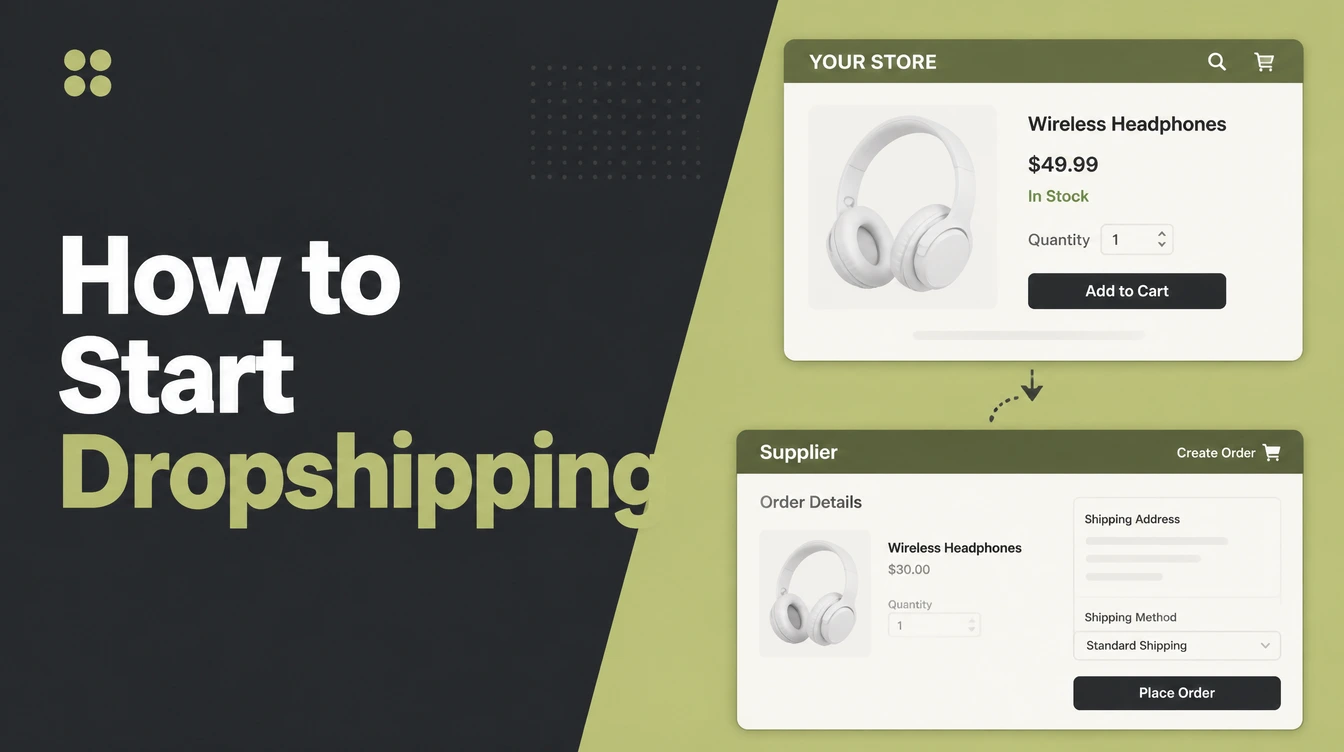
Dropshipping is a way to run an online store without holding any stock. You list products, a customer buys, and your supplier ships the item straight to them.
You never pack a box. That is the appeal, and it is real. You can start cheaply because you only pay for a product after someone has already paid you for it.
Here is the honest part, up front. Dropshipping is a real business, not a shortcut. It lowers the cost of starting, but it does not lower the work. You compete on marketing, on thin margins, with no control over shipping or quality.
Done with patience it can work. Sold to you as easy money by a guru with a course, it will not. This guide walks you through it plainly. If you want the wider view first, start with our guide to how to start an online store.
1. What is dropshipping?
Dropshipping is a retail model where you sell products you never physically touch. You set up a shop, put products on it, and set your own prices. When someone buys, you forward that order to a supplier.
The supplier picks the item off their shelf, packs it, and posts it directly to your customer. Your name is on the store. Their warehouse does the shipping.
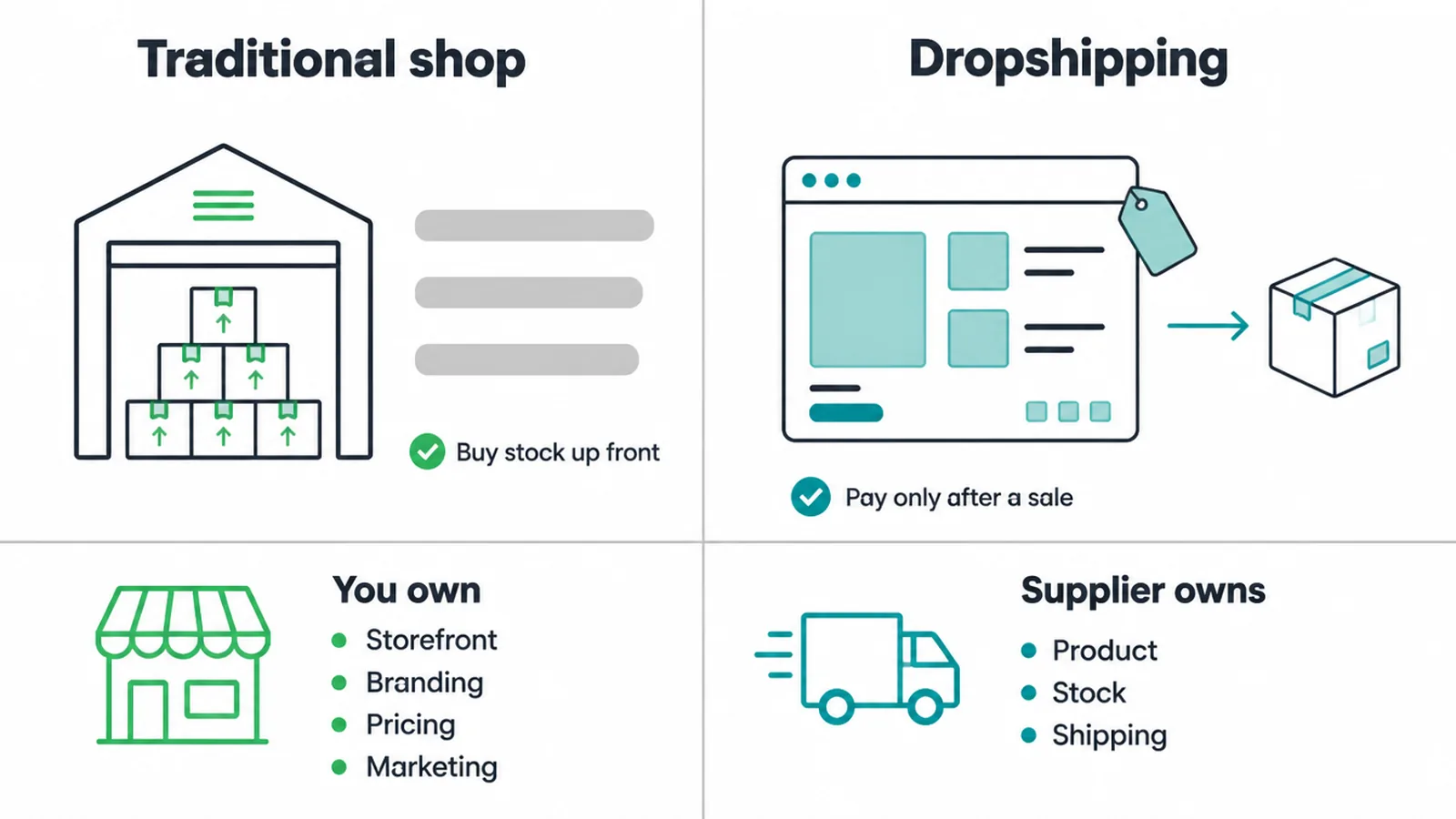
Compare that to a normal shop. Normally you buy a pile of stock up front, store it, and hope it sells. If it does not, your money is stuck in boxes in a garage.
With dropshipping you skip all of that. You only pay the supplier once a real customer has paid you, so you are never sitting on unsold stock.
So who does what? You own the storefront, the branding, the pricing and, most of all, the marketing. The supplier owns the product, the stock and the shipping. That split is the whole idea.
It sounds like the supplier does the hard part. In practice, getting people to your store is the hard part, and that job is entirely yours. Keep that in mind before anyone tells you this is hands-off.
2. How does dropshipping work?
The order flow is simple once you see it laid out. A customer lands on your store and buys a product. They pay you your price.
Behind the scenes, you (or an app that does it automatically) send that same order to your supplier and pay them their lower price. The supplier ships the item to your customer, often in plain packaging. You keep the difference. The customer usually never knows a supplier was involved.
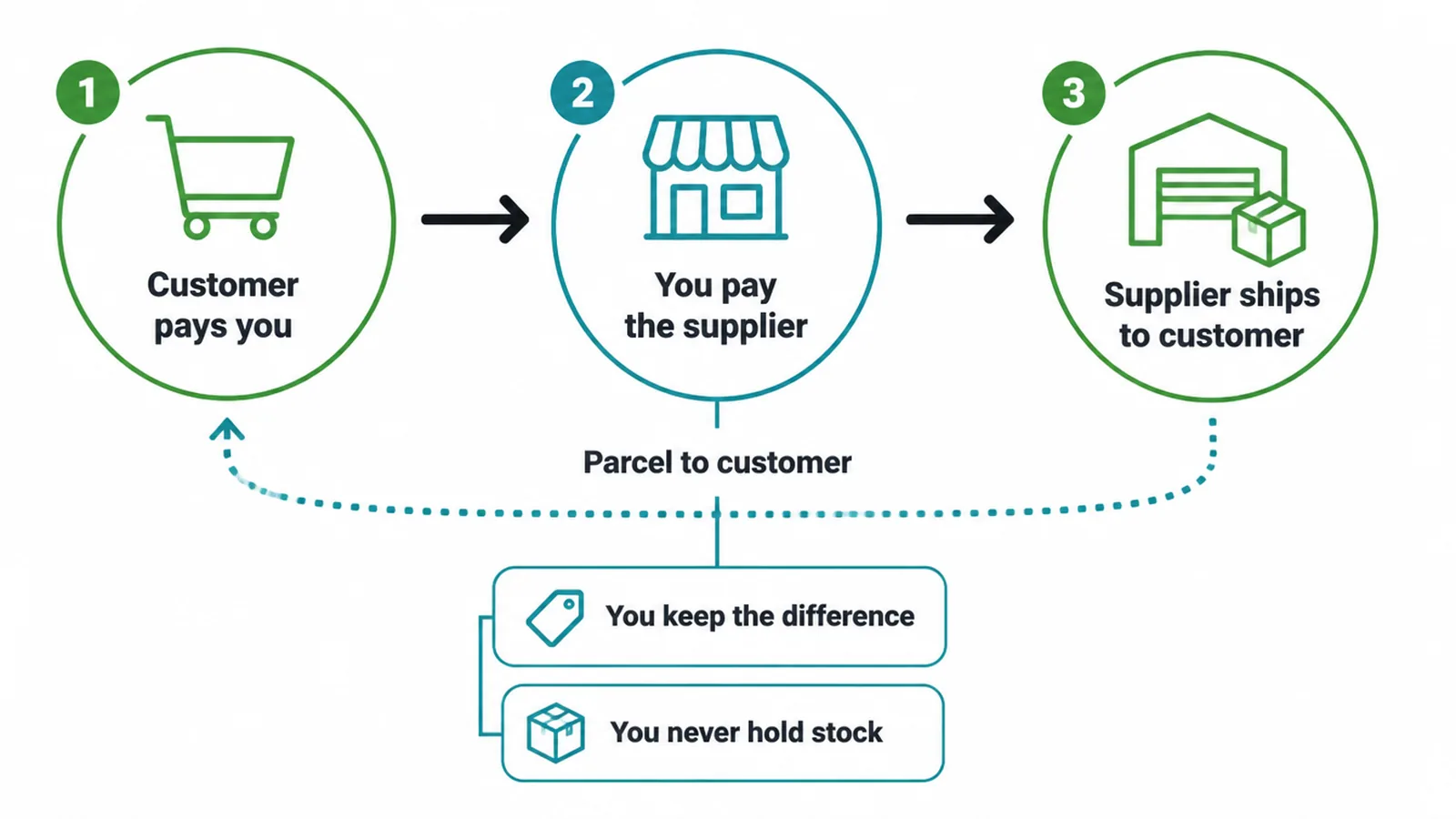
The order chain in three steps
So the chain runs: customer pays you, you pay the supplier, the supplier ships to the customer. You sit in the middle. You never see, touch or store the product. Your job is to bring the customer in and to sort out any problems afterwards.
Why the middle spot is risky
That middle spot is comfortable and risky at the same time. Comfortable because you carry no stock. Risky because you rely completely on someone else to deliver on time and to a decent standard.
If the supplier is slow, sends the wrong thing, or ships something shoddy, the angry email comes to you, not to them.
This is why choosing the right supplier is the single biggest decision you will make. We go deep on how to vet them in our guide to dropshipping suppliers. Read that before you commit to anyone.
3. The real pros and cons of dropshipping
Every guide lists the good bits. Fewer list the catch honestly. Here are both sides, plainly, so you can decide with your eyes open.
The pros are real, which is why so many people try it. The cons are also real, which is why so many quit. Read the whole table before you get excited about the left column.
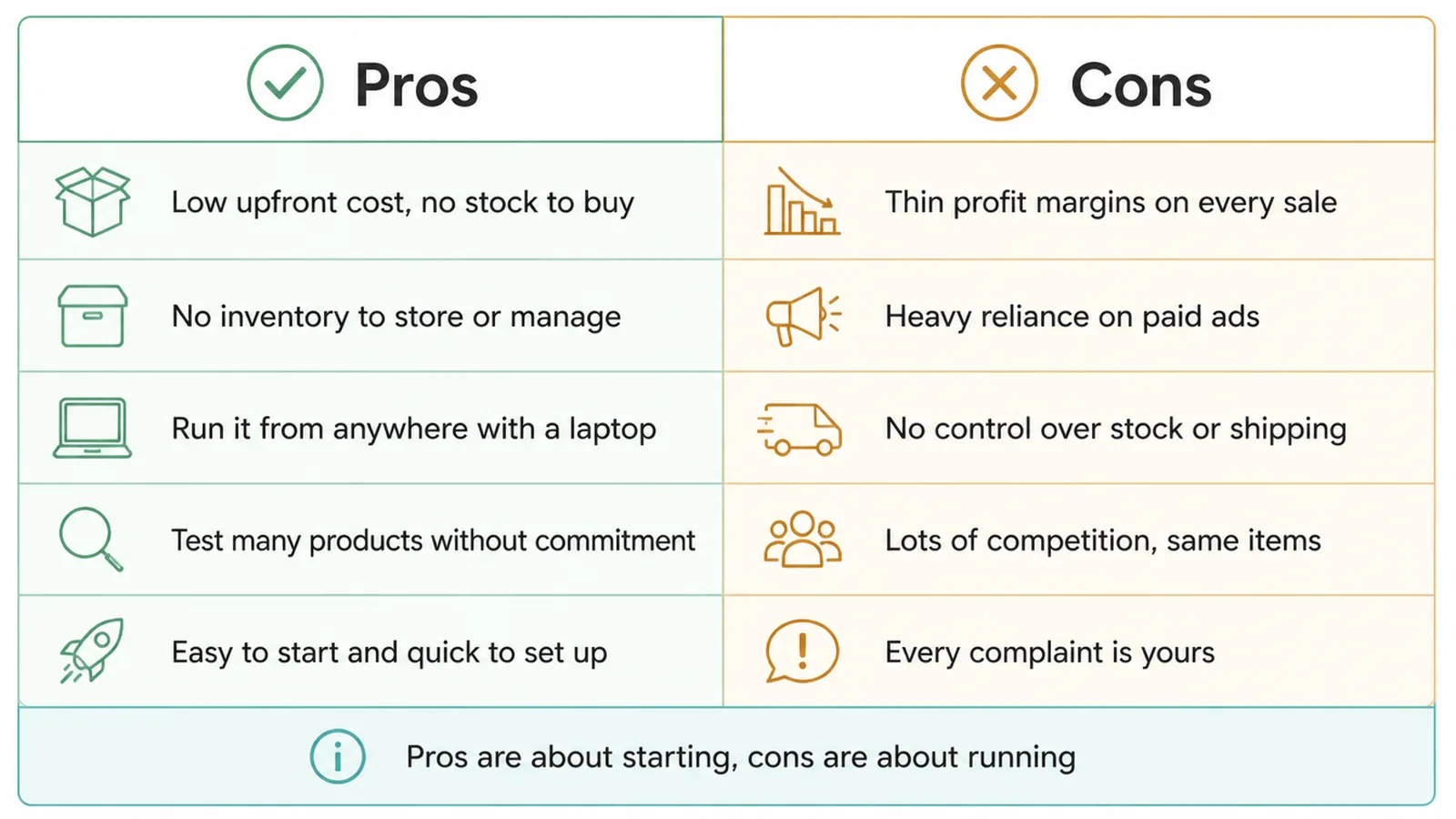
| Pros | Cons |
|---|---|
| Low upfront cost, no stock to buy | Thin profit margins on every sale |
| No inventory to store or manage | Heavy reliance on paid ads for traffic |
| Run it from anywhere with a laptop | No control over stock, shipping or packaging |
| Test many products without commitment | Lots of competition selling the same items |
| Easy to start and quick to set up | Every complaint is yours, even supplier mistakes |
Notice the pattern. The pros are all about starting. Cheap, fast, low risk to get going. The cons are all about running. Making money, keeping customers happy, staying ahead of copycats.
That is the trap most beginners fall into. Starting is the easy, fun part. Running it week after week, testing ads that lose money before you find one that works, and calming down a customer whose parcel is stuck somewhere, that is the real job. Weigh the right column as heavily as the left.
4. How to start dropshipping, step by step
Here is the honest version of the steps. Each one has a catch that the get-rich videos leave out. Read the catch column as carefully as the middle one.
None of these steps is hard on its own. Doing all of them well, at the same time, on a thin margin, is the part that takes real effort.
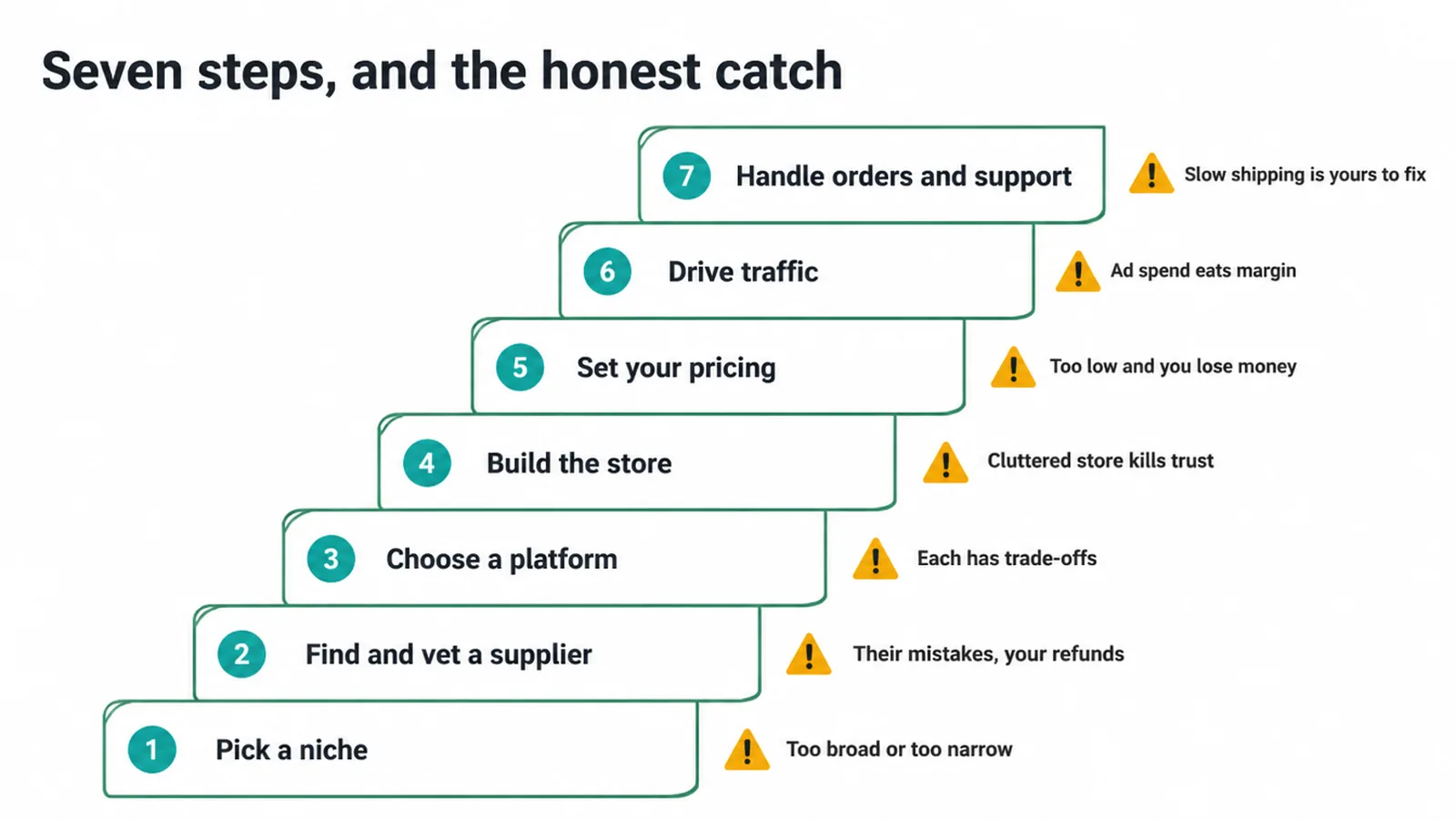
| Step | What you do | The honest catch |
|---|---|---|
| 1. Pick a niche | Choose a focused type of product for a clear group of buyers. | Too broad and you blend in, too narrow and nobody is searching. |
| 2. Find and vet a supplier | Test their products, shipping times and communication yourself. | A bad supplier ruins your name, and their mistakes become your refunds. |
| 3. Choose a platform | Pick the software your store runs on. | Each has trade-offs in cost, control and effort to run. |
| 4. Build the store | Set up pages, product listings, payment and shipping info. | A cheap, cluttered store kills trust before anyone buys. |
| 5. Set your pricing | Price high enough to cover ads, fees and a real margin. | Price too low and every sale after ad costs can lose money. |
| 6. Drive traffic | Bring buyers in, mostly through paid ads at the start. | You are buying customers, and that spend eats your margin fast. |
| 7. Handle orders and support | Pass orders to the supplier and answer every customer. | Slow shipping and problems are yours to smooth over, daily. |
A few of these deserve a closer look.
Choosing a platform in step three
On the platform choice in step three, most people land on a hosted store builder or a self-hosted one, and each suits a different owner. Our comparison of Shopify vs WooCommerce lays out which fits you.
Driving traffic in step six
On driving traffic in step six, understand what you are really doing: you are paying to put your product in front of strangers. That is a skill, and it costs money while you learn it. Our guide to Google Ads for small business shows how to spend without setting cash on fire.
Get pricing and traffic wrong together and the whole thing quietly bleeds money, no matter how nice the store looks.
5. The hard truths nobody puts in the ad
Let me be blunt, because the honest bits are what actually help you.
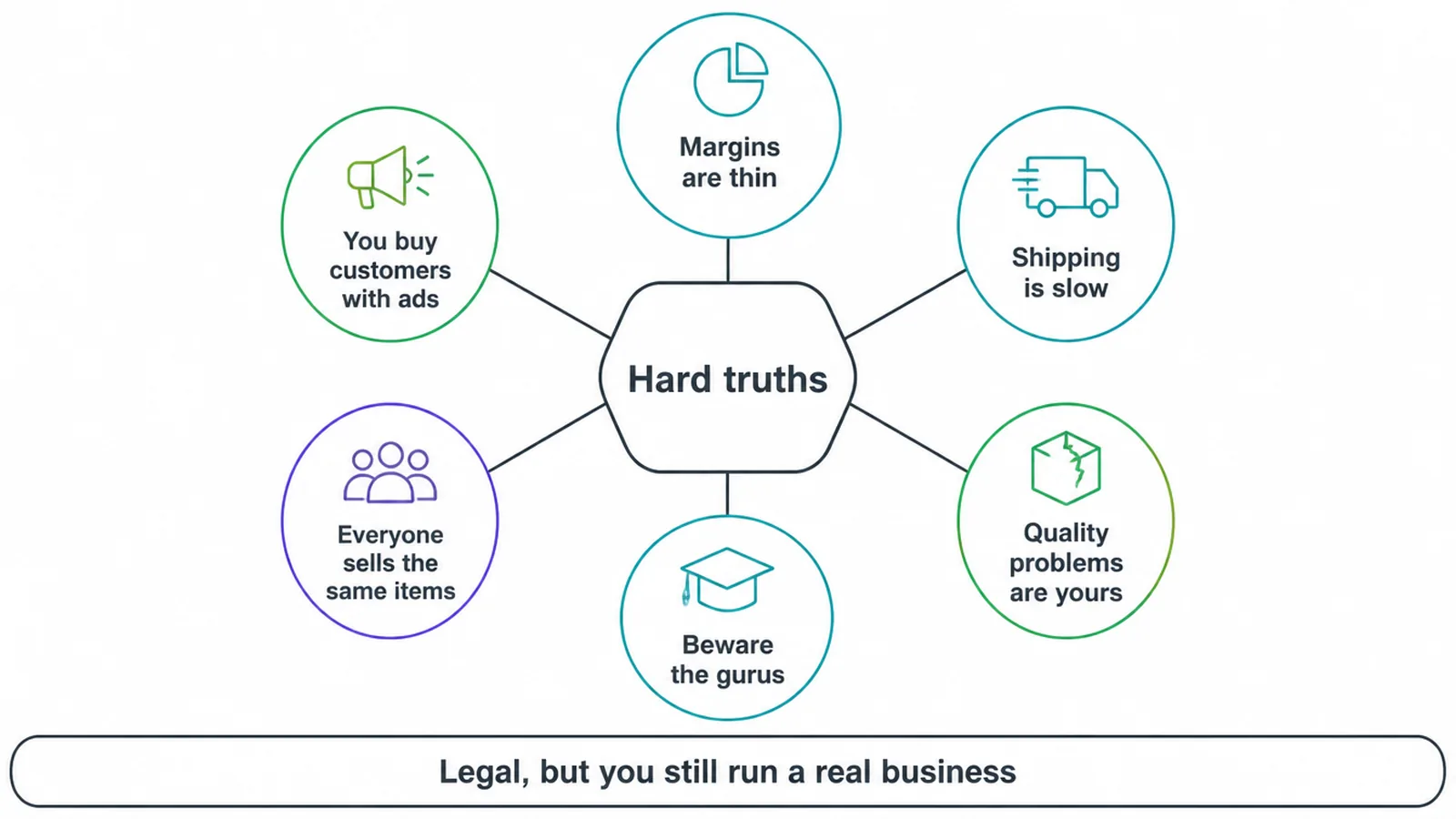
- Margins are thin. After the supplier, the platform fee and the ads, what is left per sale is often small. You need steady volume, and volume needs marketing that works.
- You are really in the business of buying customers with ads. The product is almost a side note. Your skill at ads decides whether you live or die.
- Shipping is slow and out of your hands. Many suppliers ship from far away, so parcels can take a while, and you cannot speed them up.
- Quality problems are yours. If the supplier sends something poor, the customer blames your store, and you refund or replace it.
- Everyone sells the same items. The winning products get copied within days, so any edge is temporary.
- Most important, be wary of the gurus. Many of the loudest voices selling the dropshipping dream make their money from courses and coaching, not from stores. The pitch of easy passive income is the product they are actually selling. Regulators watch this space. In 2025 the U.S. Federal Trade Commission took action that permanently banned the operators of an online store "business opportunity" scam that sold the promise of a lucrative store. Take that as a warning: if someone guarantees riches, walk away.
One more practical note. Dropshipping is legal, but you still run a real business, which may mean registering it or getting a permit. The U.S.
Small Business Administration notes that most small businesses need one or more licences or permits, and the rules vary by place and product. Check your local requirements. This is general guidance, not legal advice.
6. Is dropshipping worth it?
Worth it if you treat it as a marketing business
It depends entirely on what you expect. Dropshipping is worth it if you treat it as a marketing business with a real niche and some patience. If you enjoy testing ads, studying what buyers want, and building a brand that stands out from the copycats, you have a genuine shot.
It is a legitimate way to start selling online with less money at risk than stocking a warehouse. That lower risk is the real prize, not overnight riches.
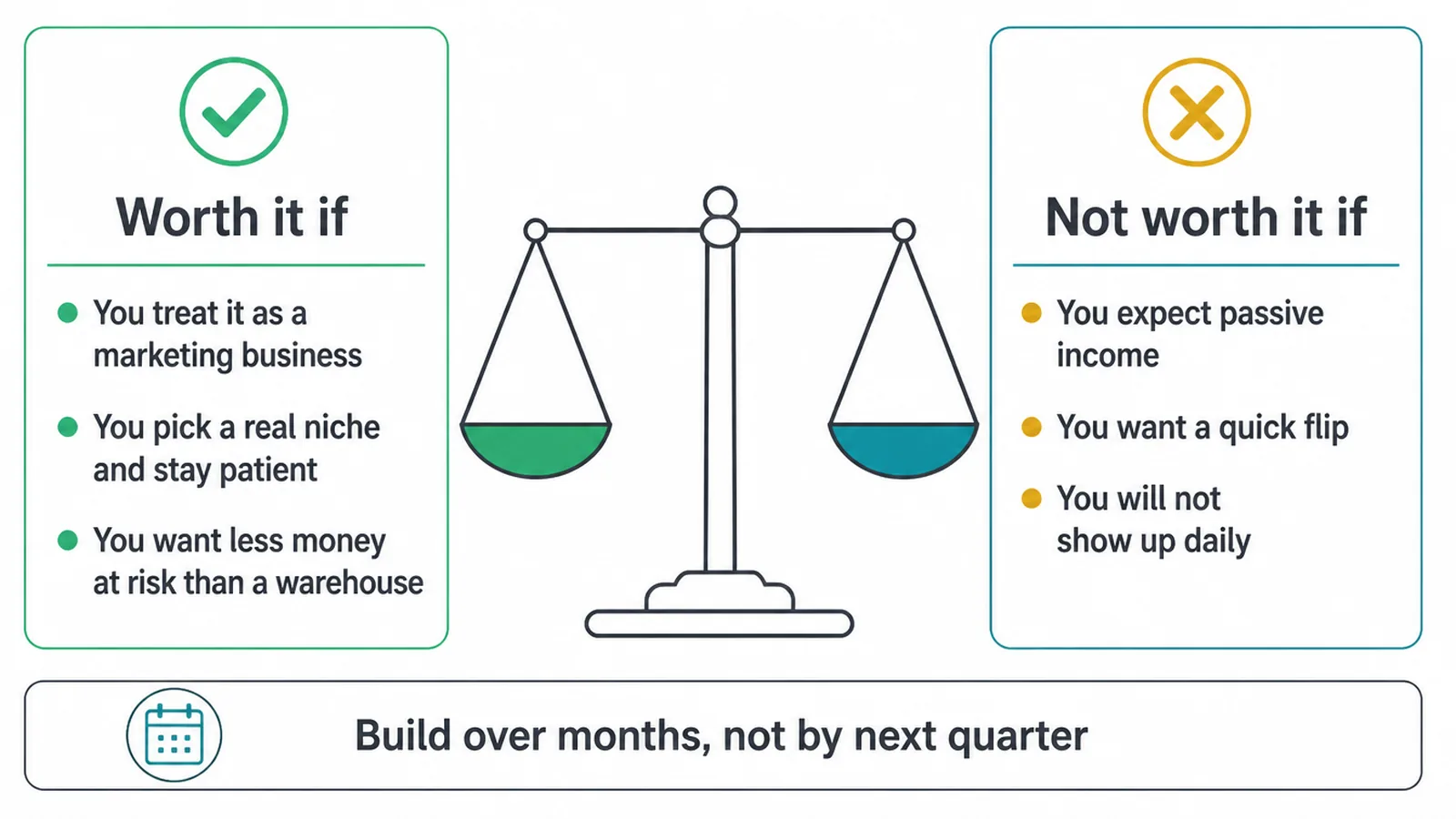
Not worth it if you want passive income
It is not worth it if you want passive income or a quick flip. There is no version of this where money arrives while you sleep and do nothing.
The stores that last are run by owners who show up daily, answer customers, and keep refining their marketing. If that sounds like a job, it is, because it is one.
So ask yourself honestly. Are you here to build something over months, or to get rich by next quarter? The first mindset can succeed. The second one is exactly what the scammers prey on.
Go in expecting real work on thin margins, and you will not be disappointed or fooled. Go in expecting magic, and you will lose your ad budget and your patience.
7. Better alternatives worth a look
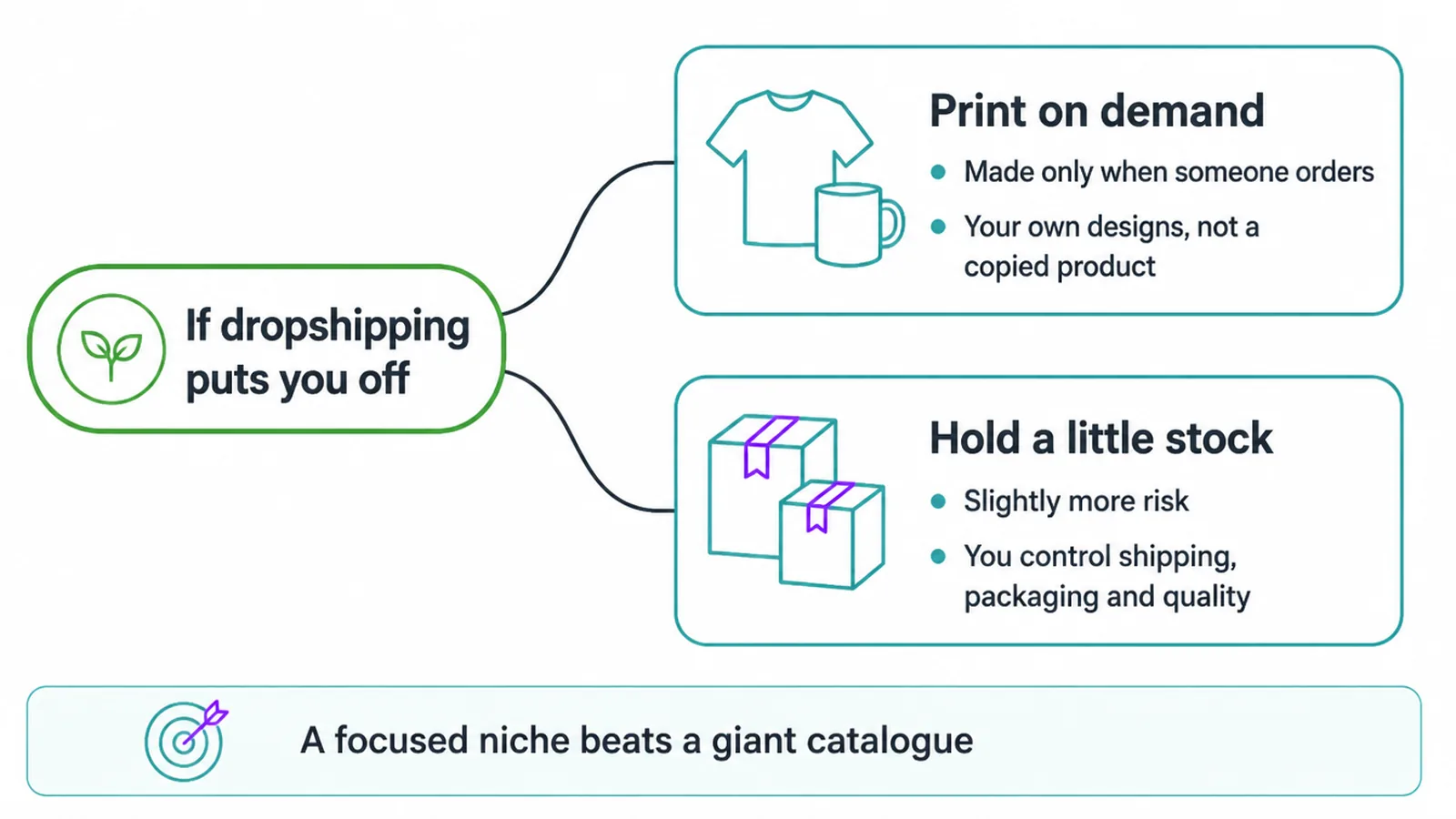
Dropshipping is not the only low-risk way to start. If the downsides put you off, a few close cousins keep the upside and trim the pain.
Print on demand
Print-on-demand works like dropshipping, but you sell your own designs on products that are only made when someone orders. You still hold no stock, yet your product is unique, so you are not fighting fifty identical stores.
Holding a little stock
Another option is holding a small amount of stock of one or two products you truly believe in.
You take on a little more risk, but you win back control over shipping speed, packaging and quality, which are the three things dropshipping cannot give you. A focused niche store with a handful of well-chosen items often beats a giant catalogue of random gadgets.
Whichever route you pick, the store itself has to earn trust and turn visitors into buyers. That is a craft on its own. If you would rather have a shop built to sell from day one, our team handles ecommerce website design so you can focus on the products and the marketing.
Frequently asked questions
1. What is dropshipping?
A retail model where you sell products in your own store but a supplier holds the stock and ships each order straight to the customer, so you never handle inventory yourself.
2. How does dropshipping make money?
You keep the difference between what the customer pays you and what the supplier charges you, minus your costs like advertising and platform fees. The margin is usually thin, so volume and marketing matter.
3. Is dropshipping still worth it?
It can be, but only as a real business, not a shortcut. It lowers your upfront inventory cost, but you compete on marketing with thin margins and no control over shipping, so it takes genuine work.
4. Is dropshipping legal?
Yes, dropshipping itself is a legal fulfilment method. You still need to follow your local business rules, sell genuine products, and be honest about shipping times, and you may need a licence or permit depending on where you are.
5. How much does it cost to start dropshipping?
Less than stocking inventory, because you only pay the supplier after a customer buys. But you still pay for a store, a domain and, most of all, advertising to get traffic, so it is not free.
6. Do I need a business licence to dropship?
It depends on your country and what you sell, so check your local rules. Many small businesses need a licence or permit, and this is general guidance, not legal advice.
7. What are the downsides of dropshipping?
Thin profit margins, heavy reliance on paid ads, no control over stock, shipping speed or packaging, and a lot of competition selling the same products. Customer service problems are yours even when the supplier caused them.
8. Can you really make passive income from dropshipping?
No. Running a dropshipping store is active work: finding products, testing ads, handling customers and managing suppliers. Anyone promising easy passive income is usually selling you a course, not the truth.
About the author
Gregory Yeoh is the founder of Seed Light, a web design and digital marketing agency that builds websites and runs marketing for small businesses. He has watched plenty of people try dropshipping, and the ones who last treat it as a real marketing business. This is the honest version, with none of the get-rich hype. Tell us what you are planning and we will point you the right way.