

Key takeaways
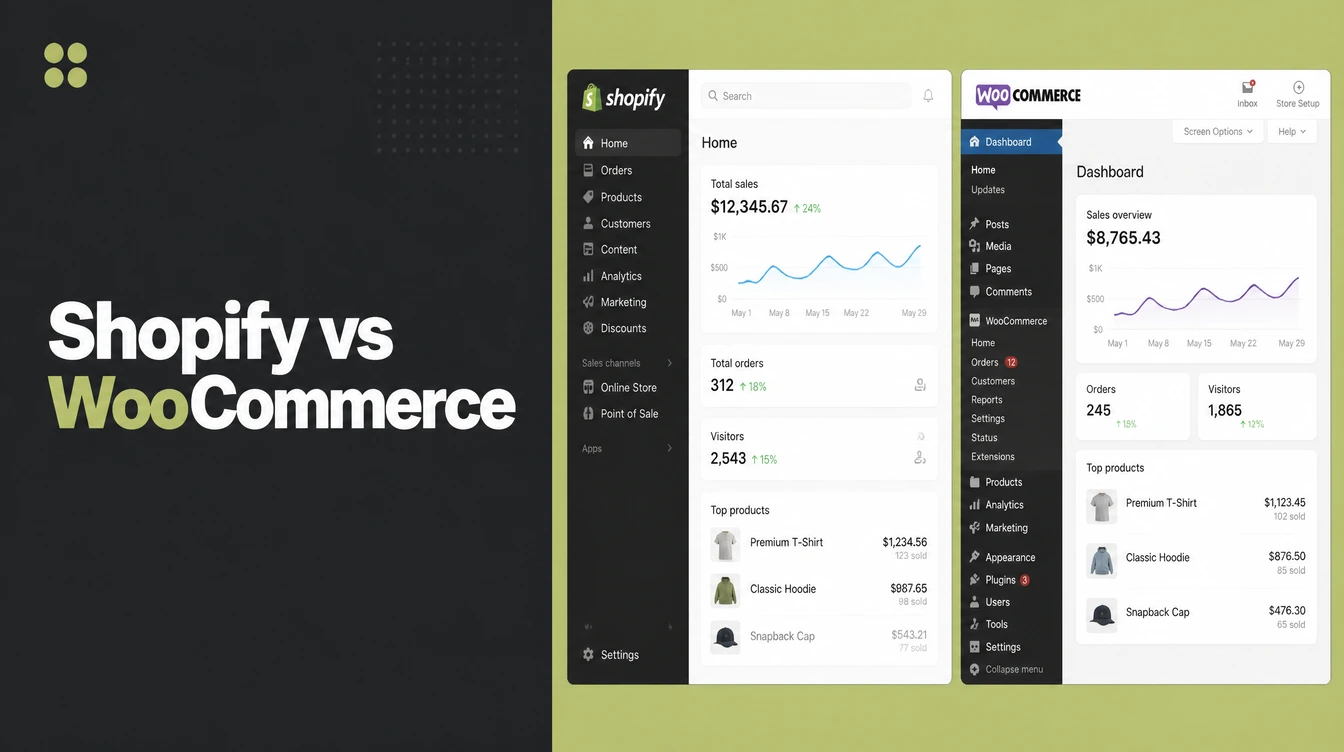
Short on time? Here is the whole Shopify vs WooCommerce decision in five lines before we break it down.
- Shopify is the hosted all-in-one. You pay a monthly plan and it runs hosting, security, and updates for you (Shopify, 2026).
- WooCommerce is the free plugin you own. The core is free and open-source, and you self-host it on WordPress (WooCommerce, 2026).
- The real divide is convenience versus control. Shopify handles the tech. WooCommerce hands you the keys and the upkeep.
- Ownership sits on WooCommerce's side. You keep full ownership of the store, its content, and its data.
- Choose by use-case. Want hands-off and simple? Pick Shopify. Want full ownership and flexibility? Pick WooCommerce.
2. The core difference
Here is Shopify vs WooCommerce in one breath. Pick Shopify if you want a store that just works and someone else runs the tech. Pick WooCommerce if you want to own everything and run it yourself.
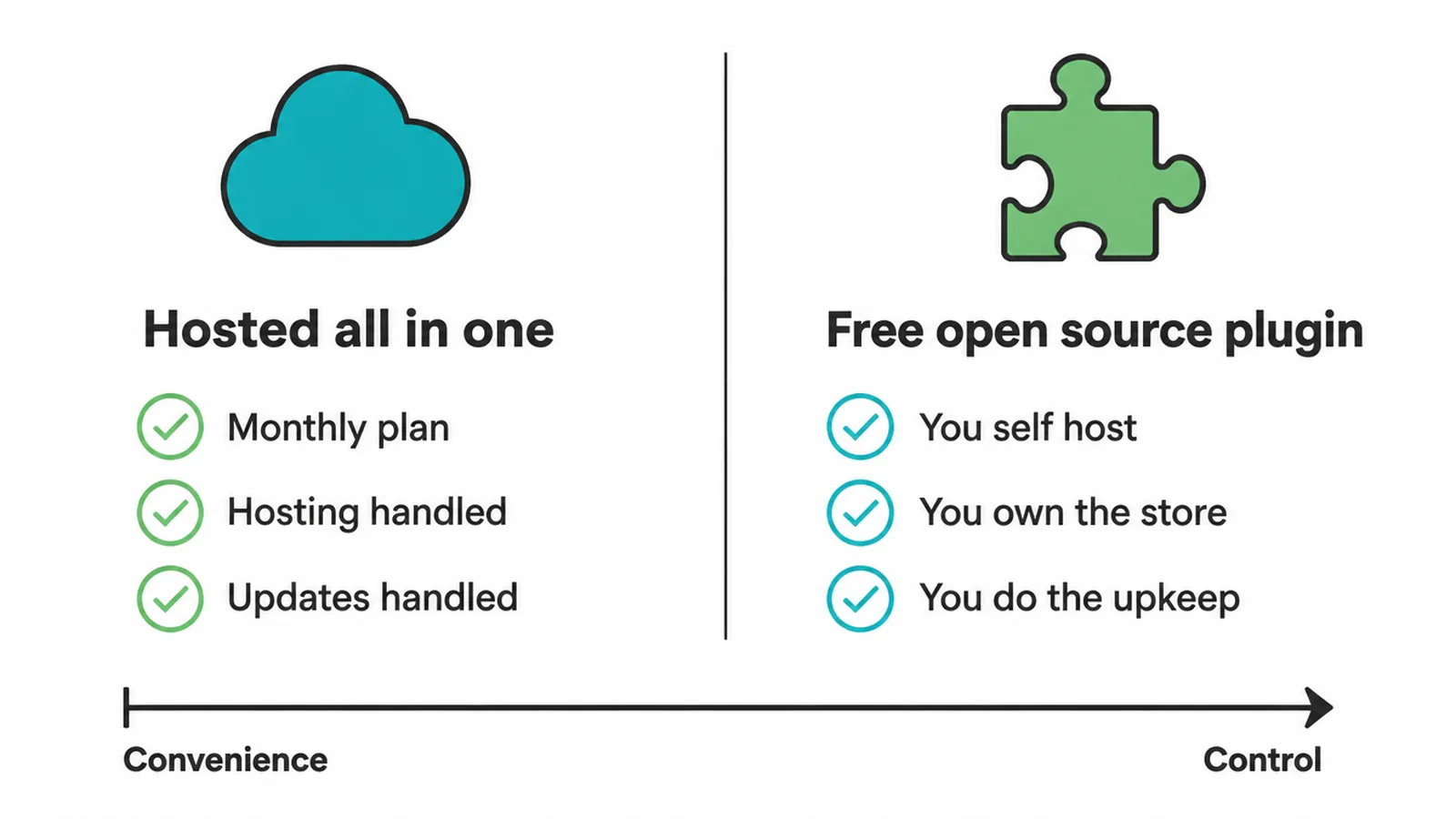
The distinction is simple. Shopify is a hosted, all-in-one platform. You sign up, pay a monthly plan, and Shopify handles the hosting, security, and updates behind the scenes (Shopify, 2026).
WooCommerce is different. It is a free, open-source plugin for WordPress that you install on your own hosting, and you keep full ownership of the store and its data (WooCommerce, 2026).
So the whole choice boils down to one trade-off: convenience versus control. Shopify trades some control for a lot of convenience. WooCommerce trades some convenience for a lot of control. Neither is wrong.
They just fit different owners. If you want to zoom out beyond the store itself and compare the wider platforms, our guide on WordPress vs Shopify is the companion piece to this one.
3. Shopify vs WooCommerce at a glance
Before we go deep, here is the head-to-head in one table. Skim it for the shape of the decision, then read the sections that matter most to you.
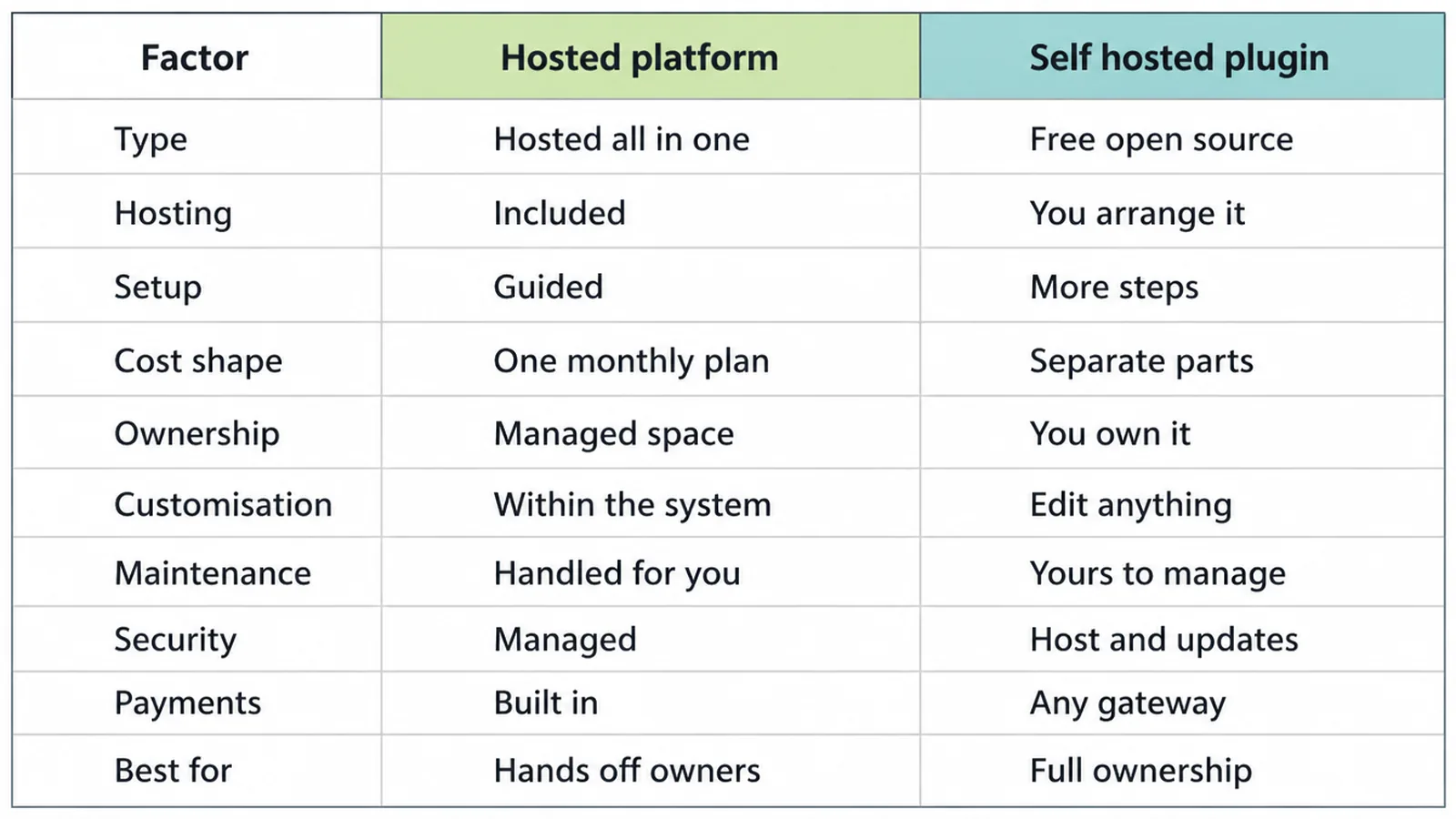
| Factor | Shopify | WooCommerce |
|---|---|---|
| Type | Hosted all-in-one platform | Free open-source plugin for WordPress |
| Hosting | Included in your plan | You arrange your own |
| Setup ease | Guided and beginner-friendly | More steps, more moving parts |
| Cost structure | One predictable monthly plan | Free core plus separate parts |
| Ownership and control | You own your data inside a managed space | You own the store, content, and data outright |
| Customisation | Flexible within Shopify's system | Open-ended, edit anything |
| Maintenance burden | Handled for you | Yours to manage or hand off |
| Security | Managed, with PCI compliance | Depends on your host and updates |
| Payments | Built-in, with fees on third-party gateways | Any gateway you choose to add |
| Best for | Owners who want hands-off convenience | Owners who want full ownership |
The table gives you the map. The sections below give you the reasons, so you can weigh the factors that matter for your business rather than someone else's.
4. Ease of setup
This is where Shopify wins clearly. You sign up, follow a guided setup, and your hosting, security, and payments are handled for you out of the box (Shopify, 2026).
You can add products and be ready to sell without ever touching a server. For a busy owner, that head start is a real relief.
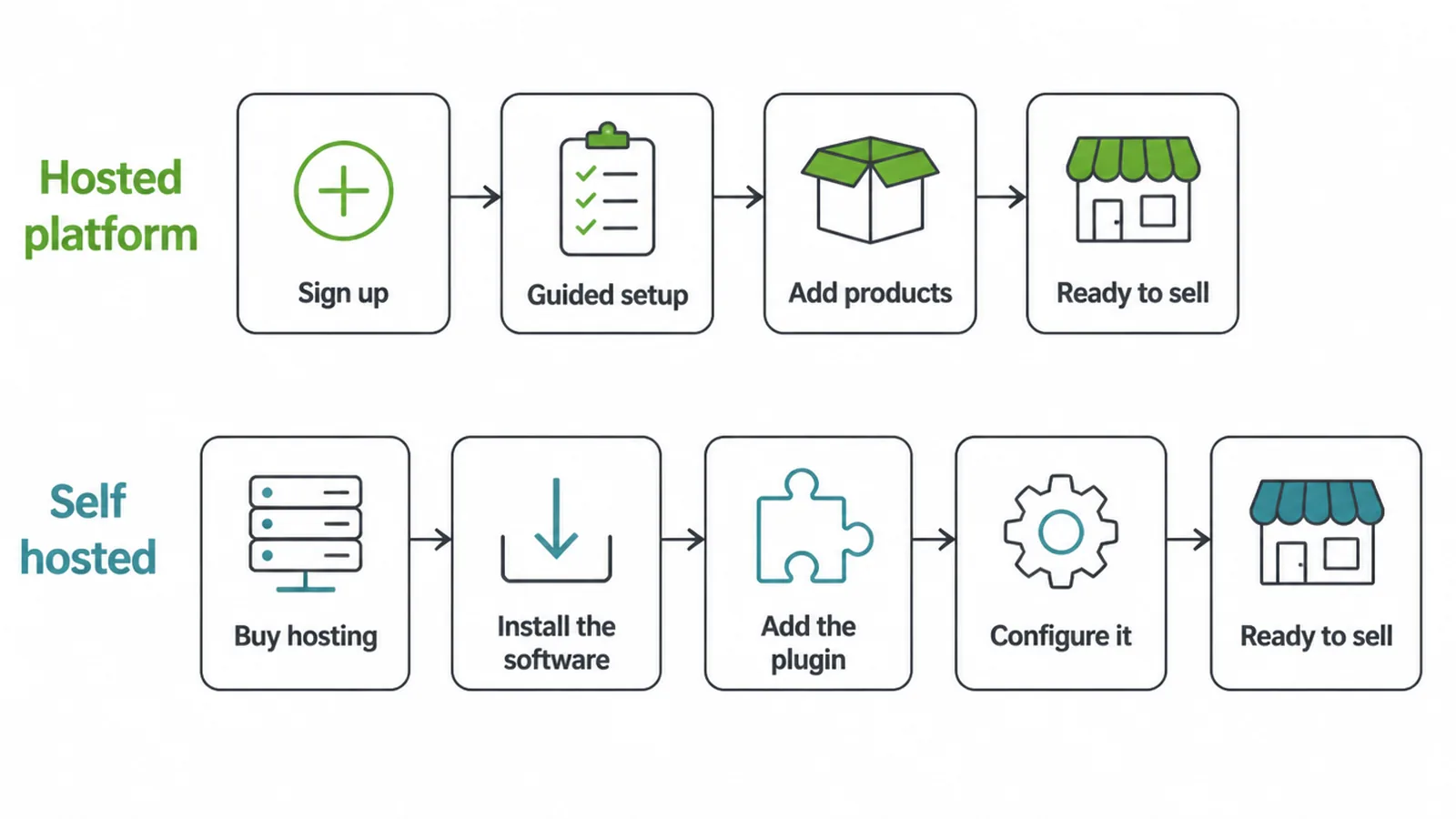
WooCommerce asks more of you up front. You buy hosting, install WordPress, add the WooCommerce plugin, and configure the pieces yourself.
None of it is beyond a determined owner, but it is more steps and more decisions than Shopify's guided path. Many people hand that first setup to an agency and skip the learning curve entirely.
So weigh how fast you want to launch. If you want to be live soon with no technical fuss, Shopify is the gentler road.
If you are comfortable with WordPress, or you have help, WooCommerce's setup is a one-time hurdle that unlocks a lot of freedom. Either way, our plain walk-through on how to start an online store covers the steps that apply on both.
5. Ownership and control
If you read only one section, read this one. Ownership is the sharpest line between the two, and most owners do not think about it until later.
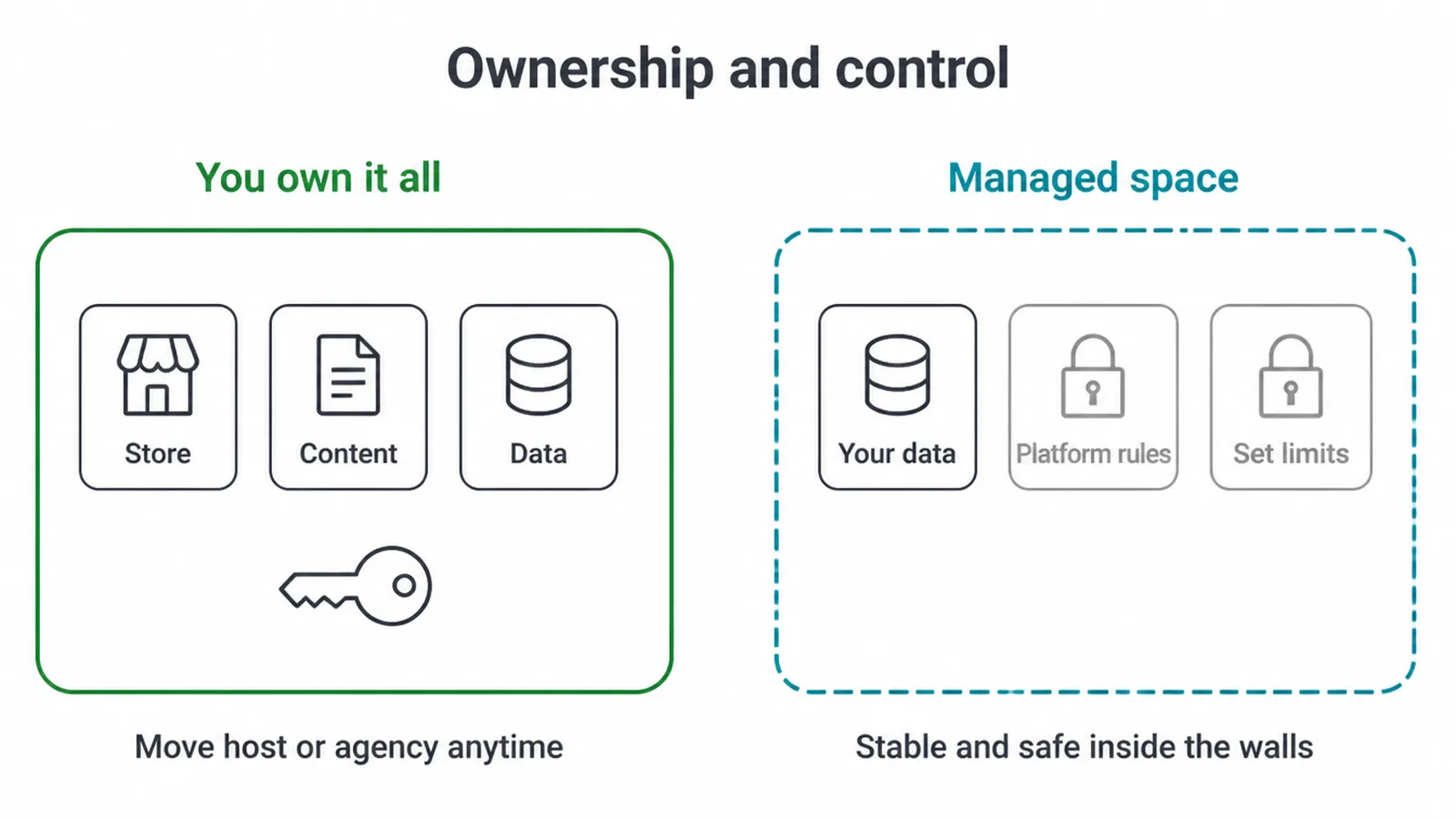
WooCommerce gives you full ownership. It is open-source, and you keep the store, its content, and its data (WooCommerce, 2026).
Because it lives on your own WordPress hosting, nothing locks you in. You can move hosts, change agencies, or rebuild parts of the store whenever you like. The site is genuinely yours to carry.
Shopify works differently. You own your data, but you operate inside Shopify's hosted environment, with guardrails around what you can change. For many owners that is a fair deal, because those guardrails are also what keep the store stable and safe. You give up some deep control in return for a system that runs itself.
So ask yourself how much control you actually need. If your store is a core business asset you want to shape freely, WooCommerce's ownership is worth a lot. If you would rather stay inside safe walls and never touch the plumbing, Shopify's managed space will feel like a comfort, not a cage.
6. Cost structure
We will not quote figures here, because plans and rates change and depend on your needs. What matters is the shape of the cost, and the two platforms are shaped very differently.
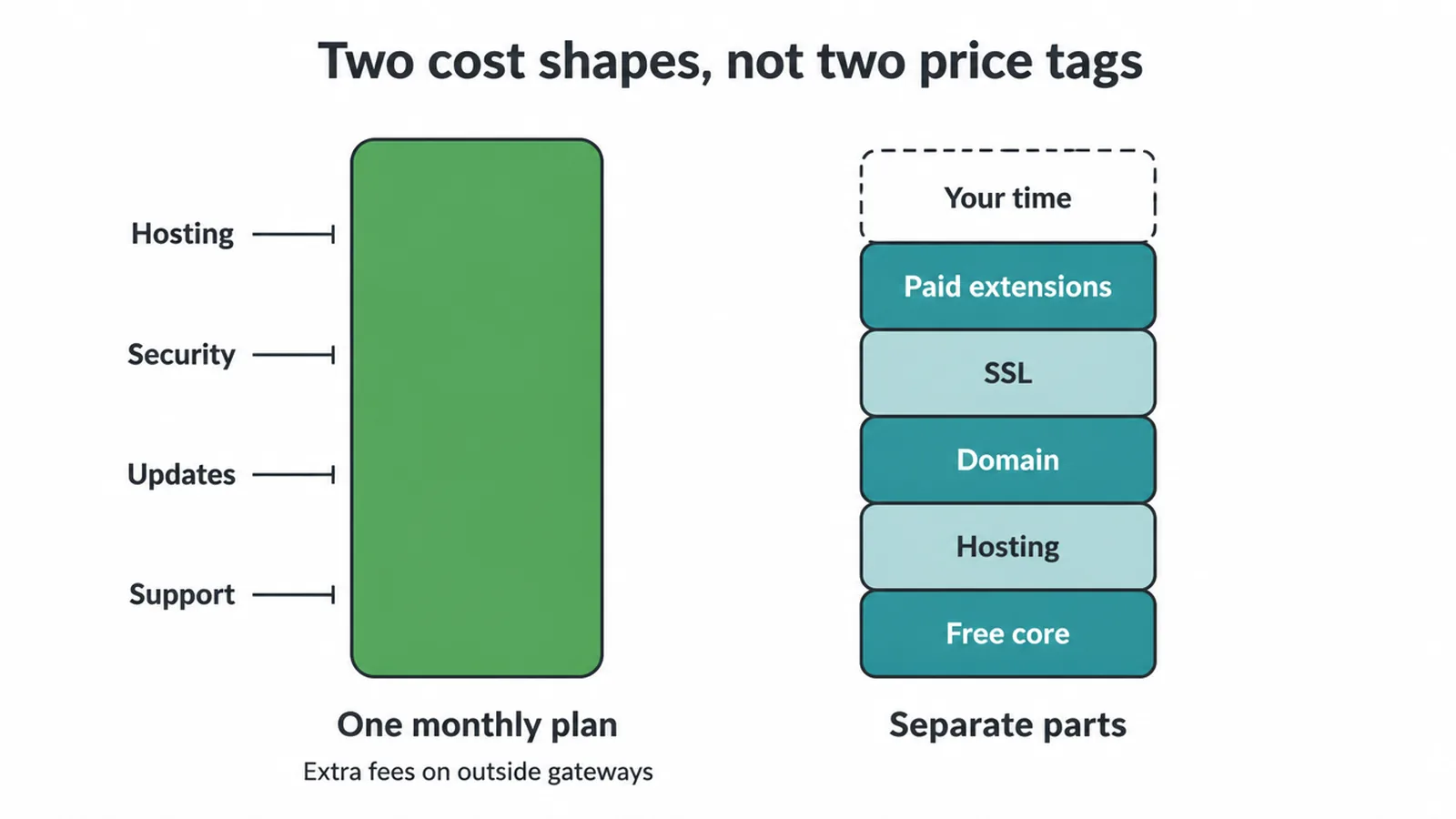
Shopify is a single subscription. Your plan bundles hosting, security, updates, and support into one recurring bill, which makes it simple to budget with few surprises (Shopify, 2026).
One thing to note: if you use a third-party payment gateway instead of Shopify's own, extra transaction fees apply, so the payments choice affects your running cost.
WooCommerce splits the cost into parts. The plugin core is free (WordPress.org, 2026), but you pay separately for hosting, a domain, an SSL certificate, and any paid extensions you add. On top of those, there is your own time to keep everything updated, which is the hidden cost owners tend to forget.
So the honest answer to "which is cheaper" is that it depends on how you value your time. Shopify trades money for convenience. WooCommerce trades your involvement for a free, flexible core. Neither is automatically the frugal choice.
7. Scalability
Both platforms can grow with you, but they grow in different ways. Think about where you want to be in a few years, as well as where you are on launch day.
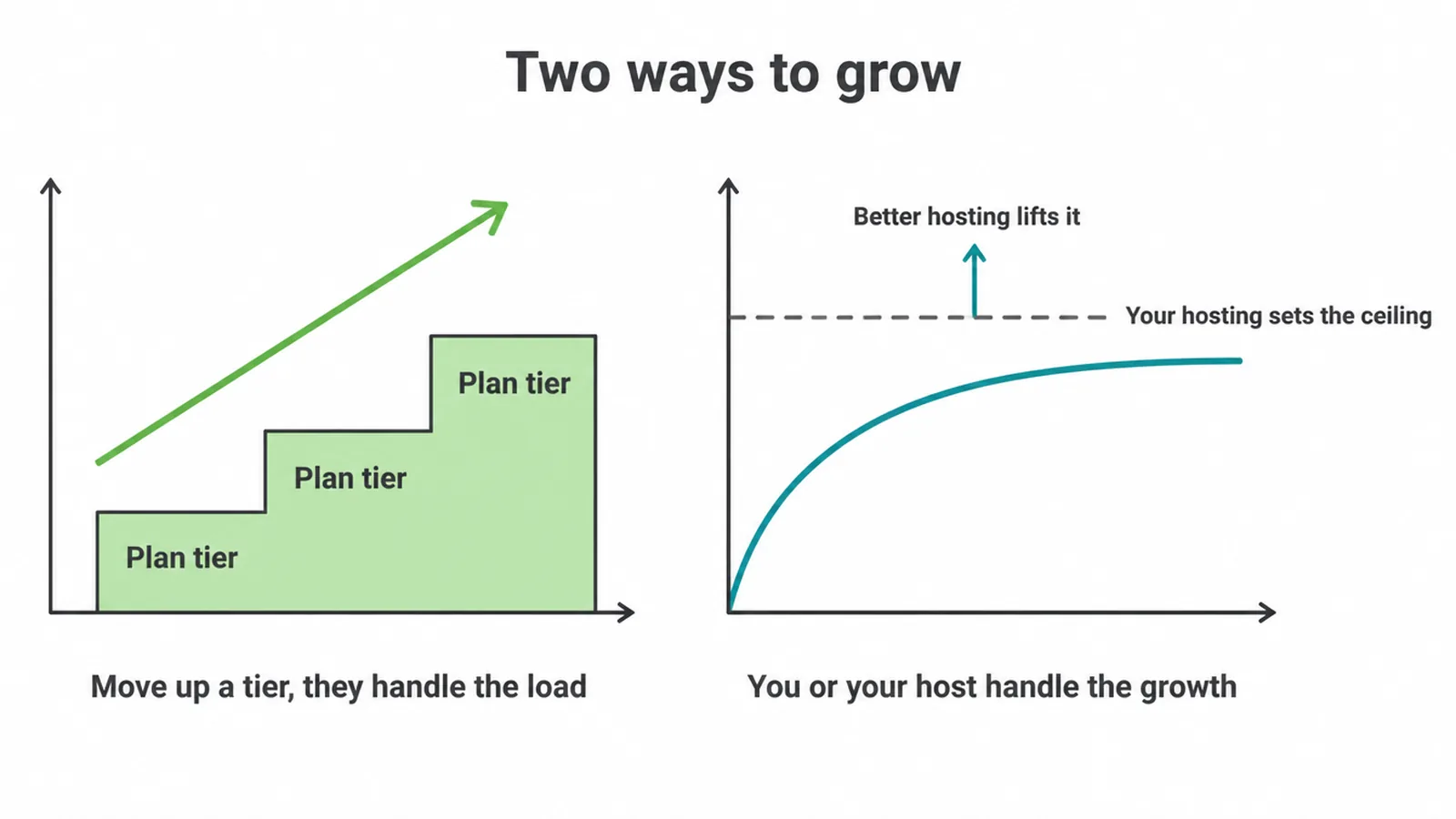
Shopify scales through managed plans. As your store gets busier, you move up a tier and Shopify handles the extra load for you. You do not have to think about servers or capacity, because that job stays on their side. For most growing stores, that hands-off headroom is exactly what you want.
WooCommerce scales as far as your hosting allows. Because you run the store yourself, its ceiling is really your hosting setup and how well it is tuned.
That gives you room to grow in whatever direction you choose, but the responsibility for handling the growth sits with you or your host. A big, busy WooCommerce store needs solid hosting behind it.
So match the model to your appetite. If you want growth handled for you, Shopify's tiers make it painless. If you want to control your own infrastructure and are willing to invest in good hosting, WooCommerce will stretch as far as you are ready to take it.
8. Maintenance
Every online store needs upkeep. The question is who does it, and the two platforms answer that very differently.
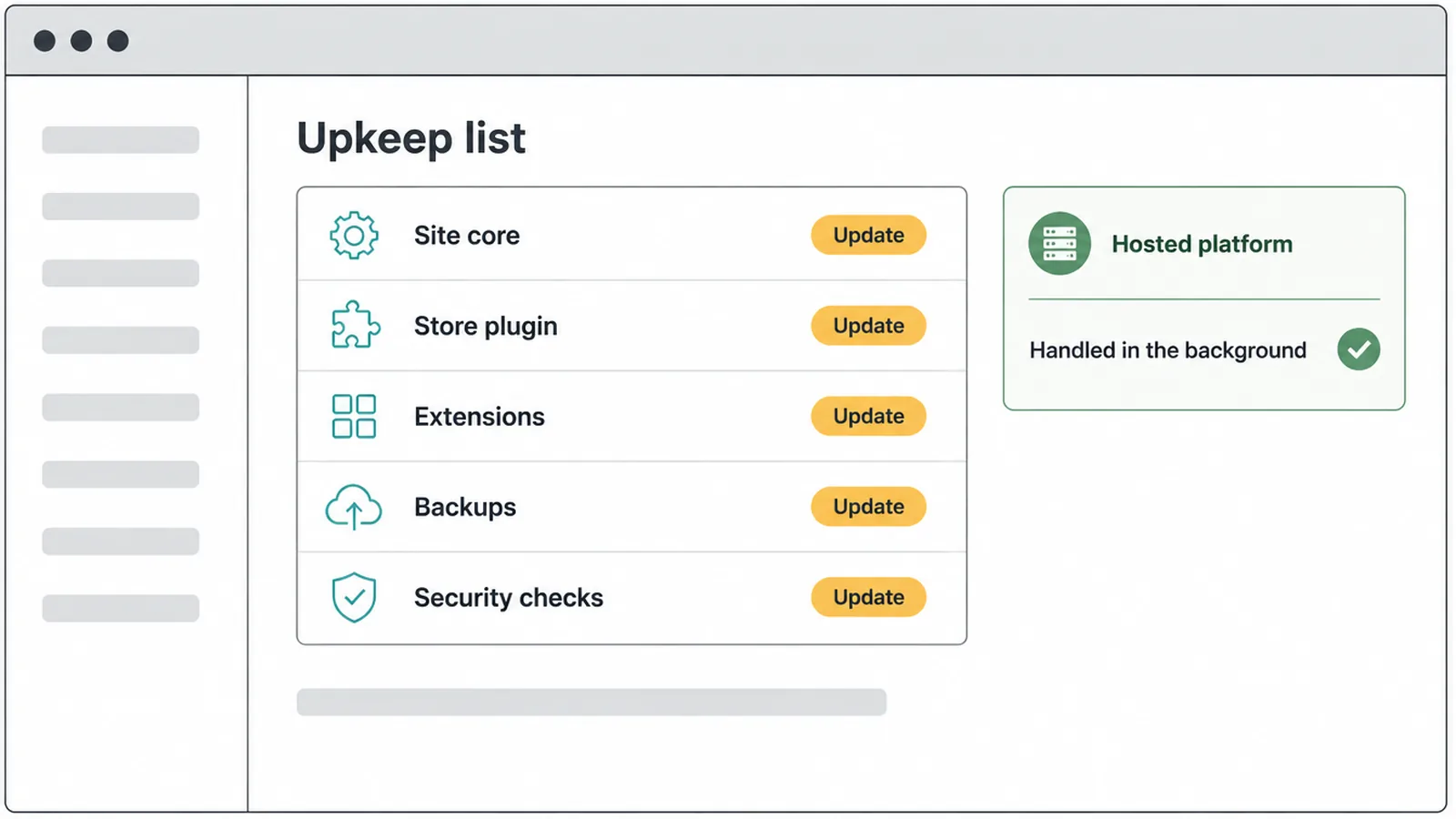
Shopify handles maintenance invisibly. Security patches, software updates, and PCI compliance happen in the background, so you almost never think about them (Shopify, 2026). For a busy owner, taking that whole job off your plate is a genuine relief and one of the biggest reasons people choose it.
WooCommerce shifts that job onto you or your agency. WordPress core, the WooCommerce plugin, and any extensions all need regular updates, and skipping them is how stores break or get hacked.
You also own your backups and your security choices. Many owners pay for a care plan so they never have to think about it, which is a sensible move.
So be honest about your appetite for upkeep. If you want zero maintenance and zero worry, Shopify removes the work. If you are happy to handle updates or pay someone to, WooCommerce gives you the control that comes with that responsibility.
This is exactly the kind of upkeep we take on when we build and run stores as part of our e-commerce website design service.
9. Apps and ecosystem
Both platforms let you bolt on extra features, from bookings to reviews to email tools. The difference is how the marketplace works and how much vetting falls to you.
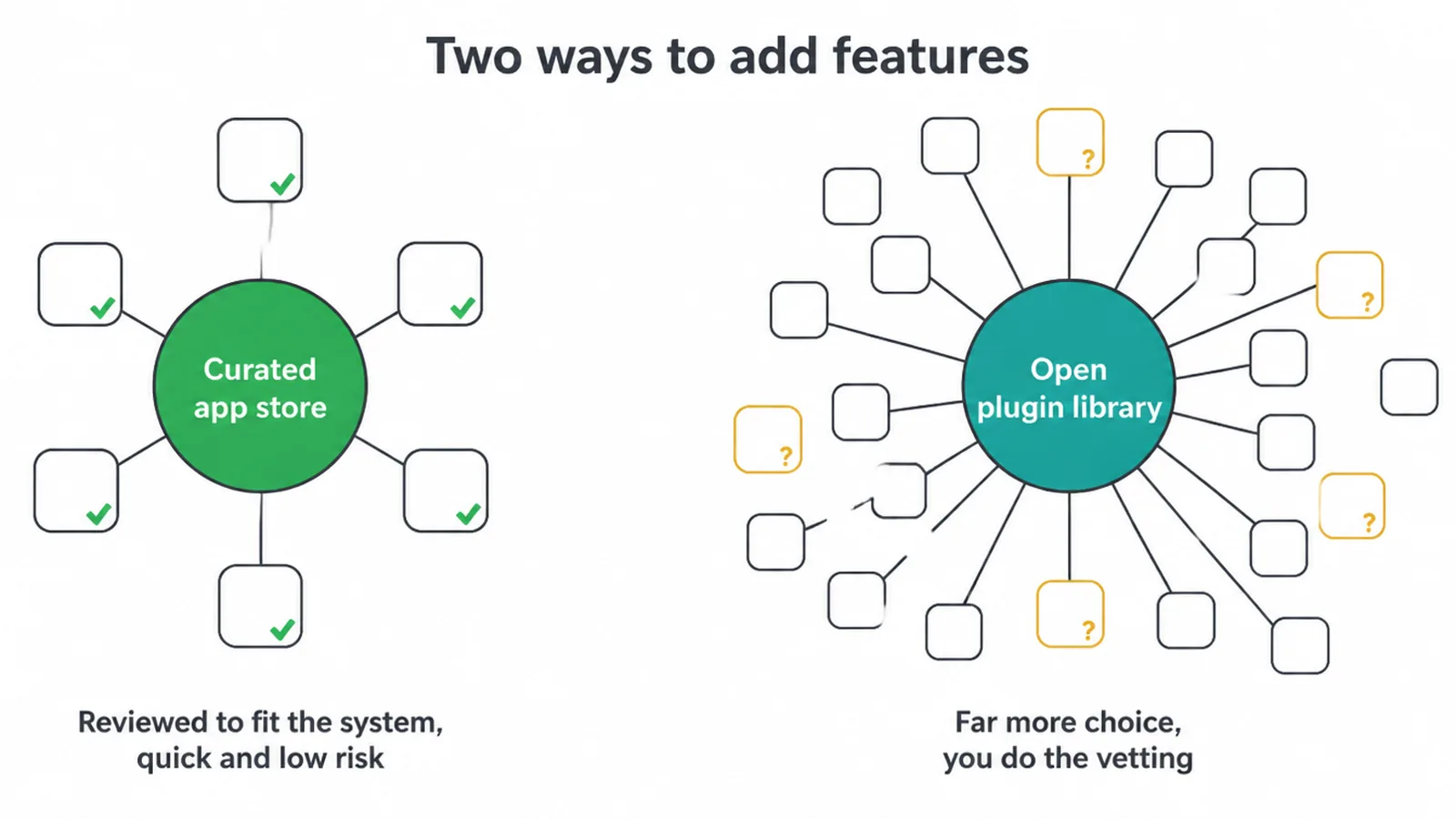
Shopify has a curated app store. The apps are built for Shopify and reviewed to work within its system, so adding one is usually quick and low-risk. You give up a little breadth in return for that tidiness, but for most stores the curated set covers what you need without much thinking.
WooCommerce plugs into the much larger WordPress universe, with hundreds of extensions plus the wider plugin library (WooCommerce, 2026). That openness means you can find a tool for almost anything, which is a real strength.
The catch is that you carry more of the vetting yourself, checking that a plugin is well-built, well-supported, and safe to trust with your store.
So pick the ecosystem that matches how you like to work. If you want a safe, curated shortlist, Shopify's store keeps things simple. If you want maximum choice and you are willing to do a little homework, WooCommerce opens a far bigger toolbox.
10. Who each one suits
Forget which platform is "best." The right question is which fits your situation. Here is the plain version.
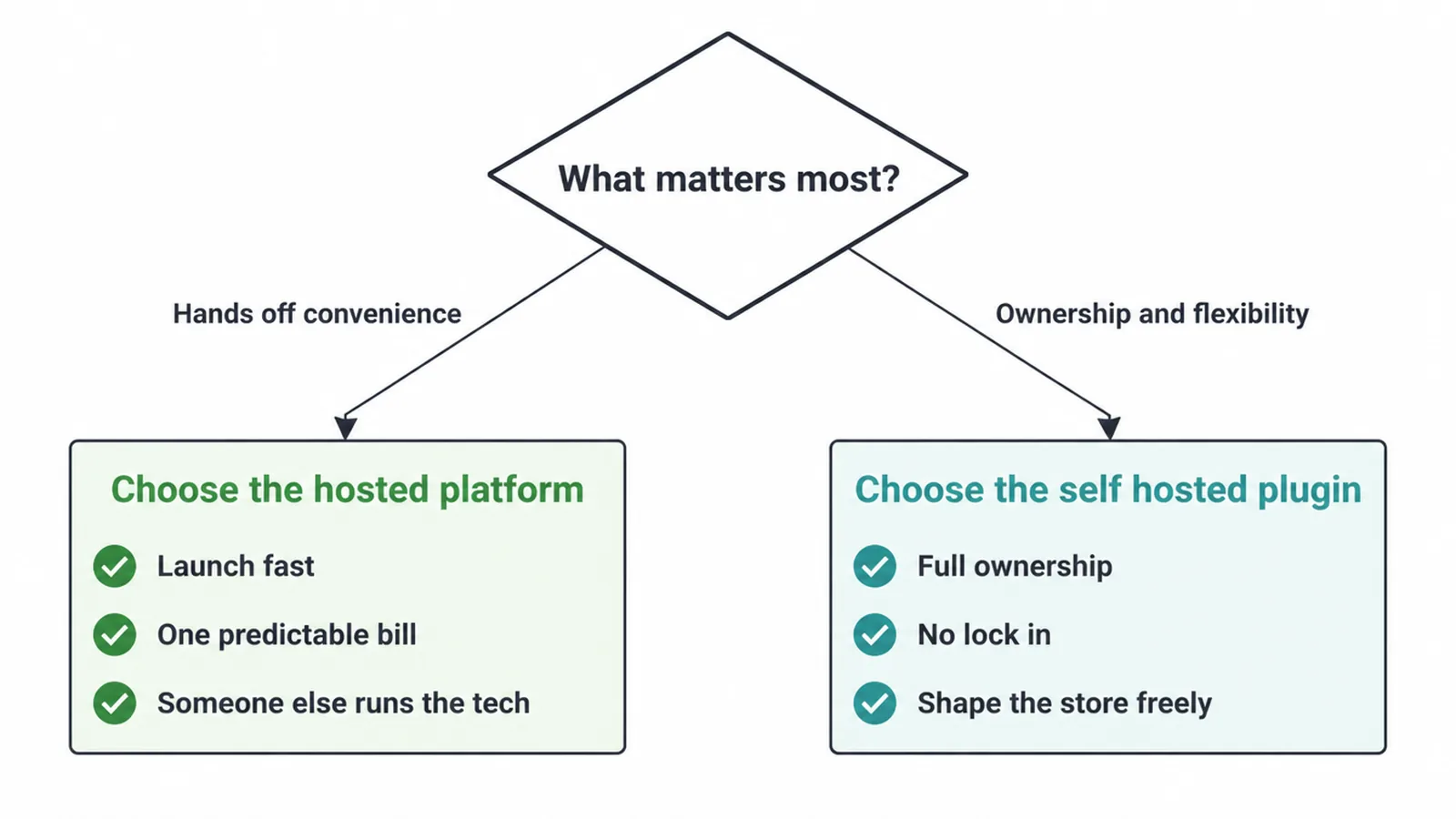
Choose Shopify if you want to launch fast, keep one predictable bill, and let someone else run the tech. It suits owners who would rather spend their energy on products and customers than on hosting, updates, and security. If hands-off convenience is your priority, Shopify is built for you.
Choose WooCommerce if you want full ownership, no lock-in, and the freedom to shape the store exactly as you like.
It suits owners who are comfortable with WordPress, or who have support to lean on, and who see their store as a long-term asset worth controlling. If flexibility and ownership matter most, WooCommerce is your platform.
Here is how it lands in our own work. Libulbs is a wholesale LED lighting distributor whose buyers search by fitting type, spec and part number, so it runs on WooCommerce with the store shaped around its catalogue.
Ottoman Malaysia sells furniture on Shopify, browsed room by room. The platform followed the way each set of buyers shops.
Still torn? That is normal, and it usually means the honest answer is "it depends on how you value your time and control." If you want a wider view across the main options before you commit, our roundup of the best e-commerce platform for small business lays the choices side by side. And remember, choosing well the first time saves you a migration later.
Frequently asked questions
1. What is the difference between Shopify and WooCommerce?
Shopify is a hosted all-in-one platform you pay for on a monthly plan, and WooCommerce is a free open-source plugin you self-host on WordPress. Shopify runs the tech for you, while WooCommerce hands you the control and the upkeep.
2. Is WooCommerce cheaper than Shopify?
The WooCommerce plugin itself is free, but you pay separately for hosting, a domain, an SSL certificate, and paid extensions, plus your own time to maintain it. Shopify bundles the tech into one predictable monthly fee, so the honest answer is that it depends on how you value your time.
3. Which is easier for beginners?
Shopify. It gives you a guided setup with hosting, security and payments handled for you out of the box, so you can launch faster without touching the technical side.
4. Do I need to know code for WooCommerce?
Not strictly, but you will manage WordPress, hosting, plugins and updates, so it suits people who are comfortable with WordPress or who have support to lean on.
5. Which is better for a small business?
It depends on whether you value hands-off convenience or full ownership and flexibility. Shopify wins on convenience, and WooCommerce wins on control.
6. Can I move from Shopify to WooCommerce?
Yes. Your products, customers and orders can be migrated, though it is a proper project with redirects to set up, so it is easier to choose well the first time.
7. Which is more secure?
Shopify manages security and PCI compliance for you. WooCommerce security depends on your hosting and how well you keep the site updated.
8. Do I own my store on Shopify?
You own your data, but you operate inside Shopify's hosted environment with guardrails. WooCommerce gives you full ownership of the store, its content and its data.