
Key takeaways
- There are seven steps: decide what to sell, choose a business model, pick a platform, add products, set up payments and shipping, design for trust, then launch and drive traffic.
- Open in a weekend, sell in a few weeks. The store is quick. The customers take work. Do not confuse the two.
- Online shopping keeps growing. Roughly one in six retail dollars in the US is now spent online, and the share keeps climbing.
- You do not need to hold stock. You can stock your own products, dropship, or use print-on-demand. Each one trades control for convenience.
- Trust and honest costs win sales. Most carts get abandoned, and surprise extra costs are the number one reason people leave.
1. How to start an online store
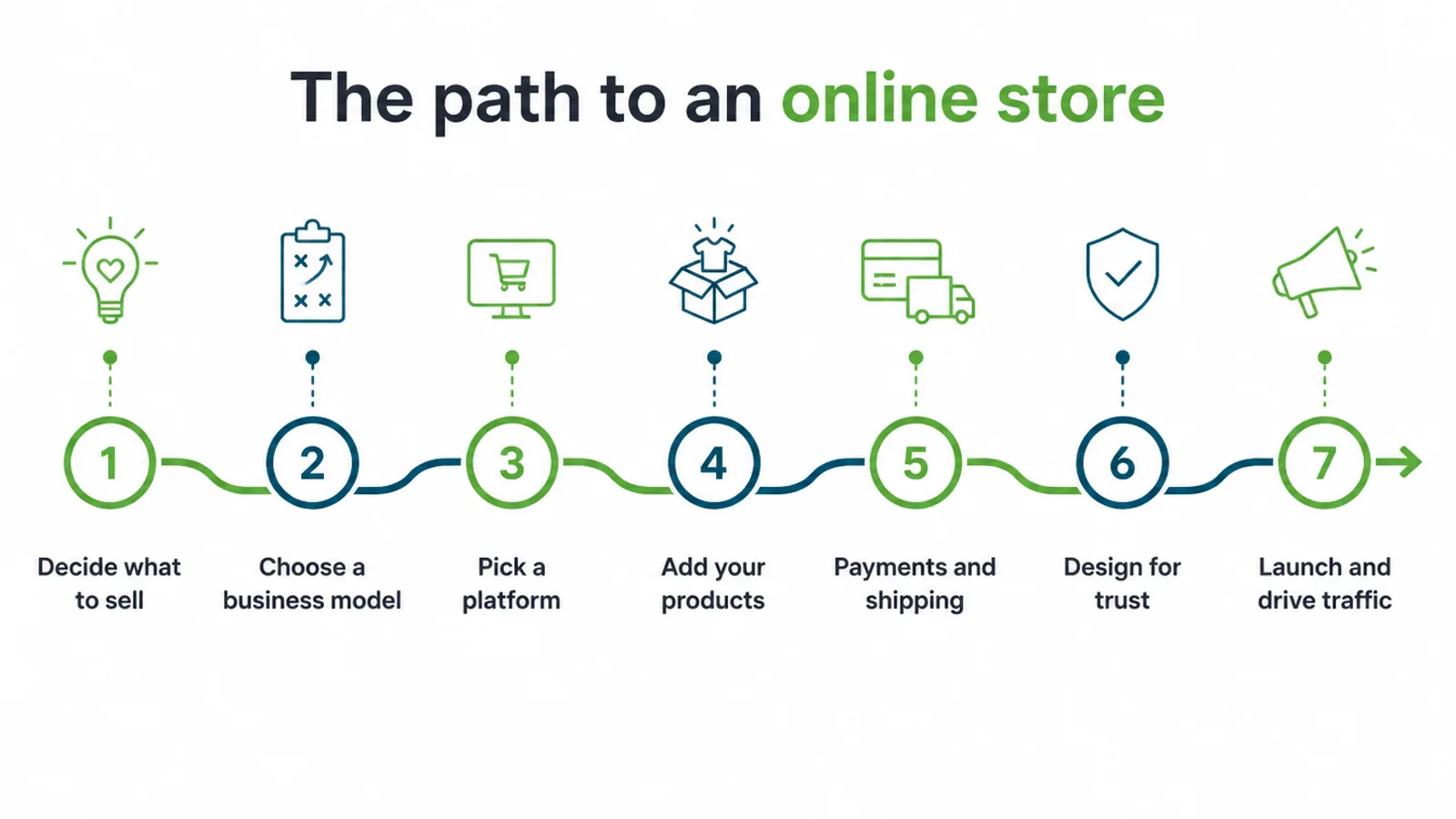
Here is the short answer. To start an online store you pick what to sell, choose a business model, pick a platform, add your products, set up payments and shipping, design for trust, then launch and drive traffic.
That is the whole path. You can get a basic store live in a weekend. A store that actually pulls in customers takes a few weeks of steady work.
So do not let the tech scare you. The hard part is not the buttons. The hard part is choosing well and putting in the reps once the store is up.
Is it worth it? The numbers say people keep moving online. Roughly one in six retail dollars in the US is now spent online, and that share keeps climbing. Not everyone shops online, and plenty still buy in shops. But the trend is clear and steady, which is a good tailwind for a new store.
This guide is the map, not the deep dive. We walk the seven steps in order, then link down to the detailed guides where you need them. Read it once, then work the steps one at a time.
2. The 7 steps at a glance
Before we dig in, here is the whole plan on one screen. Each row is one step, what you actually do, and one tip to keep you moving. Do not try to do them all in a day. Work top to bottom, finish one, then start the next.
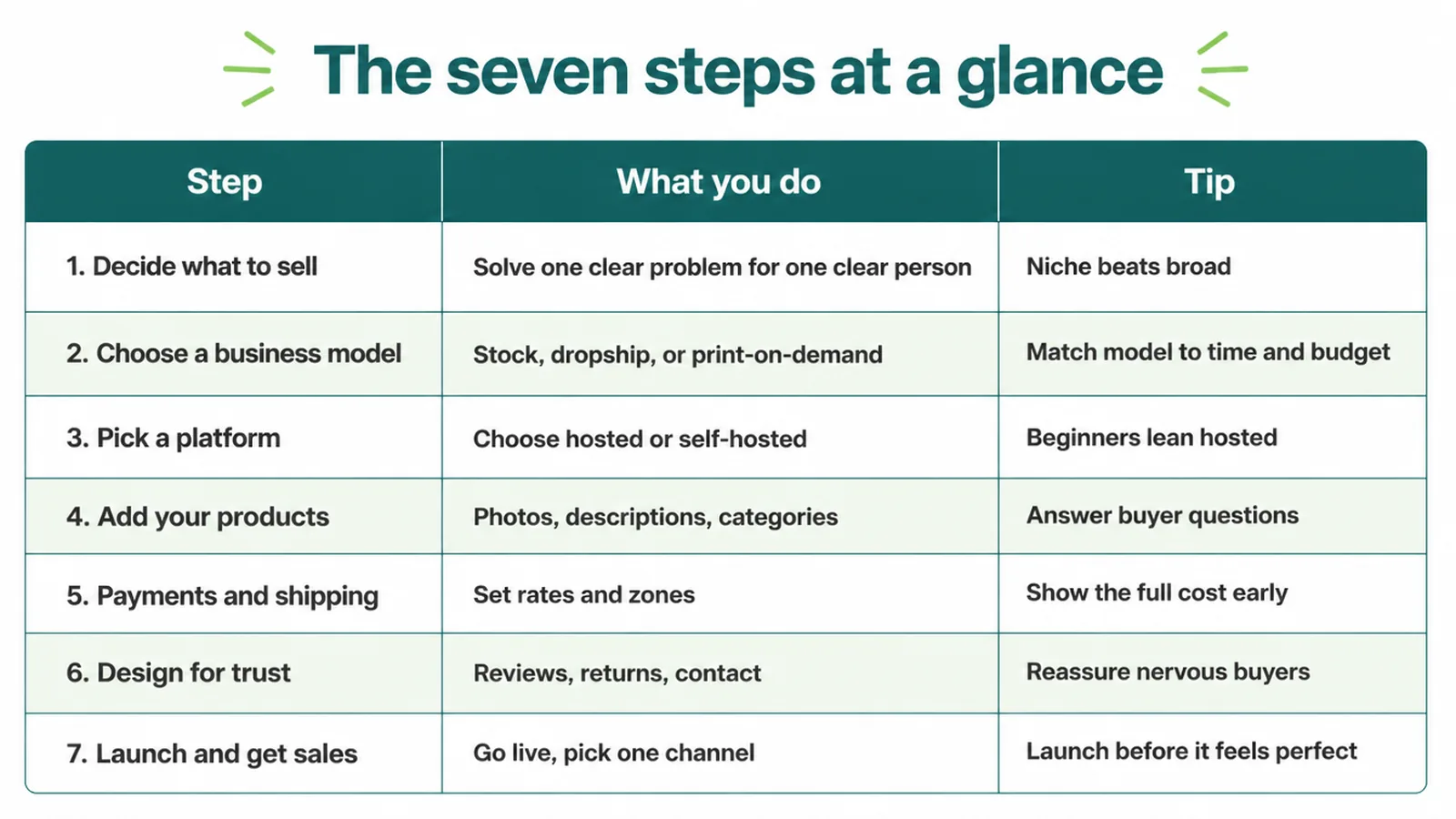
| Step | What you do | Tip |
|---|---|---|
| 1. Decide what to sell | Solve one clear problem for one clear person | Niche beats broad every time |
| 2. Choose a business model | Stock, dropship, or print-on-demand | Match the model to your time and budget |
| 3. Pick a platform | Choose hosted or self-hosted | Beginners lean hosted for speed |
| 4. Add your products | Photos, clear descriptions, categories | Answer buyer questions in the text |
| 5. Set up payments and shipping | Turn on a provider, set rates and zones | Show the full cost early |
| 6. Design for trust | Clean pages, reviews, returns, contact | Nervous buyers need reassurance |
| 7. Launch and get sales | Go live, tell people, pick one channel | Launch before it feels perfect |
3. Step 1: Decide what to sell
Everything starts here. The best stores solve a specific problem for a specific person. Not "clothes for everyone" but "comfy work shirts for tall men". Not "dog stuff" but "calming gear for anxious rescue dogs". The tighter your focus, the easier every other step gets.
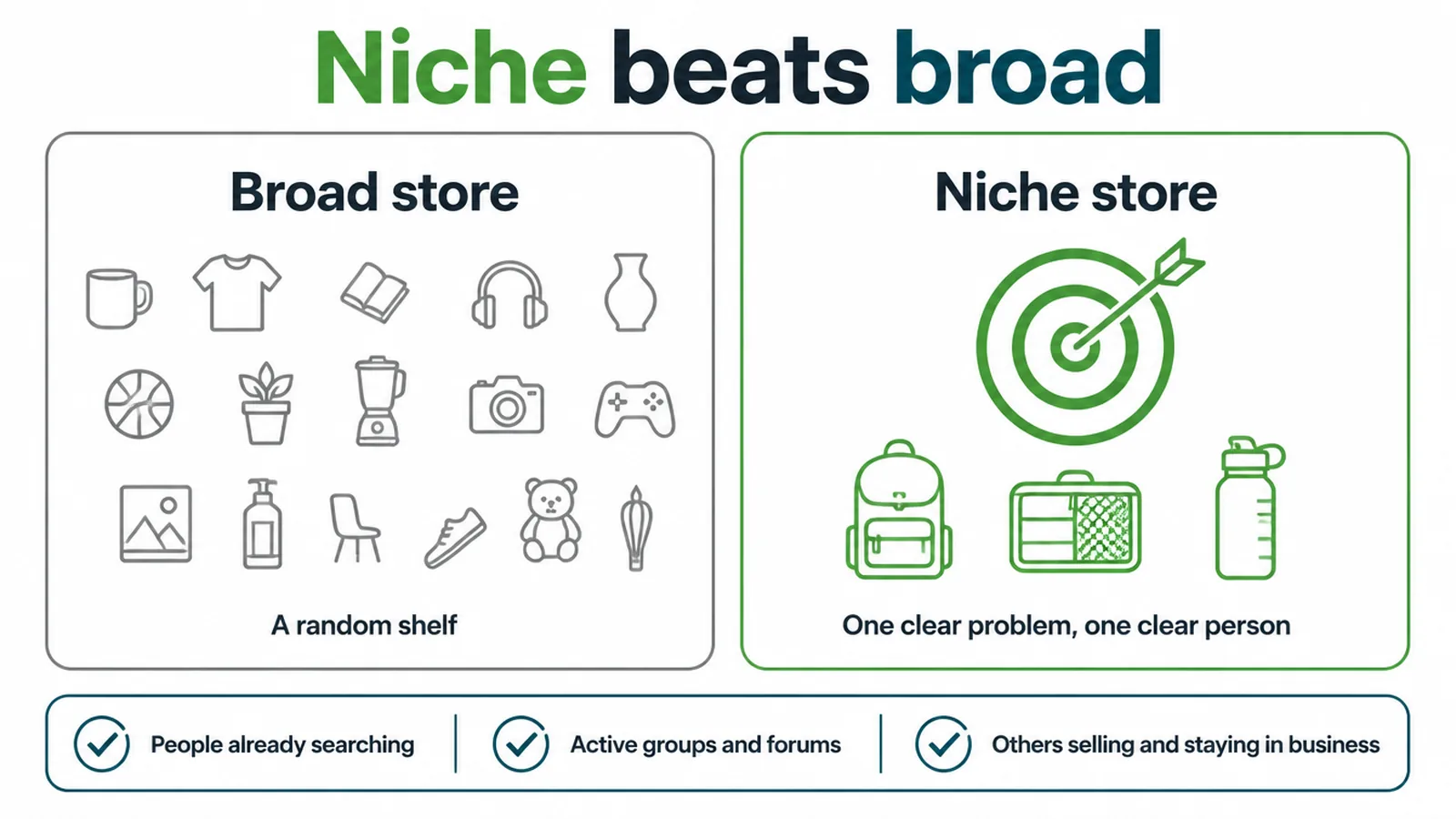
Why does niche beat broad? Because a narrow store is easier to market, easier to rank in search, and easier for a shopper to trust.
When someone lands on a page built just for their problem, they feel understood. A general store that sells a bit of everything feels like a random shelf. People scroll past it.
Now sanity-check demand before you commit. Are people already searching for it? Are there groups, forums, or hashtags full of folks with this problem? Are other shops selling something similar and staying in business? A little competition is a good sign. It means money is already changing hands. Zero competition often means zero demand.
One warning. Passion alone does not sell. Loving a product is a lovely start, but you need buyers. So mix what you enjoy with what people will pay for.
Ask a few real people in your target group if they would buy it, and at roughly what point they would say yes. Their honest answers are worth more than any guess. Get this step right and the rest of the build is mostly steady work.
4. Step 2: Choose a business model
Next, decide how you will actually get products to customers. You have three common paths, and each one trades control for convenience. There is no single best choice. There is only the best choice for your time, your budget, and how hands-on you want to be.
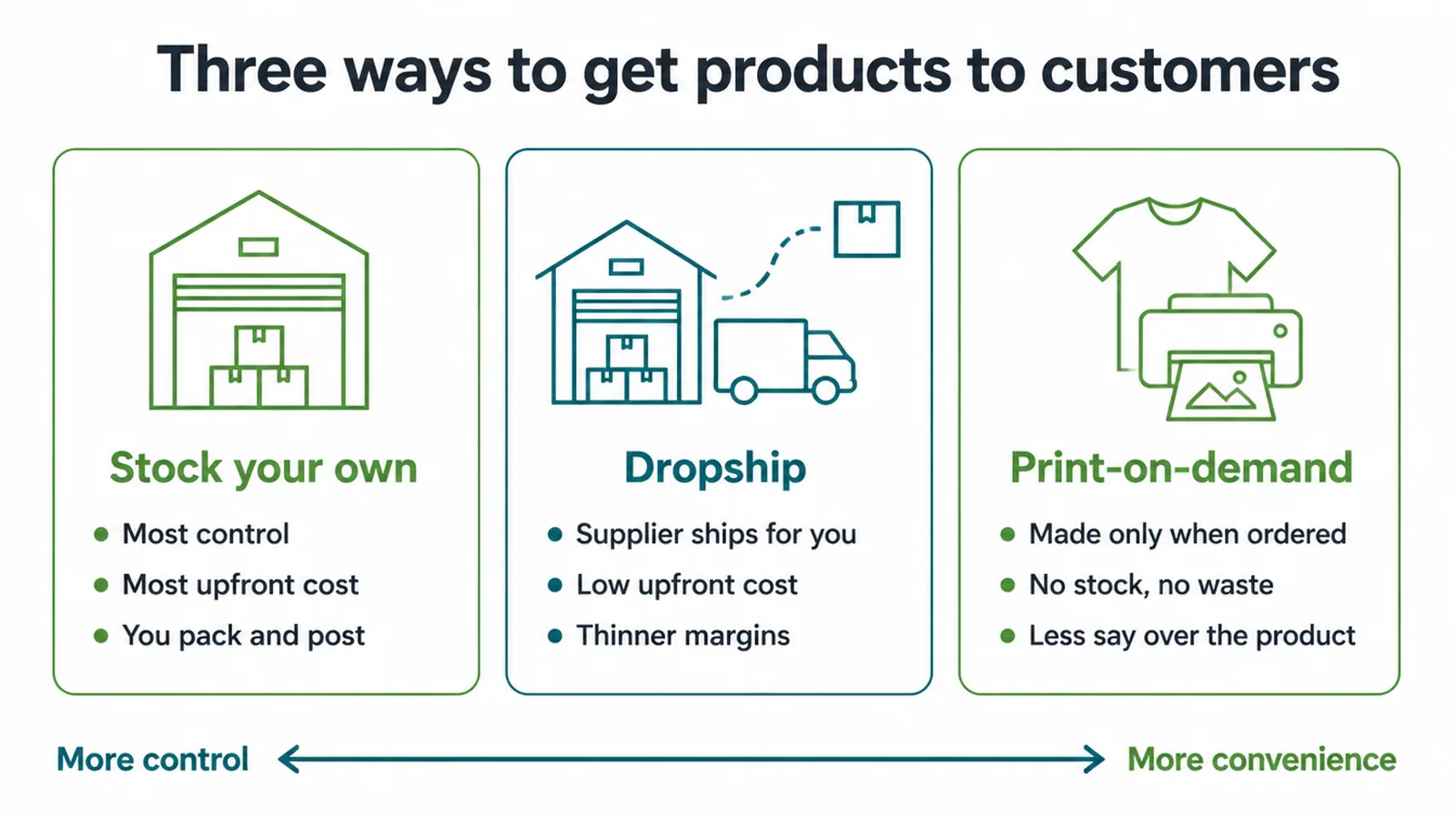
Stock your own products. You buy or make the items, keep them, and ship them yourself. You get the most control over quality, packaging, and the customer experience.
You also carry the most risk and the most work. Money goes out before it comes in, and you handle storage and postage. This suits makers and people with a product they truly believe in.
Dropship. A supplier holds the stock and ships each order for you when a customer buys. You never touch the product. That means low upfront cost and no storage, which is why beginners love it.
The trade-off is thin margins, less control over shipping times, and a crowded market. If this path pulls at you, read our full guide on how to start dropshipping before you commit.
Print-on-demand. A partner prints your design onto a product like a shirt or mug only when someone orders it. Nothing is made until it sells, so you hold no stock and waste nothing.
It is a great low-risk way to test designs. The catch is a smaller profit per item and less say over the base product.
Pick one to start. You can always add another later. Most people begin with dropship or print-on-demand because the risk is low, then move into their own stock once they know what sells.
5. Step 3: Pick a platform
A platform is the software that runs your store. It shows your products, takes payments, and handles orders. Think of it as the shopfront, the till, and the stockroom rolled into one. This is a big choice, but do not agonise over it. Most good platforms can grow with you.
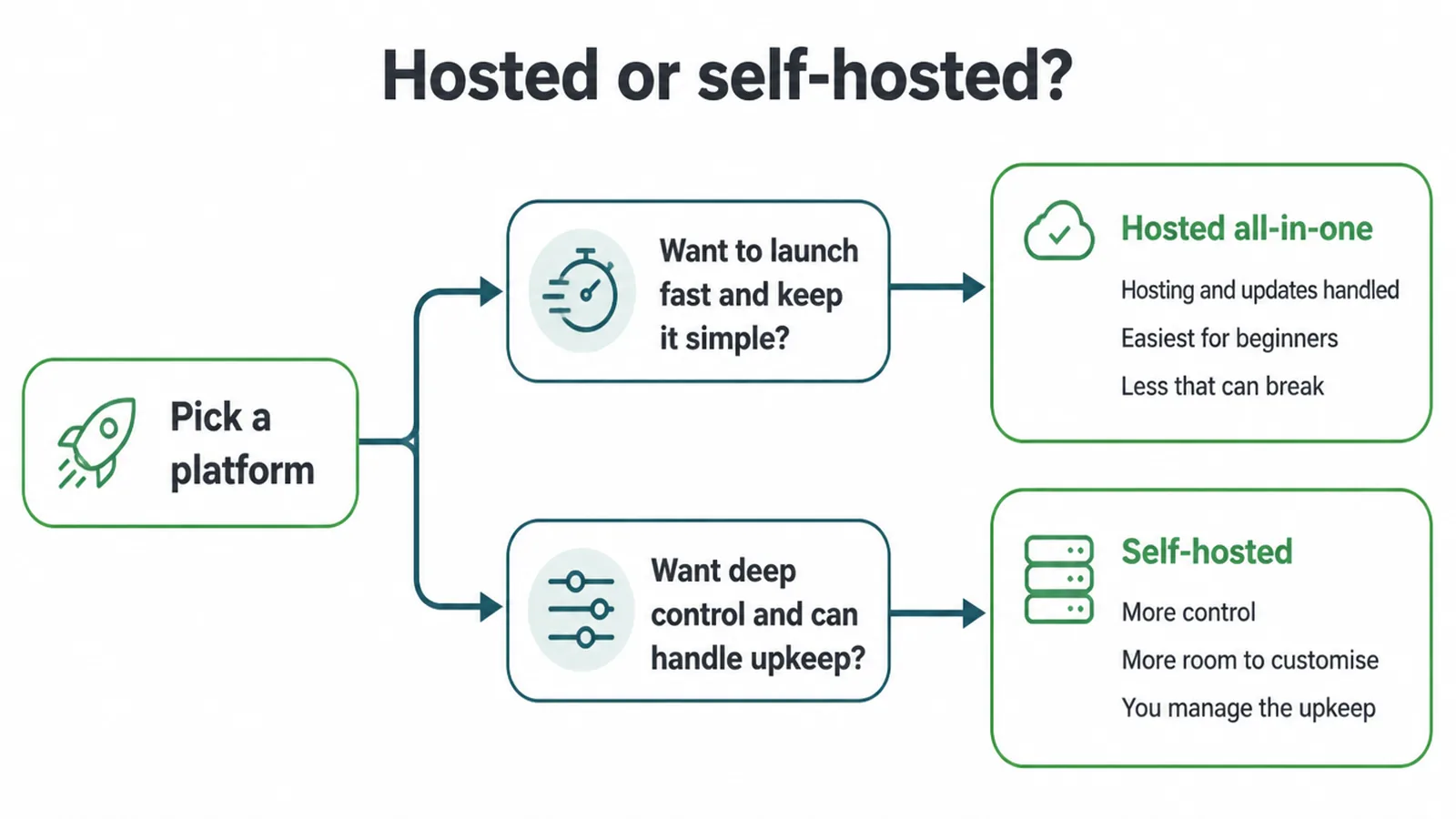
You have two broad types. Hosted all-in-one builders handle the hosting, security, and updates for you. You log in, add products, and go. They are the easiest way for a beginner to get selling fast, with less that can break.
Self-hosted options give you more control and more room to customise, but you manage the hosting and upkeep yourself. That power comes with more responsibility.
How do you choose? Match the platform to what you are selling and how hands-on you want to be. If you want to launch quickly and keep things simple, hosted usually wins.
If you want deep control and do not mind the extra work, self-hosted can be worth it. We break the whole decision down in our guide to the best ecommerce platform for small business.
If you have already narrowed it to the two most popular names, our head-to-head on Shopify vs WooCommerce lays out the real differences, so you can pick with your eyes open. Whatever you choose, do not let this step stall you for weeks. Pick a solid platform, start building, and move on to your products.
6. Step 4: Add your products
With a platform in place, it is time to fill your store. This is where a plain store starts to feel real. Four things do most of the work here: photos, descriptions, categories, and honest pricing.
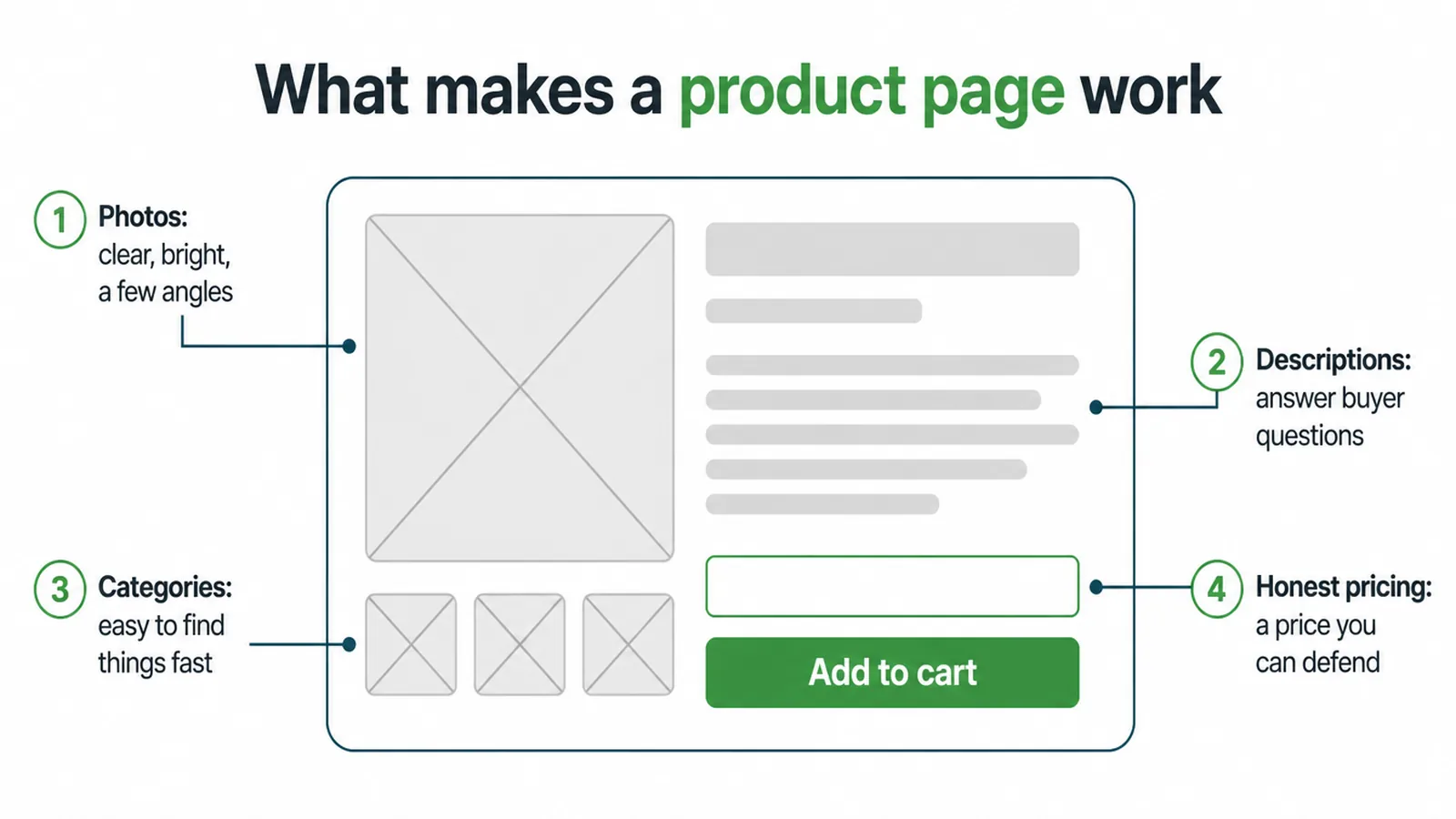
Photos. Online, people cannot touch your product, so the photos do the selling. Use clear, bright images from a few angles, plus one that shows the product in use.
You do not need a pro studio. A clean background, good natural light, and a steady phone go a long way. Blurry, dark photos quietly kill sales.
Descriptions. Do not stop at the specs. Answer the questions a real buyer has. Will this fit me? How does it feel? How do I care for it? What comes in the box? Write the way you would explain it to a friend across a table. Buyer-question descriptions turn browsers into buyers.
Categories. Group your products so people can find things fast. Clear categories act like signs in a shop. A shopper who can self-select the aisle they care about stays longer and buys more. A messy pile of products sends people straight back out the door.
Honest pricing. Set a price you can defend and that still leaves you a profit after fees and postage. Do not race to the bottom. Cheap is not a strategy, it is a trap.
Price for the value you give, and be upfront about it. We will come back to showing the full cost early, because that one habit saves a lot of lost sales.
7. Step 5: Set up payments and shipping
Now make it possible for people to actually pay you and get their order. This step is less fun than product photos, but it is where sales are won or quietly lost. Get it wrong and shoppers fill a cart, then walk away at the last moment.
Payments. Turn on a trusted payment provider so customers can pay by card and the common wallets they already use. Most platforms make this a few clicks.
Offer more than one way to pay, because a checkout that only supports one method turns away people who prefer another. Test it yourself by placing a real order before you tell anyone the store is open.
Shipping. Set your rates, your zones, and your delivery times clearly. Decide where you ship, what it costs, and how long it takes, then say all of that plainly. Vague or missing shipping info makes people nervous, and nervous people do not buy.
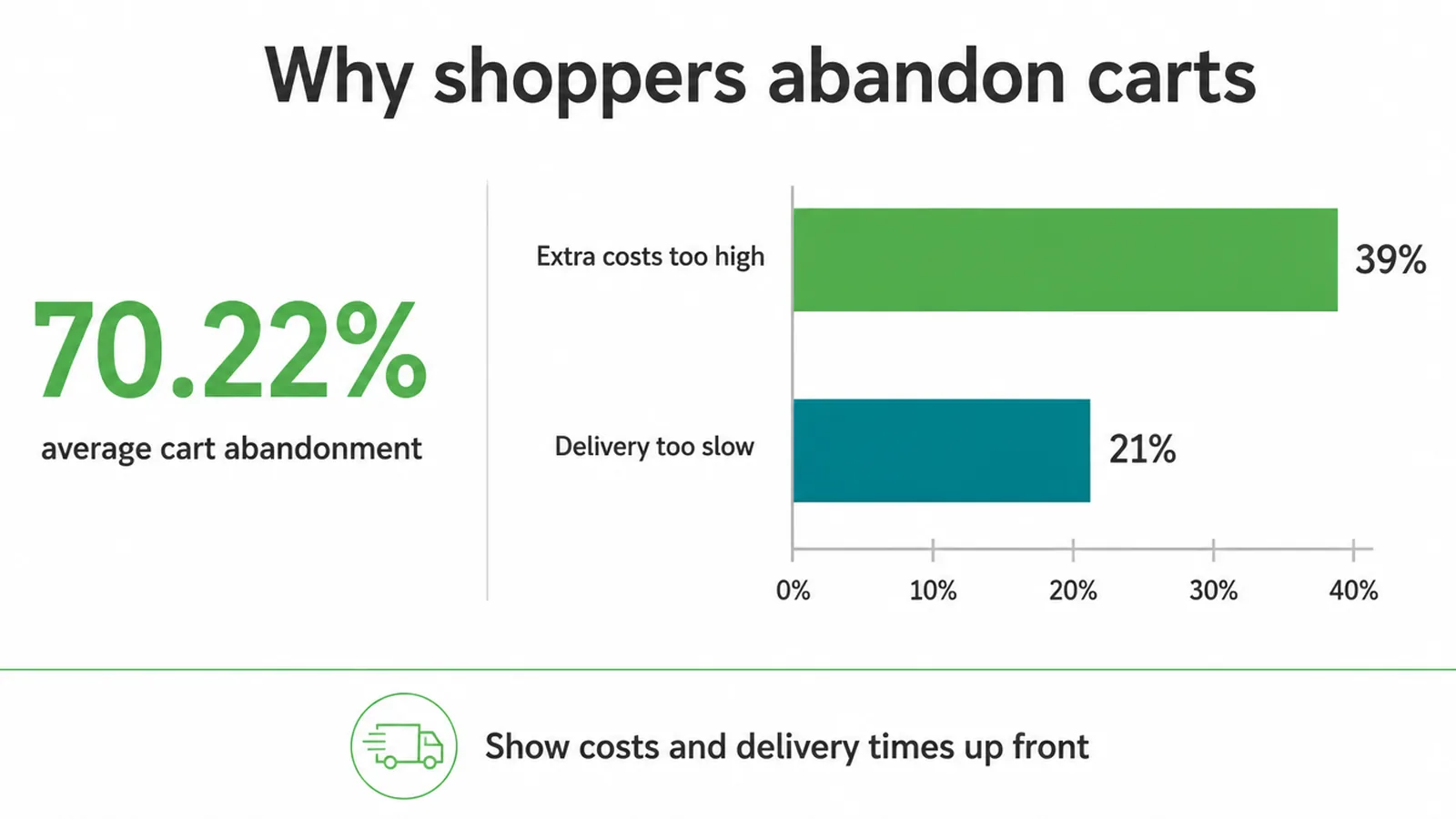
Here is the big one. Show the full cost early. Baymard's review of 50 studies puts average cart abandonment at 70.22%, and the top reason people bail is extra costs that feel too high, which hits 39% of the time.
Slow delivery drives away another 21%. So do not spring surprise shipping fees at the final step. Show costs and delivery times up front, and you keep far more of the carts you worked so hard to fill.
8. Step 6: Design for trust
You can have great products and still lose sales if people do not trust the store. Trust is not a nice extra. It is the thing that lets a stranger hand over their card. Your job is to remove every reason for doubt.
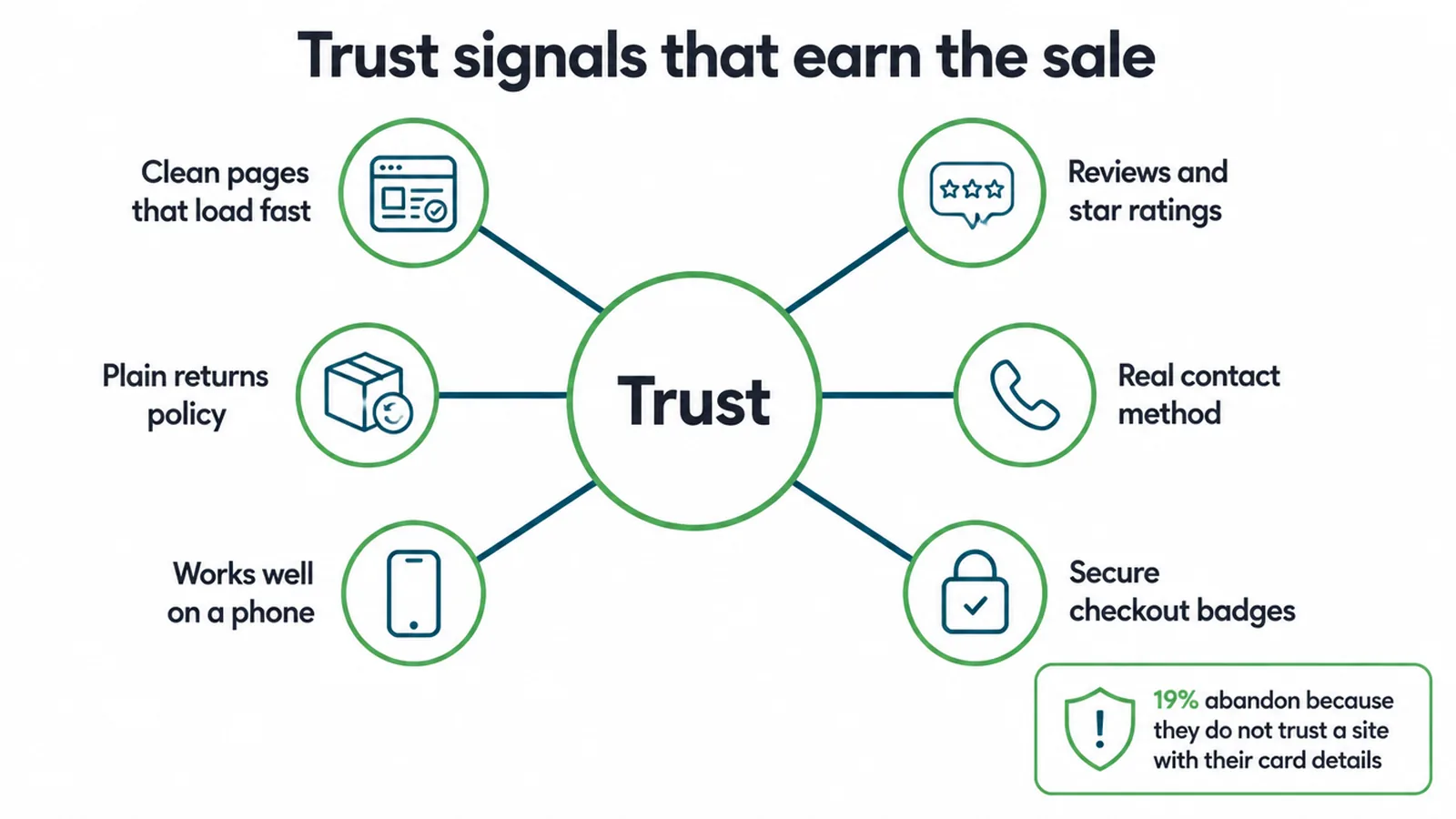
Start with a clean, clear look. A tidy homepage that loads fast and reads at a glance signals a real business. A cluttered, slow, confusing store signals risk. Keep the design simple and let the products breathe. Our guide to ecommerce homepage design walks through the exact jobs your front page must do.
Then add the trust signals shoppers look for. Show reviews and star ratings so new buyers see that others took the leap. Post a plain returns policy, because an easy return makes buying feel safe.
Give a real contact method, so people know a human is behind the store. And make sure the whole thing works well on a phone, where most people shop.
Card safety matters more than a lot of new owners think. In that same Baymard research, 19% of shoppers abandon a cart because they do not trust the site with their card details. So show your secure checkout, your payment badges, and your policies where people can see them. Little signals, big effect.
If you would rather have this built for you the right way from day one, that is exactly what our ecommerce website design service does. We design stores around the things that earn trust and sales.
9. Step 7: Launch and get your first sale
Here is the step where most people freeze. They keep tweaking, keep polishing, keep waiting for the store to feel perfect. It never will. Launch before it feels ready. A live store with a few rough edges beats a perfect store that never opens.
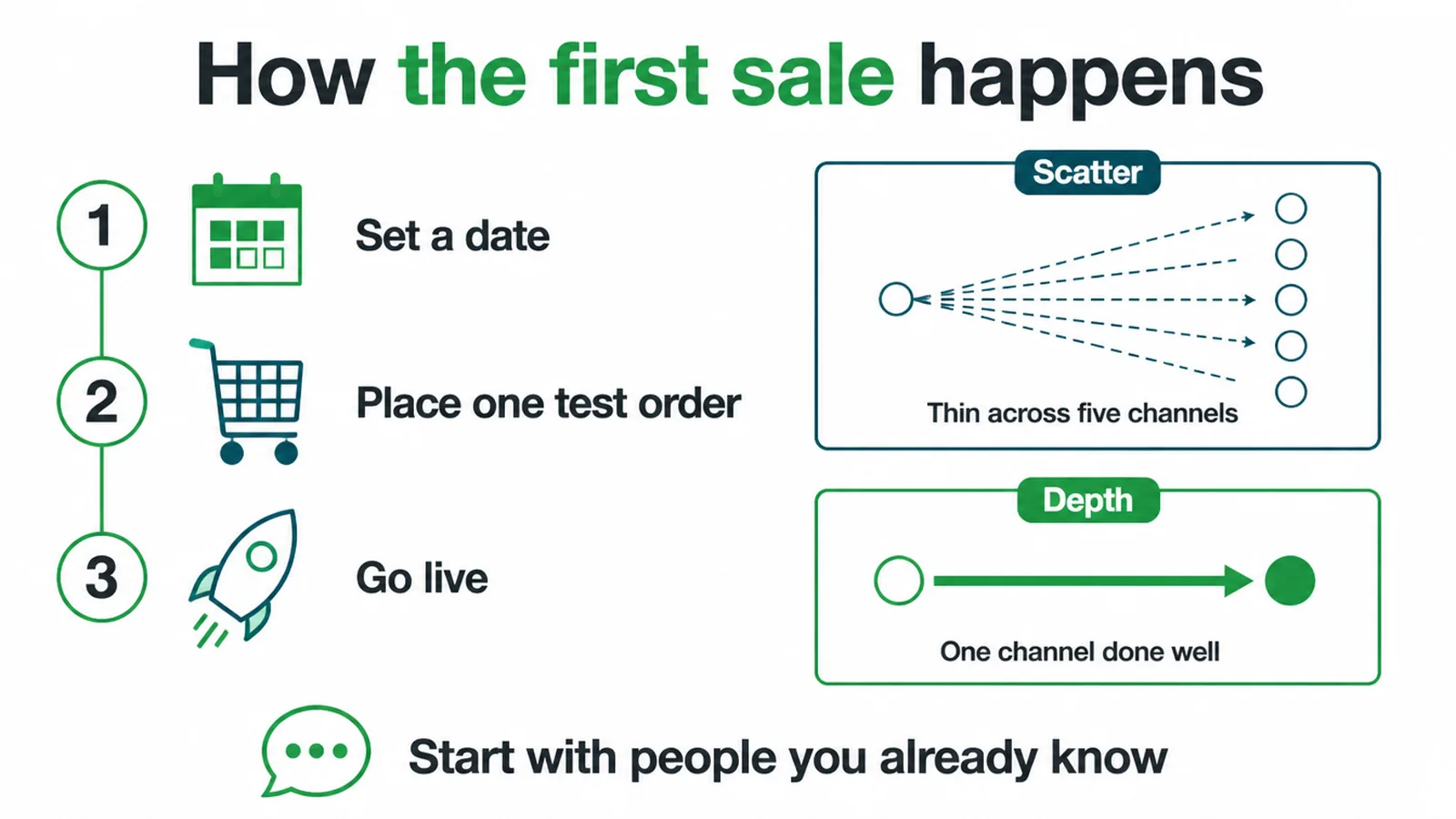
So set a date, place one test order yourself, and go live. Then the real work begins: getting people to visit. And the good news is your first sale almost never comes from a stranger. It comes from your own network plus one channel you commit to.
Start with people you already know. Tell friends, family, old colleagues, and any group you belong to. Ask them to take a look and share it if they like it. This feels awkward, but it is the fastest path to sale number one. Warm people buy first.
Then pick one traffic channel and do it well. Choose search or one social platform, not all of them at once. Spreading yourself thin across five channels gets you nowhere. Master one, learn what works, then add another. Depth beats scatter.
Set your expectations right, too. Sales usually come in days and weeks, not minutes. The first one is the hardest. After that, you have proof it works, and you can keep tuning your products, pages, and traffic.
If you want a second set of eyes on your store or your launch plan, get in touch and tell us where you are stuck.
10. What an online store costs, and how long it takes
Two questions come up more than any others: how much, and how long. Honest answer: it depends, and anyone who gives you one exact number is guessing.
On cost, you can start lean. A hosted platform subscription and a domain name will get a simple store online without much outlay, especially if you use a low-stock model like dropship or print-on-demand.
If you want a custom-built store designed around your brand, that costs more, because you are paying for real design and build work. Your model, your platform, and how much you do yourself all move the figure.
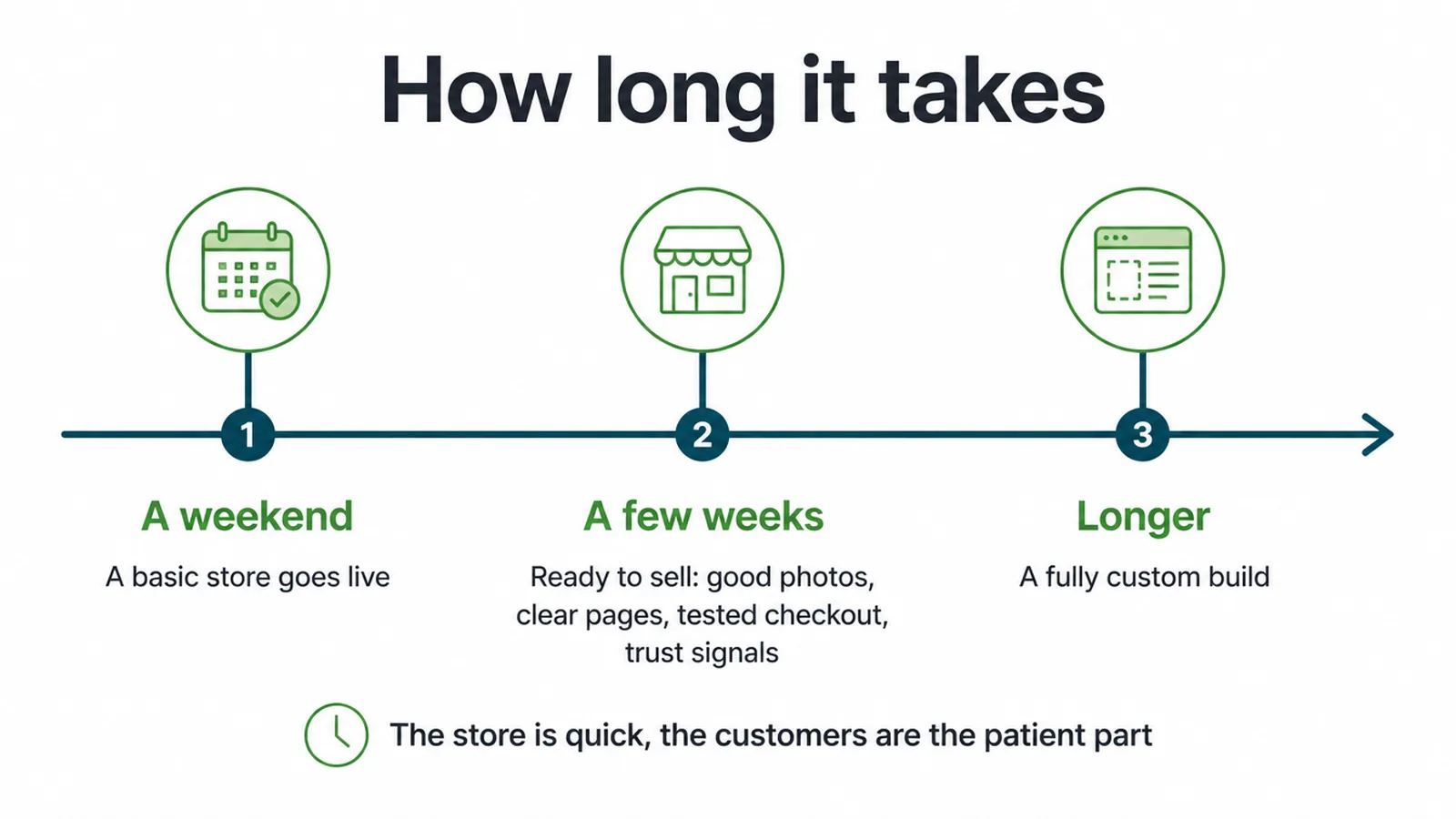
On time, a basic store can go live in a weekend. A store that is truly ready to sell, with good photos, clear pages, tested checkout, and trust signals in place, takes a few weeks of focused work.
A fully custom build takes longer still. So plan for weeks, not hours, and you will not be disappointed. The store is quick. The customers are the patient part.
Frequently asked questions
1. How do I start an online store?
Pick what to sell, choose a business model, pick a platform, add your products, set up payments and shipping, design for trust, then launch and drive traffic. You can open a store in a weekend, but a store that actually sells takes a few weeks of work.
2. How much does it cost to start an online store?
You can start lean with a hosted platform subscription and a domain, and pay more if you want a custom-built store. There is no single figure, because it depends on your platform and how much you build yourself.
3. What is the best platform to start an online store?
It depends on what you are selling and how hands-on you want to be. Hosted all-in-one builders are easiest for beginners, while self-hosted options give more control.
4. Do I need to hold inventory?
No. You can stock your own products, dropship so a supplier ships for you, or use print-on-demand where items are made only when ordered. Each trades control for convenience.
5. How do I get my first sale?
Tell people you already know, pick one traffic channel like search or one social platform and do it well, and do not wait for the store to be perfect. The first sale usually comes from your own network plus one channel.
6. Do I need a business license to sell online?
It depends on your country and what you sell, so check your local rules. This is general guidance, not legal advice, and requirements differ by location.
7. Can I start an online store with no money?
A very lean start is possible with free trials and print-on-demand, but no money usually means you pay with time instead. There is no genuinely free way to build a store that sells.
8. How long does it take to build an online store?
A basic store can go live in a weekend, and a store that is truly ready to sell takes a few weeks. Custom builds take longer.
11. Ready to build your store?
You now have the full map: decide what to sell, choose a model, pick a platform, add products, set up payments and shipping, design for trust, and launch. Work the steps one at a time and you will get there. If you would rather have a store built around sales and trust from day one, that is our job. See how we can help with our ecommerce website design service, or just get in touch and tell us what you want to sell.