Email Newsletter Templates and Ideas for Small Business

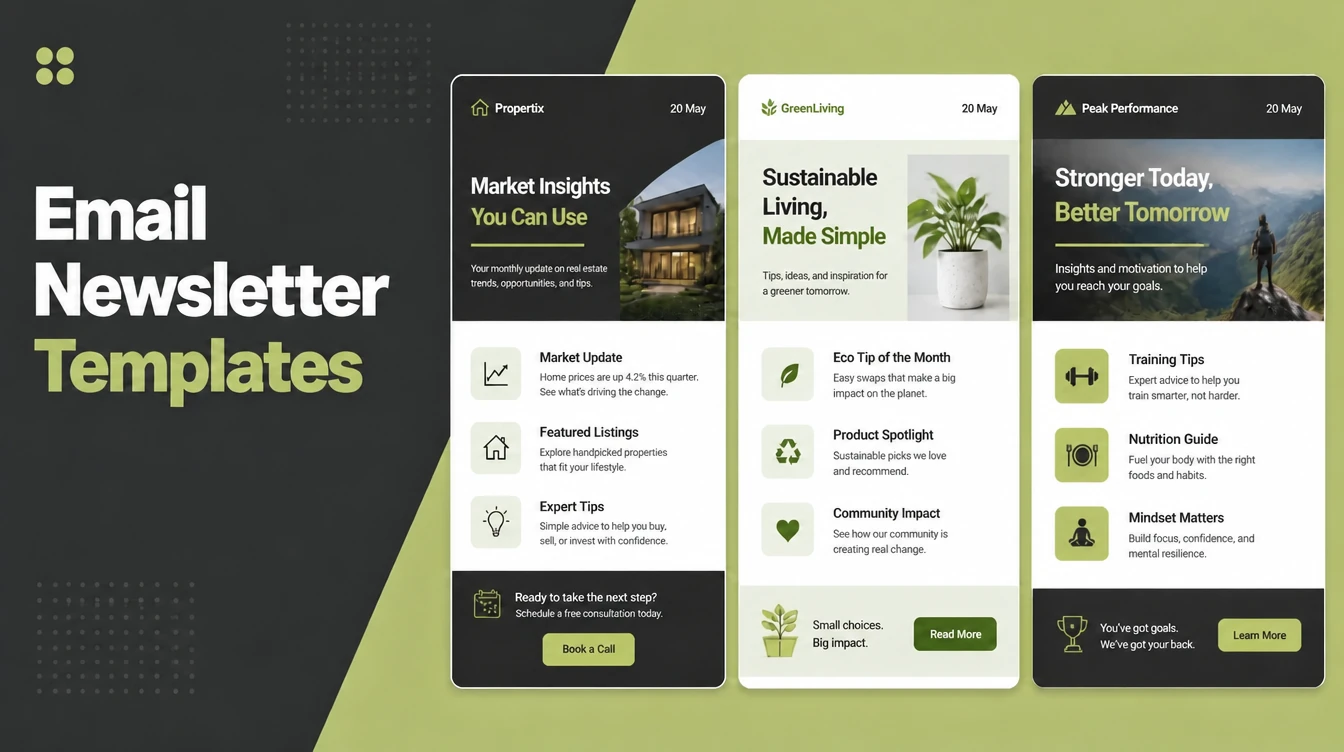
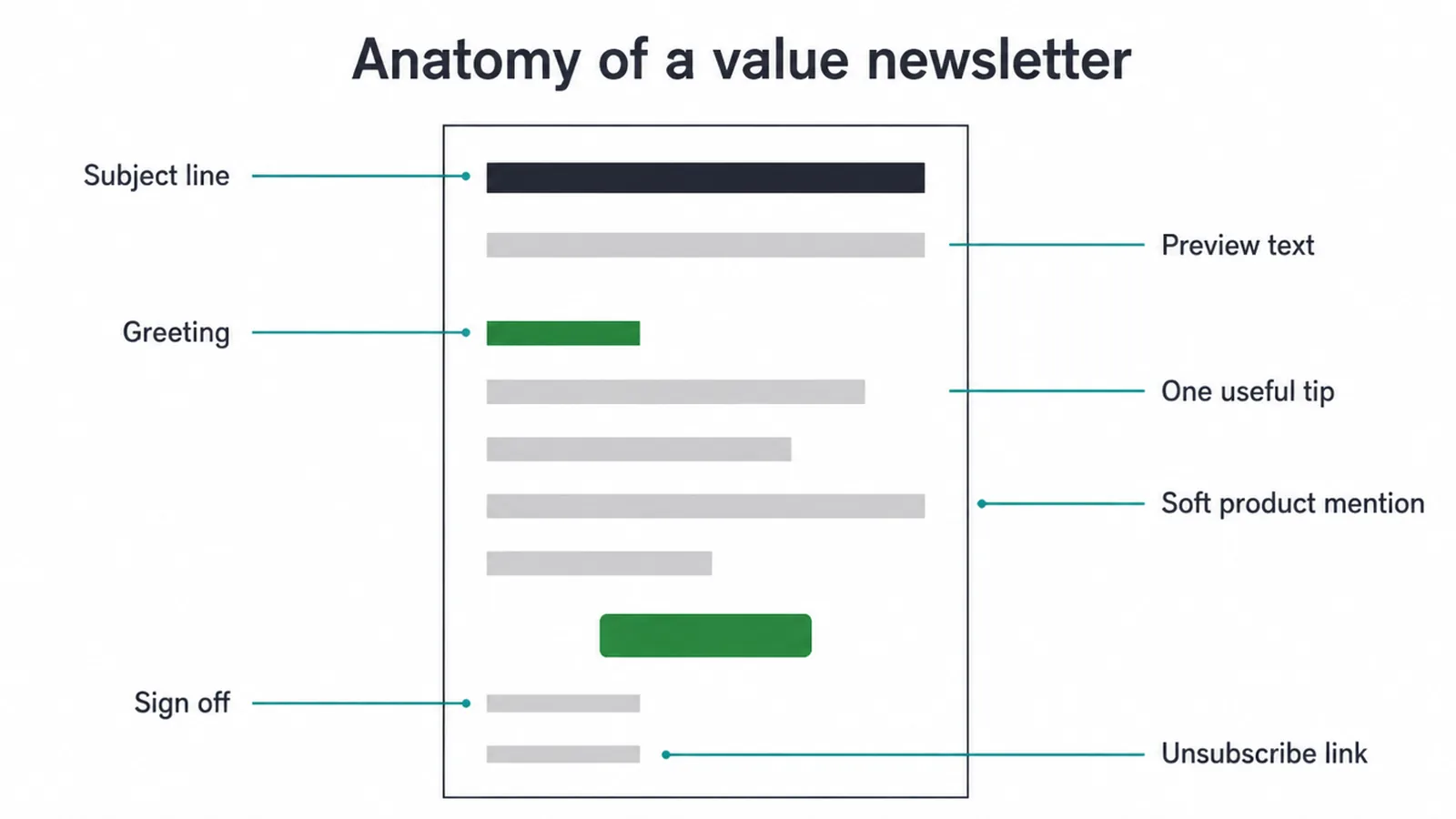
Useful email newsletter templates are structures rather than designs. Greeting, one useful thing, why it matters, a soft mention of what you do, one action, sign off. Write it to one person, keep it short, and send on a rhythm you can keep. Seed Light sets these up for small businesses.
Most small business newsletters stop after four issues, and the reason is almost always the same.
The sender made each one a small publishing project instead of a short email to one person.
This guide covers what a newsletter is for, the three types worth sending, a structure you can reuse every time, and how often to send without disappearing.
Key Takeaways
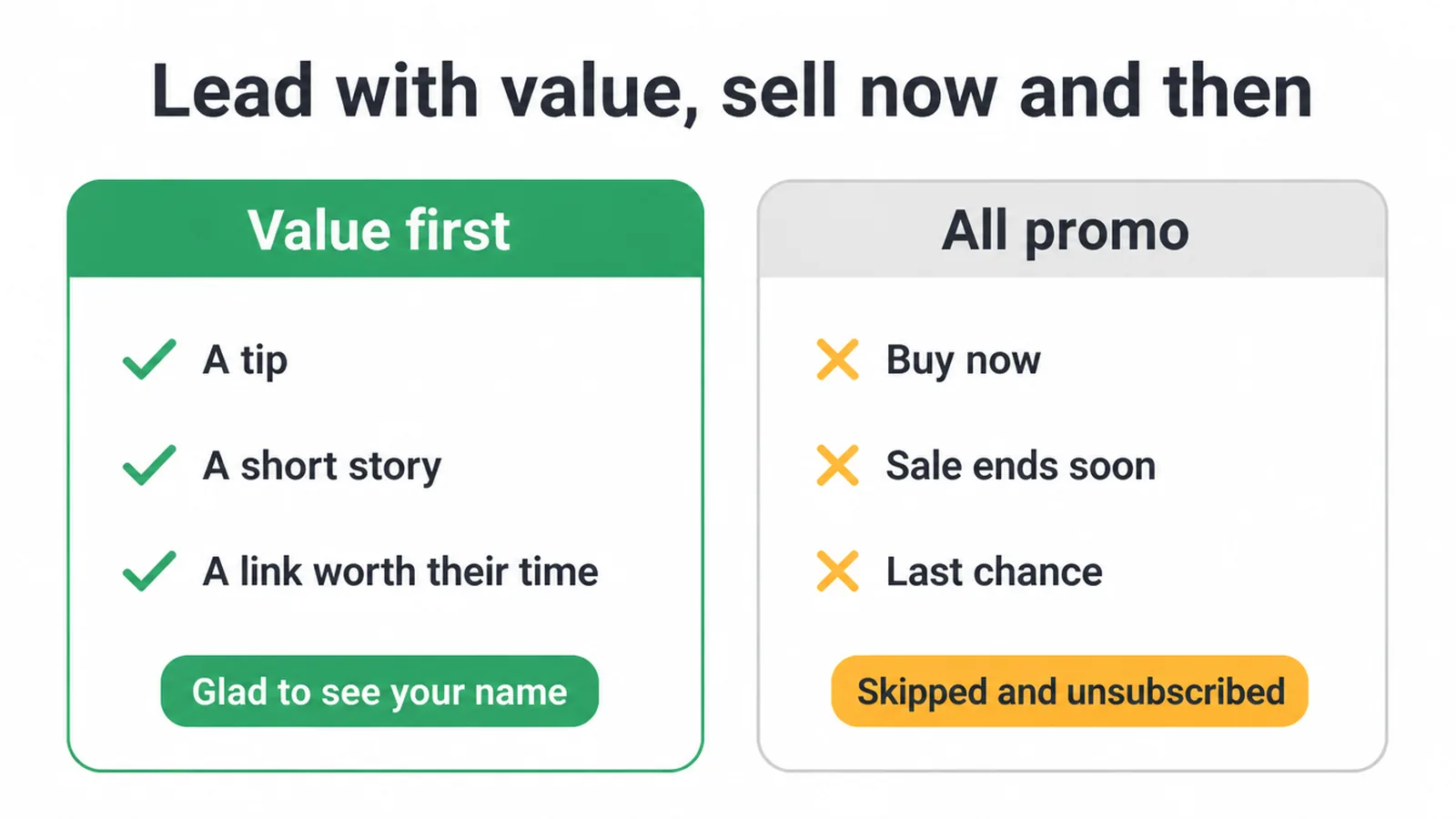
- Lead with value, sell now and then. All promotion empties a list.
- Write to one person. Not to a list of subscribers.
- One idea, one action. Anything more gets skimmed.
- Pick a rhythm you can keep. Steady beats frequent.
- Reuse the same structure. That is what makes it quick.
What a Newsletter Is Actually For
It keeps you present with people who already said yes once. That is the cheapest attention any business has.
Social media shows your post to whoever it chooses. An email arrives.
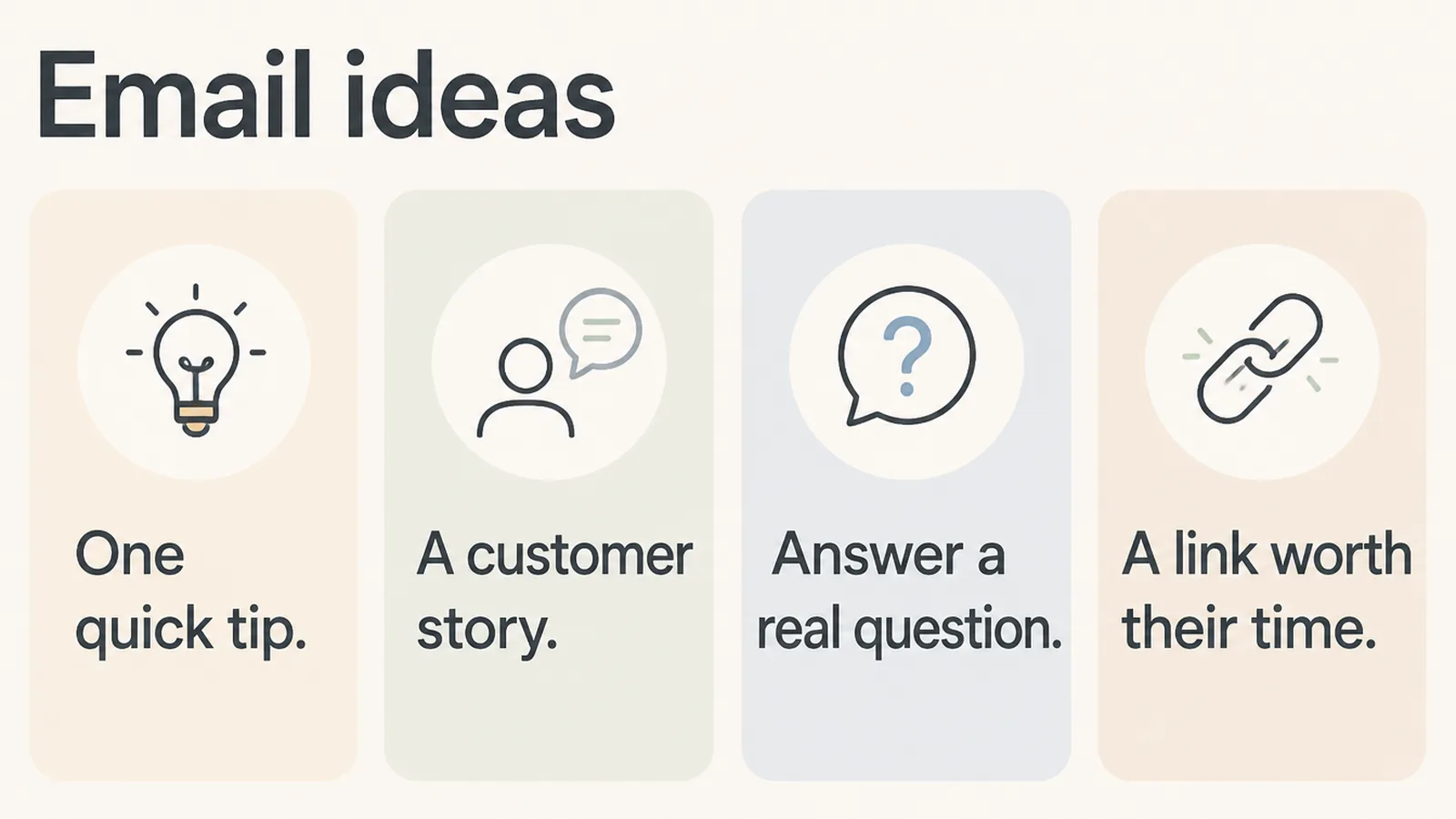
So the job is being worth opening rather than being frequent. A tip, a short story, a link worth their time.
A list that only ever hears about sales learns to ignore you.
Sell openly when you have something to sell. Just not every time, and not disguised as something else.
There is a second job worth naming. A newsletter is the only audience you own outright, because nobody can change an algorithm and take it away from you.
Social accounts can be suspended and reach can be throttled. A list of addresses you exported last month cannot.
Export the list every so often and keep it somewhere safe. Tools change, pricing changes, and the list is the asset rather than the software holding it.
The Three Types Worth Sending
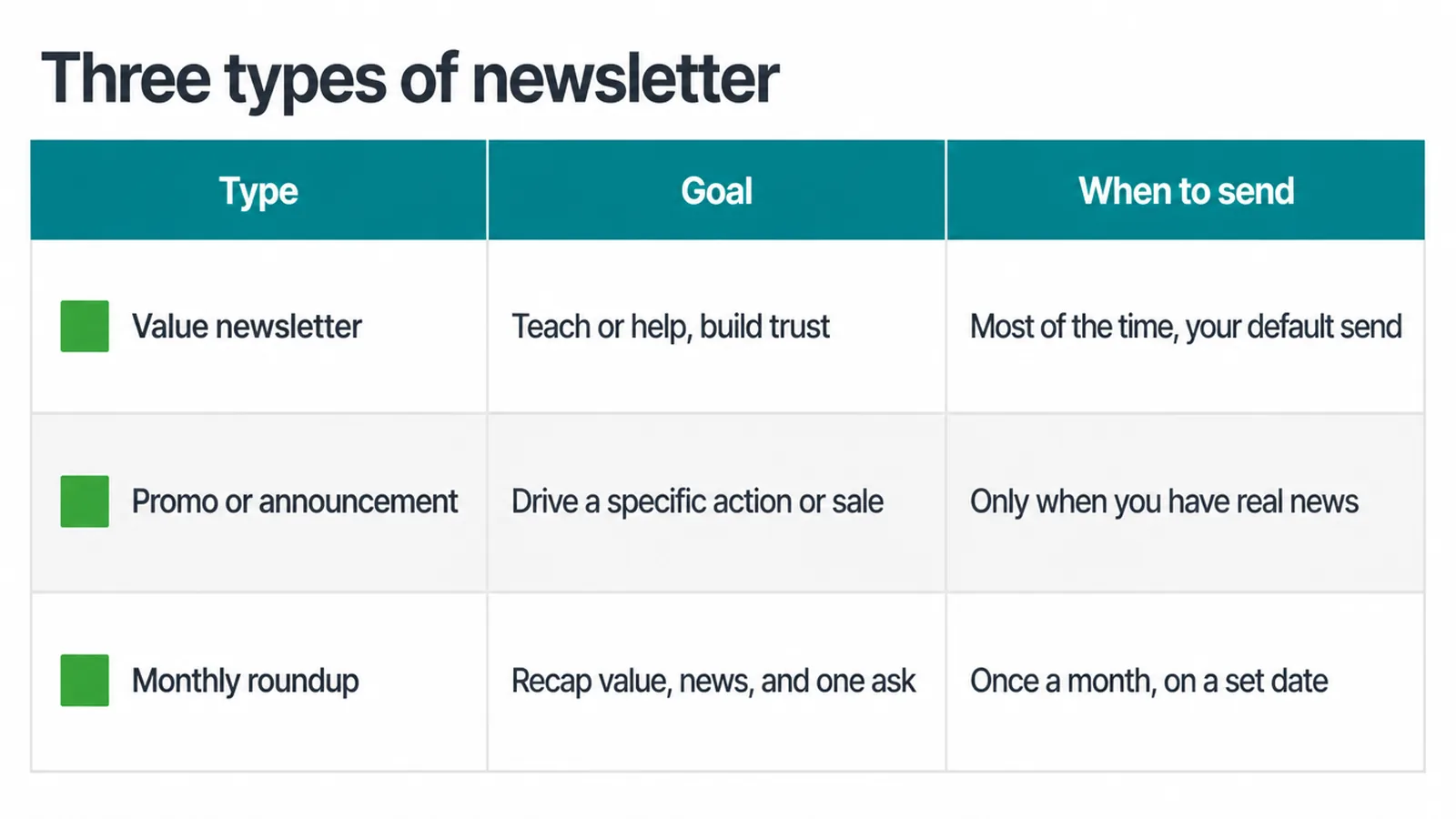
Nearly every small business newsletter is one of three things, and knowing which you are writing settles most decisions.
The value newsletter teaches or helps. It builds trust slowly and it should be your default send.
The promotion or announcement drives one specific action. Send it only when you genuinely have news.
The monthly roundup recaps what happened, adds one ask, and goes out on a set date so people expect it.
Decide the type before you write a word. Mixing two of them in one email is how newsletters become shapeless.
The value send is the one that does the work. Promotions land better because the value sends earned the attention first.
A roundup is worth considering if writing regularly feels impossible. Once a month on a fixed date asks very little of you and still keeps you present.
How to Write One Without Overthinking It
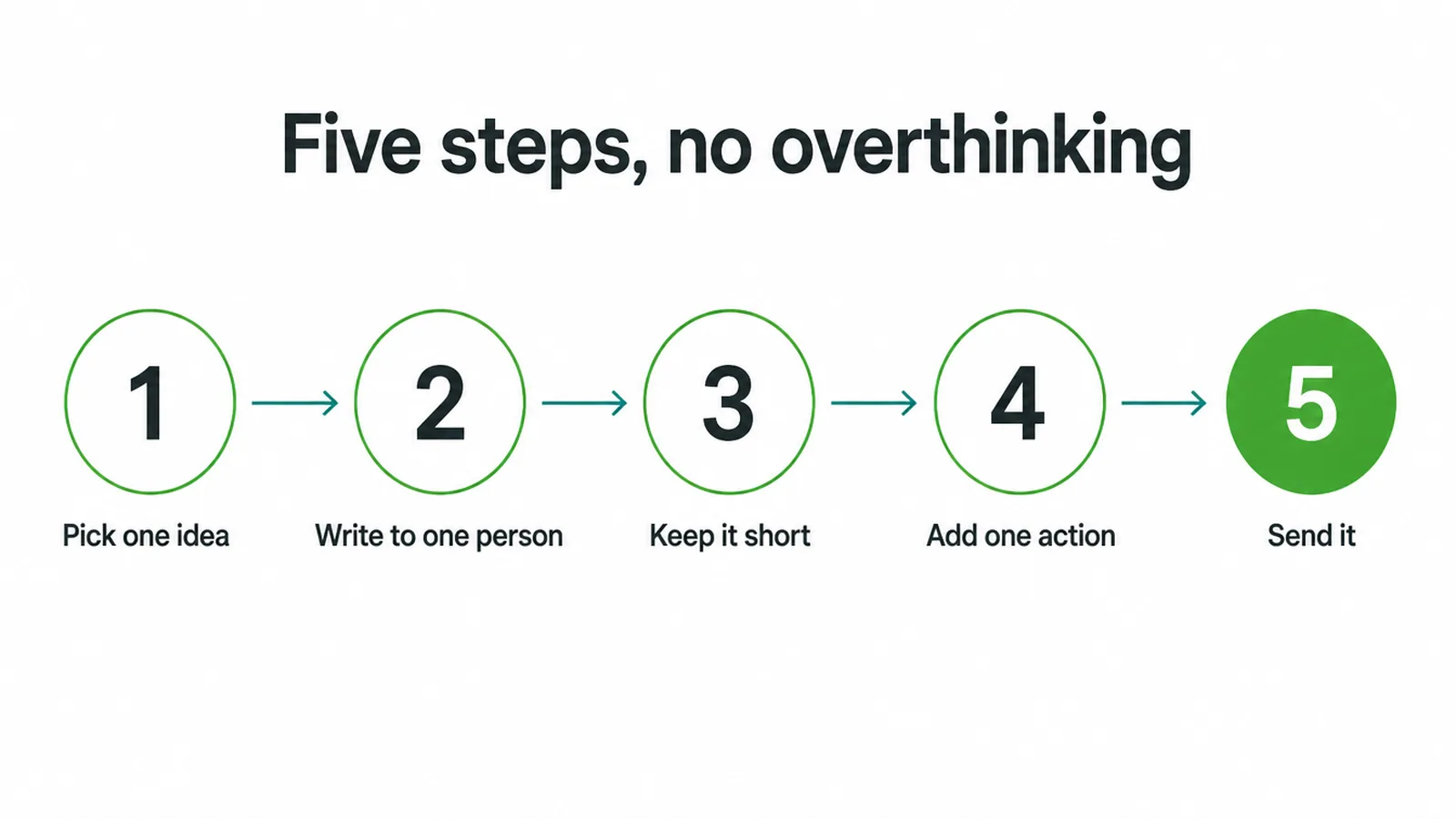
Three steps. Most people lose a whole evening to the first one and never reach the third.
1. Pick one idea
One idea, not three. The email is short enough that a second idea pushes the first out of view.
The easiest source is your own inbox. A question a customer asked this week is already proof that somebody wanted the answer.
After that: a quick tip, a short customer story, a link you found useful, a lesson from something that went wrong.
Keep a running list somewhere. Having to think of an idea on sending day is what kills the habit.
Good email newsletter ideas are usually smaller than people expect. A single thing you explained twice this month is already enough.
If an idea feels too small, it is probably the right size. The ones that feel substantial tend to become articles that never get finished.
2. Write to one person
Picture one real customer and write the email to them. The tone changes immediately and for the better.
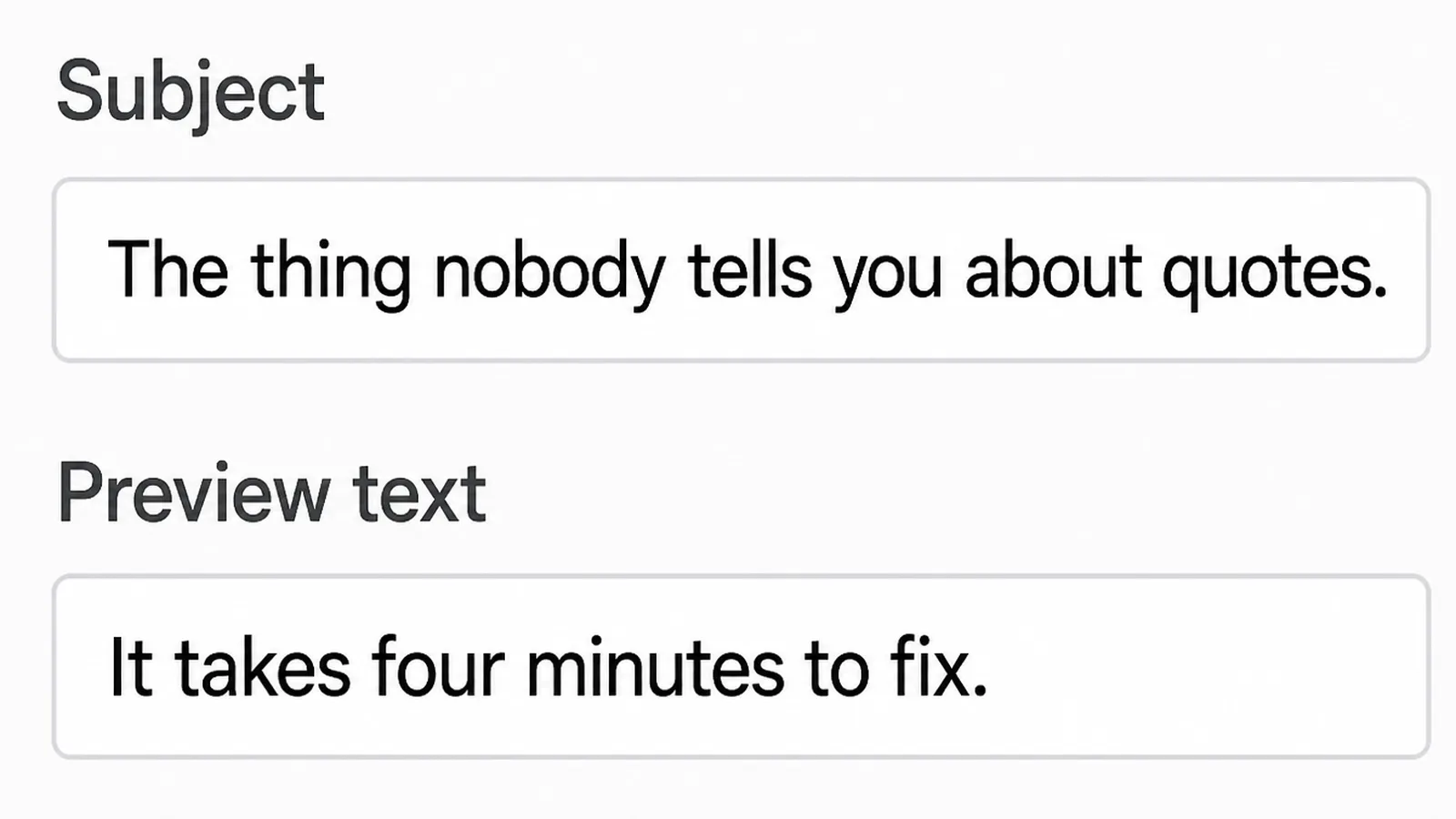
That is also what fixes the subject line. Say the thing the email actually contains, in the words that person would use.
Use your own name in the sender field rather than the business name. People open emails from people, and a reply then lands somewhere a person reads.
Use the preview text rather than wasting it. It sits beside the subject in most inboxes and it is a second line of persuasion nobody uses.
Avoid the words that look like an advert. Free, urgent, act now and a row of capital letters all make the email look like every other one.
Read the subject line aloud before sending. If it sounds like a company talking, rewrite it.
Send yourself a test and read it on your phone. Nearly every problem worth fixing shows up on a small screen first.
3. Keep it short and add one action
Short means short. A greeting, the idea, a soft mention of what you do, a sign off.
One action at the end, and only one. Reply to this, book a call, read the full piece. Give people two and most choose neither.
Asking for a reply is underrated. It costs the reader almost nothing, it tells you what they care about, and it quietly helps your emails keep arriving.
Make the action easy to miss nothing. A plain sentence works better than a loud button in a personal email.
And leave the unsubscribe link alone. Hiding it is both a legal problem and a way of keeping people who will never buy.
Plain text with a few links beats a heavily designed layout for most small businesses. It looks like a person wrote it, because a person did.
It also arrives more reliably, since image heavy emails are more likely to be filtered before anybody sees them.
Email Newsletter Templates You Can Reuse
A template here means a structure you fill in, not a designed layout you drop into a builder.
The value send runs greeting, one useful thing, why it matters in a sentence, one soft mention, one action, sign off.
The announcement runs greeting, what is new, what it means for them, what to do, sign off. Shorter than the value send.
The roundup runs greeting, three short items, one ask, sign off. It is the easiest to write and the easiest to schedule.
Newsletter templates for small business use are judged on speed, not on polish. If filling one in takes longer than writing from scratch, it is the wrong template.
Save yours as a draft you duplicate rather than as a file you open. The friction you remove is the reason the habit survives a busy month.
Reusing one structure is what turns an evening into twenty minutes.
How Often to Send
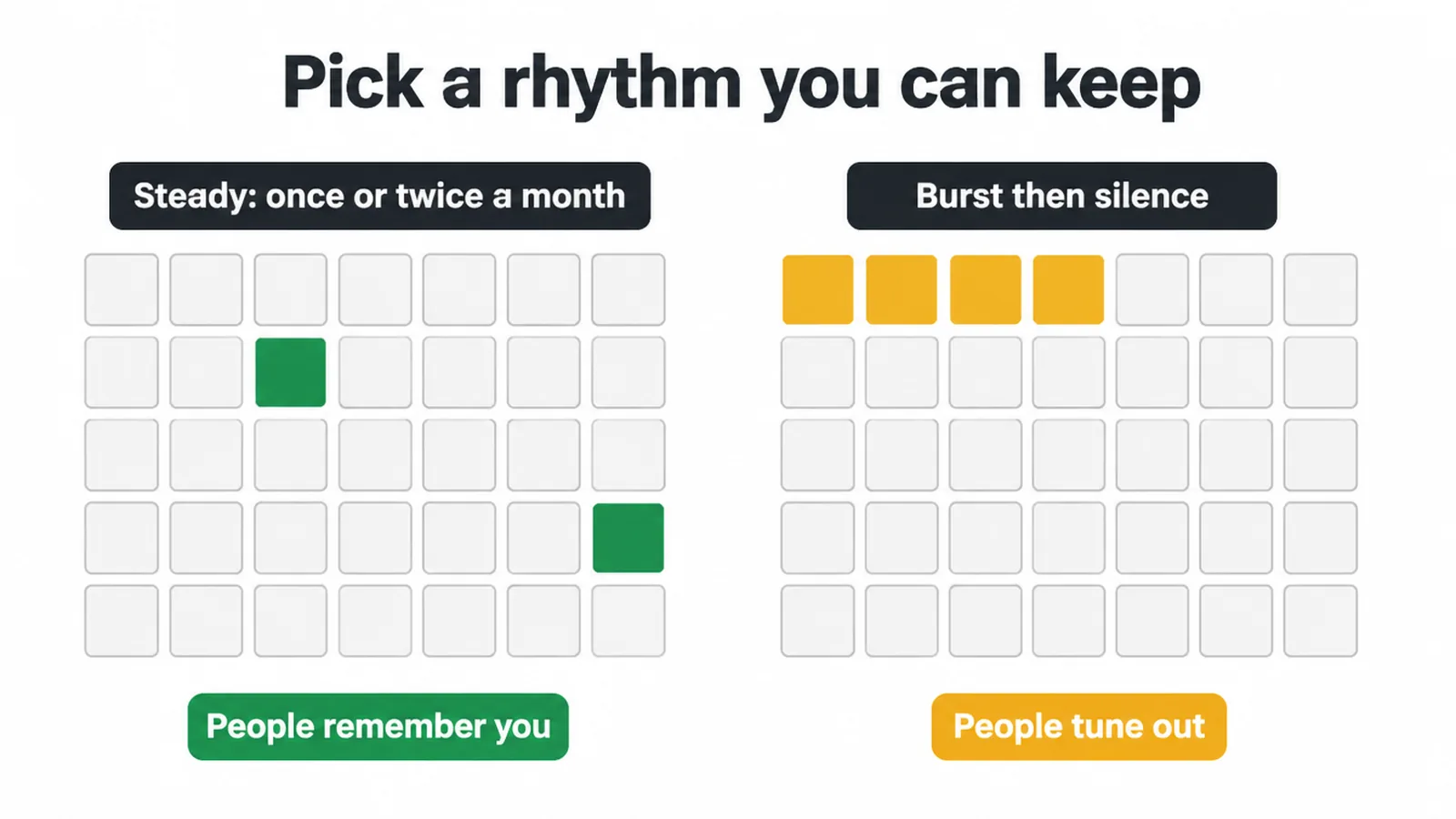
Pick a rhythm you can keep on a bad month, not the one you can manage on a good week.
Once or twice a month is enough for most small businesses. People remember you and nobody feels crowded.
Weekly works, but only if you genuinely have something each week. A weekly email padded out to fill the slot is worse than a monthly one worth reading.
The pattern that fails is a burst of four emails followed by silence. It reads as a campaign rather than a relationship.
Put the send days in the calendar before the quarter starts, so sending is a decision you already made.
Missing one is survivable. Disappearing for six months then returning with a sale is not.
Tell people the rhythm in the welcome email. Expectations set at signup are what stop a normal send from feeling like an intrusion later.
Setting It Up
| What you need | Why it matters |
|---|---|
| An email tool with a free tier | Sending from your own inbox breaks at a few hundred addresses |
| A reusable template | So writing never starts from an empty page |
| A signup form people can find | A list grows from the site, not from a one off push |
| A welcome email | Sets what they get and how often, at the moment they care |
| A visible unsubscribe link | Required, and a cleaner list sends better over time |
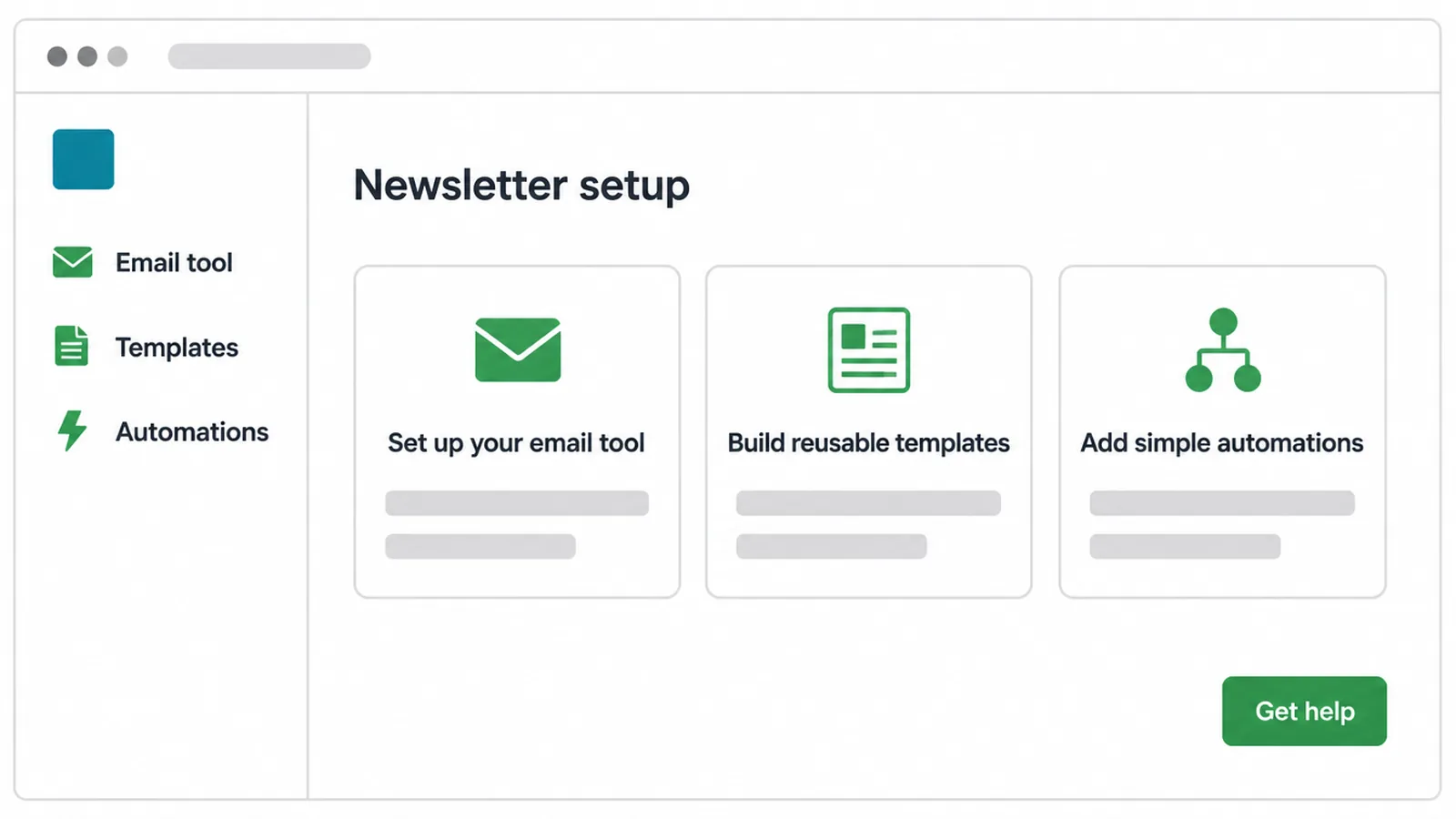
Deciding what to put in a newsletter is the easy half. Set the authentication records your email tool asks for when you connect your domain. It is the difference between arriving and being filed as spam.
Put the signup form somewhere people already are. The footer of every page, the end of your most read article, and the thank you page after an enquiry.
Say what they will get and how often, right there on the form. A vague promise of updates collects addresses that never open anything.
Common Newsletter Mistakes
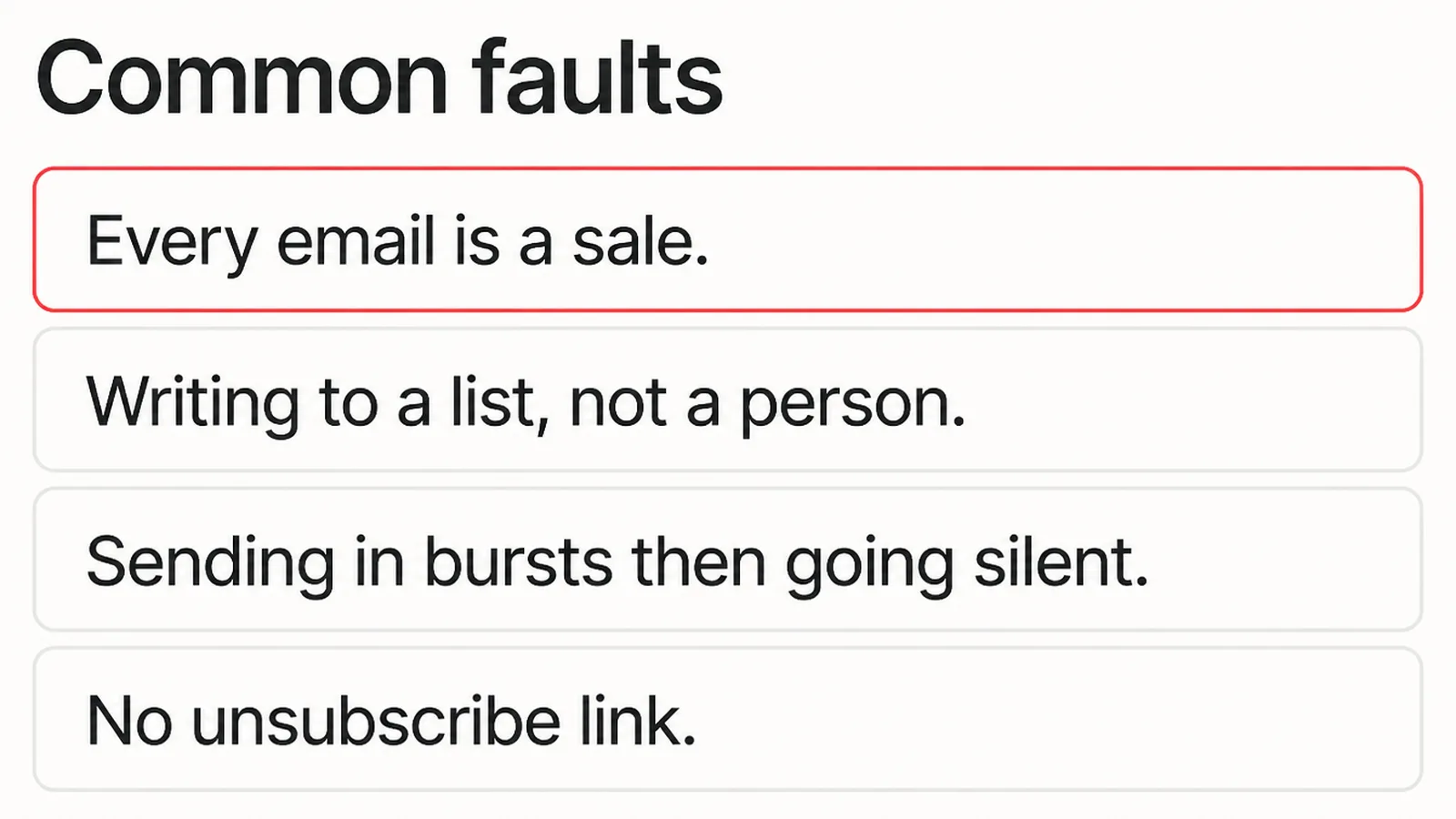
- Every email is a sale. The list learns to skip you.
- Writing to a list. Picture one person instead.
- Three ideas in one email. The first gets lost.
- Bursts then silence. Steady is what people remember.
- Two actions at the end. Most readers pick neither.
- Hiding the unsubscribe link. A legal problem and a pointless one.
- Designing it heavily. Plain text arrives and reads better.
FAQs
What should I put in a newsletter?
One idea, taken from a question a customer actually asked. A quick tip, a short customer story, a useful link or a lesson from something that went wrong all work. Keep a running list of ideas so sending day never starts with a blank page.
Are there email newsletter templates I can copy?
Yes, and the useful kind is a structure rather than a design. Greeting, one useful thing, why it matters, a soft mention of what you do, one action, sign off. Reusing that same shape every time is what turns an evening into twenty minutes.
How often should a small business send a newsletter?
Once or twice a month suits most small businesses. Pick the rhythm you could keep during a bad month rather than a good week. A burst of emails followed by months of silence performs worse than a slower pace you actually maintain.
How long should a newsletter be?
Short enough to read on a phone between other things. A greeting, one idea explained plainly, a soft mention of what you do and one action. If it needs headings and sections, it is probably an article that deserves its own page.
What makes people unsubscribe from a newsletter?
Mostly being sold to in every single email, and being sent to far more often than they were promised. Burying the unsubscribe link does not help either, because people mark those emails as spam instead, and that damages whether any of your future emails arrive at all.
Conclusion
Email newsletter templates are only useful once you stop treating each send as a publishing project.
Pick one idea, write it to one person, keep it short and ask for one thing.
Lead with something worth their time and sell openly when you genuinely have news.
Then choose a rhythm you can keep through a bad month, and put the dates in the calendar now.
If you would rather hand it over, see how we approach digital marketing.