Key takeaways
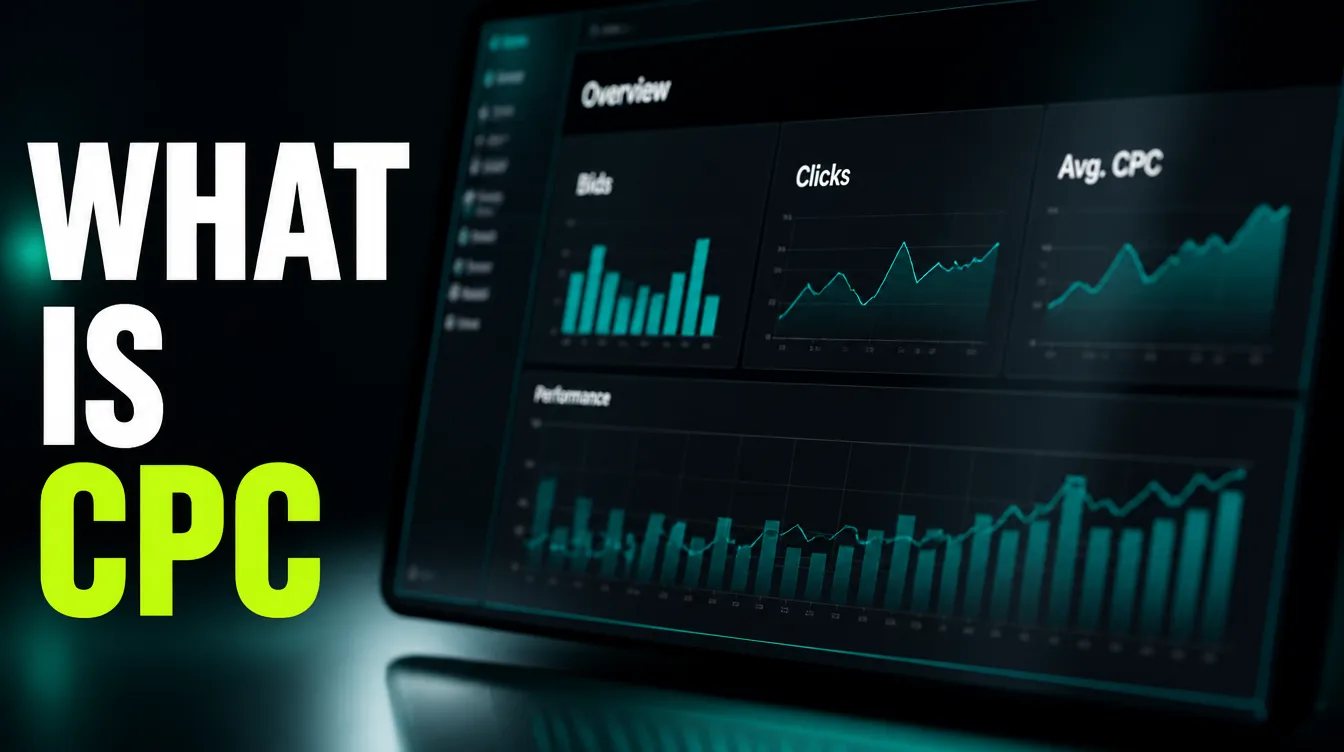
- CPC means cost per click. In Google Ads, CPC bidding means you pay for each click on your ads, not per view.
- You almost always pay less than your max. Your max CPC is a ceiling. Actual CPC is usually lower.
- Quality lowers cost. Google states higher quality ads typically cost less per click than lower quality ads.
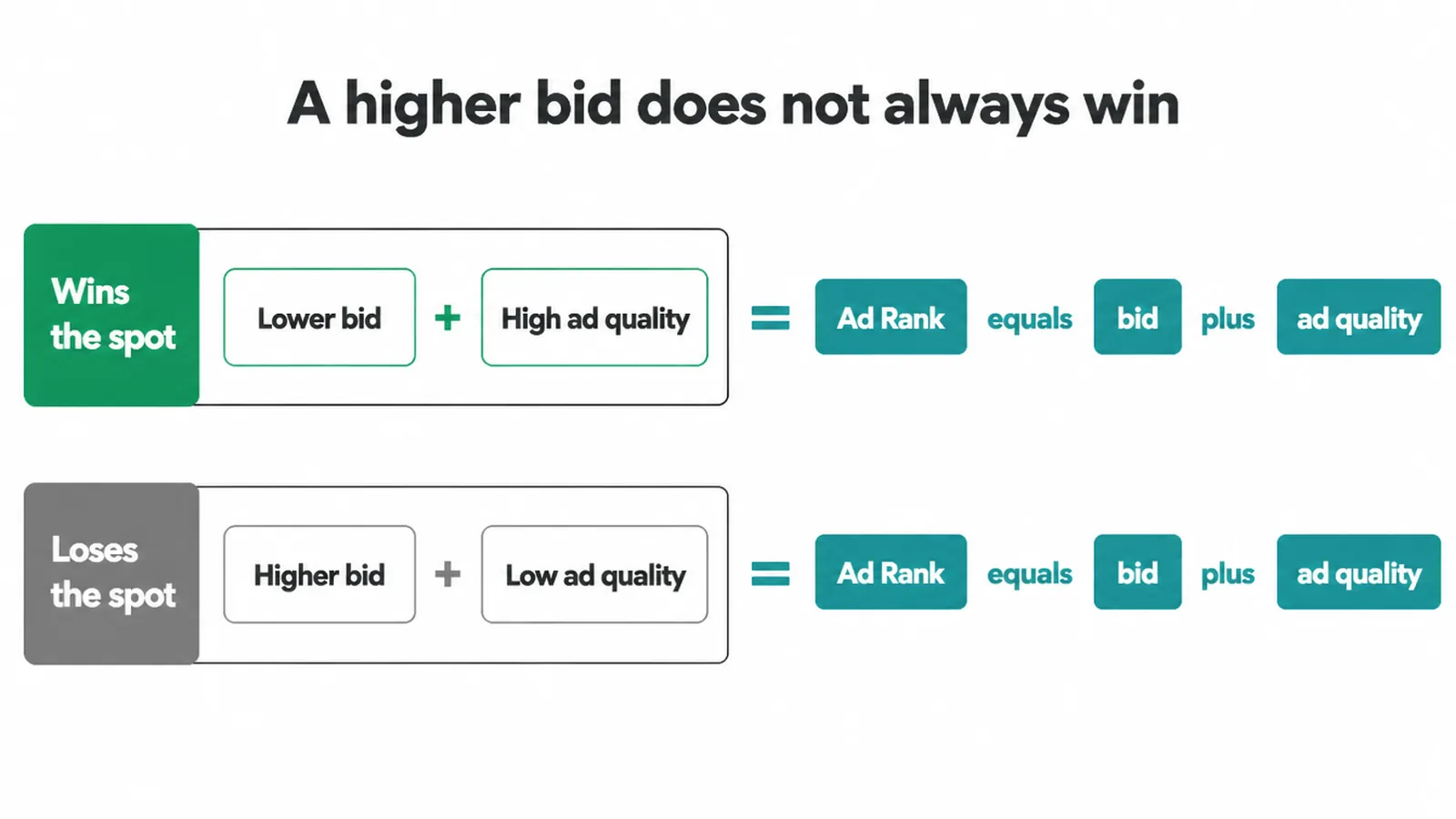
- A higher bid does not always win. Ad Rank mixes your bid with your ad quality.
- CPC is step one, not the scoreboard. The click gets a visit. Conversions are what you actually count.
1. What does CPC actually mean?
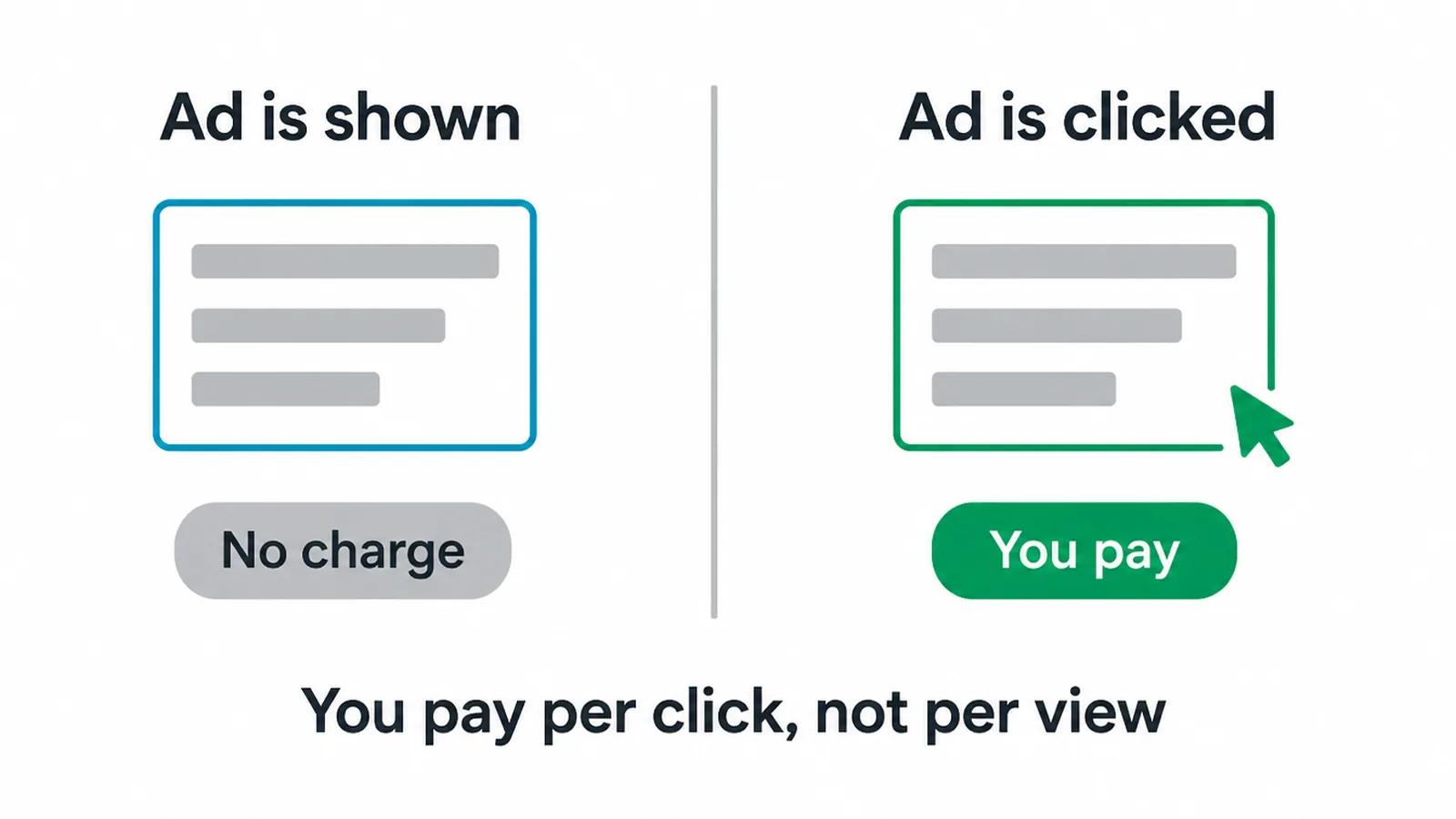
CPC means you pay per click. Google is direct about it: cost-per-click (CPC) bidding means that you pay for each click on your ads. So you are not charged when your ad shows up. You are charged when a person clicks and lands on your page.
That is the whole idea. CPC is a metric, a number. It sits inside a bigger pricing model called PPC. If you want the full model and where it runs, read our guide on what PPC is. Here we are staying on the metric itself.
Because you only pay for clicks, CPC ties your spend to action. Someone showed enough interest to click. That makes CPC easy to read. Fewer clicks or cheaper clicks means less spend. More clicks or pricier clicks means more spend.
2. Max CPC, actual CPC, and average CPC
People say "CPC" for three different things. It helps to keep them apart.
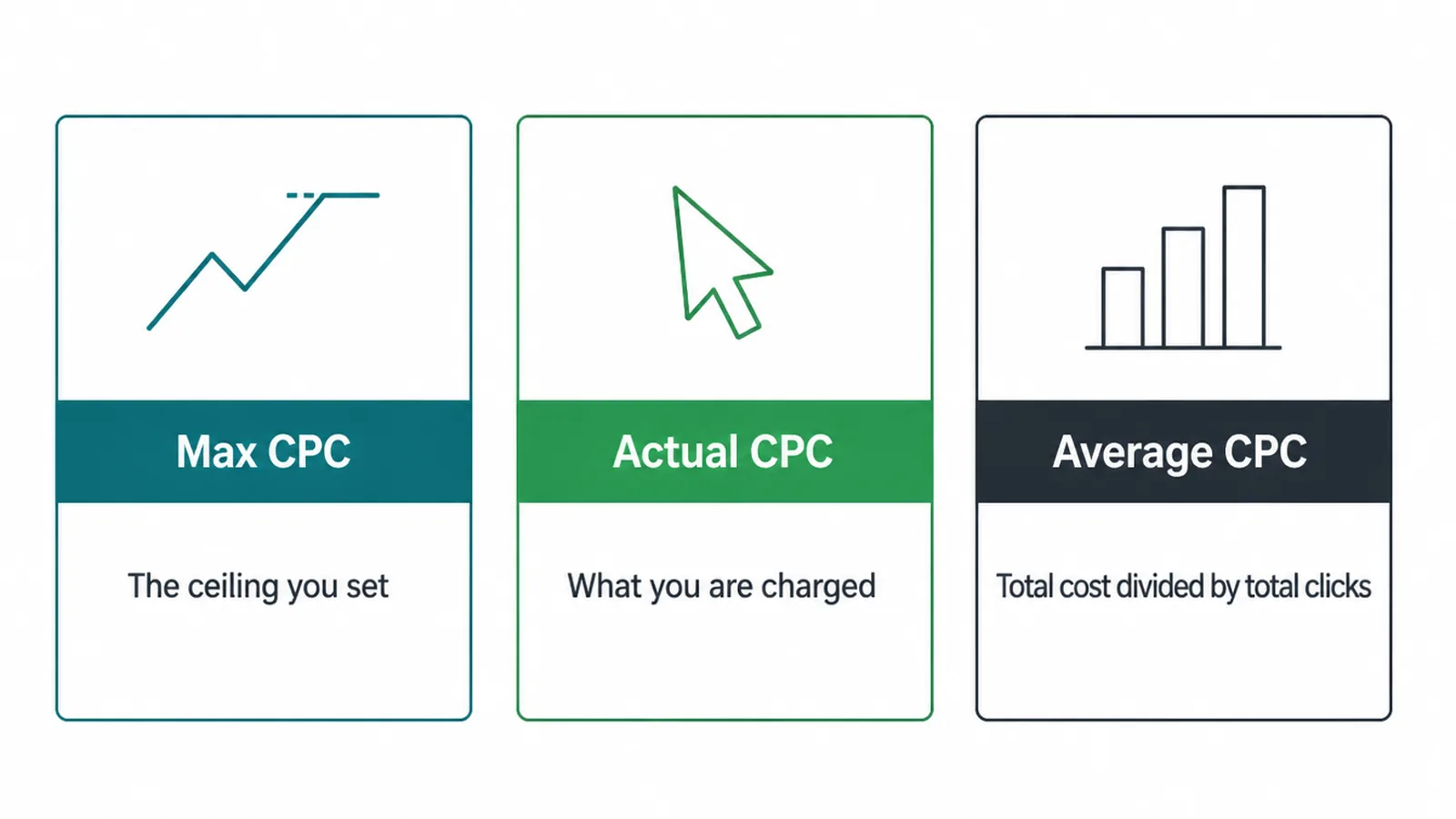
Max CPC is the ceiling you set. Google defines it as the highest amount that you're willing to pay for a click on your ad. With manual CPC bidding, you set one max CPC for an ad group or a keyword. It is your cap, not your bill.
Actual CPC is what you are really charged for a single click. Google calls it the final amount you're charged for a click, and it is often much less than your max. You usually pay just enough to clear the Ad Rank threshold and beat the advertiser ranked below you.
Average CPC is a reporting number. It is the average amount you've been charged for a click. The formula is simple: total cost divided by total clicks. So if one click costs a little and the next costs a bit more, your average lands in between. It is a look-back figure, not a setting.
3. How is your actual CPC set?
Your actual CPC is decided in a live auction each time your ad can show. A few things go into it: your max CPC bid, your ad quality at auction time, the competition around you, the Ad Rank thresholds, and the context of the search.
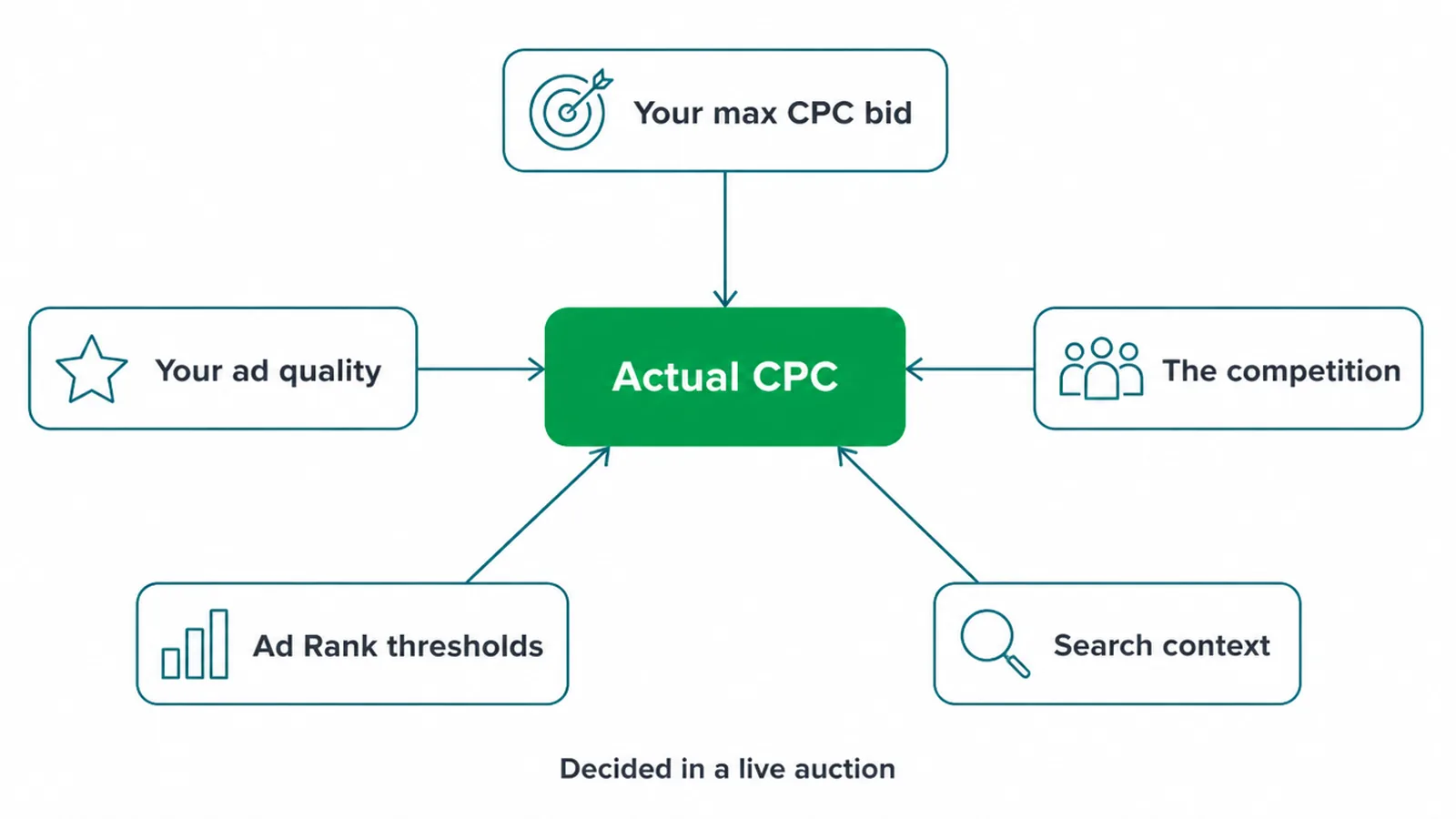
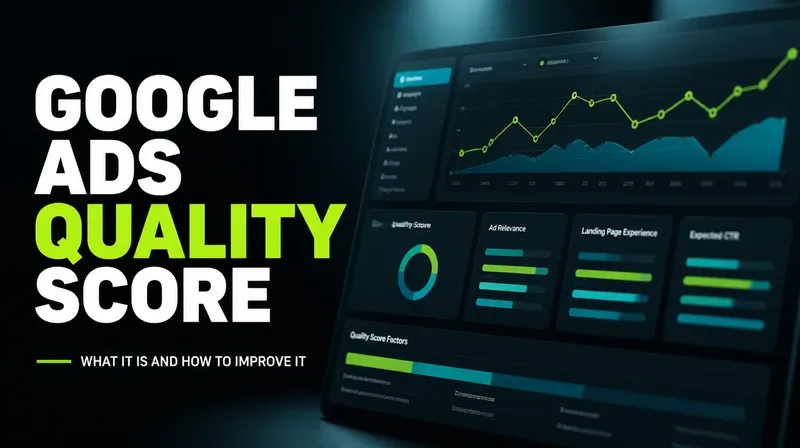
Ad quality at auction time is built from your expected click-through rate, your ad relevance, and your landing page experience. This is the same idea behind Quality Score, Google's diagnostic. For a full breakdown of that score and its three parts, see our Quality Score guide.
Here is the payoff. Google states plainly that higher quality ads typically cost less per click than lower quality ads. Better ads clear the threshold more easily, so you pay less to hold your spot. You are also never charged more than your max CPC, unless you use an automated bidding option. If you want the fuller picture on bidding, check our post on Google Ads bidding strategies.
4. Does the highest bid always win?
No. This is the most common myth about CPC. Your bid is only one input. Ad Rank combines your bid with your ad quality. So a smaller, sharper advertiser with a more relevant ad can outrank a bigger bidder and still pay less per click. Bidding more is not a shortcut. Better ads and better landing pages do real work on your cost, which is most of what good paid search management is.
5. How do you lower your CPC?
You cannot control the auction, but you can control your side of it. Most ways to lower CPC come back to one thing: make your ads more relevant so their quality goes up. Here are the practical moves.
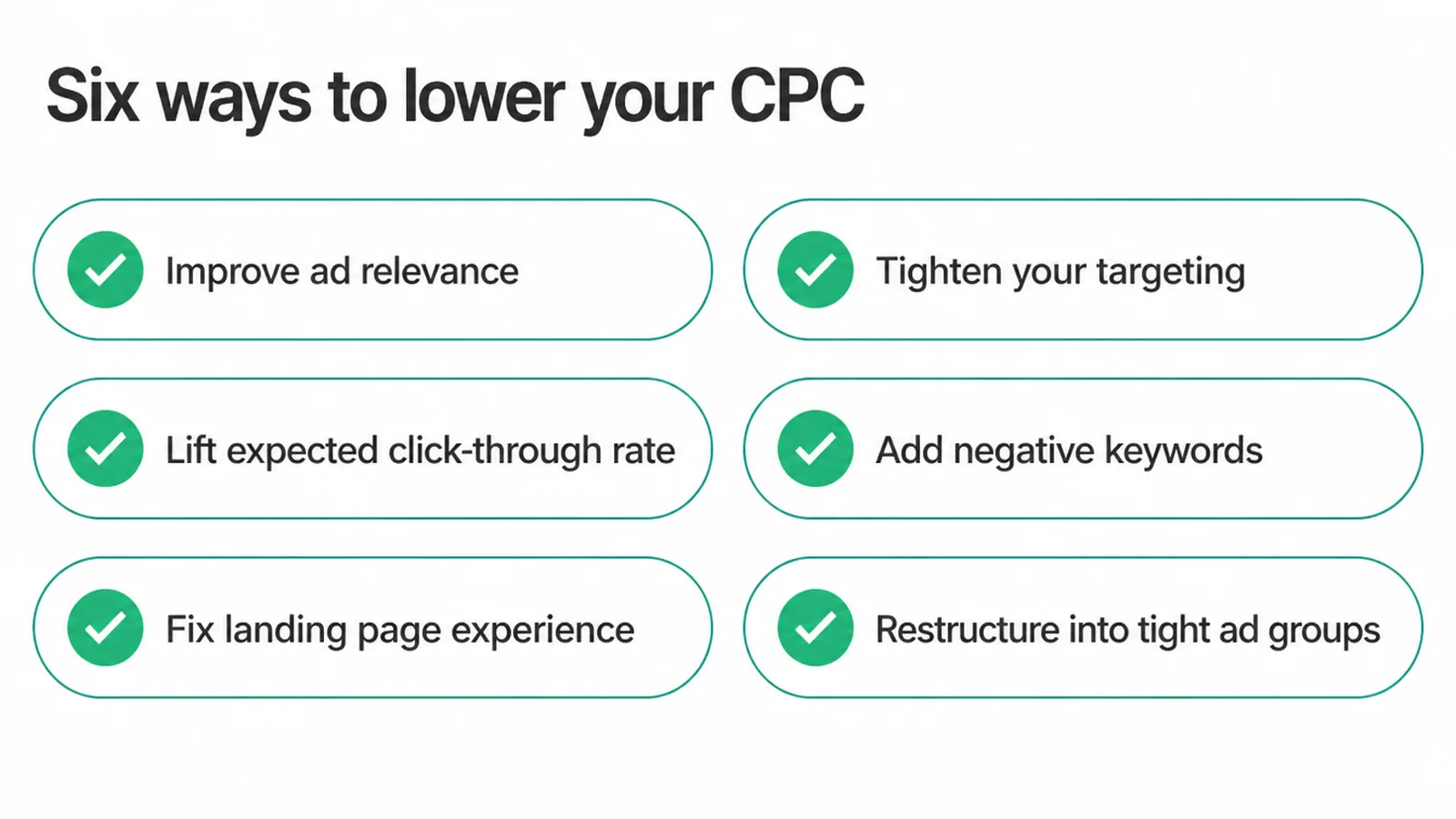
| Way to lower CPC | Why it lowers CPC |
|---|---|
| Improve ad relevance | Ads that match the search closely score higher on quality, which helps you pay less. |
| Lift your expected click-through rate | Sharper headlines and offers earn more clicks, and a stronger click-through rate raises quality. |
| Fix your landing page experience | A fast, on-topic page that delivers what the ad promised improves quality at auction time. |
| Tighten your targeting | Reaching a more relevant audience means more of your clicks are the right ones. |
| Add negative keywords | Blocking searches you do not want stops paying for clicks that never convert. |
| Restructure into tight ad groups | Small, focused ad groups let each ad match its keywords closely, which lifts relevance. |
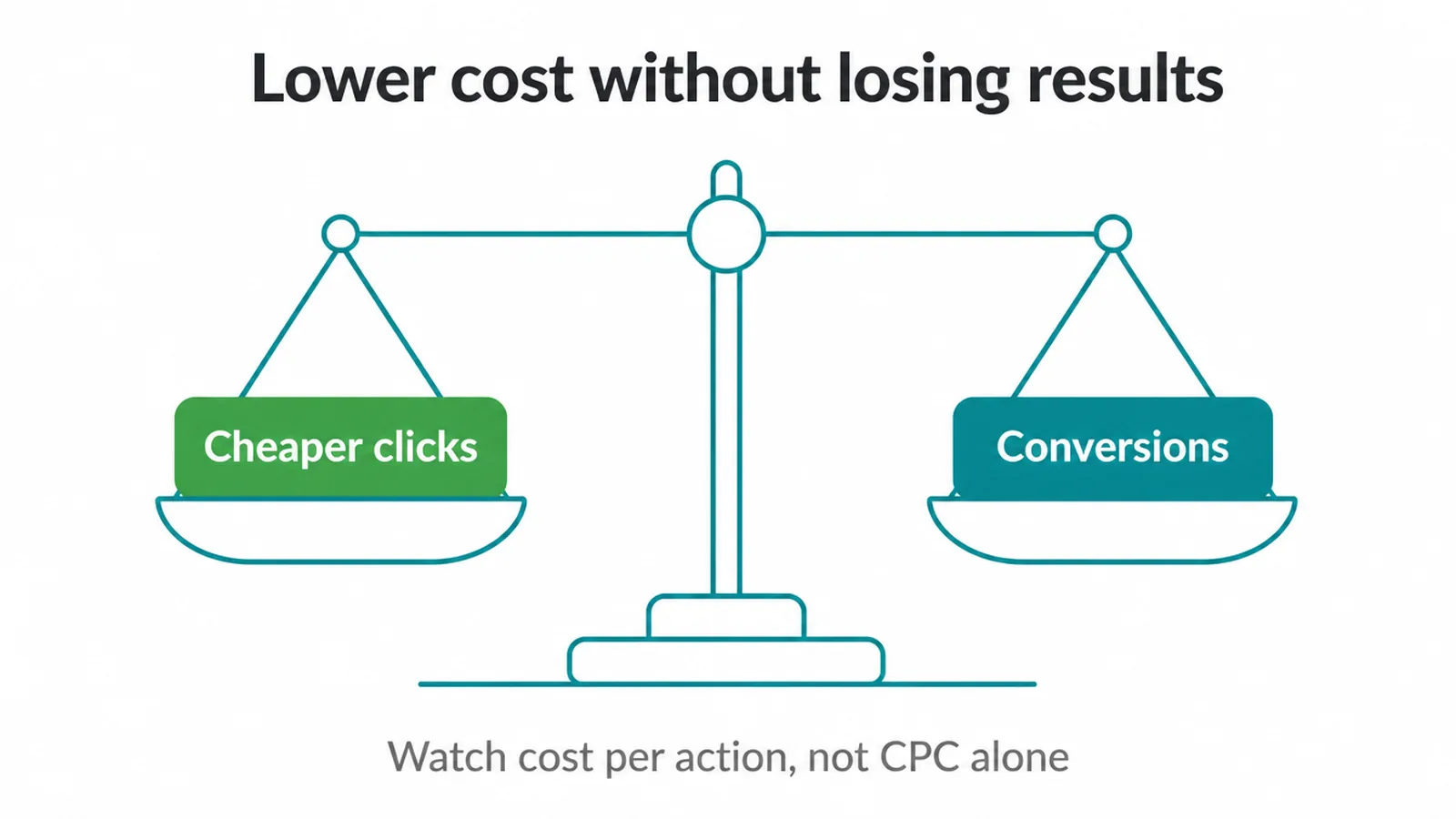
One caveat. A lower CPC only helps if it does not cost you conversions. Chasing cheap clicks by widening or watering down your targeting can bring in visitors who never buy. So watch your cost per action and your return on ad spend, not CPC alone. A slightly pricier click that converts beats a cheap click that bounces.
6. CPC vs CPM vs CPA
CPC is one of three pricing metrics you will meet. They each price a different moment. CPC prices the click. CPM prices the view. CPA prices the result.
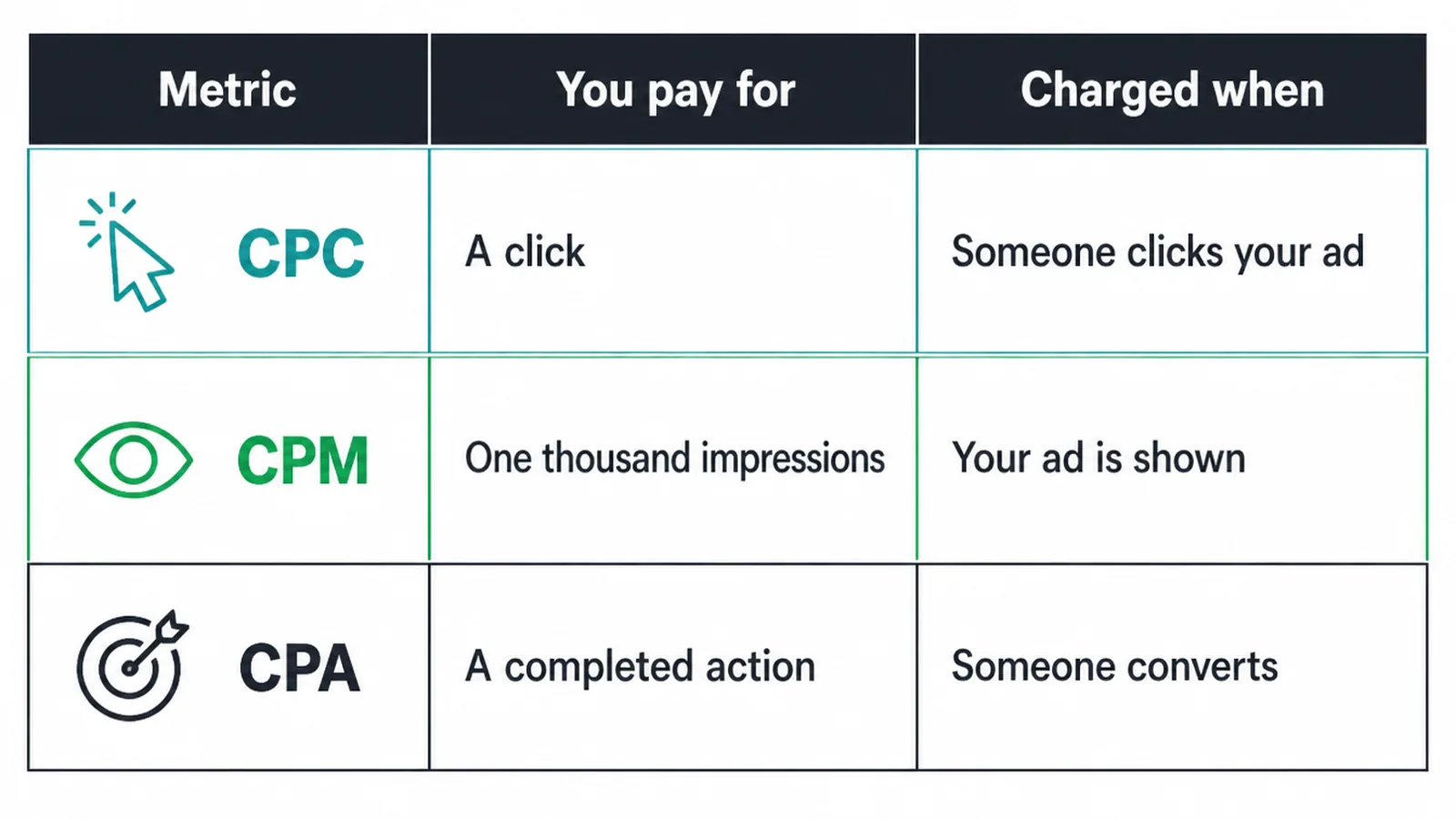
| Metric | You pay for | Charged when | Best for |
|---|---|---|---|
| CPC (cost per click) | A click | Someone clicks your ad | Driving visits and action to your page |
| CPM (cost per mille) | One thousand impressions | Your ad is shown a thousand times | Reach and awareness |
| CPA (cost per action) | A completed action | Someone converts, like a lead or sale | Judging what a result actually costs |
Google describes CPM as paying per one thousand views, or impressions, and average CPA as the total cost of conversions divided by the number of conversions. CPC ties spend to action, CPM ties it to reach, and CPA ties it to the result. Since the result is what pays your bills, it also feeds into return on ad spend. For how to judge that, read our guide on what a good ROAS is.
7. Why CPC matters for your budget
CPC is the price of a single visit. That makes it a budget dial. A lower CPC means the same spend buys more clicks and more chances to convert. A higher CPC means fewer clicks for the same money. So it is worth watching and worth improving.
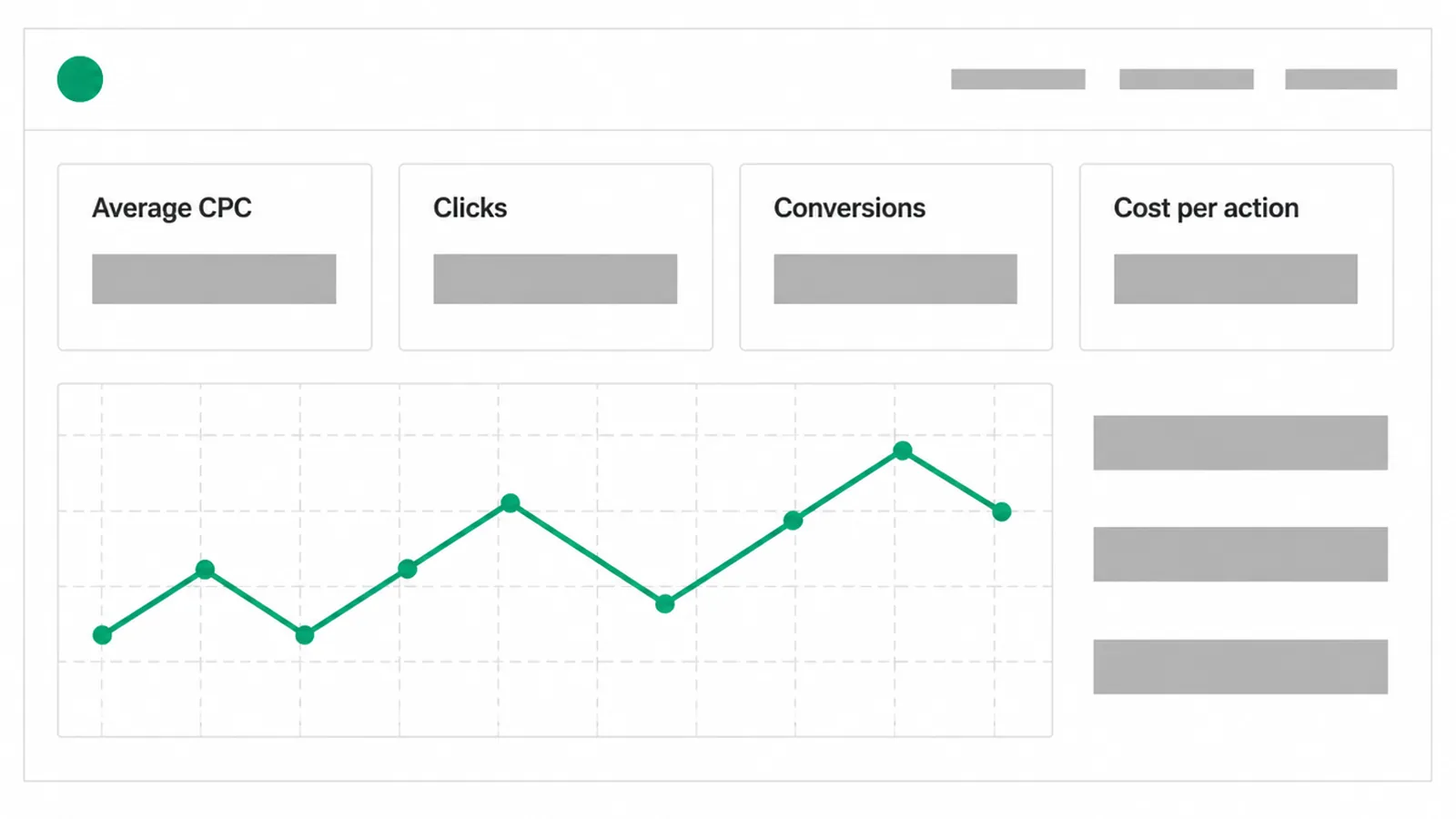
But keep it in its place. The click is step one. It gets a person onto your page. What happens next, whether they buy, book, or ask, is the real scoreboard. Track CPC to manage cost. Track conversions and cost per action to know if the ads are working. Both together tell the full story.
Frequently asked questions
1. What is CPC?
CPC, or cost per click, is the amount you pay each time someone clicks your ad. In Google Ads, CPC bidding means you pay per click, not per view.
2. What does cost per click mean?
It means the pricing is per click. You are charged only when a person actually clicks, so your spend follows real interest.
3. How is CPC calculated?
Average CPC is total cost divided by total clicks. Your actual CPC per click is set at auction by your max bid, your ad quality, the competition, and Ad Rank thresholds.
4. What is a good CPC?
There is no official number. A good CPC is one where the click still leads to profitable conversions given your margin, so judge it against cost per action or return on ad spend, not a benchmark table.
5. How do I lower my CPC?
Raise your ad quality with better relevance, expected click-through rate and landing page experience, tighten your targeting, and add negative keywords. Higher quality ads typically cost less per click.
6. What is the difference between CPC and CPM?
CPC charges you per click, while CPM charges you per thousand impressions, or views. CPC ties spend to action, and CPM ties it to reach.
7. What is max CPC vs actual CPC?
Max CPC is the ceiling you set, the most you will pay. Actual CPC is what you are actually charged, usually less, because you only pay enough to clear the Ad Rank threshold.
8. Does a higher bid always win?
No. Ad Rank combines your bid and your ad quality, so a higher-quality ad can outrank and pay less than a higher bidder.
8. Want cheaper clicks that actually convert?
CPC is easy to lower on paper and harder to lower without hurting conversions. That balance is what we handle every day. Our digital marketing team tightens targeting inside your Google Ads account, sharpens ads, and fixes landing pages so your clicks pull their weight. If you would like a look at your account, get in touch and we will take it from there.

About the author
Gregory Yeoh is the founder of Seed Light, a web design and digital marketing agency that has helped small businesses get found online since 2017. He runs Google Ads accounts for small businesses day in and day out. He wrote this to explain CPC in plain terms, using the platform's own definitions, so you can read your own numbers with confidence.