Key takeaways
- PPC means pay-per-click. You are charged only when someone clicks your ad, which Google confirms plainly in its Google Ads Help docs.
- PPC is a model, not one product. It runs on search, display banners, social feeds, and shopping listings across many platforms.
- An auction decides who shows. Your bid and your ad quality both count, so a smaller bid with better relevance can still win.
- PPC and SEO do different jobs. PPC buys visits now and stops when you stop paying. SEO earns visits over time.
- You control the spend. You set a daily budget and a max bid per click. Results are not guaranteed, so start small and measure.
1. What is PPC in simple terms?
PPC, or pay-per-click, is an online advertising model where you pay only when someone clicks your ad. Google says it plainly in its own documentation: "you pay for each click on your ads", and that "CPC pricing is sometimes known as pay-per-click (PPC)." So the two terms describe the same idea from different angles.
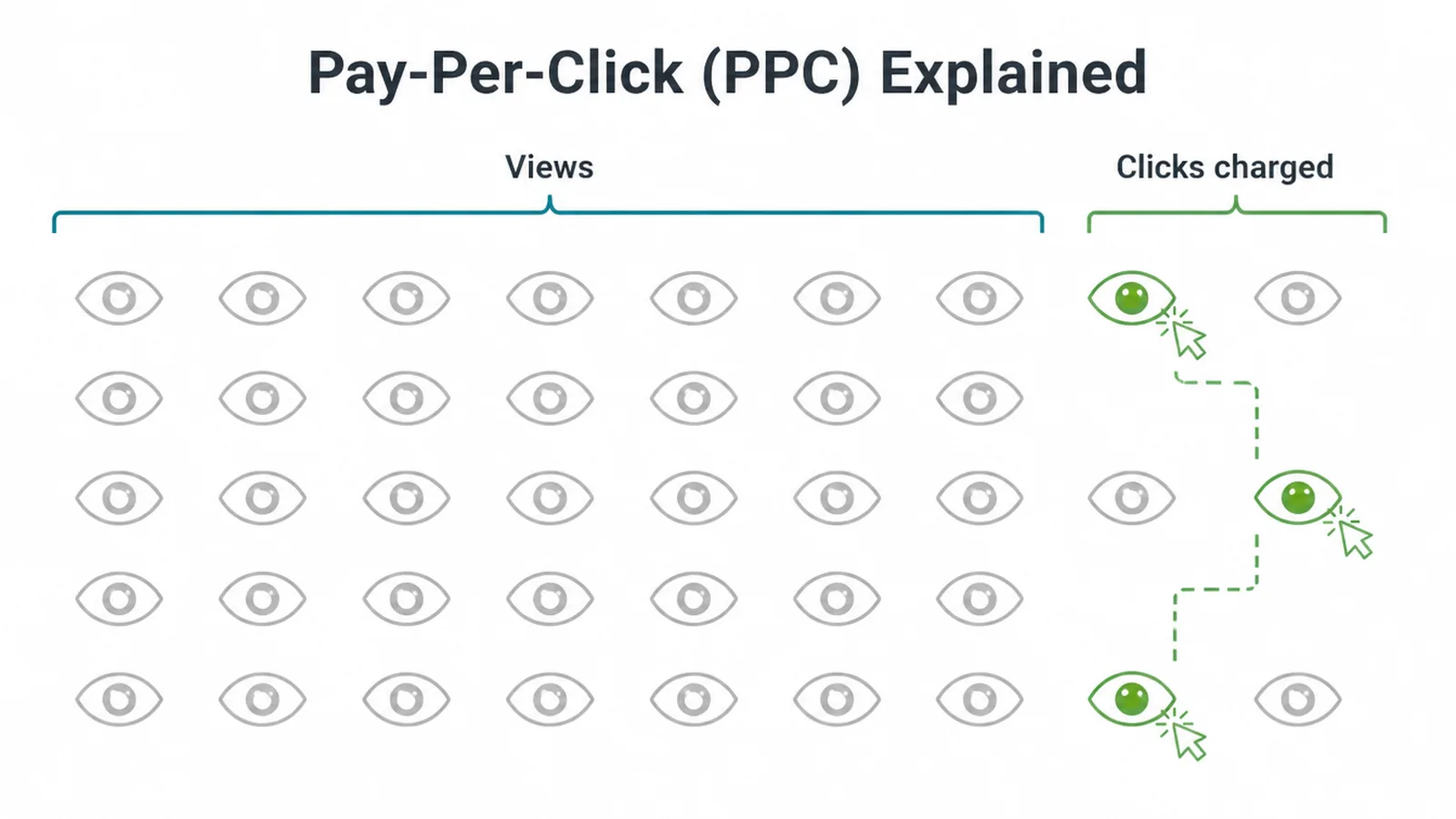
Here is the easy way to picture it. Say 100 people see your ad and 3 of them click. You pay for those 3 clicks, not the 100 views. If people scroll past and never click, you pay nothing at all. That is the whole point: your money goes toward people who actually take an action.
One quick clarification. PPC is the pricing model. CPC, or cost per click, is the actual price of a single click. People often mix them up. If you want the price side of it, we break that down in our guide to what CPC means and why it matters.
2. How does PPC work?
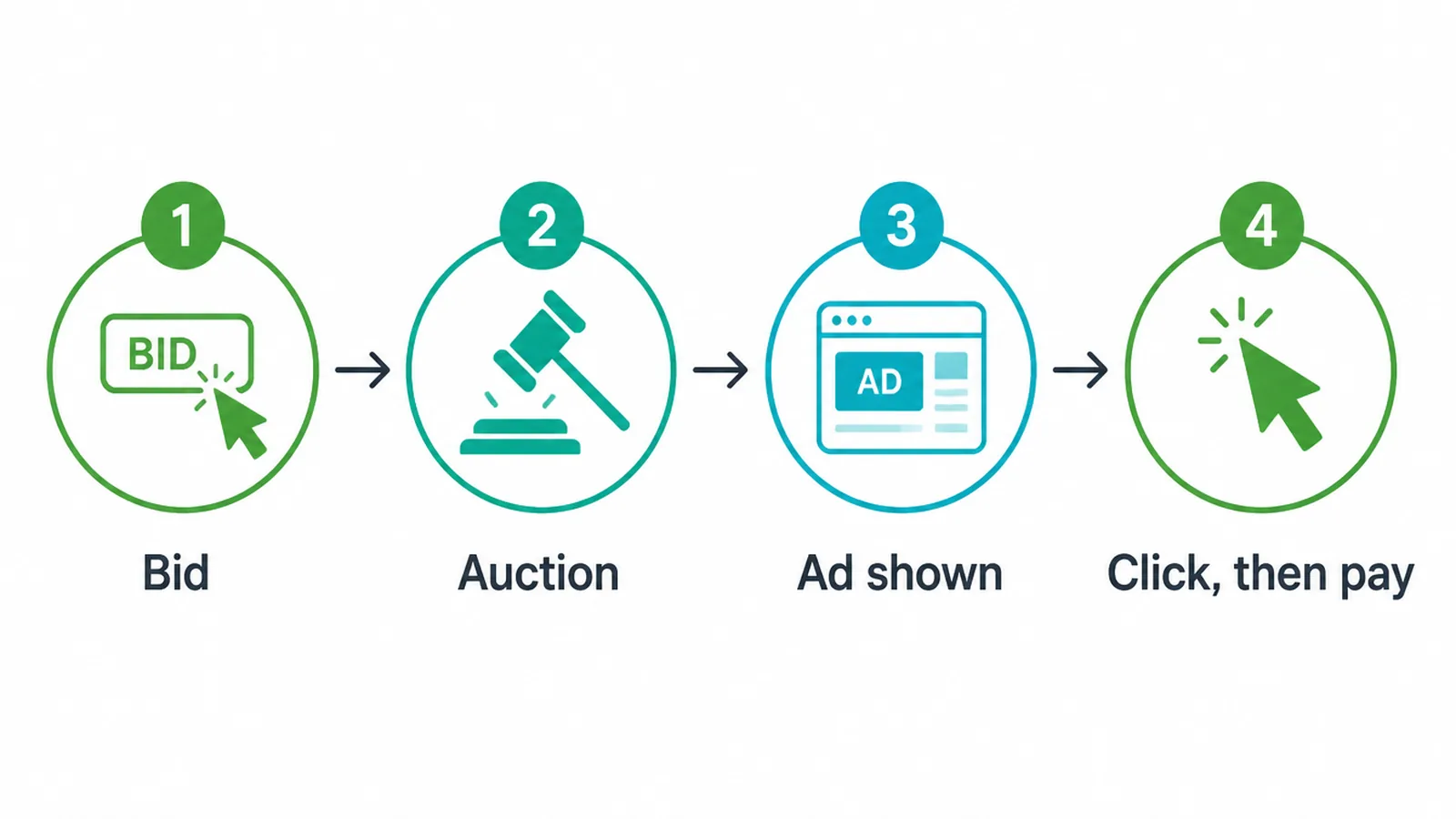
PPC works in four quick steps: you bid, an auction runs, an ad shows, and you pay only if it gets clicked. Let us walk through each one.
First, you set a maximum bid. This is the most you are willing to pay for a click. Then, every time an ad slot is available, the platform runs an auction. Google describes it as "a lightning-fast ad auction, that takes place every time someone searches on Google or visits a site that shows ads." This happens in the split second before the page loads.
The auction ranks on bid and quality together. It weighs your bid alongside the quality of your ad and landing page, your assets, and how relevant you are to the search. Google is clear on this: "Even if your competition has higher bids, you can still win a higher position at a lower price by using highly relevant keywords, ads, and assets." Your position is set by your Ad Rank, which Google recalculates in every auction from your bid, your auction-time quality, and the competition around you.
Because the auction runs fresh each time, no two moments are the same. Bidding is a whole topic on its own, so if you want the deeper mechanics of bids and strategies, see our post on how Google Ads bidding strategies work.
3. Where does PPC run?
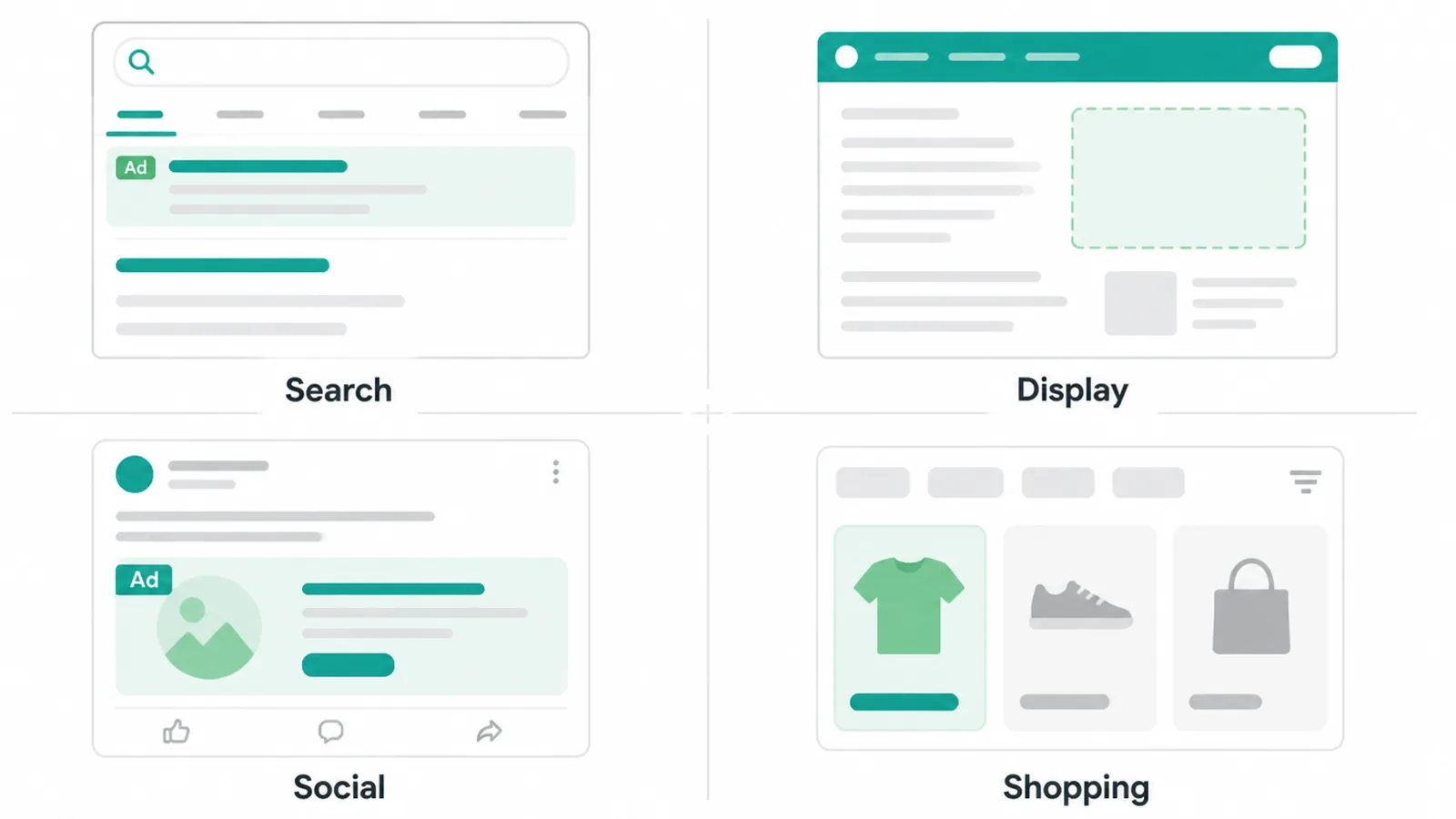
PPC is not one place. It runs across search engines, banner networks, social feeds, and shopping listings. The platform changes, but the pay-per-click model stays the same. Google itself notes that ads can show on Google Search and on partner and content sites, which covers both search text ads and display banners.
Different formats suit different goals. Search ads catch people who are already looking for something. Display and social ads put you in front of people who are not searching yet. Here is a quick map of the main options.
| Platform | Ad type | Best for |
|---|---|---|
| Google Search, Microsoft Ads | Text search ads | Reaching people actively searching for what you sell |
| Google Display Network | Banner and image ads | Building awareness and showing up again to past visitors |
| Meta, TikTok | Feed and video ads | Reaching people by interest before they start searching |
| Google Shopping, Amazon | Product listing ads | Selling physical products with a photo and price |
| YouTube | Video ads | Telling a longer story and demonstrating a product |
You do not need to be everywhere. Most small businesses start with one channel that fits how people find them, then expand once it works.
4. PPC vs SEO: what is the difference?
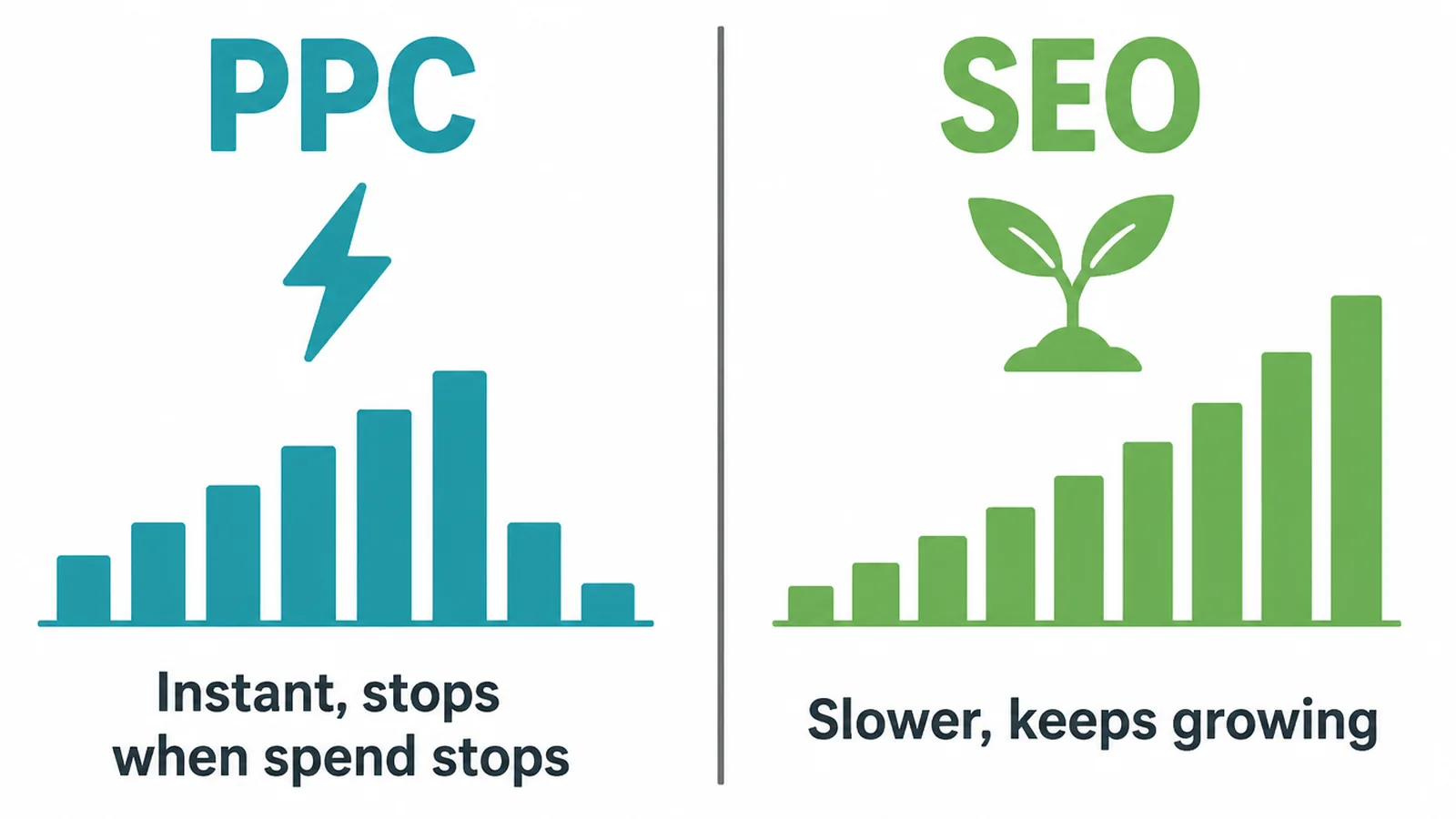
PPC buys visits instantly, while SEO earns them over time for free. That is the core split. With PPC you turn on a budget and your ad can show today. With SEO you improve your site so it ranks in the unpaid results, which builds slowly but keeps working after you stop actively pushing.
There is a trade-off in both directions. PPC traffic is fast, but it stops the moment your budget runs out. SEO traffic is slower to build and takes months of steady work, but it compounds and does not charge you per click. One is rented reach, the other is owned reach.
Most small businesses do not pick one. They use PPC to get results while their SEO catches up, then lean on organic traffic as it grows. If you want a full side-by-side to plan your split, read our comparison of SEO versus Google Ads.
5. Should a small business use PPC?
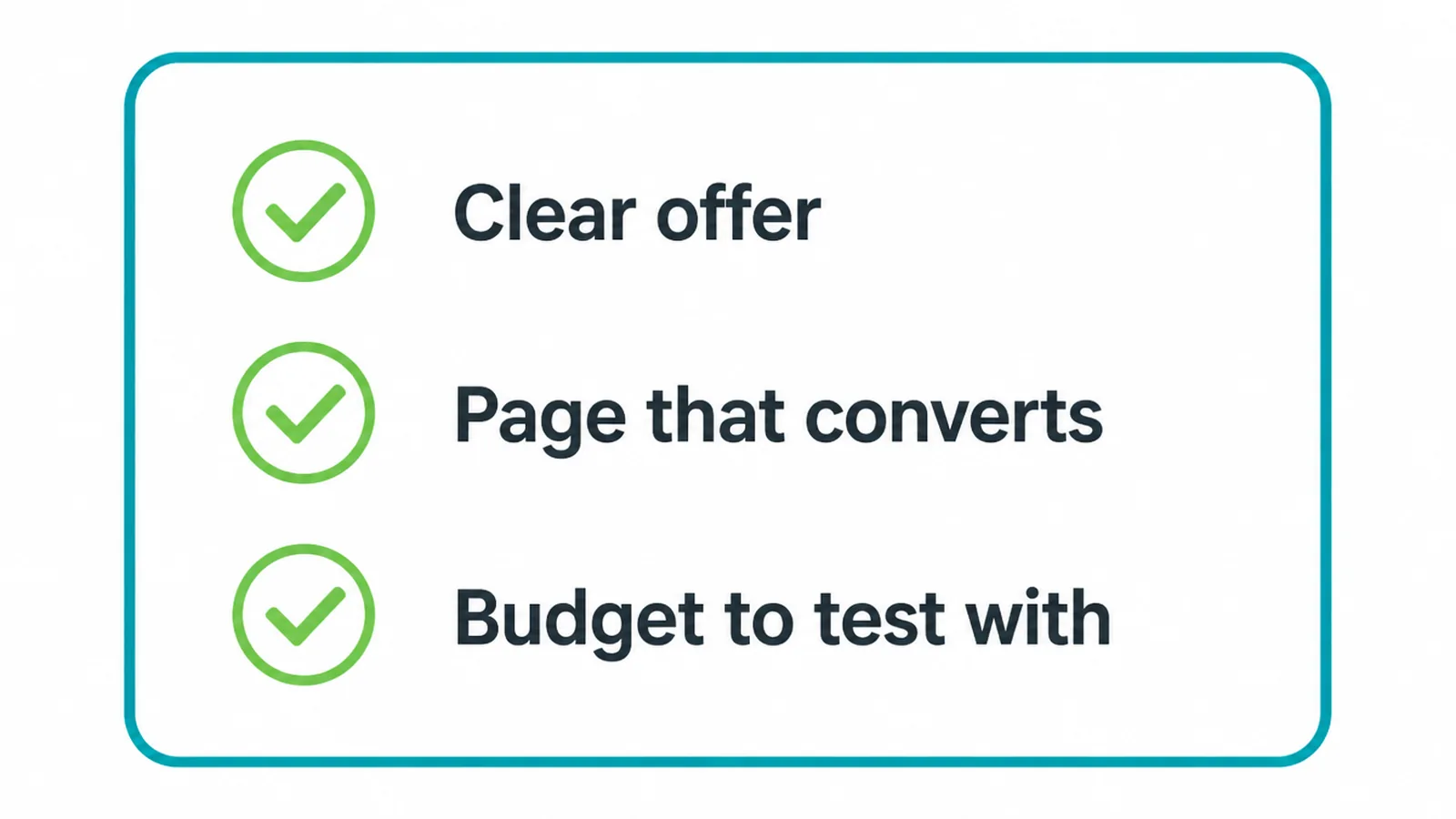
PPC is a good fit for a small business when you have a clear offer, a page that turns visitors into customers, and a budget you can afford to test with. If all three are in place, PPC can bring you people who are ready to buy, fast. If they are not, you will pay for clicks that go nowhere.
Think about it like this. A click only helps if the page it lands on does its job. Sending paid traffic to a slow or confusing page is the quickest way to waste money. So before you spend, make sure the offer is obvious and the next step is easy.
PPC is a poor fit when you have no clear offer, no way to handle the leads, or a budget so small you cannot gather enough data to learn anything. In those cases, fix the foundation first. For a practical starting point, see our walkthrough of Google Ads for small business.
6. How much does PPC cost?
There is no fixed price for PPC, because you control the spend. You set a daily budget and a maximum bid per click, and Google confirms you "decide the average amount you want to spend each day." You are also often charged less than your max bid, since Google notes "you'll often be charged less, sometimes much less" than the ceiling you set.
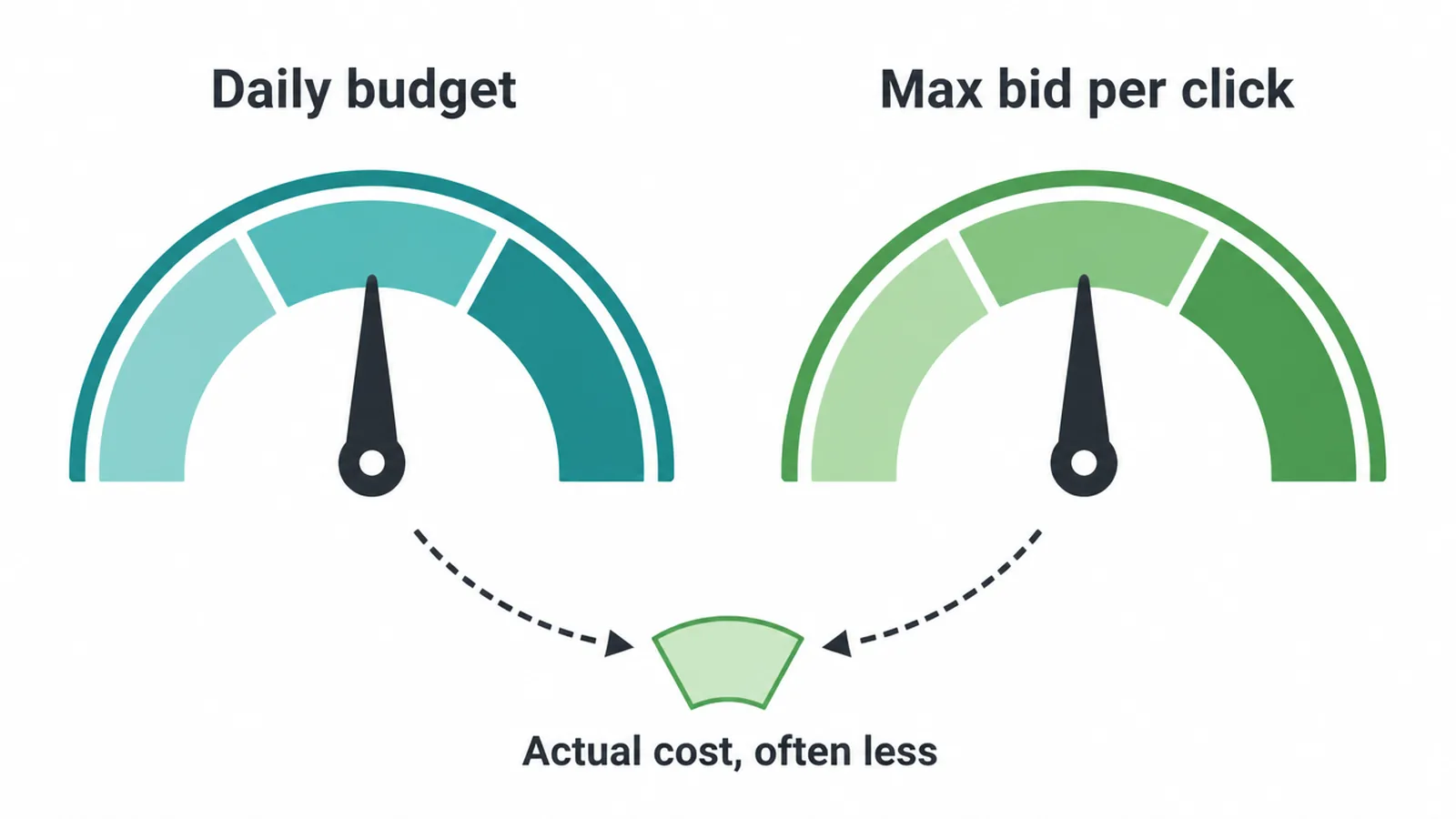
The price of one actual click is your cost per click. That number moves with your bid, your ad quality, and how many others are competing for the same slot. We cover what drives that price and how to bring it down in our guide to cost per click.
Spending money is easy. The real question is whether each click earns more than it costs. That is where you measure return on ad spend, so you know if a campaign is worth keeping. Our post on what a good ROAS looks like shows how to judge that honestly. Results are never guaranteed, so treat your first budget as a test, not a bet.
Frequently asked questions
1. What is PPC?
PPC, or pay-per-click, is an online advertising model where you pay only when someone clicks your ad, not when they see it. Google's own docs put it plainly: CPC pricing is sometimes known as pay-per-click, and you pay for each click on your ads.
2. How does PPC work?
You bid the most you will pay for a click. When an ad slot is available, the platform runs a fast auction that weighs your bid and your ad quality to decide who shows and in what order. If people scroll past your ad you pay nothing, and you only pay when someone clicks.
3. What does pay-per-click mean?
It means the price you pay is tied to clicks. If 100 people see your ad and 3 click it, you pay for 3 clicks, not 100 views.
4. Is PPC the same as Google Ads?
No. PPC is the pricing model, and Google Ads is one platform that uses it. Meta, Microsoft Ads, TikTok and others also run pay-per-click ads.
5. What is the difference between PPC and SEO?
PPC buys visits instantly and stops when you stop paying. SEO earns visits for free over time but takes months to build. Most small businesses use both.
6. How much does PPC cost?
There is no set price. You control a daily budget and a maximum bid per click, and you are often charged less than your max. What each click actually costs is your CPC.
7. Is PPC worth it for a small business?
It can be, when you have a clear offer, a page that converts, and a budget you can afford to test with. Results are not guaranteed, so start small and measure the return.
8. What platforms offer PPC?
Google Ads, Microsoft Ads, Meta Ads, TikTok Ads, LinkedIn Ads and Amazon Ads all use a pay-per-click model.
7. Want help getting PPC right?
PPC can bring you customers quickly, but only when the offer, the page, and the budget all line up. If you would rather not learn the auction the hard way, we can plan and run campaigns that respect your budget and track real returns.
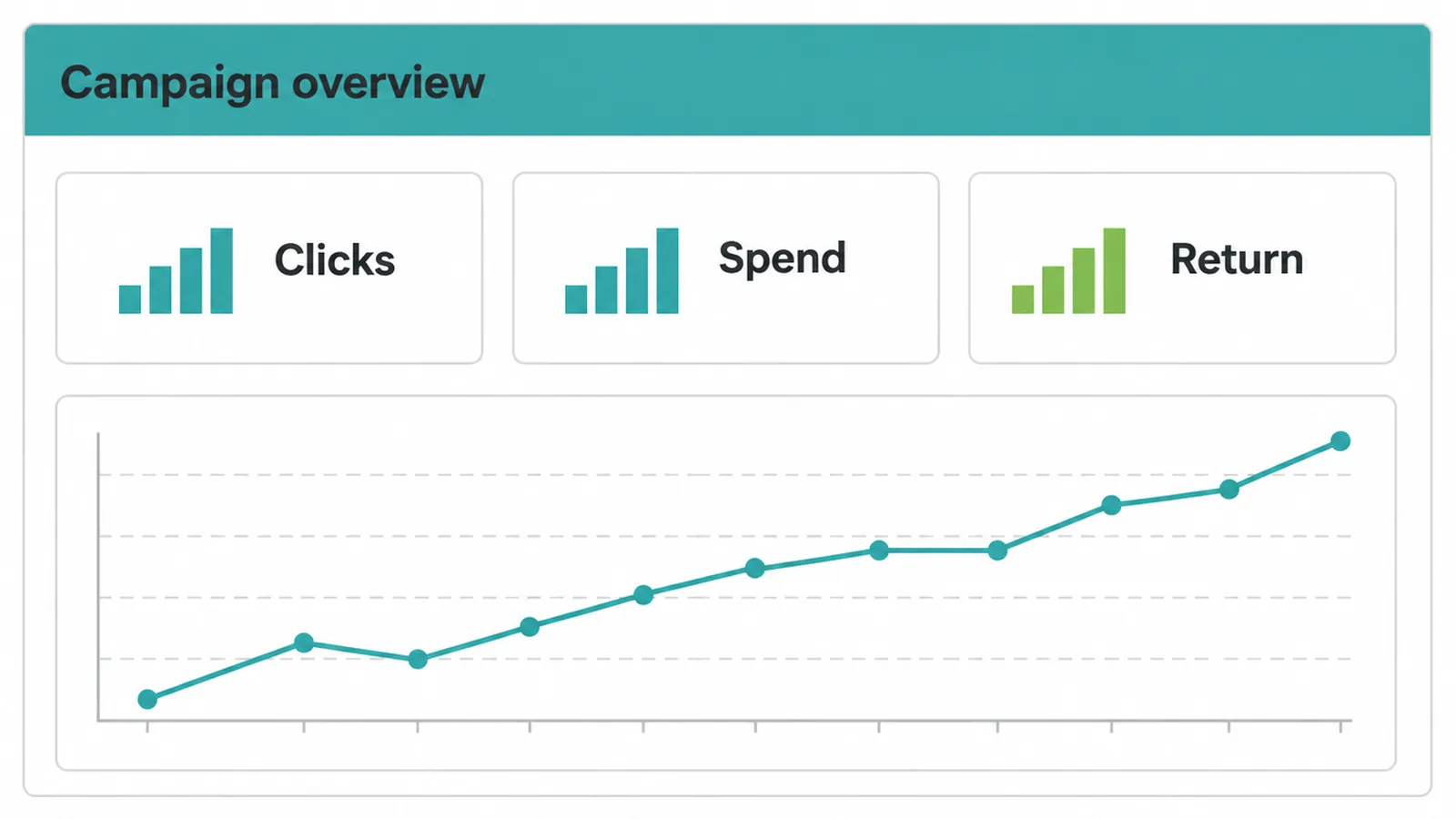
For a sense of scale, the campaign dashboards we publish on our results page include a Google Ads account at 3,330 conversions, a Meta account at 4,500 leads, and a TikTok account at 15,000. Different platforms, different products, all bought the same way: click by click, against a budget you set.
See how we approach digital marketing, or get in touch to talk through your goals. No pressure, just a straight answer on whether PPC is a smart move for you.

About the author
Gregory Yeoh is the founder of Seed Light, a web design and digital marketing agency that has helped small businesses get found online since 2017. He sets up and manages PPC campaigns across search and social every week, so he writes from what he sees in real accounts. We keep our advice plain and honest: tactics help, nothing in advertising is guaranteed, and we would rather set the right expectation than sell you a promise.