Key takeaways
- Three levels run the show: Campaign sets the goal, Ad set decides who sees it and how much you spend, and Ad is what people actually see.
- There are six objectives now: Awareness, Traffic, Engagement, Leads, App promotion and Sales. Most small businesses start with Traffic or Leads.
- You set the budget: pick a daily or lifetime amount, start small, and watch your cost per result before you scale.
- One ad set covers both apps: Advantage+ placements serve your ad across Facebook, Instagram and more from a single setup.
- Every ad is reviewed: approval is usually within 24 hours but can take longer, and ads can be checked again after they go live.
1. What you need before you start
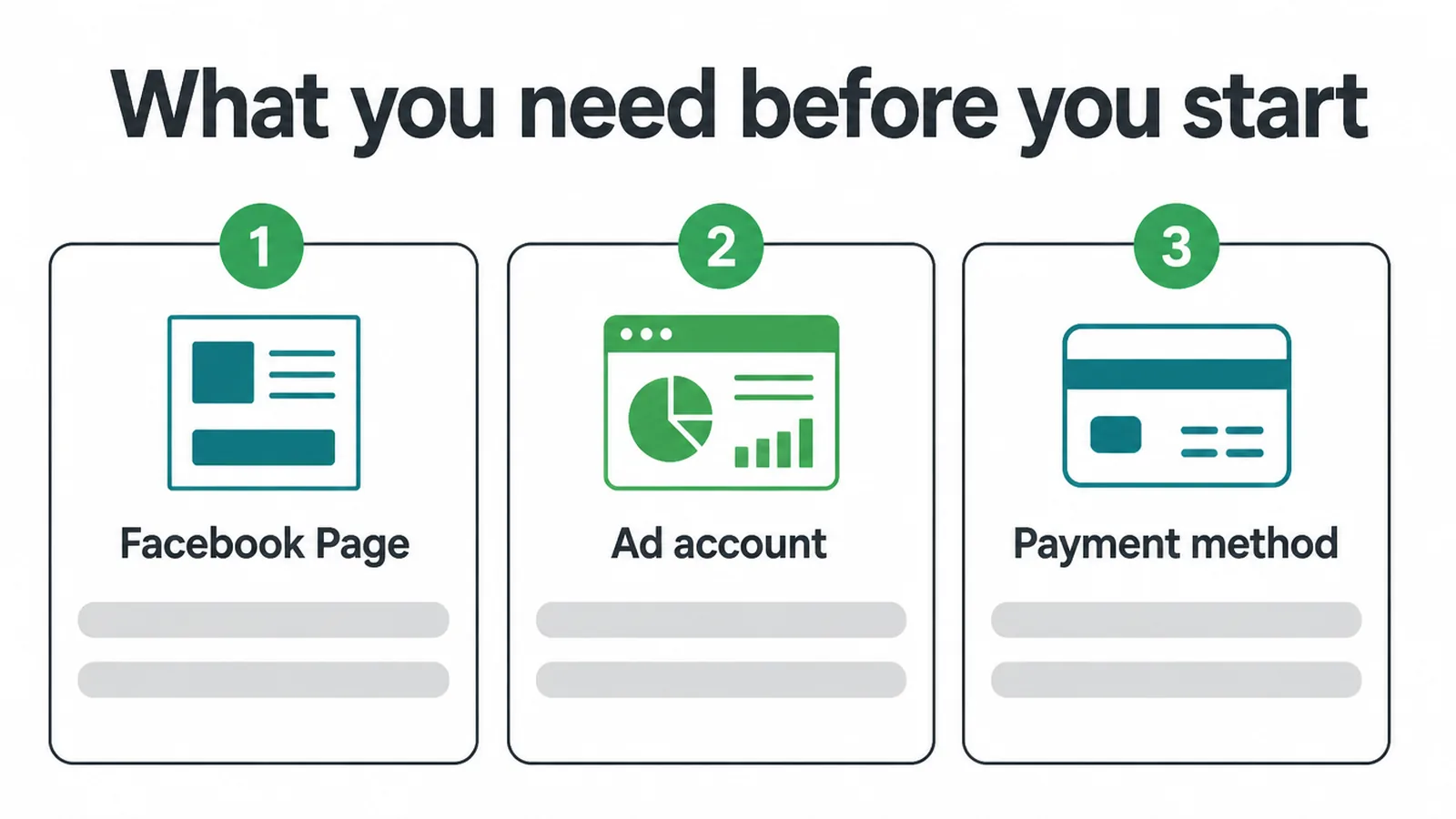
You need three things to run your first Facebook ad. First, a Facebook Page. This is the identity your ad runs from, the name and picture people see. Second, an ad account inside Ads Manager, which is the tool you build ads in. Third, a payment method, because you add billing details before the ad can publish.
You do not strictly need a Business Manager account to start. Some larger setups use one to manage many Pages and people, but a single Page and a personal Facebook or Instagram login is enough for a first ad. If you want a clean setup from day one, a Facebook Page plus an ad account is the practical starting point.
If all of this feels like a lot, our digital marketing team sets accounts up and runs the ads for you. Once your Page and payment are ready, you are ready to build.
2. The three levels of a Facebook ad
Every Facebook ad is built in three layers, and they stack in order. Understanding these three makes the rest of the steps click into place.
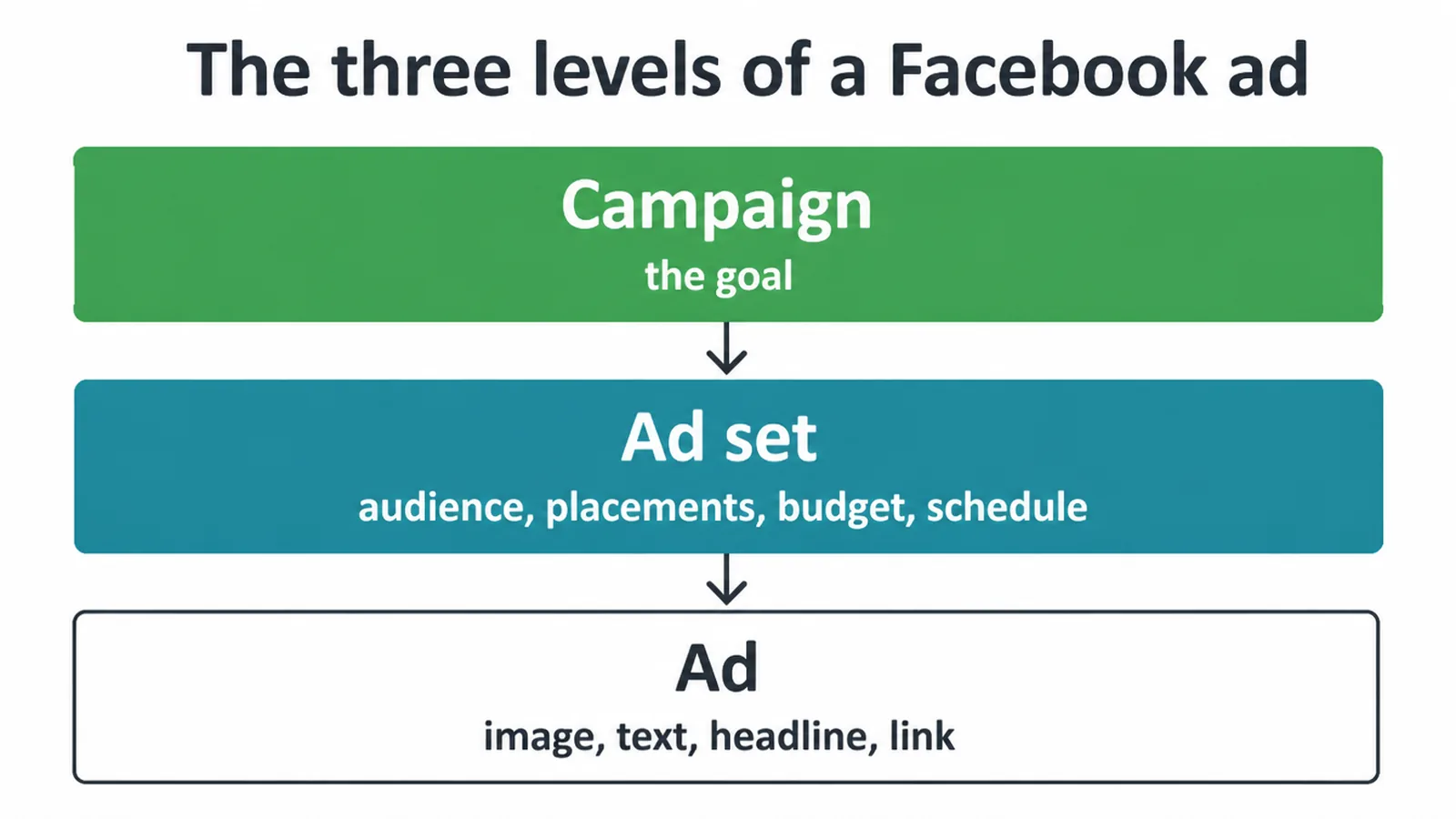
- Campaign: this is the goal. You pick one objective, like getting website traffic or leads. The whole campaign points at that one aim.
- Ad set: this is the who, where, how much and when. You choose your audience, your placements, your budget and your schedule here.
- Ad: this is what people see. The image or video, the primary text, the headline and the link they click.
So the campaign says why, the ad set says how, and the ad says what. You can have several ad sets under one campaign, and several ads under one ad set, but keep it simple for your first go.
3. How to create a Facebook ad, step by step
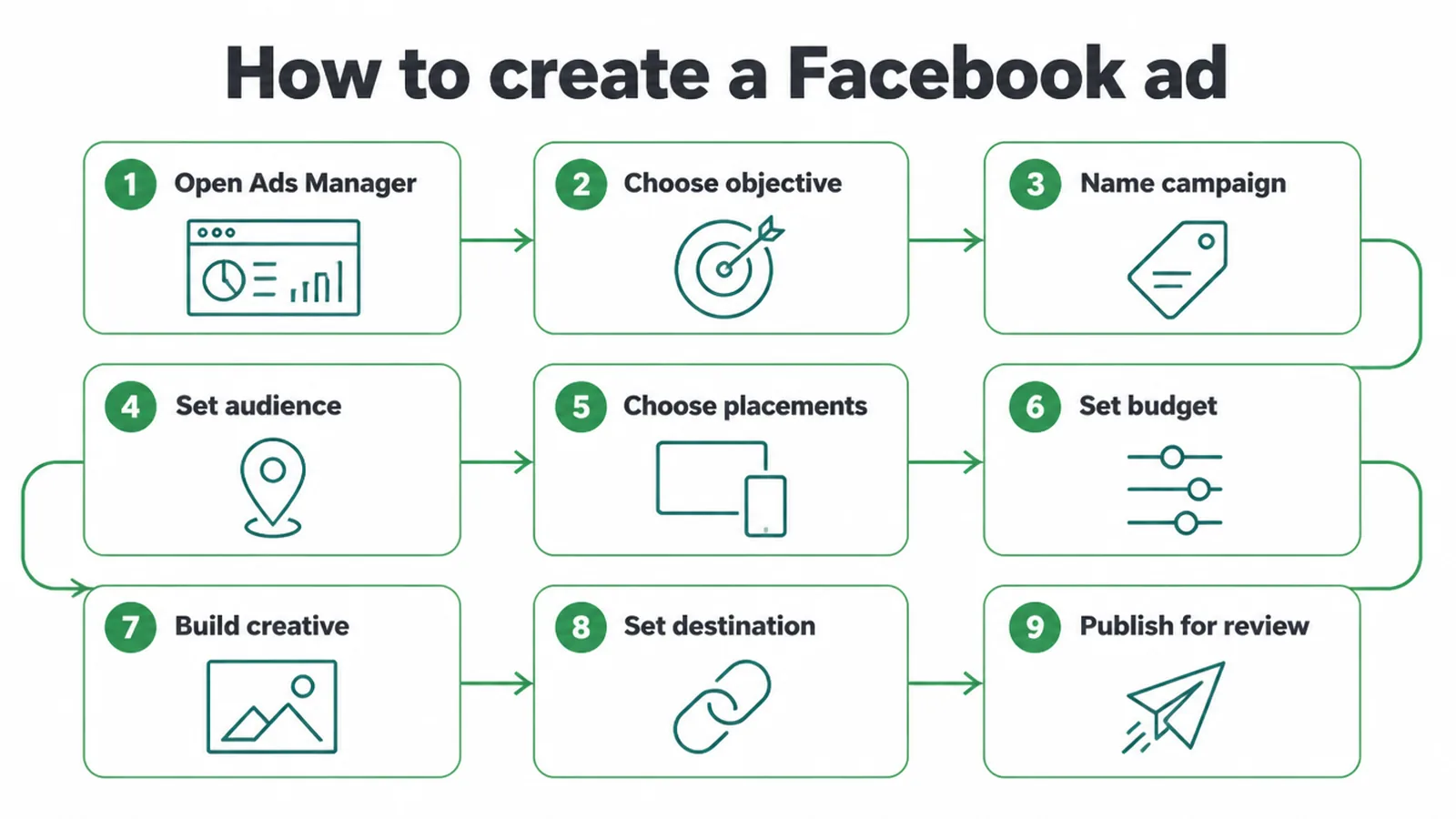
1. Open Ads Manager and click Create
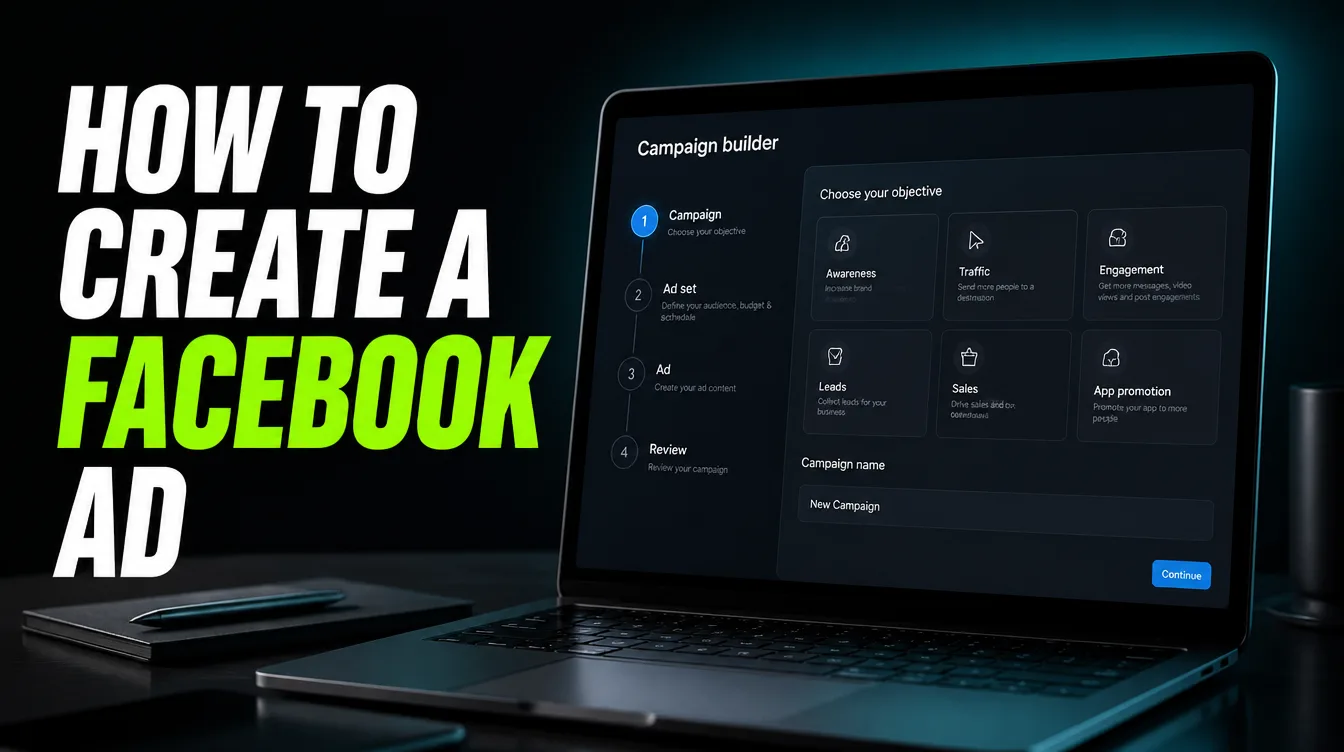
Go to Meta Ads Manager. It is the free ad-building tool, and it sits inside the wider Meta Business Suite. Click the Create button to start a new campaign. This opens the campaign builder where the three levels appear.
2. Choose your campaign objective
Pick one goal from the six objectives: Awareness, Traffic, Engagement, Leads, App promotion or Sales. Meta uses your choice to decide who to show the ad to, so pick the one that matches what you actually want. If you want people to visit your site, choose Traffic. If you want form fills or messages, choose Leads. Most small businesses start with one of those two.
3. Name your campaign
Give the campaign a clear name you will recognise later. Something like "Spring offer, Traffic" beats a random default. Good names save you time when you have more than one campaign running.
4. Set your audience
Now you are at the ad set level. Choose who sees the ad. You can target by location, age, gender and interests, and you can build a custom audience from people who already know you. Keep it tight. A smaller, relevant audience usually beats a huge broad one when you are learning.
5. Choose your placements
Placements are where your ad shows up. The default is Advantage+ placements (this used to be called automatic placements), which lets Meta serve your ad across Facebook, Instagram and other Meta surfaces from one ad set. You can switch to manual placements if you want full control, but for a first ad, Advantage+ placements is a safe start.
6. Set your budget and schedule
You choose between a daily budget or a lifetime budget. A daily budget spends roughly that amount each day. A lifetime budget spends across a set start and end date. Set a schedule for when the ad runs. Start small so you can learn without risk. We are not quoting a number here on purpose, because you set it and it depends on your goal.
7. Build the ad format and creative
This is the ad level, what people see. Pick a format first: a single image or video, a carousel, or a collection. Then add the creative. Upload your image or video, write the primary text, add a headline, and set the link. For help writing the words, see our ad copy examples. Keep the primary text plain and lead with the benefit.
8. Point the ad at the right destination
Decide where the click goes. Usually that is a page on your website. Send people to a page that matches the ad's promise. A focused destination gets more results, which is why landing page design is part of every campaign we run. Our guide to landing page best practices shows what a strong destination looks like.
9. Add payment and publish for review
If this is your first ad, you add payment details now. Then click Publish. Your ad does not go live straight away. Meta reviews it against its Advertising Standards first, mostly by automated checks. You will see the status in the Delivery column while it is being reviewed.
4. The six Facebook campaign objectives
Older guides show eleven objectives. Meta simplified them into six. Here is what each one is best for, so you can pick with confidence.
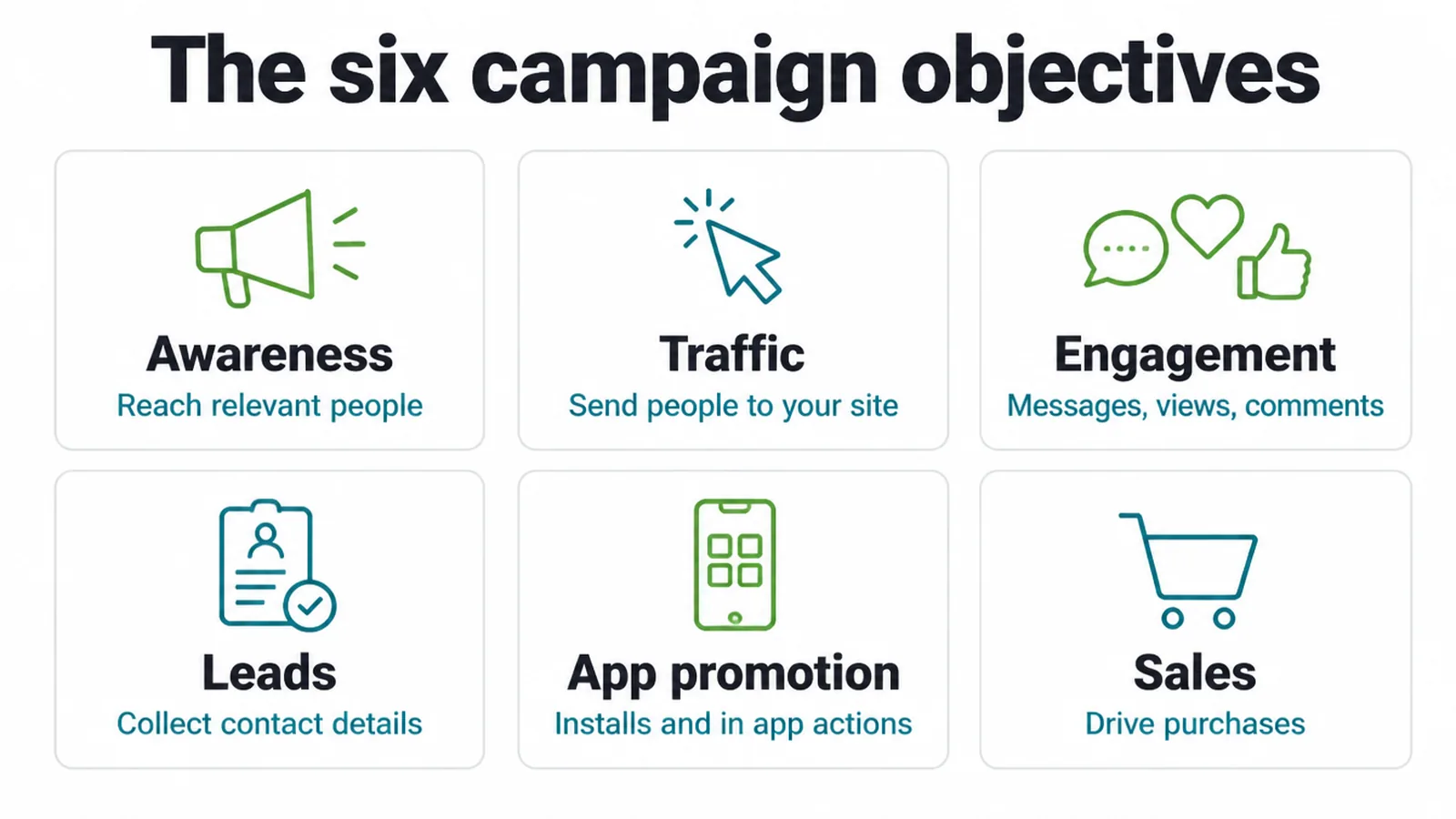
| Objective | Best for |
|---|---|
| Awareness | Getting your brand in front of as many relevant people as possible. Good for launches and top-of-funnel reach. |
| Traffic | Sending people to a destination such as your website or landing page. |
| Engagement | Getting messages, video views, likes, comments or event responses. |
| Leads | Collecting contact details through a form or a message, without leaving the platform in some cases. |
| App promotion | Getting people to install or take action inside your mobile app. |
| Sales | Driving purchases or other high-intent actions, often for online stores. |
Most small businesses start with Traffic or Leads. Awareness is useful once you have a bit of budget and want more people to know you exist.
5. What makes a good Facebook ad
A good ad is not about being clever. It is about being clear. Five things matter most, and they are all within your control.
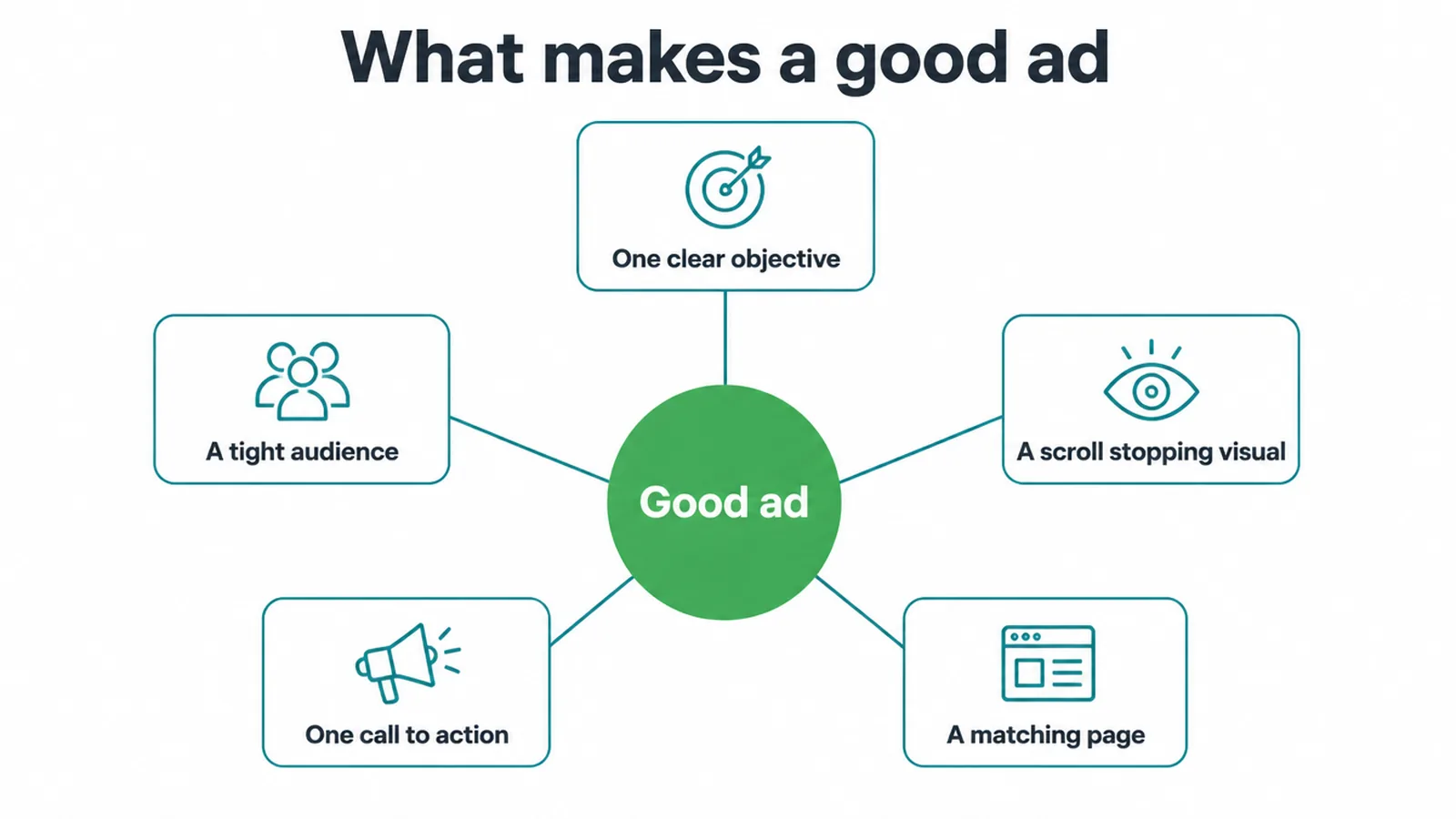
- One clear objective: know the single action you want before you build anything.
- A tight audience: the right people beat a big crowd every time.
- A scroll-stopping visual: your image or video has one job, to make someone stop.
- One call to action: ask for one thing, not five. Plain primary text works best.
- A matching page: the page they land on should deliver exactly what the ad promised.
Where your ad sits in the customer journey shapes what you say. Our guide to the marketing funnel stages helps you match the message to the moment.
6. After you publish
Once you publish, your ad goes for review. Approval is usually completed within 24 hours, but it can take longer at busy times. Watch the Delivery column to see when it goes from in review to active. Note that an ad can also be reviewed again after it goes live.
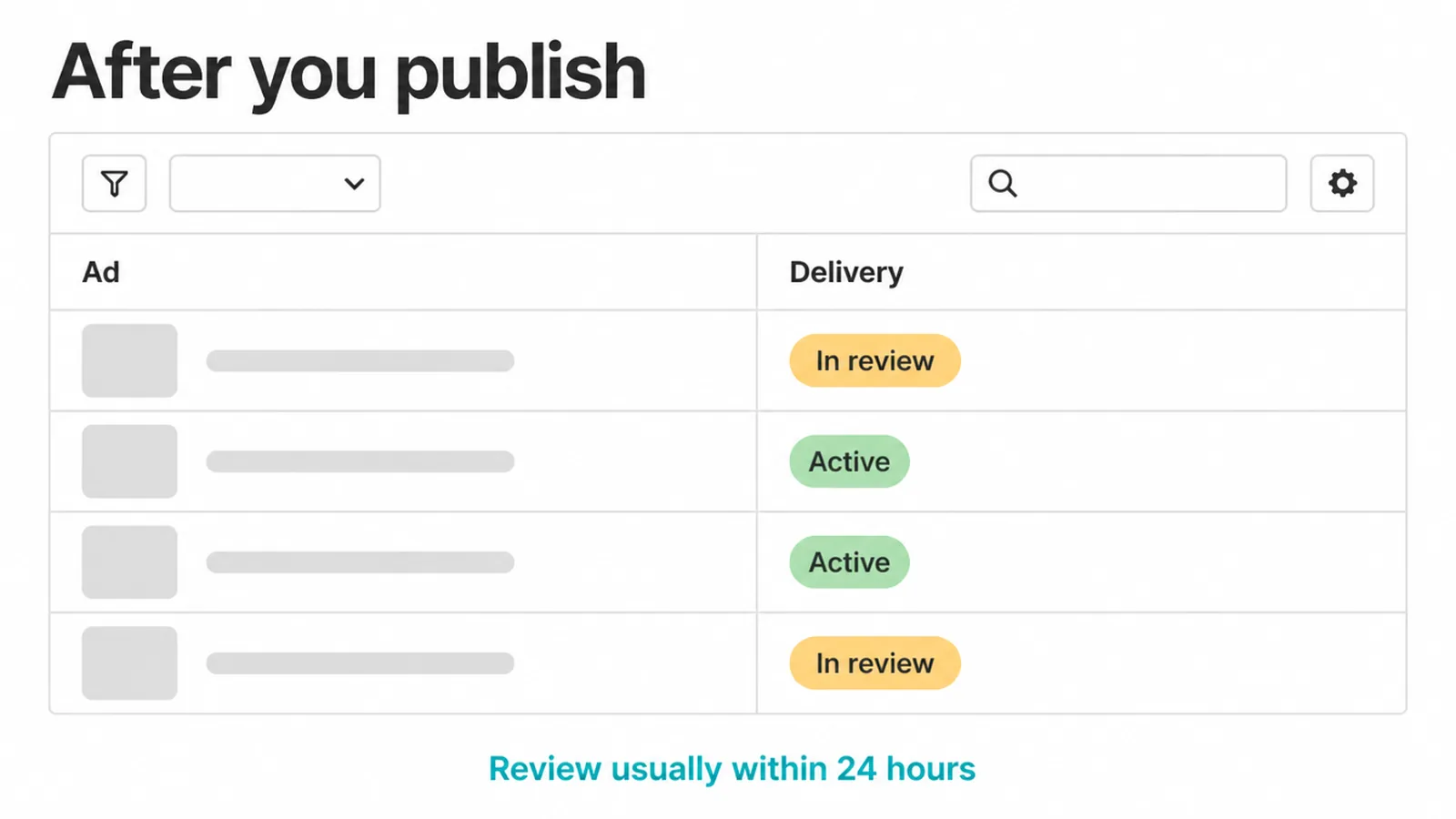
When it is running, do not judge it on day one. Give it a little time to gather data. Then look at your cost per result and whether people are doing what you wanted. Try a second version, change one thing, and see which does better. Remember the budget is yours and results vary. Small, steady tests teach you more than one big bet.
7. Cost and where to go next
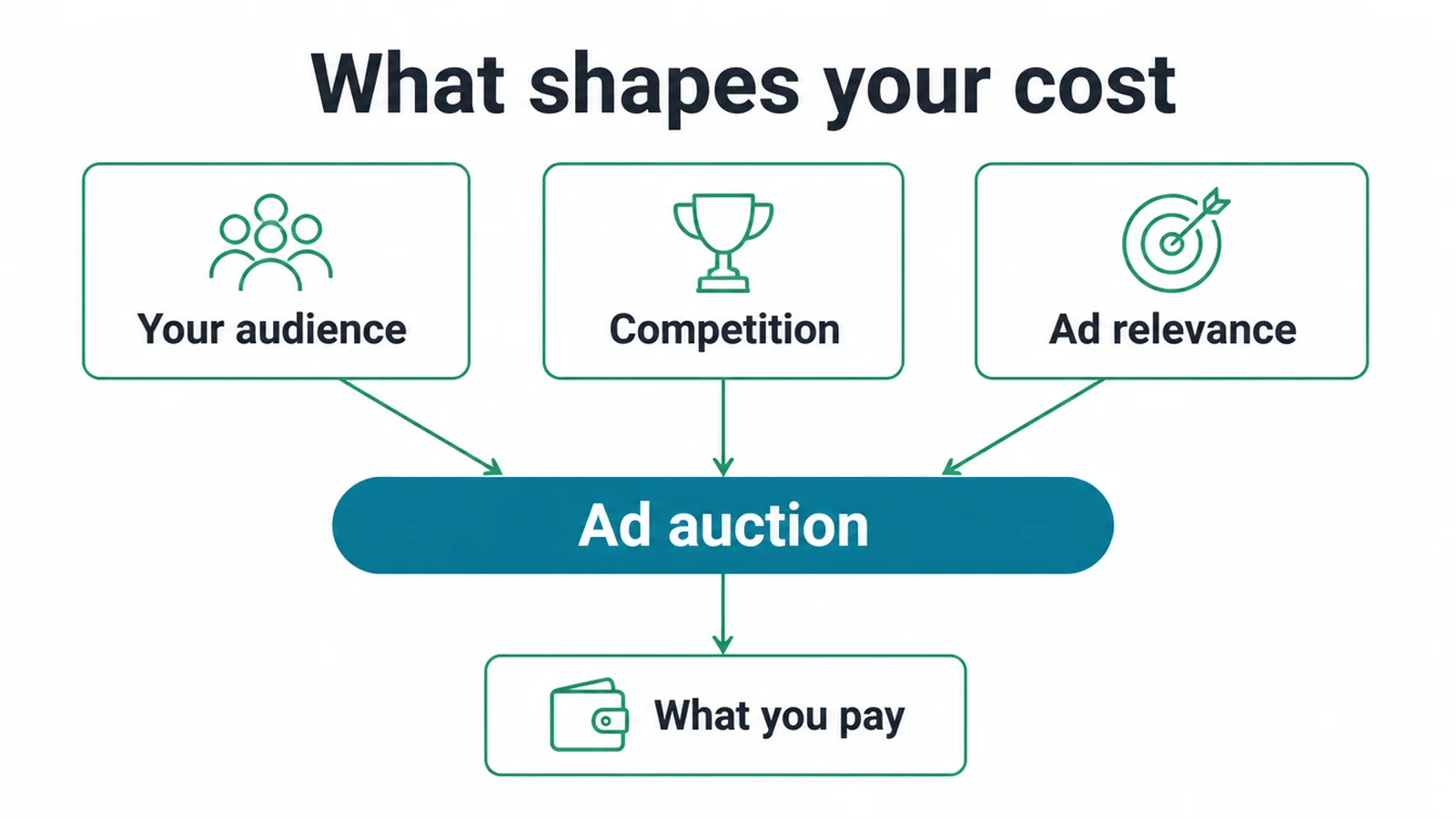
This guide is about building the ad, not the price. Facebook ads run on an auction, and what you pay depends on your audience, competition and how relevant your ad is. For the full picture, read how much it costs to run Facebook ads. If you would rather have someone build, run and improve your Facebook and Instagram ads for you, get in touch and we will point you in the right direction.
Frequently asked questions
1. How do I create a Facebook ad?
Open Meta Ads Manager, click Create, pick a campaign objective, set your audience, placements, budget and schedule at the ad set level, build the creative with an image or video plus text, headline and link, then publish for review.
2. Do I need a Facebook Page to run ads?
You need an ad account and a Facebook or Instagram login, and a Facebook Page is the standard identity ads run from and the practical starting point. A Business Manager account is not strictly required.
3. What is Meta Ads Manager?
It is Meta's free tool for building, running and tracking Facebook and Instagram ads, and it lives inside the wider Meta Business Suite.
4. What are the Facebook campaign objectives?
The current six are Awareness, Traffic, Engagement, Leads, App promotion and Sales.
5. How much do I need to spend to start?
You set your own daily or lifetime budget and can start small, and because results vary you should treat the first spend as a test.
6. What makes a good Facebook ad?
A clear objective, a tight audience, a scroll-stopping image or video, plain primary text with one call to action, and a landing page that matches the promise.
7. How long until a Facebook ad gets approved?
Review is usually completed within 24 hours but can take longer, and ads can be reviewed again after they go live.
8. Can I run Facebook and Instagram ads together?
Yes. One ad set with Advantage+ placements serves your ad across Facebook, Instagram and other Meta surfaces.

About the author
Gregory Yeoh is the founder of Seed Light, a web design and digital marketing agency that builds and runs paid social campaigns for small businesses every day. He wrote this to give beginners a plain, honest walkthrough of the current Ads Manager, without hype and without invented numbers. If you want a hand with your ads, our digital marketing service is where to start.