Key takeaways
- It is a 1-to-10 diagnostic. Quality Score is a keyword-level estimate of how your ad quality compares to other advertisers, on a scale from 1 to 10 (Google Ads Help).
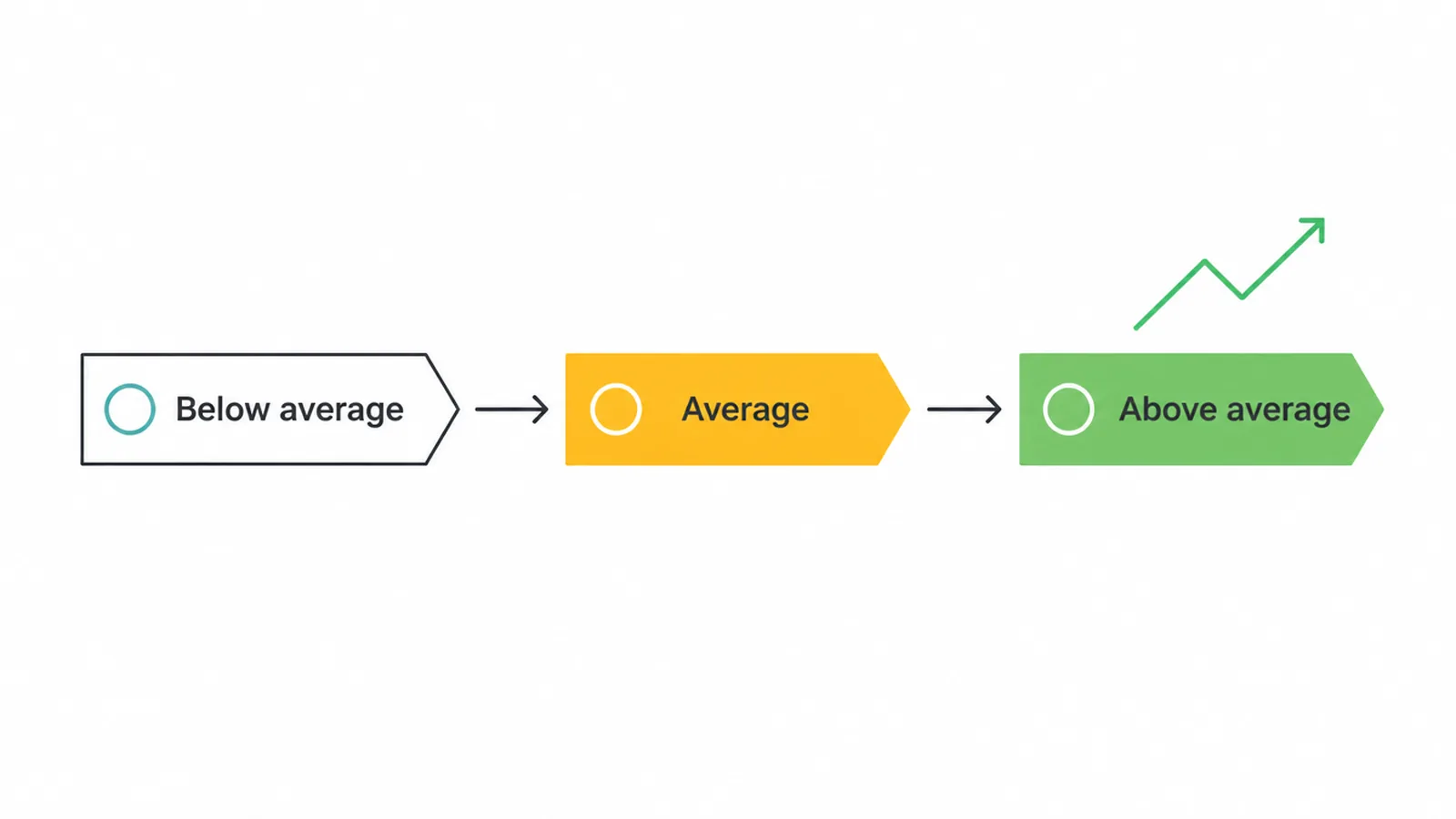
- Three parts build it. Expected click-through rate, ad relevance, and landing page experience. Each shows as Above average, Average, or Below average.
- The number is not an auction input. Google says the same real-time quality signals feed Ad Rank, but the Quality Score number itself does not.
- Higher quality can mean lower cost. Google states that higher-quality ads can often lead to lower CPCs.
- Fix the components, not the number. Aim to move each of the three parts to Above average instead of chasing a target score.
1. What is Google Ads Quality Score?
Quality Score is a diagnostic tool that gives you a sense of how well your ad quality compares to other advertisers. It is measured on a scale from 1 to 10 and shown at the keyword level (Google Ads Help). So it is not one score for your whole account. It is a read on each keyword you bid on.
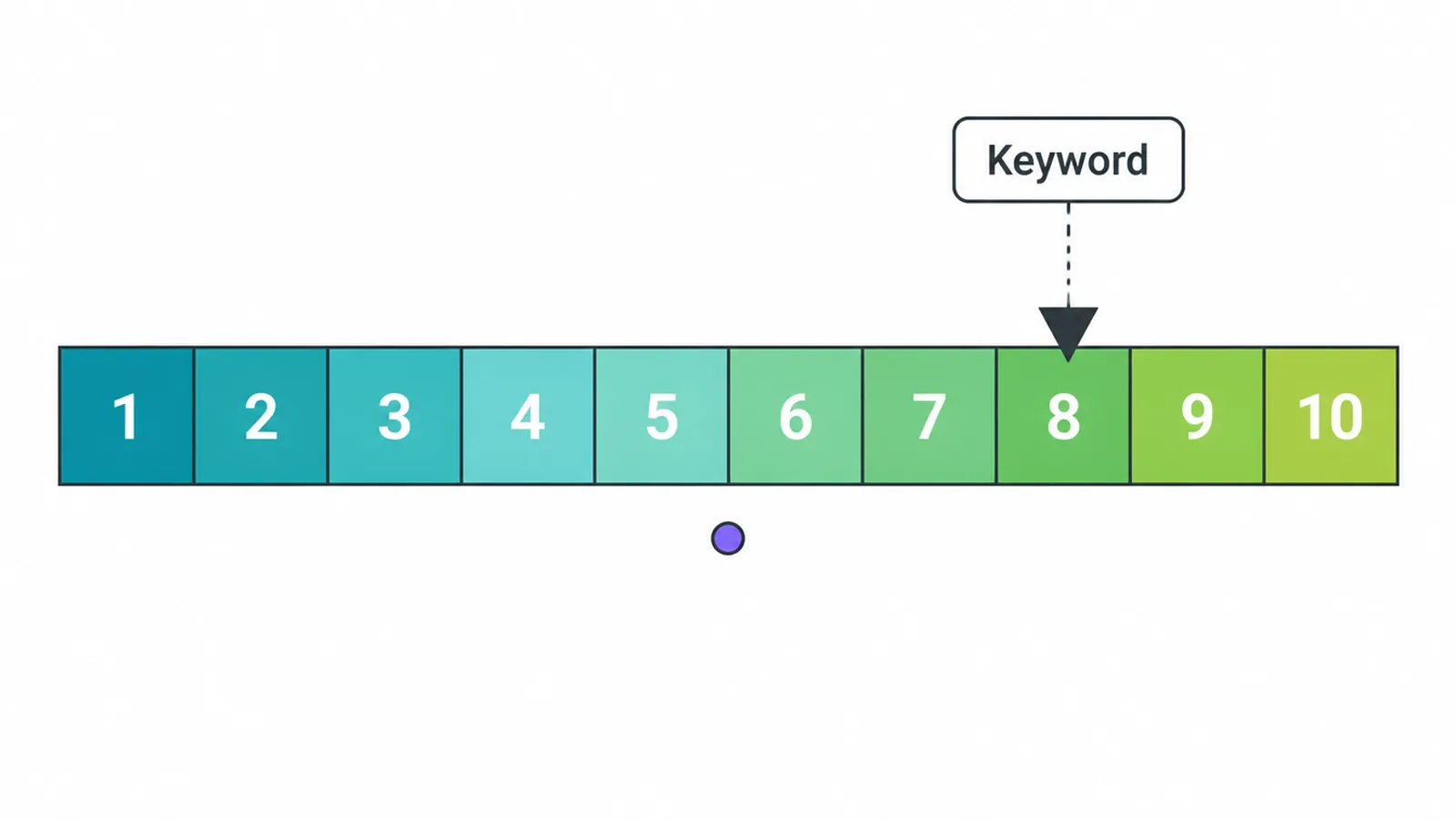
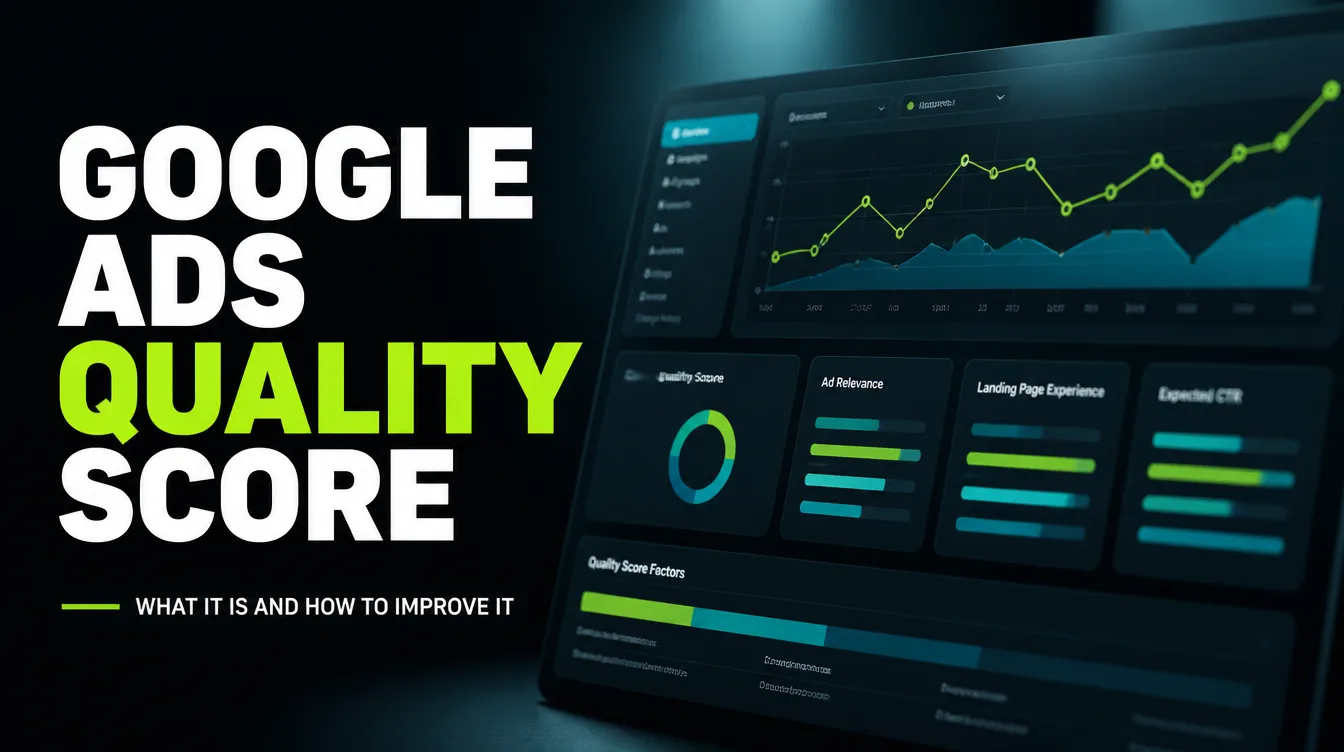
The score is built from three components: expected click-through rate, ad relevance, and landing page experience. Alongside the number, Google shows each component as Above average, Average, or Below average. Those labels are the useful part. They tell you which piece is dragging you down and where to spend your time.
Think of it like a car dashboard warning light. It does not fix the car. It tells you where to look. If you are just getting started with paid search, our guide to running Google Ads for a small business sets the wider scene, then this post zooms into the quality signal.
2. The three components of Quality Score
Every Quality Score comes from the same three parts:
- Expected click-through rate is the likelihood that your ad will be clicked when it is shown.
- Ad relevance is how closely your ad matches the intent behind a user's search.
- Landing page experience is how relevant and useful your landing page is to people who click your ad (Google Ads Help).
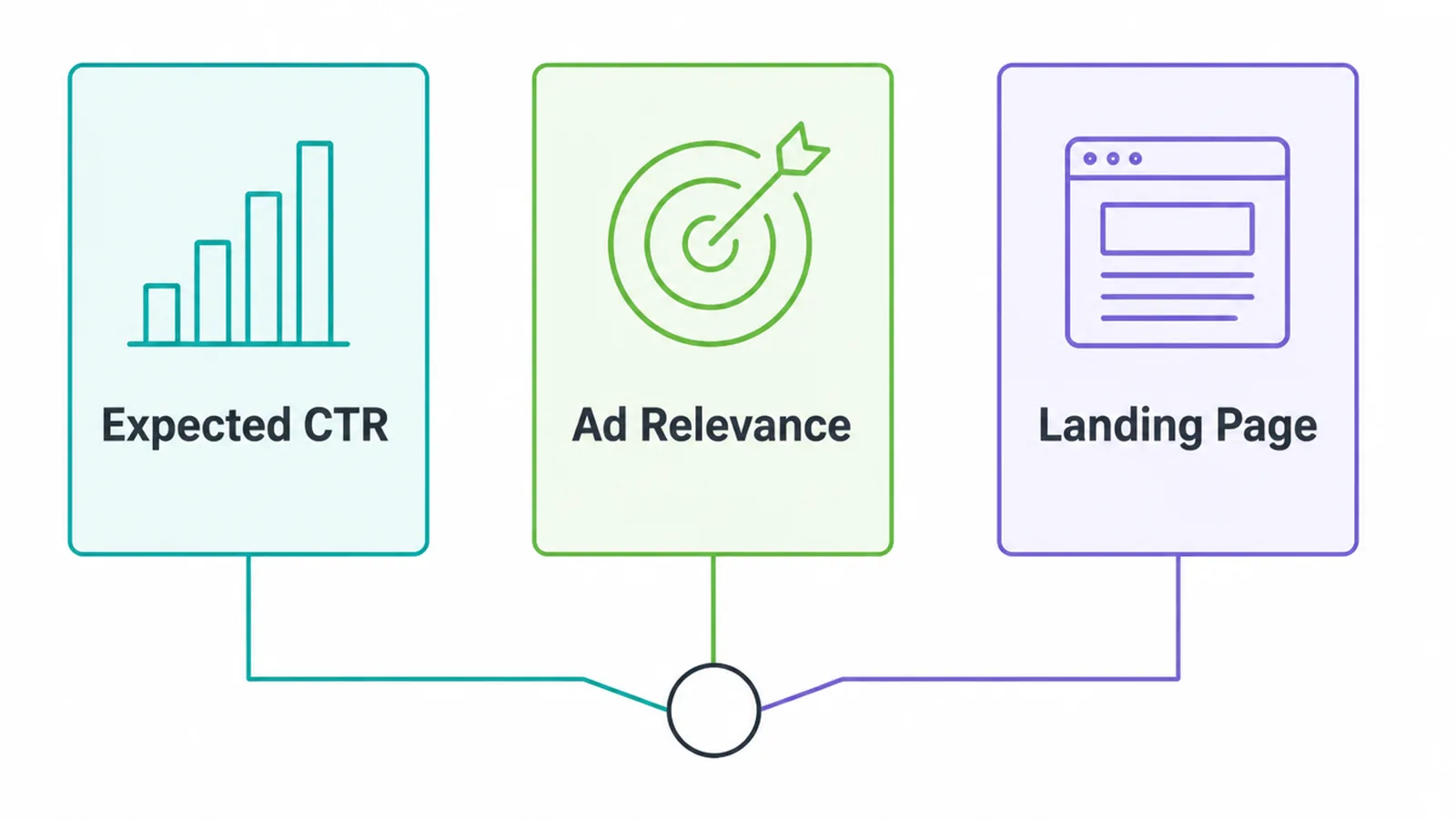
Here is each one, what it measures, and the first move to improve it.
| Component | What it measures | How to improve it |
|---|---|---|
| Expected click-through rate | The likelihood that your ad will be clicked when it is shown. | Edit your ad text to make the offer more compelling, highlight a benefit, and use action words like Buy, Order, Sign up, or Get a quote. |
| Ad relevance | How closely your ad matches the intent behind a user's search. | Match your ad language more directly to the search terms, and split ad groups that mix unrelated keywords so each group is tightly themed. |
| Landing page experience | How relevant and useful your landing page is to people who click your ad. | Keep the page relevant to the search and ad, keep messaging consistent from ad to page, make it mobile-friendly, and improve loading speed. |
Two of these three lean on skills we cover elsewhere. For the ad text side, browse our ad copy examples. For the landing page side, our landing page best practices go deeper than we can here.
3. Why Quality Score matters (and the part people get wrong)
Here is the honest core. Google states plainly that Quality Score is not a key performance indicator and should not be optimised or aggregated with the rest of your data. It also says Quality Score is not an input in the ad auction. It is a diagnostic tool (Google Ads Help). So a lot of advice that treats the number as a lever to crank is simply wrong.
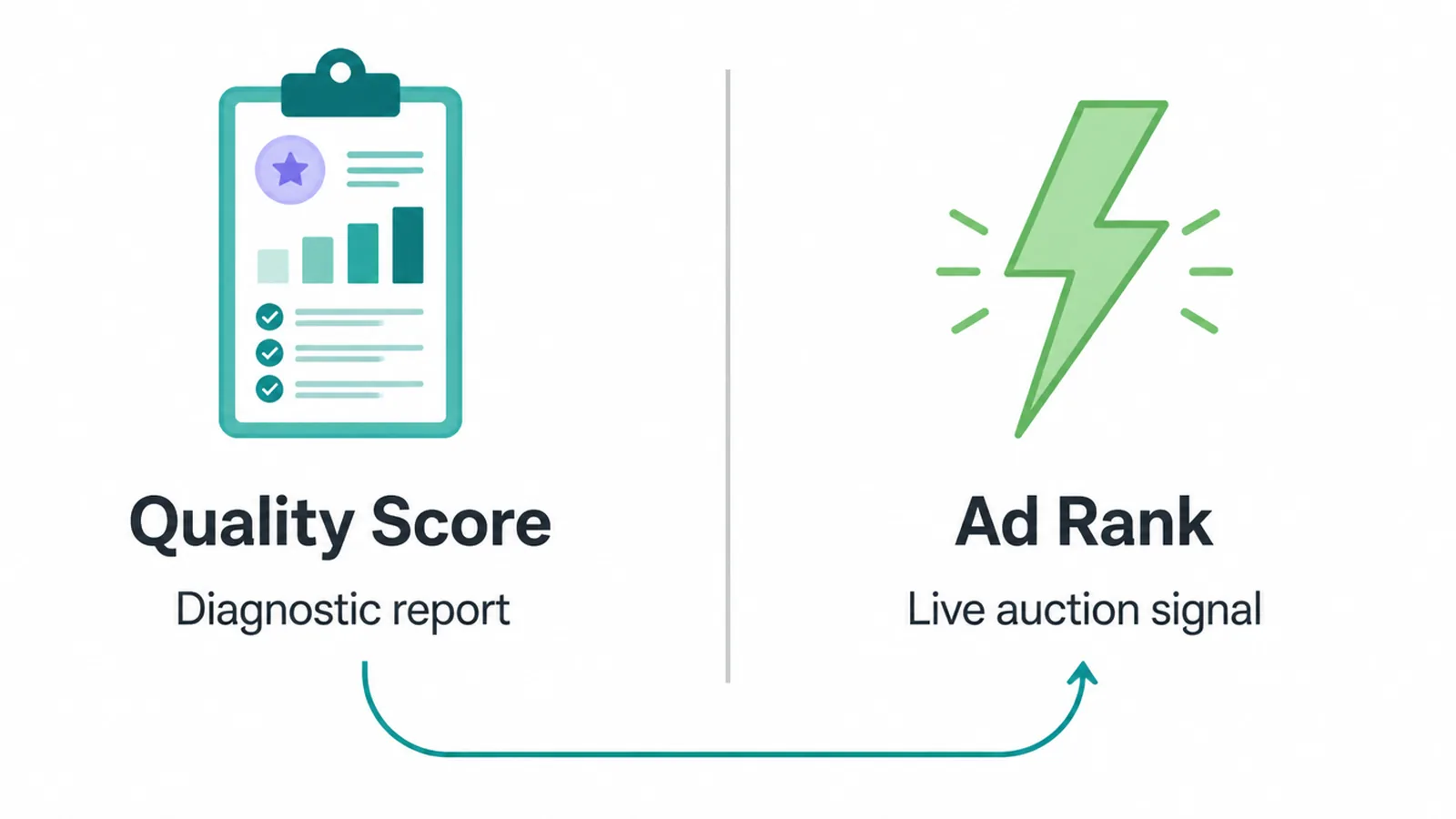
Ad Rank is what the auction actually uses
So what actually affects your ads? Ad Rank does. Ad Rank takes your bid plus auction-time quality, which includes the expected click-through rate, ad relevance, and landing page experience, among other factors (Google Ads Help).
Notice the overlap. The same three quality signals that build your Quality Score are also measured live in each auction and feed Ad Rank. The score is your rear-view report. The live evaluations are what count when your ad competes.
Higher quality can often mean a lower cost per click
This is why the score is still worth reading. Google says higher-quality ads can often lead to lower CPCs, which means you can pay less per click when your ads are higher quality (Google Ads Help).
We will not quote a "one point equals X percent cheaper" formula, because Google does not publish one, and any number like that is made up. If you want to understand what you actually pay per click, read what CPC means and how it is set.
4. How to improve each component
You improve your Quality Score by improving the three components. Do not chase the number. Chase the labels. Any component sitting at Below average or Average is your best chance to gain. Here is how to work each one.
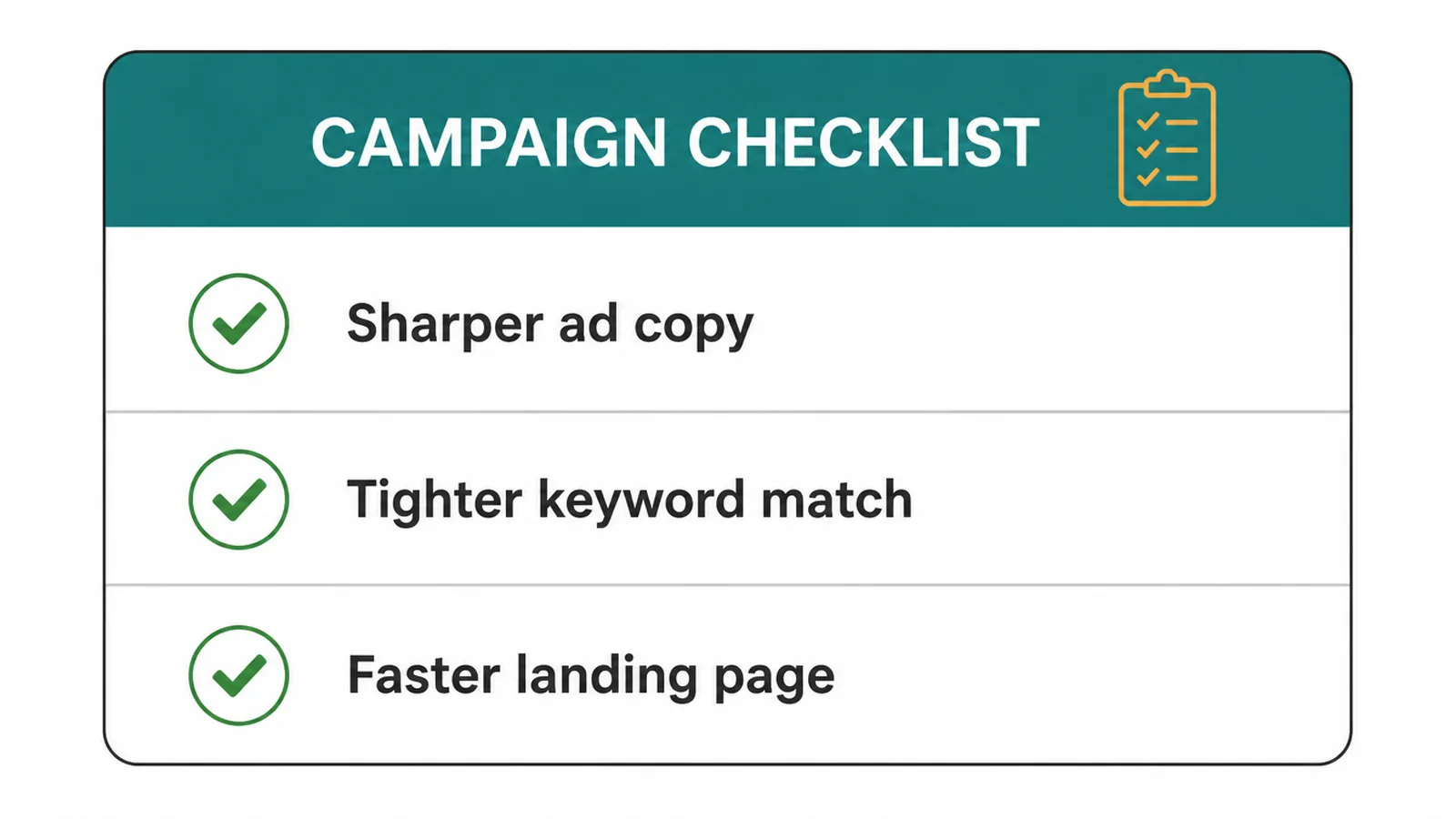
Improve expected click-through rate
This is about the ad text itself. Google's advice is to edit your ad text to make your offer more compelling, highlight a unique benefit, and use action words like Buy, Order, Sign up, Try, or Get a quote (Google Ads Help).
Say the one thing that makes you different, then tell people what to do next. Weak, vague ads get skipped, and skipped ads have a low expected click-through rate. For a shelf of headline patterns to borrow, see our collection of ad copy that works.
Improve ad relevance
Relevance is about the match between the search and the ad. Google's advice is to match the language of your ad text more directly to user search terms, and to split ad groups that contain unrelated keywords so each group is grouped thematically (Google Ads Help).
In plain terms, if one ad group covers ten different topics, no single ad can match all of them well. Break it up. One tight theme per ad group, with ad text that echoes those exact terms, lifts relevance fast, and that structure is the core of good paid search management.
Improve landing page experience
The click is only half the job. The page has to deliver. Google's advice is to keep the page relevant to the search and ad, keep messaging consistent from ad to landing page, make the page mobile-friendly, and improve loading speed (Google Ads Help).
If your ad promises one thing and the page shows another, people bounce. Match the promise, keep it fast, and make sure it works on a phone, which is the standard we build to in our landing page design work. Our landing page checklist walks through the details.
5. How to check your Quality Score
You can see your Quality Score inside your account. In the Keywords table, open the columns and add the Quality Score section. That shows the current Quality Score plus the status of each component. You can also run Diagnose keywords for a breakdown (Google Ads Help).
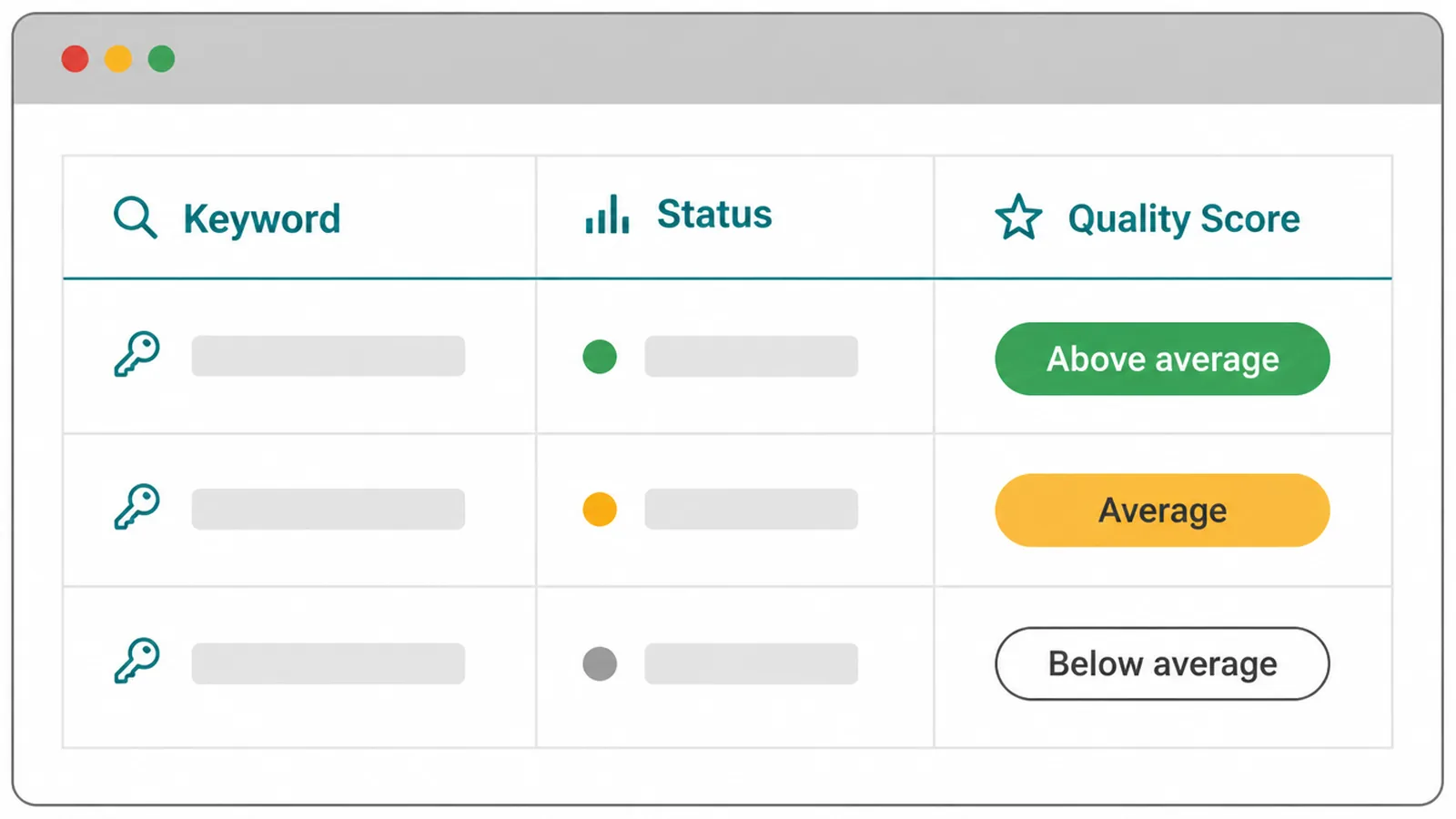
When you look, read the component statuses. The number alone does not tell you what to fix. The Above average, Average, or Below average labels do. If ad relevance is Below average, that is your first job. If landing page experience is Below average, start there instead.
6. What is a good Quality Score?
Higher is better on the 1-to-10 scale, but here is the trap. Google says Quality Score is a diagnostic, not a KPI, so there is no magic target to hit. Rather than aiming for a specific number, aim to get each of the three components to Above average. We will not invent a benchmark like "the average score is X", because Google does not publish one and any figure you see quoted is guesswork.
7. Want a hand with your paid search?
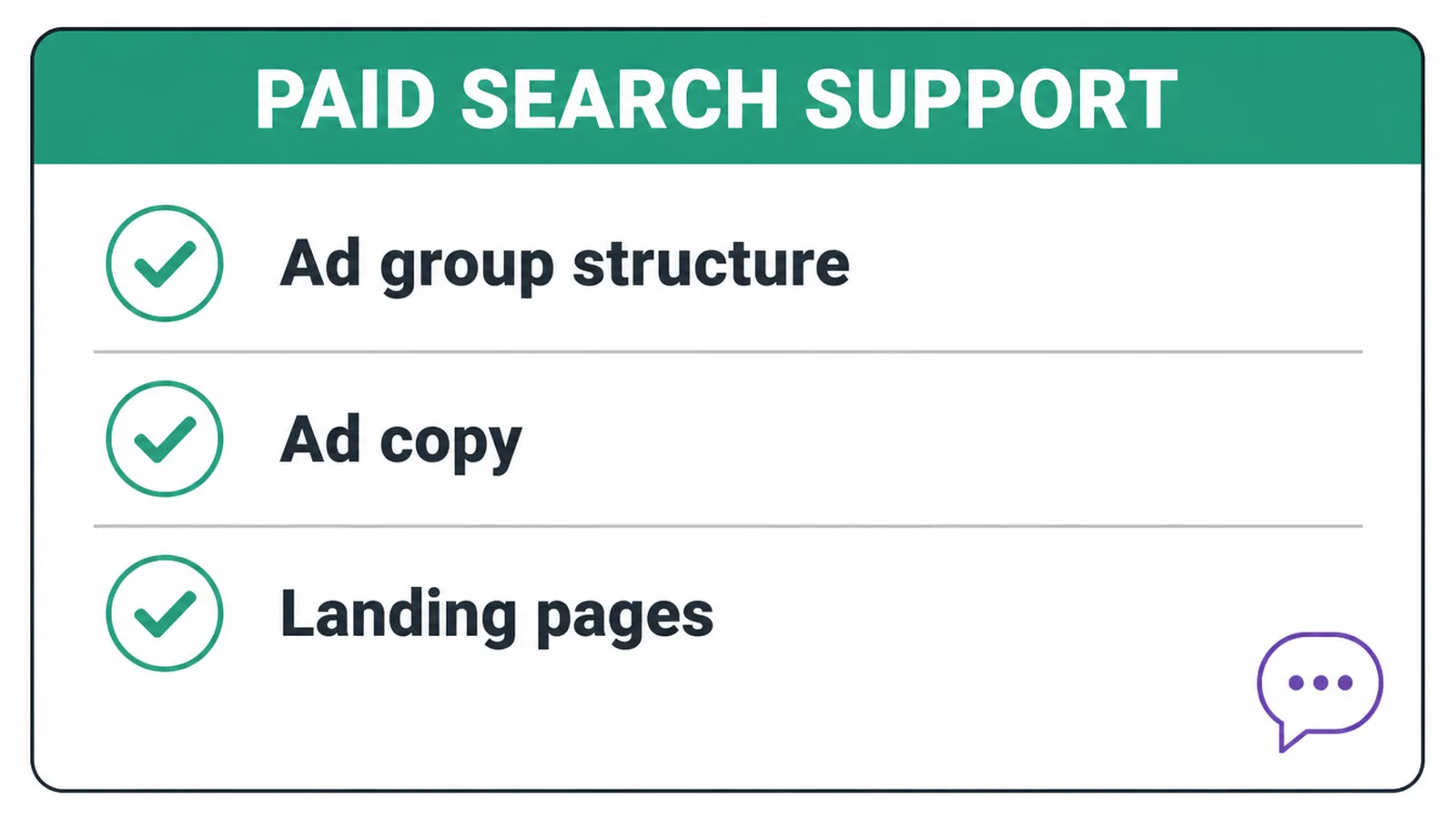
Quality Score is one signal among many, and cleaning it up takes tight ad groups, sharp copy, and fast, relevant pages working together. If you would rather someone build and manage that for you, our digital marketing team runs paid search for small businesses every day. Tell us what you sell and who you want to reach on our contact page, and we will take it from there.
Frequently asked questions
1. What is Google Ads Quality Score?
It is a 1-10 diagnostic tool, at the keyword level, that estimates how your ad quality compares to other advertisers. It is built from three components: expected click-through rate, ad relevance, and landing page experience.
2. What are the three components of Quality Score?
Expected click-through rate, ad relevance, and landing page experience. Each one shows as Above average, Average or Below average, which tells you where to focus.
3. Why does Quality Score matter?
It is a diagnostic that flags weak keywords. The same real-time quality signals feed Ad Rank, so higher-quality ads can often lead to lower CPCs and better positions.
4. What is a good Quality Score?
Higher is better on the 1-10 scale, but Google says Quality Score is a diagnostic, not a KPI to chase. Aim to get each component to Above average rather than hit a target number.
5. How do I improve my Quality Score?
Improve each component. Sharper ad copy for expected click-through rate, tighter keyword-to-ad match and ad-group structure for relevance, and a fast, consistent, relevant landing page for experience.
6. Does Quality Score affect cost?
The Quality Score number is not an auction input, but the same quality components feed Ad Rank, and Google says higher-quality ads can often lead to lower CPCs.
7. How do I check my Quality Score?
Add the Quality Score columns to your Keywords table, or run Diagnose keywords for a breakdown of each component status.
8. Does Quality Score directly set my price?
No. Quality Score itself is not an input in the ad auction. The real-time evaluations of expected click-through rate, ad relevance and landing page experience are what feed Ad Rank and influence your actual cost per click.

About the author
Gregory Yeoh is the founder of Seed Light, a web design and digital marketing agency that builds websites and runs paid search and social ads for small businesses. He spends a lot of time inside Google Ads accounts sorting real diagnostics from recycled myths, and sticks to what Google's own help pages say. If you want practical help with your ads or your landing pages, start on our contact page.