Key takeaways
- The subject wins the open, the body wins the click. Do not try to say everything in the subject. Promise one thing and let the email deliver it.
- Clear beats clever almost every time. If a reader has to decode your line, you have already lost the open.
- A misleading subject line is illegal in the US. Under 15 U.S.C. 7704(a)(2) it is unlawful to send a commercial email with a subject that would likely mislead a reasonable recipient about the contents. Honesty here is the law.
- Open rate is now unreliable. Since Apple Mail Privacy Protection, opens are inflated by preloaded tracking, so judge your subject lines by clicks and replies, not opens alone.
- Ignore recycled stats. There is no verified universal lift from emojis, questions, or a magic word count. Test your own list and trust your own numbers.
1. What makes a subject line actually work
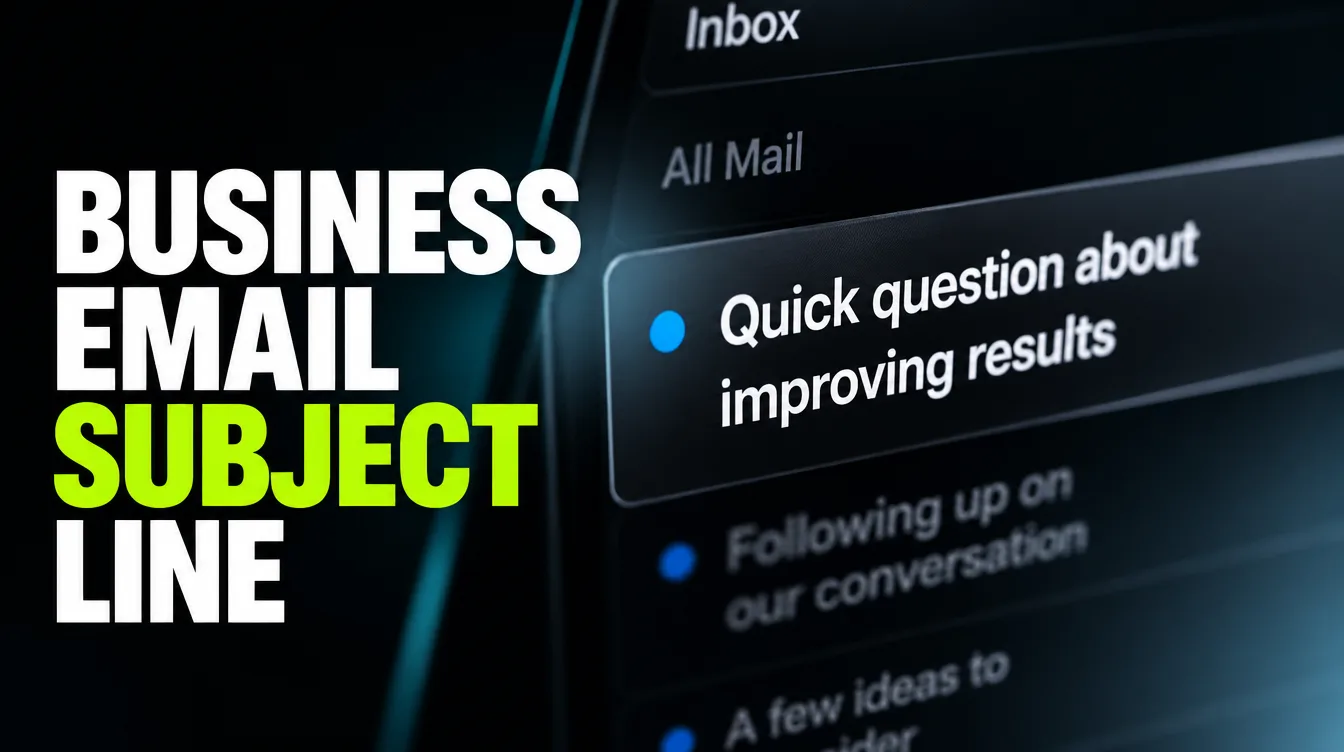
Think of the inbox as a busy hallway. Your reader is scanning names and short lines, deciding in a second what to open and what to skip. Your subject line is that one-second pitch. Its only goal is to make opening feel worth it. It does not need to be catchy or clever. It needs to be worth a click.
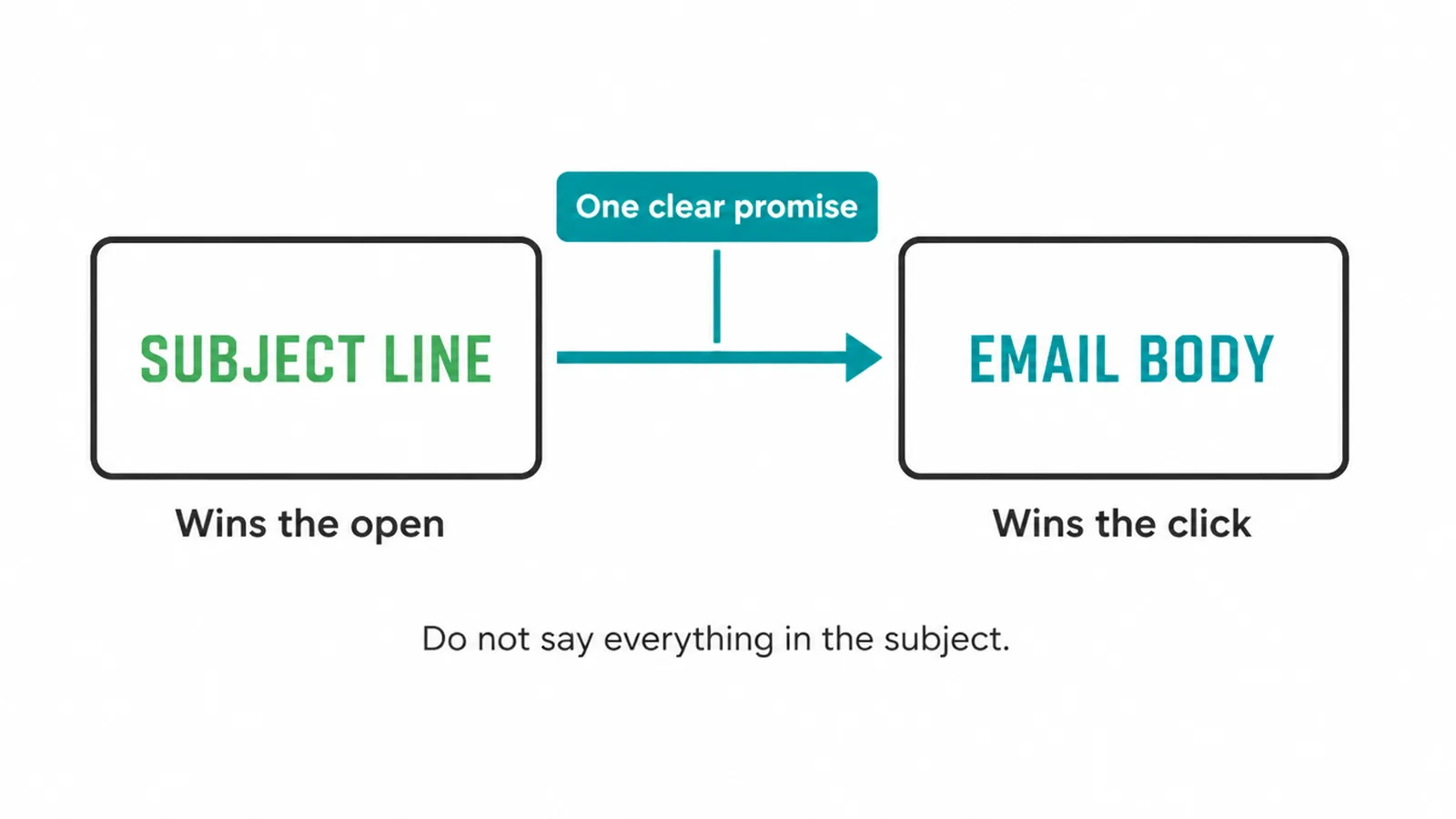
So stop asking your subject line to do too much. It cannot describe your whole offer, list your features, and close a sale in eight words. When you try, you get a crowded line that reads like an ad and gets ignored. Give the subject one clear promise, then keep that promise inside the email. If you are new to sending, start with the basics in our guide to email marketing for small business and build the subject-line skill on top.
2. Clear beats clever
This is the biggest lever you have, and most people get it wrong. They reach for a pun, a mystery, or a clever twist, thinking it will stand out. Sometimes it does stand out, as the line nobody understands. Confusion does not earn an open. It earns a skip.
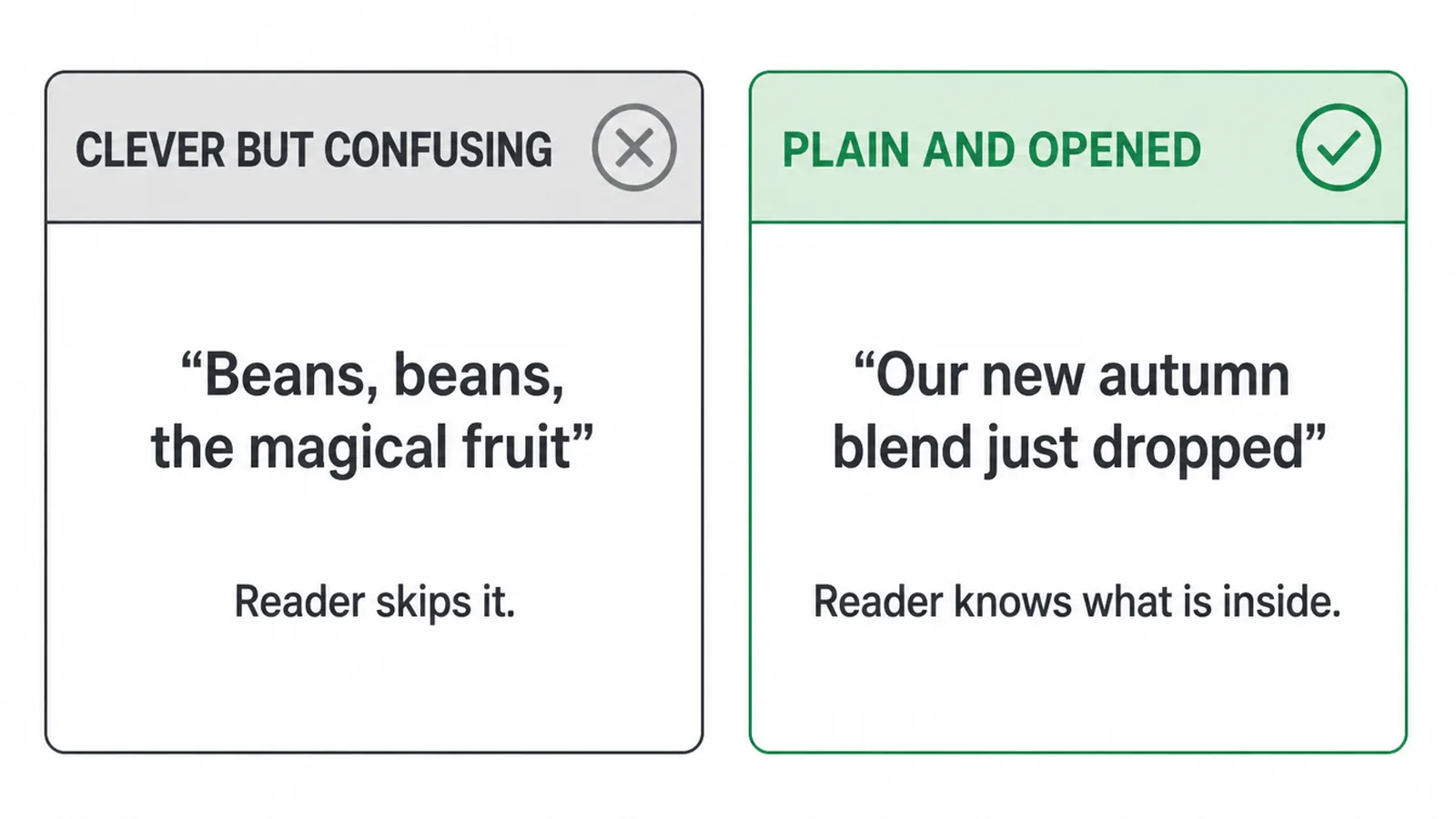
Compare two lines for a coffee roaster. Clever but confusing: "Beans, beans, the magical fruit." Cute, but what is inside? Plain and opened: "Our new autumn blend just dropped." The second one tells the reader exactly what they get if they open. It respects their time. When you are unsure, pick the version your reader would understand at a glance while walking down the street. Clever can work, but only when it is also clear. If cleverness costs clarity, drop it.
3. Be honest, not clickbait
Curiosity is fine. A subject line can hint at something and make you want to know more. But it has to pay off. If the subject teases "The secret behind our best-selling roast" and the email is a coupon with no secret in sight, you just broke a promise. Readers remember that. Next time your name shows up, they skip it.
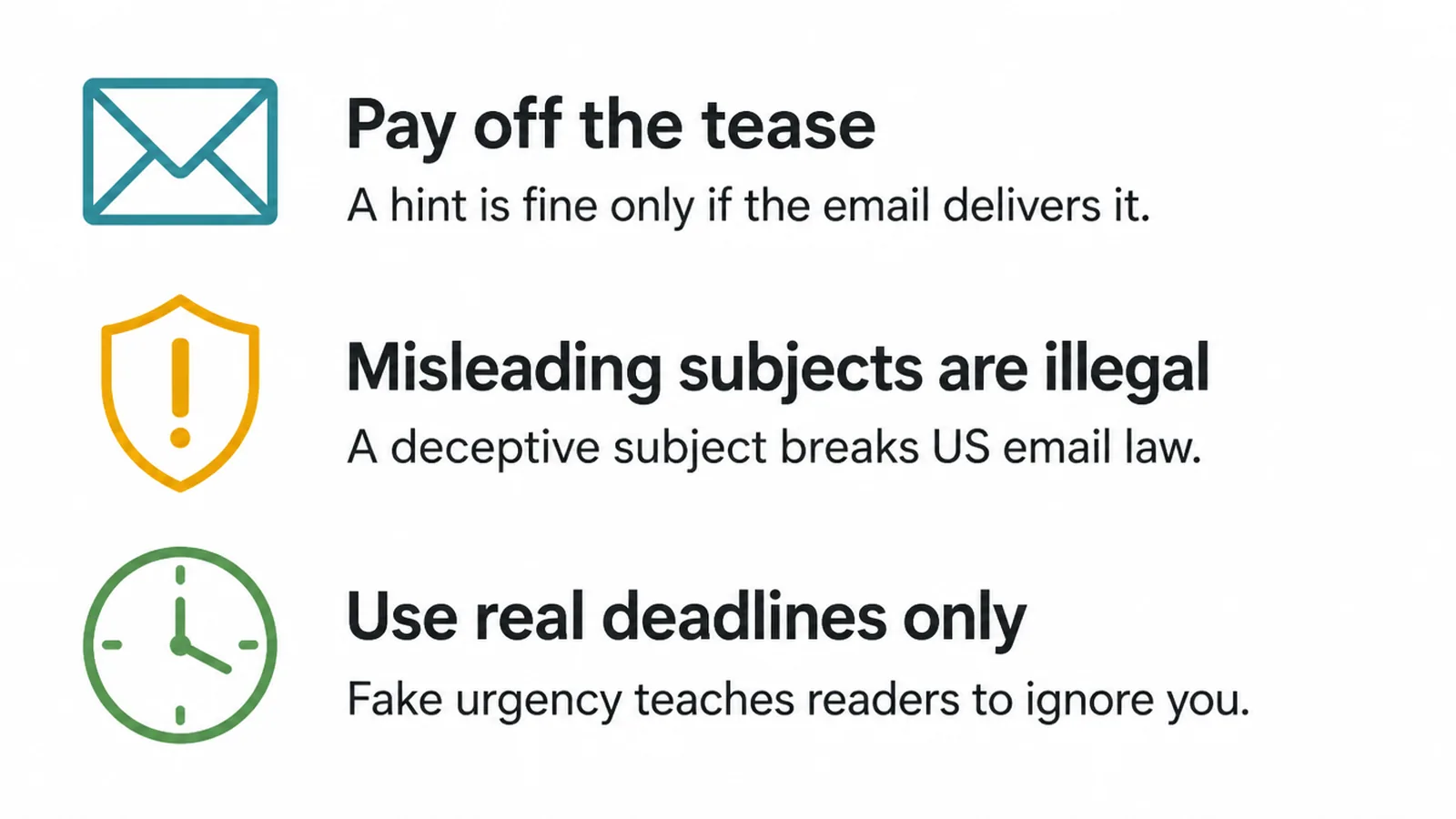
There is a legal line here on top of the trust one. Under 15 U.S.C. 7704(a)(2), it is unlawful to send a commercial email in the US with a subject heading that would be likely to mislead a reasonable recipient about a material fact regarding the contents of the message. The FTC covers the same rule in its CAN-SPAM compliance guide. So a bait-and-switch subject is not a clever growth hack. It is against the law.
Fake urgency is the other trap. "LAST CHANCE" every single week teaches people that your deadlines are not real. Once they learn that, urgency stops working for you entirely. Use a deadline only when there is a real one. Honesty keeps your subject lines effective over time.
4. Length and preheader text
Write short, then test
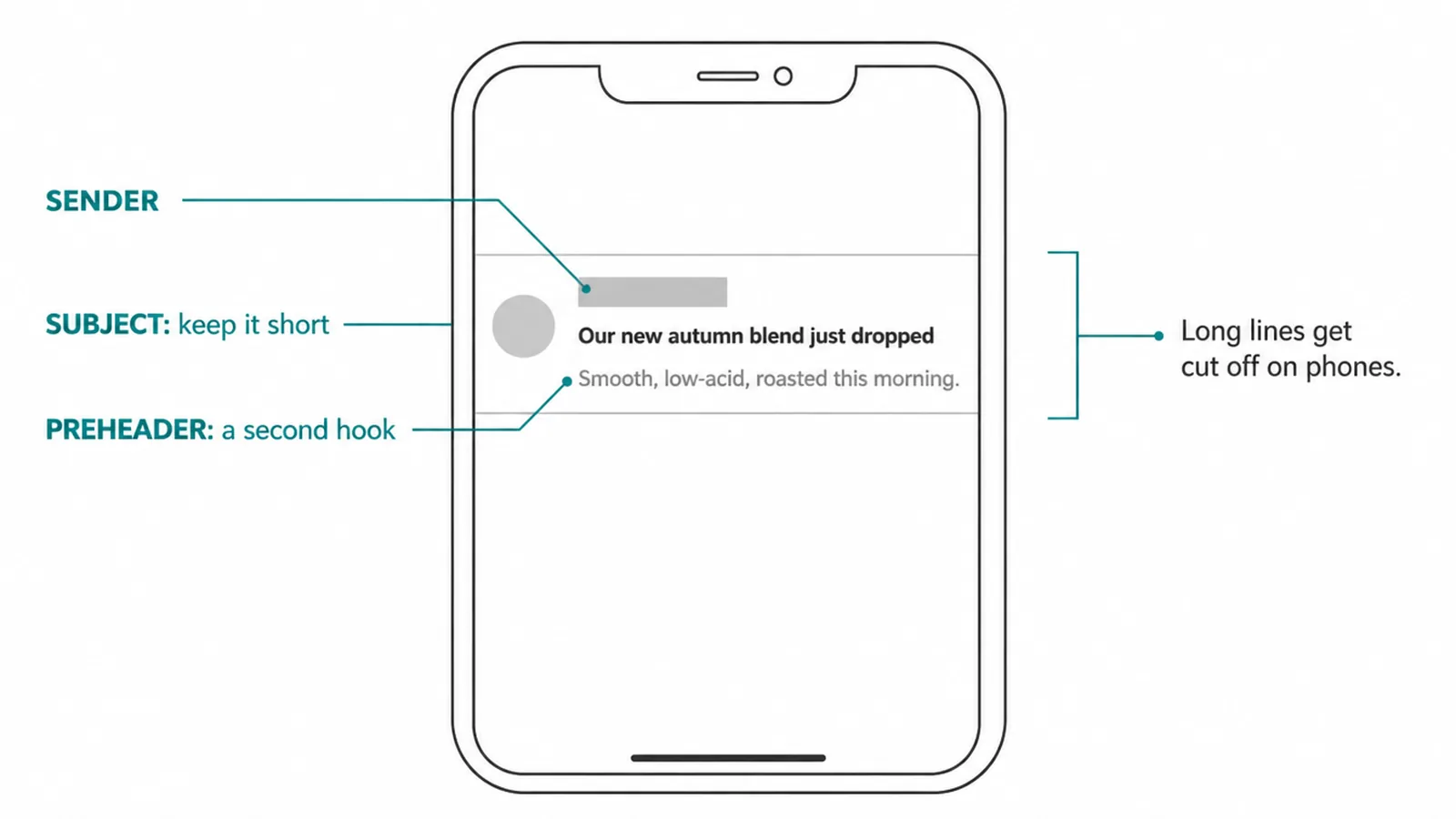
Most people read email on a phone, and phones cut long subject lines off. A line that reads fine on your laptop may get chopped mid-word on a small screen. So keep it short enough to read at a glance. A handful of words is a safe habit. Do not obsess over an exact character count you read on some blog, because it changes by device and inbox. Write short, then test.
Then use your preheader text
That is the short preview line the inbox shows next to or under the subject. Treat it as a second hook, and write it with the same care you give any marketing content. If your subject is "Our new autumn blend just dropped," the preheader can add "Smooth, low-acid, roasted this morning." Together they tell a fuller story in the inbox.
Many senders leave the preheader empty and waste free space. When you write your first sequences, plan the subject and preheader as a pair, and our welcome email templates show where they fit.
5. Personalisation and spam triggers
Personalise only where it is real
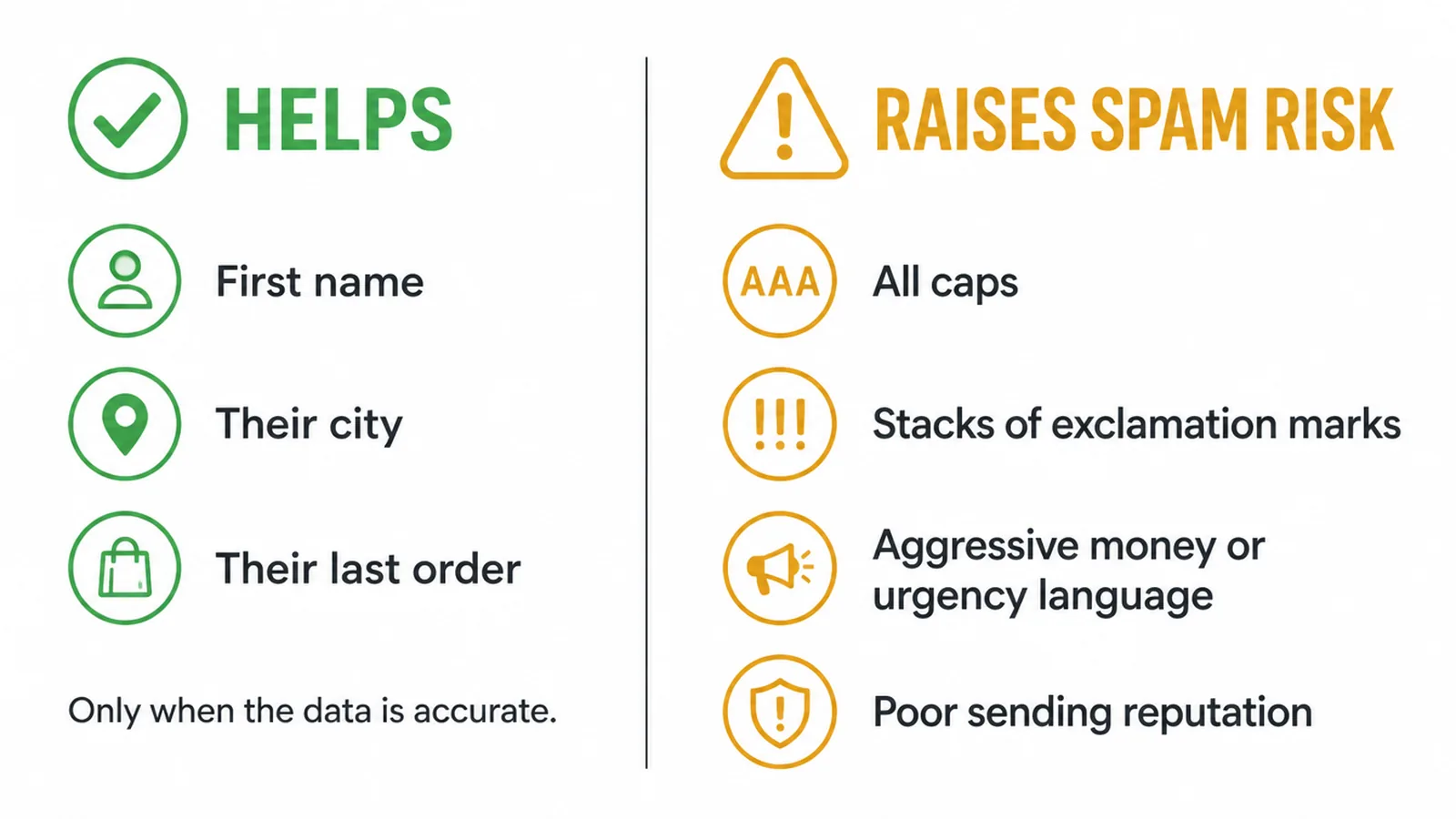
Light personalisation can help, when it is accurate and relevant. A first name, their city, or their last order can make a line feel written for them. "Sarah, your usual is back in stock" beats a generic blast. But it only works if the data is right. A wrong name, or a clumsy "Hi FIRSTNAME," does more harm than a plain line.
You will see recycled claims that personalised subjects lift opens by some exact percentage. Ignore them. They are rarely from a source you can verify, and they do not account for your list. Personalise when it is genuinely useful, not to hit a stat.
Spam filters weigh patterns, not single words
On spam, forget the myth of a banned-word list. Modern filters weigh many signals together, not single words. Still, some patterns raise your risk:
- all caps
- stacks of exclamation marks
- aggressive money or urgency language
- a poor sending reputation
"FREE!!! ACT NOW!!!" looks like spam because spammers write like that. Write like a human talking to a human, keep your list clean, and send from a reputable platform. That does more for your delivery than dodging any single word.
6. The swipe list: 12 subject line patterns
Take the shape, then write it in your own voice
Here are twelve shapes that work across many businesses, with examples for a made-up coffee roaster called Ember & Oak. These are not lines to copy word for word. They are patterns. Take the shape, then write it in your own voice for your own offer. If you want help drafting a dozen variations of one, feed a pattern into a tool using our best ChatGPT prompts, then pick the clearest one.
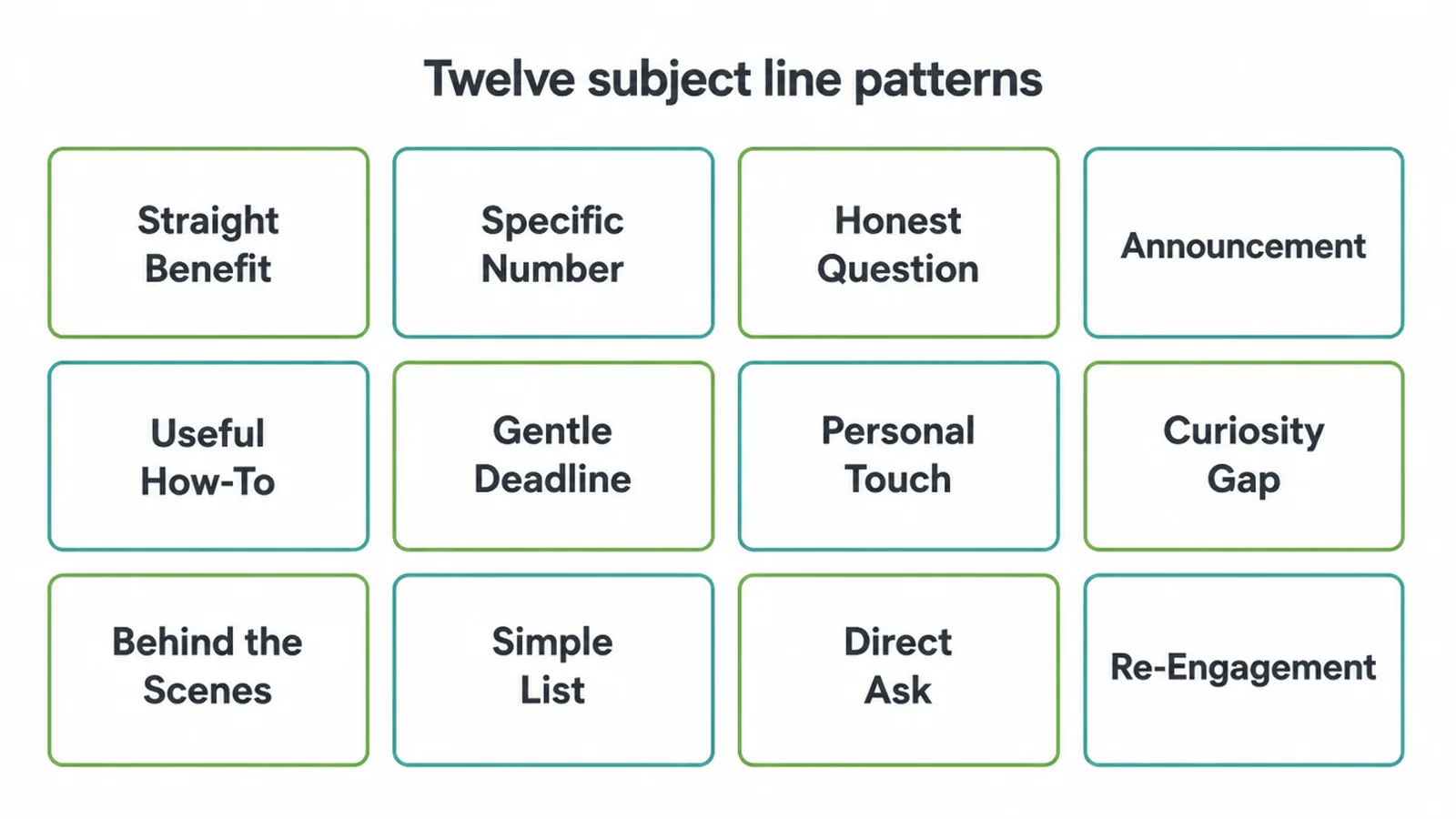
The twelve patterns
| Pattern | When to use it | Example |
|---|---|---|
| The Straight Benefit | When the value is obvious and you just need to state it plainly | Fresh single-origin beans, roasted this morning / Your coffee, delivered every Friday |
| The Specific Number | When a concrete number makes the promise feel real and skimmable | 3 ways to brew a better cup at home / We roasted 4 new beans this month |
| The Honest Question | When a real question matches what the reader is already wondering | Running low on beans? / Which roast is right for you? |
| The Announcement | When you have genuine news, a launch, or a change worth sharing | Our new autumn blend just dropped / Ember and Oak is open on Sundays now |
| The Useful How-To | When the email teaches something your reader wants to learn | How to keep beans fresh for weeks / The grind size most people get wrong |
| The Gentle Deadline | When there is a real deadline, used honestly and not every week | Last day for free delivery this week / Holiday orders close Friday |
| The Personal Touch (light) | When you have accurate data like a name, city, or last order | Sarah, your usual is back in stock / A little something for our George Town regulars |
| The Curiosity Gap (honest) | When the body truly pays off the tease, never as bait | The one mistake ruining your morning coffee / We changed how we roast. Here is why. |
| The Insider / Behind-the-Scenes | When you want to build connection with a peek behind the curtain | A look inside our roastery this week / What we learned from 1,000 bags of beans |
| The Simple List | When one email holds a few useful items worth previewing | 5 gifts under one roof for coffee lovers / This week: new beans, a sale, and a free guide |
| The Direct Ask / Reply Bait | When you want a reply and to boost your sender reputation | Quick question about your last order / What should we roast next? |
| The Re-Engagement | When a subscriber has gone quiet and you want to win them back | Still want our emails? / We miss you. Here is a fresh cup on us. |
7. How to test your subject lines
You cannot know what your list responds to until you test on your list. Start simple. Take two versions of a subject line, send version A to a small slice of your list and version B to another slice, then send the winner to everyone else. That is an A/B test, and most email platforms build it in. If your list is too small to split, compare over time instead. Try a pattern for a few sends, note how it does, then try another.
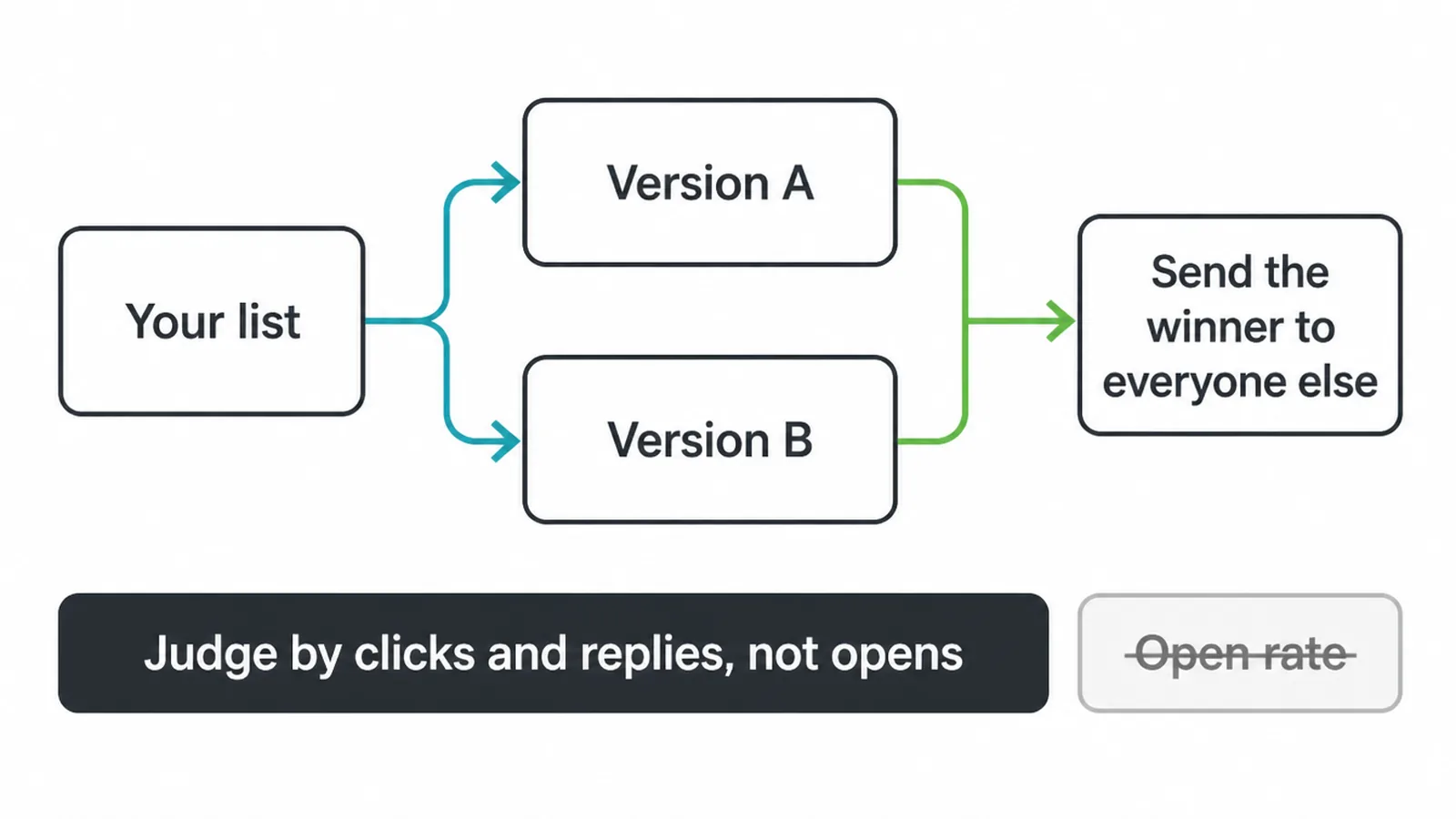
Open rate is no longer a reliable number
Here is the catch that changes how you read the results. Open rate is no longer a reliable number. Since Apple Mail Privacy Protection arrived, Apple preloads the tracking pixel on delivery, which registers opens no human actually triggered, and Apple Mail is a big share of opens. Both Postmark and Validity explain the effect.
So judge your subject lines mainly by clicks and replies, the actions a real person has to take. Opens can hint at a trend, but clicks and replies tell the truth. When you plan a series of sends, our guide to email drip campaigns covers how to test across a whole sequence.
Frequently asked questions
1. What makes a good email subject line?
It is clear, honest and specific, and it promises one thing the body delivers. Its only job is to earn the open.
2. How long should an email subject line be?
Short enough to read on a phone without cutting off. Aim for a handful of words and let the preheader carry the rest, and test on your own list rather than chasing a magic character count.
3. Should I use emojis in subject lines?
You can, sparingly, if they fit your brand, but never rely on one and never let it replace clear words. Test whether your audience responds, because there is no verified universal lift.
4. Do personalised subject lines work?
Light personalisation, like a first name, their city or their last order, can help, but only if it is accurate and relevant. Fake or clumsy personalisation hurts, so ignore the recycled percentage claims.
5. What words trigger spam filters?
Modern filters weigh many signals, not a banned-word list, but aggressive money or urgency language, all caps and lots of exclamation marks, plus a poor sending reputation, raise your risk. Write like a human.
6. What is preheader text?
It is the short preview line shown next to or under the subject in the inbox. It is a second hook, so use it to add detail rather than repeat the subject.
7. How do I test subject lines?
A/B test two versions on a slice of your list, or compare over time. Because open rate is now inflated by Apple Mail, judge mainly by clicks and replies, not opens alone.
8. Should subject lines be clever or clear?
Clear wins almost every time. Clever only works when it is also clear, and if a reader has to decode it, you have lost the open.
8. The takeaway
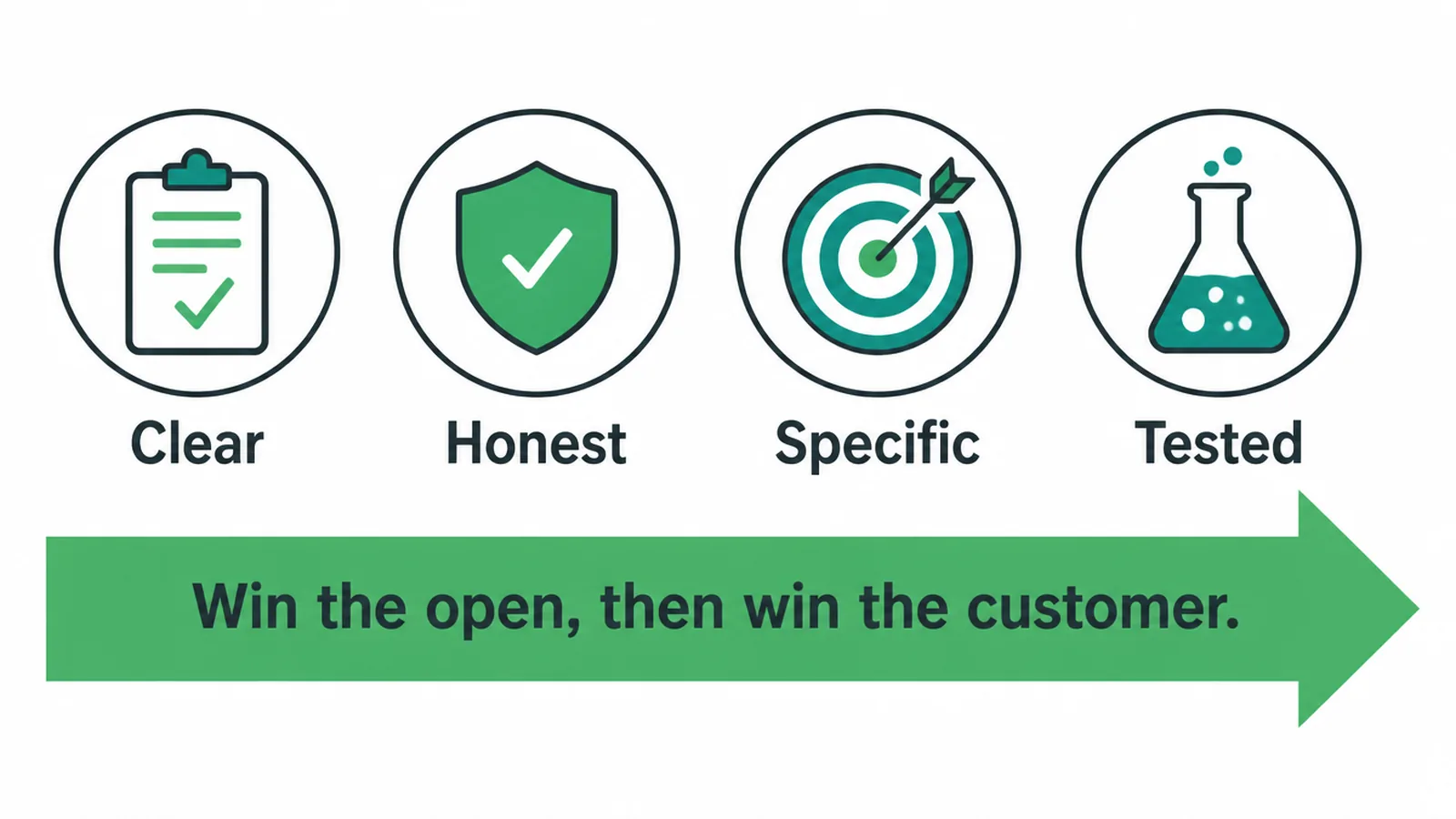
Good subject lines are not tricks. They are clear, honest, and specific, they promise one thing the body delivers, and they are tested on your own list. There is no single best line waiting to be copied. Use the twelve patterns as starting shapes, write them in your voice, and let clicks and replies tell you what works. Get the subject right and you win the open. Get the email right and you win the customer.
Want your emails and website working together to turn readers into customers? Talk to our team and we will help you build an online marketing system that does exactly that.

About the author
Gregory Yeoh is the founder of Seed Light, a web design and digital marketing agency. He writes and sends a lot of email for small businesses. We have watched clever lines flop and plain ones win, and we test everything on real lists rather than trusting recycled benchmarks. Our aim here is simple and honest advice you can use today, with no promises of magic open rates.