Key takeaways
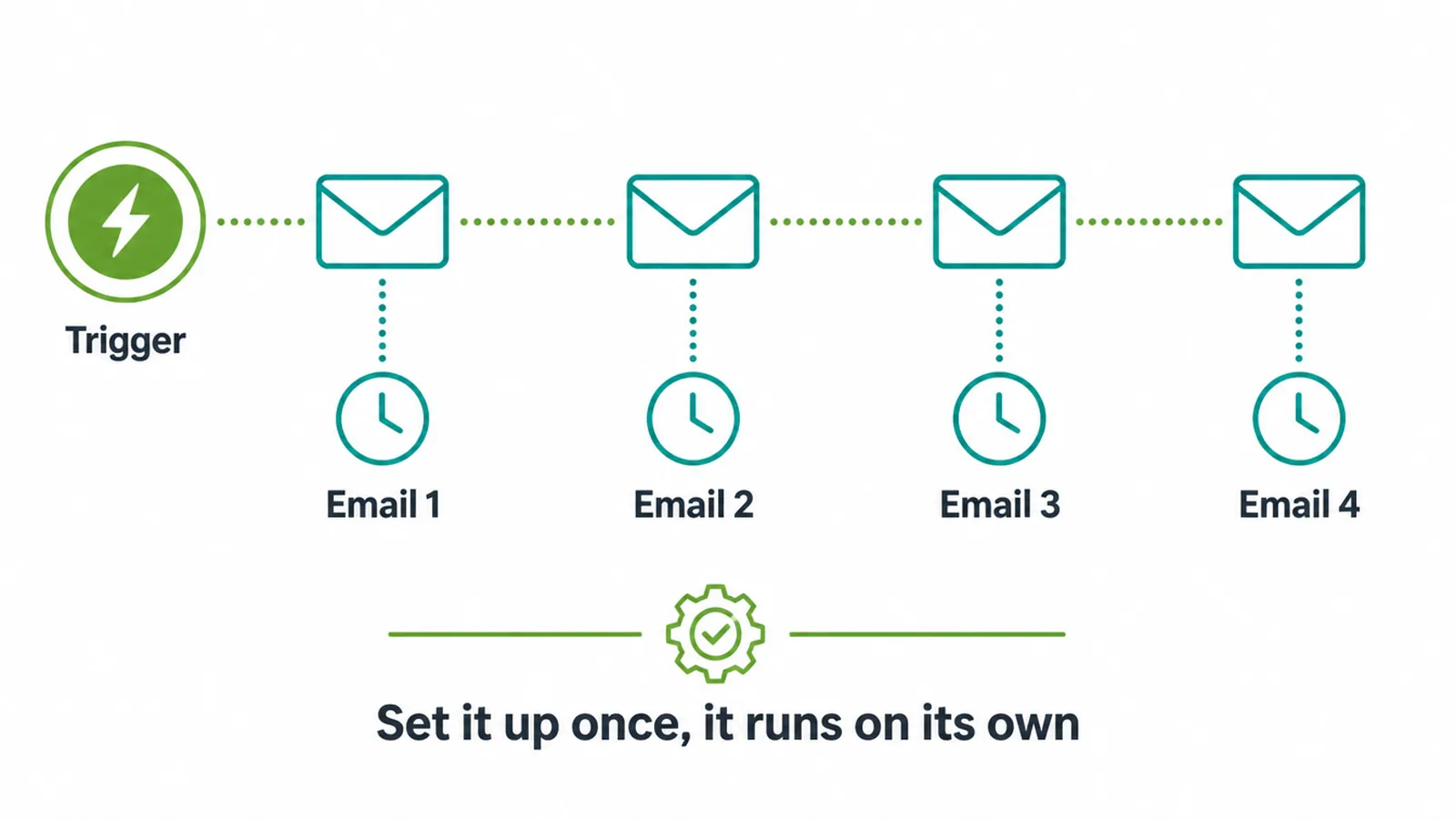
- A drip is automated, not manual. It starts from each person's own action and runs on a timer, so different people sit on different emails at the same time.
- Three ingredients make a drip: a trigger that starts it, timing between emails, and one clear goal for the sequence.
- Five sequences cover most cases: welcome, lead nurture, abandoned cart, re-engagement, and post-purchase.
- Plan the whole sequence before you build it. One job per email, lead with the point, one call to action each.
- Judge a drip by clicks, replies and conversions, not opens. Apple Mail Privacy Protection auto-marks emails as opened, so open rates read higher than reality. MailerLite flags this in its own email benchmark data.
1. What is an email drip campaign?
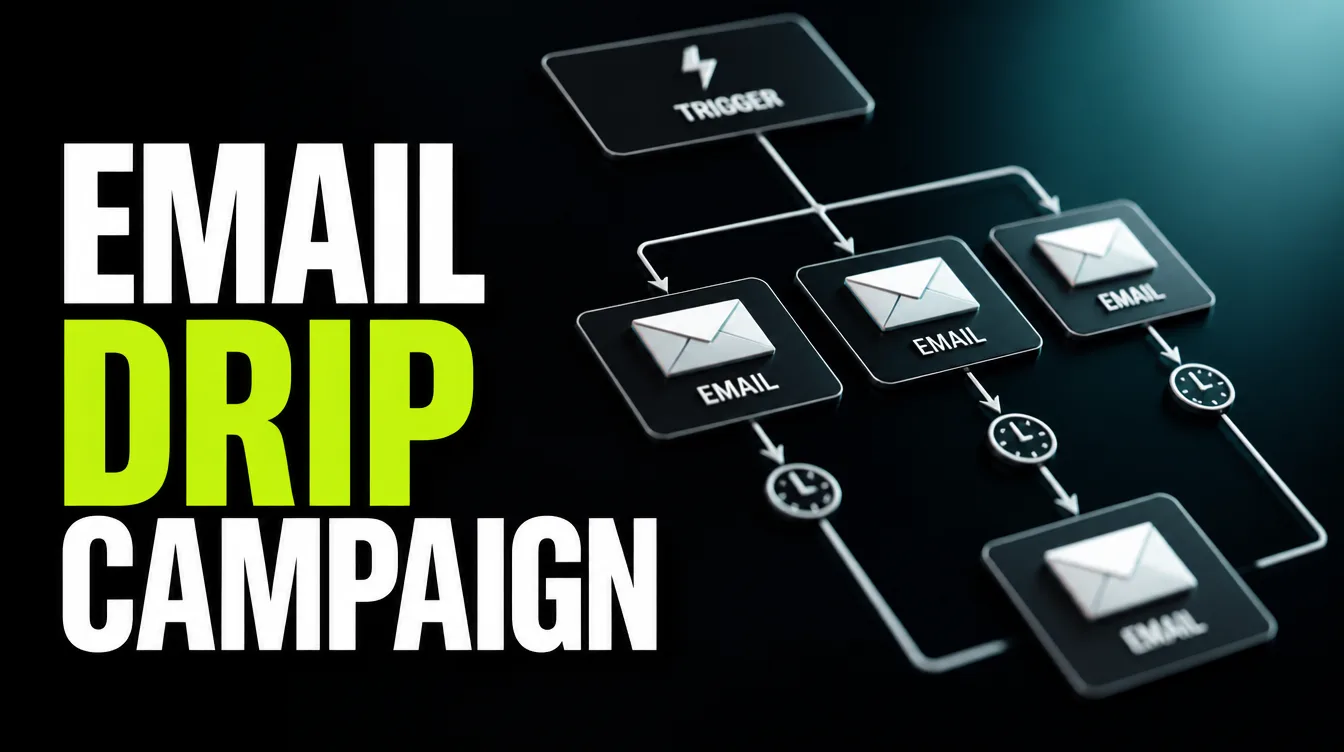
An email drip campaign is a fixed sequence of emails that sends itself. You build it once, and the software delivers each email in order after a person triggers the flow. That is the whole idea. It has three parts.
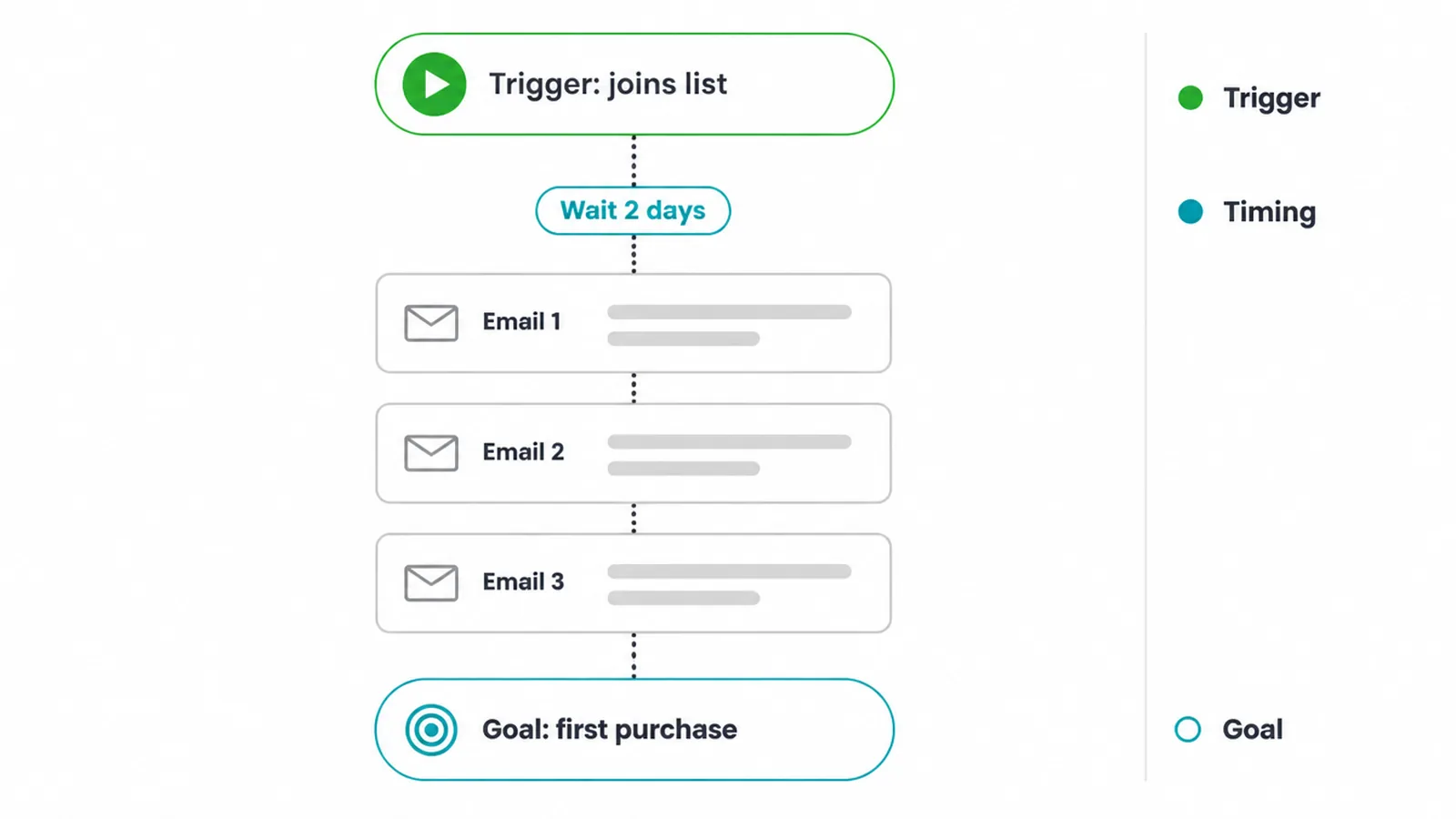
- First, a trigger. This is the action that starts the drip, like joining your list, buying a product, or not opening anything for 60 days.
- Second, timing. This is the wait between each email, set in hours, days or weeks.
- Third, a goal. This is the one thing the whole sequence is trying to get someone to do, like make a first purchase or come back.
You will see drips called a few other names. Drip marketing, an automated email sequence, an email flow, or just email automation. They all mean the same thing: emails that go out on a schedule, tied to what each person does.
2. How is a drip different from a newsletter?
A newsletter is one message you send to your whole list at once, by hand. Everyone gets it the same day. You write it, you hit send, you are done. Great for news, offers and updates.
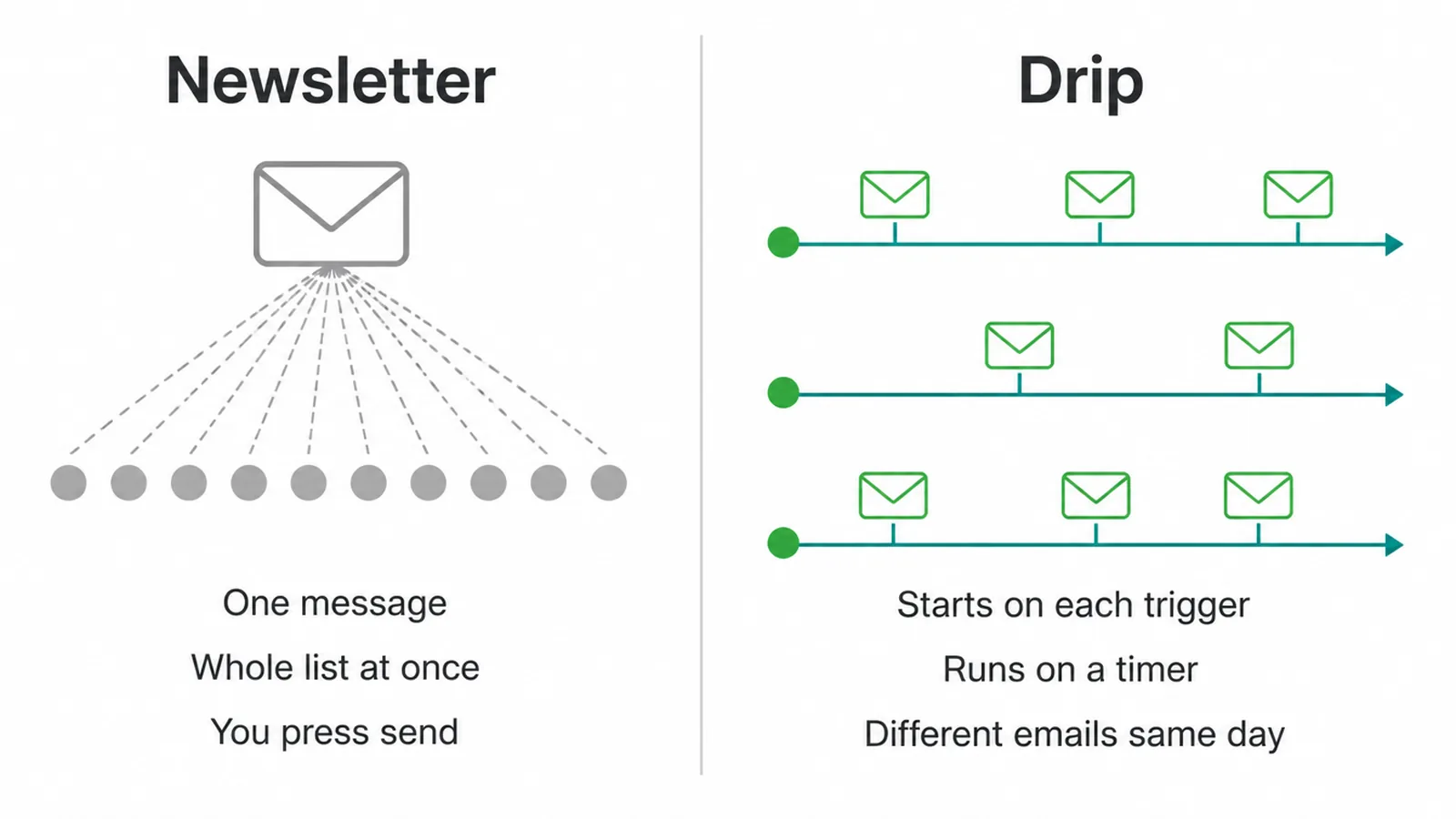
A drip is different. It starts from each person's own trigger and runs on their own clock. So one person can be on email 1 while another is on email 4 of the exact same sequence, on the same day. Nobody presses send. The timer does.
If you are still new to the basics, our guide to email marketing for small business covers where newsletters and drips each fit.
3. What are the common drip campaigns?
Most small businesses only need a handful of drips. Each one has a clear trigger and a clear job. Here are the five you will use most.
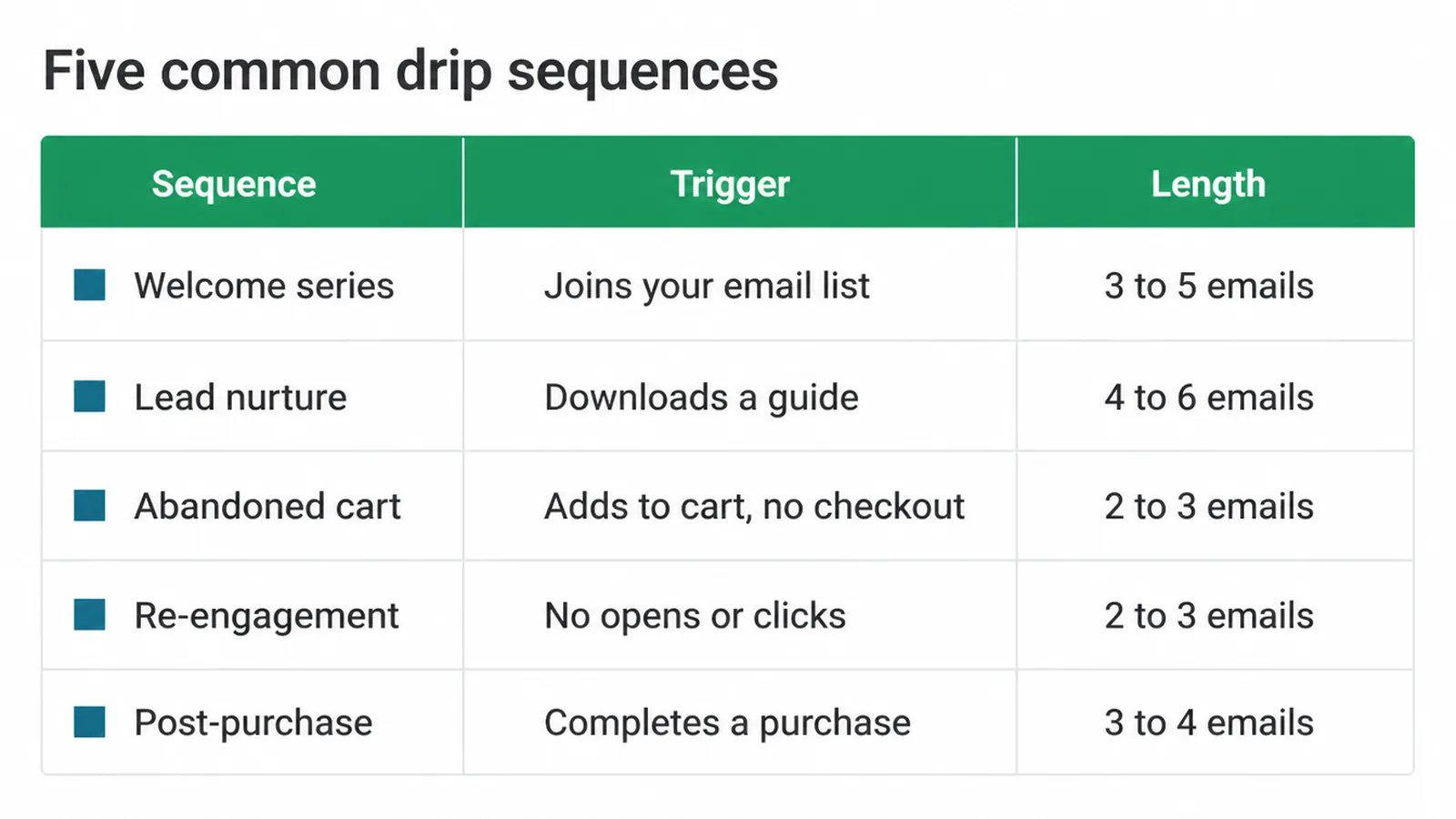
- A welcome series starts when someone joins your list. It says hello, sets expectations, and points to your best stuff.
- A lead nurture sequence warms up someone who showed interest but has not bought, by teaching and building trust over a few weeks.
- An abandoned cart drip fires when someone adds to cart and leaves, reminding them fast while intent is still high.
- A re-engagement or win-back sequence targets people who went quiet, giving them a reason to come back or a graceful way out.
- A post-purchase drip runs after a sale to confirm the order, help them use the product, and set up the next step.
| Sequence | Trigger | Goal | Rough length |
|---|---|---|---|
| Welcome series | Joins your email list | Say hello, build trust, drive a first click or purchase | 3 to 5 emails over about 1 to 2 weeks |
| Lead nurture | Downloads a guide or shows interest | Teach, answer doubts, move toward a buy | 4 to 6 emails over 2 to 4 weeks |
| Abandoned cart | Adds to cart, does not check out | Recover the sale while intent is high | 2 to 3 emails over about 24 to 48 hours |
| Re-engagement / win-back | No opens or clicks for a set period | Bring people back, or clean the list | 2 to 3 emails over 1 to 3 weeks |
| Post-purchase | Completes a purchase | Confirm, help them use it, set up the next step | 3 to 4 emails over a few weeks |
The welcome series is the one most people build first, and it is worth doing well. If that is your starting point, grab our welcome email templates for copy you can adapt. And if you want to see how these sequences map to a customer's journey from stranger to buyer, the marketing funnel stages guide lines it all up.
4. How to plan a drip campaign in 5 steps
Do not open the email tool first. Plan the whole sequence on paper or a doc, then build it. Here is the order that works.
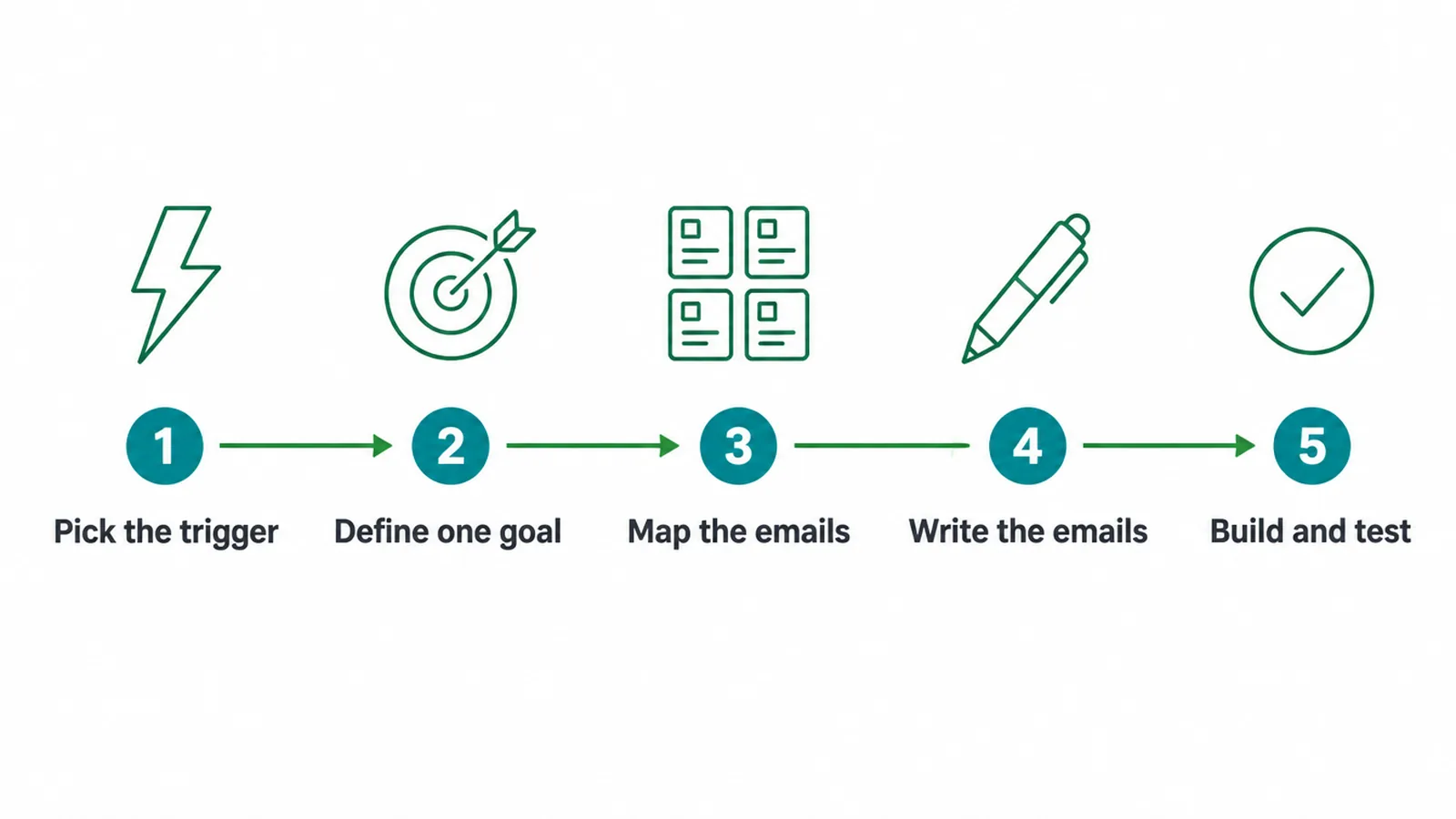
Step 1: Pick the trigger
Decide the exact action that starts the drip. Joins the list. Buys. Abandons a cart. Goes quiet for 60 days. Be specific, because the trigger sets the mood of the first email. A welcome trigger means "nice to meet you". An abandoned-cart trigger means "you left something behind". Same tool, very different tone.
Step 2: Define one goal
Pick the single thing the whole sequence should get someone to do. First purchase. Book a call. Come back. Use the product. One goal per drip. If you try to do three things, the emails get muddy and nobody acts. Write the goal at the top of your plan and keep every email pointed at it.
Step 3: Map the emails
Sketch 3 to 6 emails. For each one, write four things: the subject line, the one point it makes, the single call to action, and the delay before it sends. Give each email one job. Email one welcomes. Email two teaches. Email three offers. Do not cram. When the map reads cleanly top to bottom, the sequence is ready to write.
Step 4: Write the emails
Keep each email short. Lead with the point in the first line. Plain words, one idea, one call to action. Write the full sequence in one sitting so the emails connect and reference each other. If you need a head start on tone and structure, our welcome email templates give you a frame you can rewrite in your own voice.
Step 5: Build and test it
Now open the software. You need an email tool that supports automation, and most email marketing platforms do. Set the trigger, drop in your emails, and set the wait time between each.
Before you switch it live, run yourself through it. Sign up with a test email and watch the emails arrive in order with the right timing. If you want to speed the build up and let smart tools help with the flow, see how to automate email marketing.
5. How to measure a drip campaign
Judge a drip on clicks, replies and conversions, not opens. Opens used to be the go-to number, but they are unreliable now. Apple Mail Privacy Protection preloads images and marks an email as opened whether the person read it or not, which inflates open rates.
MailerLite makes this exact point in its email benchmark report, noting that Apple's privacy feature auto-marks emails opened, so click rate is the more trustworthy signal.
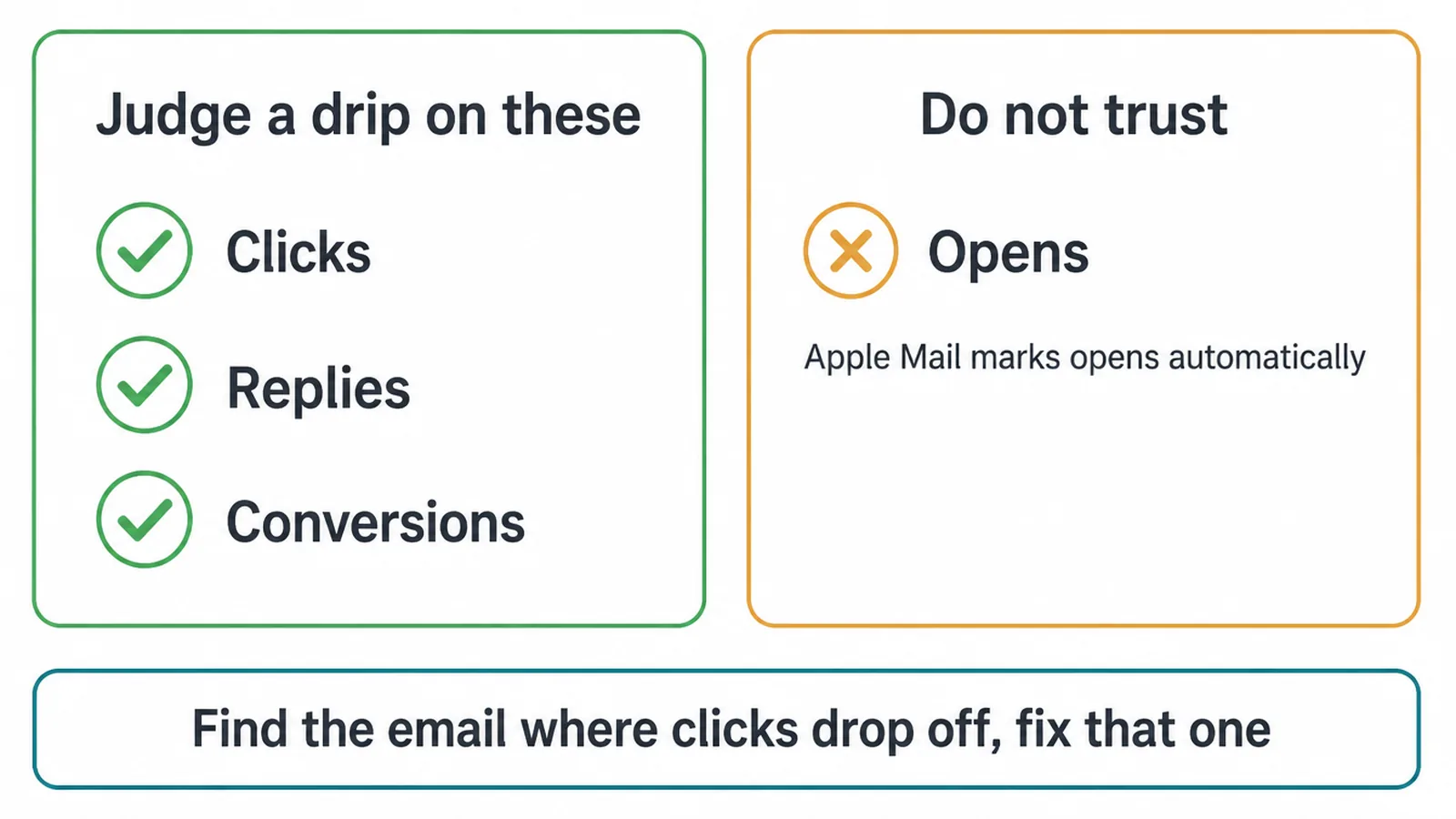
So track what people actually do. Did they click through? Reply? Buy? Then look for the drop-off. Find the email in the sequence where clicks fall off a cliff and fix that one first. That is where the sequence is leaking, and it is the highest-value thing you can improve. Pointing more traffic at a broken email three does nothing.
6. The honest take
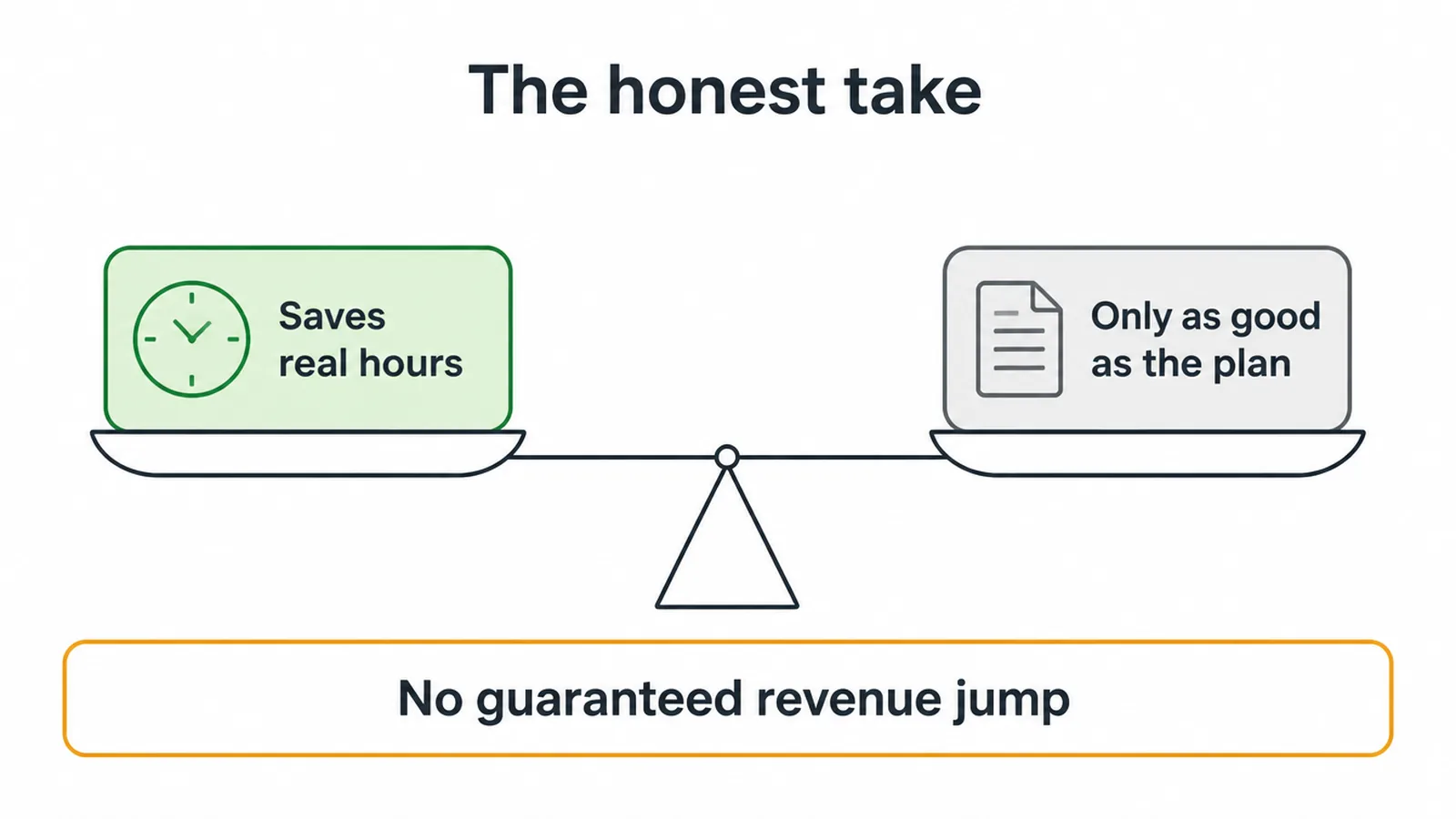
Automation saves you real hours. Once a good drip is live, it does the follow-up you would never get around to doing by hand. That is the win.
But a drip is only as good as the plan behind it. A rushed sequence with no clear goal, sent too often, annoys people faster than a single bad email, because it keeps arriving.
There is no magic multiplier here. A drip will not guarantee more sales, and anyone promising a fixed revenue jump from automation is selling you a number, not a plan.
Build one clear sequence, measure it honestly, and fix the weak email. If you would rather have the whole thing built and maintained for you, our AI and automation service can set it up.
Frequently asked questions
1. What is an email drip campaign?
A drip campaign is a set of emails that send automatically on a schedule after someone does something, like signs up, buys or goes quiet. You write them once and the software drips them out over days or weeks.
2. How is a drip campaign different from a newsletter?
A newsletter is one message you send to everyone at once, manually. A drip is a fixed sequence that starts from each person's own trigger and runs on a timer, so two people can be on email 1 and email 4 of the same drip on the same day.
3. What are examples of drip campaigns?
Welcome series, lead nurture, abandoned cart, re-engagement or win-back, and post-purchase are the common ones.
4. How many emails should a drip have?
Usually 3 to 6. Enough to make your point and follow up, few enough that you do not wear people out, with one clear goal per sequence.
5. How far apart should drip emails be?
It depends on the trigger. Abandoned-cart emails go within hours, a welcome series spreads over days, and a win-back can be a week or more apart. Match the timing to how urgent the moment is.
6. Do I need special software for drip campaigns?
Yes, you need an email tool that supports automation, and most email marketing platforms do. You cannot run a real drip from a normal inbox.
7. How do I write a drip sequence?
Start from the goal, give each email one job, lead with the point, keep it short, and end with one clear call to action. Write the whole sequence before you build it so the emails connect.
8. How do I measure a drip campaign?
Judge it on clicks, replies and conversions, not opens, because opens are unreliable now. Check where people drop off and fix that email.
7. Want a drip built for you?
Planning a sequence is simple. Building it, wiring the triggers, and keeping it running takes time you may not have. If you would rather hand that off, get in touch with Seed Light and we will map the sequences your business needs and set them up.

About the author
Gregory Yeoh is the founder of Seed Light, which builds websites and runs digital marketing for small businesses. He plans and builds email sequences that follow up for you, and keeps the advice honest: tactics help, but he does not promise numbers he cannot verify. This guide reflects how he actually plans drips for clients.