Key takeaways
- Top of funnel (TOFU) means awareness. It is the work that helps strangers discover you, not the work that closes a sale.
- Give value, do not pitch. A good TOFU offer is free and easy to grab, like a guide or a short video.
- Watch reach, not sales. Track new visitors, new followers and views. Judging awareness by revenue makes you kill work that was actually working.
- People research before they buy. Most U.S. adults at least sometimes read online reviews before a first purchase (Pew Research Center, 2016), so being findable early matters.
- It compounds slowly. Awareness builds over months. Pick one channel and stay consistent instead of spreading thin.
1. What is top of funnel marketing?
Top of funnel marketing is the awareness-stage work that helps people who have never heard of you find your business. It works through helpful content, social posts, video, search, being mentioned by others, and referrals. The goal is to get found and remembered, not to sell.
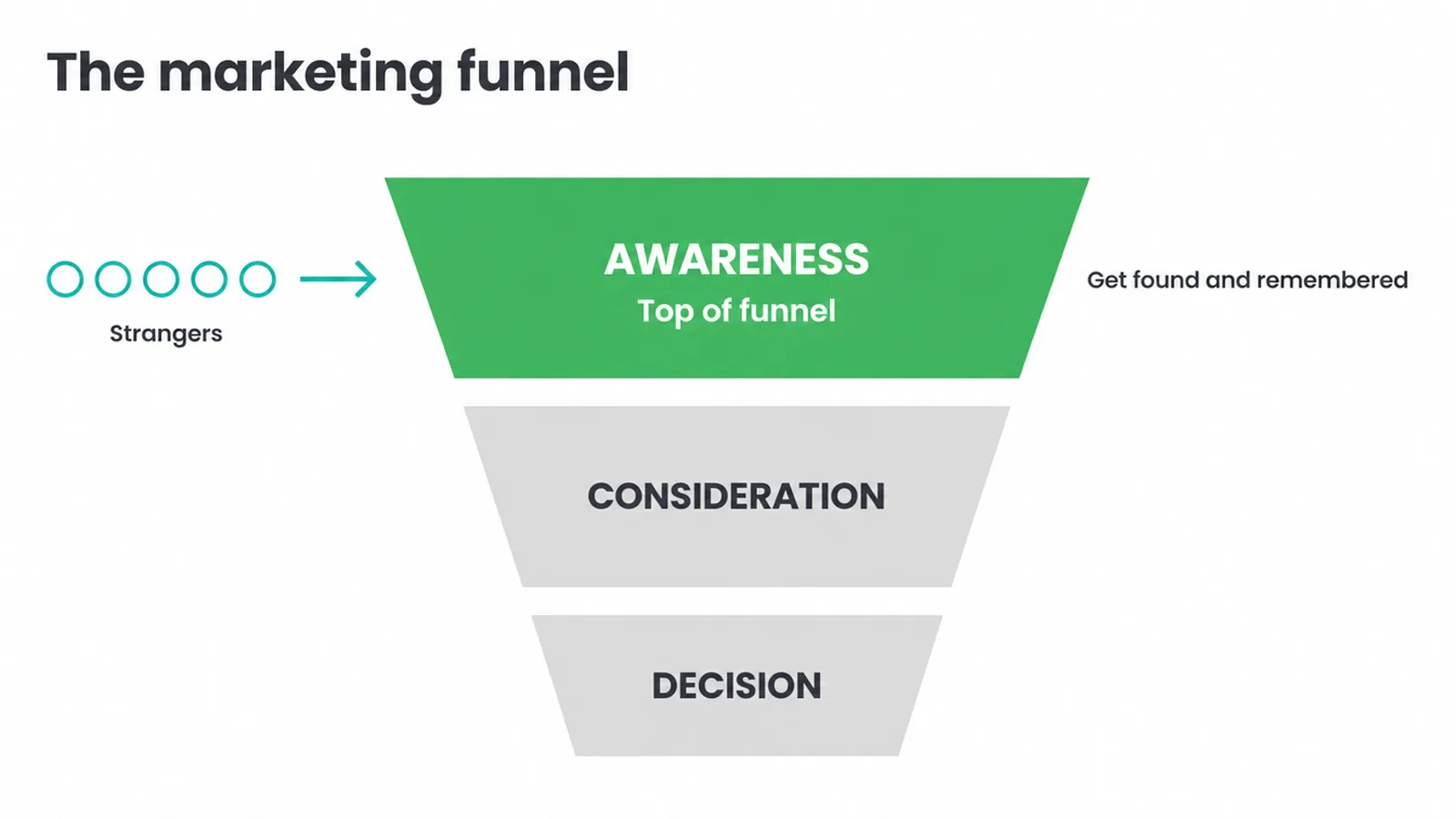
Picture someone with a question. They do not know you. They may not even know your kind of business exists. At this point, you are not trying to win a sale. You are trying to show up when they look, and be useful when they land. That is the whole job of the top of the funnel.
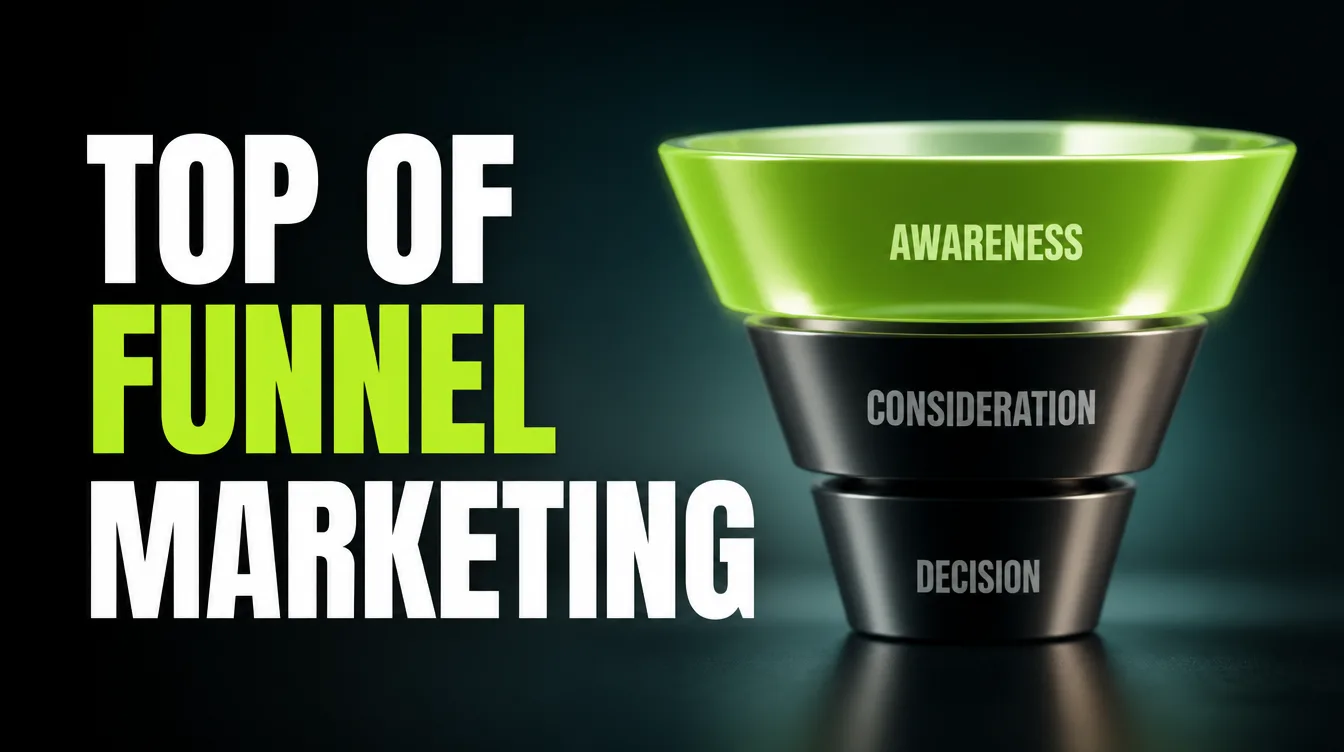
It is called the "top" because the funnel is widest here. Lots of people are just becoming aware. Fewer will move down to consider you, and fewer still will buy. TOFU is simply shorthand for top of funnel, the first and widest part where strangers first meet your brand.
2. The mindset shift: getting found, not closing
The biggest mistake at the top of the funnel is treating a first hello like a checkout. People do not meet you once and buy. They look around, compare, and take their time. Being present and helpful during that window is the point.
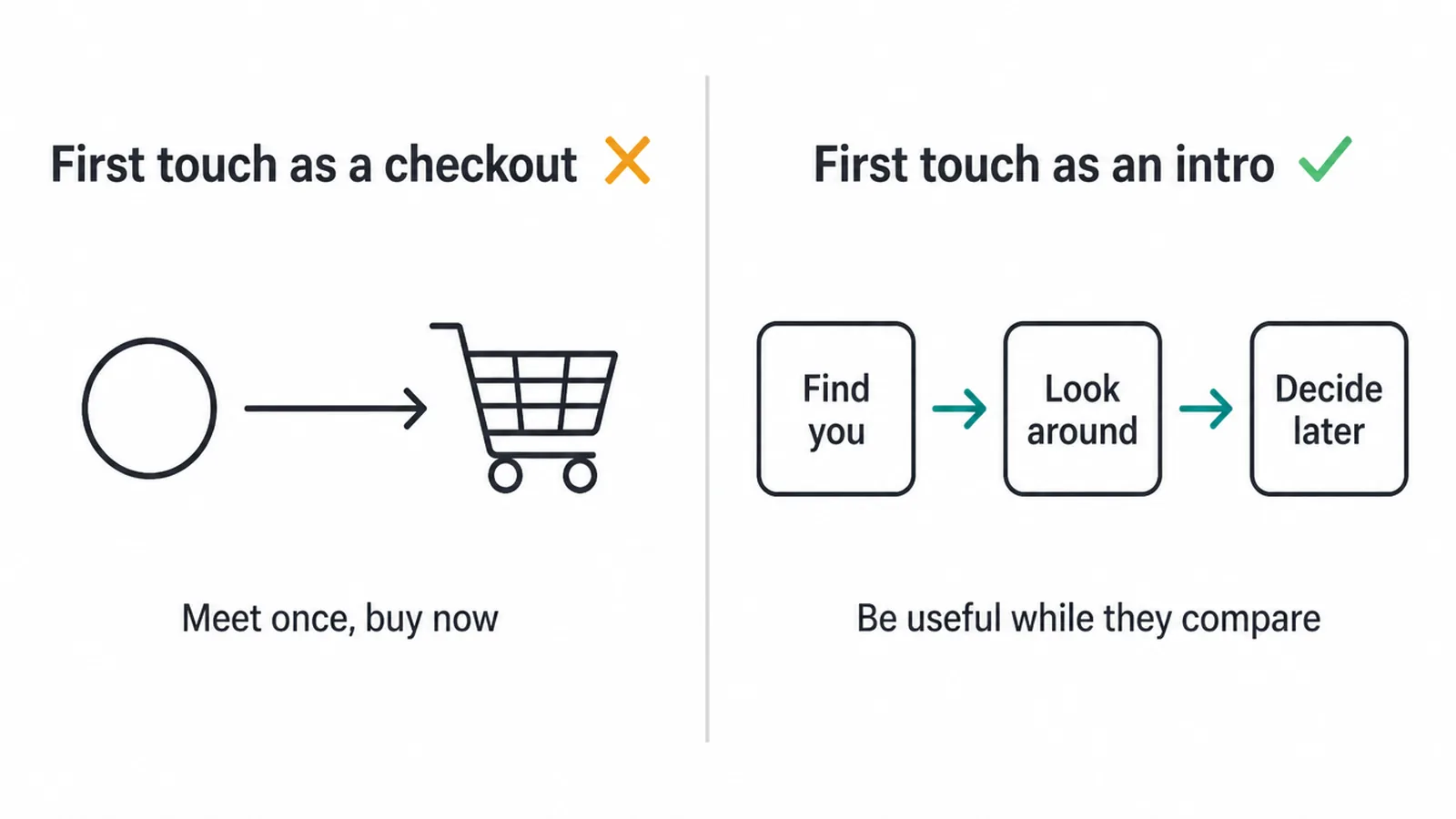
People really do research before they buy. Most U.S. adults at least sometimes read online reviews before a first purchase, and many typically compare prices online and in store first (Pew Research Center, 2016). Those figures are older and directional, but the pattern holds: people look around before they commit. So a first touch is an intro, not a transaction. If you show up early and leave a good impression, you are on the shortlist later, when they are actually ready to decide.
3. Top of funnel channels that attract strangers
Awareness channels all do one thing: put you in front of people who do not know you yet. You do not need all of them. Start with one that fits where your customers already spend time, and keep at it. Here are the main ones and what to watch for each.
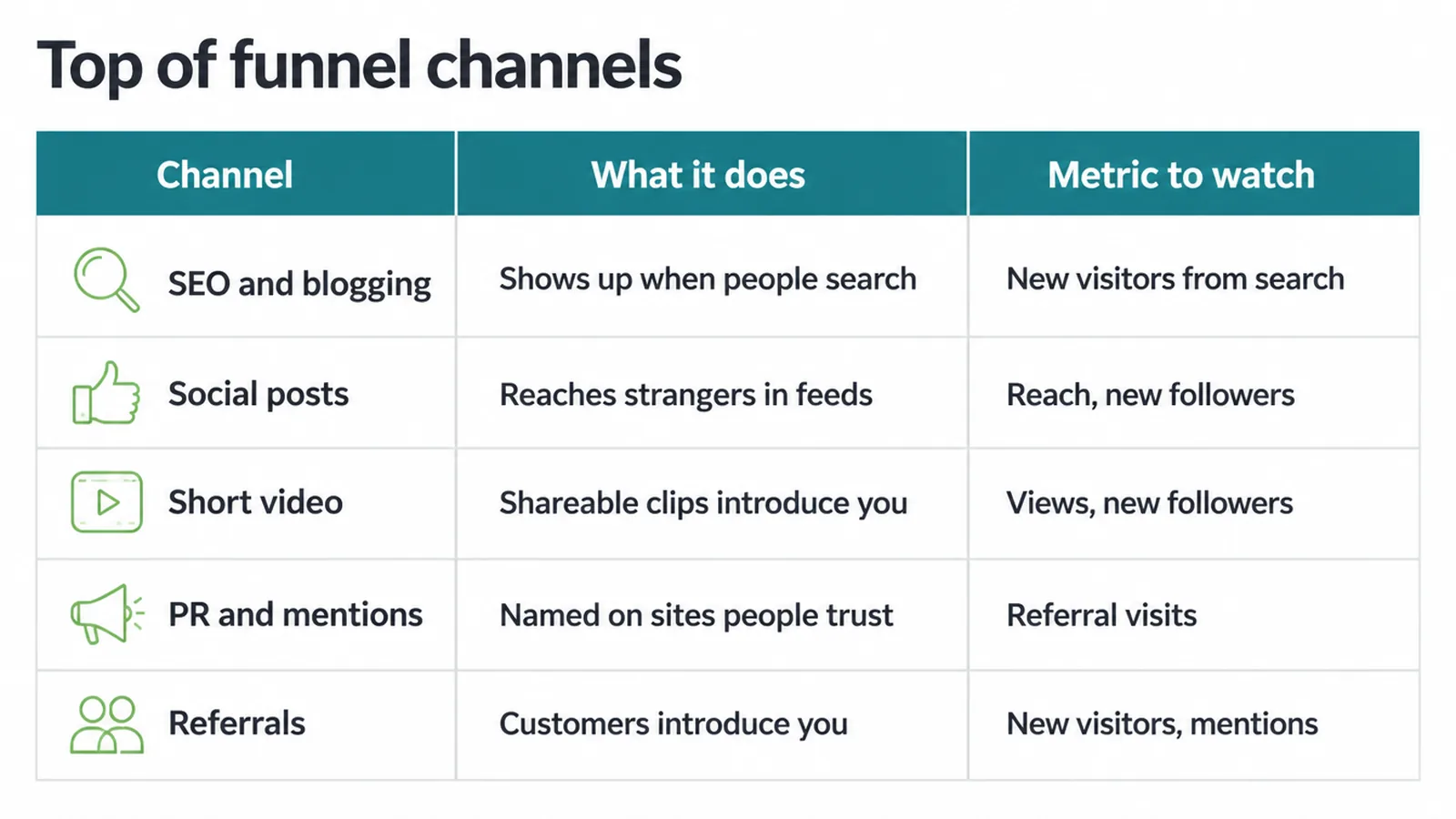
| Channel | What it does | Metric to watch |
|---|---|---|
| SEO and blogging | Answers what people search for, so you show up when they look | New visitors from search, impressions |
| Social posts | Puts helpful or fun content in feeds where strangers scroll | Reach, new followers |
| Short video | Fast, shareable clips that introduce you and get passed around | Views, new followers |
| PR and mentions | Gets you named on other sites, podcasts or lists people trust | Referral visits, brand searches |
| Referrals and word of mouth | Turns happy customers into people who introduce you to others | New visitors, mentions |
For search, a steady stream of helpful posts is one of the strongest ways to get found over time, which is why SEO pays off slowly but keeps working. For social media, the platform depends on your audience: our notes on building an Instagram strategy and growing on YouTube cover two of the biggest. Pick one lane and go deep before you add another.
4. What a good top of funnel offer looks like
A good top of funnel offer is free value with a low barrier. Think a useful guide, a checklist, a helpful video or a simple tip thread. It gives before it asks. It does not book a demo or push a buy-now, because those come later, further down the funnel.
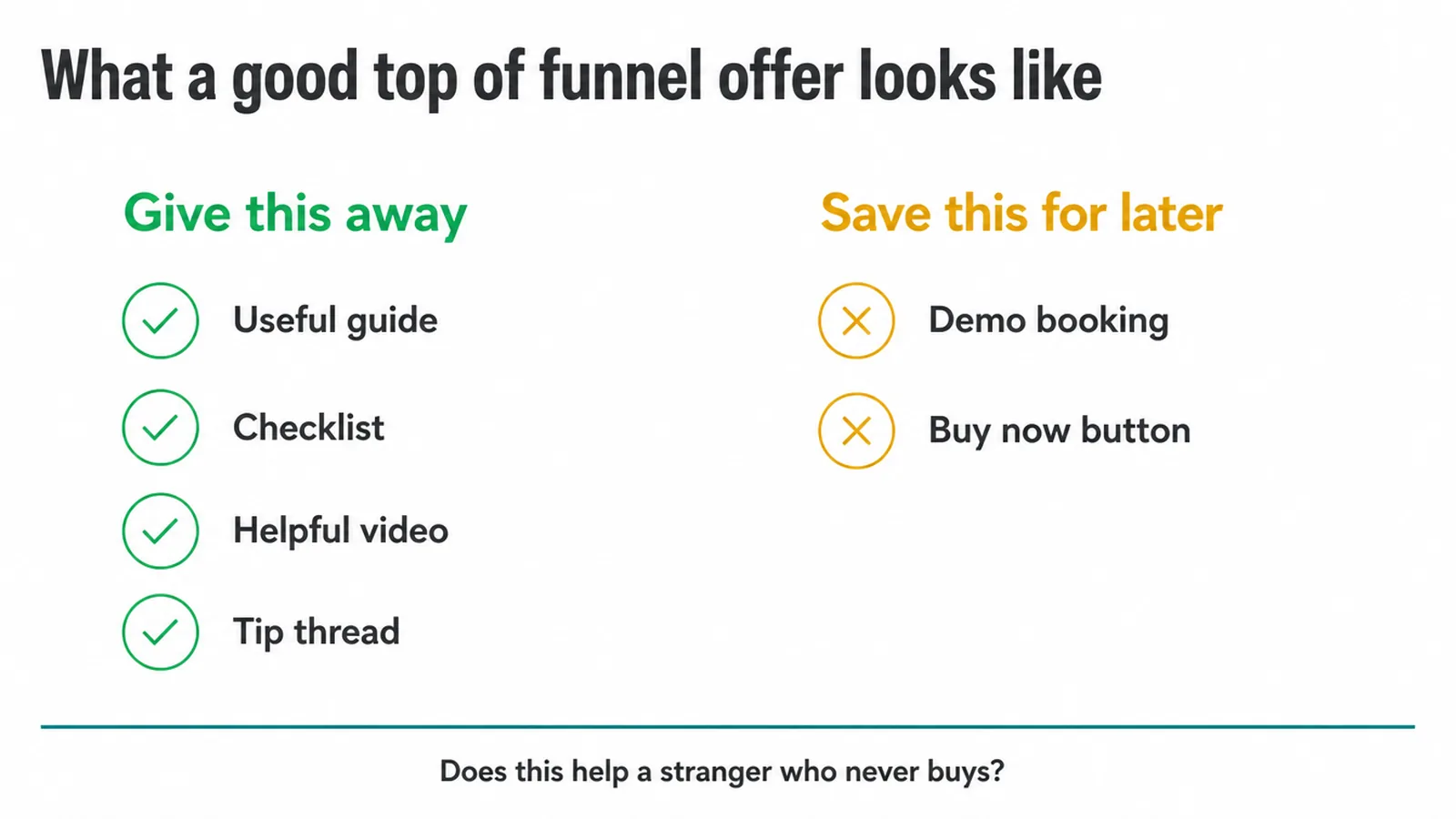
Here is the logic. Nobody hands their money to a stranger. But they will read a helpful post, save a checklist, or watch a two-minute video. When you help first, you earn a little trust and a spot in their memory. That is exactly what you want at this stage.
Content that helps or entertains without pitching is the fuel here, and it is the heart of content marketing. If you want concrete formats to copy, see our list of content marketing examples. The test is easy: does this help a stranger even if they never buy? If yes, it belongs at the top of the funnel.
5. The one metric to watch (and it is not sales)
Track reach and new people at the top of the funnel: new visitors, new followers, video views and impressions. Do not track sales or revenue here. Those are the wrong yardstick for this stage, and using them will push you to kill work that is actually working.
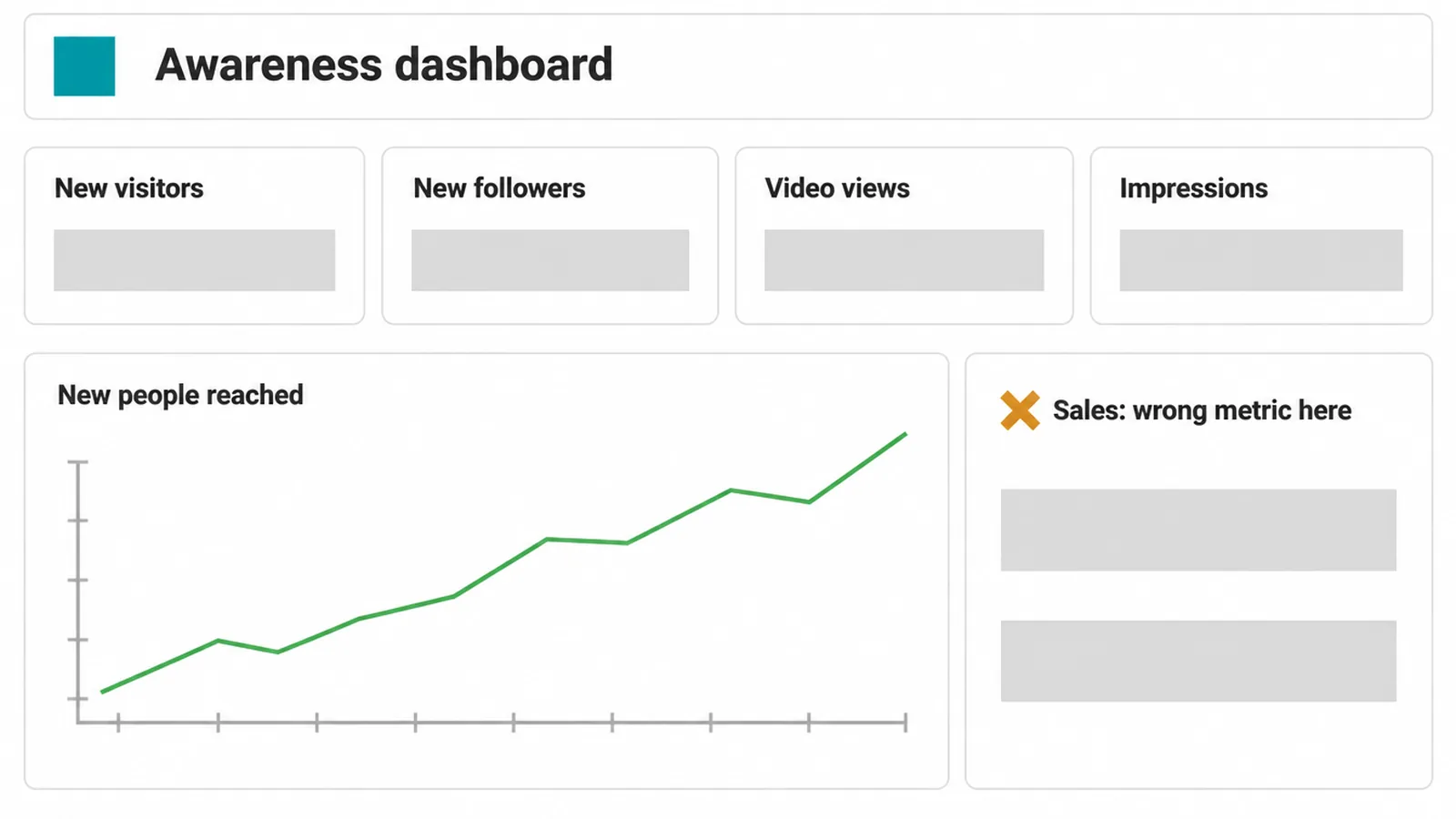
This is the trap that hurts small businesses most. You post helpful content for a month, look at your sales, see no jump, and quit. But awareness was never meant to make an instant sale. The sale, if it comes, happens further down the funnel, weeks or months later. If you measure the top by the bottom, you will pull the plug on the very thing that was filling your funnel with new people. Judge awareness by awareness. Are more strangers finding you this month than last? That is the score.
6. Top of funnel vs bottom of funnel
Top of funnel is about getting discovered by people who do not know you, and you measure it in reach. Bottom of funnel is about helping people who already know you decide and buy, and you measure it in sales. Different jobs, different metrics.
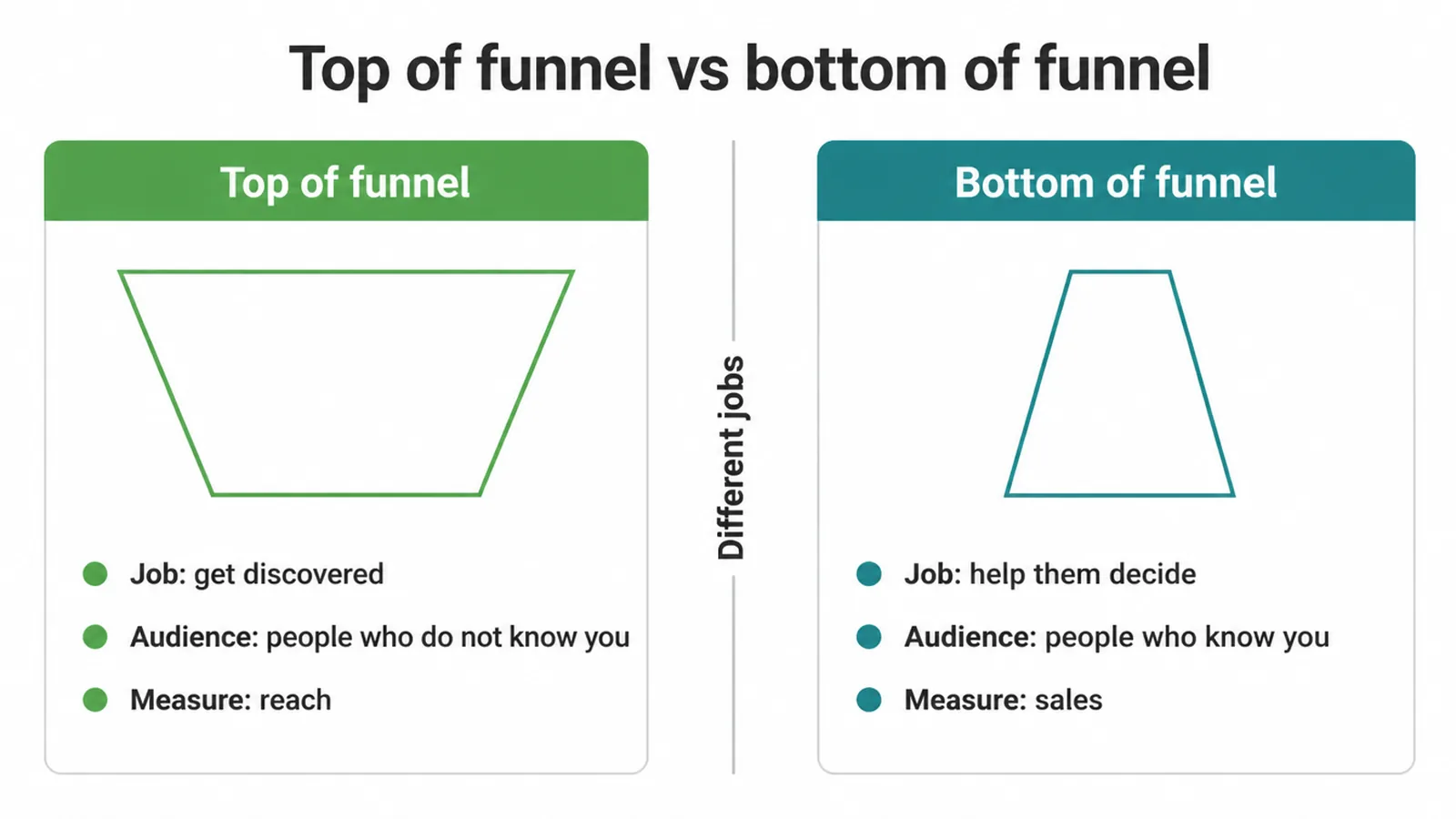
Mixing them up is common and costly. A bottom-of-funnel move, like a strong offer or a clear call to book, works because the person already trusts you. Drop that same hard sell on a total stranger and it falls flat. Each stage needs its own content and its own scorecard. For how the middle and bottom fit together, point back up to the full marketing funnel model.
7. How long until top of funnel marketing works?
It compounds slowly. Awareness builds over months, and the sale, if it comes, usually happens later down the funnel, not from a first touch. No honest channel promises fast sales at this stage, and anyone who does is selling you something.
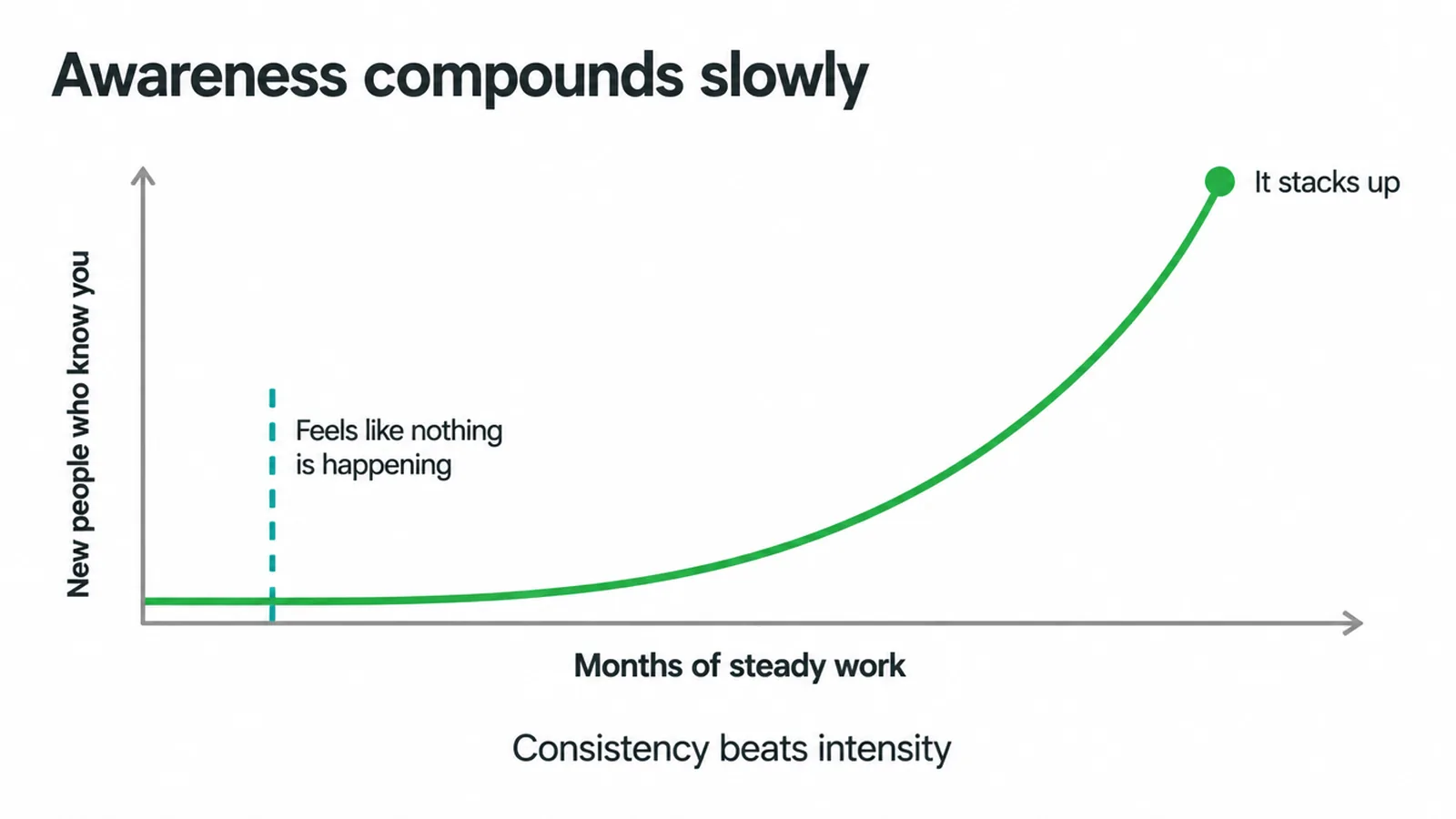
The good news is that consistency beats intensity. One channel worked steadily for months will out-earn five channels done once and dropped. A single blog cadence, one social platform, one video series: pick something you can keep up, and let it stack. Early on it feels like nothing is happening. Then, over time, more strangers know your name, and your whole funnel has more to work with.
8. Do small businesses need top of funnel marketing?
Yes. If no new strangers are discovering you, your whole funnel starves. No new awareness means no new people to consider you, and no new people to eventually buy. But you can start small, because one channel done consistently beats spreading thin.
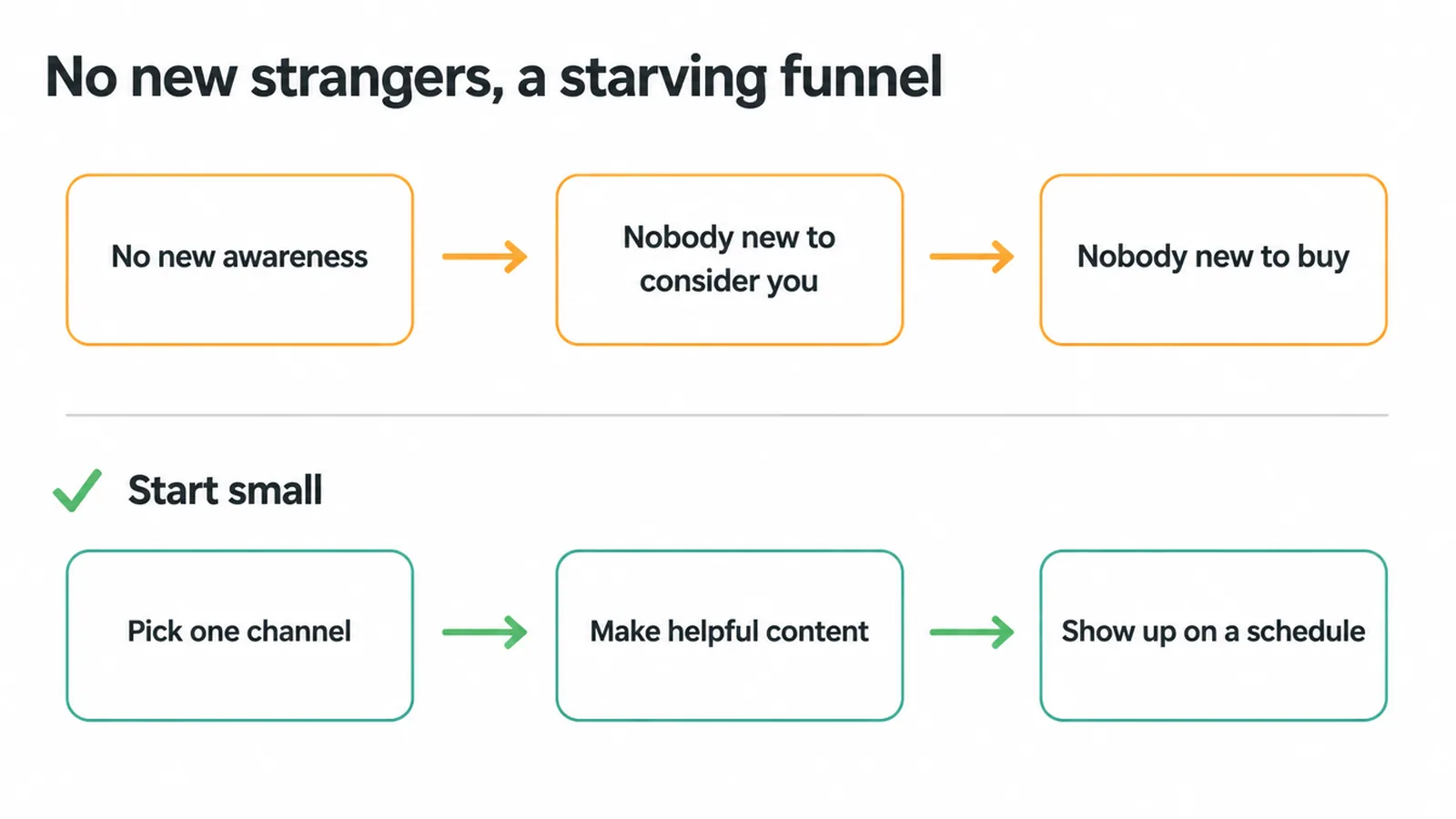
You do not need a big budget or a full team. Pick the one place your customers already are, make genuinely helpful content, and show up on a schedule you can actually hold. That is a real top-of-funnel plan. For how awareness connects to the rest of your marketing, our overview of digital marketing for small businesses ties the pieces together.
Frequently asked questions
1. What is top of funnel marketing?
It is the awareness-stage work that helps people who have never heard of you discover your business, through helpful content, social, video, SEO, being mentioned and referrals. The goal is to get found and remembered, not to sell.
2. What does TOFU mean?
It means top of funnel. It is shorthand for the awareness stage, the widest, first part of the marketing funnel where strangers first meet your brand.
3. What content is top of funnel?
Content that helps or entertains a stranger without asking for a sale, like how-to blog posts, short videos, social posts, simple guides and checklists. It answers a question, it does not pitch.
4. What is a good top of funnel offer?
Free value with a low barrier, like a useful guide, a checklist, a helpful video or a tip thread. Not a demo booking or a buy-now, because those come later, further down the funnel.
5. What metric do I track at the top of the funnel?
Reach and new people: new visitors, new followers, video views and impressions. Not sales or revenue, because those are wrong for this stage and will make you kill work that is actually working.
6. How is top of funnel different from bottom of funnel?
Top is about getting discovered by people who do not know you, measured in reach. Bottom is about helping people who already know you decide and buy, measured in sales. Different jobs, different metrics.
7. How long until top-of-funnel marketing works?
It compounds slowly. Awareness builds over months, and the sale, if it comes, usually happens later down the funnel, not from a first touch. No honest channel promises fast sales here.
8. Do small businesses need top of funnel marketing?
Yes. If no new strangers are discovering you, your whole funnel starves. But you can start small, because one channel done consistently beats spreading thin.
9. Where to go from here
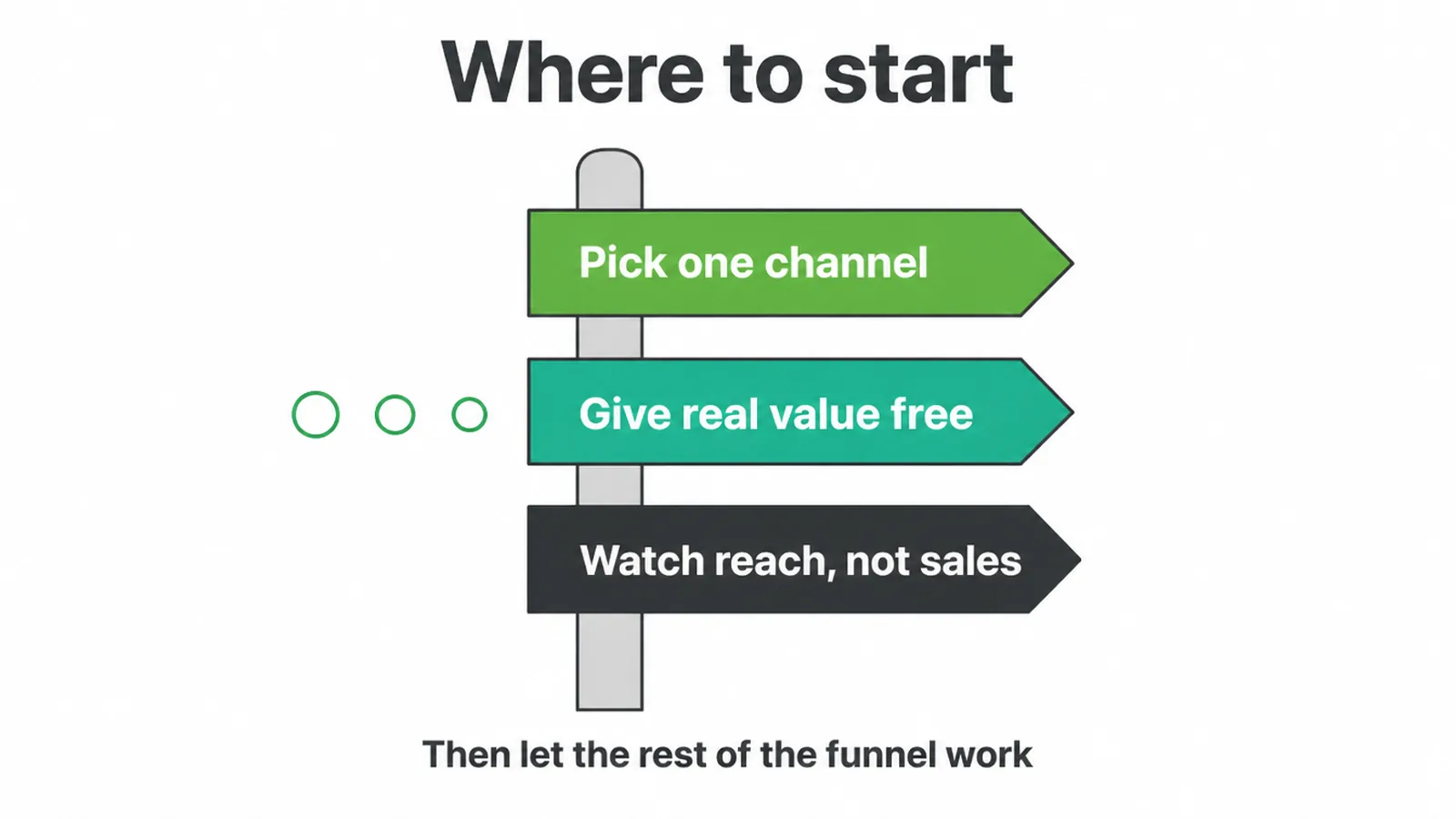
Top of funnel marketing is one job: help strangers find you and remember you. Pick one channel, give real value for free, and watch reach instead of sales. Then let the rest of your funnel do its part over time. If you want a hand building the awareness side of your marketing, or the pages people land on once they find you, get in touch with our team. We will give you a straight answer about what fits your business, with no pushy pitch.

About the author
Gregory Yeoh is the founder of Seed Light, a web design and digital marketing agency that has helped small businesses get found online since 2017. He helps small business owners get found, build trust, and turn attention into customers. We write these posts the way we work: plain, honest, and focused on what actually helps you.