Key takeaways
- Three jobs only. A welcome email should thank the person, set expectations, and point to one next step. Skip everything else.
- Send it instantly. The welcome email should fire within seconds of someone joining, while they still remember you.
- Start with one, grow to three. A single welcome email works. A 3-email sequence lets you build a relationship over a few days.
- Keep it short and human. A few short paragraphs and one button. Sound like a real person, not a robot.
- Templates are a starting point. Rewrite them in your own voice, use the first name, and test versions. Measure your own numbers instead of trusting a benchmark.
1. What a welcome email does
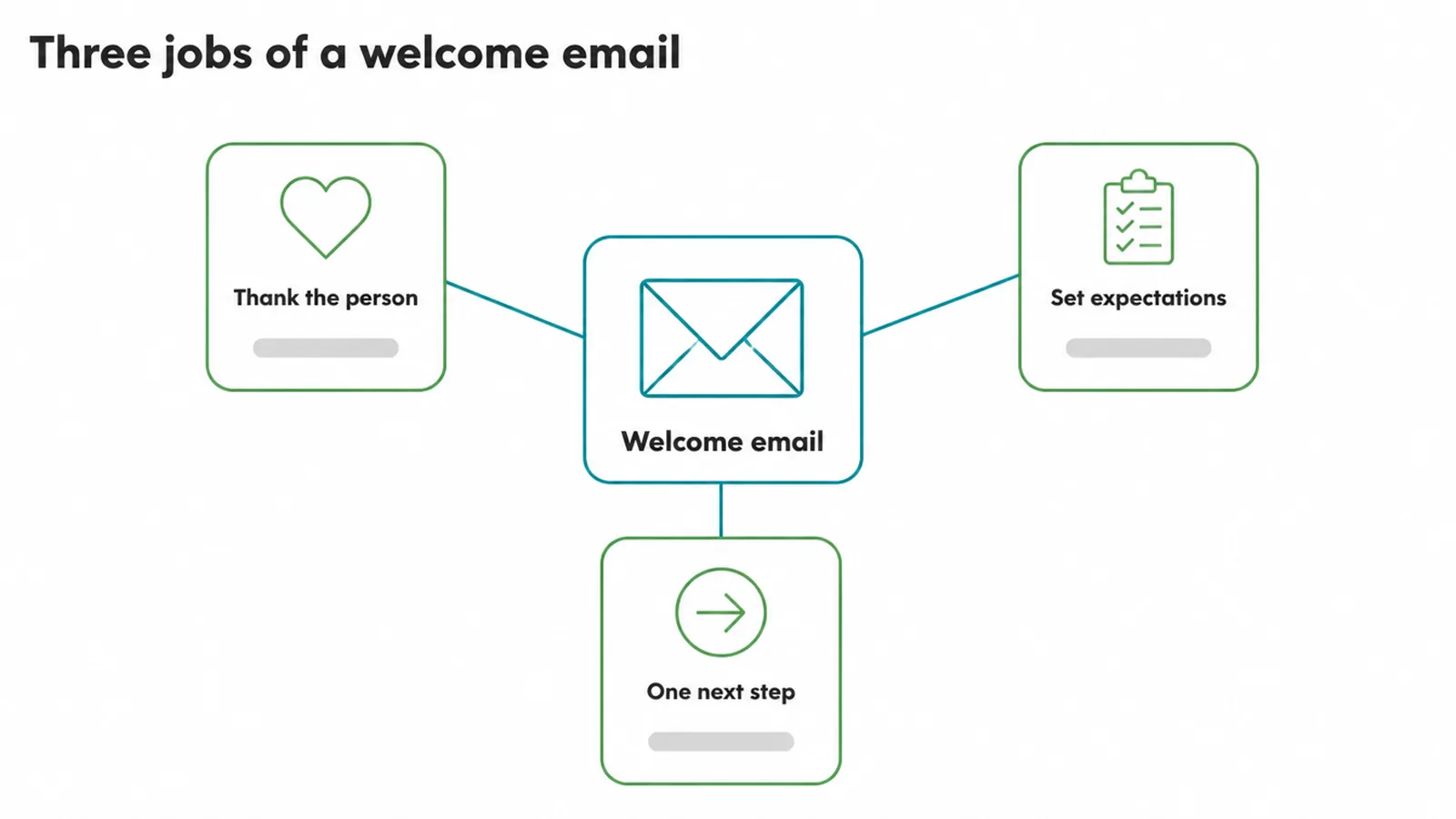
A welcome email is the first automated message someone gets after they subscribe or buy from you. Its whole point is to do three jobs: thank the person, set expectations about what you will send and how often, and give one clear next step.
The welcome moment matters because the person just chose to hear from you. They are paying attention right now in a way they may never be again. So you want that first email to feel warm, useful, and easy to act on.
You will see a lot of big claims online about how welcome emails get huge open rates. Be careful with those. The numbers get copied around, they disagree wildly, and most trace back to vendor blogs that show no original data.
Here is the honest version: welcome emails are typically among your highest-engagement sends because someone just opted in on purpose. That does not mean any single benchmark applies to your list. Send your welcome, watch your own open and click numbers, and let that guide you.
For the wider picture of building a list and sending regular emails, start with our guide to email marketing for small business.
2. The single welcome email template
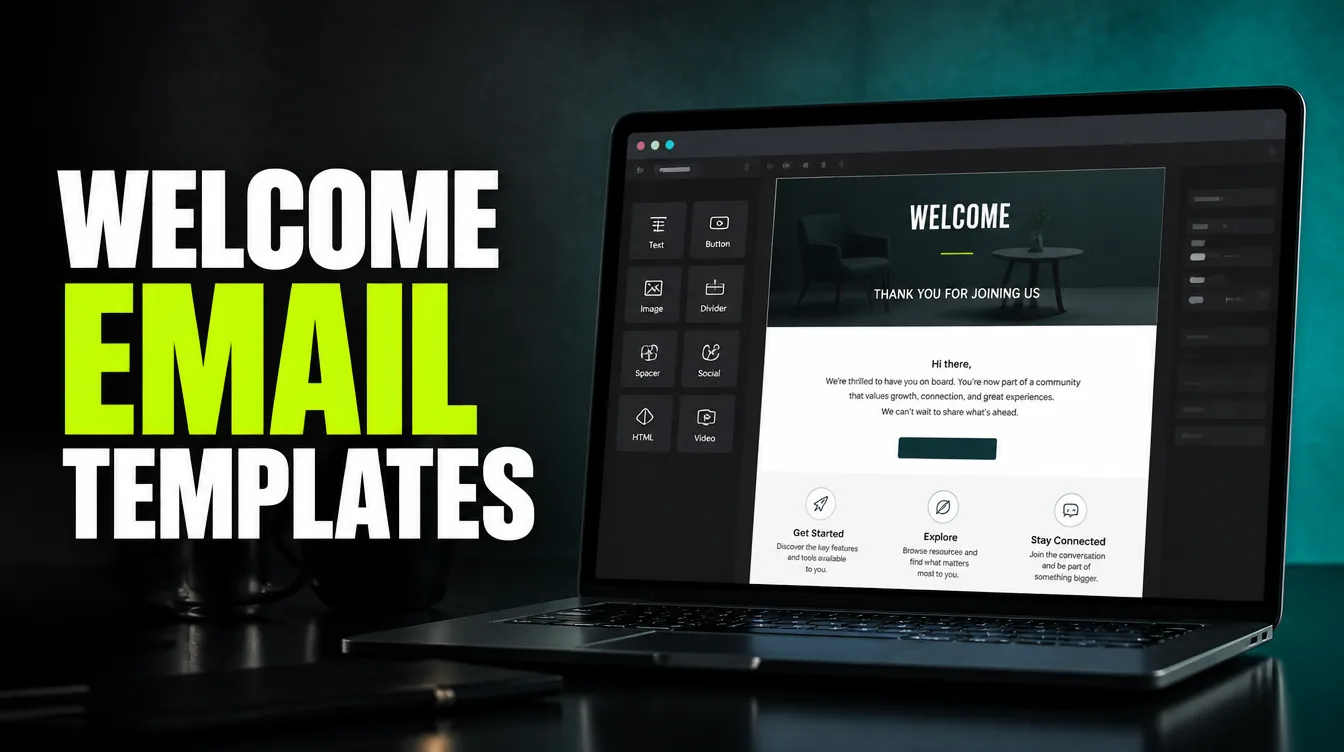
If you only do one thing, do this. A single welcome email covers all three jobs in a short, friendly send. Here is a full template written for a made-up home-and-gift shop called Bright Leaf Studio. Copy it, then swap the placeholders in brackets for your own details.
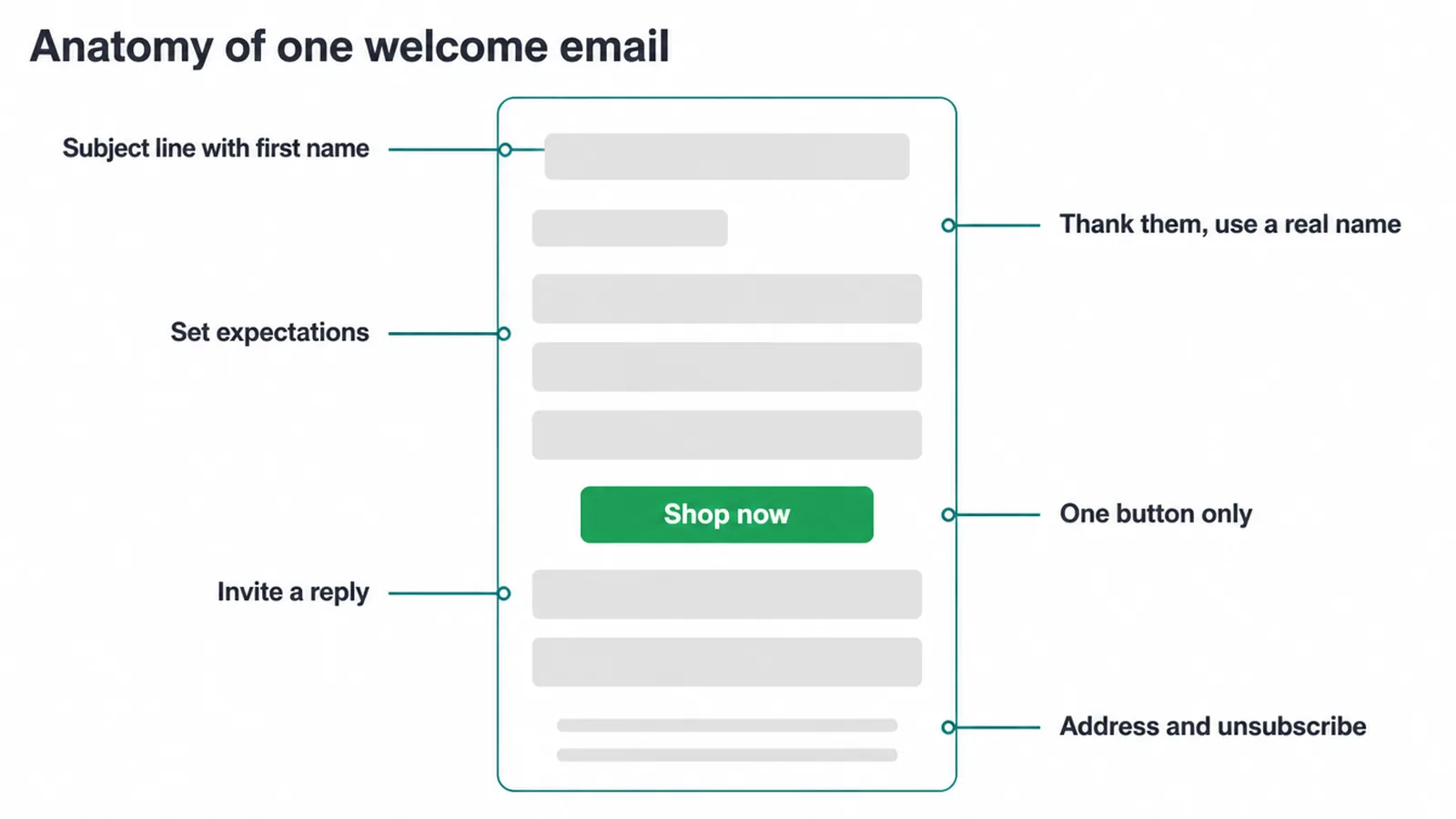
Subject: Welcome to Bright Leaf Studio, [First Name]

Hi [First Name],

Thanks for joining Bright Leaf Studio. I'm [Your Name], and I run
the shop, so you'll usually be hearing straight from me.

Here's what to expect: about one email a week with new arrivals,
a behind-the-scenes look at how our pieces are made, and the odd
tip for making your space feel more like home. No spam, and you
can leave any time.

To get started, here's the thing most new customers look at first:

    [Button: Shop our best sellers ->]  ([your link])

Reply to this email if you ever have a question. A real person
(me) reads every one.

Talk soon,
[Your Name]
[Bright Leaf Studio]
[Your address / unsubscribe link]
Why each part is there
Notice how it works.
- The subject line uses the first name and says who it is from, so the open feels earned.
- The opening thanks them and puts a real person's name on the email.
- The middle paragraph sets clear expectations: what you send, how often, and a promise not to spam.
- Then there is one button, not five.
- The close invites a reply, which makes you feel human and helps your emails land in the inbox.
Your subject line does a lot of the heavy lifting here, so it is worth writing a few and picking the best. Our post on business email subject lines that get opened walks through how.
Swap in a discount variant
Want to nudge a first purchase? Swap the button block for a discount variant. Keep the offer generic in your template and fill in the real detail later. Never bake a number into the template itself.
As a thank-you for joining, here's your welcome discount waiting
at checkout:

    [Button: Claim your welcome offer ->]  ([your link])
3. The 3-email welcome sequence template
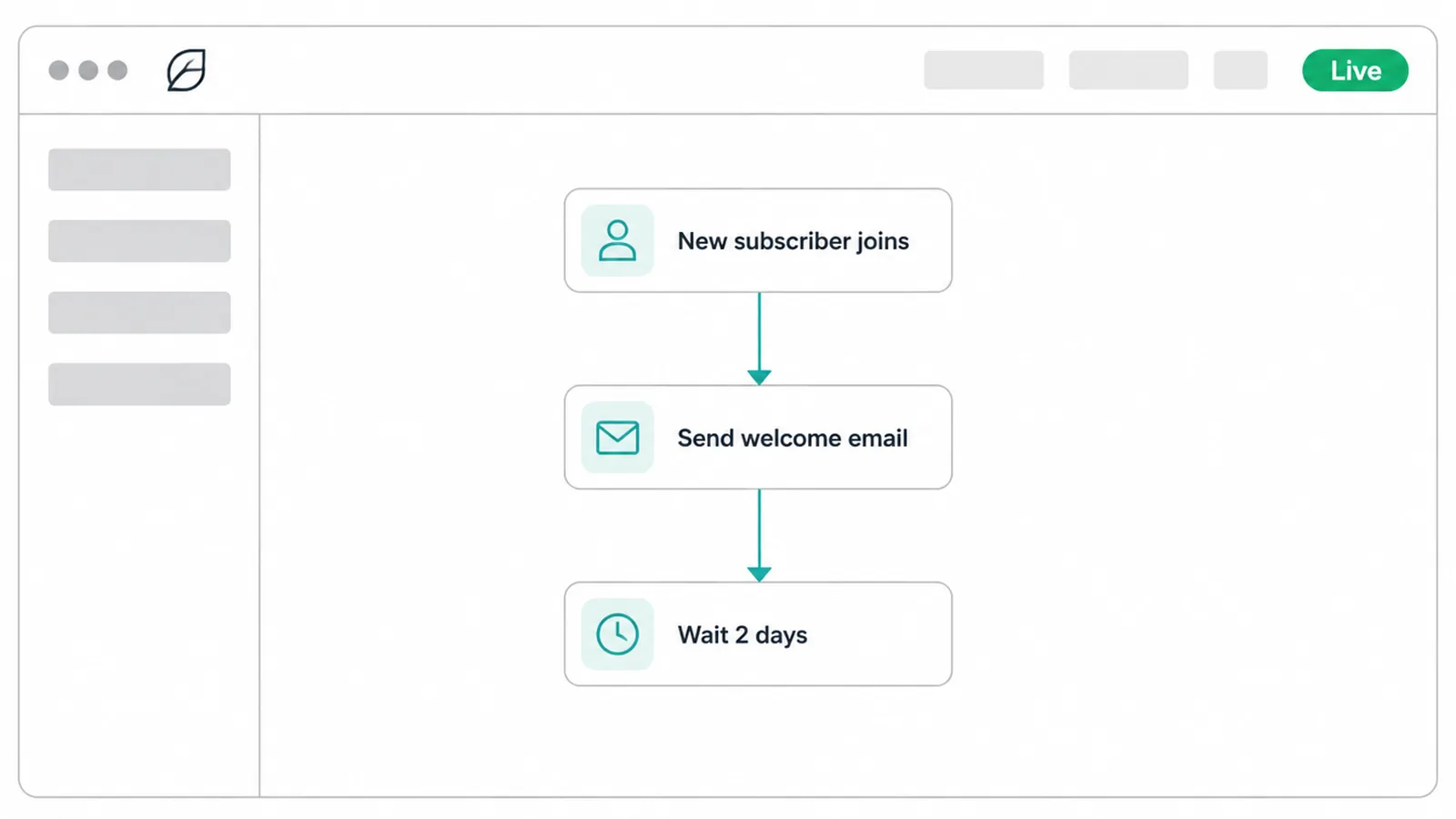
One email is fine to start. But a short sequence lets you build a relationship instead of cramming everything into a single send. A 3-email welcome sequence spreads the load over a few days: welcome first, story or value second, soft offer third. Here is the shape before the templates.
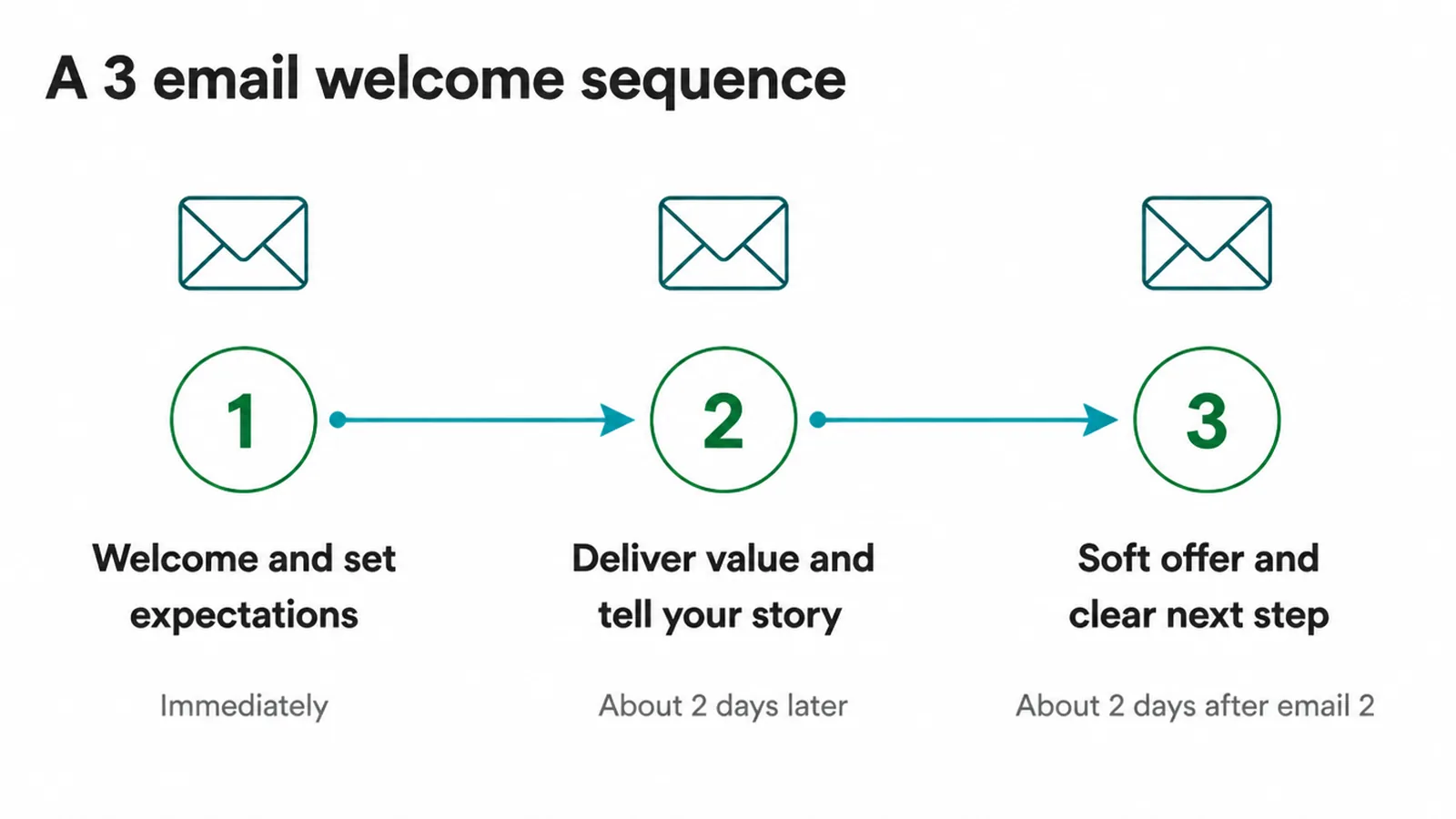
| Goal | When it sends | |
|---|---|---|
| Email 1 of 3 | Welcome and set expectations | Immediately |
| Email 2 of 3 | Deliver value and tell your story | About 2 days later |
| Email 3 of 3 | Soft offer and a clear next step | About 2 days after Email 2 |
The three emails, ready to copy
Here are all three emails, ready to copy. Same made-up shop, same placeholders.
Email 1 of 3: Welcome and set expectations (sends immediately)
Subject: Welcome to Bright Leaf Studio, [First Name]

Hi [First Name],

Thanks for joining. I'm [Your Name], the person behind Bright Leaf
Studio, and I'm really glad you're here.

Quick heads-up on what's coming: over the next few days I'll send
you two short emails. The first shares the story behind the shop,
and the second has something I think you'll like. After that,
expect about one email a week.

For now, here's where most people start:

    [Button: Browse the collection ->]  ([your link])

If you ever want to reach me, just reply. I read everything.

Talk soon,
[Your Name]
[Bright Leaf Studio]
[Your address / unsubscribe link]
Email 2 of 3: Deliver value and tell the story (sends about 2 days later)
Subject: The story behind Bright Leaf Studio

Hi [First Name],

I promised you the story, so here it is, quickly.

I started Bright Leaf Studio in [year] because [one honest reason,
e.g. "I couldn't find gifts that felt handmade and personal
without a huge price tag"]. Every piece we sell is [what makes it
different, e.g. "made in small batches by a team of three"].

That's the whole idea: [your one-line promise, e.g. "beautiful,
useful things that don't cost the earth"].

If that sounds like your kind of thing, here's what people tell
us they love most:

    [Button: See our most-loved pieces ->]  ([your link])

More soon,
[Your Name]
[Bright Leaf Studio]
[unsubscribe link]
Email 3 of 3: Soft offer and clear next step (sends about 2 days after Email 2)
Subject: A little something to get you started, [First Name]

Hi [First Name],

You've been with us a few days now, so I wanted to make it easy
to try Bright Leaf Studio for yourself.

[Choose one:
 - "Here's your welcome offer, ready at checkout:" (for a discount)
 - "Here's the piece I'd pick if it were my first order:" (for a
   recommendation, no discount)]

    [Button: [Claim your welcome offer -> / Shop this pick ->]]
    ([your link])

No pressure at all. And if you're not ready, that's fine too,
I'll keep sending you the good stuff either way.

Thanks for being here,
[Your Name]
[Bright Leaf Studio]
[Your address / unsubscribe link]
Each email has one job and one button. Together they warm someone up without pressure. If you want to go further than a welcome, this is where automated sequences come in, like nurture emails, abandoned-cart reminders, and win-back sends. See our guide to email drip campaigns and how to build one for the wider set of automated flows.
4. How to make the templates yours
A template gets you 80% of the way. The last 20% is what makes it yours, and it matters. Do these things before you hit send.
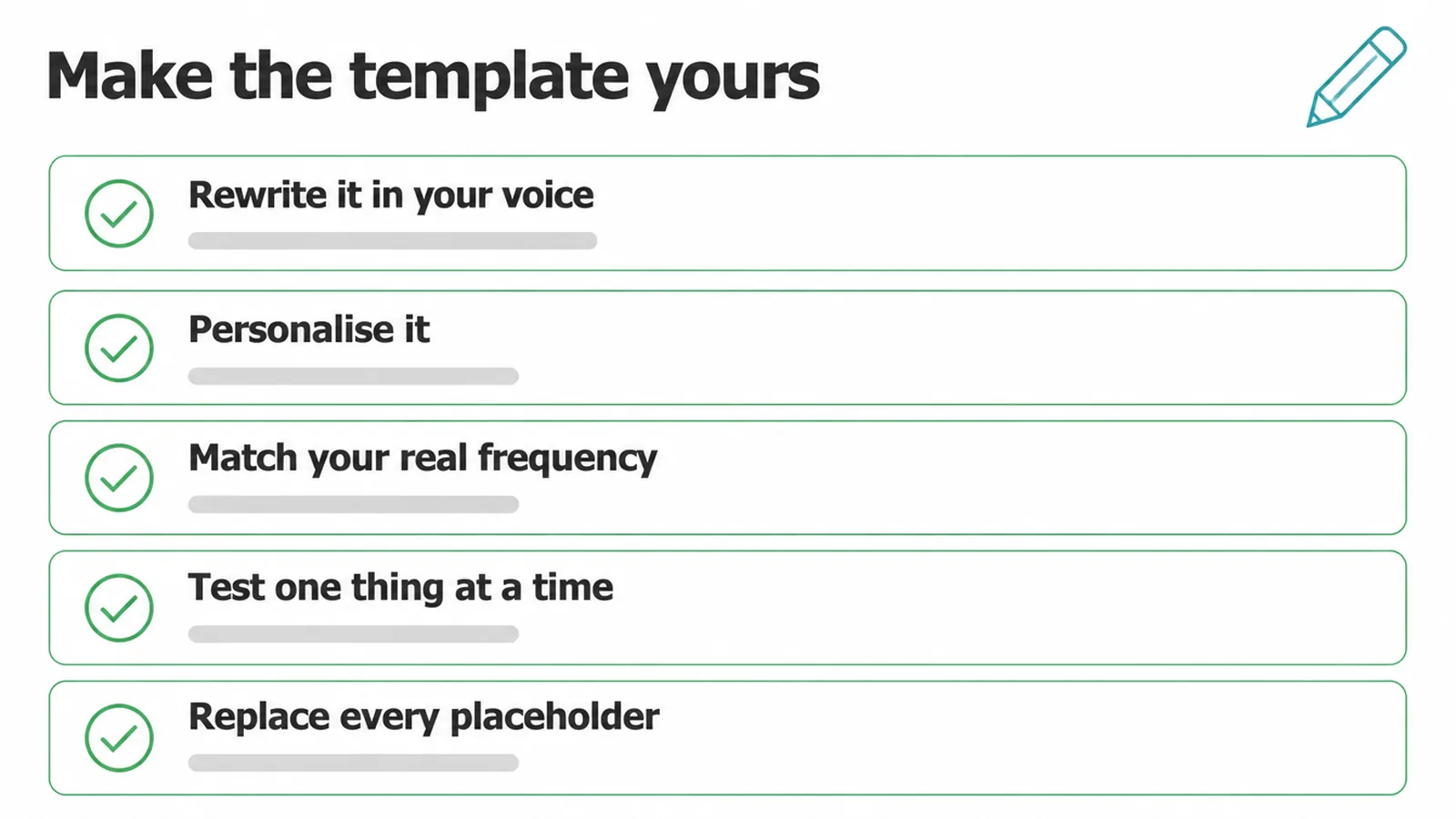
- Rewrite it in your voice. Read it out loud. If it does not sound like how you actually talk to a customer, change the words until it does.
- Personalise it. Use the first name where your tool supports it. If you can, mention how they joined, like a purchase or a sign-up form.
- Match your real frequency. If you cannot send weekly, do not promise weekly. Say what you will genuinely do and stick to it.
- Test one thing at a time. Try two subject lines, or two buttons, and keep the winner. Change one thing so you know what made the difference.
- Do not ship [Your Name]. Read the whole email one last time and replace every placeholder. Send yourself a test first, always.
Once your welcome is dialled in, your email tool can send it automatically the moment someone joins, the simplest kind of automation to set up. If you want a hand setting that up, our guide to automating your email marketing covers the tools and triggers.
5. Common welcome email mistakes
Most welcome emails miss for the same handful of reasons. Check your draft against this list before it goes live.
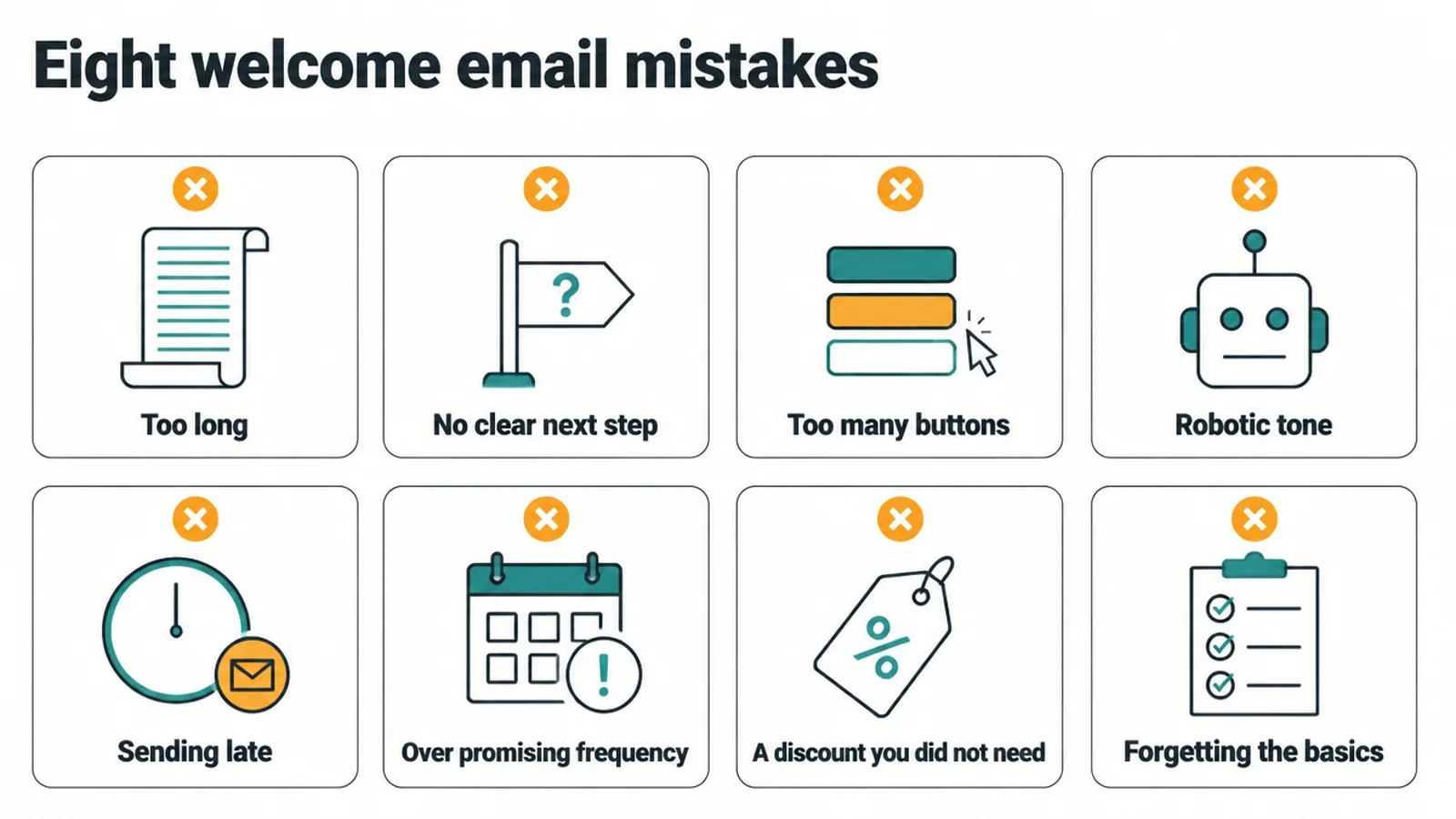
- Too long. If it needs scrolling on a phone, cut it. A welcome email should read in under a minute.
- No clear next step. If the reader finishes and thinks "so what do I do now?", you failed the third job.
- Too many buttons. Five links means no decision gets made. Pick one action and lead to it.
- Robotic tone. "Dear valued subscriber" reads like a form. Write like a person emailing a person.
- Sending late instead of instant. A welcome that arrives a day later has lost the moment. Fire it in seconds.
- Over-promising frequency. Do not say daily if you send monthly. Broken promises get you unsubscribed.
- A discount you did not need. Do not give money away out of habit. Offer one only if it fits your business.
- Forgetting the basics. An unsubscribe link and a real postal address keep you compliant and trusted. Never skip them.
Frequently asked questions
1. What is a welcome email?
The first automated message someone gets after they subscribe or buy. It confirms they are in, thanks them, and points them to one next step.
2. What should a welcome email say?
Three things: thank the person, set expectations about what you will send and how often, and give one clear next step. Keep it short and sound like a human.
3. How many emails should be in a welcome sequence?
One is fine to start. A 3-email sequence, with a welcome, a story or value email, and a soft offer, lets you build a relationship instead of cramming everything into one send.
4. When should the welcome email send?
Immediately, within seconds of someone joining, while your brand is fresh in their mind. Follow-ups in the sequence go out over the next several days.
5. Should I offer a discount in the welcome email?
Only if it fits your business. A discount can nudge a first purchase, but it can also train people to wait for deals, and a helpful recommendation often works just as well.
6. How long should a welcome email be?
Short. A few short paragraphs and one button. If someone can read it in under a minute on their phone, you are on track.
7. Do welcome emails work?
They tend to be among your highest-engagement emails because the person just chose to hear from you. Measure your own open and click numbers rather than trusting a benchmark.
8. How do I personalise a welcome email?
Use the person's first name, write in your real voice, mention how they joined if you can, and reply from a real person's name. Then test versions and keep what performs.
6. Get your welcome emails working
Welcome emails are one of the easiest wins in your whole marketing setup. You just have to send them, keep them short, and make them sound like you. If you would rather have someone set up your welcome flow, write the copy, and wire it into your site, that is one of the things our online marketing team does. Tell us about your business and we will help you turn new subscribers into real customers.

About the author
Gregory Yeoh is the founder of Seed Light, a web design and digital marketing agency that has helped small businesses get found online since 2017. He builds websites and email flows for small businesses, and he writes these guides to share what actually works when you are doing it yourself. Plain words, real numbers, and the version he would use himself.