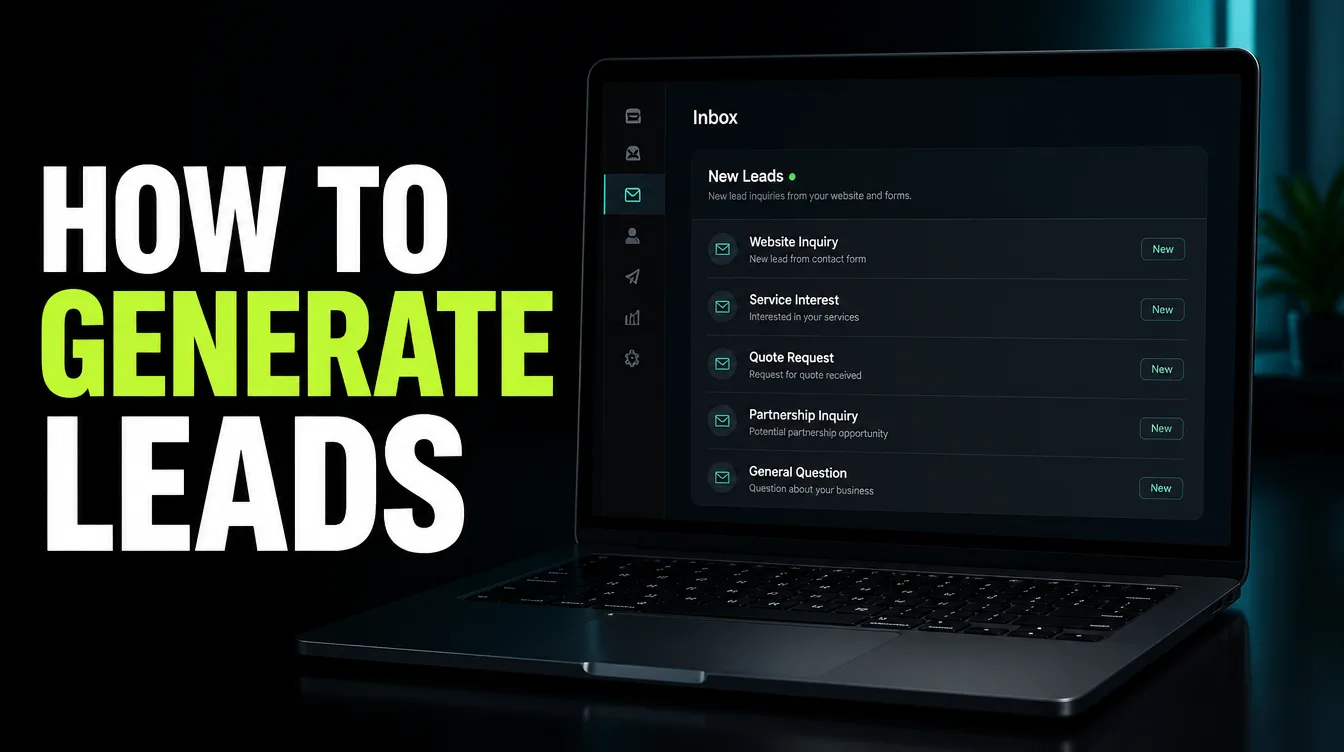
- Build the loop first. Offer, landing page, form, fast follow-up. Every channel is just a front door into the same loop.
- Pick one channel and commit. Trying six at once spreads you too thin. Choose one you can do for 90 days.
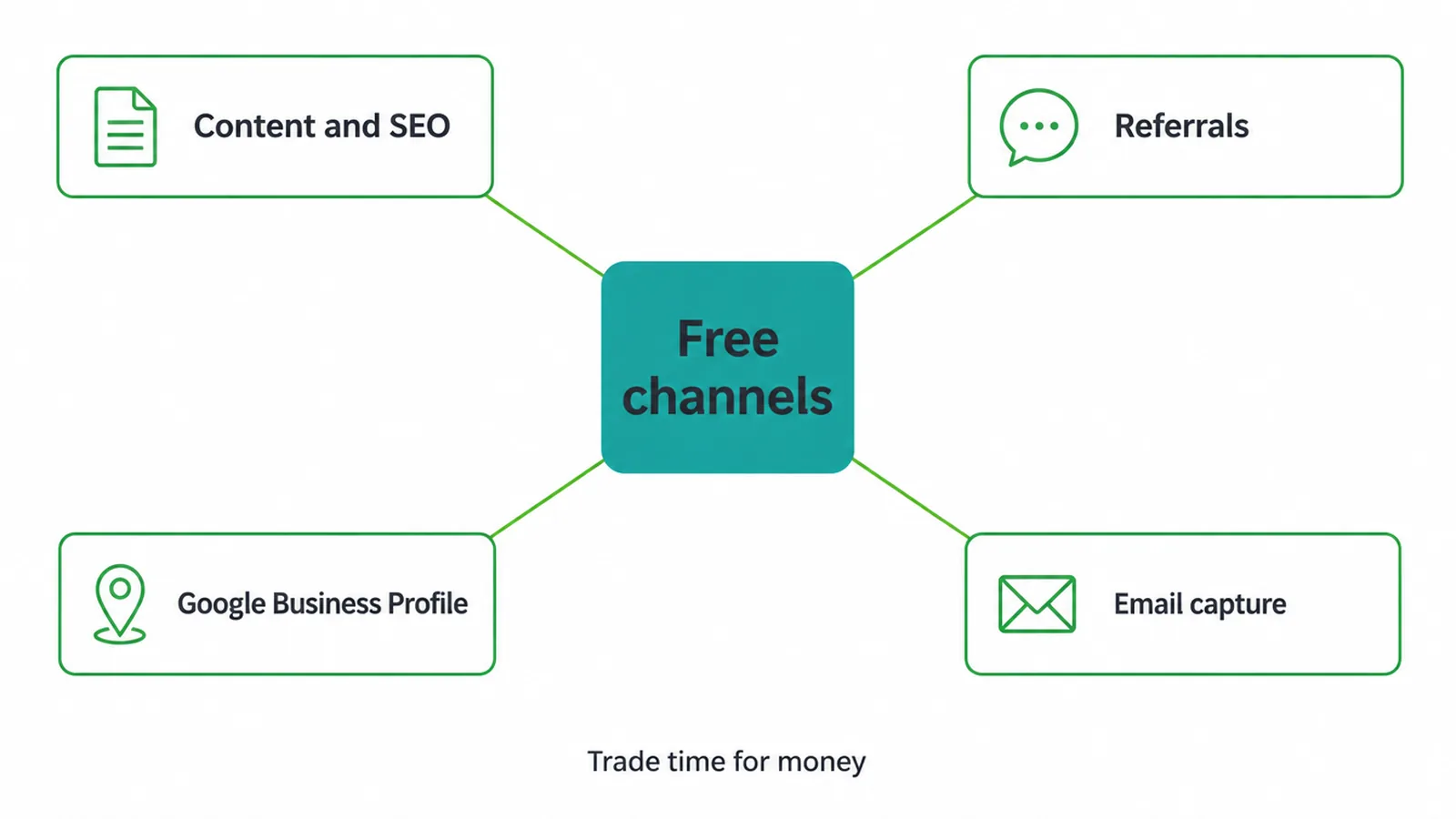
- Free channels trade time for money. Content and SEO rank as the top return channel for marketers in HubSpot's State of Marketing data, but they build slowly.
- Reviews and referrals reach warm people. Nearly all consumers use Google to check reviews before choosing, per BrightLocal.
- Follow-up is where most leads are won or lost. Reply fast, stay human, and have a simple next step.
- No one can promise you a number. Lead volume builds with consistency. Track your own baseline and beat it.
1. What is a lead, really?
A lead is a person who has shown interest in what you sell and given you a way to reach them. That is the whole definition. A visitor who reads your page and leaves is not a lead. A visitor who fills in a form, calls you, or sends a message is. The gap between the two is the entire game.
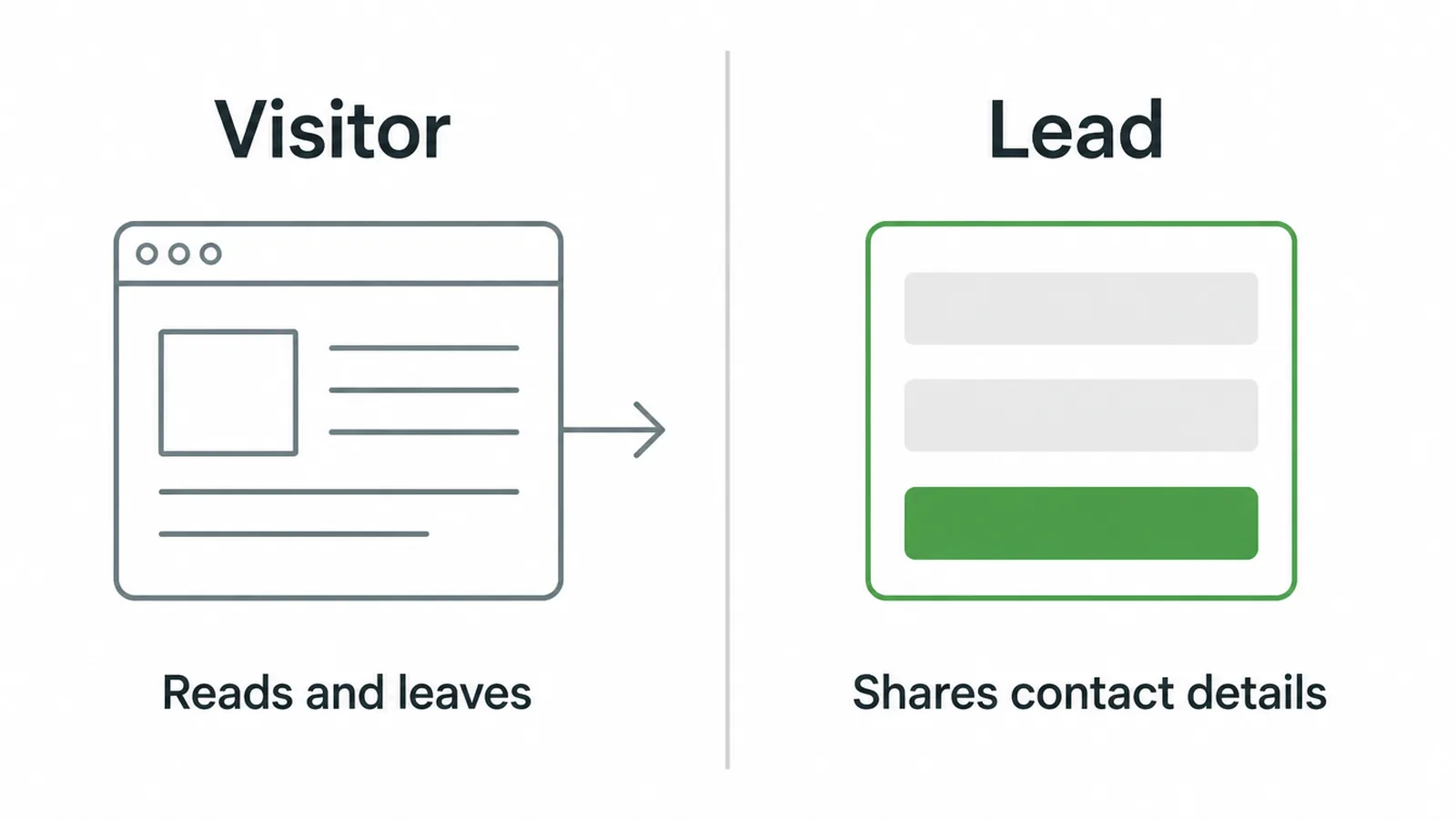
Think of it as two stages. First, someone finds you. Second, they raise their hand and share their details. Most small businesses are good at the first part and lose people at the second. They get visits but no messages, because there is no clear offer and no easy way to say yes.
Leads also sit at a specific point in the buyer journey. Someone who just discovered you is not the same as someone ready to buy. If you want to see how attention turns into a sale step by step, read our guide to the stages of a marketing funnel. For now, hold this in your head: your job is to turn interested visitors into named contacts you can follow up with.
2. The core loop every channel plugs into
Before you touch any channel, build the loop. It has four parts, and they work in order.
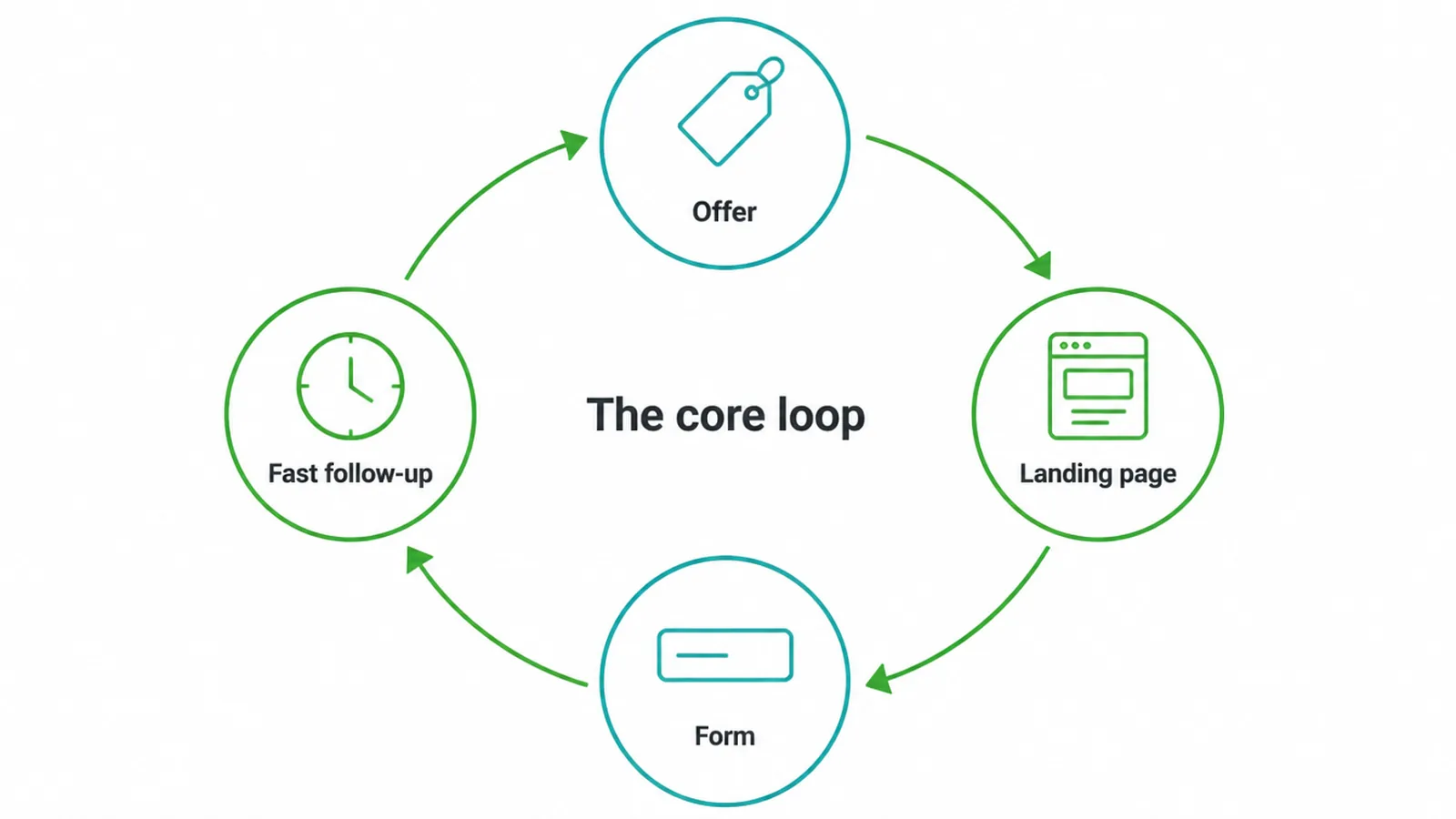
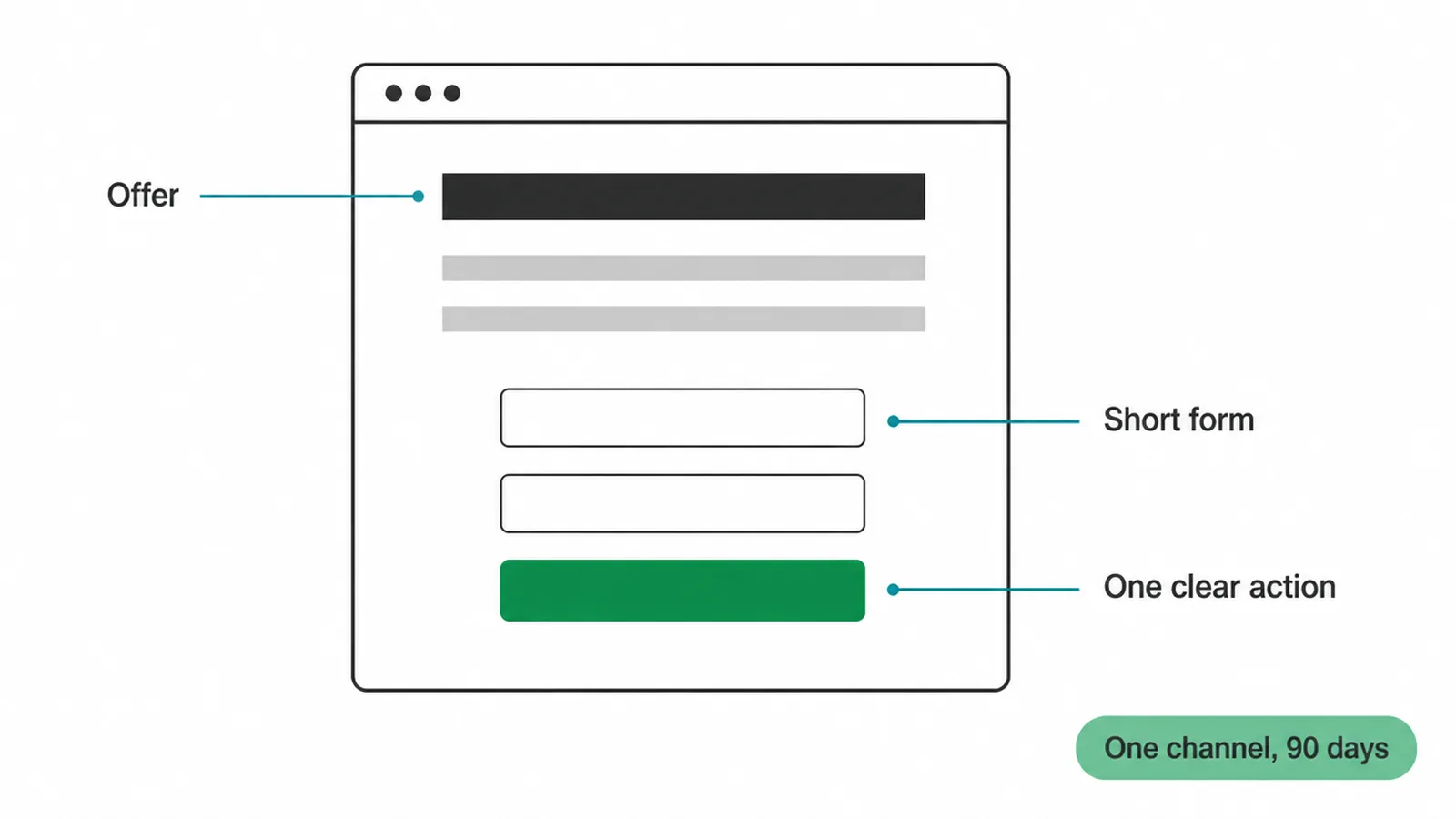
1. The offer, or lead magnet. This is a small, useful thing you give away free in exchange for contact details. A checklist, a short guide, a discount, a free quote, or a free consultation all work. The point is to give people a reason to raise their hand. A bland "contact us" is not an offer. "Get a free 20-minute site review" is.
2. The landing page. This is one focused page that explains the offer and asks for the details. No menu of distractions, no ten other links. Just the promise, why it helps, and the form. This part matters more than most owners think, so it is worth getting right, and it is the page our landing page design work is built around. Our landing page best practices cover the layout, the headline, and the trust signals that keep people from bouncing.
3. The form. Keep it short. Ask for as little as you can get away with. A name and an email or a phone number is usually enough at the start. Every extra field costs you leads. You can always ask for more once a conversation begins.
4. Fast follow-up. The moment someone fills in the form, the clock starts. Reply quickly, while they still remember you and still care. This is the part people skip, and it is the part that separates a busy business from a quiet one. More on how to do it well further down.
Here is the key idea: every channel below, free or paid, is just a front door into this same loop. Google Business Profile, referrals, content, ads. They all point people at your offer and your form. So build the loop once, get it converting, and then you can send traffic from anywhere.
3. Free channels: trade time for money
If you have more time than budget, start here. Free channels cost effort and patience instead of cash. They are slower to switch on, but they keep working after you stop touching them, and they compound. Here are the four that pay off most reliably for a small business.
Helpful content and SEO
Publishing content that answers the real questions your customers ask is one of the strongest long-term plays, and it is the backbone of our content marketing work. In HubSpot's marketing research, a website, blog, and SEO rank as the top return-generating channel that marketers report. The same research notes small businesses are notably more likely than average to see a return from blog content. It rewards patience: a good article can bring in leads for years, but it takes months to gain traction.
Start with the questions people ask before they buy from you. Write one clear, genuinely useful answer per page. This is awareness work, the top of your funnel, so measure it in reach and trust, not instant sales. Our guide to top-of-funnel marketing explains how to turn that early attention into leads over time.
Referrals and word of mouth
Referrals bring you people who already trust someone who trusts you. That warmth makes them the easiest leads to close, and they cost nothing but the nerve to ask. The good news is that people are willing. BrightLocal's research found that the vast majority of consumers are open to writing a business a review when asked, which is the same instinct that fuels referrals.
Make asking a habit. After a happy result, ask directly: "Do you know anyone else who needs this?" Give existing customers an easy way to pass your name along. A simple referral offer can help, but often just asking at the right moment is enough.
Google Business Profile
If you serve a local area, your Google Business Profile is the highest-value free thing you can set up. It puts you on Google Maps and in local search, right where people are already looking for what you sell. Reviews are the engine here: BrightLocal found that most consumers use Google to find and read reviews before choosing a business. A strong, well-reviewed profile turns local searches into calls and messages.
Your first step is simple: claim and verify your profile. Then fill in everything, add real photos, list your services, and start asking happy customers for reviews. It is free, it is fast to set up, and it reaches people at the exact moment they are ready to buy.
Email capture
Every website visitor who leaves without a way to reach them is a lead you paid to earn and then lost. Capturing emails fixes that. Add a clear offer and a short form so interested visitors can join your list, then keep in touch. When you do ask people to leave a review or take an action, email is the channel most likely to get a response, per BrightLocal's data on how consumers reply to review requests.
You do not need anything fancy to start. A simple sign-up offer and a habit of sending something useful is enough. Our guide to email marketing for small business walks through the tools and the first few emails to send.
4. Paid channels: fast to switch on, but you pay to keep them
Paid ads are the fastest channel to switch on. You can go from nothing to traffic in a day. That speed is the appeal, and it is also the catch: the leads stop the moment you stop paying. Free channels keep working after you switch off. Paid ones do not.
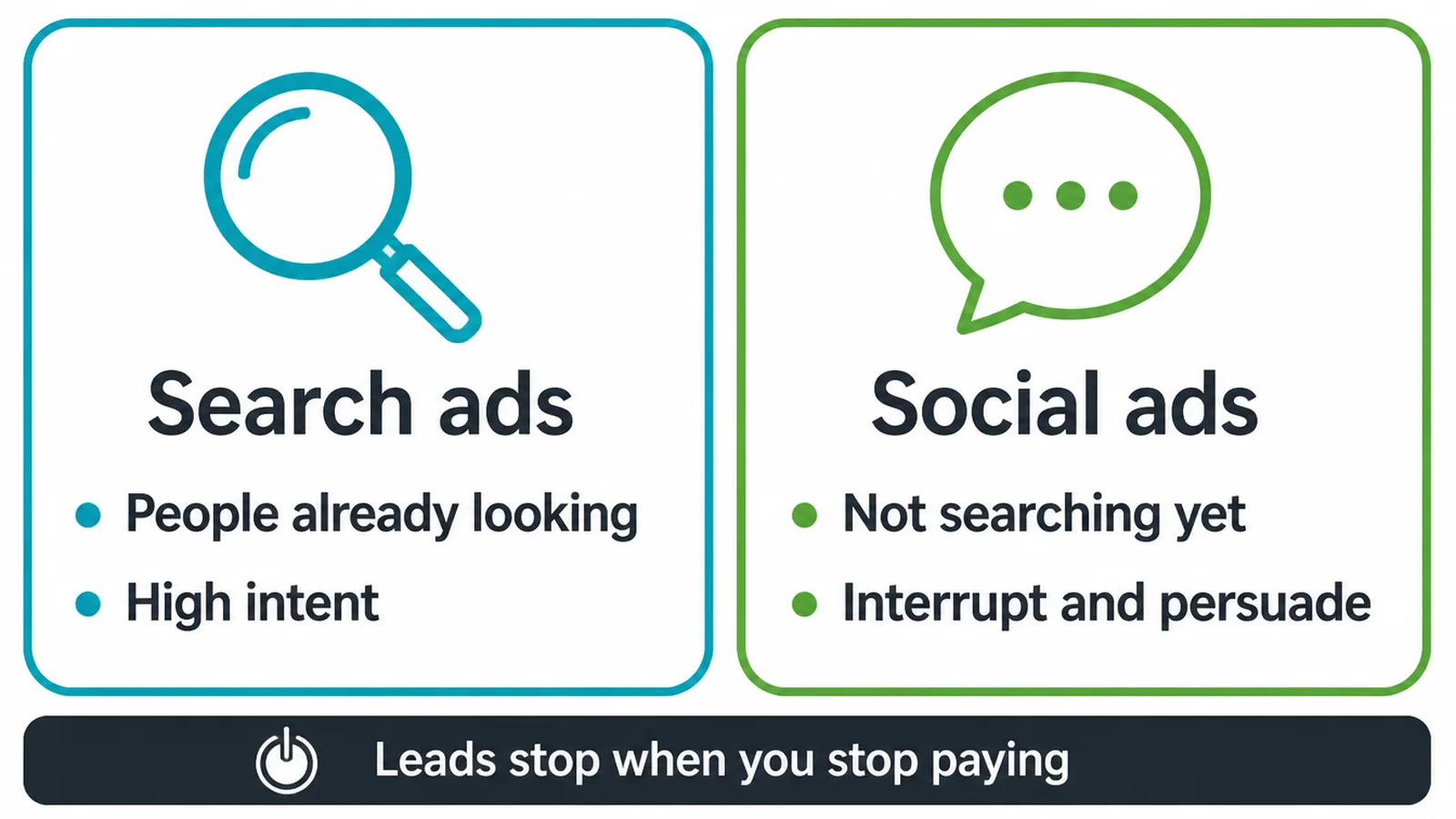
So the honest advice is this: paid ads work best once your loop already converts. If your landing page and follow-up turn traffic into leads reliably, ads pour more people into a machine that already works. If they do not, ads just spend money faster. Fix the loop first.
Two broad options. Search ads catch people who are already looking for what you sell, so intent is high. Social ads put you in front of people who are not searching yet, so you interrupt and persuade. Whichever you choose, start small, send everyone to your dedicated landing page, and watch your cost per lead closely. Kill what loses, feed what works. If you would rather have someone run this properly, our digital marketing service sets up and manages paid campaigns for small businesses.
5. The channels at a glance
Here is every channel side by side, with what each is best for, the rough effort or cost, and the single first step to take. Do not try to run them all. Pick one, commit to it for 90 days, and give it a fair chance before you judge it.
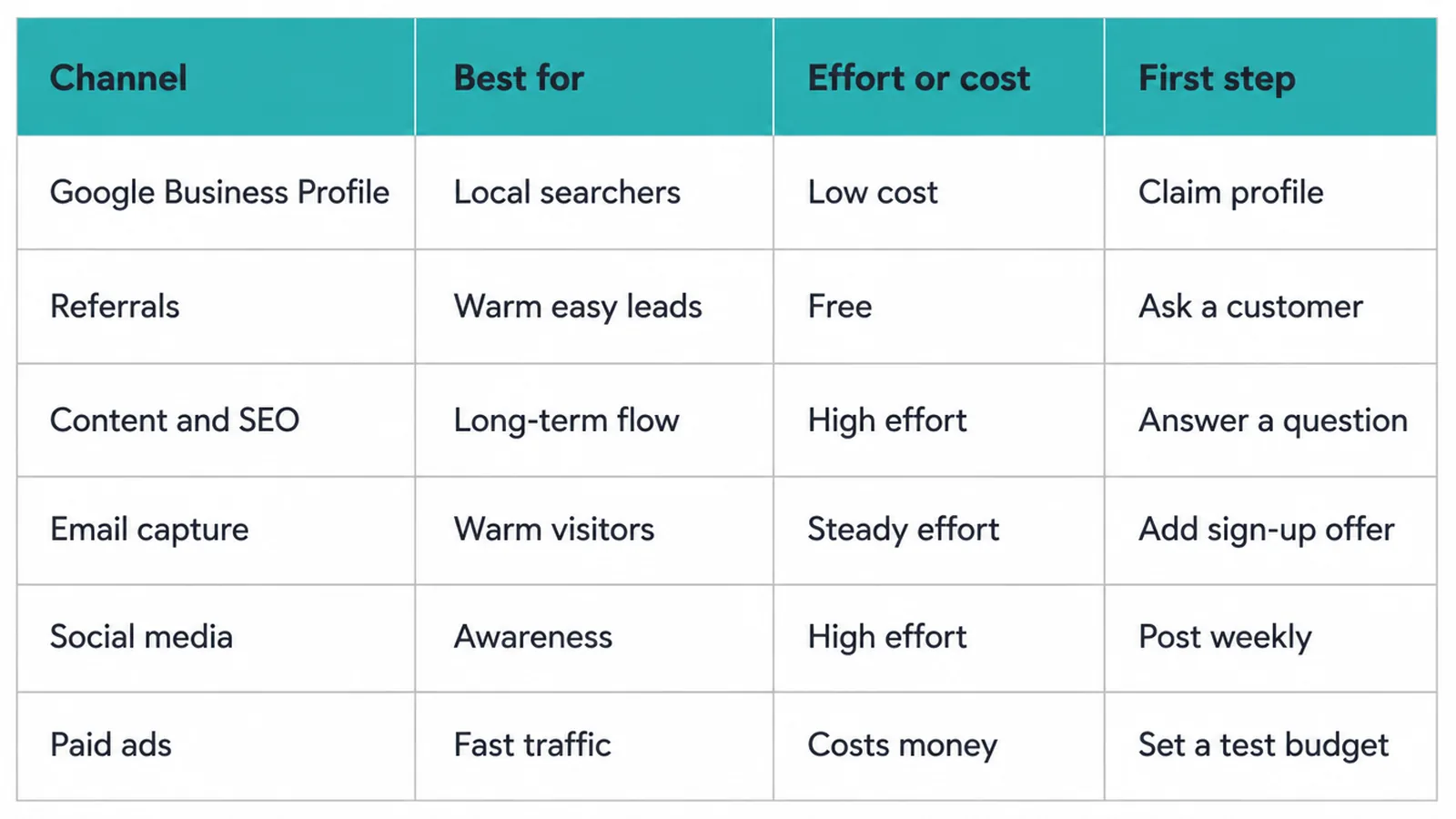
| Channel | Best for | Rough effort / cost | First step |
|---|---|---|---|
| Google Business Profile | Local businesses, ready-to-buy searchers | Low cost, low effort | Claim and verify your profile |
| Referrals | Warm, easy-to-close leads | Free, needs the nerve to ask | Ask your last happy customer |
| Content and SEO | Long-term, compounding lead flow | Free, high effort, slow to build | Answer one real customer question |
| Email capture | Staying in touch with warm visitors | Low cost, steady effort | Add a sign-up offer to your site |
| Social media | Awareness and brand familiarity | Free to post, high effort | Pick one platform, post weekly |
| Paid ads | Fast traffic once the loop converts | Costs money, stops when you stop | Set a small test budget |
6. Follow up fast, or the leads leak away
You can do everything else right and still lose. The most common leak in a small business is slow, weak follow-up. A lead that fills in your form is interested right now. An hour later, they are thinking about something else. A day later, they have moved on or messaged a competitor.
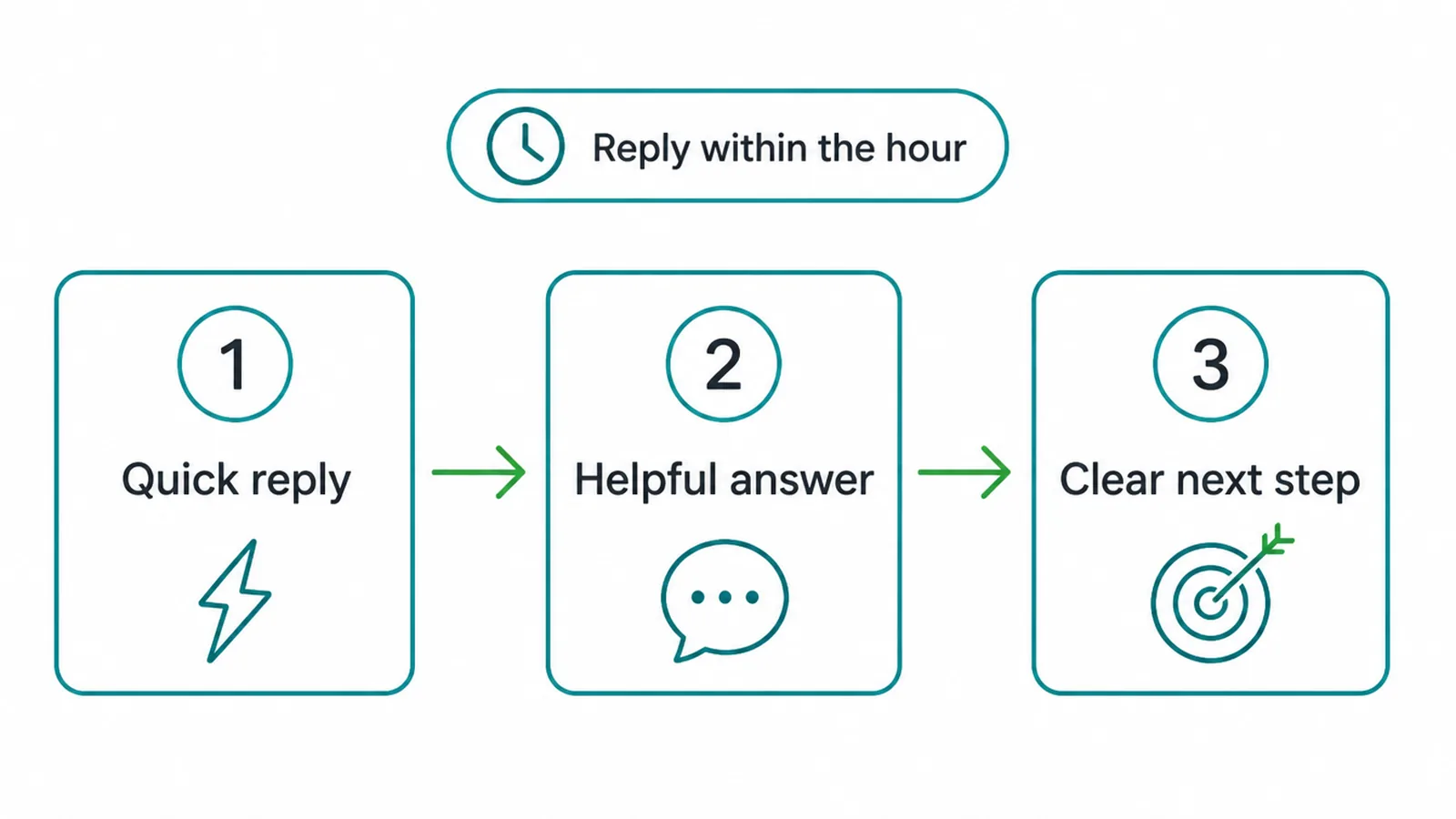
So make follow-up a habit, not an afterthought. Reply fast, ideally within the hour. Keep it human, not a robotic auto-reply. And use a simple three-step sequence:
Step 1, the quick reply. Acknowledge them fast so they know they were heard. Even a short "Got your message, I'll get you a proper answer shortly" beats silence.
Step 2, the helpful answer. Address what they actually asked. Solve a small piece of their problem for free. This builds trust before you ask for anything.
Step 3, the clear next step. Tell them exactly what happens next. Book a call, send a quote, visit the shop. One obvious action, not five options.
Once you have done this by hand enough times to know it works, you can start to automate the repetitive parts, like the instant first reply. That is the right time to bring in tools, not before. Our guide to AI lead generation covers how to automate follow-up once your manual process is solid.
7. How many leads should you expect?
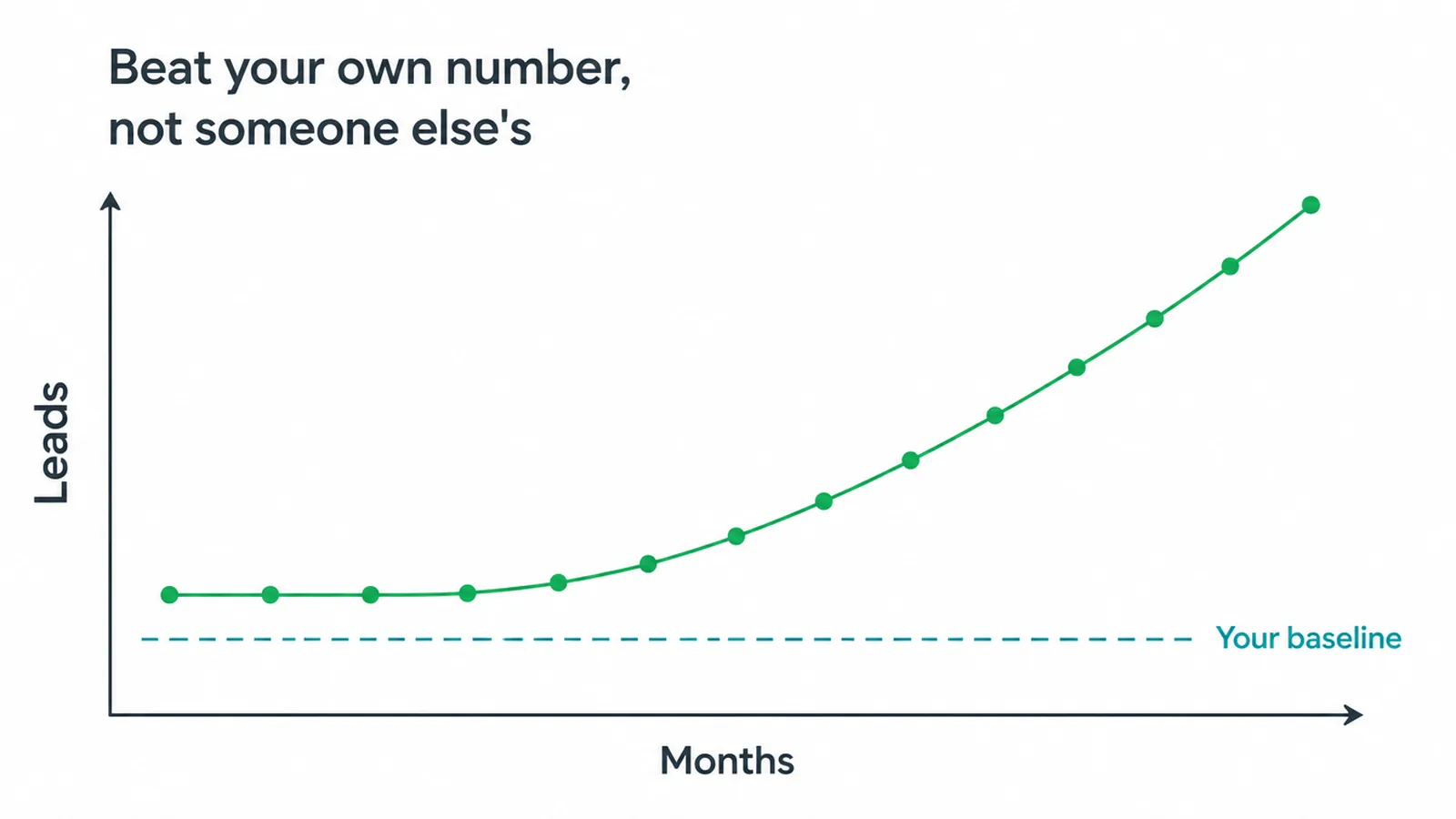
There is no honest fixed number, and anyone who promises you one is guessing or lying. Lead volume depends on your channel, your audience, your offer, and how consistent you are. It builds slowly. A channel that produces nothing in month one can produce steadily by month six.
It also helps to know that lead generation is genuinely hard, and it is hard for everyone. In HubSpot's research, a meaningful share of marketers still name generating leads as one of their top challenges. So if it feels tough, that is normal, not a sign you are doing it wrong.
The right move is to track your own baseline. Count the leads a channel brings in over a few months, then aim to beat that. Chasing someone else's numbers from a case study will only make you feel behind. Your baseline, improving over time, is the only benchmark that matters.
8. Build the lead loop this week
Keep it simple. Build the loop once: an offer worth wanting, a landing page that explains it, a short form, and a plan to follow up fast. Then pick one channel from the table, the one you can realistically keep doing, and commit to it for 90 days. Do not spread yourself across six. Do one thing well.
Most importantly, treat follow-up as the job, not the leftover. That is where quiet businesses become busy ones. If you want help building the loop, the landing page, and the system behind it, get in touch with us and we will point you at the fastest first step for your situation.
Frequently asked questions
1. What is lead generation?
Lead generation is the process of getting people who might buy from you to share their contact details, so you can follow up and turn them into customers. A lead is just a person who has shown interest and given you a way to reach them.
2. How do I generate leads for a small business?
Set up one simple loop first: an offer people want, a landing page that explains it, a short form to capture a name and email or phone, and fast follow-up. Then drive traffic to it from one channel you can stick with, like Google Business Profile, referrals, or helpful content.
3. What is a lead magnet?
A lead magnet is a small, useful thing you give away for free in exchange for someone's contact details, like a checklist, a guide, a discount, a quote, or a free consultation. It gives people a reason to raise their hand.
4. How do I get leads without paying for ads?
Focus on free channels: claim and optimise your Google Business Profile, ask happy customers for referrals, publish helpful content that answers real questions, and capture emails from your website. These take time and consistency instead of money.
5. What is the fastest way to get leads?
The fastest reliable route for most small businesses is Google Business Profile plus referrals, because both reach people who are already looking or already trust someone who knows you. Paid ads are the fastest to switch on, but they cost money and stop the moment you stop paying.
6. How do I capture leads on my website?
Add a clear offer, a short form that asks for as little as possible, and one obvious call to action per page. Send the form to your email or a simple tool so no message gets lost.
7. How do I follow up with leads?
Reply fast, ideally within an hour, keep it personal, and have a simple sequence: a quick reply, a helpful answer, and a clear next step. Following up is where most small businesses lose leads, so make it a habit, not an afterthought.
8. How many leads should I expect?
There is no honest fixed number. Lead volume depends on your channel, audience, and offer, and it builds slowly with consistency. Track your own baseline for a few months and aim to beat it, rather than chasing someone else's numbers.

About the author
Gregory Yeoh is the founder of Seed Light, a web design and digital marketing agency that builds websites and runs marketing for small businesses. Most of his week goes on exactly this problem: turning visitors into leads and leads into customers. He has watched plenty of good businesses stay quiet for want of a loop and the habit of following up. The advice here is what we set up first for our own clients.